Human Rights Advocacy Organization Landing Page
Advocate is an editorial landing page built for human rights advocacy organizations. It opens with a monumental full-bleed photograph and unfolds like a long-form magazine feature, guiding attorneys, journalists, organizers, and donors through documented work before inviting them to join. The design is archival and dignified, rooted in a botanical color palette and driven by a lead generation form.
by Rocket studio
Quick summary
Advocate is a single-page editorial template for a human rights advocacy organization. It scrolls like a magazine feature, moving from a cinematic hero image through founding story, work pillars, documentary interludes, and an active cases timeline, before landing on a lead generation form. The design is archival and serious, built to earn trust before asking for a commitment.
Who this template is for
This template is built for civic organizations that need to demonstrate credibility through evidence before asking anyone to act. It suits groups that communicate with legally sophisticated or research-oriented audiences who expect depth, not marketing language.
- Pro bono attorneys and legal clinics evaluating case partnerships
- Journalism students, policy researchers, and grassroots organizers seeking coalition support
- Serious donors who read annual reports and want documented proof of impact
What problem this template solves
Human rights organizations often struggle to convert page visits into meaningful engagement because their websites feel like brochures rather than evidence rooms. Visitors arrive with high skepticism and leave before the ask.
- Generic nonprofit layouts fail to communicate urgency or documented wins
- Standard lead forms appear too early, before trust has been established
- The work's complexity gets flattened into bullet points that lose the human detail
What you get with this template
You get a complete editorial landing page that builds its case section by section, the way a well-edited magazine feature would. Every layout decision supports the goal of presenting undeniable documentation before inviting participation.
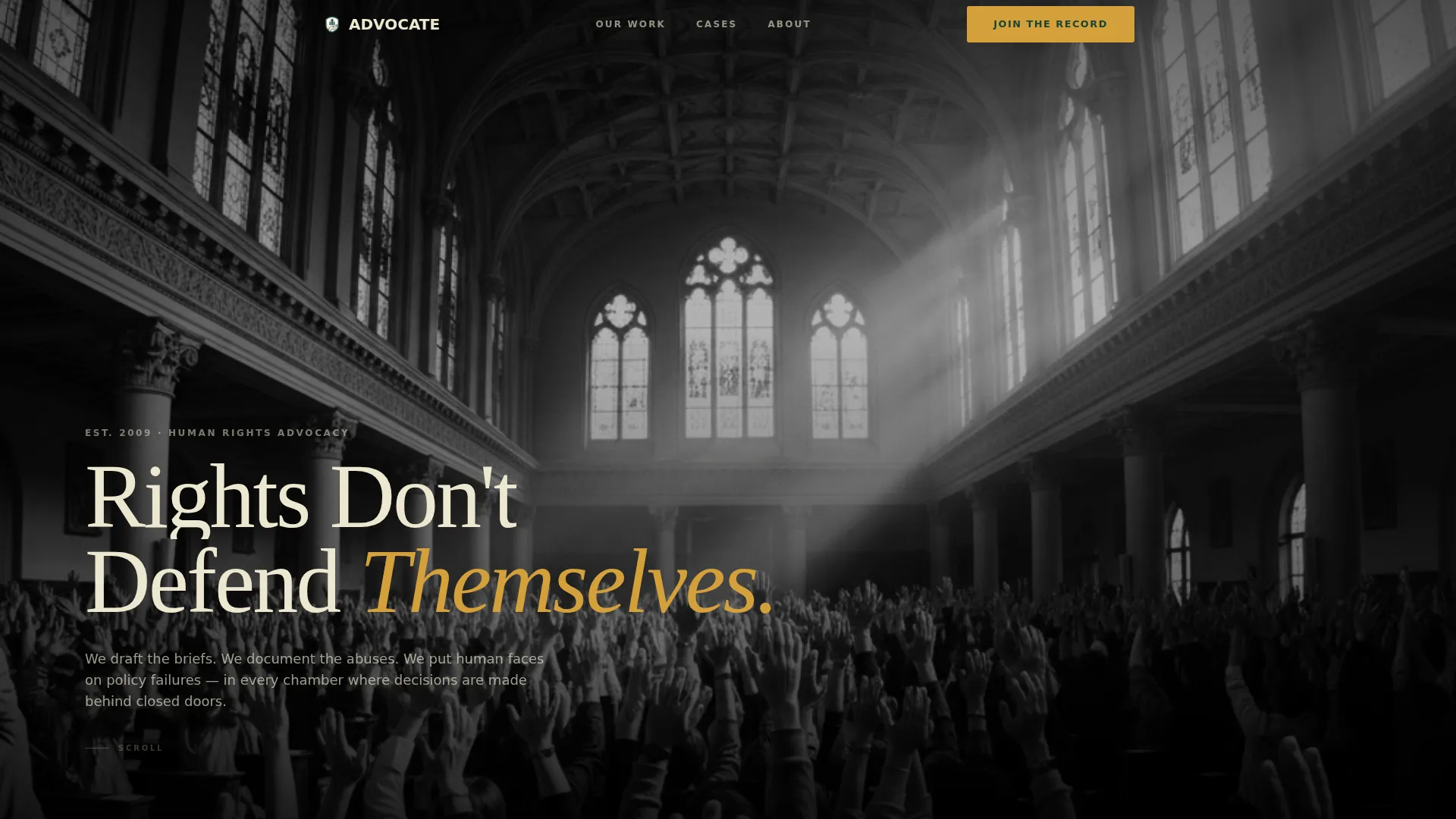
- A full-bleed cinematic hero with a masked serif headline and floating call-to-action button
- Four editorial work-pillar sections with oversized statistic displays and narrative columns
- A lead generation form with an area-of-engagement selector and an email-gated annual report download
Feature list
This template is built around a specific editorial rhythm. Each feature below reflects a deliberate design and layout decision present in the template.
Cinematic Full-Bleed Hero
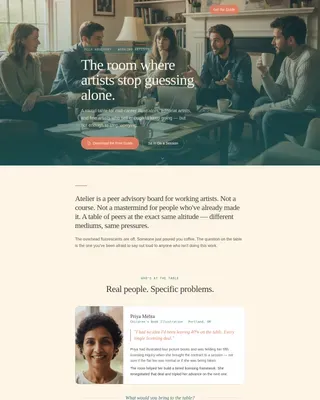
The header uses a documentary-grade black-and-white photograph of raised hands, shot from below so the ceiling vaults upward and light catches fingertips. A single Fraunces serif headline fades in over the image with a scroll-triggered masked text reveal. No faces, no logos, and no flags keep the image universal and archival in feeling.
Editorial Work-Pillar Columns
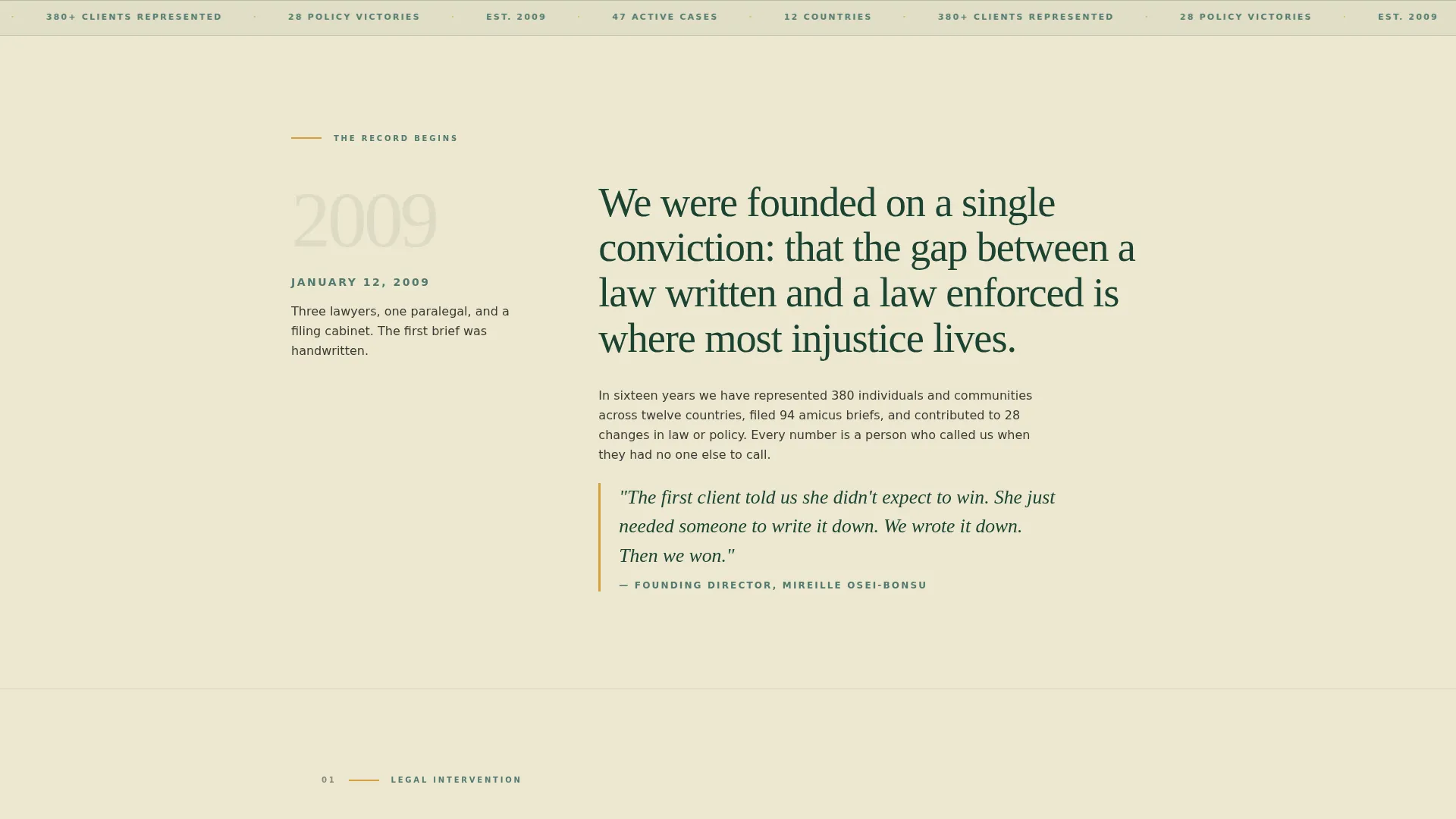
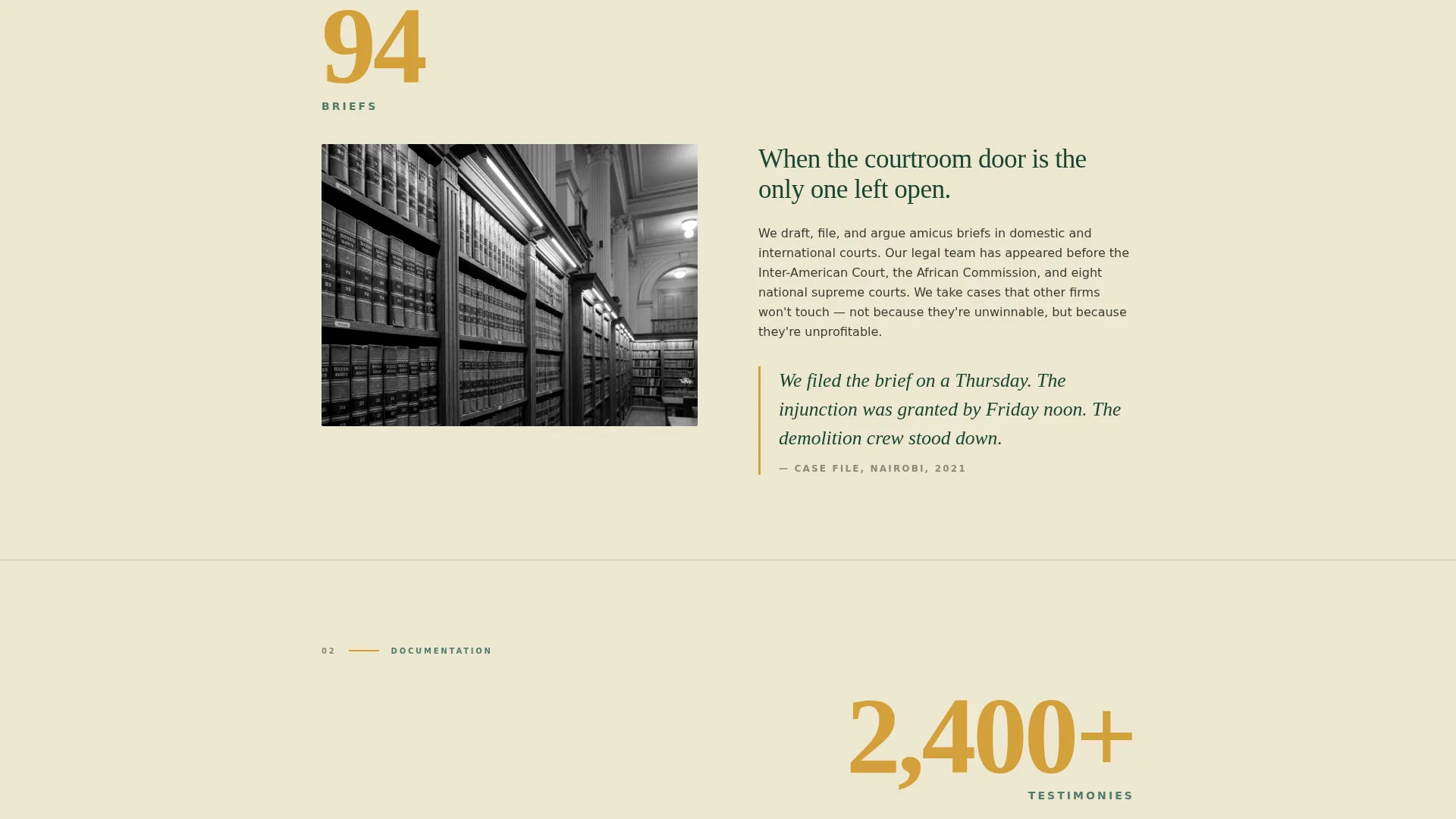
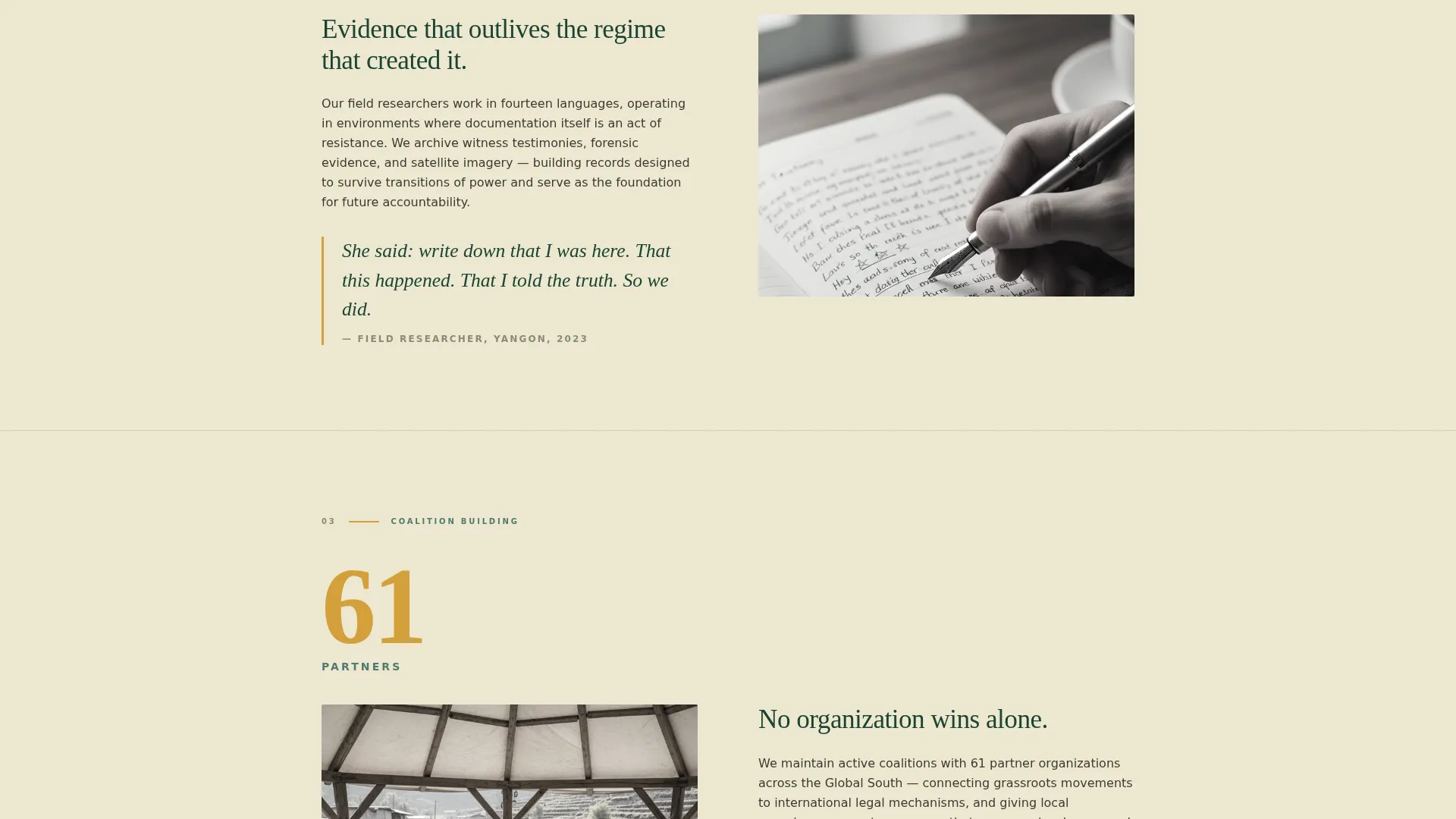
Each of the four work pillars, legal intervention, documentation, coalition building, and policy reform, opens with a single statistic set in oversized sap-colored type. Tight editorial columns then explain what the number means in human terms. This format mirrors long-form investigative journalism, giving the layout both visual impact and narrative credibility.
Documentary Photographic Interlude
A full-width image grid breaks the editorial columns with documentary photography, followed by stacked testimony pull quotes. This section slows the reader intentionally, creating a contemplative pause between the founding story and the urgency of active cases.
Active Cases Timeline
A compressed, urgency-focused layout presents a running tracker of active cases. The tighter spacing and stacked format signal that the work is unfinished and ongoing, shifting the reader's emotional register from reflection to present-tense engagement.
Lead Generation Form with Engagement Selector
The "Join the Record" form collects full name, email address, area of engagement (legal, research, organizing, or funding), and a single open-text field asking what brings the visitor to this work. A secondary path offers the annual impact report gated behind email capture, labeled "Read the Evidence."
Scroll-Triggered Animation System
The template uses masked text reveals, scroll-triggered section reveals, Ken Burns effects on images, and parallax layering throughout. The animation system is set to medium-high intensity, creating a sense of deliberate pacing without distraction.
Page sections overview
| Section | Purpose |
|---|---|
| Hero with headline | Establishes tone with cinematic B&W photo and masked serif headline |
| Founding story pillars | Introduces origin date and four work pillars with statistic displays |
| Photographic documentary interlude | Breaks narrative with image grid and stacked testimony pull quotes |
| Active cases timeline | Compresses layout to signal urgency and show ongoing case work |
| Join the Record form | Captures leads via engagement-segmented form and report download gate |
| Footer row | Closes with minimal single-row pattern |
Design & branding system
The visual identity follows a Civic Service theme expressed through a Botanical color system. The palette feels like a leather-bound field journal beside a window of herbs, dignified, rooted, and alive. Typography pairs Fraunces serif headlines with DM Sans for body text and interface elements.
- Parchment (#EDE8D0) dominates backgrounds; Evergreen (#1B4332) anchors headers and navigation; Fern (#52796F) softens secondary text and dividers
- Living Sap (#D4A03C) appears only on calls to action, pull quote accents, and oversized statistics to direct the eye precisely where commitment is requested
- The overall visual style is editorial and archival, referencing documentary photography and long-form print journalism rather than modern startup aesthetics
Mobile & speed optimization
The template is designed desktop-first to serve donors reviewing annual reports and attorneys evaluating case partnerships on large screens. Full mobile support is included so the editorial layout remains readable and navigable at any screen size.
- Static sections use server-rendered components for faster initial load on content-heavy pages
- Animations and interactive form elements are handled by client components, keeping the scroll experience smooth without blocking content delivery
- The floating call-to-action button and email-gated report download are optimized for touch interaction on mobile
How this template helps you convert
Advocate is built on a specific conversion philosophy: earn the click through evidence, not persuasion. The page's structure delays the formal ask until the visitor has already been moved by the documentation.
- The floating "Join the Record" button appears after the second scroll section, offering an early path for visitors who are already convinced without interrupting those who need more context.
- The form arrives only after the founding story, work pillars, photographic interlude, and active cases timeline have made the organization's credibility concrete and the work's urgency felt.
- The secondary "Read the Evidence" download gate creates a lower-commitment entry point, capturing email addresses from visitors who are interested but not yet ready to declare an area of engagement.
Other information about this template
This template is part of a broader editorial category designed for organizations in the civic and nonprofit space. It is a strong fit for groups working in human rights law, investigative documentation, and grassroots coalition building across global contexts.
- The template is built with English-language copy and is scoped for a global audience using USD context
- It sits within the Community and Nonprofit category, specifically matched to the Human Rights Nonprofit subcategory and Human Rights Advocacy Organization niche
- The intersection match score of 13 reflects a high degree of alignment between the template's design language, layout structure, and the specific communication needs of this niche
Theme
Civic Service
Creative direction
Vision & Mission
Color system
Botanical
Style
Editorial/Magazine
Direction
Lead Generation
Page Sections
Cinematic Full-bleed Hero Section
Editorial Work-pillar Layout
Documentary Photographic Interlude
Active Cases Timeline Tracker
Segmented Lead Generation Form
Scroll-triggered Animation System
Related questions
Who is this template designed for?
Can I adapt the work pillar sections to fit my organization's focus areas?
How does the lead generation form work?
Does the template include the photography shown in the design preview?
Is this template suitable for a smaller advocacy group or only large organizations?