Depression Care Booking Website Template
Anchor is a depression caregiver support service landing page built around honest questions caregivers ask at midnight. It uses a FAQ-driven comparison table layout to gently contrast going-it-alone with guided support. The minimal booking form, award badge header, and a Healing Space visual identity make the page feel like quiet permission to finally ask for help.
by Rocket studio
Quick summary
Anchor is a single-page booking template for a depression caregiver support service. It opens with earned trust marks and one disarming question, then walks visitors through three FAQ-anchored comparison tables. By the time they reach the booking form, the decision feels less like a commitment and more like setting down something heavy.
Who this template is for
This template is built for mental health service providers and caregiver support organizations who want to reach people caring for a loved one with depression. It suits practitioners who want a low-friction booking experience for an emotionally exhausted audience.
- Caregiver support services offering peer groups, psychoeducation, or respite planning
- Mental health practitioners targeting spouses, parents, and adult children of people with depression
- Organizations that want warm, trust-first design rather than clinical or transactional pages
What problem this template solves
People caring for someone with depression are already running low. A page that leads with intake questionnaires, insurance fields, or urgent calls to action will lose them before they even read the offer. This template removes every unnecessary barrier.
- Replaces heavy onboarding friction with a three-field booking form: first name, preferred day, and who they are caring for
- Softens resistance by answering real caregiver questions before asking for anything in return
- Offers a secondary email path for visitors not yet ready to schedule a call
What you get with this template
The template delivers a complete, single-page booking flow designed specifically for caregiver support services. Every section is purposeful and prompt-backed.
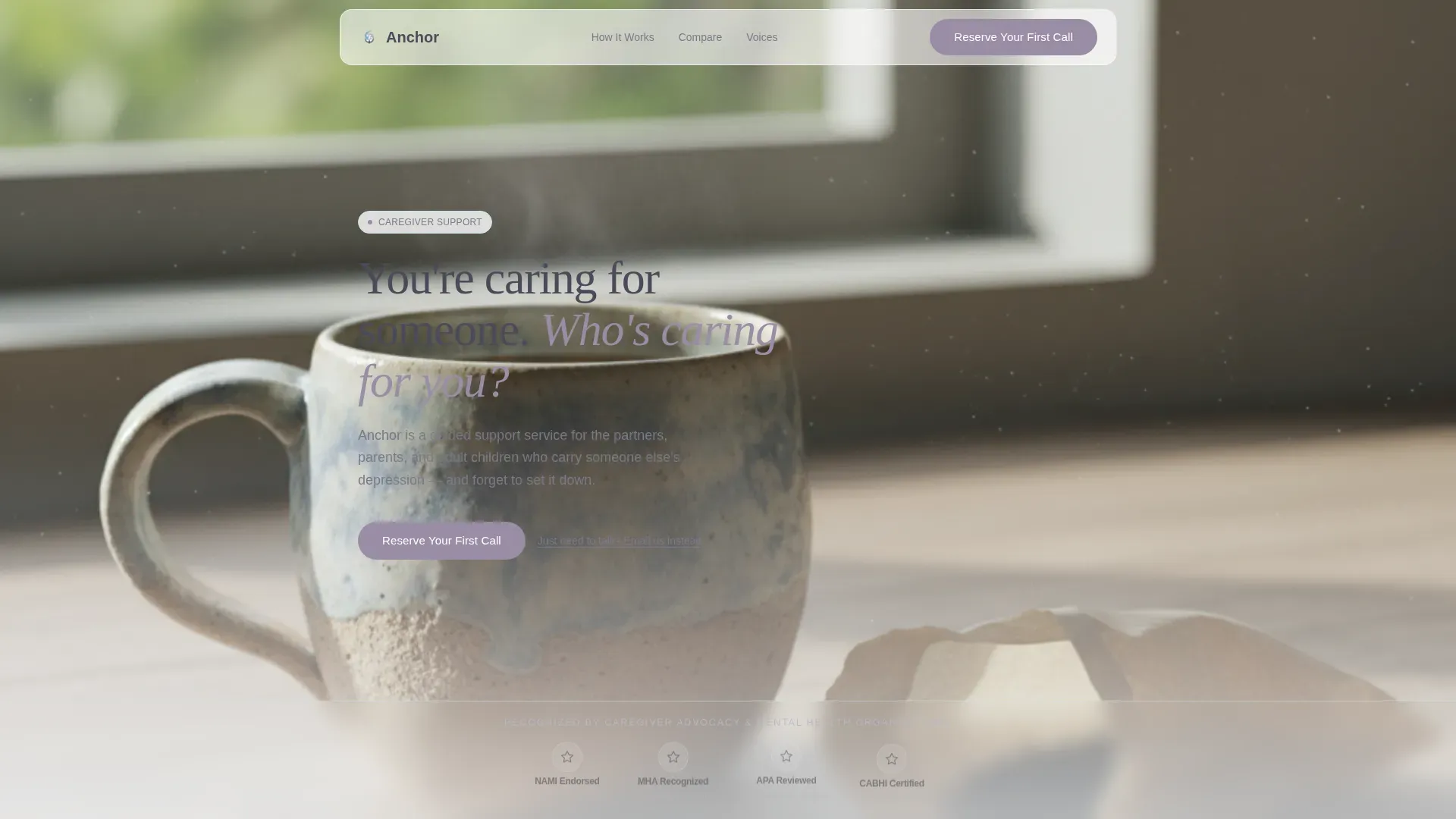
- A horizontal award badge header strip with a single fade-in headline
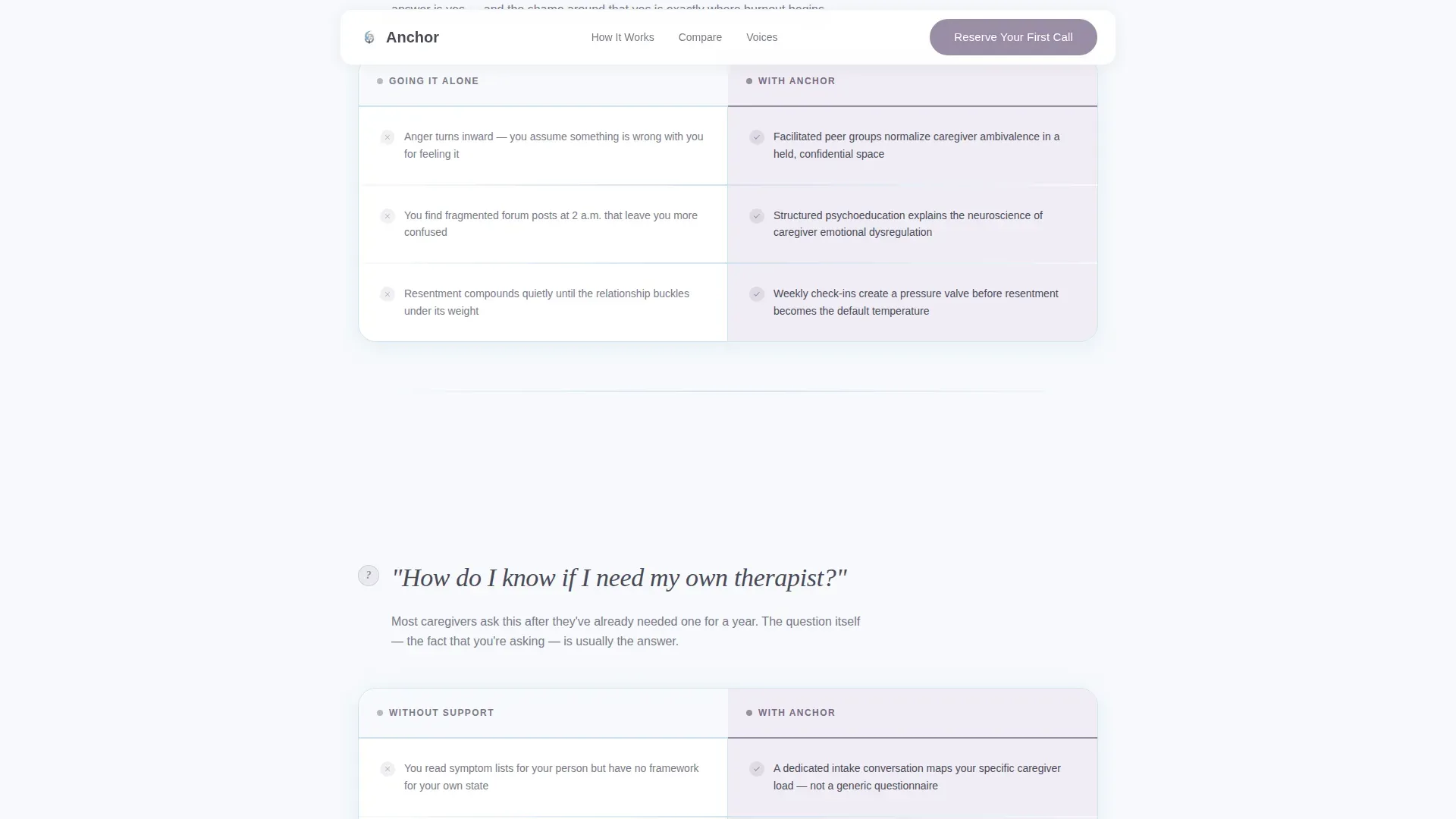
- Three FAQ-comparison table sections contrasting solo caregiving against guided support
- A caregiver testimonial section with intimate first-name-only quote cards
- A minimal three-field booking form plus a soft email fallback link
- A lightweight footer using an extreme minimal layout pattern
Feature list
This template is built around a small set of purposeful, caregiver-focused components.
FAQ-Driven Comparison Tables
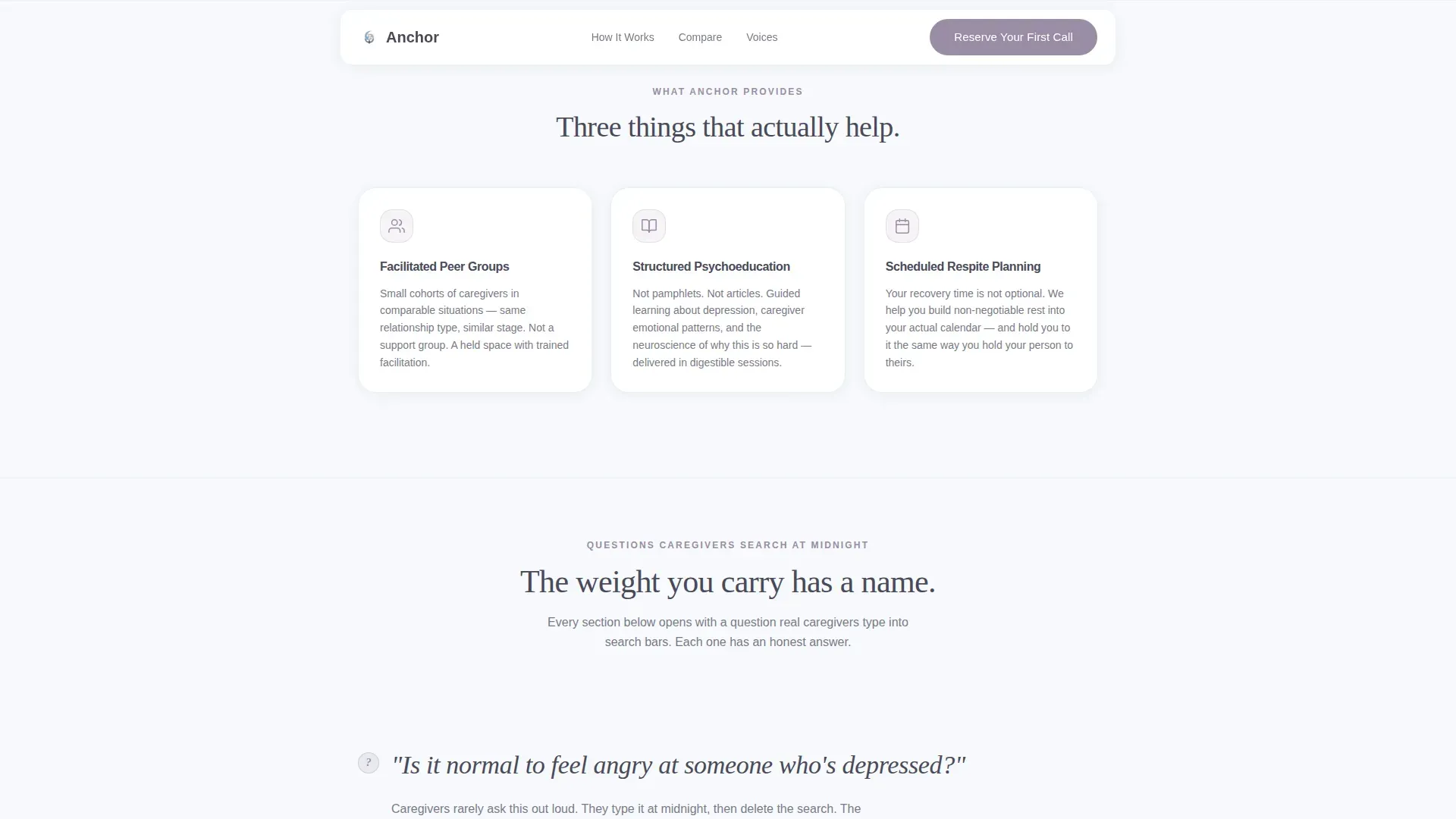
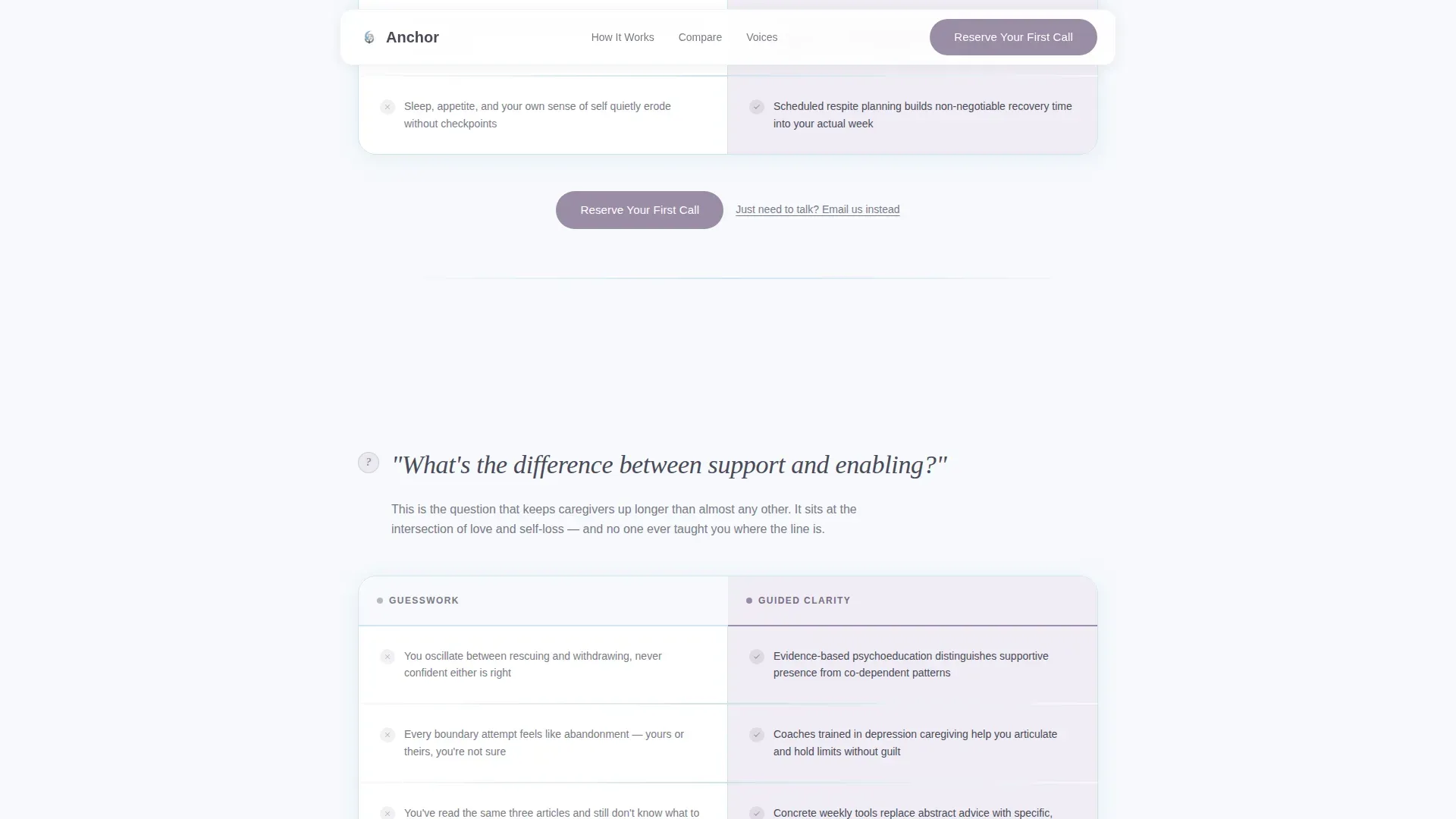
Each of the three main scroll sections opens with a real question caregivers search for at midnight. The comparison table beneath each question contrasts two columns: going it alone versus structured guided support. Rows cover emotional normalization, peer group access, psychoeducation, and respite planning.
Award Badge Header Strip
A horizontal band of recognition marks from caregiver advocacy organizations and mental health foundations sits at the top of the page. Badges are rendered in muted monotone against arctic white so trust is communicated without visual noise.
Minimal Booking Form
The primary call to action uses a three-field form: first name, preferred day of the week, and a dropdown asking who the visitor is caring for. Options include partner, parent, child, sibling, and friend. No insurance fields, no intake questionnaire.
Soft Email Fallback Path
A secondary text link beneath the booking form reads "Just need to talk? Email us instead." It gives hesitant visitors a lower-commitment way to reach out without leaving the page empty-handed.
Caregiver Testimonial Cards
A dedicated section holds intimate quote cards attributed by first name only. The design keeps social proof warm and personal rather than corporate or clinical.
Scroll-Reveal Animation System
The page uses medium-weight scroll reveals, subtle float effects, and staggered fade-ins powered by GSAP. Sections appear gently as the visitor scrolls, matching the calm, unhurried tone of the service.
Page sections overview
| Section | Purpose |
|---|---|
| Award Badge Header | Establish trust before any copy |
| Hero Headline | Land the single disarming question |
| FAQ Comparison 1 | Normalize anger and difficult emotions |
| FAQ Comparison 2 | Address the need for personal therapy |
| FAQ Comparison 3 | Clarify support versus enabling |
| Testimonial Cards | Reinforce trust with caregiver voices |
| Booking Call to Action | Convert with a minimal three-field form |
| Email Fallback Link | Offer a softer path for hesitant visitors |
| Minimal Footer | Close cleanly without distraction |
Design & branding system
The visual identity follows a Healing Space theme. Every design choice is calibrated to feel still, bright, and unhurried, like a room where someone just opened a window.
- Color palette: snow-field white (#F7F9FC) for all backgrounds, soft graphite (#4A4A5A) for body text, pale glacier blue (#D0E4F0) as a row separator, and dried-lavender mauve (#9B8DA6) reserved for buttons and active states only
- Typography: Fraunces serif for emotional headlines, DM Sans for body text with gentle authority
- No stock photography of clasped hands or clinical imagery; trust is carried by badge marks and honest copy alone
Mobile & speed optimization
Caregivers search for help on their phones late at night. The template is built mobile-first with that specific behavior in mind.
- Single-column scroll layout that reads clearly on small screens without horizontal overflow
- GSAP handles scroll reveals and staggered fade-ins; no heavy animation libraries are loaded beyond that
- Lightweight page architecture keeps load feel fast on a phone with a weak signal at 2 a.m.
How this template helps you convert
The page does not push. It gradually removes the reasons someone might leave without booking.
- The award badge strip and single-question headline establish credibility and emotional resonance before any service details appear, earning attention before asking for action.
- Three FAQ comparison rows answer the exact questions caregivers type into search bars at night, softening resistance one honest answer at a time before the booking form appears.
- The primary call to action, "Reserve Your First Call," appears after the third comparison row and again at the page close, with a soft email fallback for visitors who are not yet ready to schedule.
Other information about this template
This template is well suited for depression caregiver support services looking to launch or refresh their primary booking page. A few additional details worth knowing:
- The page is designed for a US English context and a service-based offering with no currency fields
- The footer uses a Pattern 4 Superhuman Extreme Minimal layout for a clean, distraction-free close
- The booking form dropdown includes six relationship options: partner, parent, child, sibling, and friend, making it easy to personalize follow-up outreach
- Animations use medium intensity: visible enough to feel alive, restrained enough not to overwhelm someone already tired
- The template is category-matched to Health and Medical, Depression Care, and Depression Caregiver Support Service use cases
Theme
Healing Space
Creative direction
FAQ-Driven
Color system
Arctic White
Style
Comparison Table
Direction
Booking/Scheduling
Page Sections
Faq-driven Comparison Table Layout
Award Badge Header Strip
Minimal Three-field Booking Form
Soft Email Fallback Link
Caregiver Testimonial Cards
Scroll-reveal Animation System
Related questions
Can I change the booking form fields?
Does this template work for services that do not offer peer groups?
How many call-to-action placements does the template include?
Is this template appropriate for a solo practitioner or only for organizations?
Can I add more comparison rows beyond the three included?