PTSD Patient Education Landing Page Template
Anchor is a split-screen PTSD patient education landing page built for trauma survivors, their families, and mental health professionals. It walks visitors through the neuroscience of trauma in plain language, using a calm healing-space design, trust badges, step-by-step scroll sections, and a low-pressure lead capture form to turn first-time visitors into informed, engaged leads.
by Rocket studio
Quick summary
Anchor is a single-page PTSD education landing page that explains trauma responses as biology, not brokenness. It uses a 50/50 split-screen layout, a step-by-step scroll structure, and a gentle lead generation flow. The design is built around calm, trust-first visuals and plain-language clinical content aimed at survivors, supporters, and clinicians.
Who this template is for
This template serves anyone who needs to communicate about trauma clearly, compassionately, and credibly. It works equally well for patient-facing education and professional outreach.
- Combat veterans and assault survivors researching their symptoms late at night
- Partners, family members, and caregivers seeking resources to share with someone they love
- Therapists and mental health professionals looking for a polished, shareable education page to send between sessions
What problem this template solves
Most PTSD information online either reads like a clinical manual or oversimplifies trauma to the point of feeling dismissive. Neither serves the person searching at 2 a.m. with shaking hands. This template fills the gap between clinical accuracy and human warmth.
- Visitors arrive frightened and skeptical; the trust badge row answers their first unspoken question before they scroll
- Educational content is locked behind jargon elsewhere; this template delivers plain-language neuroscience freely throughout the page
- Standard lead capture forms feel intrusive for vulnerable audiences; the low-friction form here asks only for a first name and email
What you get with this template
You get a fully structured, design-ready landing page that balances emotional safety with clinical credibility. Every section has a clear job and a clear visual language.
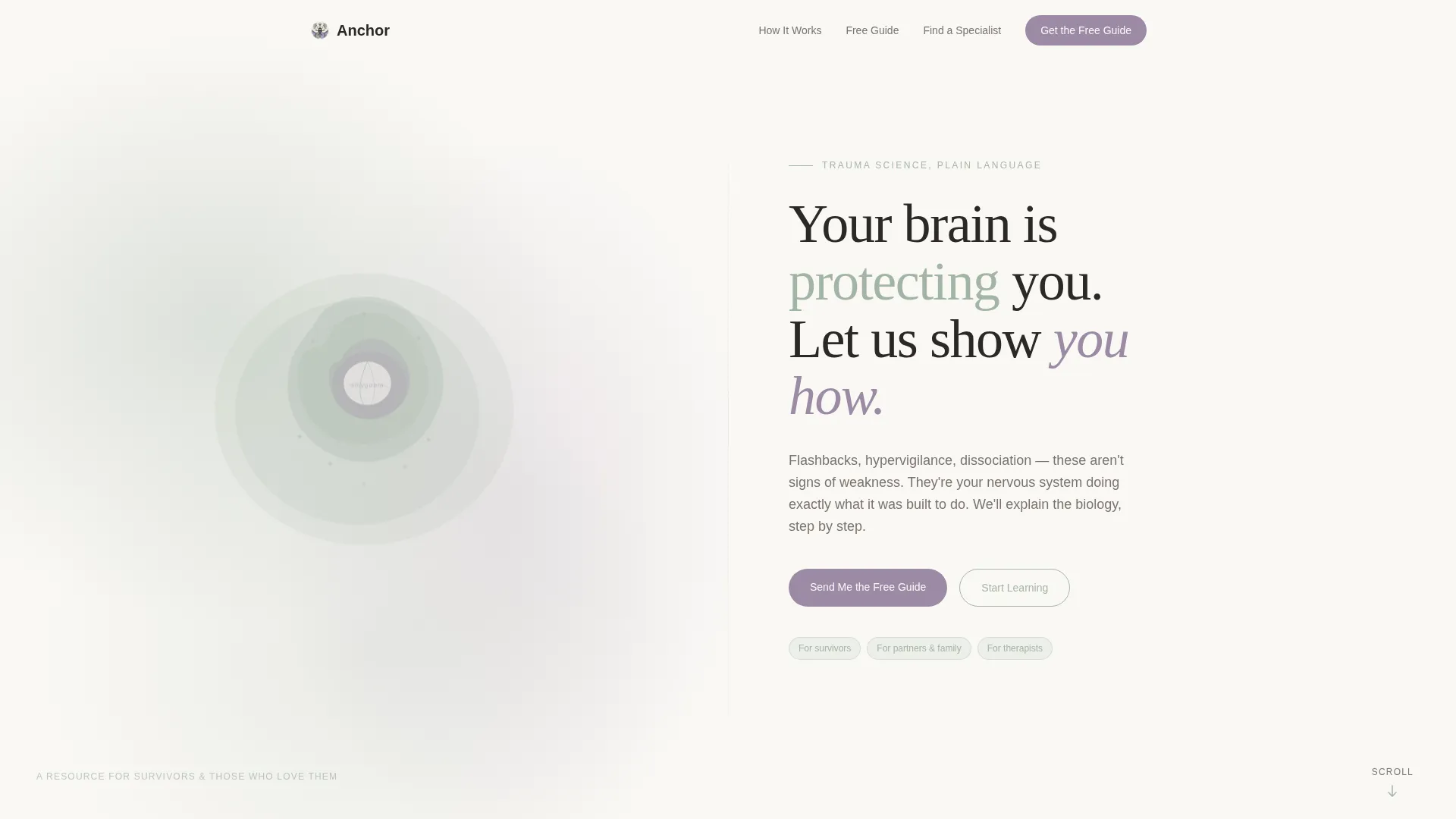
- A split-screen hero with a watercolor illustration panel and a serif headline, plus a trust badge row featuring recognized trauma organization credentials
- Three numbered educational scroll sections covering what happens in the body, why triggers feel random, and how recovery works
- A dual lead capture section with a free guide form and a zip code field connected to a therapist directory finder
Feature list
This landing page is built around five focused capabilities, each designed with the trauma-aware visitor in mind.
Split-Screen 50/50 Hero Layout
The hero divides the viewport into two equal halves. The left side holds a still, abstract watercolor wash in sage and mist tones. The right side displays a single generous serif headline. A row of trust badges from recognized trauma organizations sits above this composition, answering credibility questions before a single scroll happens.
Step-by-Step Scroll Education Flow
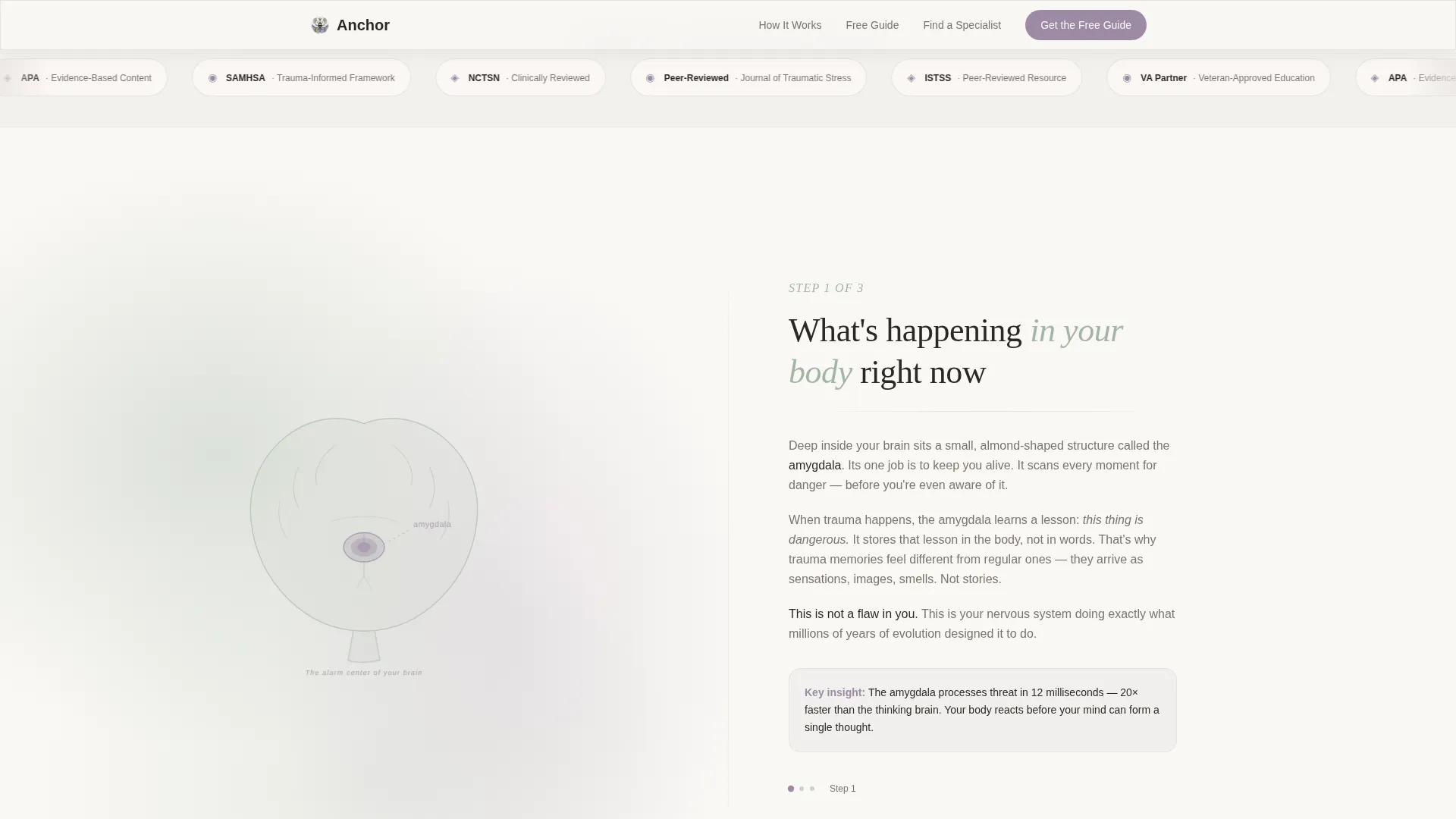
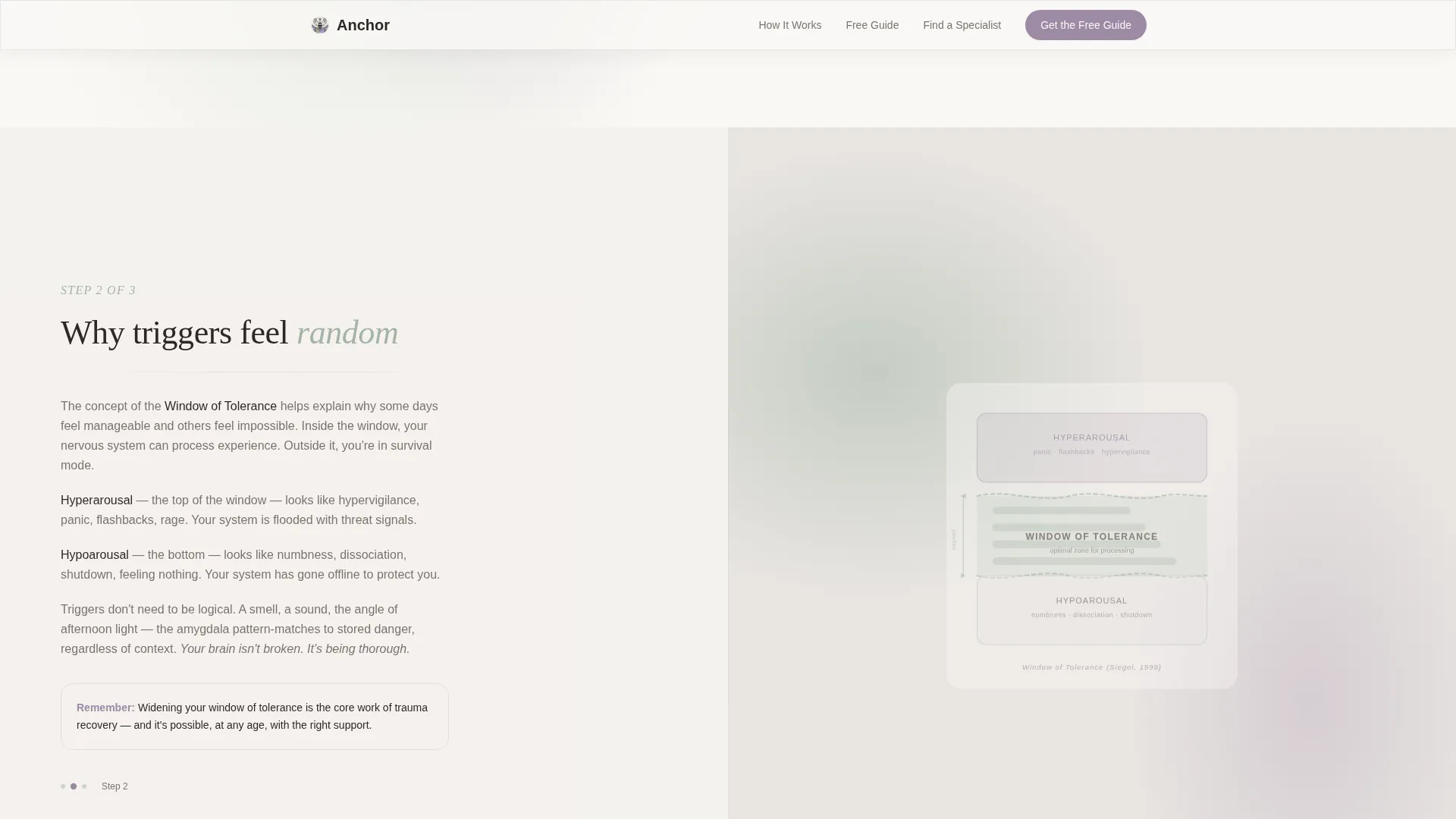
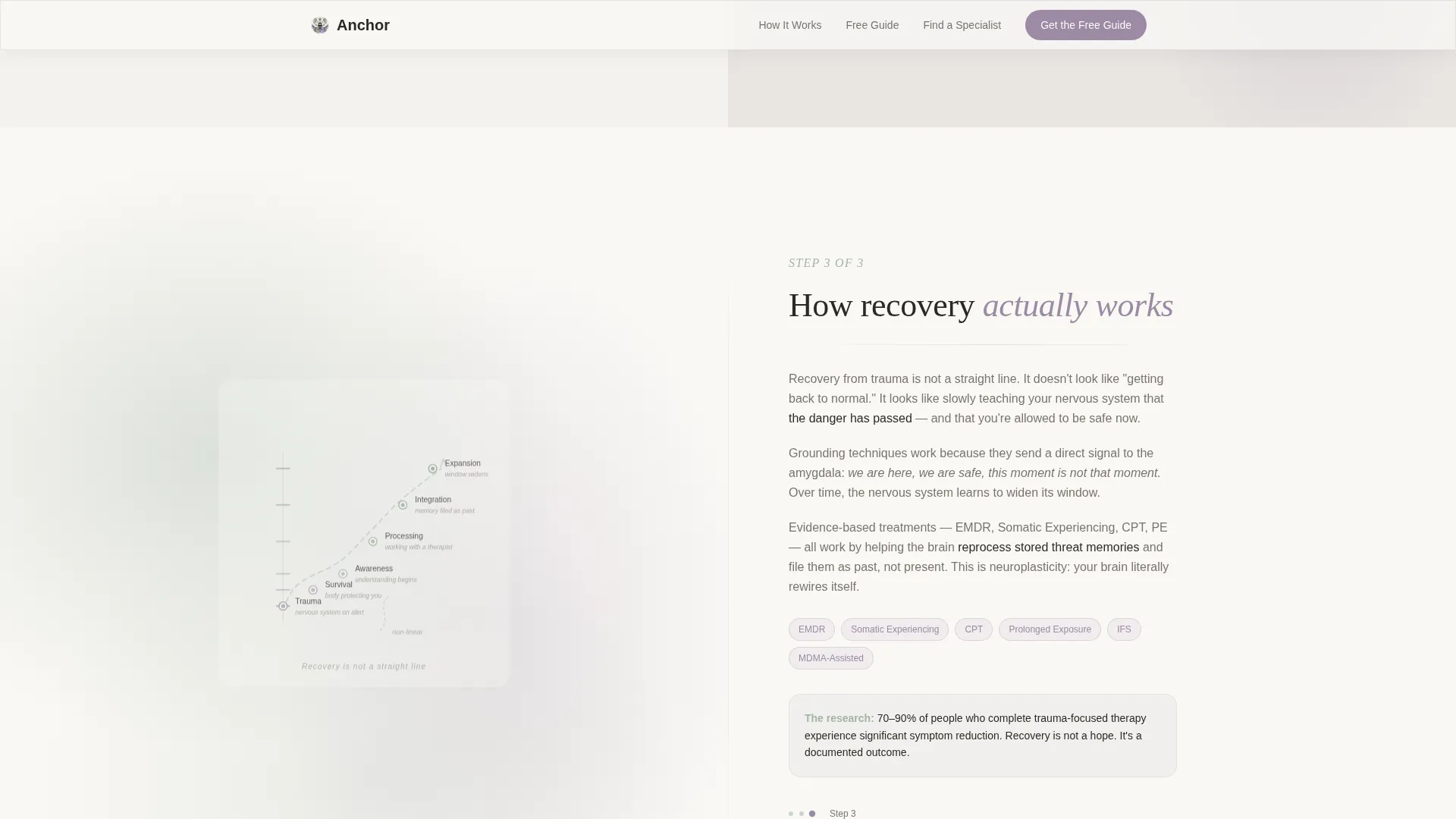
The page reveals three numbered learning stages as the visitor scrolls. Step 1 covers what is happening in the body, Step 2 explains why triggers feel random, and Step 3 describes how recovery actually works. Each stage pairs a simple hand-drawn illustration on the left with a short plain-language explanation on the right, written at an eighth-grade reading level with clinical accuracy.
Progressive Low-Pressure Lead Capture
The primary call to action reads "Send Me the Free Guide" and asks only for a first name and email address. The last name field is deliberately omitted to reduce vulnerability friction. By the time the form appears, the visitor has already received real education freely, so the guide feels like a continuation rather than a transaction.
Therapist Directory Finder
A secondary conversion path labeled "Find a Specialist Near Me" includes a zip code input field. This gives visitors who are ready to take action a direct route to professional support without forcing them through the primary lead form first.
Trust Badge Header Row
Credential badges from recognized trauma authorities sit at the very top of the page. These signals are not decorative; they are placed before the first scroll to answer the visitor's implicit question about whether the content can be trusted.
Soft Mist Visual and Typography System
The page uses Fraunces, a warm serif typeface, for display headings and DM Sans for body text. The color palette consists of fog gray, linen white, muted sage, and a single dried lavender accent reserved for interactive elements and progress indicators. White space between sections acts as a quiet breath, preventing cognitive overload.
Page sections overview
| Section | Purpose |
|---|---|
| Trust Badge Row | Establish credibility before scroll |
| Split-Screen Hero | Introduce core message and tone |
| Step 1: Body Response | Explain amygdala and nervous system |
| Step 2: Random Triggers | Clarify window of tolerance concept |
| Step 3: Recovery Path | Show grounding timeline and hope |
| Lead Capture Form | Collect first name and email |
| Therapist Finder | Connect visitor to local specialist |
| Footer | Provide navigation and closing context |
Design & branding system
The visual identity follows a Healing Space theme built to lower a visitor's shoulders the moment the page loads. Every design decision is intentional and grounded in emotional safety.
- Color palette: linen white (#FAF8F5), morning fog gray (#E8E4E1), muted sage (#A3B5A6), and dried lavender (#9B8AA4) used exclusively for interactive elements and progress indicators
- Typography: Fraunces serif for display headings creates warmth and quiet authority; DM Sans body text keeps reading effortless and accessible
- Illustration style: simple, hand-drawn anatomical and conceptual drawings (amygdala diagram, window of tolerance, grounding timeline) appear on the left panel of each educational step
Mobile & speed optimization
The template is built with a mobile-first approach because a significant share of the target audience visits on a phone, often late at night. The experience must feel as calm on a small screen as it does on a desktop.
- Gentle scroll-reveal animations are set to low-to-medium intensity so motion never startles a visitor who may already be in a heightened state
- Server Components handle static content sections, keeping JavaScript load minimal and the page responsive on slower mobile connections
- The split-screen layout adapts gracefully to single-column stacking on smaller viewports, preserving the reading rhythm of each educational step
How this template helps you convert
This template earns the conversion before the form appears. Visitors receive genuine value throughout the scroll, which makes the lead capture feel like a natural next step rather than a demand.
- The trust badge row resolves credibility skepticism immediately, so visitors read the educational content with confidence rather than doubt
- Each numbered scroll step delivers real neuroscience education freely, building trust and demonstrating the quality of the full guide before any information is requested
- The dual conversion path (free guide download and therapist finder) meets visitors wherever they are in their journey, whether they want to learn more or take immediate action
Other information about this template
This template is specifically designed for the PTSD patient education niche within the broader Health and Medical category. It serves a B2C and B2B hybrid audience, meaning it works for direct patient outreach and for clinicians who want a resource to share with clients.
- The page is localized for a United States audience and uses English-language content throughout
- The footer follows a horizontal layout pattern suited for a clean, minimal health-focused brand
- The educational content model is designed around a progressive disclosure approach, meaning information is revealed gently as the visitor scrolls rather than all at once
- The template can support organizations seeking to align with peer-reviewed trauma research standards or institution-backed trust signals
Theme
Healing Space
Creative direction
Step-by-Step Guide
Color system
Soft Mist
Style
Split Screen (50/50)
Direction
Lead Generation
Page Sections
Split-screen 50/50 Hero Layout
Step-by-step Scroll Education Flow
Progressive Low-pressure Lead Capture
Therapist Directory Finder
Trust Badge Header Row
Soft Mist Color and Typography System
Related questions
Who is this landing page template designed for?
Can I customize the step-by-step educational sections?
What makes the lead capture form trauma-informed?
Does the template include the therapist directory connection?
What typography and colors are built into this template?