Andean — Warm Latin Bistro Landing Page Template
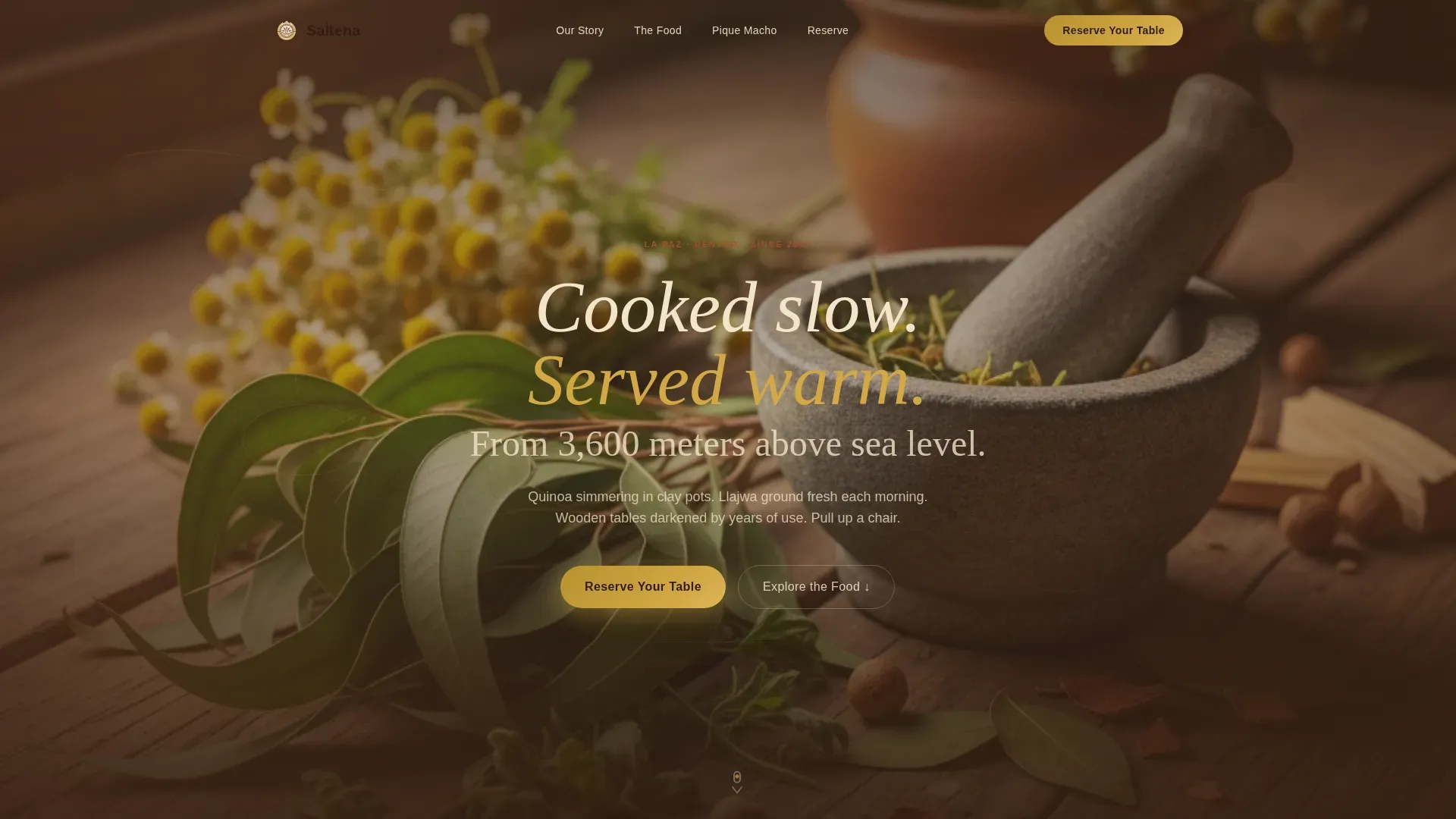
Saltena is a full-width immersive landing page template built for Bolivian restaurants. It combines sensory dish storytelling, a hand-illustrated hero, and a focused reservation form to turn hungry browsers into booked guests. The warm artisan design uses adobe clay, quinoa gold, and llajwa cream to place visitors inside a lamplit highland kitchen before they read a single word.
by Rocket studio
Quick summary
Saltena delivers a single-page, scroll-driven dining experience for Bolivian restaurants. Cooked-slow sensory narratives guide visitors from street snacks to feast plates, building real appetite before the reservation form appears. The template is ready to launch with a custom illustrated hero, dish story sections, and a mobile-pinned call to action.
Who this template is for
This template fits restaurants that lead with cultural identity and food storytelling rather than a standard menu grid. It is especially strong for kitchens where the dish itself is the reason people visit.
- Bolivian restaurant owners wanting a home for authentic highland cooking online
- Food-focused operators who need high-quality imagery of salteñas, silpancho, and pique macho to showcase their menu
- Restaurant owners who want to drive table reservations and saltena pickup orders from one focused page
What problem this template solves
Most restaurant pages list dishes without making visitors feel anything. Guests ready to eat need atmosphere and appetite, not a bullet-point menu.
- Visitors leave before booking because the page never earns their hunger
- Salteñas and regional Bolivian dishes are unfamiliar to new guests who need context to feel confident ordering
- Mobile users need a clear, fast path to reserve without digging through navigation
What you get with this template
The template includes every section needed to move a visitor from curiosity to confirmed reservation. A well-designed restaurant landing page like this can strengthen a restaurant's online presence immediately.
- Full-bleed custom illustrated hero with serif headline fade-in
- Sensory dish story sections covering salteñas, pique macho, and ambiance
- Reservation form with date, party size, and an optional occasion field, plus a secondary saltena pickup call to action
Feature list
This template is structured to showcase menu items effectively and build emotional trust through design and storytelling.
Illustrated Hero with Scroll Animation
A hand-drawn kitchen table panorama spans the full viewport. Rendered in textured ink and watercolor wash, it pulls visitors into the room before they scroll. The serif headline fades in over the illustration.
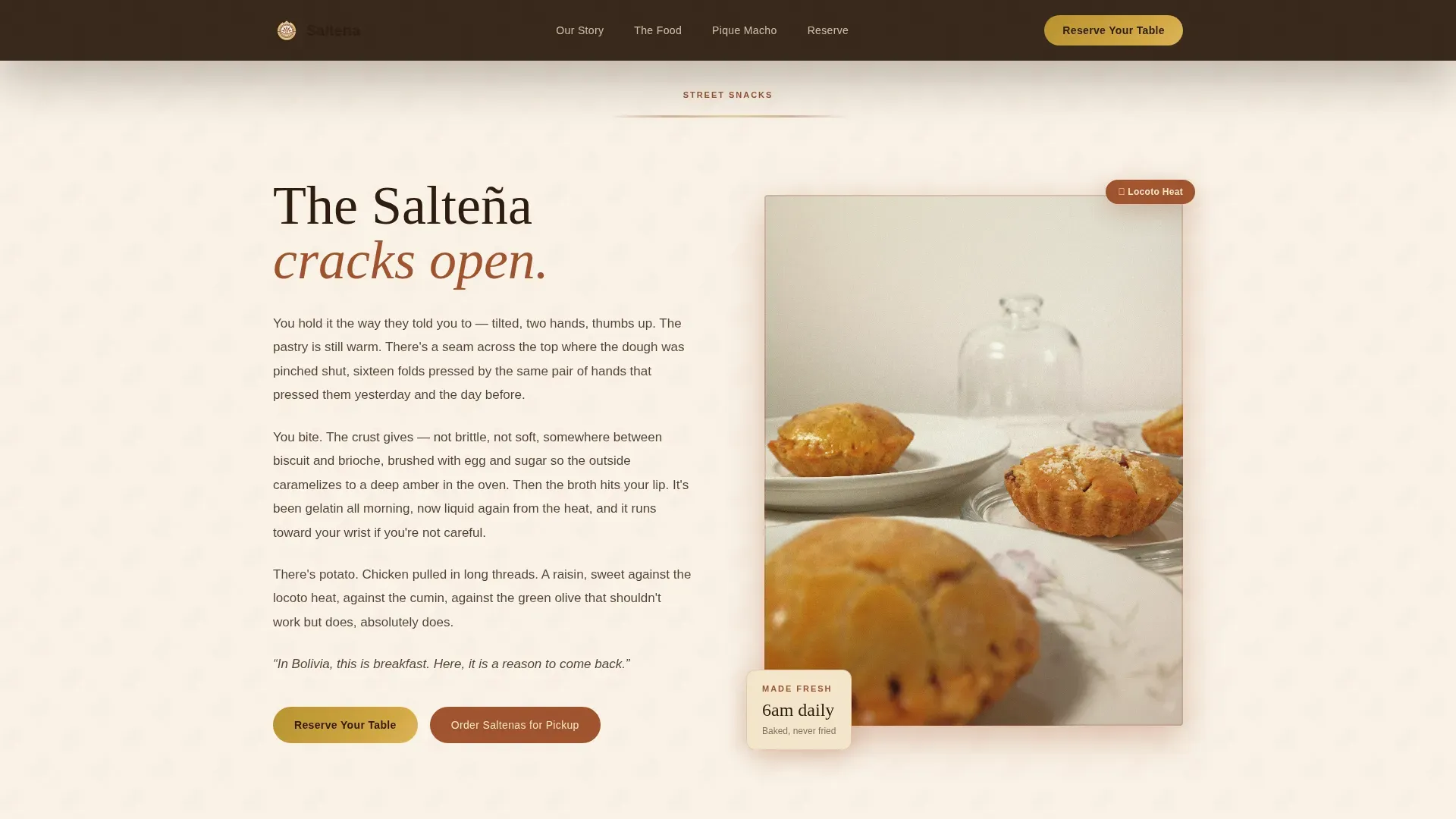
Sensory Salteña Story Section
Salteñas are unique among empanadas for their juicy filling, a savory stew cooked inside a golden crust. This section describes the pastry cracking, the broth spilling, and the raisin sweetness meeting the spice, making visitors want to eat before they read the price.
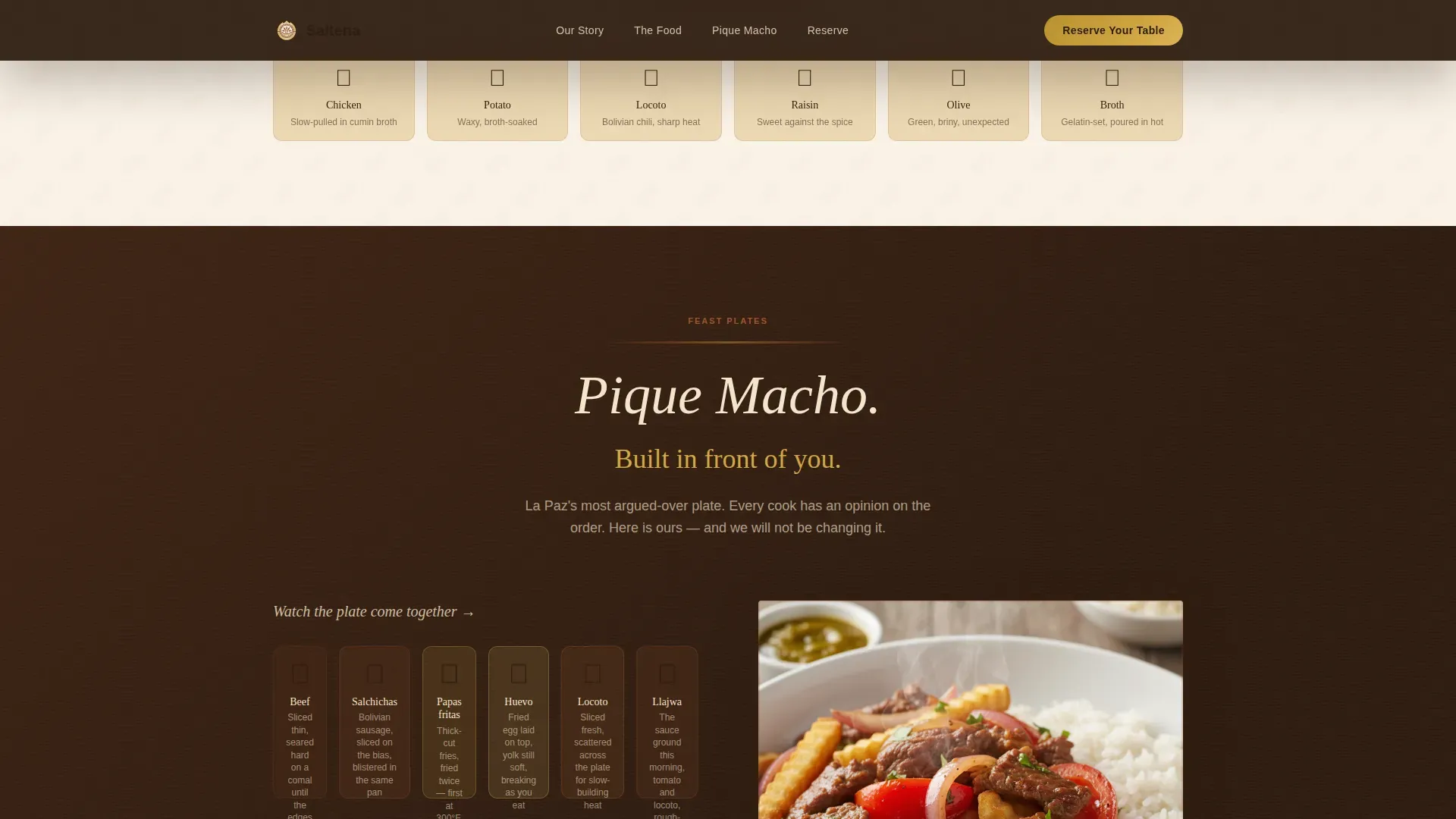
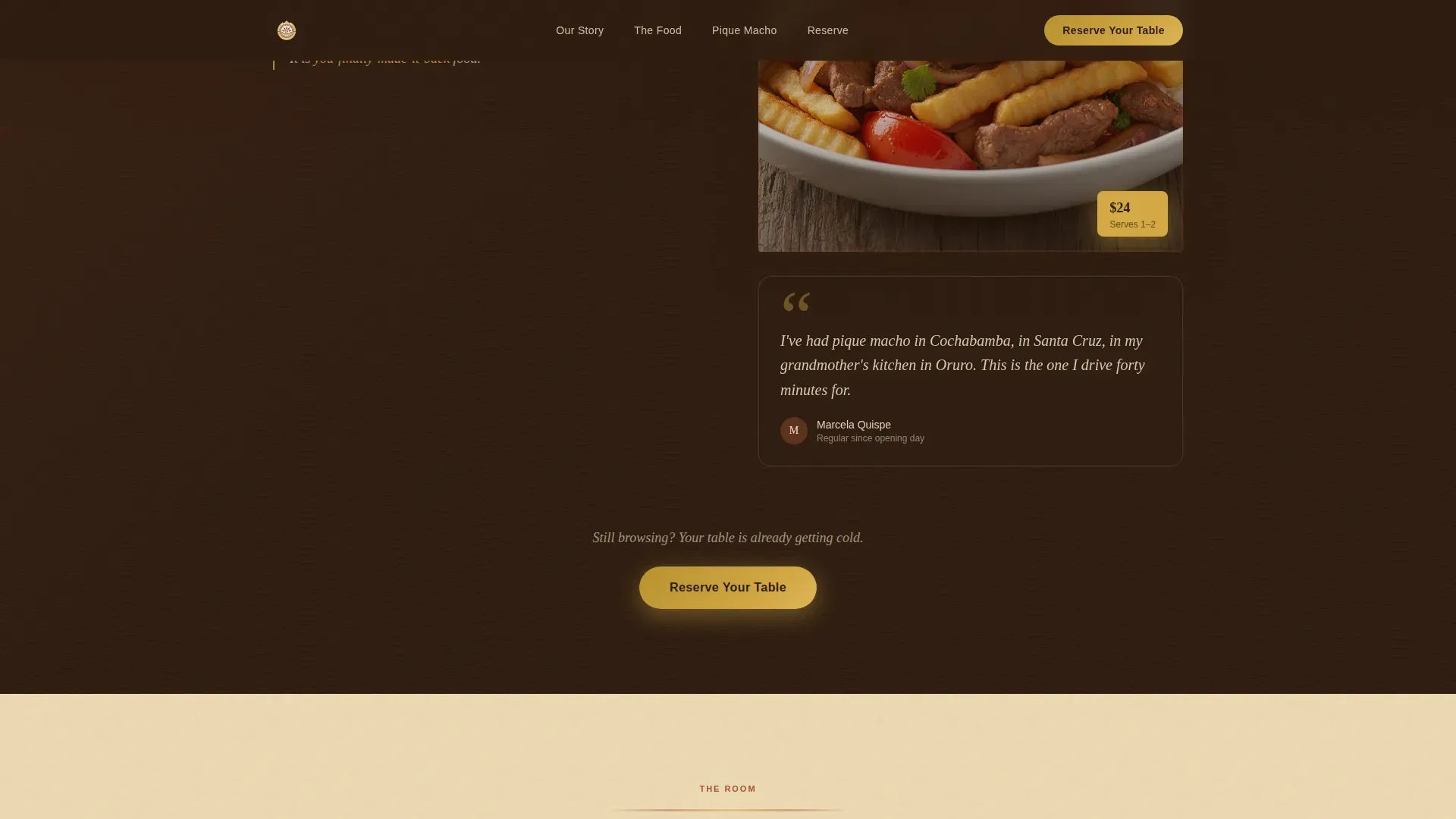
Pique Macho Ingredient Builder
Each component of the plate is revealed and named through illustrated visual cards. Potatoes, chicken, garlic, and cumin build the dish ingredient by ingredient, turning a menu item into a moment.
Reservation Form with Occasion Field
The primary call to action asks for date, party size, and one optional line: "Any occasion we should know about?" The form is pinned to the bottom of the viewport on mobile so it is always ready.
Warm Artisan Color and Typography System
Adobe clay, quinoa gold, charred timber, and llajwa cream work together as a visual system. Fraunces serif handles display text and DM Sans carries body copy, keeping every line readable at any size.
Page sections overview
| Section | Purpose |
|---|---|
| Illustrated Hero | Sets atmosphere, fades in headline |
| Salteña Story | Sensory narrative builds appetite |
| Pique Macho Builder | Visual ingredient reveal per dish |
| Ambiance and Origin | Room story, trust, cultural context |
| Reservation Form | Books table or schedules pickup |
| Footer | Hours, location, horizontal flow |
Design & branding system
The palette runs warm throughout, reflecting Bolivian heritage through appetite-triggering tones of clay and gold. Warm, inviting colors that reflect rustic themes anchor every section without feeling heavy.
- Adobe clay (#A0522D) for section dividers and hover states, quinoa gold (#D4A843) for buttons and prices, charred timber (#2C1A0E) for headers
- Llajwa cream (#F5E6CC) as the dominant background, holding body text in a soft, candlelit tone
- Fraunces serif for display headings, DM Sans for body copy, both sized for mobile-first readability
Mobile & speed optimization
Mobile-first design is essential for a restaurant landing page because most visitors browse and reserve on smartphones. This template is built with that priority in mind.
- Reservation call to action is pinned to the bottom of the viewport on mobile for one-tap access
- Images are lazy-loaded and CSS animations are GPU-accelerated to keep scroll smooth
- Server Components handle static sections so the page stays light and fast to reduce visitor drop-off
How this template helps you convert
To attract diners, a page must prioritize visual hunger. This template builds appetite through storytelling and then resolves it with a clear booking path.
- Scroll-linked dish reveals escalate from street snacks to feast plates, making visitors physically hungry before the form appears
- The reservation form is prominent and low-friction, with a secondary "Order Salteñas for Pickup" path for visitors not yet ready to dine in
- Archetype-based social proof and occasion-led testimonials serve as the trust layer that turns a warm visitor into a confirmed guest
Other information about this template
The Saltena warm artisan Bolivian restaurant landing page template is built around the culinary logic of salteñas themselves. To craft salteñas at home, one combines flour with butter or lard until the mixture resembles coarse crumbs, then adds water with achiote for color. The dough is rolled out on a floured surface, filled, and the edges are sealed before going into the oven to bake. A chicken filling uses cooked shredded chicken alongside potatoes, raisins, garlic, cumin, and a small amount of broth that gels before baking. You add shredded chicken to the mixture, let it rest, then place the filled dough on a tray, seal the edges, and bake until golden. To eat salteñas like a local, hold one upright and nibble off one corner to sip the broth inside, letting the air escape slowly so the juicy filling stays intact. Salteñas are best served warm alongside llajua. The menu should highlight chicken and beef varieties, along with clear location and hours information.
- Each region in Bolivia adds its own turn to the recipe, using different meats or vegetarian options, but salteñas remain quintessentially Bolivian
- Social proof such as guest reviews is a key component for a high-converting page; this template includes archetype-based quote fragments
- An email list can reward regular customers with specials; the template's footer is designed to support that secondary conversion path
Theme
Warm Artisan
Creative direction
Taste & Aroma
Color system
Warm Stone
Style
Full-Width Immersive
Direction
Booking/Scheduling
Page Sections
Illustrated Hero with Scroll Animation
Sensory Salteña Story Section
Pique Macho Ingredient Builder
Reservation Form with Occasion Field
Warm Artisan Color and Typography System
Related questions
Can I customize the dish story sections for my own menu?
Does the reservation form support different party sizes and occasions?
Is this template suitable for a restaurant that also offers pickup orders?
How does the template handle social proof?
Can I adapt this template for a restaurant outside Bolivia?