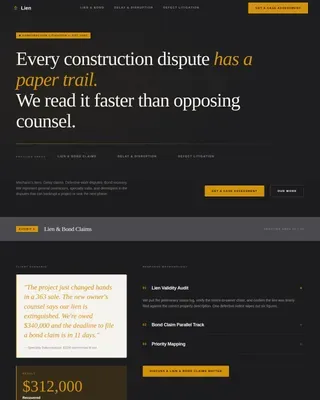
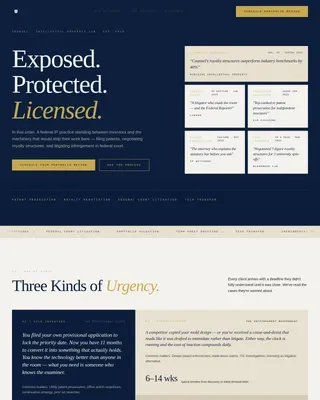
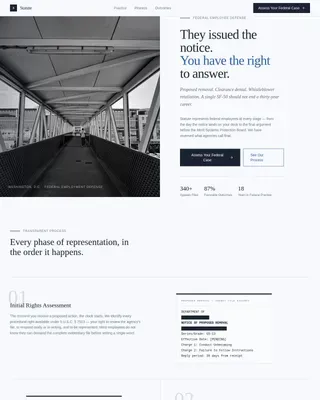
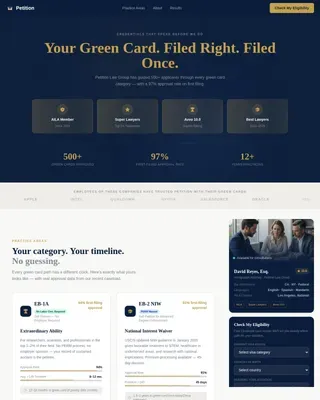
Immigration Law Specialist Booking Website Template
A sidebar companion landing page built for immigration appeals specialists. The template follows a Problem-to-Solution arc, opening with the weight of a refusal letter and walking visitors through grounds, tribunal process, and case outcomes. A fixed sidebar timeline and a single judicial-red call to action guide families and referring solicitors toward a case-review booking, no form, no friction, no fluff.
by Rocket studio
Quick summary
This is a single-page, click-through landing page for an immigration appeals law practice. It pairs a dominant main column with a fixed sidebar timeline, leading visitors from the shock of a refusal letter through the firm's method and case outcomes, then directing them to a case-assessment booking page. Every design and copy decision reinforces legal authority before asking for anything.
Who this template is for
This template is built for legal professionals who handle complex immigration appeals and need a page that communicates precision, urgency, and tribunal experience in one reading.
- Immigration appeals solicitors and barristers working on First-tier Tribunal (FTT) and Upper Tribunal cases
- Law practices serving families facing deportation orders, visa refusals, or asylum denials
- Solicitors who accept referrals from generalist firms and need to demonstrate specialist credentials quickly
What problem this template solves
When someone receives a refusal letter, they are not browsing casually. They are searching urgently, reading fast, and deciding within minutes whether a firm is worth trusting. A generic legal website does not answer the questions running through their mind.
- Visitors need to understand what a refusal means, what deadlines are already running, and what inaction costs
- Referring solicitors need proof of tribunal mastery, not a list of practice areas
- The page must earn trust before asking for a booking, not after
What you get with this template
The template delivers a structured, desktop-first reading experience that mirrors the discipline of a legal brief. Every section is purposeful, every visual element is restrained, and the single call to action appears only after the page has made its case.
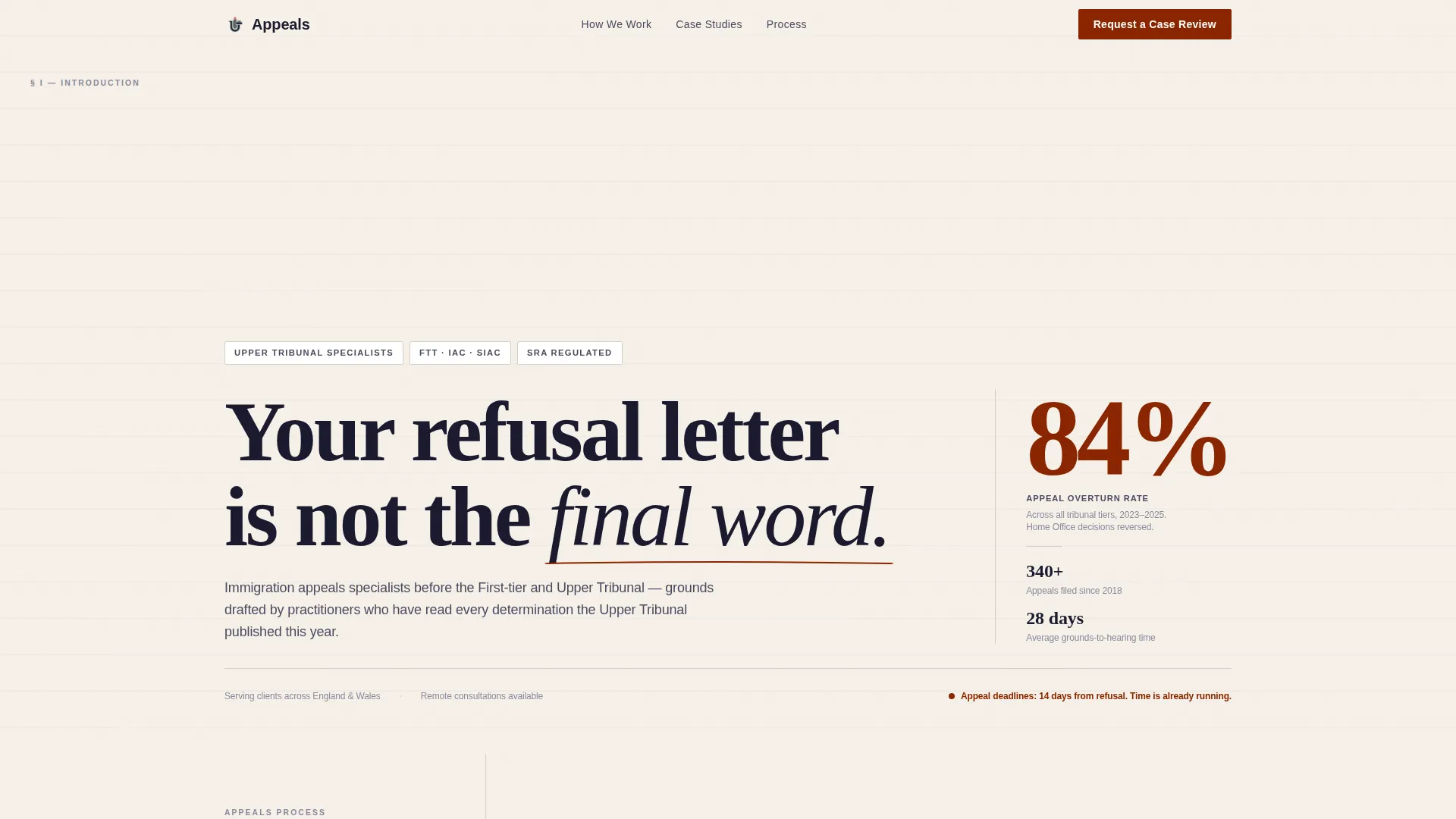
- A 70/30 hero split with a giant serif headline on the left and the firm's overturn rate in judicial red on the right
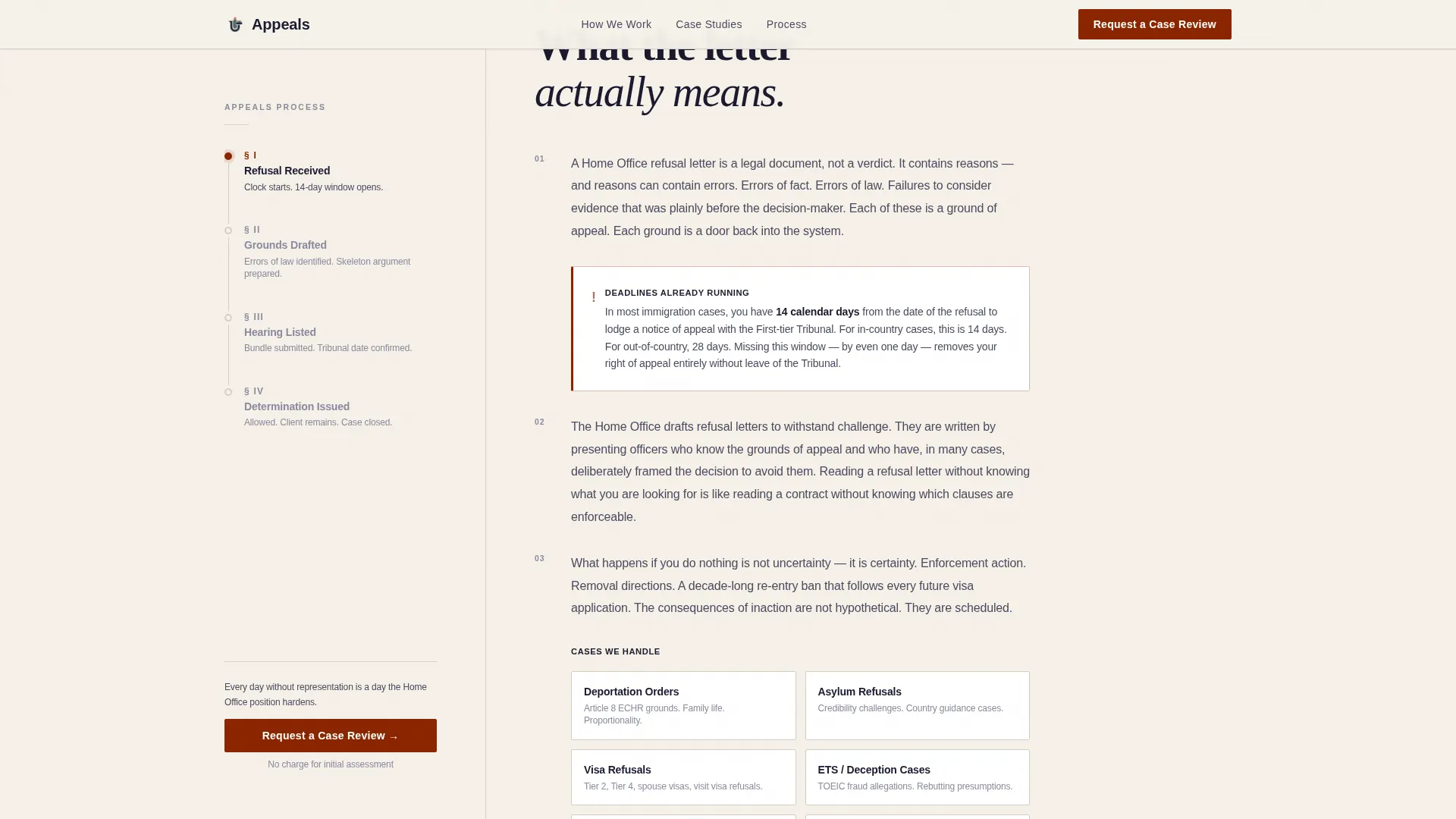
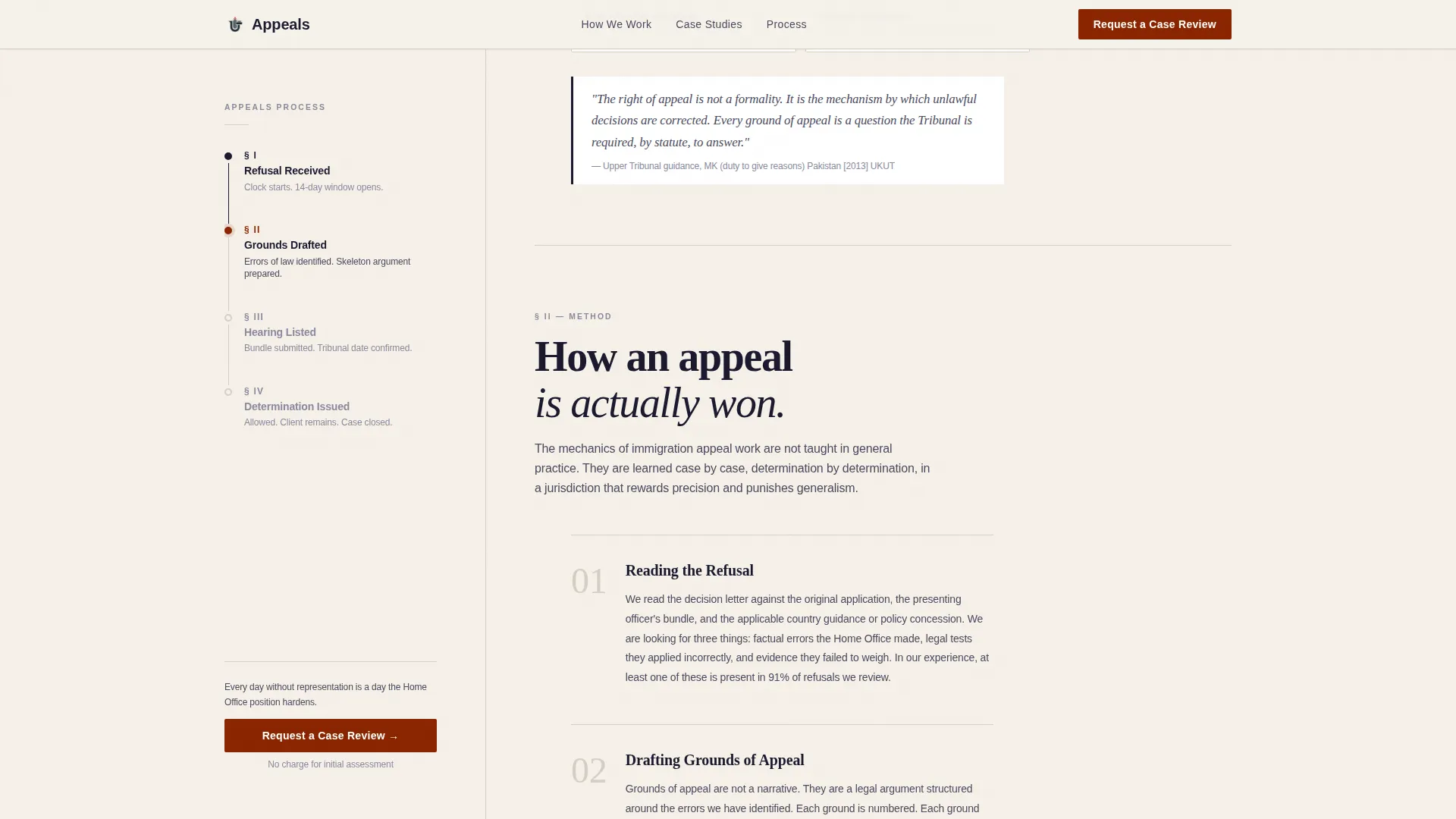
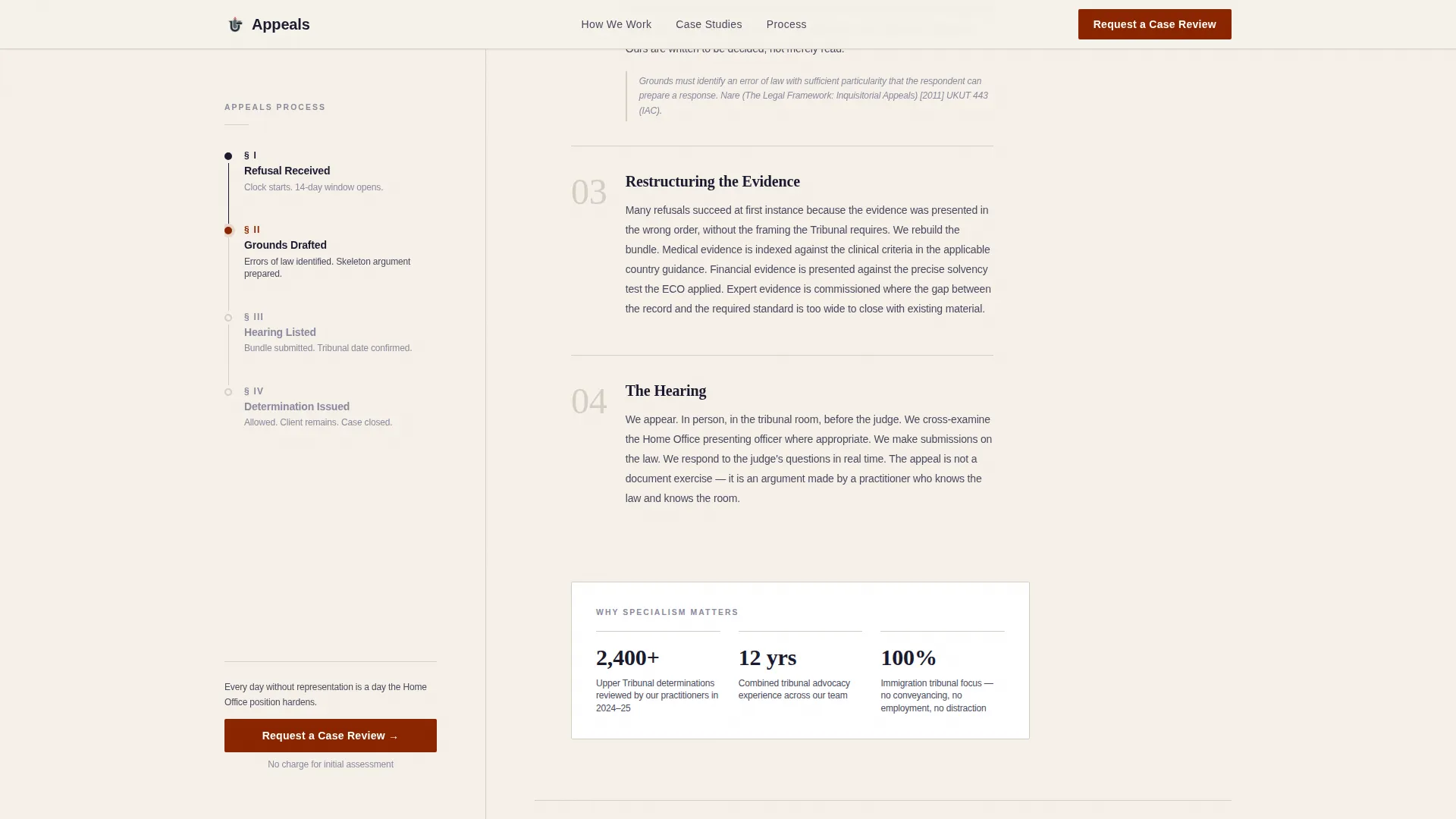
- A fixed sidebar displaying a vertical appeals timeline that activates as the visitor scrolls through each stage
- Five main content sections covering the problem, the method, redacted case summaries, and a transparent process overview
Feature list
This section describes the core built-in components and structural capabilities delivered by the template.
Fixed Sidebar Timeline
A persistent vertical timeline sits alongside the main column showing four stages: refusal received, grounds drafted, hearing listed, and determination issued. It activates progressively as the visitor scrolls, keeping the appeals process visible at all times without interrupting the reading flow.
Giant Headline Hero with Split Layout
The hero uses a 70/30 viewport split. The left side carries a large serif headline in deep ink on archival cream. The right side holds the firm's overturn rate in judicial red, large enough to read across the room. There is no image or illustration, keeping the tone precise and print-like.
Redacted Case Summary Blocks
Social proof is presented as redacted case summaries rather than pull quotes. Each summary describes a tribunal outcome without identifying the client. This format matches the discretion expected in immigration law while still demonstrating real results.
Scroll-Linked call to action Escalation
The primary call to action, "Request a Case Review," appears first in the sidebar after the visitor scrolls past the problem section. It then reappears as a full-width bar after the final case summary. The click leads to a short intake page, not a form on this page.
Problem-to-Solution Section Arc
The main column is structured in a deliberate narrative arc. It opens with the raw consequences of a refusal, then moves into the firm's method for constructing grounds of appeal, then into case outcomes. Each section escalates demonstrated competence without becoming promotional.
Transparent Process and Fee Section
A dedicated section outlines the firm's process and fee structure before the final call to action. Visitors understand what happens after they click before they click. This reduces hesitation and builds trust at the point of decision.
Page sections overview
| Section | Purpose |
|---|---|
| Hero headline split | Establishes authority and overturn rate at first glance |
| Problem statement | Explains what a refusal means and what deadlines are running |
| Method and grounds | Describes how appeals are constructed and what tribunals expect |
| Redacted case summaries | Shows three real tribunal outcomes in a discreet format |
| Process and fees | Sets transparent expectations before the booking click |
| Full-width call to action bar | Final prompt to request a case review after the last case study |
Design & branding system
The visual identity follows a Corporate Precision theme built around an Ink and Paper color palette. The design feels like a barrister's desk late at night: cream dominates the reading surface, deep ink anchors all body text, and a single accent color carries the weight of urgency.
- Colors: archival cream (#F5F0E8) as the dominant background, deep ink (#1A1A2E) for body text, ruled-line gray (#D4CFC4) for dividers and sidebar borders, and judicial red (#8B2500) used only for urgent callouts and the primary call to action
- Typography: Fraunces serif for all headlines to give the page a printed-brief quality, paired with DM Sans for body text to keep reading comfortable at length
- Tone: restrained, authoritative, and print-disciplined, no decorative imagery, no gradients, no visual noise
Mobile & speed optimization
The template is built desktop-first to honor the legal brief reading experience, with a considered mobile fallback for visitors who open a refusal letter on their phone.
- The fixed sidebar collapses gracefully on smaller screens so the timeline and call to action remain accessible without obscuring the main content
- Scroll-linked animations use low-to-medium complexity, with staggered paragraph reveals and sidebar timeline activation handled through minimal JavaScript to avoid layout interference
- Static sections use server components to keep the page light and fast on first load
How this template helps you convert
Every structural and design decision in this template is aimed at a single outcome: moving a distressed or time-pressed visitor from reading to booking.
- The hero establishes credibility in under three seconds by pairing a precise headline with a concrete overturn rate, removing any doubt about the firm's specialism before the visitor reads a single line of body copy.
- The Problem-to-Solution arc mirrors the visitor's own mental state, starting with their crisis and ending with a clear path forward, so the call to action feels like a logical next step rather than a sales prompt.
- The delayed and repeated call to action placement means the page earns the click through demonstrated mastery first, reducing the friction that causes distressed visitors to close the tab before acting.
Other information about this template
This template is designed specifically for UK immigration law practice pages operating within the First-tier Tribunal and Upper Tribunal system. It reflects UK terminology, GBP fee framing, and Home Office refusal letter conventions throughout.
- The footer uses a horizontal flow pattern suited to professional service firms
- The intake page linked from the call to action is designed to ask only three questions: visa type, refusal date, and whether a deadline is imminent
- The template is suitable for solo barristers, boutique appeals chambers, and specialist immigration solicitor firms alike
- Animation is kept at low-to-medium intensity so the page reads as measured and authoritative rather than animated or sales-driven
Theme
Corporate Precision
Creative direction
Problem→Solution Arc
Color system
Ink & Paper
Style
Sidebar Companion
Direction
Click-Through
Page Sections
Fixed Sidebar Appeals Timeline
70/30 Hero Split Layout
Redacted Case Summary Format
Scroll-linked Call to Action Escalation
Problem-to-solution Narrative Arc
Transparent Process and Fee Block
Related questions
Who is this landing page template designed for?
Does this template include a contact form?
Can I update the overturn rate and case summaries with my own details?
What makes this different from a standard law firm page template?
Is the template suitable for mobile visitors?