Oak-Fired Argentinian Food Truck Landing Page Template
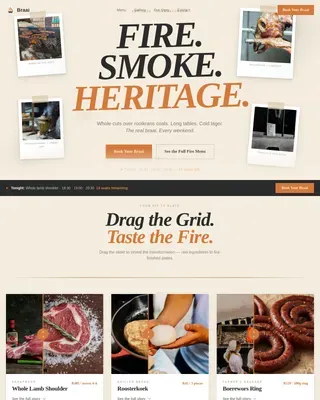
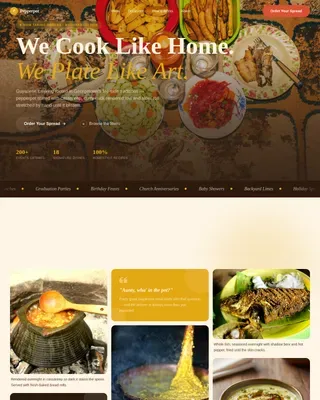
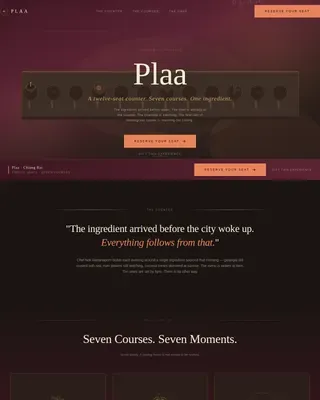
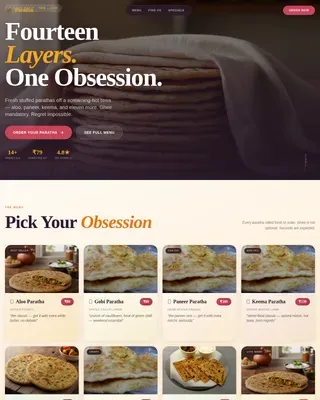
Asado is a Luxe Minimal gallery landing page built for an oak-fired Argentinian food truck. It pairs a UGC masonry photo wall with a dish-by-dish Gallery Walk scroll, then funnels visitors toward two clear paths: booking the truck for an event or finding the weekly schedule. The warm stone palette and editorial typography make the food look as good as it tastes.
by Rocket studio
Quick summary
Asado is a single-page gallery landing page template designed for a mobile parilla food truck rooted in open fire cooking and Argentinian barbecue tradition. The template uses a Luxe Minimal visual style, a warm stone color palette, and a slow, immersive scroll structure to let the food photograph itself before any call to action appears. Every design decision serves one goal: make the visitor hungry before they ever see a button.
Who this template is for
This template speaks directly to food truck operators who take their craft seriously. If your grill runs on oak and your menu leads with live fire cooking, this design was built for your brand. The template supports a dual conversion path, which means it works equally well for event bookings and walk-up regulars.
- Craft beer taproom owners and brewery venue managers looking for a weekend food anchor
- Event planners building festival vendor rows or private catering lineups
- Office managers who want to bring a coal-fired, street-level restaurant experience to a parking lot at noon
What problem this template solves
Most food truck pages look like a rushed flyer. They list a menu, drop a phone number, and call it done. That approach does not communicate the heat, the smoke, or the tradition behind a real asado. It does not help an event planner trust that your grill will be the center of attention, and it does not give a walk-up regular a reason to track you down on a Tuesday.
This template solves that gap by leading with atmosphere before function. The food earns the click. The page communicates the sensory experience of fire cooking before it ever asks for commitment.
- Event bookers get a structured slide-in booking form with date, headcount, and venue type fields
- Regular customers get a minimal schedule strip showing three upcoming locations with map pins and times
- Both audiences experience a full dish gallery scroll before they ever reach a call-to-action button
What you get with this template
You get a fully structured, single-page layout built around editorial food photography and two parallel conversion goals. Every section has a clear role. Nothing is decorative without purpose. The template is organized so that the scroll itself does the persuading.
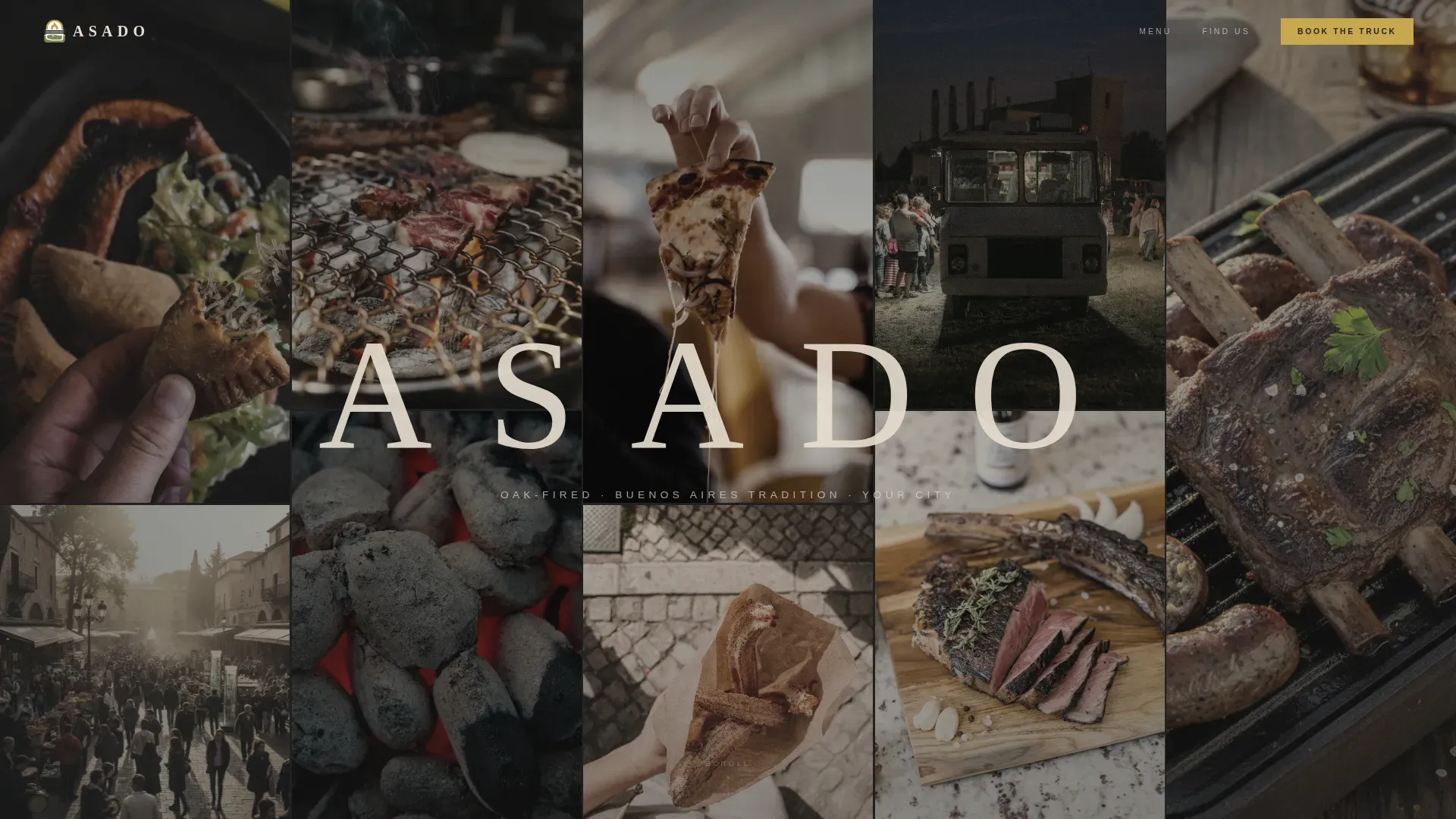
- A UGC masonry photo wall header with parallax scroll, edge-to-edge viewport fill, and a wide-letterspaced ASADO wordmark centered across the grid
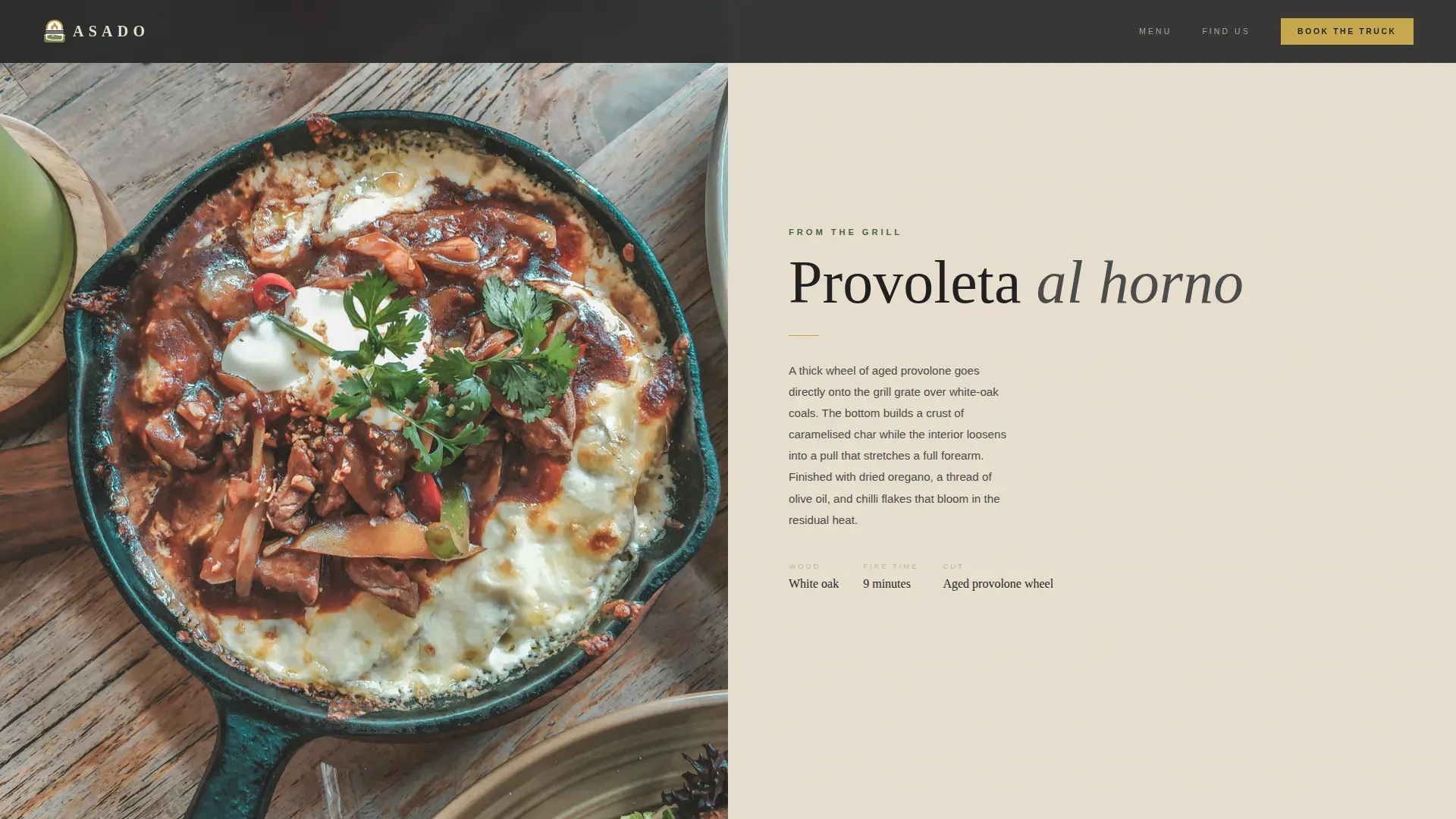
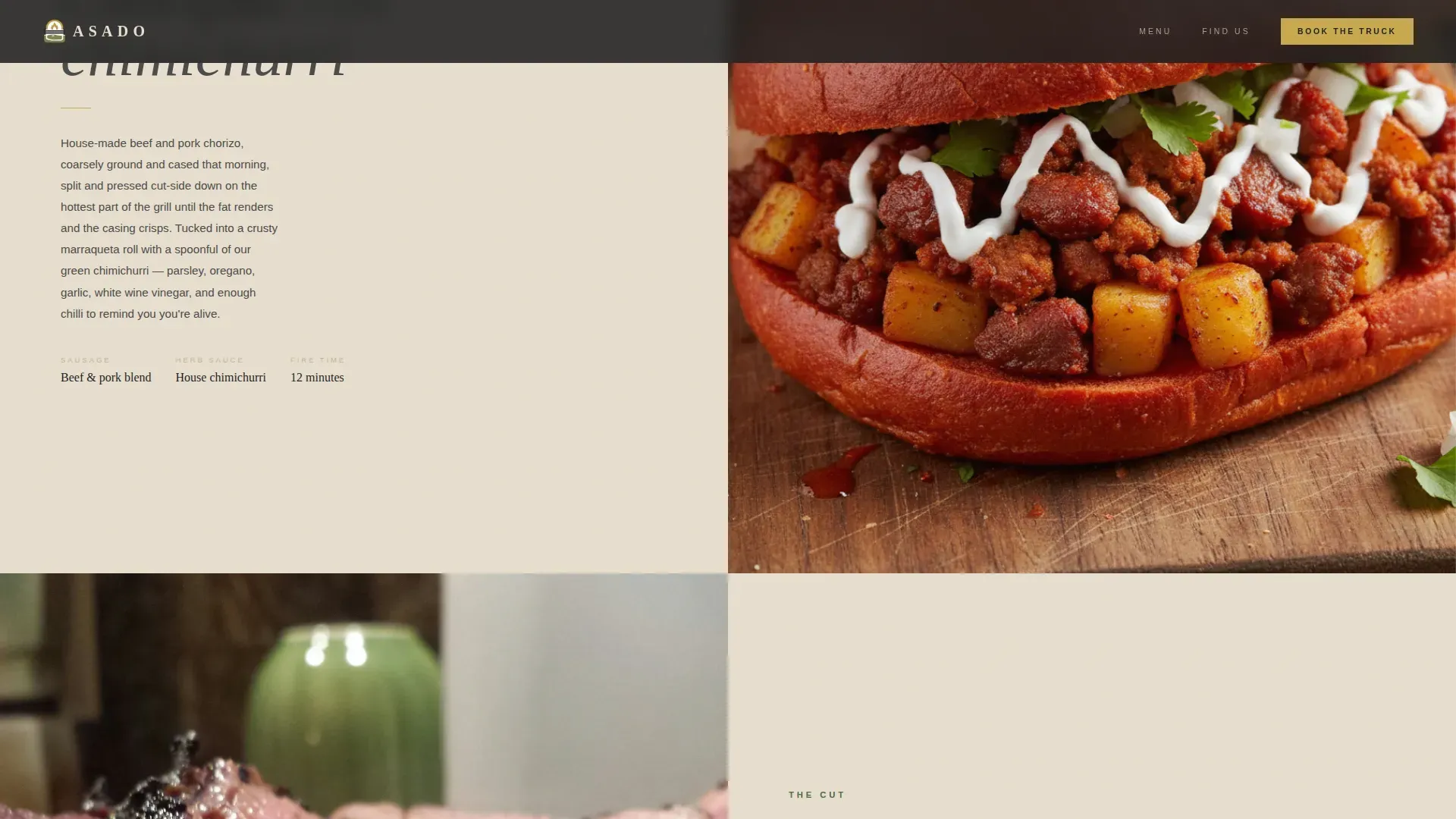
- A dish-by-dish Gallery Walk section isolating provoleta, choripán, entraña, and alfajores in one-dish-per-viewport panels with atmospheric break shots between them
- A location schedule strip labeled "Find Us This Week" showing three upcoming stops with map pins
- A slide-in booking form section labeled "Book the Truck" with fields for event date, estimated headcount, and venue type
- A single-row linear footer
Feature list
This section details the core built-in features of the Asado template. Each feature is grounded in the template's design direction and functional scope.
UGC Masonry Photo Wall Header
The header fills the full viewport with a masonry grid of real customer photography. Images are slightly desaturated and color-graded to match the warm stone palette, keeping the visual tone consistent without erasing the rawness. Hands tearing open empanadas, cheese pulling off provoleta, a silhouetted crowd at the truck window: these are the images that open the page. The ASADO wordmark sits centered in large, thin-weight serif type letterspaced wide enough to touch four photos at once. Subtle parallax activates on scroll, giving the grid a sense of depth and motion without distracting from the food.
An appetizing hero section like this communicates the oak-fired specialty of the truck the moment the page loads. It immediately conveys the sensory experience of live fire cooking and open fire barbecue without a single word of marketing copy. That is the standard an effective landing page for an asado food truck must meet.
Dish-by-Dish Gallery Walk
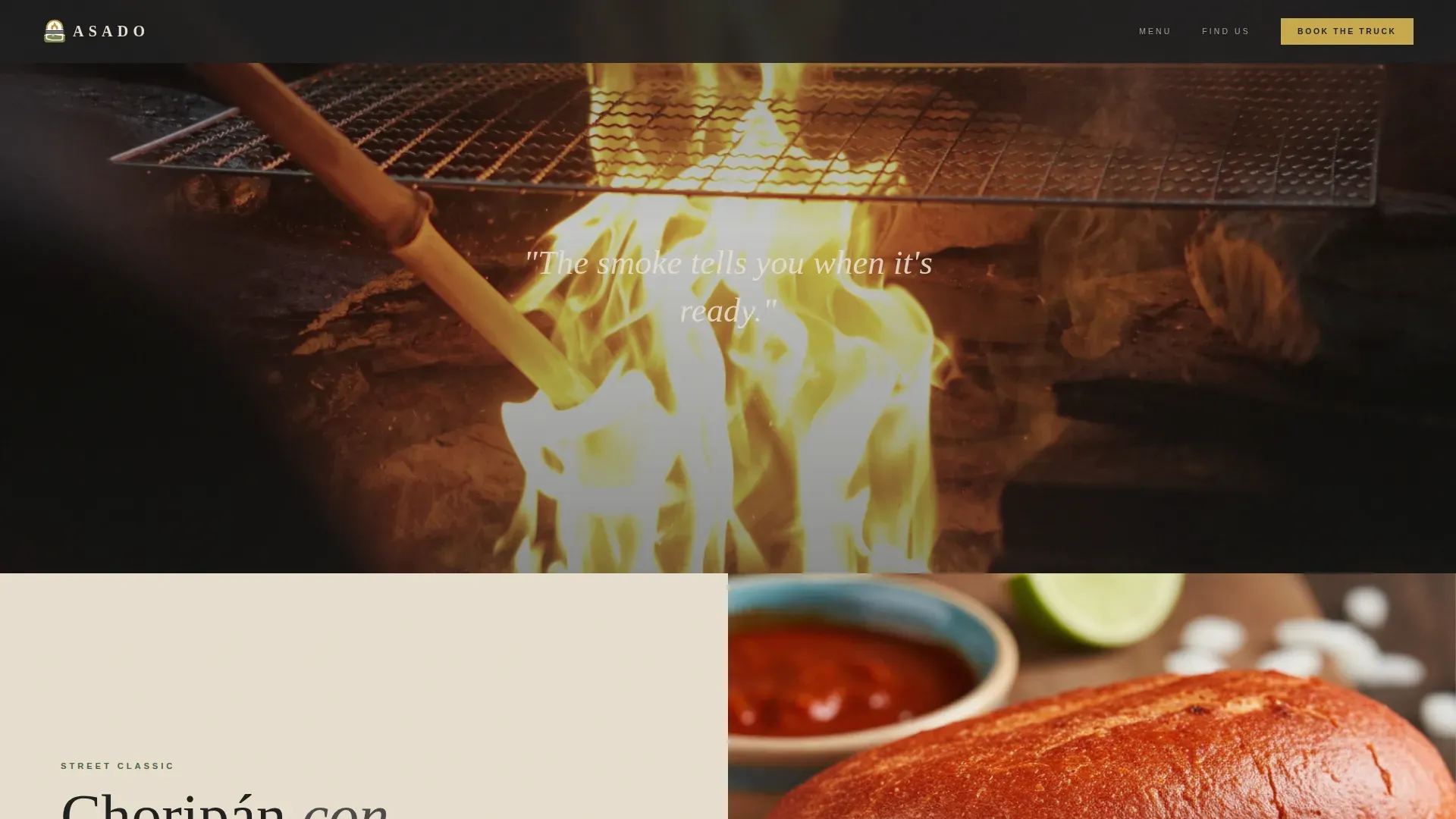
The Gallery Walk turns the scroll into a curated tasting menu. Each viewport isolates one dish: a single full-bleed hero image on one side and a tight descriptive paragraph on the other. The paragraph names the cut, the wood, the fire time, and the technique. Provoleta. Choripán. Entraña. Alfajores. Between dishes, full-bleed atmospheric shots interrupt the rhythm: hands working the grill grate, embers glowing close-up, a truck window framing a crowd at golden hour. The pacing is deliberate and slow, one dish per screen, so by the time the visitor reaches the booking section they have already tasted every item mentally.
Dual Conversion Path Layout
The template supports two simultaneous conversion goals without one undermining the other. Event bookers follow a primary path to the "Book the Truck" slide-in panel, which collects event date, estimated headcount via dropdown (50, 100, or 200 plus guests), and venue type (brewery, office, festival, or private). Walk-up regulars follow a secondary path to the "Find Us This Week" schedule strip, which lists three upcoming locations with map pins and times. Both paths appear only after the full Gallery Walk has scrolled past, which means every visitor arrives at the call to action already engaged.
Warm Stone Color System and Editorial Typography
The visual identity uses four colors drawn from the world of the parilla: sun-bleached limestone (#E8DFD0) as the background, carbon char (#1E1E1E) for text, chimichurri verde (#4A6741) for structural accents, and rendered beef-fat gold (#C9A84C) reserved strictly for buttons and hover states. The palette feels like a linen napkin laid on a blackened iron grate: restrained and elegant until the heat underneath asserts itself. Typography pairs Fraunces serif headlines with DM Sans body and interface text for an editorial, restaurant-quality finish.
High-Animation Scroll Interactions
The template includes a defined animation layer: parallax scroll on the photo wall, staggered dish reveals triggered by scroll position, scroll-linked opacity transitions between sections, and a slide-in panel for the booking form. Intersection Observer drives the reveal behavior, so components animate in only when they enter the viewport. Hover states activate on gallery images and on the beef-fat gold call-to-action buttons, reinforcing the premium feel without adding visual clutter.
Mobile-First Responsive Layout
The template is built mobile-first, which is the correct priority for a food truck audience. The majority of visitors will arrive from a phone while standing near the truck or searching for it between stops. The masonry photo wall reflows gracefully on smaller screens. The Gallery Walk maintains its one-dish-per-viewport rhythm on mobile. The schedule strip and booking form remain fully accessible without zooming or horizontal scrolling.
Page sections overview
| Section | Purpose |
|---|---|
| UGC Photo Wall | Full-viewport masonry hero with parallax and ASADO wordmark |
| Gallery Walk | One dish per viewport: provoleta, choripán, entraña, alfajores |
| Atmospheric Breaks | Full-bleed fire and crowd shots between dish panels |
| Schedule Strip | Three upcoming locations with map pins and times |
| Booking Section | Slide-in form for event date, headcount, and venue type |
| Footer | Linear single-row footer with contact and social links |
Design & branding system
The Asado template follows a Luxe Minimal editorial style. The goal is to look like a high-end restaurant's print collateral, except it moves. Every color choice and typographic decision reinforces the warmth and restraint of open fire cooking tradition.
- Color system: limestone (#E8DFD0) background, carbon char (#1E1E1E) text, chimichurri verde (#4A6741) structural accents, beef-fat gold (#C9A84C) for buttons and hover states only
- Typography: Fraunces serif for all headlines and wordmarks, DM Sans for body paragraphs and user interface elements
- Photography treatment: all UGC images are slightly desaturated and graded to the warm stone palette so no single photo breaks the visual tone of the page
Mobile & speed optimization
Food truck audiences are on their phones. A visitor searching for the truck's location between sets at a summer festival does not wait for a slow page to load. Visitors expect near-instant load times, especially for media-heavy gallery pages where mobile dominance is absolute. The Asado template is structured with this reality in mind from the ground up.
- Image lazy loading is built into the template, so the photo wall and Gallery Walk images load progressively as the visitor scrolls rather than all at once on page entry
- CSS scroll-behavior and Intersection Observer handle all reveal animations natively, keeping the animation layer lightweight and smooth on mobile hardware
- The layout reflows cleanly across viewport sizes without requiring additional breakpoint overrides, so the mobile experience matches the desktop gallery quality
How this template helps you convert
The template earns conversions by sequencing the visitor experience carefully. The food comes first. The ask comes last. That order matters because a visitor who has scrolled through a full dish gallery is a visitor who is already persuaded. The conversion architecture supports both event bookers and walk-up regulars simultaneously without splitting the page or confusing the message.
- The Gallery Walk builds desire before any call to action appears, so the "Book the Truck" and "Find Us This Week" buttons arrive at the right psychological moment
- The dual conversion path separates event bookers from walk-up regulars cleanly, giving each audience exactly the next step they need without distraction
Other information about this template
The Asado template draws its sensory identity from the deep traditions of Argentinian live fire cooking. Understanding that context helps any operator use the template to its full potential, because the design language and editorial copy structure were shaped by the same rituals that happen around the grill every time the fire is lit.
Traditional asado cooking is built on patience and fire management. The chef does not rush the grill. Embers are prepared separately and shoveled beneath a steel grill or iron grate, so the meat cooks over consistent, radiant heat rather than direct flame. This prevents the flare ups that char food unevenly and destroy the smoky flavor a properly managed fire creates. The grill grate is positioned at height, and the chef adjusts it throughout the cook to control the heat rather than moving the meat. That philosophy of control and restraint is exactly what the Luxe Minimal design system reflects: everything in its place, nothing excessive.
The asado tradition covers a wide range of proteins and dishes. Beef ribs, skirt steak, and entraña are staples. Chorizo and blood sausage are served early as the fire establishes itself. Pork ribs, chicken, and offal cuts follow depending on the menu. Alongside the meat, roasted potatoes, grilled onions, and chimichurri sauce are standard. The sauce is applied at the table, never on the grill, because the chef knows that the fire should season the food, not the other way around. Some asado spreads include roasted vegetables, beans, and salad. A proper meal finishes with alfajores or another dessert, followed by coffee.
The grill itself is central to every decision. Not all grills are created equal. A steel grill is more affordable than a stainless steel grill and performs well with proper care, but it must be painted or seasoned to resist rust. A stainless steel grill requires less maintenance and lasts longer because stainless steel is naturally corrosion-resistant due to its chromium content. For high-use mobile operations, 304 grade stainless steel is the practical standard. The grill grate design matters too. A v grate channels dripping fat into a drip pan rather than letting it fall onto the embers, which helps prevent flare ups and keeps the fire clean. Modern gaucho grills often incorporate this v grate geometry alongside a horizontal grate mounted on four legs, making them easy to transport for outdoor cooking and ideal for a mobile parilla setup.
Santa maria grills represent a different tradition with roots in the Santa Maria valley of California's central coast, where red oak wood fires and a height-adjustable grill grate became the regional standard for wood fired cooking. Santa maria grills are known for their ability to retain heat evenly across a wide cooking surface and for the way red oak smoke layers flavor into steaks and other fatty cuts. The adjustable grate is the defining feature: it allows the chef to raise or lower the cooking surface over hot coals without moving the meat, which is the same principle used in traditional Argentine asado. If you are building out a wood burning setup that draws from both traditions, santa maria grills offer custom sizes to fit different truck configurations or outdoor cooking rigs.
Both traditions share the same truth about fire cooking: high heat is managed, not applied blindly. Open fire cooking over split logs, wood chips, or charcoal each produces a different result. Charcoal provides consistent high temperatures with less active management. A charcoal grill is a practical starting point for grilling outdoors, especially for operators new to live fire work. Wood chips added to a charcoal grill introduce smoky flavor and complexity without requiring a full wood burning setup. Earthen pits represent the oldest form of open fire cooking, where the heat source is buried and the food cooks from all sides simultaneously. Each method has its place depending on the menu, the volume, and the setting.
For the food truck operator using this template, the most important marketing asset is specificity. Highlight the oak-fired process. Name the cuts. Describe the fire time. Show the grill grate, the embers, and the smoke. The key differentiator for an asado food truck is the live fire cooking technique itself: it is the one thing a restaurant kitchen cannot easily replicate and the one thing a mobile parilla does better than anyone operating from a griddle or a flat pan. Participating in local events and festivals increases visibility and gives the page a reason to update the schedule strip regularly. Engaging with the local community through brewery partnerships or office catering relationships builds the kind of loyalty that a food truck company needs to maintain consistent revenue between summer peaks. Social media location tags tied to the "Find Us This Week" section extend the page's reach without requiring a separate marketing channel. A food truck landing page that includes high-quality images of dishes served, a readable menu, contact information, and a clear location map provides everything a new customer needs to show up.
- Steel grills are more affordable to start with, but stainless steel grills need less ongoing care and last longer in outdoor mobile environments
- Gaucho grills are generally more affordable than specialized santa maria grills or cross grills, making them a practical entry point for a new chef starting a food truck company
- The v grate geometry on modern gaucho grills channels fat into a drip pan, helps prevent flare ups, and keeps the cooking surface clean at high temperatures
- Wood fired cooking over hot coals retains the smoky flavor and complexity that neither a griddle nor a kitchen counter setup can replicate
- Earthen pits, traditional asado cross grills, and santa maria grills each represent distinct open fire cooking philosophies that share the same respect for wood, heat, and time
- Skewers, used for cuts like ribs, chicken, pork, and fish, allow the chef to rotate protein over embers without a full grill grate setup, making them versatile tools for markets and festivals
- The asado oak fired argentinian food truck landing page template is designed specifically for mobile parilla operators who need to convert both event bookers and walk-up regulars from a single, visually immersive page
Theme
Luxe Minimal
Creative direction
Gallery Walk
Color system
Warm Stone
Style
Gallery + Detail
Direction
Marketplace/Multi
Page Sections
UGC Masonry Photo Wall with Parallax
Dish-by-dish Gallery Walk Scroll
Dual Conversion Path Architecture
Warm Stone Color System and Editorial Typography
High-animation Scroll Interaction Layer
Mobile-first Responsive Structure
Related questions
Can I customize the menu section with my own dishes and prices?
How does the booking form work for event inquiries?
Is this template suitable for a food truck that also does sit-down catering?
Does the schedule strip support more than three locations?
What photography style works best with this template?