Sustainable Architecture Portfolio Landing Page
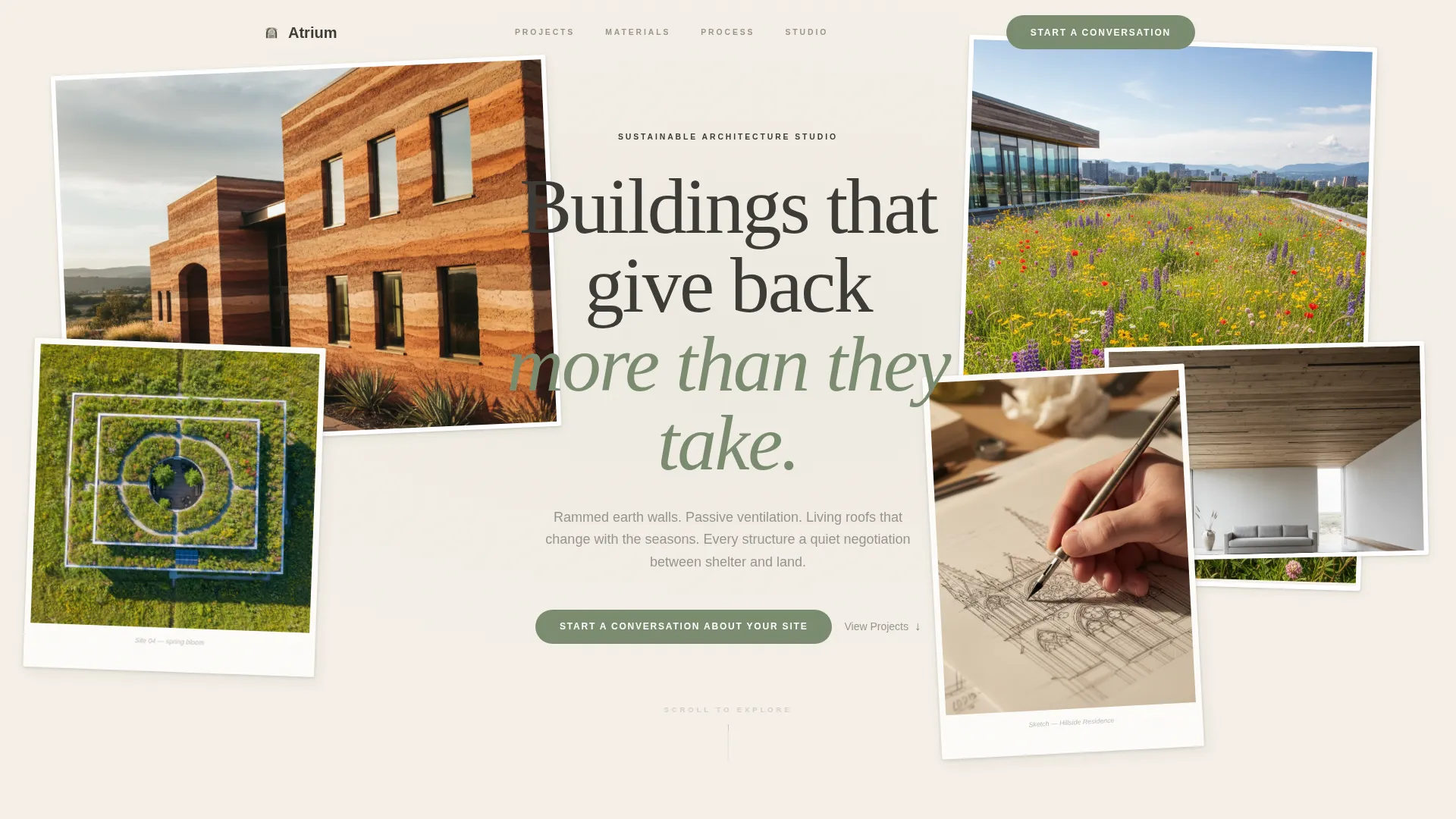
Atrium is a storybook landing page template built for sustainable architecture practices. It combines a collage-style header, gallery-walk project sections, and a lead generation flow into one cohesive design. The warm Cloud Canvas palette and Gallery Walk layout make every project feel like a curated exhibit, helping practices attract municipal planners, boutique hotel developers, and private homeowners.
by Rocket studio
Quick summary
Atrium is a full-page landing page template for sustainable architecture portfolios. It presents projects as framed gallery exhibits, scrolling slowly from landscape photograph to pencil sketch to sustainability data. The design uses warm parchment tones, a lichen green accent, and a persistent lead-capture bar to turn quiet, confident storytelling into client inquiries.
Who this template is for
Atrium is designed for architecture practices whose work lives at the intersection of ecological responsibility and built beauty. If your portfolio includes rammed earth structures, living roofs, or net-zero civic buildings, this template gives that work the presentation it deserves.
- Sustainable architecture studios seeking a portfolio that matches the depth of their practice
- Municipal and civic design teams pitching net-zero building commissions to planners and officials
- Boutique hospitality and residential architects whose clients collect inspiration before they ever make contact
What problem this template solves
Most architecture portfolio templates present projects like product listings. They prioritize quantity over depth, and they give every building the same visual weight. That approach fails practices whose work takes years, whose materials have stories, and whose clients need to feel the philosophy before they pick up the phone.
- Generic portfolio grids flatten complex, process-driven projects into thumbnail rows
- Standard contact forms ask for a name and email before a visitor has any reason to share them
- Aesthetic-first templates skip sustainability metrics, leaving the most compelling differentiator invisible
What you get with this template
You get a single-page storybook layout that builds trust through accumulation rather than spectacle. Each section is a deliberate beat in a larger narrative, from the collage header to the sketchbook-style contact overlay.
- A collage header featuring overlapping frames of finished buildings, material swatches, site sketches, and drone photography
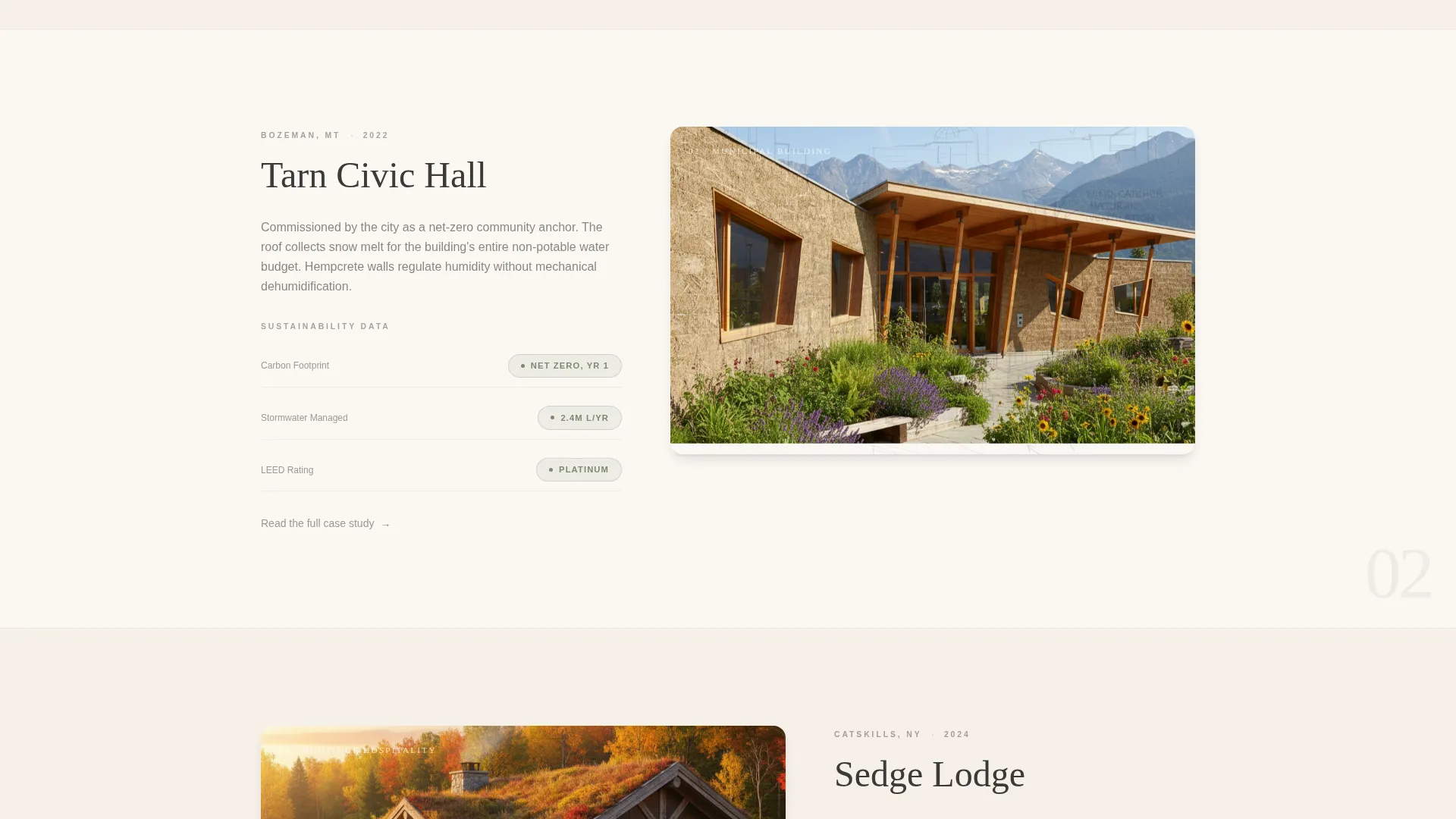
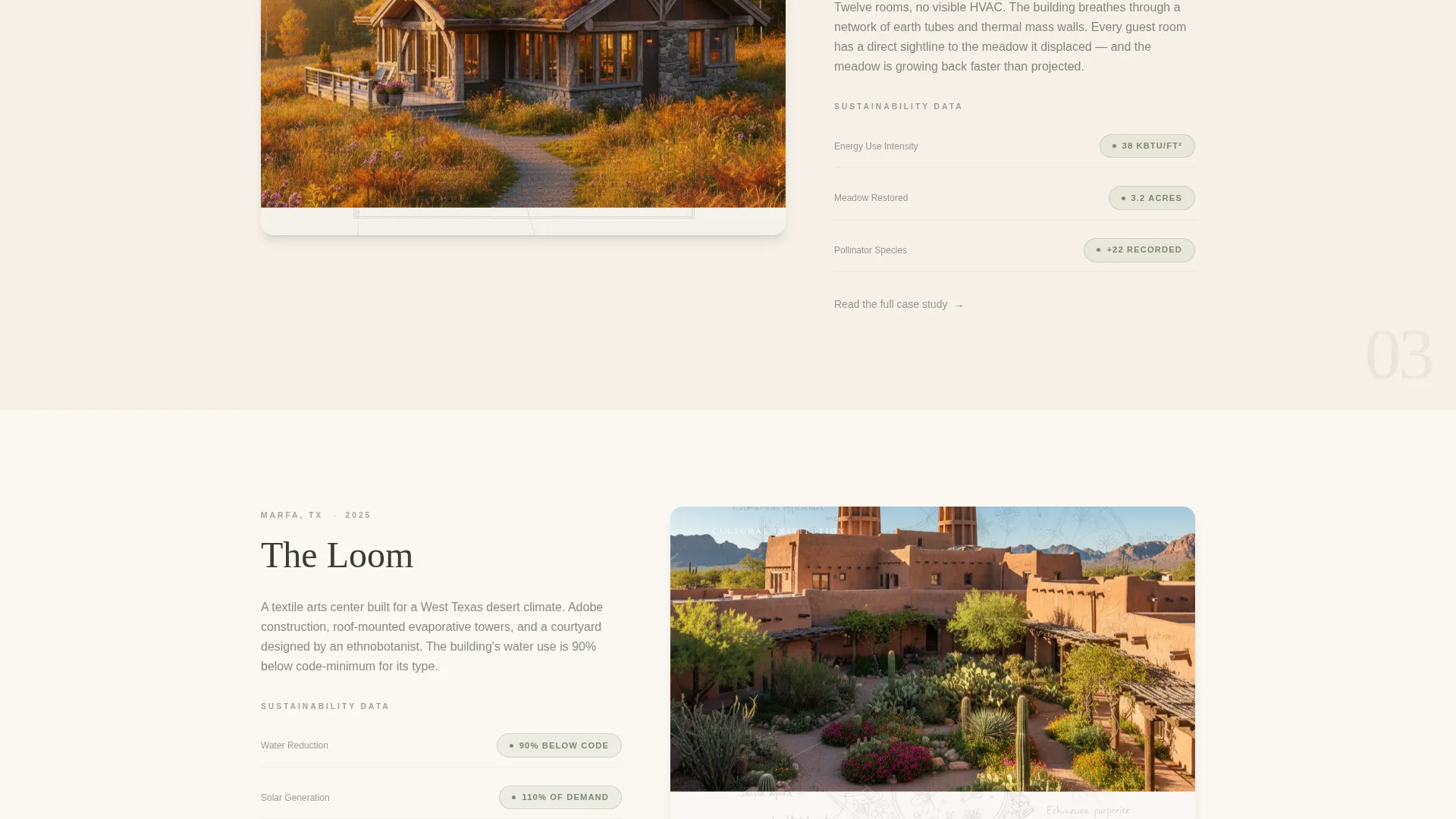
- Gallery-walk project sections with landscape photography, low-opacity sketch overlays, and sustainability data per project
- A persistent bottom-bar call to action and a full-page overlay form styled like a fresh sketchbook page
Feature list
A brief paragraph introduces the feature depth: Atrium is built around a clear visual language and a structured content flow. Every feature listed below comes directly from the template's design and layout system.
Collage and Scrapbook Header
The header arranges overlapping frames of varying sizes and angles on a parchment background. Finished building shots, material swatches, a hand-drawn site sketch with coffee ring details, and a drone photograph of a green roof all share the composition. A hand-lettered headline reading "Buildings that give back more than they take" emerges from the arrangement.
Gallery Walk Project Sections
Each project occupies a full-page section styled as a framed exhibit. The scroll reveals a wide landscape photograph first, then a pencil sketch overlaid at low opacity, then the sustainability data for that project. Soft parallax fades serve as transitions between projects, pacing the scroll like turning pages in a cloth-bound monograph.
Sustainability Data Display
Each project section includes space for embodied carbon saved, annual rainwater captured, and species returned to the site. These figures appear as part of the exhibit reveal rather than as a sidebar, keeping the data integrated into the narrative rather than separate from it.
Persistent Lead Generation Bar
A quiet bottom bar solidifies after the visitor passes the second project section. It carries the primary call to action: "Start a Conversation About Your Site." The bar stays visible without interrupting the reading experience.
Full-Page Sketchbook Overlay Form
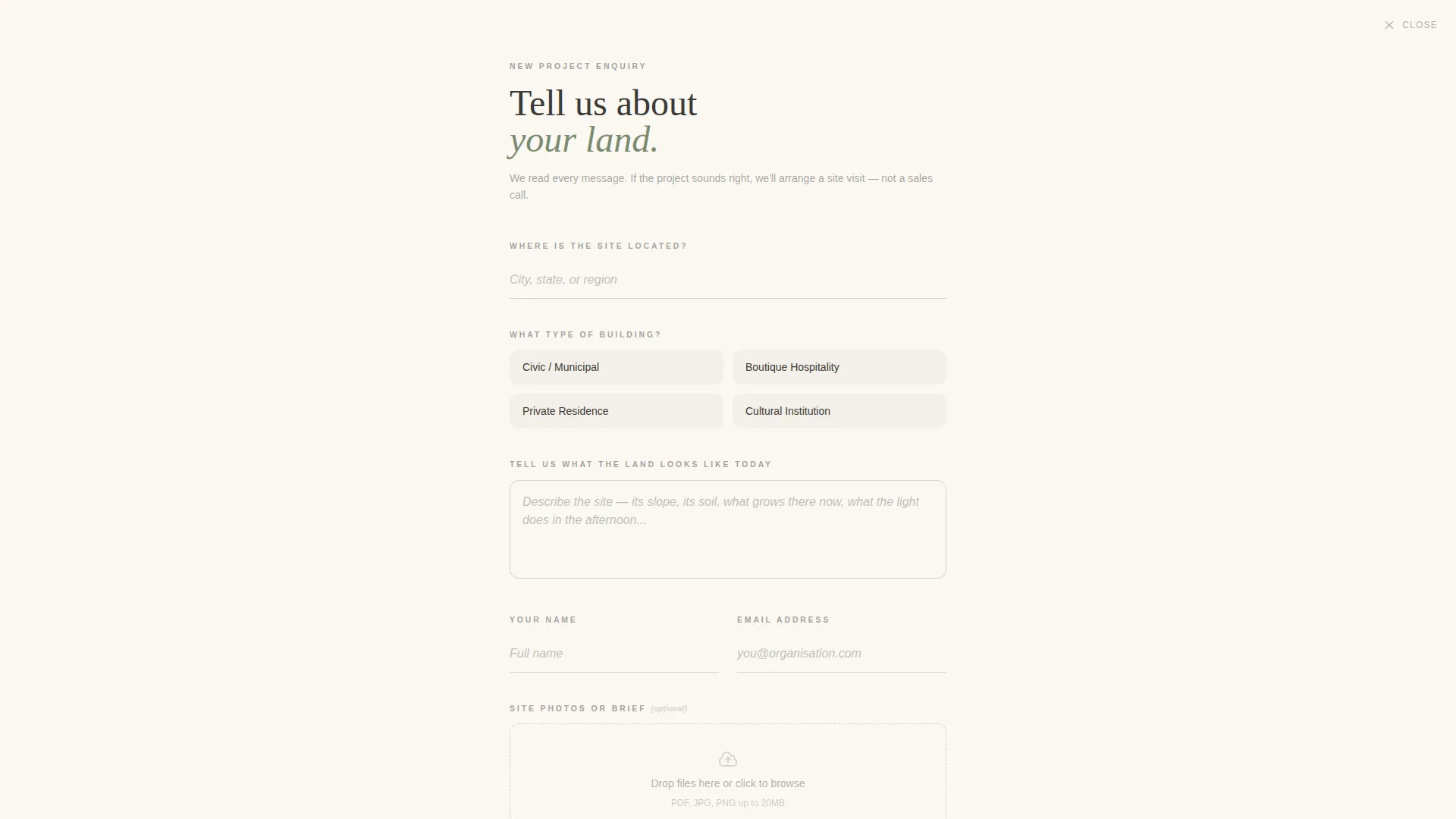
The primary contact form opens as a full-page overlay styled like a blank sketchbook page. It collects project location, building type (civic, hospitality, residential, or cultural), a free-text field labeled "Tell us what the land looks like today," and an optional file upload for site photos or briefs.
Secondary Email Capture Path
A secondary call to action, "Download Our Material Library," targets visitors who are still in the research phase. It captures an email address without requiring a full project inquiry, keeping early-stage prospects inside the funnel.
Page sections overview
| Section | Purpose |
|---|---|
| Collage Header | Introduce the practice through overlapping visual frames and a hand-lettered headline |
| Project Exhibit One | Present the first project with photograph, sketch overlay, and sustainability metrics |
| Project Exhibit Two | Continue the gallery narrative with the second full-page project exhibit |
| Project Exhibit Three | Deepen the accumulation effect with the third project and its ecological data |
| Project Exhibit Four | Complete the four-project arc, reinforcing the practice's discipline and depth |
| Persistent Bottom Bar | Anchor the primary call to action after the second project section |
| Sketchbook Contact Overlay | Capture detailed project inquiries through a full-page form styled as a sketchbook |
| Material Library Capture | Offer a secondary download to collect emails from research-phase visitors |
Design & branding system
The visual identity follows a Lens and Frame theme using the Cloud Canvas color palette. Every color choice references the texture of an architect's working environment rather than a polished digital product.
- Warm parchment white (#F5F0E8) and soft overcast gray (#D6D1C9) form the base, with charcoal graphite (#3B3A36) for text and structure
- Lichen green (#7A8B6F) appears only on hover states, active links, and sustainability metric highlights, keeping it meaningful rather than decorative
- Paper shadow effects on collage frames and a Storybook full-page layout reinforce the handcrafted, monograph-quality feel throughout
Mobile & speed optimization
The Storybook full-page layout and Gallery Walk pacing translate naturally to vertical scrolling on smaller screens. The template is structured so each project section reads as a complete unit even on a narrow viewport.
- Collage frames and overlapping compositions adapt to single-column stacking without losing the layered quality of the header
- The persistent bottom bar and sketchbook overlay form are designed to remain accessible and clear at mobile screen widths
- Parallax fade transitions are kept soft and lightweight, avoiding heavy motion that would interrupt the reading pace on slower connections
How this template helps you convert
Atrium earns its leads by building conviction before asking for anything. The conversion path is patient and structured, matching the mindset of clients who spend years researching before they commission a building.
- The gallery-walk structure lets each project section do persuasive work independently, so a visitor who enters mid-page still encounters a complete, compelling exhibit before reaching the call to action.
- The sketchbook overlay form opens with a question about land and location rather than a name and email, which immediately signals that the practice listens before it draws, creating trust at the moment of highest intent.
Other information about this template
Atrium sits within the Portfolio and Agency category, specifically the Architecture and Interiors Portfolio subcategory. It is a strong fit for practices competing in the sustainable architecture portfolio niche where visual differentiation and philosophical alignment matter as much as project credits.
- The template style is Storybook full-page, meaning the entire narrative arc lives on one long-scroll page rather than across multiple linked pages
- The Lens and Frame theme and Cloud Canvas color system are paired to communicate material honesty and craft without relying on high-gloss digital aesthetics
- The Gallery Walk creative direction and Collage header concept are matched intentionally: one slows the pace of consumption, the other rewards close looking
- The template is suited for practices whose target clients include LEED Platinum (Leadership in Energy and Environmental Design Platinum) hotel developers and net-zero civic building commissioners
Theme
Lens & Frame
Creative direction
Gallery Walk
Color system
Cloud Canvas
Style
Storybook/Full-Page
Direction
Lead Generation
Page Sections
Collage Scrapbook Header
Gallery Walk Project Exhibits
Sustainability Metrics Per Project
Persistent Bottom Bar Call to Action
Sketchbook Overlay Contact Form
Secondary Material Library Capture
Related questions
Can I update the project sections with my own buildings and sustainability data?
How does the lead generation form work?
Is this template suitable for a practice working across residential, civic, and hospitality project types?
How many project exhibits does the gallery section support?
What separates this template from a standard portfolio grid layout?