Restaurant & Dining Booking Website Template
The Bamboo Serene dim sum dining reservation landing page template is built for Cantonese dim sum restaurants that want to turn first-time visitors into confirmed bookings. A full-screen video hero, a slow gallery-walk scroll, and a sticky terracotta reservation button work together to create an unhurried, appetite-building experience that guides guests from curiosity to confirmed table.
by Rocket studio
Quick summary
Bamboo Serene is a hero-dominant landing page template designed specifically for dim sum restaurants. It opens with a full-screen video of the dining room, moves through a cinematic gallery walk of individual dishes, and closes with a minimal reservation form. The whole thing is built to feel warm, unhurried, and deeply inviting, matching the pace of dim sum itself.
Who this template is for
This template fits dim sum restaurants that want their online presence to reflect the care and culture behind the food they serve. It works equally well for a long-running neighbourhood house as for a new city-centre restaurant making its debut.
- Dim sum restaurants hosting Saturday morning families and anniversary couples seeking a gentle, memorable booking experience.
- New restaurant owners who want to attract curious walk-in diners from the street and convert them online before they even arrive.
- Established dim sum spots looking to replace a generic site with a landing page that truly captures the atmosphere of their dining room.
What problem this template solves
Most restaurant landing pages treat dim sum like fast food, a menu grid, a phone number, and a buried booking link. That approach misses the whole point. Guests who eat dim sum come for the ritual, the company, the unhurried procession of plates. A page that rushes them out does not reflect that reality at all.
- Visitors leave generic restaurant pages before they feel anything. This template builds appetite first, through photography and poetic captions, before asking for a reservation.
- Without a sticky call-to-action (call to action), guests who are ready to book have to scroll back up to find the button. This template keeps "Reserve a Table" pinned and visible throughout the scroll, so no one has to wait or hunt.
- Dim sum menus are long and varied, covering dumplings, rice dishes, and sweet desserts. A sprawling menu list overwhelms new diners. The gallery walk and mosaic grid present dishes as experiences rather than inventory.
What you get with this template
You get a fully structured, single-page layout that takes the visitor on a considered journey. Every section has a clear purpose, and every design decision has been made to serve the dim sum dining context specifically.
- A full-screen video hero section, a dish-by-dish gallery walk, a mosaic grid finale, and a minimal reservation form, all arranged in a deliberate scroll sequence.
- A Desert Rose color system built from soft clay pink, sun-bleached linen, deep oolong brown, and muted terracotta, plus Fraunces serif headlines paired with DM Sans body text.
- A sticky "Reserve a Table" button in terracotta that stays pinned at the bottom of the viewport after the hero scrolls away, with a secondary "Order for Pickup" text link for regulars.
Feature list
This template was designed around a single idea: the landing page should feel like sitting in a sun-filled dining room with a cup of chrysanthemum tea, nowhere to rush. Every feature serves that idea.
Full-Screen Video Hero with Ambient Sound Design
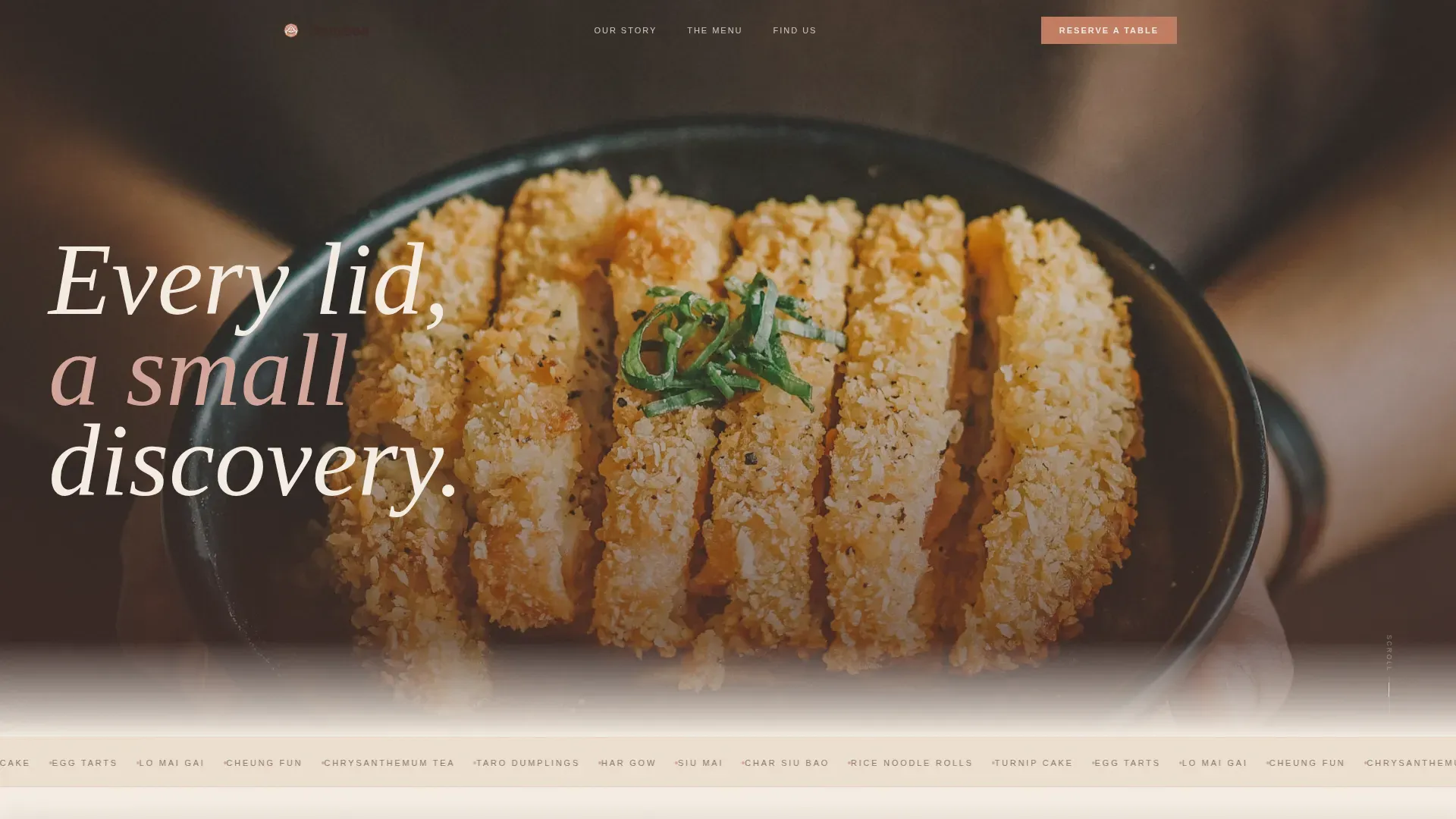
The hero section fills ninety percent of the viewport with a slow, handheld tracking shot following a dim sum cart through the dining room. The camera stays at cart height, catching stacked steamers, a grandmother's pointing hand, and sunlight catching steam as a bamboo lid is lifted. No music plays, only the ambient clatter of porcelain, Cantonese murmur, and the soft thud of lids. The headline, "Every lid, a small discovery," fades in over the steam. A poster-image fallback ensures the hero loads correctly when video cannot play.
Gallery Walk Scroll Experience
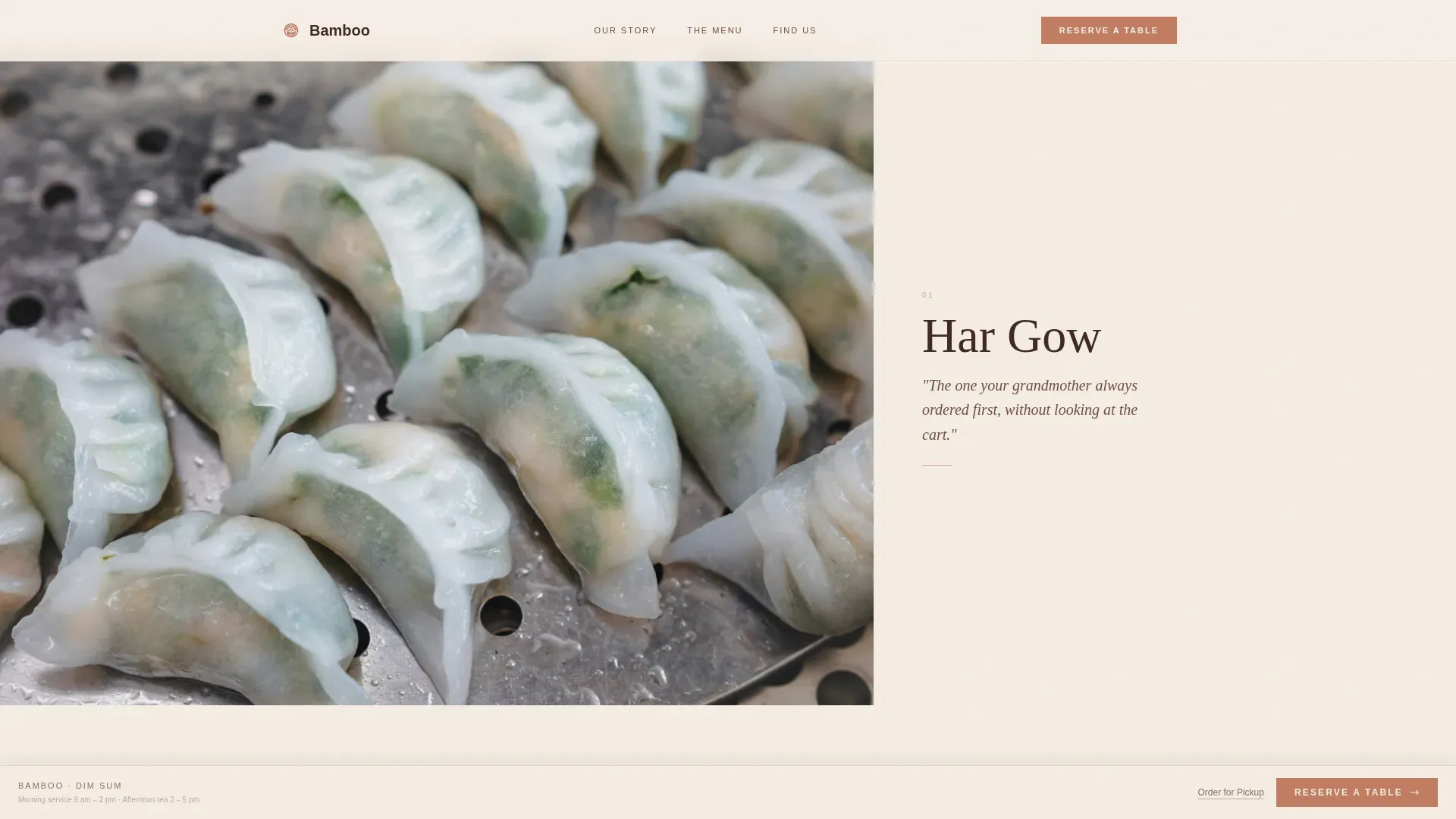
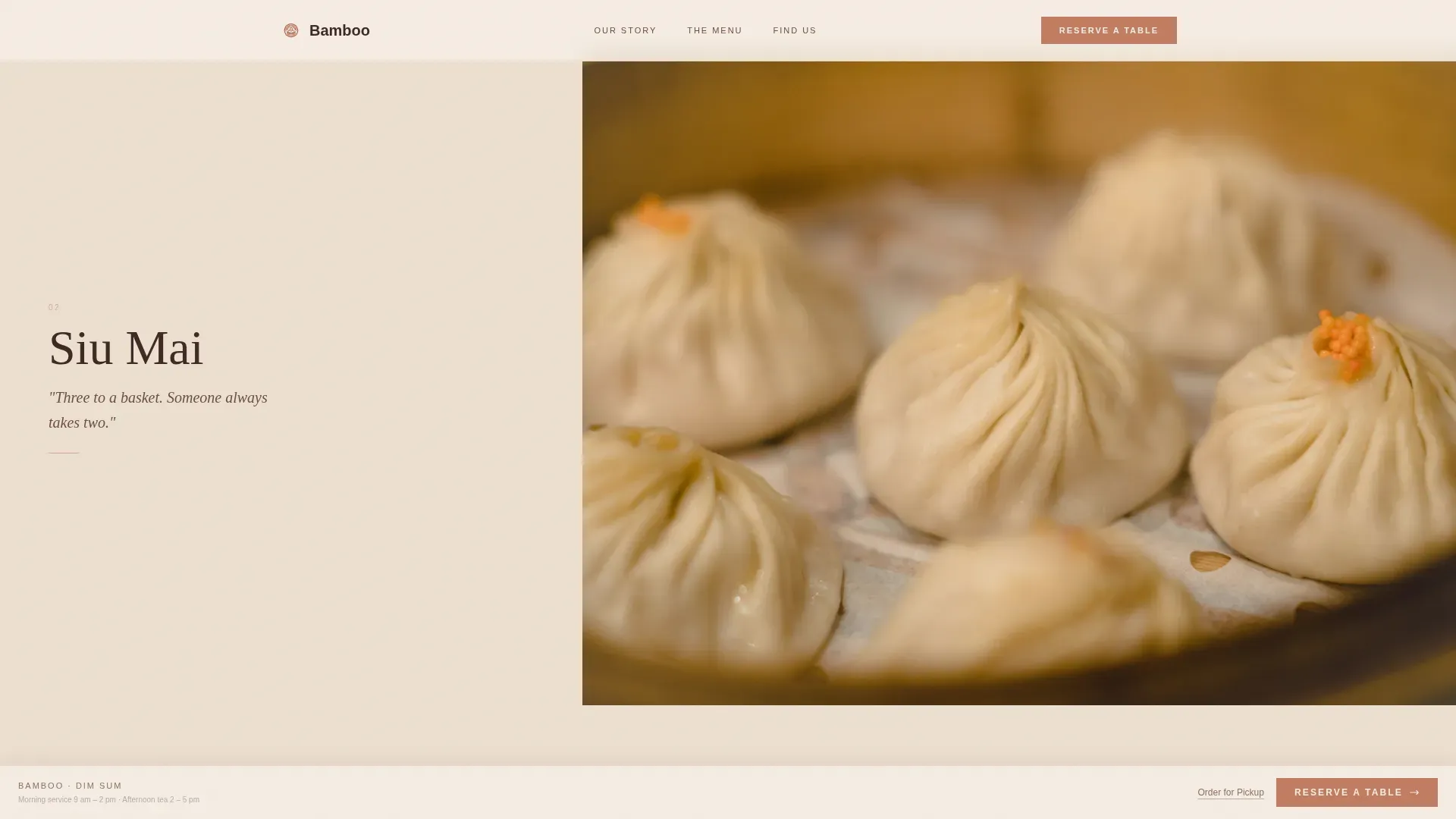
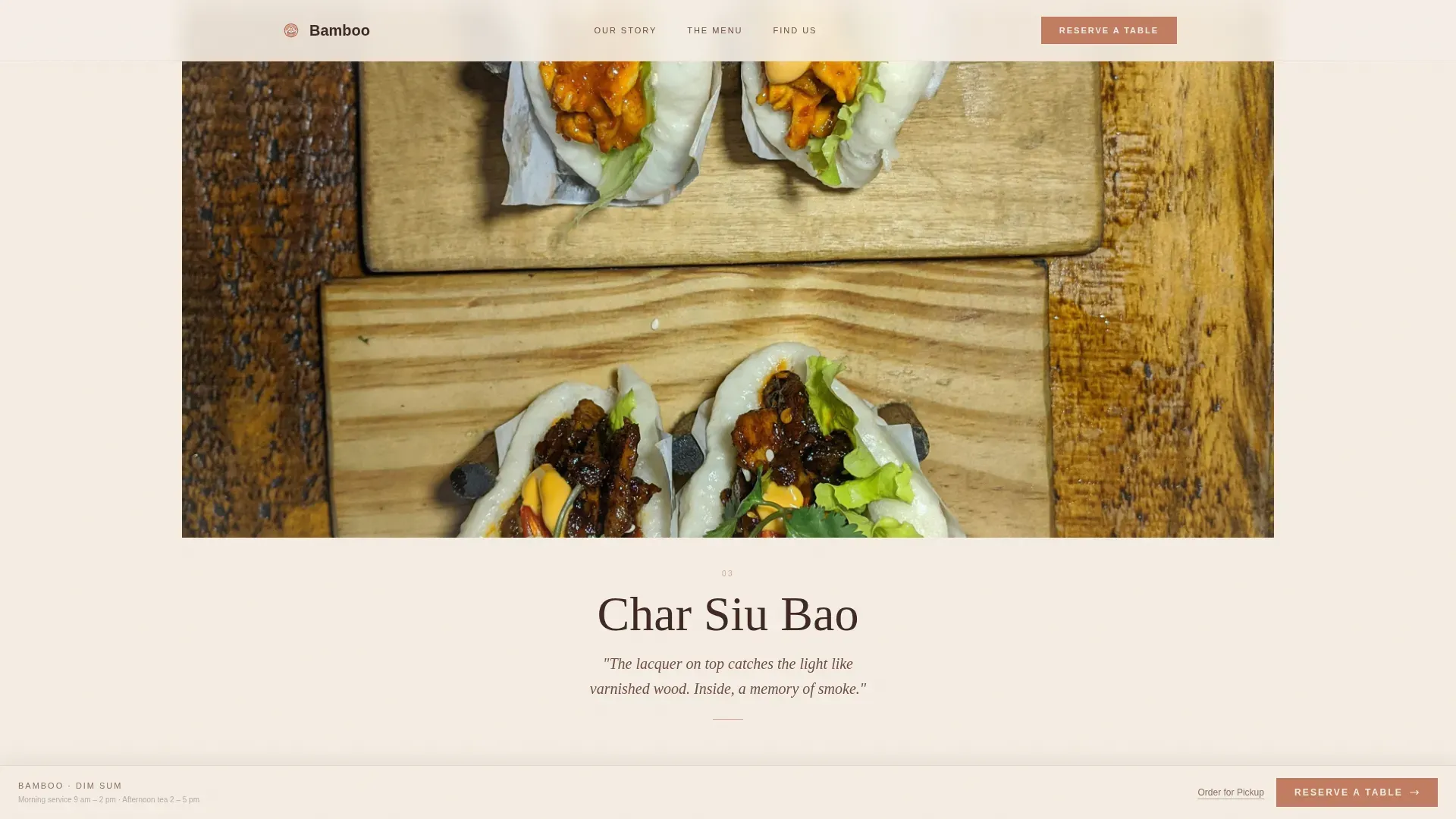
After the hero, each scroll step reveals a single dish photographed in natural light against raw linen, occupying the full viewport width. Beneath each photograph sits one line of poetic memory copy, not an ingredients list but a feeling, the kind of description that makes a returning diner smile with recognition. The pace is deliberate. One dish per viewport forces visitors to linger, building appetite through restraint across har gow, char siu bao, cheung fun rice noodle rolls, and more. Scroll-linked reveals and staggered fade-ins drive the cinematic rhythm.
Mosaic Grid Finale
The gallery walk resolves into a tight mosaic grid that gathers every dish into a single abundant frame. Where the gallery walk savors one plate at a time, the mosaic says "this is the full spread waiting for you." It functions as a visual abundance signal, the kind that makes diners want to sit down and order a dozen plates.
Sticky Reservation call to action with Modal Form
After the hero scrolls away, a terracotta "Reserve a Table" button stays pinned gently at the bottom of the viewport. Tapping it opens a minimal modal form with four fields: date, time (morning dim sum or afternoon tea service), party size, and an optional "Any dishes you're dreaming of?" field. No phone number is required upfront; confirmation arrives by text. The booking form asks only for essential information, keeping the process clean and preventing drop-off.
Secondary Pickup Path
Beneath the reservation button sits an understated text link: "Order for Pickup." This secondary path is built for regulars who already know the menu and want a fast route to placing their order without going through the full reservation flow.
Film Grain Overlay and Scroll-Linked Animation System
A subtle film grain overlay sits across the page, giving the whole thing the warmth of analog photography. Scroll-linked reveals, staggered fade-ins, and the sticky call to action animation are all coordinated to create a medium-to-high animation presence without feeling flashy or hurried, consistent with the Pastoral Calm design direction.
Page sections overview
| Section | Purpose |
|---|---|
| Full-Screen Hero | Opens with video, headline fade-in, sets atmospheric tone |
| Gallery Walk | One dish per viewport with poetic one-line memory captions |
| Mosaic Grid | Consolidates all dishes into a dense, appetite-building grid |
| Reservation Form | Minimal modal with date, time, party size, and optional field |
| Footer | Horizontal flow with restaurant information and secondary links |
Design & branding system
The visual identity follows a Pastoral Calm theme. The palette and typography work together to create what the brief describes as "a ceramic teacup left on a wooden table in the afternoon light." Every color and type decision reinforces the slow, warm, human quality of dim sum dining.
- Color system: linen (#F5EDE3) backgrounds, deep oolong brown (#3E2723) body text, soft clay Desert Rose (#D4A59A) accents, and muted terracotta (#C17C60) for the call to action button and hover states.
- Typography: Fraunces serif for all headlines, DM Sans for body text. The pairing balances editorial warmth with clean readability.
- Visual details: red lanterns appear in the dining room video and photography as ambient atmosphere elements. The film grain overlay, natural-light dish photography against raw linen, and the overall space of the layout all reinforce the Pastoral Calm identity.
Mobile & speed optimization
The template is designed desktop-first with graceful mobile adaptation. The gallery walk, mosaic grid, and sticky call to action all translate to smaller screens without losing their visual logic. The layout prioritizes thumb-friendly interaction for mobile diners browsing on the go.
- The hero video uses a poster-image fallback so the section loads correctly on all devices, even when video autoplay is restricted.
- Gallery images are lazy-loaded so the page does not request all assets at once, keeping the initial load smooth even on a long scroll.
- The sticky reservation button uses a single-column layout on mobile with large tap targets, making it easy to open the booking form from any screen size.
How this template helps you convert
The template is not trying to close a transaction in the first second. It is designed to earn trust, build appetite, and then make the booking action feel like the natural next step. That sequence is deliberate, and each stage serves a specific conversion purpose.
- The full-screen video hero and gallery walk build genuine desire before any call to action appears prominently, so the visitor arrives at the reservation form already wanting to sit down. Guests who feel something are far more likely to complete a booking than guests who are simply presented with a form.
- The sticky terracotta "Reserve a Table" button stays visible throughout the scroll without interrupting the experience, so a visitor who is ready to book at any point can tap immediately without having to hunt or wait.
- The minimal four-field form, date, time, party size, and one optional question, reduces abandonment by asking only for what is needed. Confirmation by text, rather than requiring a phone call upfront, removes a common friction point for new diners.
Other information about this template
This section covers broader context that helps prospective users understand where this template sits in the dim sum restaurant landscape and what design principles inform its structure.
- Bamboo-themed restaurant landing page templates are typically associated with Asian cuisine, particularly Chinese and Japanese dining. This template leans into that cultural resonance intentionally, using natural materials, warm tones, and traditional elements like red lanterns and bamboo steamers to reflect the cultural essence of Cantonese dim sum.
- The bamboo serene dim sum dining reservation landing page template follows a calming, organic aesthetic with cream, warm wood tones, and carefully placed red lanterns throughout the visual content. These elements appear in the video hero, the gallery photography, and the overall space of the layout.
- A high-converting landing page for a dim sum restaurant should feature stunning, high-quality images of dim sum and a clear call-to-action. This template showcases signature dishes through the gallery walk format, with each plate presented individually before the mosaic grid brings the whole thing together.
- The design philosophy here is informed by what industry practitioners call vibe coding, the deliberate use of colors, imagery, and typography to communicate a restaurant's specific atmosphere to visitors before they ever walk through the door. Applied thoughtfully, this approach lets the landing page do real work for the restaurant.
- Well-known dim sum destinations like Yank Sing, celebrated for metal push carts with bamboo steamers, and The Happy Crane, which releases reservations thirty days out, demonstrate how strong visual branding and smooth booking flows translate directly into demand. This template gives independent dim sum restaurants the same level of considered presentation.
- HK Lounge Bistro's tableside xiao long bao service is a good example of the kind of experiential detail that, when captured in photography and copy, creates genuine online engagement. This template is built to hold and present exactly those kinds of moments.
- The dim sum restaurant category spans everything from fancy white-tablecloth establishments to casual café counters and afternoon tea bars. This template suits the mid-to-upscale end of that range, where the dining experience itself is part of the offer.
- The template includes space for menu highlights, restaurant branding, and all essential contact information, consistent with best practices for dim sum restaurant landing pages.
- Dim sum menus are deliberately broad, covering dumplings with varied fillings, rice dishes, stir fried greens, deep fried taro puffs, sweet egg tarts, and more. The template does not try to list every item. Instead it curates a handful of signature dishes in the gallery walk and lets the mosaic grid suggest the full depth of the menu.
- Popular dim sum items that photograph particularly well for use in the gallery walk include har gow with translucent wrappers, char siu bao with their lacquered tops, cheung fun rice noodle rolls glistening with sesame oil, and sticky rice in lotus leaf. These plates carry the visual richness and tender detail that make the gallery format work.
- The "Any dishes you're dreaming of?" optional field in the reservation form is a small but meaningful touch. It invites guests to name a favorite dish or make a special request, the kind of personal detail that makes a restaurant feel like it listens. This field also gives the house advance notice of what the table is hoping for, which is genuinely useful for kitchen planning.
- For dim sum restaurants that handle high weekend volume, a clean reservation system reduces the wait at the door and keeps the dining room flowing smoothly. The form's minimal field structure supports that goal by encouraging completion rather than abandonment.
- The template is structured around a hero-dominant (90/10) layout, meaning roughly ninety percent of the initial viewport is dedicated to the video experience and only ten percent to interface elements, consistent with the brief's creative direction.
Theme
Pastoral Calm
Creative direction
Gallery Walk
Color system
Desert Rose
Style
Hero-Dominant (90/10)
Direction
Booking/Scheduling
Page Sections
Full-screen Video Hero with Ambient Sound
Gallery Walk Scroll with Poetic Captions
Mosaic Grid Dish Finale
Sticky Reservation Button and Modal Form
Secondary Pickup Text Link
Film Grain Overlay and Animation System
Related questions
Can I customize the dish photography and captions in the gallery walk?
Does the reservation form connect to a booking platform?
Is this template suitable for a dim sum restaurant that also serves dinner?
How does the sticky Reserve a Table button behave on mobile devices?
Can regulars use a faster path to place a pickup order?