Marine Equipment & Supply Advanced Professional Website Template
Berth is a precision-engineered marine furniture landing page template built for studios that fabricate teak helm consoles, carbon-wrapped salon tables, and stainless-steel galley systems. Designed around an Engineering Blueprint theme with a Carbon Fiber color palette, it leads with stats-first project cards, filterable by vessel type, material, and scope, and drives qualified leads through a structured refit brief form.
by Rocket studio
Quick summary
Berth is a modular card-grid landing page template for marine furniture and interior studios. It pairs an isometric yacht cutaway header with stats-first project cards, a Carbon Fiber color system, and two clear conversion paths: a slide-out refit brief form and a material spec sheet download. The result feels like a shipyard drawing come to life on screen.
Who this template is for
This template is built for workshops and studios operating in the marine furniture and interior space. If your clients arrive with GA plans, haul-out deadlines, or new-build specifications, Berth speaks their language before you say a word.
- Yacht refit managers sourcing custom pieces against a tight schedule
- Superyacht interior designers specifying one-off furniture for new builds
- Commercial fleet operators replacing crew mess seating across multiple vessels
What problem this template solves
Marine furniture studios struggle to communicate engineering-grade capability through a generic web presence. A lifestyle photography approach undersells precision fabrication work and fails to filter the right buyers.
- Visitors leave before understanding the scale, material quality, or turnaround capability of the studio
- The wrong enquiries arrive because the page does not qualify vessel type, project scope, or material requirements upfront
- Research-phase visitors with no active brief drift away with no capture mechanism in place
What you get with this template
You get a single, focused landing page that is structured around proof first and aesthetics second. Every layout decision is grounded in the brief a refit manager or superyacht designer would bring to a kickoff meeting.
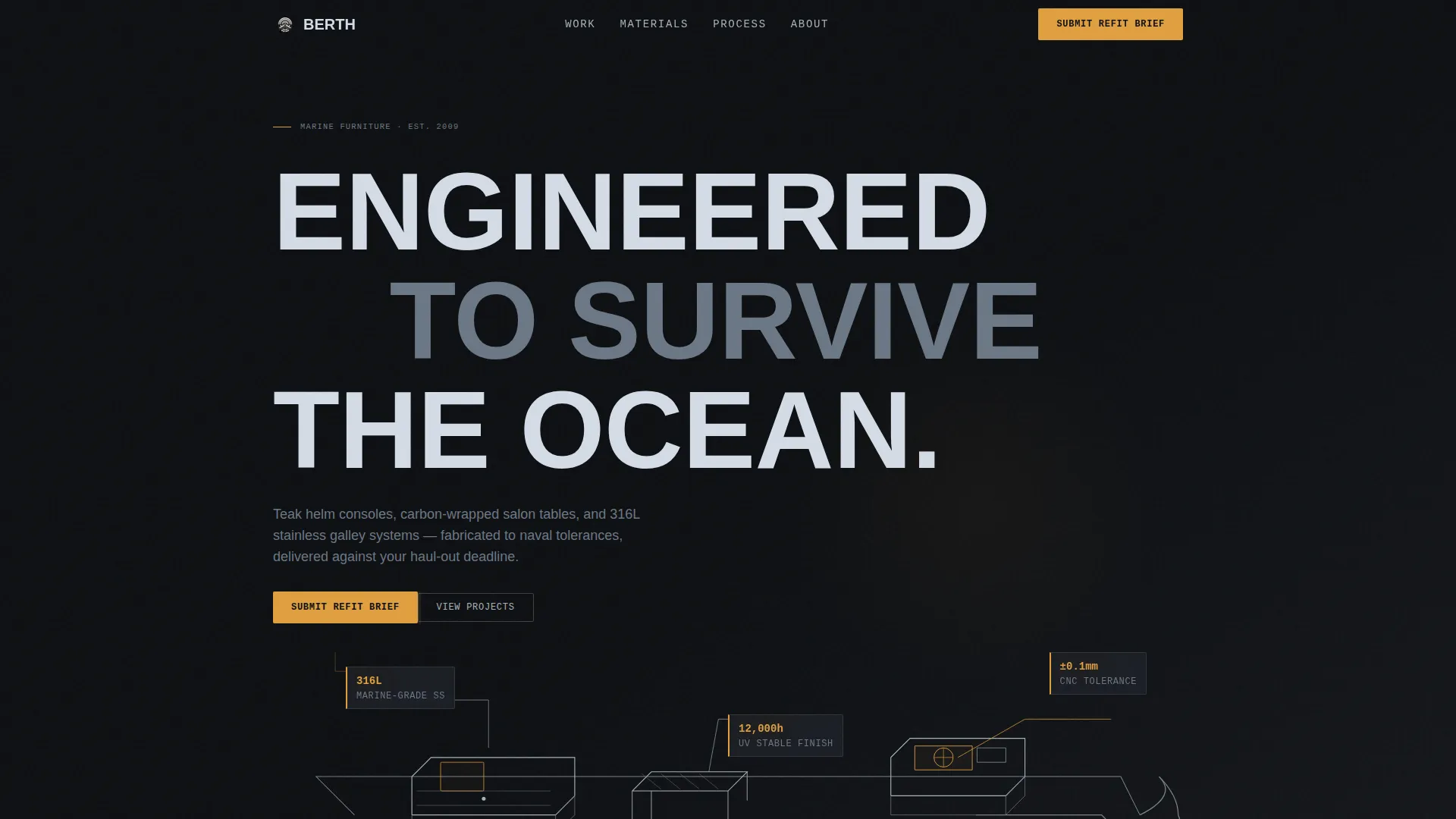
- An isometric cutaway header illustration with floating material-spec callouts built into the design
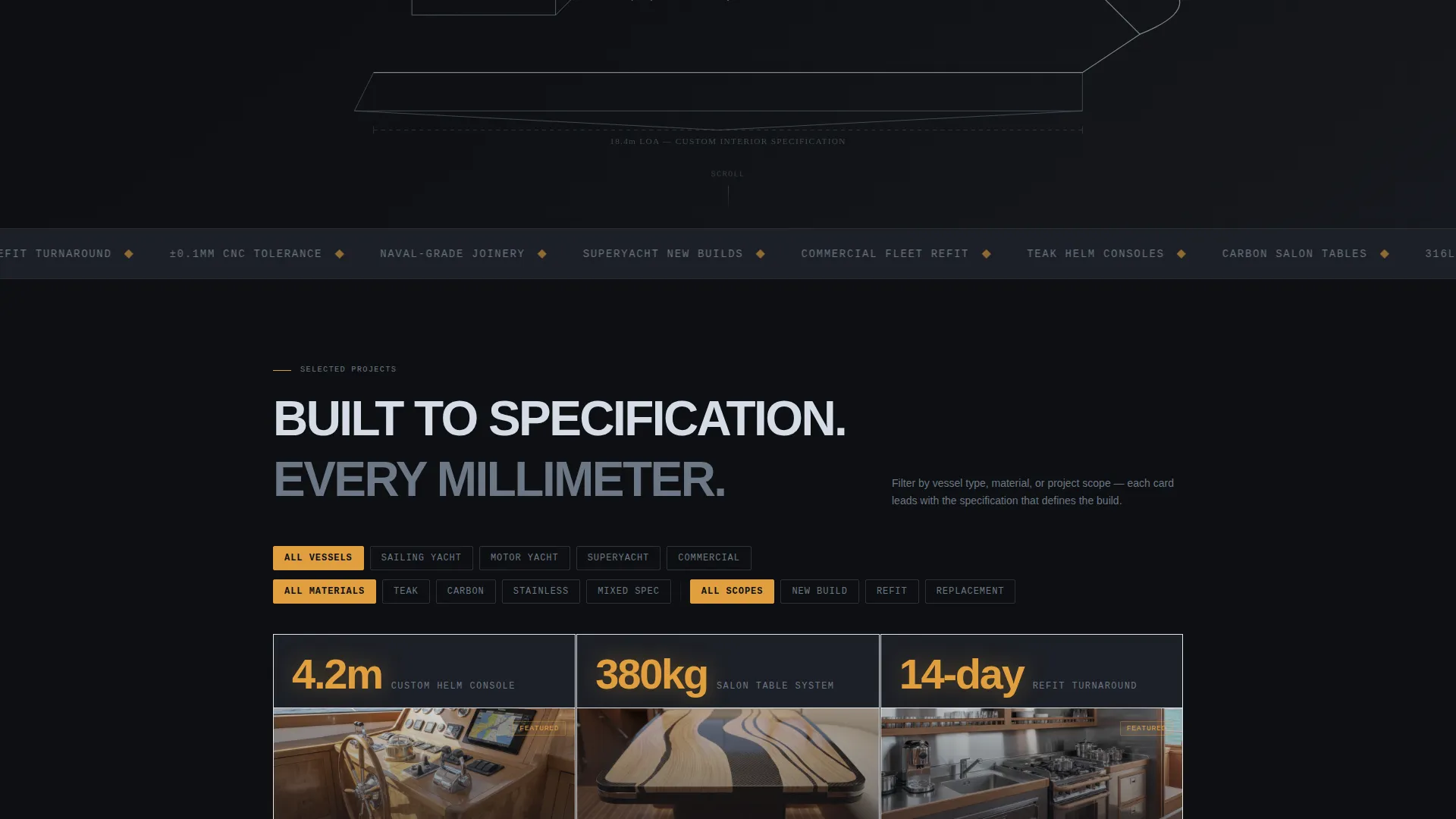
- A modular card grid with filter controls for vessel type, material, and project scope
- A slide-out brief form with vessel name, length, project type, material checkboxes, and a file drop zone for plans or reference images
- A secondary email-capture path for visitors downloading the material spec sheet
Feature list
This section covers the core functional components and layout capabilities that come with the Berth template.
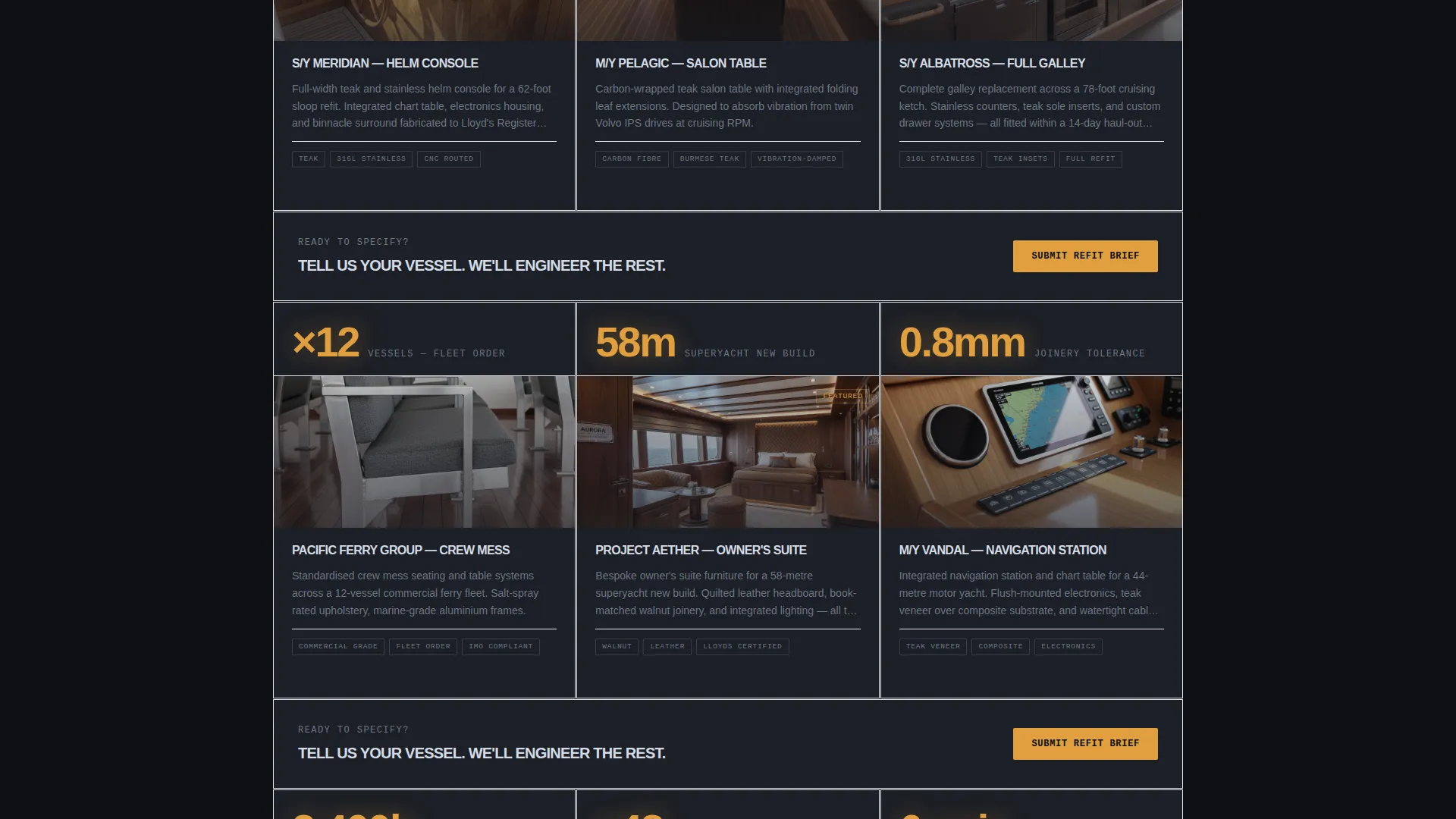
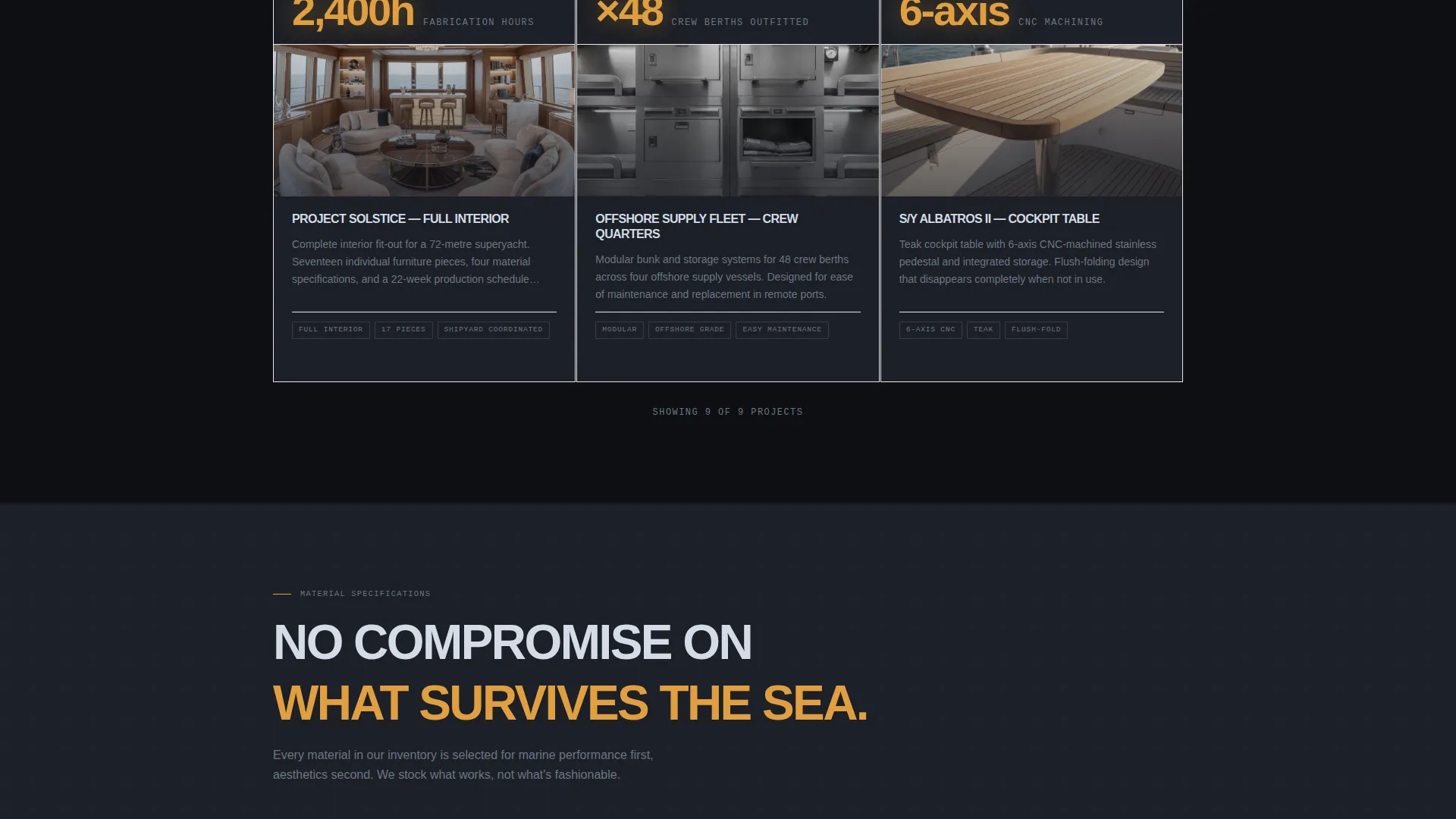
Stats-First Project Card Grid
Every card in the grid opens with a single oversized number or specification before revealing project detail beneath it. Figures like "4.2m custom helm console" or "14-day refit turnaround" communicate scale and capability before any image loads. When the detail photography appears, it reads as evidence, not decoration.
Filterable Portfolio Grid
Cards are filterable by vessel type, material, and project scope. A refit manager can drill straight to relevant work without scrolling past superyacht commissions that do not apply to their brief. The filter system keeps navigation fast and the experience targeted.
Isometric Cutaway Header
The header presents a technical illustration of a yacht interior with furniture pieces exploded slightly from their installed positions. Each component is labeled with material specifications and dimensional tolerances in thin aluminum wireframe against hull black. Stat callouts such as "±0.1mm CNC tolerance" and "316L marine-grade stainless" float beside key pieces.
Slide-Out Refit Brief Form
The primary conversion path opens as a slide-out panel. It asks for vessel name and length first, then project type (new build, refit, or replacement), material preferences via checkbox, and a file drop zone for GA plans or reference images. This structure qualifies the enquiry before it reaches the studio inbox.
Anchored Lead Capture calls to action
The primary call to action, "Submit Your Refit Brief," is rendered in signal amber and anchored at the bottom of every third card row. On mobile it is fixed in a slim bottom bar. The placement ensures the conversion option is always visible without interrupting the browsing flow.
Material Spec Sheet Download
A secondary path labeled "Download Our Material Spec Sheet" captures email from visitors who are still in the research phase. This gives the studio a nurture opportunity before a formal brief arrives, turning passive browsers into a qualified contact list.
Page sections overview
| Section | Purpose |
|---|---|
| Isometric Header | Display technical yacht cutaway with material-spec callouts |
| Stats Callout Bar | Surface key fabrication figures before project cards |
| Filterable Card Grid | Browse portfolio by vessel type, material, and scope |
| Slide-Out Brief Form | Capture qualified refit and new-build enquiries |
| Spec Sheet Download | Convert research-phase visitors with an email gate |
| Fixed Mobile call to action Bar | Keep the primary call to action accessible on smaller screens |
Design & branding system
The visual identity follows an Engineering Blueprint theme using a Carbon Fiber color system. The palette is intentionally restrained so that functional highlights are impossible to miss.
- Deep hull black (#0D0F12) and woven carbon charcoal (#1C1F26) alternate as section backgrounds, giving the page a composite layup room atmosphere
- Brushed aluminum (#A8B2BD) carries all body text and wireframe line work, maintaining legibility against dark backgrounds
- Signal amber (#E09F3E) is reserved strictly for calls to action, stat callouts, and hover states, functioning like a warning indicator on a helm panel
Mobile & speed optimization
The template is structured to keep the conversion path accessible on every screen size without sacrificing the technical visual identity. Layout decisions were made with mobile use in mind from the start.
- The fixed slim bottom bar on mobile keeps "Submit Your Refit Brief" visible as users scroll the card grid
- The card grid reflows to a single-column layout on smaller screens, preserving the stats-first hierarchy without horizontal overflow
How this template helps you convert
Berth is built around two distinct conversion paths that match where each visitor is in their decision process.
- The slide-out brief form qualifies active buyers immediately by collecting vessel details, project type, material preferences, and supporting files before any sales conversation begins.
- The material spec sheet download captures email addresses from visitors still in the research phase, giving the studio a direct follow-up channel before those visitors are ready to submit a formal brief.
Other information about this template
Berth sits at the intersection of the marine furniture and interior niche within the broader Marine and Maritime category. The template is particularly well suited to studios that fabricate against naval tolerances and need their web presence to reflect that standard.
- The Engineering Blueprint theme and Carbon Fiber palette are matched to the Marine Equipment and Supply subcategory, where technical credibility drives purchase decisions
- The Stats-First Impact creative direction is designed specifically for audiences who process specifications before aesthetics, which aligns precisely with refit managers and fleet operators
- The template style is a Card Grid (Modular) layout, making it straightforward to add or remove project cards as the portfolio grows
- The Isometric header concept can be updated with studio-specific illustrations while preserving the wireframe-on-hull-black visual language
Theme
Engineering Blueprint
Creative direction
Stats-First Impact
Color system
Carbon Fiber
Style
Card Grid (Modular)
Direction
Lead Generation
Page Sections
Stats-first Project Card Grid
Filterable Portfolio by Vessel and Material
Isometric Cutaway Header Illustration
Slide-out Refit Brief Form
Anchored Amber Call to Action Placement
Material Spec Sheet Email Capture
Related questions
Who is the primary audience for this template?
Can I filter the project cards by different criteria?
What does the slide-out brief form collect?
Is there a way to capture visitors who are not ready to submit a brief?
Does the template require lifestyle or ocean photography?