Specialist LGBTQ+ Organization Reviews & Social Proof Website Template
Bloom is a single-column lead generation landing page built for coming out support networks. It pairs a warm Desert Rose color system with a scroll-driven Testimonial Mosaic structure, guiding visitors from fear to courage through practical educational lessons, staggered peer voices, and a simple email capture form that connects them to a free coming out guide or a peer mentor.
by Rocket studio
Quick summary
Bloom is a focused, single-column landing page for LGBTQ+ coming out support organizations. It combines an intimate half-page hero, four educational guide sections, and a rising scroll of peer testimonials to build trust before asking for an email. The Desert Rose palette and Fraunces serif typography create a warm, grounded space where visitors feel seen before they act.
Who this template is for
This template is built for organizations and networks that offer practical coming out support. It works equally well for established nonprofits and emerging peer communities.
- LGBTQ+ support networks offering free guides, peer mentorship, or community resources
- Nonprofit organizations serving individuals at any stage of their coming out journey
- Volunteers or advocates building a landing page to capture leads and connect people with support
What problem this template solves
Many people searching for coming out support land on pages that feel either too clinical or too generic. They leave without taking action because nothing on the page reflects their specific moment or fear. Bloom solves that by making the visitor feel recognized immediately and building emotional trust before presenting any form.
- Visitors feel anonymous and unsure whether a resource actually understands their situation
- Generic pages lack the social proof needed to convince someone in a vulnerable moment to share their email
- Support organizations struggle to convert page visits into real connections with guides or mentors
What you get with this template
Bloom delivers a fully structured, single-column landing page with every section pre-built for a coming out support network. The layout is ready to populate with your organization's content, testimonials, and form details.
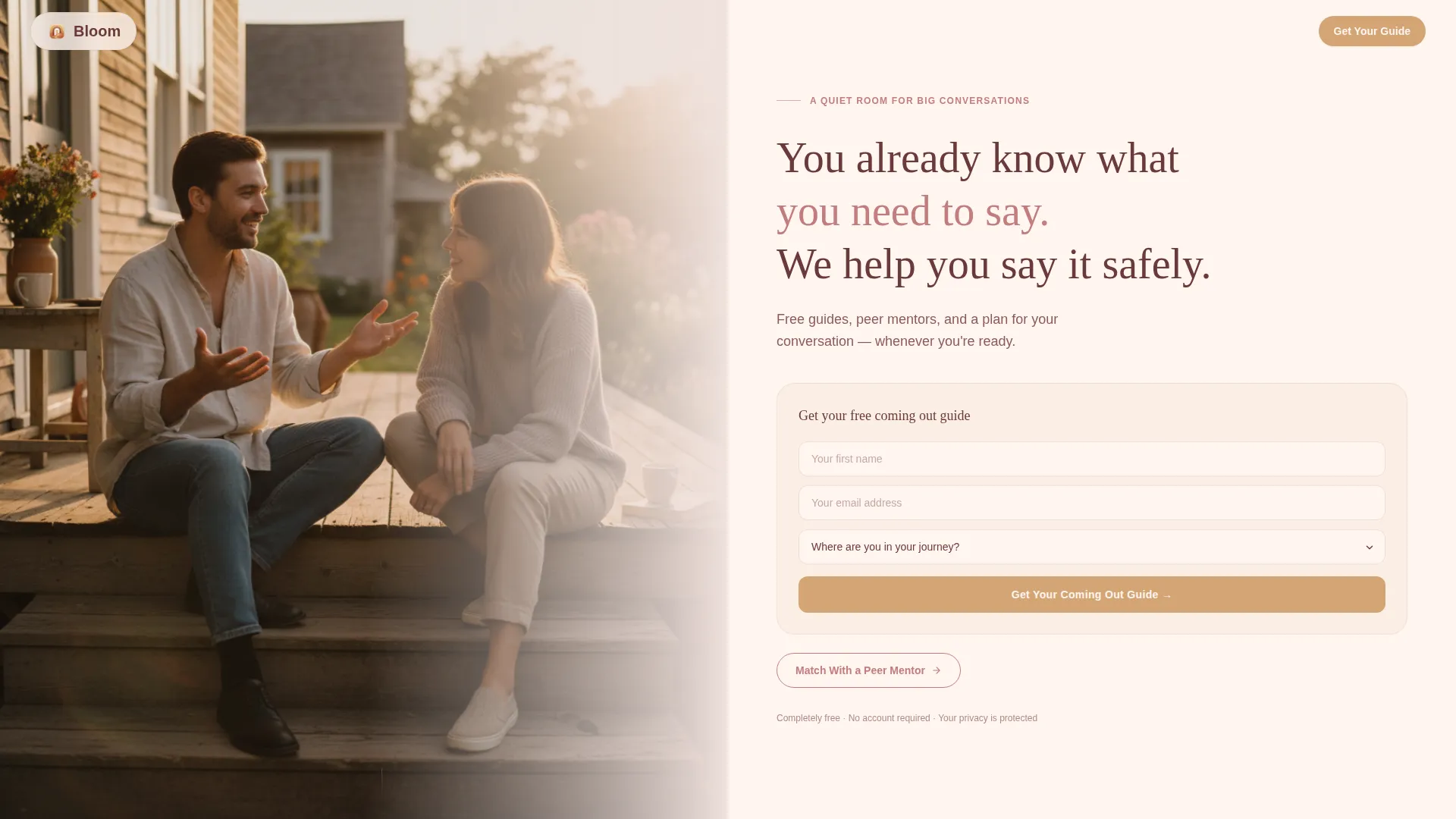
- A hero section with a half-page photo and text split, a headline, and a primary lead capture form
- Four educational guide sections, each pairing a short lesson with a staggered testimonial mosaic
- Two call-to-action placements and a secondary peer mentor path, all styled and positioned within the layout
Feature list
This section covers the core functional and design capabilities built into the Bloom template.
Half-Page Hero with Lead Capture Form
The hero splits into a warm-toned photo half and a text half. The headline and supporting line sit above a compact form that asks for a first name, an email address, and a single dropdown: "Where are you in your journey?" The primary call-to-action button appears here first, styled in quiet gold.
Scroll-Driven Testimonial Mosaic
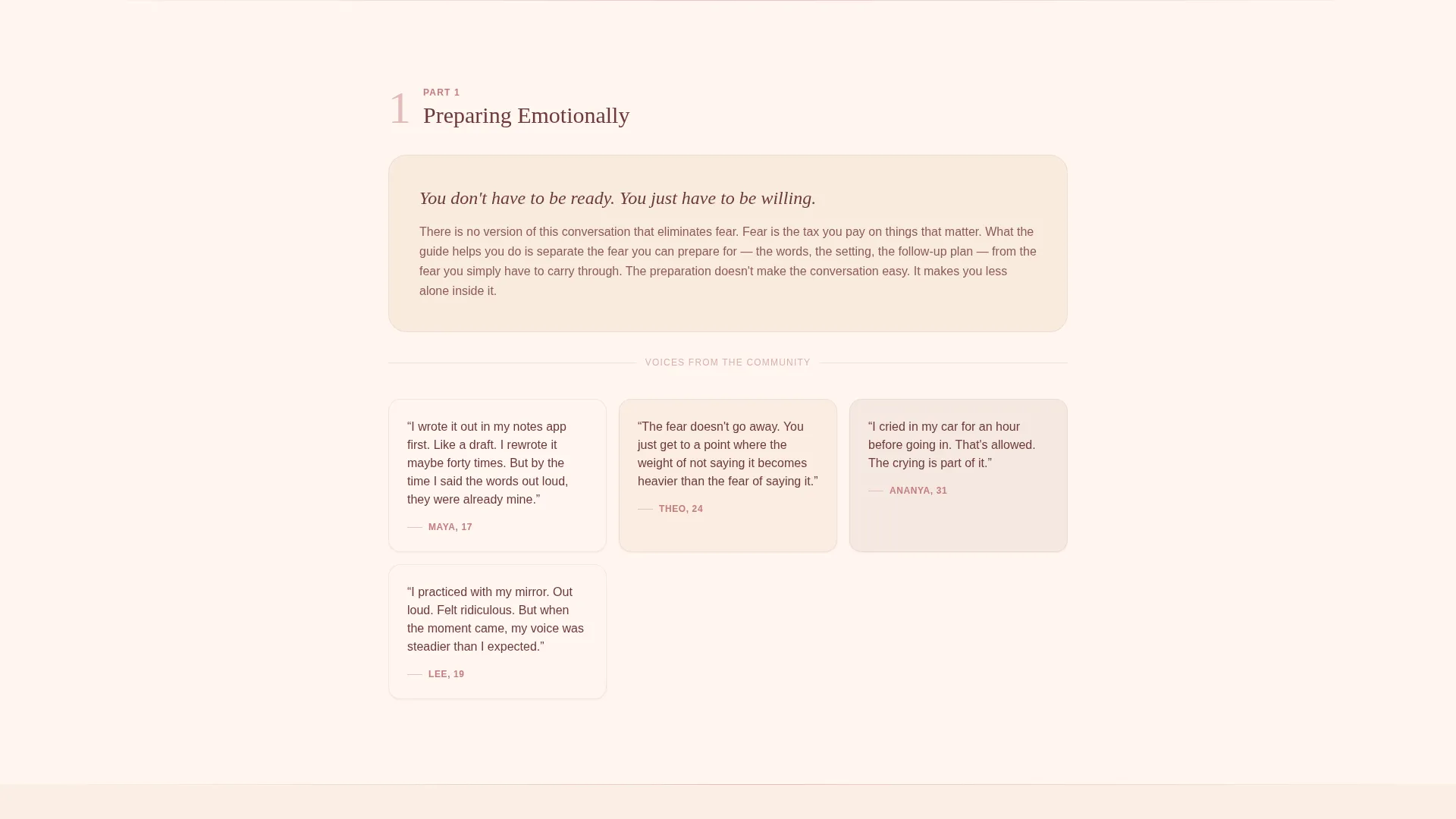
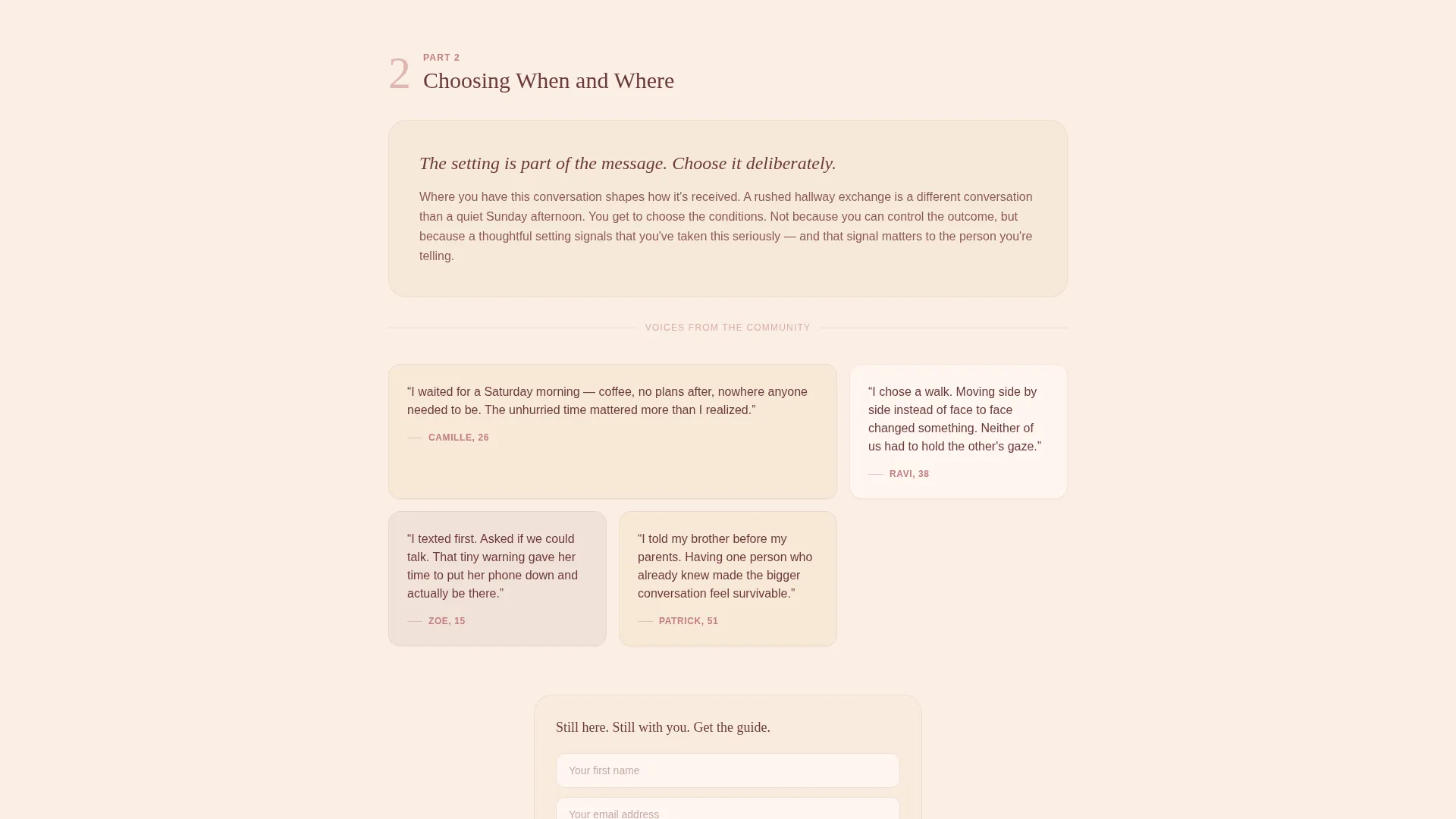
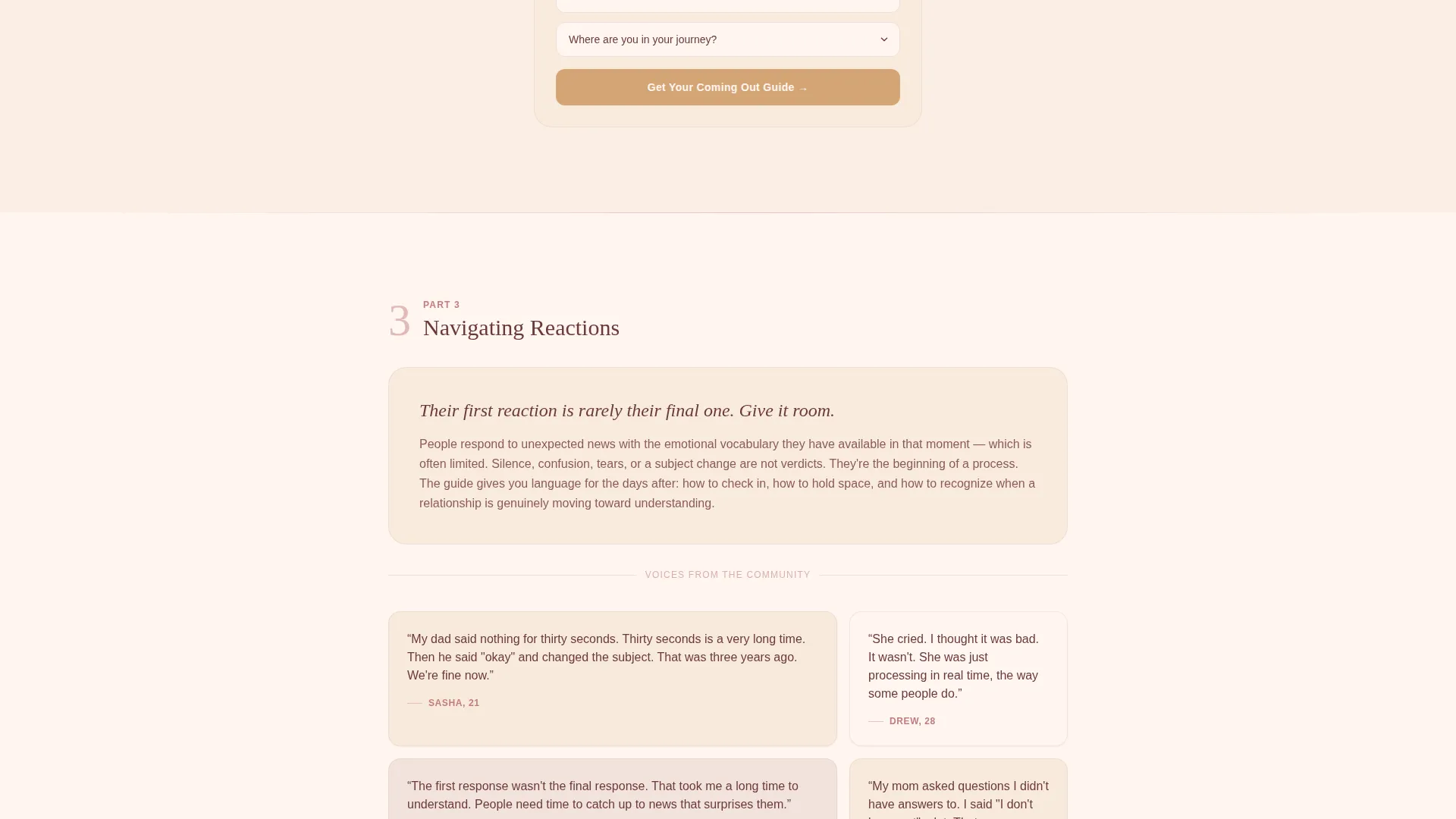
Each of the four educational sections opens with a short, second-person lesson. It then dissolves into a cluster of three to five staggered testimonial blocks, each showing a first name, age, and one sentence. The scroll is designed so emotional temperature rises as the visitor moves down the page, from fear-focused early sections to joyful, specific voices near the end.
Dual Call-to-Action System
The primary call to action, "Get Your Coming Out Guide," appears beneath the hero and again after the third testimonial cluster. A secondary terracotta button, "Match With a Peer Mentor," offers a softer path and links to a short intake form. Both paths are built into the layout and styled to complement each other without competing.
Scroll-Triggered Reveal Animations
Section content and testimonial blocks use scroll-triggered entrance animations. Testimonial cards stagger into view, and the floating glass card in the hero section includes a shimmer effect. These interactions are set to medium intensity, keeping the page feeling alive without being distracting.
Desert Rose Color System Applied Throughout
Background sections alternate between petal white and warm sand. Body text uses deep clay for grounded readability. Terracotta marks section dividers. Quiet gold is reserved for buttons and interactive highlights. Every color assignment is intentional and consistent across the full page.
Educational Guide Section Architecture
The four content sections follow a clear emotional arc: Preparing Emotionally, Choosing When and Where, Navigating Reactions, and Life on the Other Side. Each section has its own lesson block and testimonial cluster. The architecture gives visitors a framework, not just a form.
Page sections overview
| Section | Purpose |
|---|---|
| Hero Split | Introduce the service and capture the lead with a photo, headline, and form |
| Preparing Emotionally | Deliver the first lesson and open with fear-to-courage testimonials |
| Choosing When & Where | Provide a tactical framework and strategy-focused peer voices |
| Navigating Reactions | Offer practical guidance backed by longer, more specific testimonials |
| Life on the Other Side | Close the scroll with joyful testimonials and the dual call-to-action block |
| Page Footer | Display horizontal flow footer with navigation and supporting links |
Design & branding system
Bloom uses the Desert Rose color system, which draws from a desert-at-golden-hour visual language. Every color choice reinforces the emotional tone: warm enough to feel safe, grounded enough to feel trustworthy.
- Colors: petal white (#FFF5F0) and warm sand (#F5E6D3) alternate as section backgrounds; deep clay (#6B3A3A) carries body text; terracotta (#C27D7D) marks dividers and secondary buttons; quiet gold (#D4A574) highlights calls to action
- Typography: Fraunces serif for headings creates an intimate, editorial warmth; DM Sans handles body text for clean legibility at all sizes
- Visual texture: the pinned-note aesthetic of the testimonial mosaic and the shallow-depth golden-hour hero photograph reinforce the handcrafted, human feel of the overall design
Mobile & speed optimization
Bloom is built with a mobile-first priority. Many of its users will be reading privately on a phone, often in a moment of quiet urgency. The layout is designed to feel comfortable and uncluttered on small screens.
- Single-column flow keeps the reading experience clean and uninterrupted on mobile devices
- Static sections use Server Components to keep the page fast; the lead capture form uses a Client Component for interactivity
- Scroll-triggered animations are set to medium intensity, avoiding heavy rendering that could slow down mobile performance
How this template helps you convert
Bloom earns its conversions by stacking evidence before asking for anything. The visitor is guided through emotional validation and practical content before they reach a form. Every design decision supports the moment of decision.
- The hero form appears only after the headline and a single supporting line have already named the visitor's situation, reducing friction before the first input field
- The testimonial mosaic builds cumulative trust across four sections, so by the time the second call-to-action appears, the visitor has read dozens of real peer voices confirming that a plan makes the conversation survivable
- The dual call-to-action system gives visitors two paths forward, a guide download for those who prefer self-paced resources and a peer mentor match for those who want a human connection, increasing the chance that any visitor finds a conversion point that fits their readiness
Other information about this template
Bloom is categorized under Community and Nonprofit, specifically within the LGBTQ+ Organization subcategory. It is designed exclusively as a single-page, single-column flow with no multi-page routing required.
- The template is built in the Educational Guide theme, making it adaptable for any organization that uses structured content to build emotional readiness before a call to action
- The Testimonial Mosaic creative direction is structural, not decorative; it is central to how the page earns trust and is not a stylistic add-on that can be removed without affecting the conversion logic
- The Half-Page Photo and Text header concept is designed to work with warm-toned, shallow-depth photography; the layout reserves the left visual half for an image and the right for text and the primary form
- The footer follows a horizontal flow pattern, providing space for navigation links and supporting organizational information without distraction from the main page goal
Theme
Educational Guide
Creative direction
Testimonial Mosaic
Color system
Desert Rose
Style
Single Column Flow
Direction
Lead Generation
Page Sections
Half-page Hero with Lead Capture
Scroll-driven Testimonial Mosaic
Dual Call-to-action System
Scroll-triggered Reveal Animations
Educational Guide Section Architecture
Desert Rose Visual Identity System
Related questions
Who is the Bloom landing page template built for?
What sections are included in the Bloom template?
Can the lead capture form be customized for my organization?
Does the template support visitors who are allies or family members, not just people coming out?
How does the Testimonial Mosaic work inside the page structure?