African Cuisine & Dining Booking Website Template
The Bobotie template is a hero-dominant landing page built for a Cape Malay heritage fine dining restaurant in Cape Town. It leads with a cinematic cinemagraph hero, then scrolls visitors through a layered origin story of Cape Malay cuisine before revealing the menu. The sticky booking drawer and gift voucher path drive direct reservations from the first visit.
by Rocket studio
Quick summary
Bobotie is a single-page restaurant template that sells the cultural narrative of Cape Malay cuisine before presenting a single dish or price. A full-viewport cinemagraph opens the experience. Scroll-triggered prose chapters carry the visitor from 17th-century spice routes to a table set for tonight, closing with a sticky booking drawer that makes it easy to reserve.
Who this template is for
This template serves restaurant owners and chefs who want their landing page to do more than list dishes. It is built for heritage dining concepts where the story is as important as the food.
- Anniversary couples and experience-seekers looking for a meal with meaning
- Food journalists and culinary tourists researching Cape Malay cuisine in Cape Town
- Expat South Africans searching for the precise flavour of home
What problem this template solves
Most restaurant pages lead with a price list and a stock photo. That approach fails heritage dining concepts, where the emotional case for booking has to be made before the menu appears.
- Visitors leave before they connect with the food's history or cultural depth
- There is no clear path from curiosity to confirmed reservation
- The visual identity feels generic rather than rooted in a specific place and tradition
What you get with this template
You get a fully designed, single-page layout that moves a visitor from wonder to reservation in one scroll session. Every section is purpose-built for a Cape Malay fine dining context.
- A cinematic hero cinemagraph with a restaurant name reveal after two beats of stillness
- Three scroll-triggered spice chapters that connect history to current menu dishes
- A sticky booking drawer with date picker, party size selector, menu toggle, and a gift voucher path
Feature list
This template includes six core features, each grounded in the brief's stated design and interaction requirements.
Cinematic Cinemagraph Hero
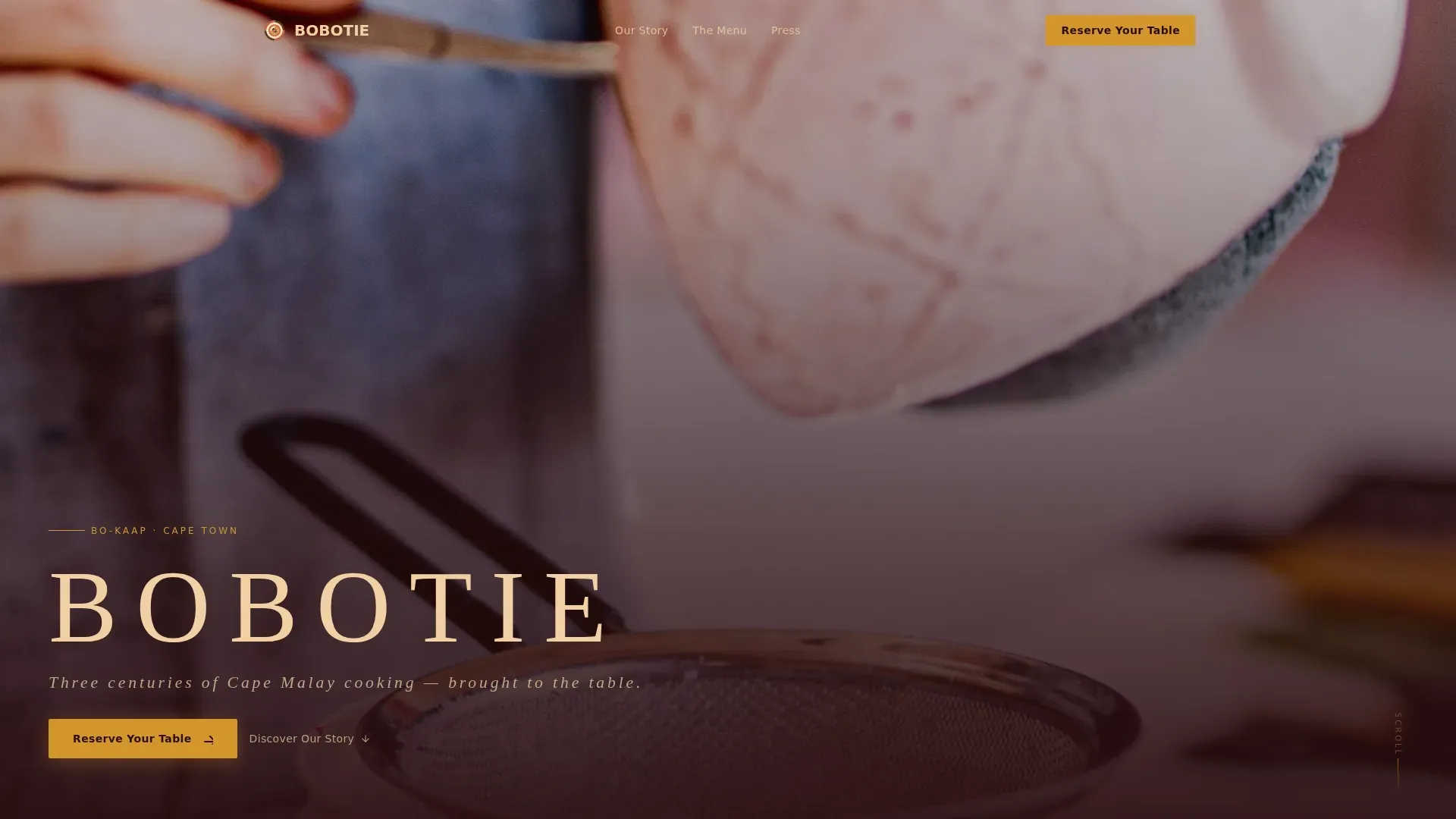
The header fills ninety percent of the viewport with a still kitchen scene. The only motion is a curl of steam rising from a hand-thrown ceramic bowl as hot bredie is ladled in. After two beats, the restaurant name appears in a fine-weight serif at the bottom edge, unhurried. The single tungsten pendant casts the cook's forearm in amber, making the scene feel warm and immediate.
Scroll-Triggered Origin Story
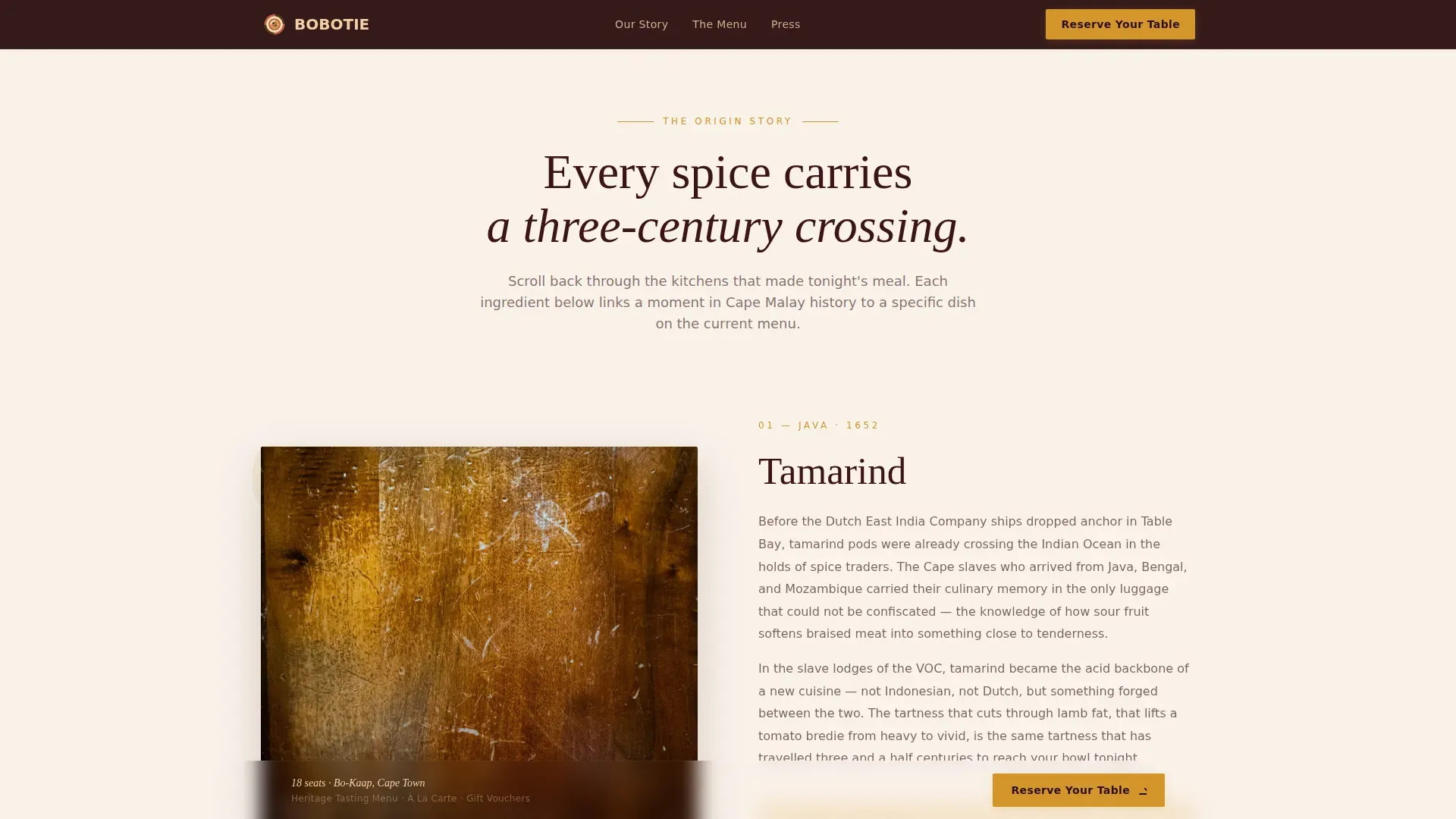
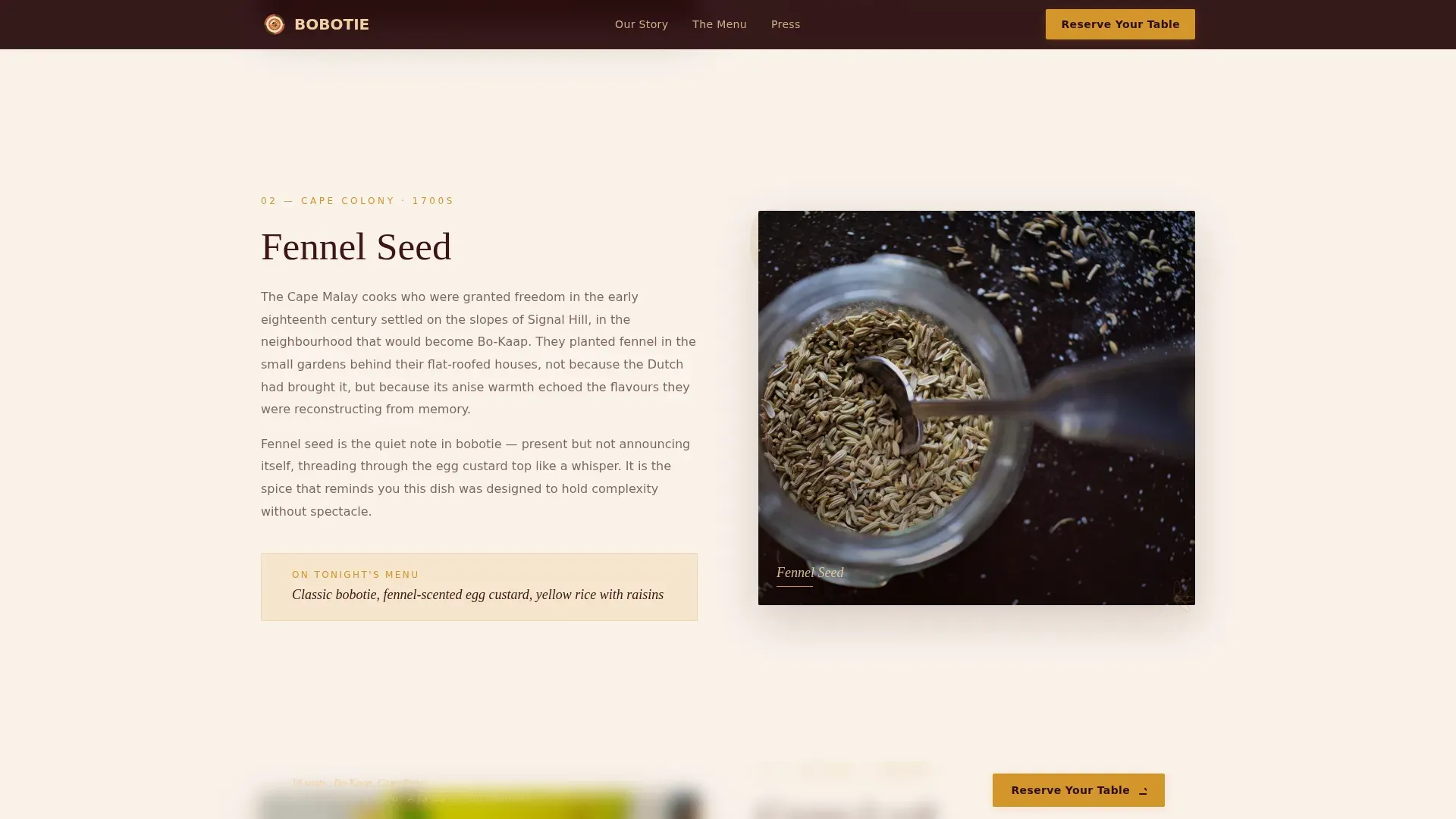
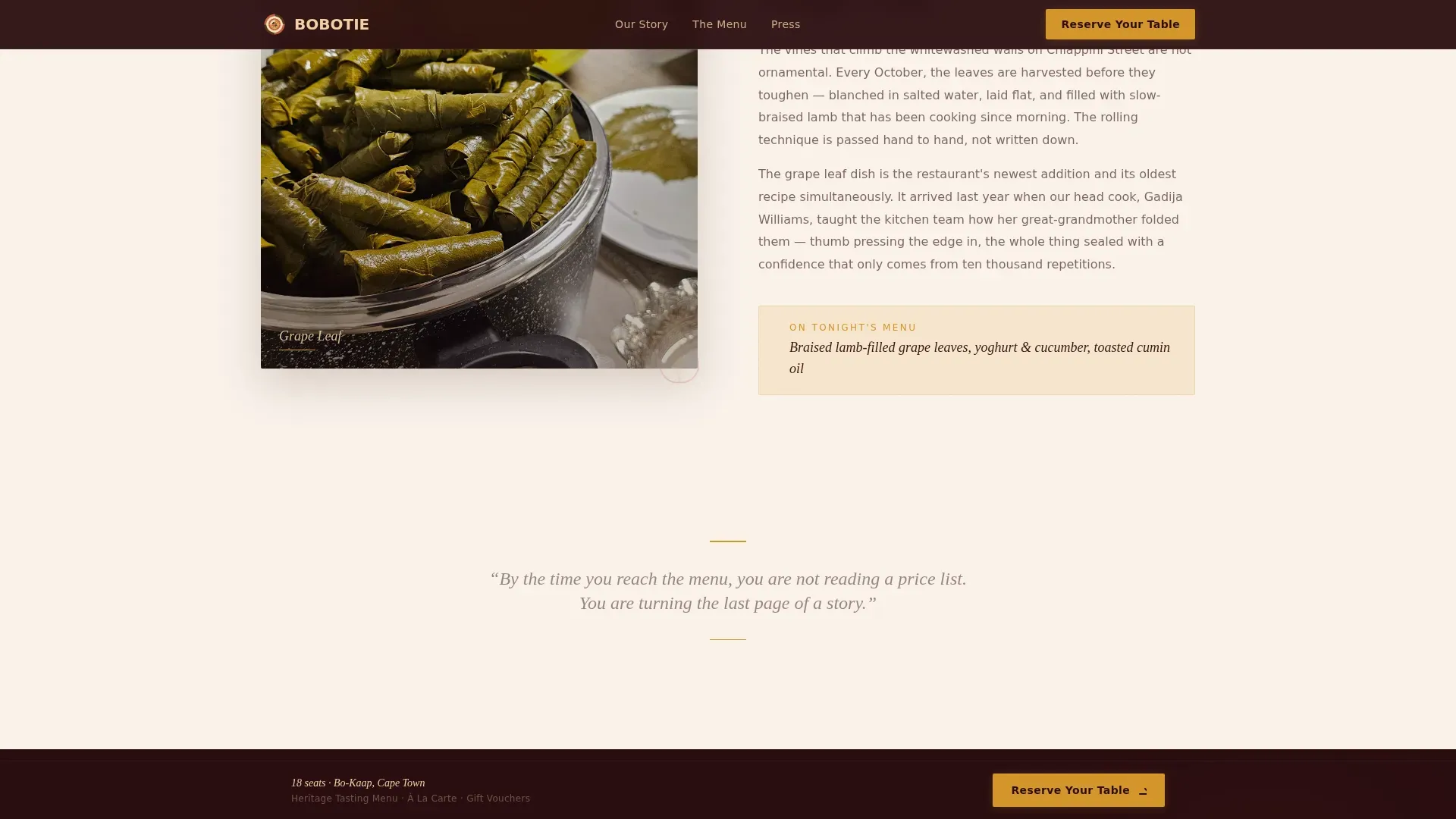
Three prose chapters unpack the history of Cape Malay cuisine through individual ingredients: tamarind, fennel seed, and grape leaf. Each chapter pairs short, archival-textured prose blocks with hand-illustrated spice diagrams. The scroll reveal is staggered, so each section arrives with purpose rather than all at once. By the time the menu appears, it reads as a final chapter, not a price list.
Menu as Final Chapter
The menu section presents the Heritage Tasting Menu alongside an à la carte preview. Signature dishes are showcased with appetising descriptions that carry the flavour of spices, fruit, and slow-cooked meat forward from the origin story. The section is structured so the food feels like the earned conclusion of the narrative scroll.
Sticky Booking Drawer
After the visitor scrolls past the origin sequence, a slim booking drawer pins to the bottom of the viewport. It includes a date picker, a party size selector for groups of two to twelve, and a toggle between the Heritage Tasting Menu and à la carte dining. A secondary call-to-action offers a prepaid dining voucher via a "Send as a Gift" path.
Press and Trust Section
Editorial quotes from food publications sit above publication logo marks. This section gives first-time visitors the social proof they need before committing to a reservation. It is positioned after the origin story and before the sticky drawer becomes the dominant action.
Desert Rose Colour and Type System
The Haute Craft visual identity uses five intentional colours. Atchar gold is reserved for buttons and hover states, so every call-to-action stands out cleanly against the warm background tones. Fraunces serves as the display serif for headings; DM Sans handles body copy for legibility at all sizes.
Page sections overview
| Section | Purpose |
|---|---|
| Hero Cinemagraph | Opens with steam-and-stillness kitchen scene and name reveal |
| Origin Story Chapters | Three spice chapters link culinary history to current menu dishes |
| Menu Final Chapter | Heritage Tasting Menu and à la carte preview presented as narrative close |
| Press and Trust | Editorial quotes and publication logo marks build credibility |
| Sticky Booking Drawer | Date picker, party size, menu toggle, and gift voucher conversion path |
| Footer Arc Split | Brand tagline and page close in Pattern 7 Arc Browser Split layout |
Design & branding system
The template uses a Desert Rose colour system built around five specific hex values. The palette is warm, tactile, and archival, designed to feel like a spice drawer opened at dusk rather than a polished restaurant chain identity.
- Terracotta (#C1666B), clove brown (#3C1518), saffron milk (#F2D0A4), and whitewashed lime (#FAF3EB) cover backgrounds and text
- Atchar gold (#D4952A) is reserved exclusively for buttons and hover states to keep calls-to-action visually distinct
- Fraunces display serif pairs with DM Sans body type for a contrast between craft warmth and clean readability
Mobile & speed optimization
The template is designed desktop-first to serve the primary audience of anniversary couples researching on larger screens, with full mobile support layered in. Animations are built to run smoothly without harming the experience on smaller devices.
- Images are lazy-loaded to avoid blocking the initial viewport render
- CSS animations are GPU-accelerated, keeping the steam effect and scroll reveals fluid on both desktop and mobile
- The sticky booking drawer adapts to mobile viewports so the reservation path remains accessible at every screen size
How this template helps you convert
The page earns the click before it asks for it. Every design and copy decision is sequenced to move a curious visitor toward a confirmed booking.
- The cinemagraph hero creates immediate emotional investment before a single word is read, making the visitor want to stay and scroll.
- The origin story sequence builds appetite through meaning, so by the time the sticky booking drawer appears, the visitor already feels the meal is unrepeatable.
- The dual conversion path, direct reservation or gift voucher, captures both the diner and the gift buyer in a single page visit.
Other information about this template
This template is built specifically around the world of Cape Malay cuisine, rooted in 17th-century traditions that crossed Indonesian spice routes, Dutch colonial kitchens, and Bo-Kaap hearths. The content structure reflects that heritage authentically.
- Bobotie is a gently-spiced mince dish, oven-baked with a savoury egg custard on top, traditionally served with yellow rice and sambals. The template's menu section is designed to present exactly this kind of dish with full contextual flavour.
- Cape Malay cuisine incorporates all the spices that define the tradition: turmeric, cumin, coriander, cloves, cardamom, and cinnamon. Dried fruit such as raisins and apricots add a sweet-and-sour depth that sets the cuisine apart.
- The meat mixture at the heart of bobotie is seasoned with black pepper, nutmeg, and vinegar alongside soft onion cooked in a little oil over medium heat. Bay leaves are tucked in during the bake, and milk-soaked bread binds the filling before you add water to loosen the mix. Many cooks squeeze a little lemon into the custard and brown the top until it is set and golden.
- Roti, the soft unleavened bread served alongside Cape Malay curries, appears in the menu section as a natural companion to the fragrant Cape Malay chicken curry, which is characterised by turmeric, cumin, coriander, ginger, and fruity undertones.
- Denningvleis, a slow-cooked lamb stew marinated in sweet-and-sour spices, and koeksisters, the braided syrup-dipped pastry, represent the full breadth of Cape Malay dishes this template is designed to serve and celebrate.
- The best place to experience Cape Malay cuisine is the Bo-Kaap district, the Malay quarter of Cape Town that sits below Signal Hill. This template carries the visual and narrative identity of that neighbourhood directly into the page.
- The Dutch settlers who imported workers from the Dutch East Indies shaped the Indian and Asian spice influences that define Cape Malay food to this day. That layered history is the backbone of the origin story scroll sequence.
- A salad of pickled vegetables, a dish of yellow rice with butter and cinnamon, a bowl of curries rich with fruit and pepper: these are the details that give the bobotie heritage fine dining cape malay restaurant landing page template its specific flavour and cultural honesty.
- The template can support a South African English localisation with ZAR (South African rand) currency and Cape Town geography references built into the copy and booking flow.
- Visit the page on any device: the layout is fully responsive and built to serve a city audience that moves between desktop research and mobile booking throughout the day.
Theme
Haute Craft
Creative direction
Origin Story
Color system
Desert Rose
Style
Hero-Dominant (90/10)
Direction
Direct Sales
Page Sections
Cinematic Cinemagraph Hero Section
Scroll-triggered Origin Story Chapters
Menu as Narrative Final Chapter
Sticky Reservation Booking Drawer
Press and Trust Editorial Section
Desert Rose Visual Identity System
Related questions
What sections does this template include?
Can I customise the booking drawer for different group sizes?
Is this template suitable for other heritage cuisine restaurants?
What typography does this template use?
Does this template support a gift voucher conversion path?