Pulmonology Medicine Specialist Professional Website Template
Breathe is a single-column landing page template built for pulmonology research centers. It guides clinicians, respiratory therapists, and academic researchers through a research pipeline narrative using parallax scroll, an animated bronchial tree illustration, and a gated research library form. The design follows an alpine, anatomical-elegant aesthetic with a cool, precise color system.
by Rocket studio
Quick summary
Breathe is a single-column flow landing page designed for a pulmonology research center. It walks professional visitors through a center's full research pipeline, from early hypothesis through published clinical translation. A breathing SVG bronchial tree opens the page, a left-margin progress bar tracks scroll depth, and a lightweight gated form converts qualified visitors into research library members.
Who this template is for
This template is built for academic medical research centers working in pulmonology and respiratory science. It speaks directly to a professional audience that expects precision, intellectual depth, and curated access to real findings.
- Pulmonologists and respiratory therapists seeking current interstitial lung disease (ILD) protocols and ventilator-weaning data
- PhD candidates and academic researchers looking for collaborators or citation-ready findings
- Research center communications teams that need to present a credible, pipeline-led narrative to a clinical audience
What problem this template solves
Most research center pages read like institutional brochures. They list credentials but never guide the visitor through the actual work. Busy clinicians and academics leave before they find anything worth citing or acting on.
- Visitors have no clear sense of where to start or how to navigate the center's research output
- Gated resources feel abrupt and unearned, making form submissions feel like a cost rather than a reward
- The design does not reflect the rigor of the science, which erodes trust with specialist audiences
What you get with this template
You get a fully structured, single-column landing page that moves visitors through a four-stage research narrative. Every section is purposeful, and every interaction detail supports the credibility of the center.
- An animated hero with a continuous-stroke bronchial tree SVG and a scroll-triggered headline reveal
- A parallax research pipeline with a left-margin inhale progress bar across Discovery, Methodology, Analysis, and Translation sections
- A gated research library form with a professional email field, clinical specialty dropdown, and quarterly digest opt-in checkbox
Feature list
This template ships with a focused set of components built specifically for a professional scientific audience.
Animated Bronchial Tree Hero
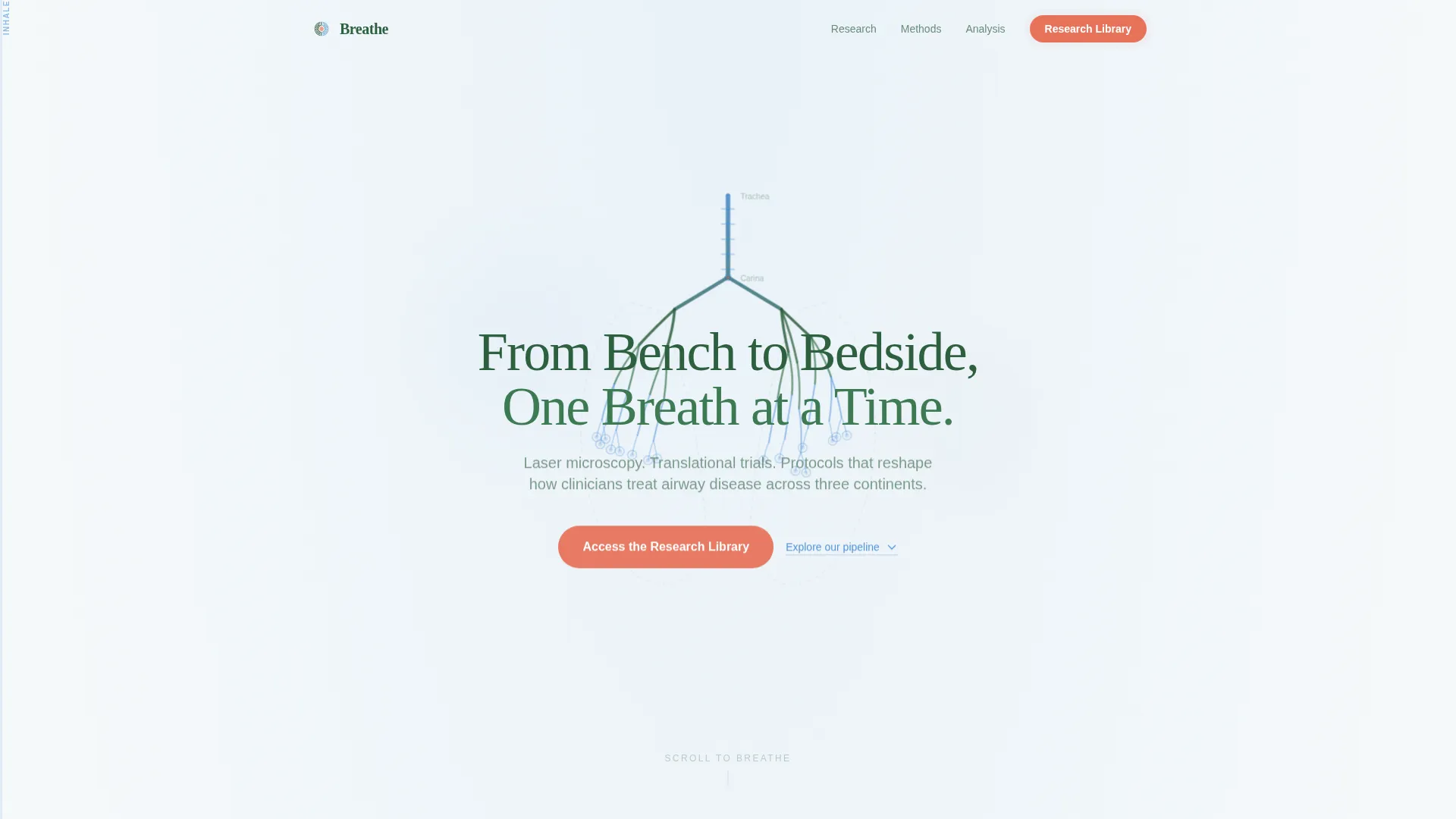
The header fills the full viewport with a line art SVG that traces the bronchial tree from trachea to terminal alveoli. A CSS breathing animation expands and contracts the illustration through two gentle cycles before the headline fades in. The style sits between a Gray's Anatomy plate and a botanical print.
Scroll-Linked Progress Bar
A thin vertical bar runs along the left margin of the page. It fills gradually as the visitor scrolls, mimicking an inhale gauge. This gives research professionals a clear sense of their position in the pipeline narrative without any intrusive interface elements.
Four-Stage Research Pipeline
The page is structured as a step-by-step guide through Discovery, Methodology, Analysis, and Translation. Each stage uses soft parallax drift transitions that echo the organic expansion of lung tissue. The flow makes the research process legible and compelling for clinical and academic readers alike.
Ungated Abstract Pathway
After the Methodology section, a plain text link offers immediate, ungated access to the center's latest published abstract. This builds intellectual trust before the visitor reaches the gated library, making the form submission feel like a natural next step rather than a barrier.
Gated Research Library Form
The primary call to action gates a curated collection of white papers, trial summaries, and imaging atlases. The form asks for a professional email address, a clinical specialty selection from a dropdown, and a single opt-in checkbox for a quarterly digest. It is intentionally lightweight to reduce friction.
Social Proof Display
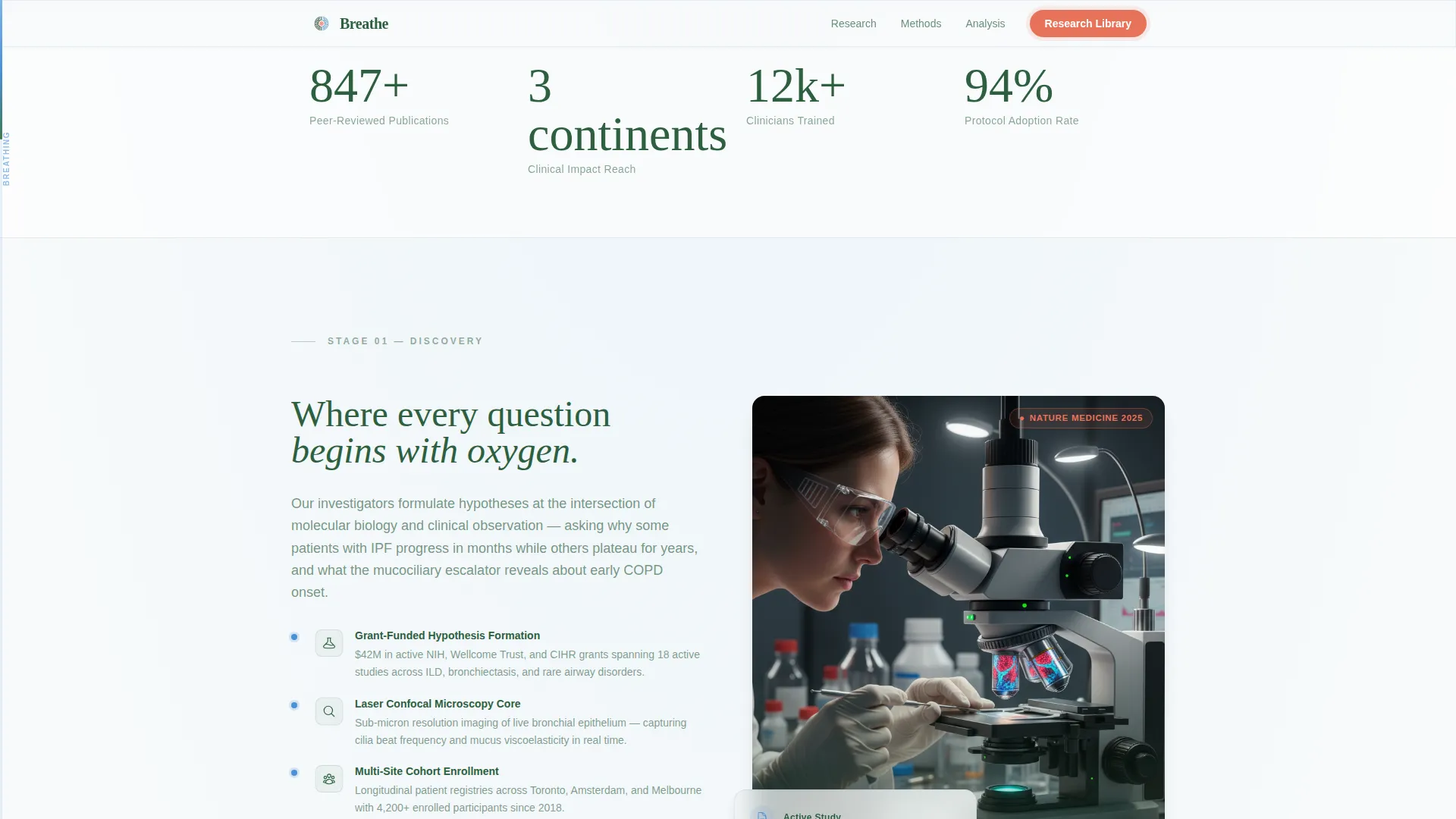
Citation counts, published journal references, institution affiliations, and continent reach statistics are woven into the page to reinforce the center's authority. These signals are placed early enough to build trust before the visitor reaches the conversion section.
Page sections overview
| Section | Purpose |
|---|---|
| Hero with Animation | Opens with the breathing bronchial tree SVG and reveals the headline after two breath cycles |
| Discovery Stage | Introduces the research pipeline at the hypothesis and grant-funding level |
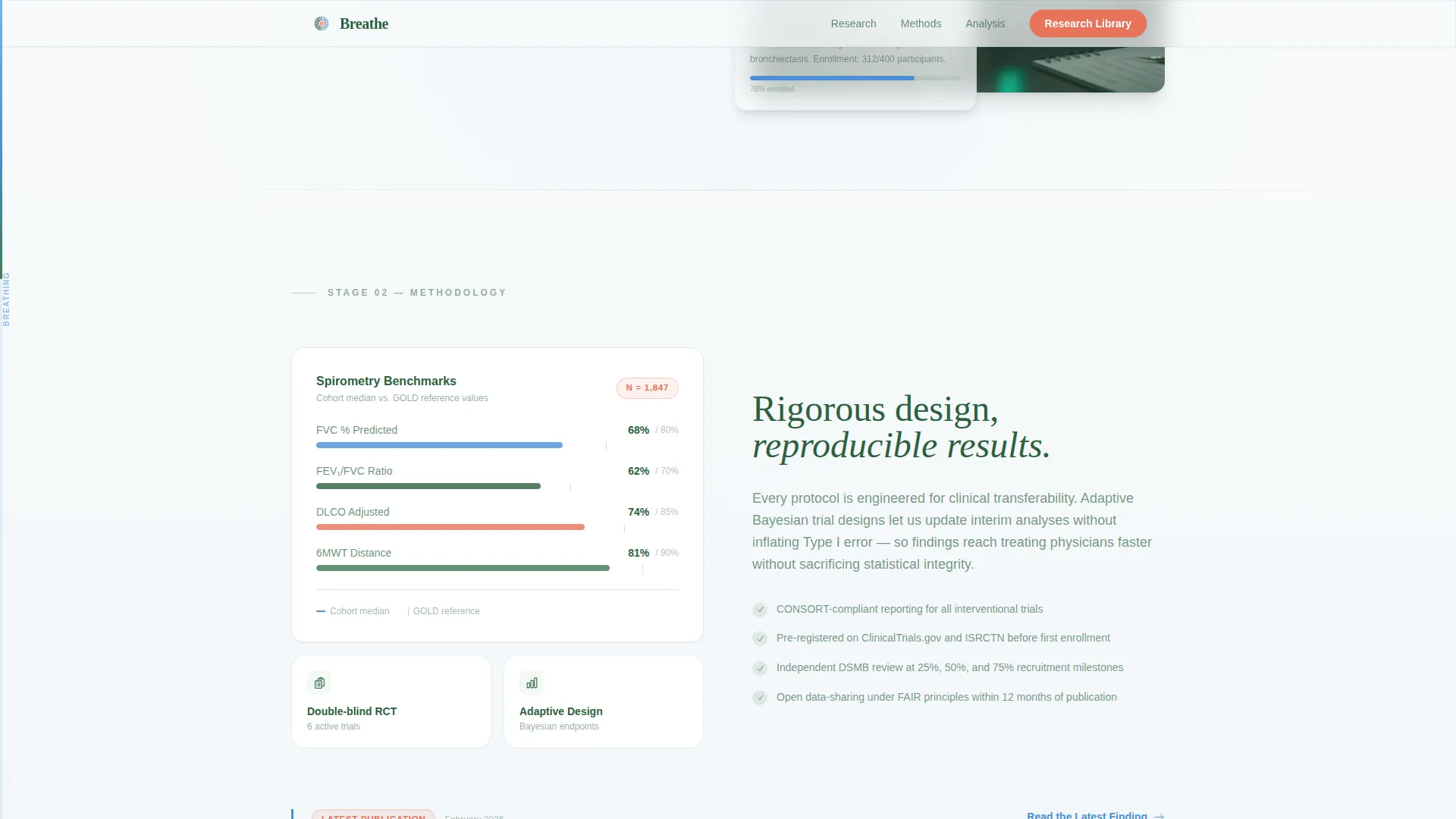
| Methodology Stage | Covers clinical trial design and spirometry benchmarks with parallax transitions |
| Ungated Abstract Link | Offers a free "Read the Latest Finding" text link to build trust before the form gate |
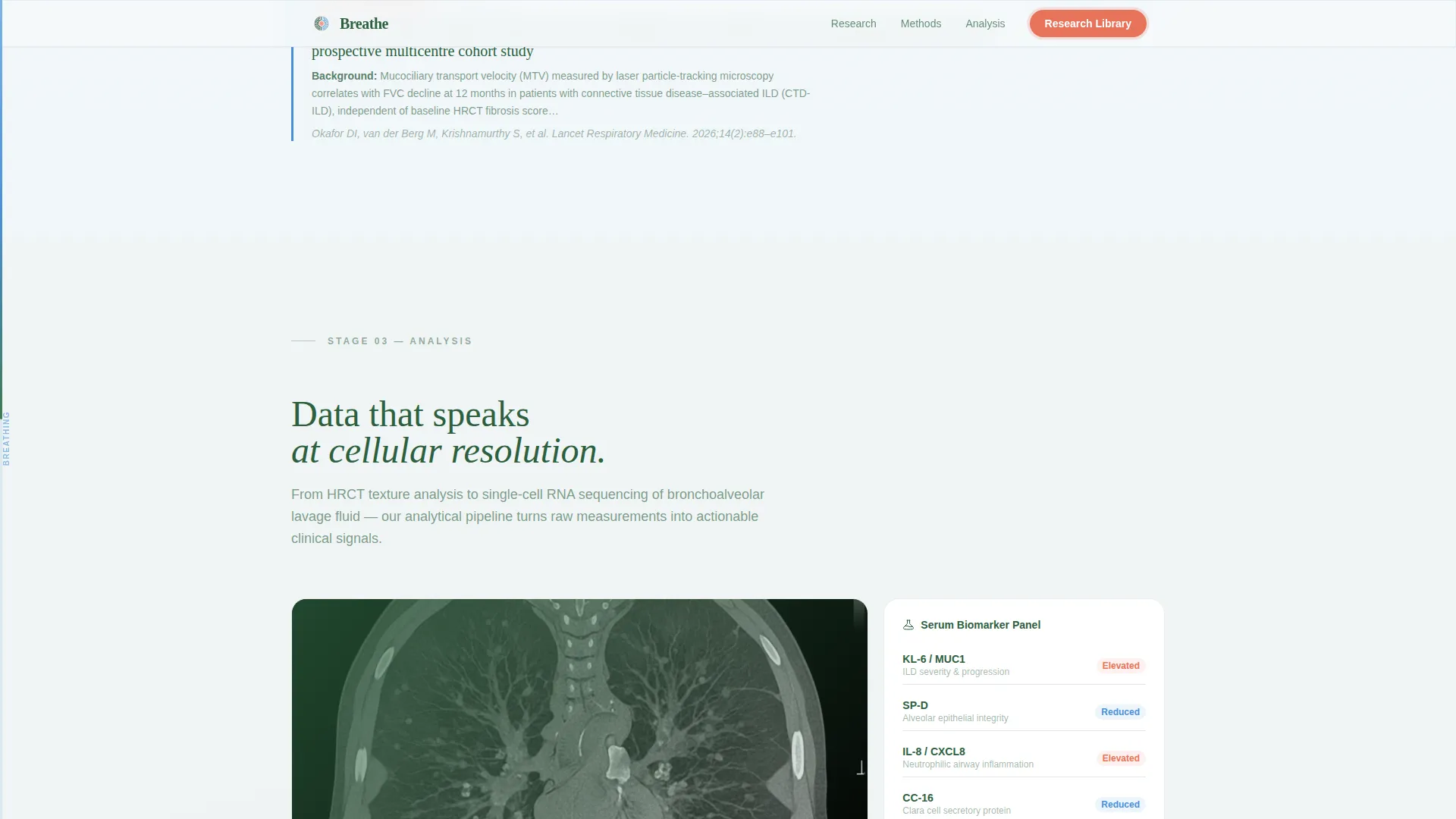
| Analysis Stage | Presents imaging data and biomarker panels in a bento-style layout |
| Translation Stage | Showcases published protocols and continuing medical education (CME) modules |
| Research Library Gate | Houses the primary call-to-action form with specialty dropdown and digest opt-in |
| Footer | Single linear row with institutional links and minimal navigation |
Design & branding system
The visual identity follows an Organic Flow theme using the Alpine Fresh color system. Every design choice reinforces the feeling of a mountain morning: cool, expansive, and precise.
- Glacier white (#F7FAFB) dominates the background; evergreen (#2D5F3E) anchors headings and section dividers; sky blue (#4A90D9) carries body links and the progress indicator
- Oxygenated coral (#E8735A) appears only on interactive highlights and citation badges, keeping it reserved for moments where the visitor needs to act
- Typography pairs Fraunces serif for headlines with DM Sans for body text and interface elements, balancing academic authority with clean readability
Mobile & speed optimization
The template is built desktop-first, reflecting the workstation context of its primary audience. It remains fully responsive for visitors on other devices.
- Server Components handle static content sections to keep initial load lean; Client Components are used only where animations and scroll interactions require them
- GSAP ScrollTrigger powers the parallax drift, progress bar fill, and section reveal animations without blocking the page render
- The single-column layout adapts cleanly to narrower viewports, preserving the pipeline narrative and form usability on tablets and mobile screens
How this template helps you convert
The conversion strategy is built into the page structure itself. Trust is earned incrementally before the visitor ever sees a form field.
- The animated hero and pipeline narrative establish the center's credibility through demonstrated depth, so visitors arrive at the form already engaged rather than skeptical.
- The ungated abstract link after the Methodology section gives something real before asking for anything in return, making the gated library feel like a continuation rather than a transaction.
- The lightweight form, with just three fields and a clear value statement, reduces the friction that typically causes qualified professionals to abandon research resource gates.
Other information about this template
This template is a strong fit for any pulmonology or respiratory science organization that needs to present research output to a specialist professional audience. It is part of the Breathe template collection and reflects the Health and Medical category with a Pulmonology Medicine subcategory focus.
- The template uses the Step-by-Step Guide creative direction to mirror the logical flow of the scientific method, making the pipeline feel intuitive rather than imposed
- The Line Art header concept and Organic Flow theme distinguish this page from generic medical site templates by leaning into anatomical illustration rather than stock imagery
- The Content and Resource landing page direction means the primary goal is qualified access, not e-commerce or appointment booking, keeping the experience appropriate for an academic and clinical audience
Theme
Organic Flow
Creative direction
Step-by-Step Guide
Color system
Alpine Fresh
Style
Single Column Flow
Direction
Content/Resource
Page Sections
Animated Bronchial Tree Hero
Scroll-linked Inhale Progress Bar
Four-stage Research Pipeline
Ungated Abstract Access Link
Gated Research Library Form
Social Proof and Citation Display
Related questions
Who is the primary audience for this template?
What does the gated research library form collect?
What sections appear before the form gate?
Can this template be adapted for a different medical specialty?
What animation tools does this template use?