Research & Analytics Firm Booking Website Template
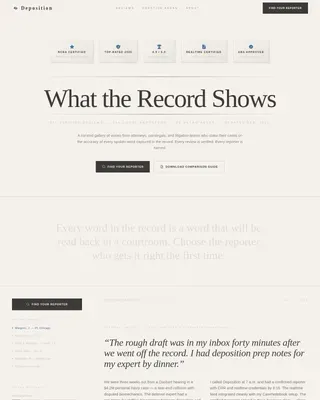
Briefing is a single-column landing page template built for policy research institutions. It pairs an editorial magazine aesthetic with a deliberate scroll rhythm, guiding cabinet advisors, corporate executives, and foundation directors toward booking a private briefing. The layout prioritizes typographic authority, institutional credibility signals, and a structured intake form that qualifies leads before the first conversation.
by Rocket studio
Quick summary
Briefing is a single-column landing page template designed for policy research institutions. It presents published frameworks and expert analysis in a slow, magazine-paced scroll. Every section is built to communicate authority. The primary goal is converting qualified visitors into briefing requests or quarterly subscribers.
Who this template is for
This template is built for organizations that publish serious policy research and need a client-facing page that matches the weight of their work. It suits teams where credibility is the product and every visual decision carries institutional meaning.
- Policy think tanks and research institutions presenting original frameworks
- Cabinet advisors or their communications teams seeking a credentialed web presence
- Foundation directors and corporate strategy officers evaluating research partnerships
What problem this template solves
Most service pages for research-oriented organizations look like generic consulting sites. They bury their expertise behind stock imagery and vague value propositions. This template solves the mismatch between the rigor of the research and the impression the page makes.
- Weak visual authority undermines trust before a prospect reads a single line
- Generic contact forms fail to qualify high-value leads by institutional affiliation or policy interest
- A cluttered layout competes with the ideas themselves, diluting analytical credibility
What you get with this template
You get a fully structured single-column landing page that moves from provocative headline to peer validation to published insight to booking form. Every section is purpose-built for a sophisticated audience that expects substance on first scroll.
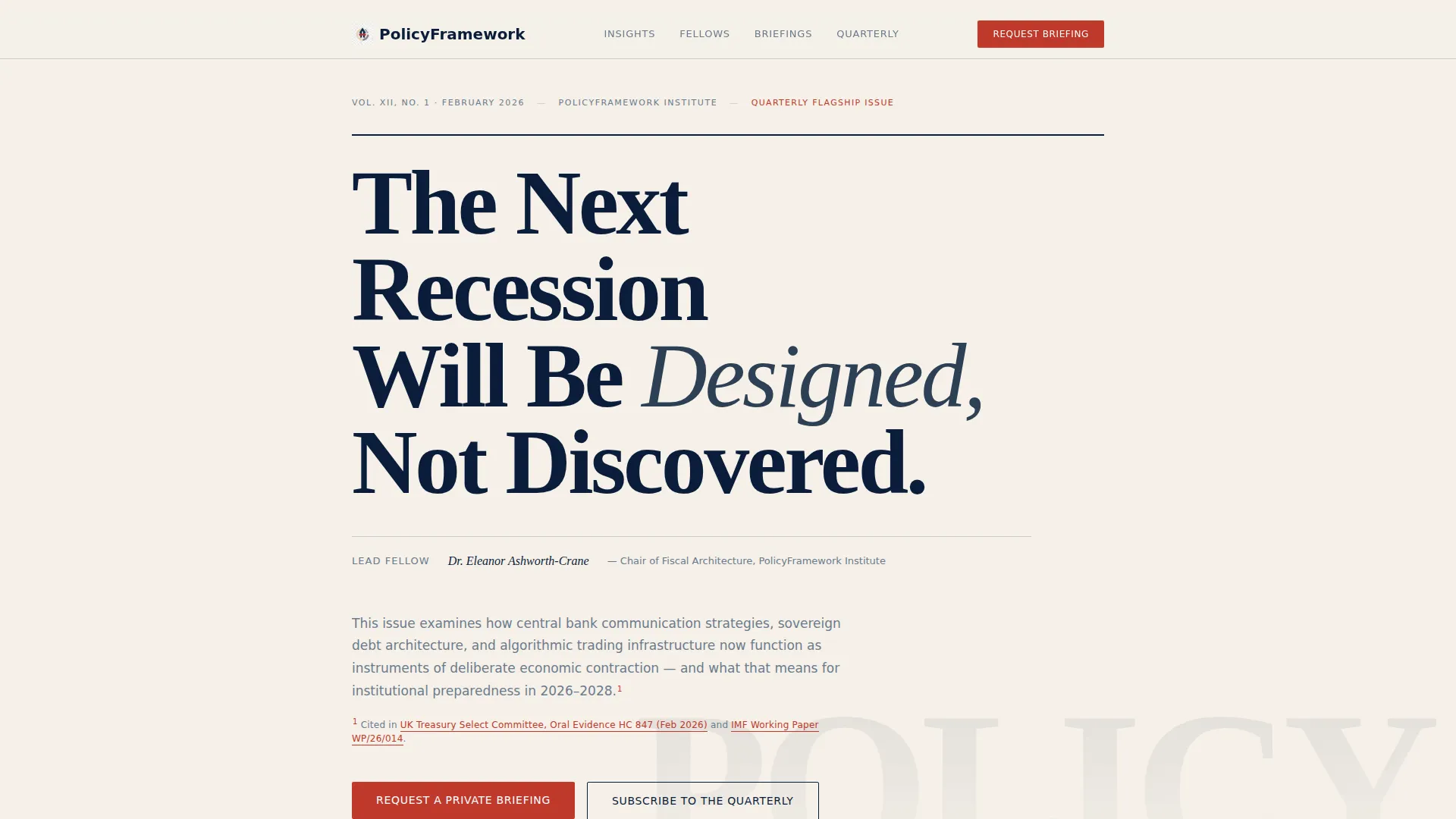
- A giant serif headline block set flush left against warm parchment, styled like a journal cover thesis
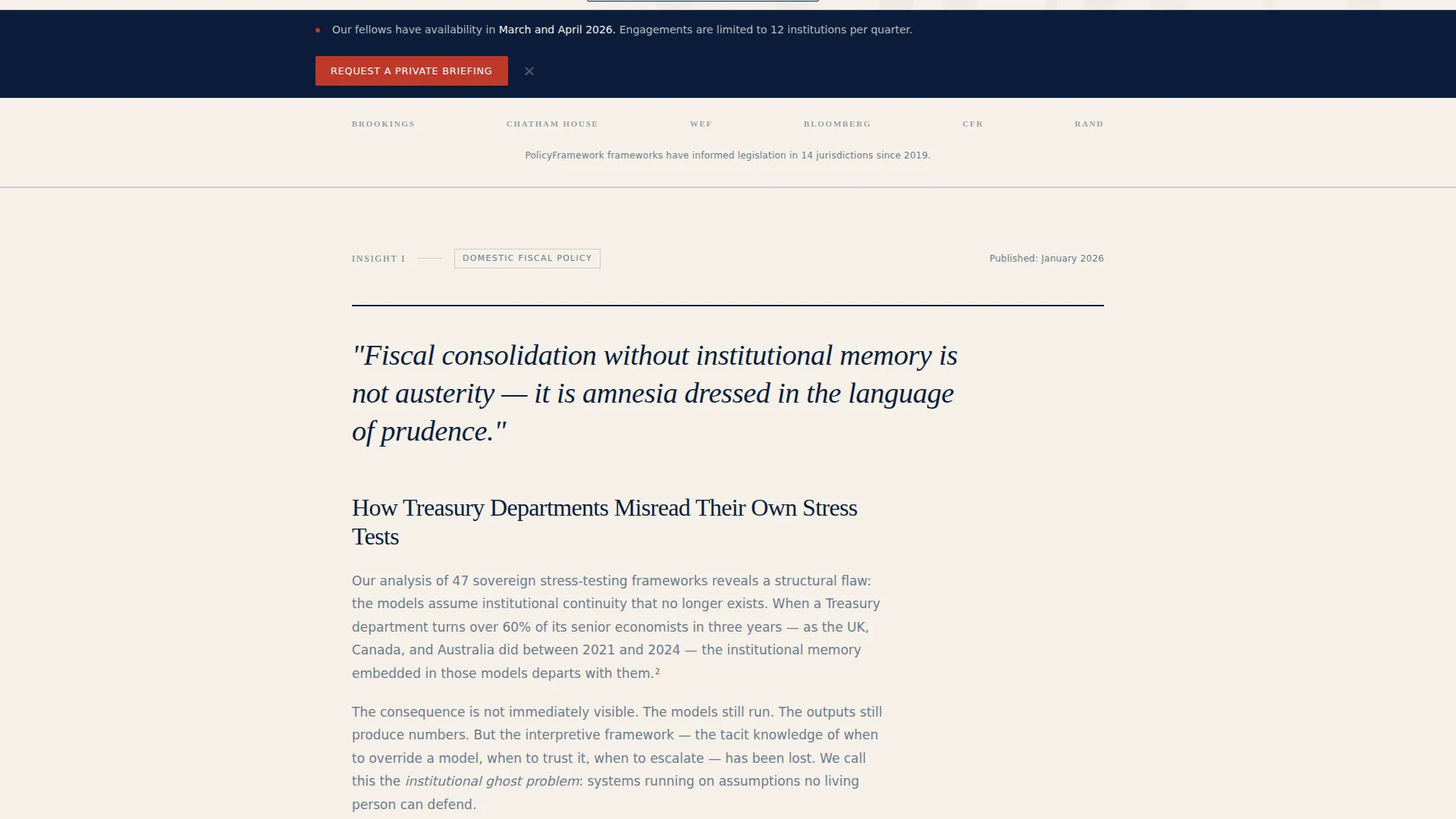
- A horizontal logo wall for institutional peer recognition, followed immediately by a primary booking call to action
- A multi-field intake form capturing affiliation, policy area, briefing format preference, and date range
Feature list
This template includes deliberate design and structural choices pulled directly from editorial publishing tradition. Each feature serves a specific persuasion purpose.
Giant Thesis Headline Block
A three-line oversized serif headline sits flush left against raw parchment background. No image. No illustration. The typographic mass alone establishes intellectual authority and sets the tone for everything that follows.
Journal Attribution Byline
A thin steel-gray rule separates the headline from a single-sentence byline crediting the lead fellow. The styling mirrors academic journal attribution, signaling that real named experts stand behind the analysis.
Institutional Logo Wall
A quiet horizontal band displays peer-institution logos immediately below the header. This section establishes credibility through association before any self-promotional copy appears.
Magazine-Spread Insight Sections
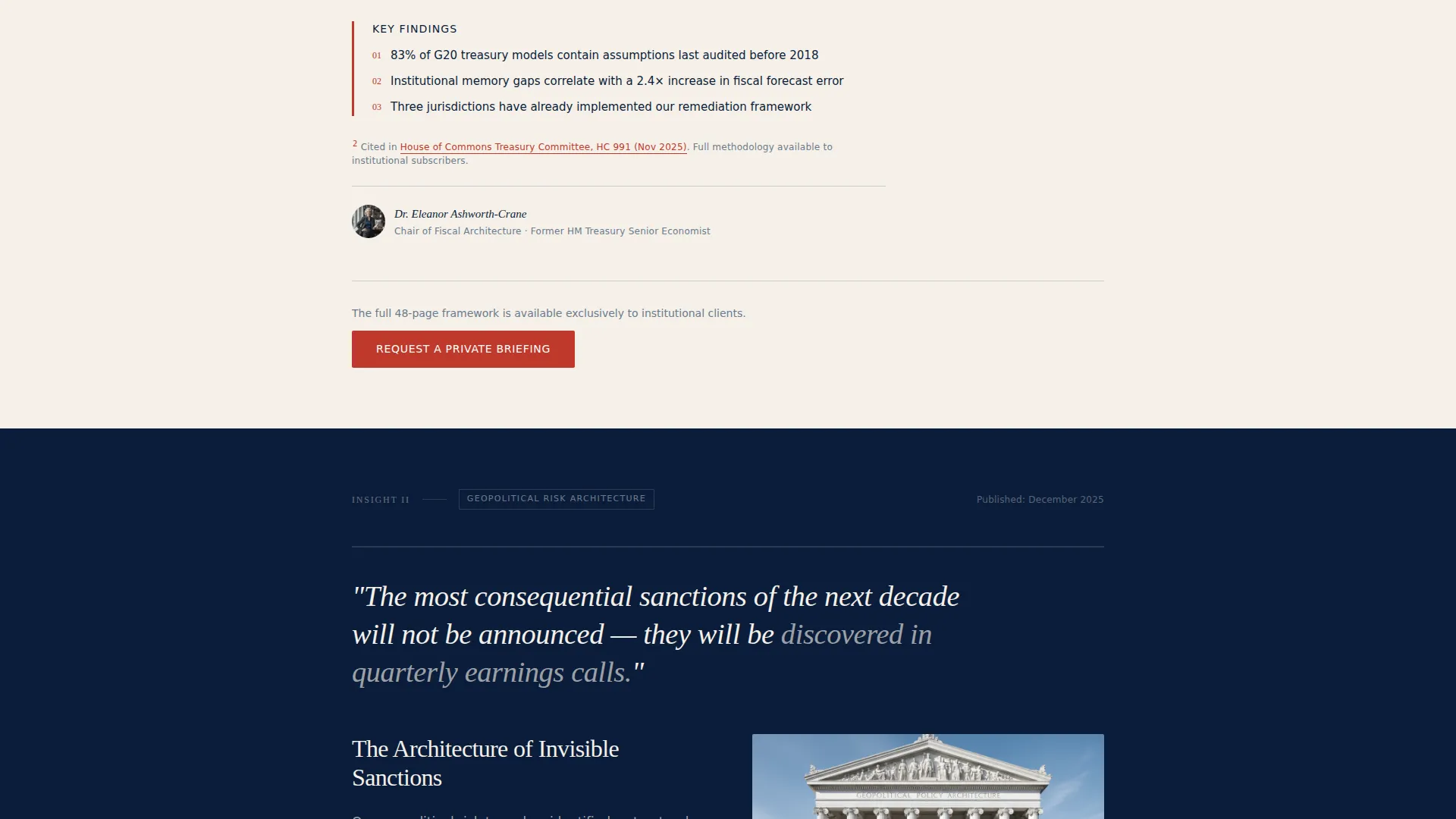
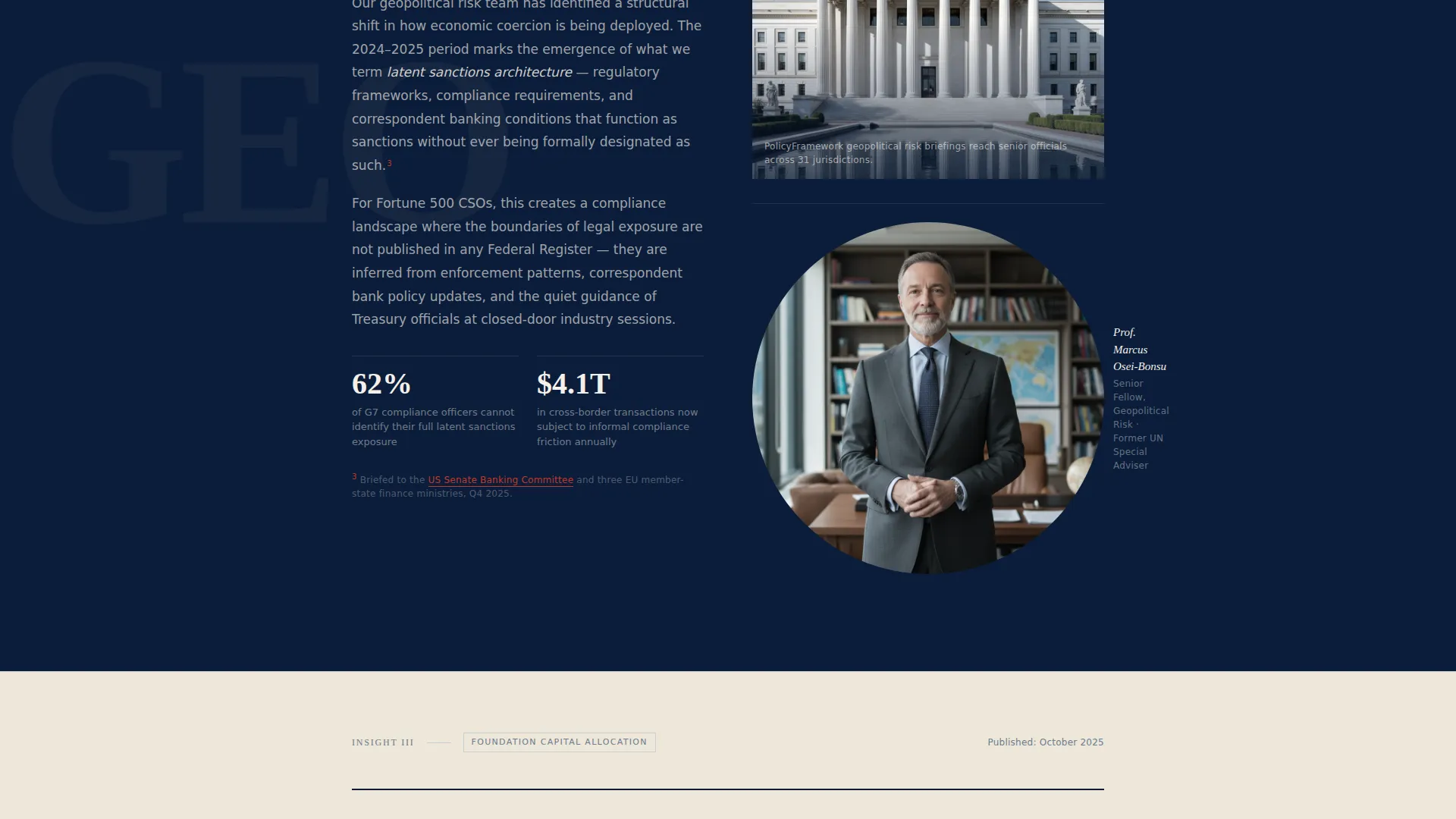
Each scroll section presents one published insight as a magazine spread. The format includes a pull quote, an abstract paragraph, and a named author with credentials. Margins are generous and columns are single, so each idea has room to land.
Private Briefing Booking Form
The primary call to action is a structured intake form rendered in citation red. It captures institutional affiliation, policy area of interest from a curated dropdown, preferred briefing format, and a date-range selector in that order.
Quarterly Subscription Path
A secondary conversion path captures leads not yet ready to book. It requires only an institutional email address, qualifying intent through the visitor's domain before any direct outreach.
Page sections overview
| Section | Purpose |
|---|---|
| Giant Headline Block | Opens with a provocative thesis statement in oversized serif type |
| Journal Attribution Byline | Credits the lead fellow below a thin steel-gray rule |
| Institutional Logo Wall | Establishes peer gravity through recognized institution logos |
| Primary Booking call to action | First appearance of the "Request a Private Briefing" call to action |
| Insight Spread One | Domestic policy insight with pull quote, abstract, and named author |
| Insight Spread Two | Mid-tier policy insight escalating toward geopolitical scope |
| Insight Spread Three | Geopolitical insight completing the analytical descent |
| Persistent Bottom Bar | Sticky booking call to action appearing after the third insight |
| Briefing Intake Form | Multi-field form qualifying leads by affiliation, area, format, and date |
| Quarterly Subscribe | Secondary email capture for leads signaling research interest |
Design & branding system
The visual identity follows an editorial magazine direction built around a navy authority color system. Every color decision references print publishing tradition, not digital convention.
- Deep editorial navy (#0B1D3A) and warm parchment (#F5F0E8) form the primary page palette, evoking the inside cover of a hardbound policy annual
- Steel rule gray (#6B7B8D) handles dividers, bylines, and secondary typographic elements throughout
- Citation red (#C0392B) is reserved exclusively for links, footnotes, and every booking call to action, giving high-stakes interactions a distinct visual signal
Mobile & speed optimization
The single-column layout adapts naturally to narrower screens without restructuring the editorial hierarchy. The deliberate simplicity of the design keeps the mobile reading experience consistent with the desktop intent.
- Single-column flow eliminates reflow complexity across screen sizes
- No hero images or heavy illustration assets means the page loads without visual bottlenecks
- Generous whitespace and large serif type remain readable at mobile scale without additional adjustments
How this template helps you convert
The page is structured to move a skeptical, time-scarce reader from awareness to qualified action in a single scroll. Every layout decision supports that path.
- The logo wall immediately after the headline removes doubt about institutional standing, making the reader more receptive to the analysis that follows
- The escalating insight spreads build analytical tension, increasing the perceived stakes and the reader's motivation to engage directly
- The persistent bottom bar and the structured intake form work together to capture both high-intent visitors ready to book and early-stage leads who prefer the lower-friction subscription path
Other information about this template
This template is categorized under Professional Services, specifically within the Research and Analytics Firm subcategory. It is designed for a high-trust, high-consideration sales context where the visitor already understands the category and is evaluating depth of expertise.
- The booking form places institutional affiliation as the first field, signaling to the visitor that their organizational context matters and pre-qualifying leads before any follow-up
- The "Subscribe to the Quarterly" path uses an institutional email requirement as a passive qualification filter, reflecting the niche intent of competitive intelligence and serious policy research audiences
- The template's editorial magazine theme and deliberate slow-scroll rhythm are specifically suited to decision-makers who consume long-form research, not skimmers looking for a quick overview
Theme
Legal Shield
Creative direction
FAQ-Driven
Color system
Slate & Sky
Style
Sidebar Companion
Direction
Click-Through
Page Sections
Giant Thesis Headline Block
Journal Attribution Byline
Institutional Logo Wall
Magazine-spread Insight Sections
Private Briefing Intake Form
Quarterly Subscription Capture
Related questions
Can I edit the headline thesis statement to match my institution's focus area?
How does the booking form qualify leads before outreach?
What is the difference between the primary call to action and the subscription path?
Is the institutional logo wall editable?
When does the persistent bottom bar appear on the page?