Chronic Pain Care Professional Website Template
Calibrate is a hub and spoke landing page for a physiotherapist-led chronic pain exercise program. Built around a multidisciplinary expert panel, it guides visitors through the neuroscience of pain, graded movement methodology, and pain psychology before presenting a personalized protocol download. The layout builds clinical trust steadily, then converts through a low-friction, three-field gated form.
by Rocket studio
Quick summary
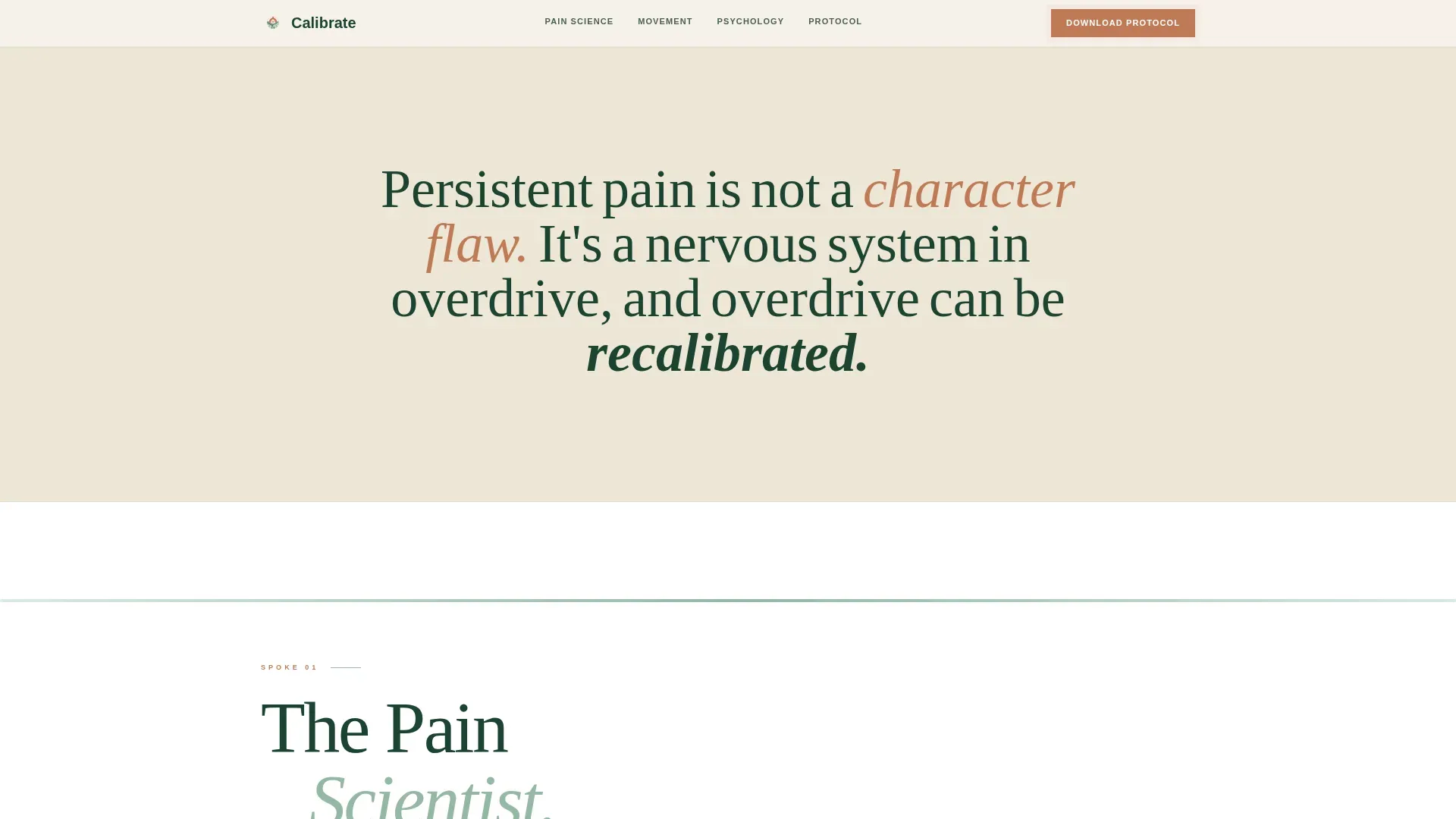
Calibrate is a single-page, anchor-navigated landing page designed for a digital chronic pain exercise program. It leads with a portrait-centered physiotherapist hero, guides visitors through three expert modules, and converts them through a personalized protocol download form. The design balances clinical credibility with organic warmth throughout every scroll.
Who this template is for
This template is built for health and medical practitioners who want to convert chronic pain sufferers into program participants. It suits physiotherapy practices, multidisciplinary pain clinics, and digital health educators offering evidence-based movement guidance.
- Physiotherapists and pain scientists launching a digital program for persistent pain conditions
- Digital health educators targeting adults with fibromyalgia, lower back pain, neck tension, or post-surgical stiffness
- Practitioners who need to build deep clinical trust before asking visitors to commit
What problem this template solves
People living with persistent pain have been dismissed, misadvised, or overwhelmed by generic guidance. A standard marketing page cannot hold their trust. This template solves the credibility gap by letting the evidence speak before the form appears.
- Visitors arrive skeptical after years of unhelpful advice, so ungated video content proves depth before any ask
- The multidisciplinary panel structure shows that pain is complex and requires more than one specialist's perspective
- The gated download form is introduced only after trust has been established through three full expert modules
What you get with this template
You get a fully structured hub and spoke landing page with five content sections, a sticky anchor navigation bar, two ungated video placements, a three-field gated download form, and a secondary low-friction email capture path. Every section is purpose-built for a chronic pain exercise program audience.
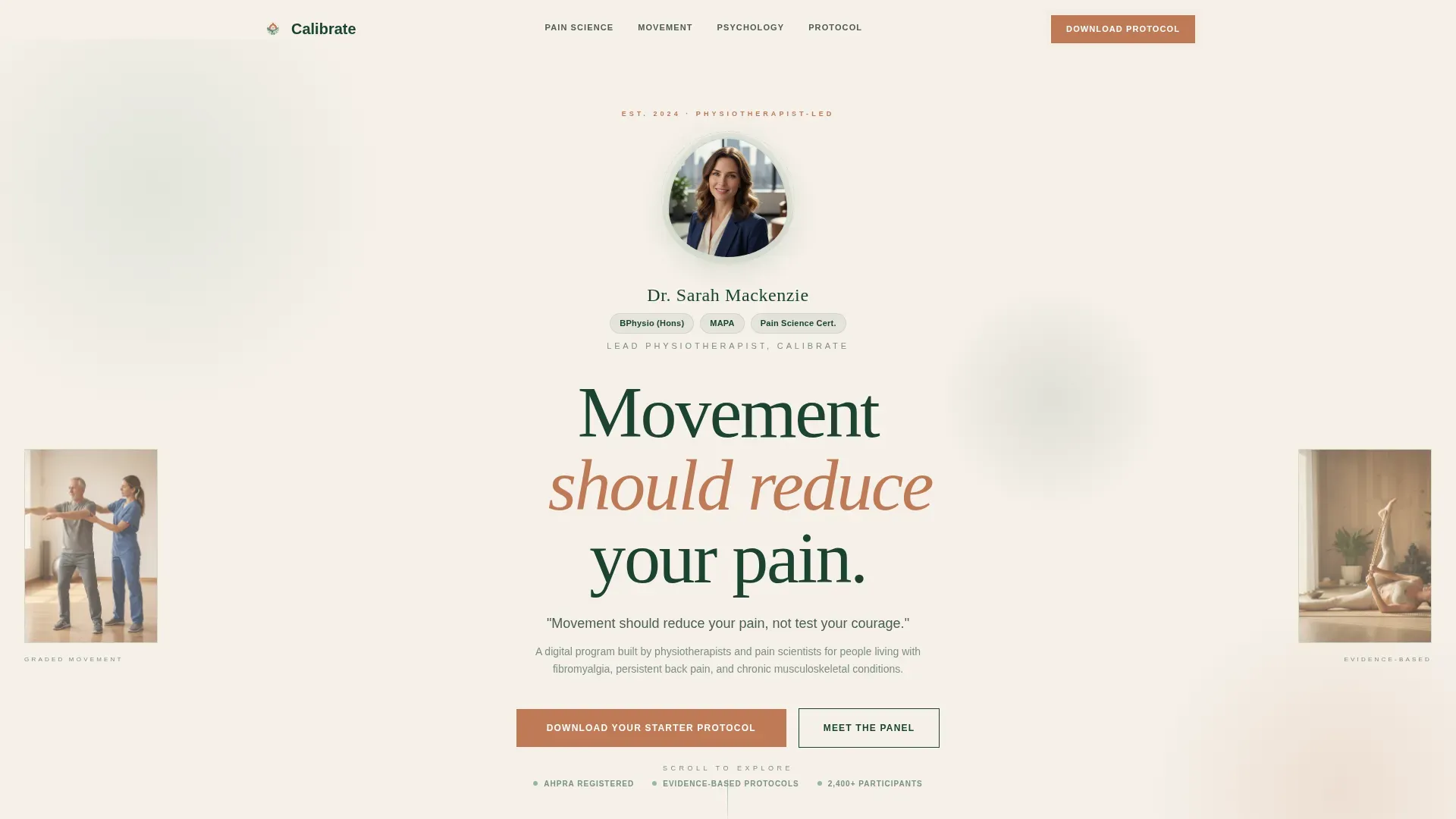
- A portrait-centered hero section with physiotherapist photograph, credentials, and a signature tagline
- Three specialist spoke sections covering pain science, graded movement, and pain psychology
- A terracotta call-to-action form gated behind first name, pain area dropdown, and pain duration selection
Feature list
This template includes a focused set of purpose-built components that guide a hesitant, pain-affected audience from arrival to commitment.
Portrait-Centered Hero Section
The hero leads with a composed, shoulders-up physiotherapist portrait set against a soft birch background. Below the photograph, name, credentials, and a single tagline appear. This establishes human trust before the visitor reads a single content line.
Sticky Anchor Navigation Bar
A sticky navigation bar labels each expert section by specialist role. Visitors can jump directly to "The Pain Scientist," "The Movement Coach," or "The Psychologist" at any point during their scroll. This keeps orientation clear on a long, content-rich page.
Multidisciplinary Expert Spoke Modules
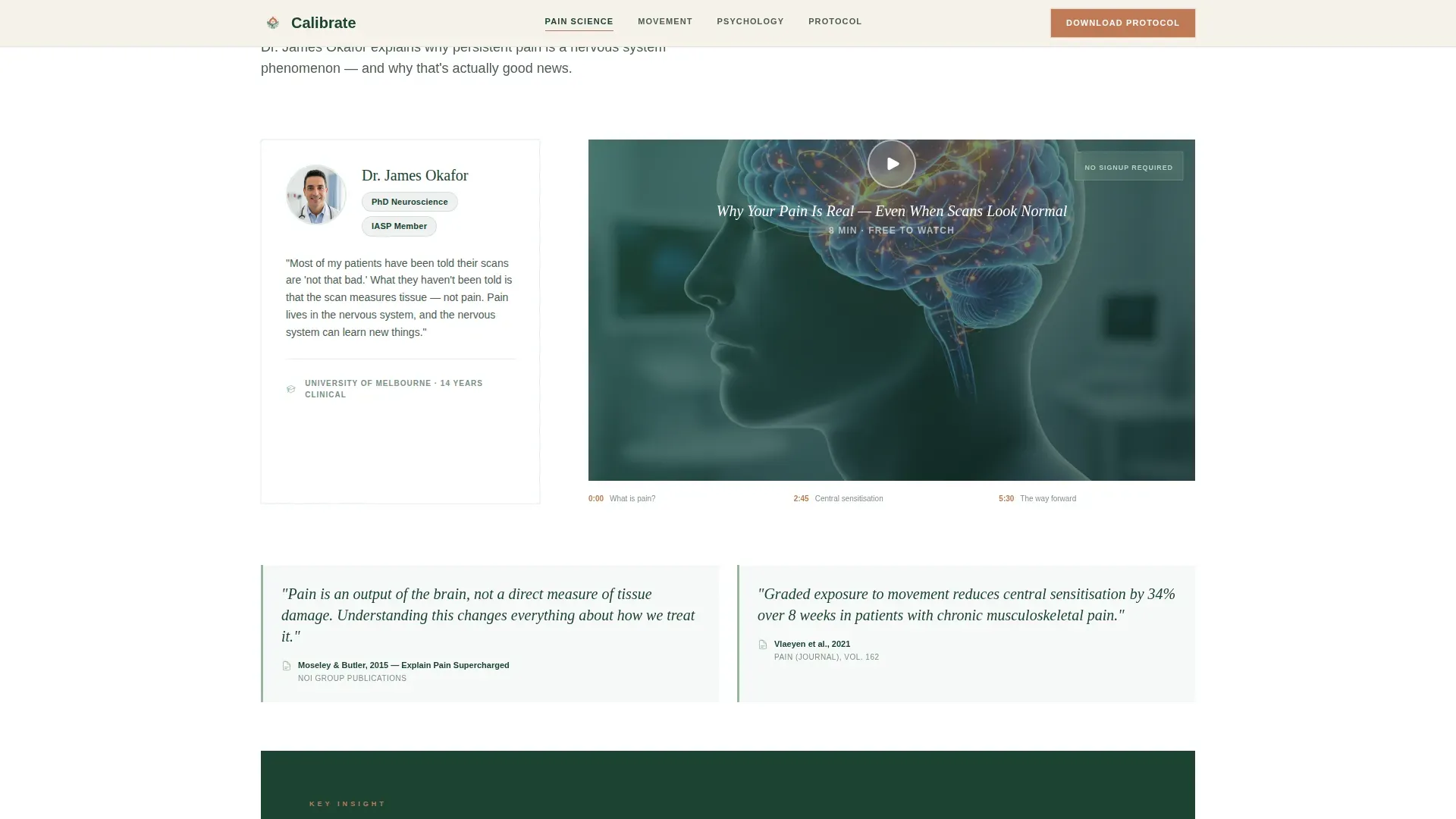
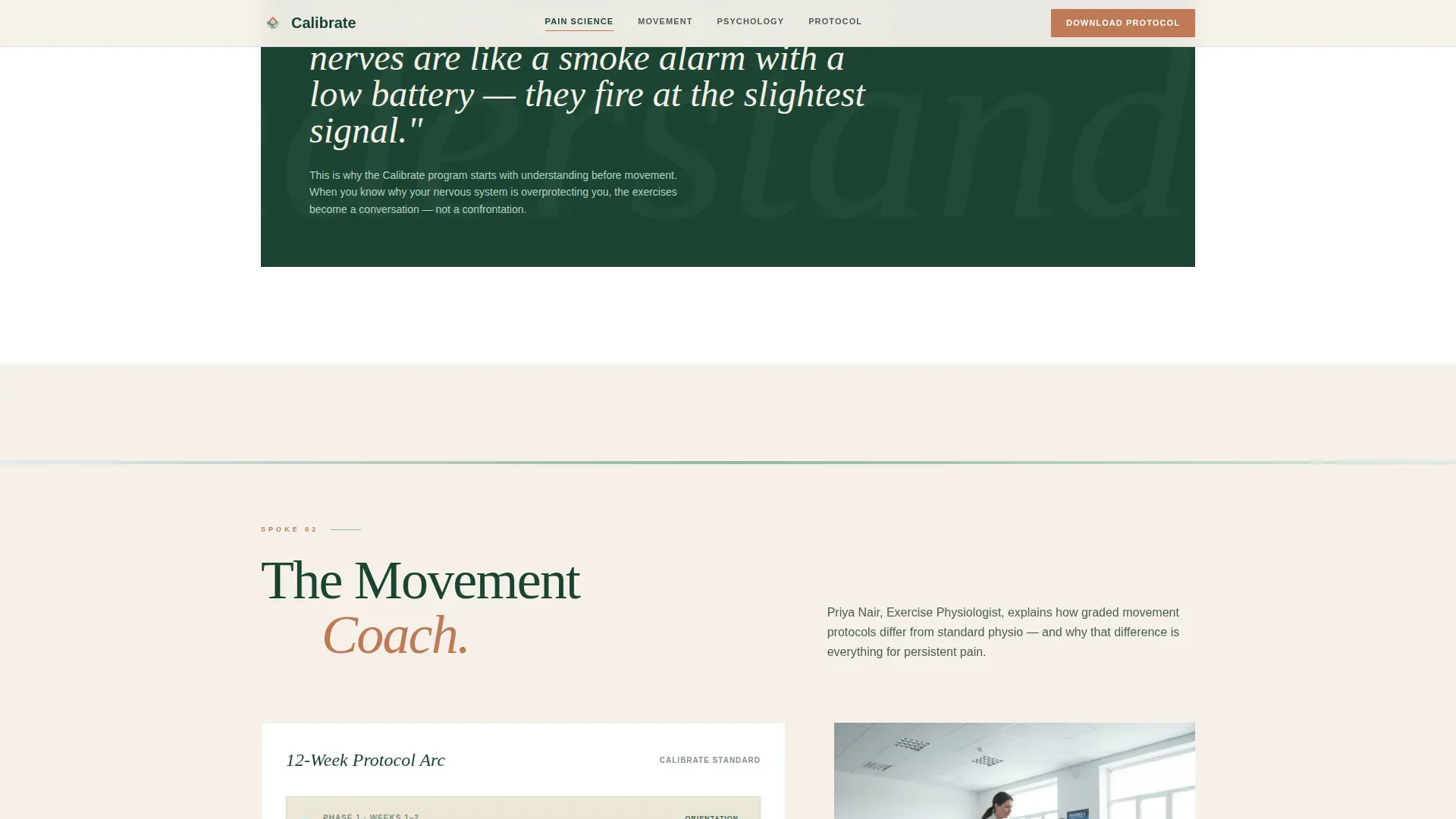
Each of the three spoke sections includes short video clip placeholders, annotated exercise diagrams, and pull-quoted research citations. The modules build a cumulative argument that persistent pain requires a team, not a single treatment approach.
Ungated Video Content Placement
Two full expert video clips play without any gate above the conversion form. Visitors see real clinical depth before being asked for anything. This reduces resistance and demonstrates the program's value ahead of commitment.
Personalized Three-Field Download Form
The primary call to action is a terracotta-styled gated form collecting first name, primary pain area via dropdown, and pain duration via selection. The submitted data maps to a personalized PDF exercise sequence, making the ask feel relevant rather than generic.
Secondary Email-Only Capture Path
A lower-friction path invites visitors to watch the full panel discussion by submitting only their email address. This captures leads who are not yet ready to self-identify their specific condition, widening the top of the conversion funnel.
Page sections overview
| Section | Purpose |
|---|---|
| Hero portrait area | Introduces the lead physiotherapist and establishes immediate clinical trust |
| Sticky anchor nav | Keeps expert section labels visible and enables smooth scroll-to-spoke navigation |
| The Pain Scientist | Explains pain neuroscience through video, annotated diagram, and research citation |
| The Movement Coach | Presents graded exercise methodology with exercise diagram and pull quotes |
| The Psychologist | Covers pain psychology with ungated video and research pull quote |
| Protocol download form | Converts visitors through a personalized three-field gated PDF download |
| Secondary email capture | Offers a low-friction email-only path for visitors not ready to commit |
| Page footer | Closes with a horizontal flow footer pattern for supporting links and context |
Design & branding system
The visual identity follows a Medical Clarity theme using a Forest Trust color palette. The result reads like a rehabilitation clinic built inside a national park lodge: clinically precise but never cold.
- Birch (#F5F0E8) dominates all backgrounds; evergreen (#1B4332) anchors headers and navigation; sage (#95B8A2) acts as a zone separator between content sections
- Terracotta (#C07A56) appears exclusively on calls to action and progress indicators, reserving its visual weight for moments that require action
- Typography pairs Fraunces serif display headings with Plus Jakarta Sans body text for a balance of authority and readability
Mobile & speed optimization
The template is built desktop-first with full mobile responsiveness, recognizing that people researching chronic pain conditions frequently do so from a phone. Layout and scroll behavior adapt cleanly across screen sizes.
- Native CSS smooth scroll handles anchor navigation without heavy dependencies
- Server Components power static sections to keep initial load lean and reliable
- GSAP ScrollTrigger drives stagger reveals, word-by-word scroll animations, and blur entrance effects that feel measured rather than distracting
How this template helps you convert
Conversion is earned progressively. The page demonstrates value at every stage before presenting any form, making each ask feel like a natural next step rather than an interruption.
- Two ungated video clips play above the form, proving clinical depth and letting visitors evaluate the program's quality before committing any personal information
- The three-field gated form collects enough context to deliver a personalized PDF exercise sequence, making the perceived value of submission concrete and immediate
- The secondary email-only path captures hesitant visitors with minimal friction, broadening reach without pressuring a full self-identification before the visitor is ready
Other information about this template
This template is designed specifically for the chronic pain exercise program niche, where audience trust is fragile and generic health marketing consistently fails. A few additional details are worth noting.
- The hub and spoke architecture means each specialist module is self-contained but reinforces the central consultation metaphor when the visitor returns to the navigation hub
- The Expert Panel creative direction is intentional: no single practitioner claims the whole answer, which mirrors how evidence-based chronic pain care actually works
- Animation intensity is set to medium, using GSAP ScrollTrigger; this keeps the page dynamic without overwhelming visitors who may be sensitive to rapid motion
- The page uses English (United States) copy with no currency references, making it suitable for any North American digital health audience
- Social proof is woven into the content rather than isolated in a testimonials block, through research citations, pull quotes, and community testimonial placements within each module
Theme
Medical Clarity
Creative direction
Expert Panel
Color system
Forest Trust
Style
Hub & Spoke (Anchor Nav)
Direction
Content/Resource
Page Sections
Portrait-centered Hero Section
Sticky Anchor Navigation Bar
Multidisciplinary Expert Spoke Modules
Ungated Video Content Placement
Personalized Three-field Download Form
Secondary Low-friction Email Capture
Related questions
Who is the lead physiotherapist portrait meant to represent?
Can I customize the pain area dropdown options in the form?
Do the video sections include actual video content?
Is the personalized PDF exercise sequence included with the template?
Can this template work for a solo practitioner rather than a full expert panel?