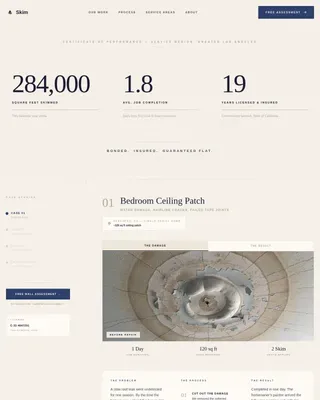
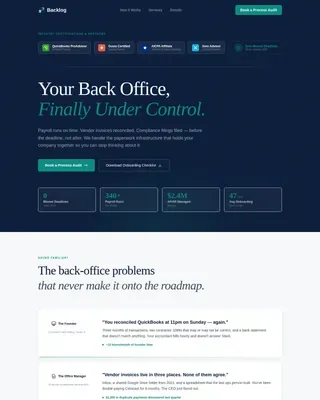
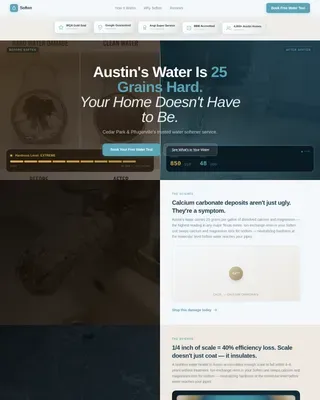
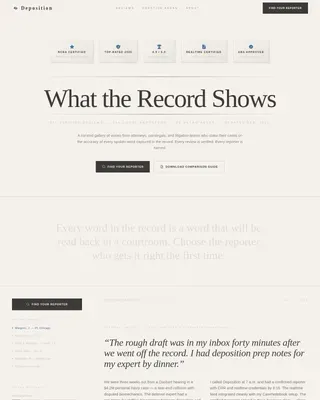
Canopy - Expert Arborist Comparison Landing Page Template
Canopy is an editorial-style comparison landing page template built for Hong Kong tree service businesses. It combines case study narrative sections, inline comparison tables, a gated PDF lead magnet, and a testimonial-led hero to help arborists convert property managers and homeowners into qualified leads. The design follows a restrained Arctic White palette with deep fig-leaf green accents.
by Rocket studio
Quick summary
Canopy is a single-page template crafted for tree care professionals operating in dense urban environments. It opens with an oversized testimonial card, unfolds into editorial case study sections, and closes with two conversion paths: a gated guide download and a tree health report request. Every section is designed to build trust through documented results and transparent comparison data.
Who this template is for
This template is the right place for any tree service business that needs to earn trust before earning a booking. It suits professionals who work across complex city landscapes and serve clients with regulatory, structural, or storm-related concerns.
- Property management offices handling government Tree Risk Assessment orders and compliance notices
- Homeowners and estate managers dealing with root damage, storm impact, or imminent tree removal decisions
- Landscape architects and urban forestry consultants specifying pre-typhoon pruning or crown reduction work
What problem this template solves
Tree care is a high-stakes decision. Property owners often struggle to understand the difference between removal and preservation, between rope access and crane work, or between acting now and facing costly consequences later. A generic services page cannot address that complexity. Canopy was created to fill that gap.
- It presents each tree services scenario as a documented case, so clients can see the reasoning behind each recommendation
- It gives arborists a structured format to display certifications, insurance details, and compliance knowledge alongside real project outcomes
- It replaces vague service lists with side-by-side comparison tables that help property owners determine the best fit for their situation
What you get with this template
Canopy delivers a full editorial landing page layout built around the Case Study Narrative creative direction. Each scroll section reads like a magazine feature, alternating between analytical text and wide atmospheric photography. The template is desktop-first but fully responsive, supporting a broad range of screen sizes for both property managers at a desk and homeowners browsing on a phone.
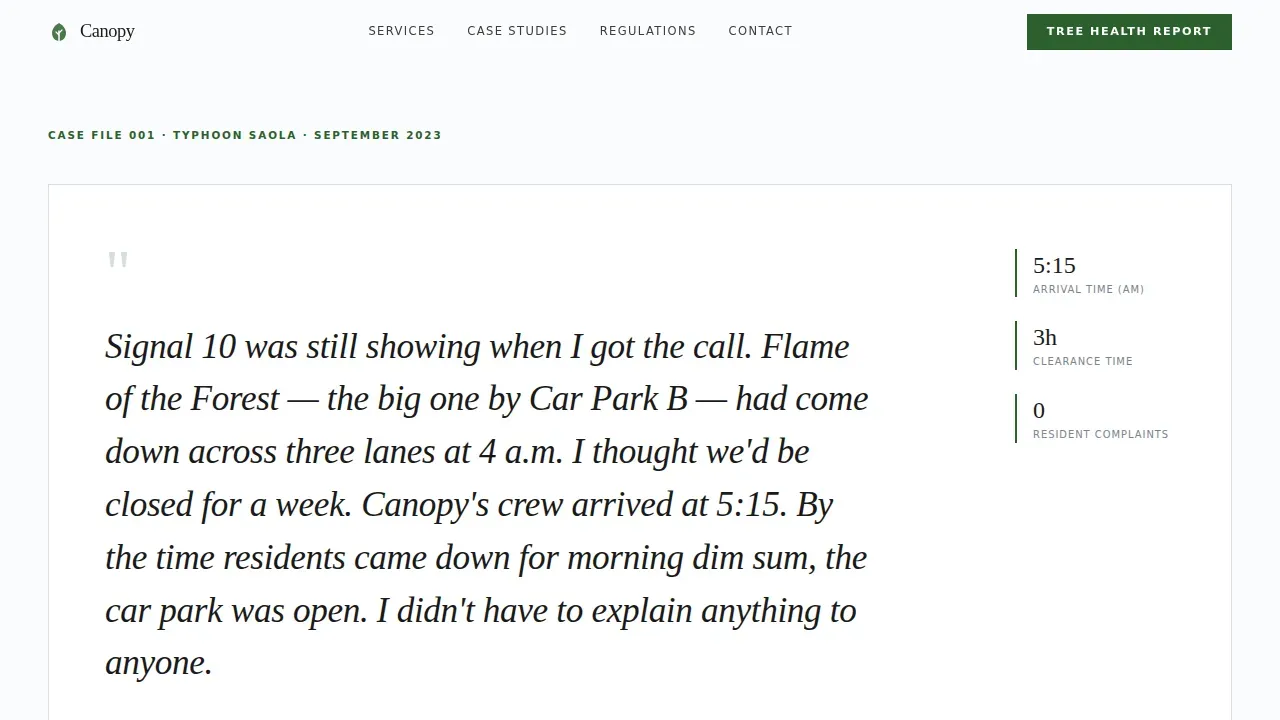
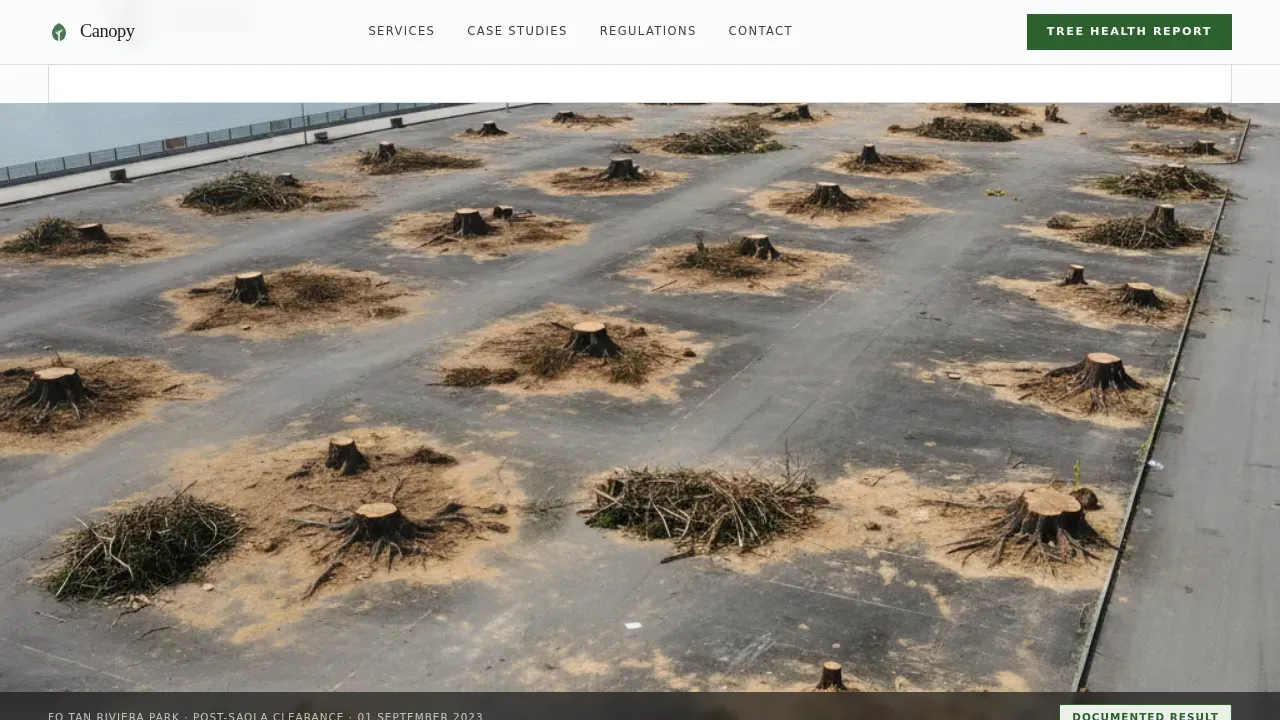
- A testimonial card hero with pull-quote typography, circular portrait, and full-bleed aerial photography beneath it
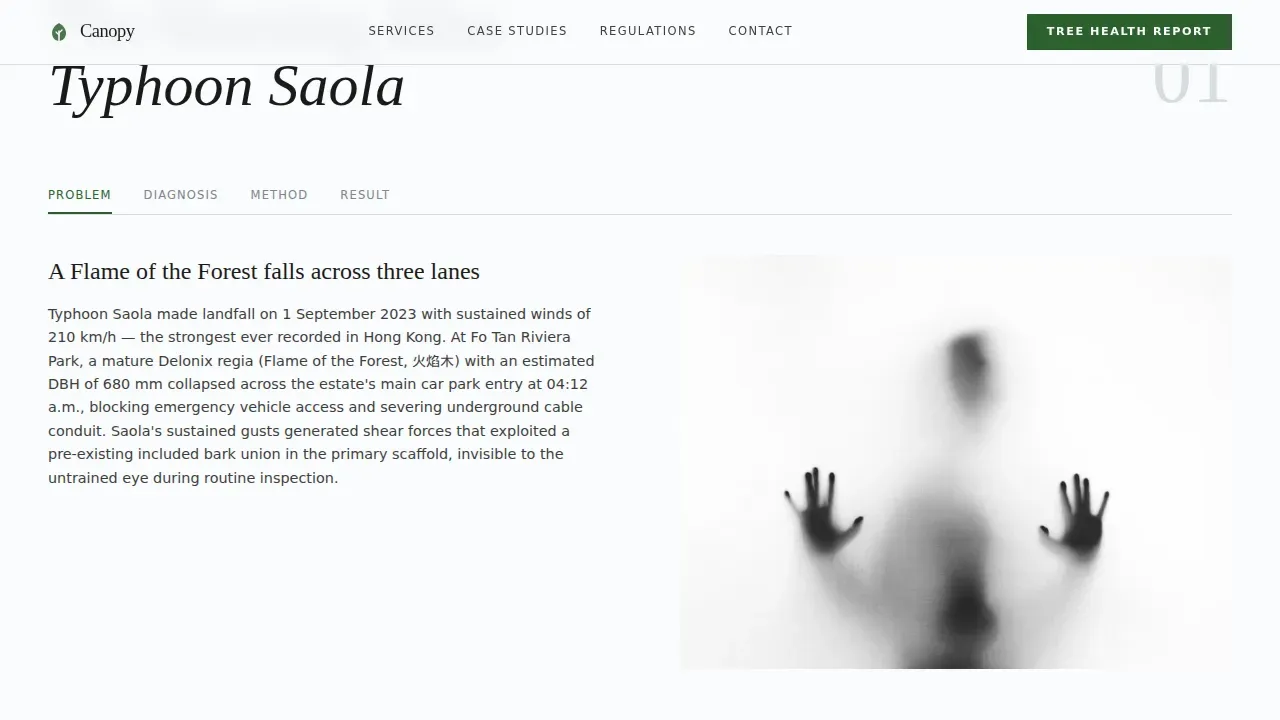
- Multiple case study sections with tab-switched content, inline comparison tables, and scroll-reveal animations
- Two conversion modules: a gated PDF form collecting name, email, and property type, plus a secondary scheduling form with photo upload support
Feature list
This section covers the core built-in capabilities that make Canopy a practical tool for any tree service business looking to launch a credible, conversion-focused landing page.
Editorial Case Study Sections
Each case study section is structured as a short magazine feature. It opens with the problem, moves to the arborist's diagnosis, presents the method chosen, and closes with the documented result. Visitors read through real jobs rather than abstract service descriptions, which builds confidence in the team's judgment.
Inline Comparison Tables
Comparison tables appear naturally within each case study. They contrast approaches side by side: tree removal versus tree preservation, mechanical crane access versus rope climbing, and the costs of acting now versus the costs of inaction. These tables give property owners a clear framework to assess their own situation and move toward a decision.
Gated PDF Lead Capture Form
The primary conversion path is a short gated form that collects name, email, and property type. In exchange, visitors receive the Hong Kong Tree Owner's Guide covering government regulations, typhoon preparation checklists, and species-specific maintenance calendars. This approach suits tree care businesses that aim to generate warm leads rather than cold inquiries.
Secondary Scheduling Form with Photo Upload
Visitors who are ready to act immediately can use the secondary conversion path: a scheduling form that collects address, tree species if known, and a photo upload. This reduces friction for urgent requests and helps arborists arrive at each job with useful context already in hand.
Testimonial Card Hero
The page opens with a single oversized pull-quote set in elegant serif typography on a matte white card. A circular portrait sits beside the name and estate. Below the card, a full-bleed aerial photograph shows the actual site after the work is complete. This combination of social proof and visual evidence sets a credible tone before the visitor reads a single service claim.
Scroll-Reveal and Tab Interactions
The template includes word-by-word scroll-reveal animations on key headings, intersection observer reveals for body sections, and subtle parallax on the hero photograph. Case study content uses tab switching so visitors can move between different jobs without leaving the page. Hover states are active on comparison table rows.
Page sections overview
| Section | Purpose |
|---|---|
| Testimonial Card Hero | Opens with a property manager pull-quote and full-bleed aerial photo |
| Storm Damage Case Study | Documents typhoon response with sectional felling versus preservation table |
| Root Invasion Case Study | Covers compliance scenarios with removal versus cable bracing comparison |
| Species and Risk Panel | Addresses regulatory context for protected trees and pre-typhoon pruning evidence |
| Guide Download Module | Gated PDF form collecting name, email, and property type for lead capture |
| Health Report Request | Secondary scheduling form with address, species field, and photo upload |
| Footer Split | Logo and tagline left, navigation links right |
Design & branding system
The visual identity follows an Editorial Magazine theme. The palette feels like a freshly printed broadsheet on a marble counter: authoritative and unhurried. Typography carries much of the personality, with a serif display face for headlines and a clean sans-serif for body text and interface elements.
- Arctic White background (#FAFBFC), stone-gray body text (#3D3D3D), and pale silver divider lines (#D6DCE1) keep the layout clean and readable
- Deep fig-leaf green (#2D5F2E) is reserved for links, icons, and interactive highlights, ensuring the accent reads with clarity against the restrained base palette
- Fraunces handles display headings for editorial weight; DM Sans handles body copy and form labels for legibility at all sizes
Mobile & speed optimization
Canopy is designed desktop-first to serve property managers who review documents and schedule appointments at a workstation. The layout is fully responsive, scaling cleanly to tablet and mobile viewports. Interactive elements are isolated to client-rendered components, keeping static sections lean.
- The comparison tables reflow gracefully on smaller screens, preserving the side-by-side data that property owners need to evaluate tree services options
- The secondary scheduling form supports photo upload directly from a mobile camera, which matters for clients photographing a damaged tree on the ground before they contact the office
- Scroll-reveal and parallax effects use intersection observer logic, applying only when the element enters the viewport
How this template helps you convert
Canopy is built around a single insight: tree care clients need to understand a recommendation before they trust it. The template converts that insight into a structured persuasion path that moves visitors from curiosity to commitment.
- The testimonial card hero provides immediate social proof from a recognizable property management context, giving first-time visitors a reason to keep reading before any service claim is made
- The case study sections and comparison tables answer the questions property owners most often ask: what is the difference, what will it cost, and what happens if nothing is done
- The two-path conversion module lets the template serve both early-stage researchers downloading the guide and ready-to-book clients requesting a tree health report, so no qualified visitor leaves the page without a next step
Other information about this template
Canopy was created with the practical realities of tree service insurance and regulatory compliance in mind, and the template layout supports clear display of that information. Tree service businesses often need to demonstrate coverage before a property management office will grant site access. General liability insurance protects against claims of bodily injury or property damage. Workers' compensation insurance is essential to cover medical expenses and lost wages for employees injured on the job. Commercial auto insurance protects vehicles used on the way to and from each project. Professional liability insurance covers claims related to negligence or failure to deliver services as promised. Insurance policies for tree service professionals can often be customized with add-ons to fit specific business needs, and some providers offer instant certificates of insurance (COIs) to streamline the approval process.
The template also fits the broader context of urban forestry and city canopy management. Trees in cities provide essential environmental and economic services, including reducing runoff, giving shade, improving aesthetics, harboring wildlife, and storing carbon. Local governments in many communities have created regulations aimed at maintaining and increasing valuable urban tree cover. For example, the City of Falls Church requires each residential redevelopment to retain or plant enough trees for 20% canopy cover within ten years. Cities like Mount Dora recognize the vital role of the tree canopy in the well-being of the community and environment, and urban forestry plans aim to strengthen commitment to sustainability and environmental stewardship. Increased urban development typically results in decreased tree cover, which makes credible, well-documented tree care services more important than ever for city communities. Note that canopy cover metrics alone may be insufficient to fully describe urban forest recovery, which is why detailed case data and species-level records matter.
ISA Certified Arborists bring advanced horticultural knowledge and a preservation-first philosophy to every assessment. Tree care services built around that philosophy offer customized strategies for plant health management and emergency response. Comparing multiple tree care pages helps clients decide which service is the best fit for their property's specific needs. The Canopy expert arborist comparison landing page template was designed precisely for this purpose: to help arborists present their expertise, insurance standing, and documented results in a format that gives property owners confidence to act.
A tree service business that invests in a well-structured, visually credible landing page is more likely to be seen as a serious company in its local market. Including proof of past jobs, details of certifications, and evidence of regulatory knowledge builds reputation over time. The template supports all of those goals within a single, focused page.
- High-quality original photography is supported throughout, with the hero, case study, and results sections all designed to hold full-bleed images
- The gated form can be used to build a contact list of property owners segmented by property type, giving the business useful data for follow-up
- The secondary form's photo upload field saves estimate time by letting arborists review tree condition before the first visit
- The editorial rhythm of the template makes it suitable for tree service businesses that want to stand out from simpler, list-based competitor pages
- The footer uses a split layout: logo and tagline on the left, links on the right, keeping navigation accessible without cluttering the conversion flow
Theme
Editorial Magazine
Creative direction
Case Study Narrative
Color system
Arctic White
Style
Comparison Table
Direction
Content/Resource
Page Sections
Editorial Case Study Narrative Sections
Inline Side-by-side Comparison Tables
Gated PDF Lead Capture Module
Testimonial Card with Aerial Photography
Secondary Scheduling Form with Photo Upload
Scroll-reveal and Tab-switch Interactions
Related questions
What type of tree service business is this template designed for?
Does the template include the gated PDF content?
Can I use this template if my tree services business operates outside Hong Kong?
How does the comparison table format help property owners make decisions?
What insurance information should I display on the landing page?