Tree Service Landing Page Template - Editorial Design
Canopy is an editorial-style tree service landing page built for Facebook ad traffic. It pairs a magazine-quality visual identity with a FAQ-driven scroll flow that moves homeowners from curiosity to a booked assessment. The Ink & Paper color system, bold serif typography, and a structured inline booking form make this template feel authoritative and easy to act on.
by Rocket studio
Quick summary
Canopy is a single-page editorial landing page template designed for tree service businesses running Facebook ad campaigns. It uses a magazine-spread layout, a FAQ-driven content structure, and a focused inline booking form to turn ad clicks into scheduled assessments. The design feels like a premium broadsheet, not a service ad.
Who this template is for
This template is built for tree service businesses that want their landing page to do more than just list services. It suits operators who are already running paid social campaigns and need a page that earns trust the moment someone lands on it.
- Tree service companies targeting suburban homeowners through Facebook ads
- Property managers and real estate professionals managing multiple sites with tree risk concerns
- Owner-operators who want a polished editorial look without hiring a custom designer
What problem this template solves
Most tree service landing pages look like flyers. They list prices, show a phone number, and expect visitors to act on faith. That approach fails when the visitor arrives mid-anxiety, after a storm, or unsure whether their oak is actually dangerous.
- Homeowners need answers before they feel safe booking, and a plain service page never provides them
- Facebook ad traffic arrives with high intent but low trust; the page must earn credibility fast
- Generic layouts waste the scroll, losing visitors before they ever reach the call to action
What you get with this template
You get a fully structured, editorially designed landing page that guides visitors through a natural reading flow from awareness to action. Every section is purposeful and visually considered.
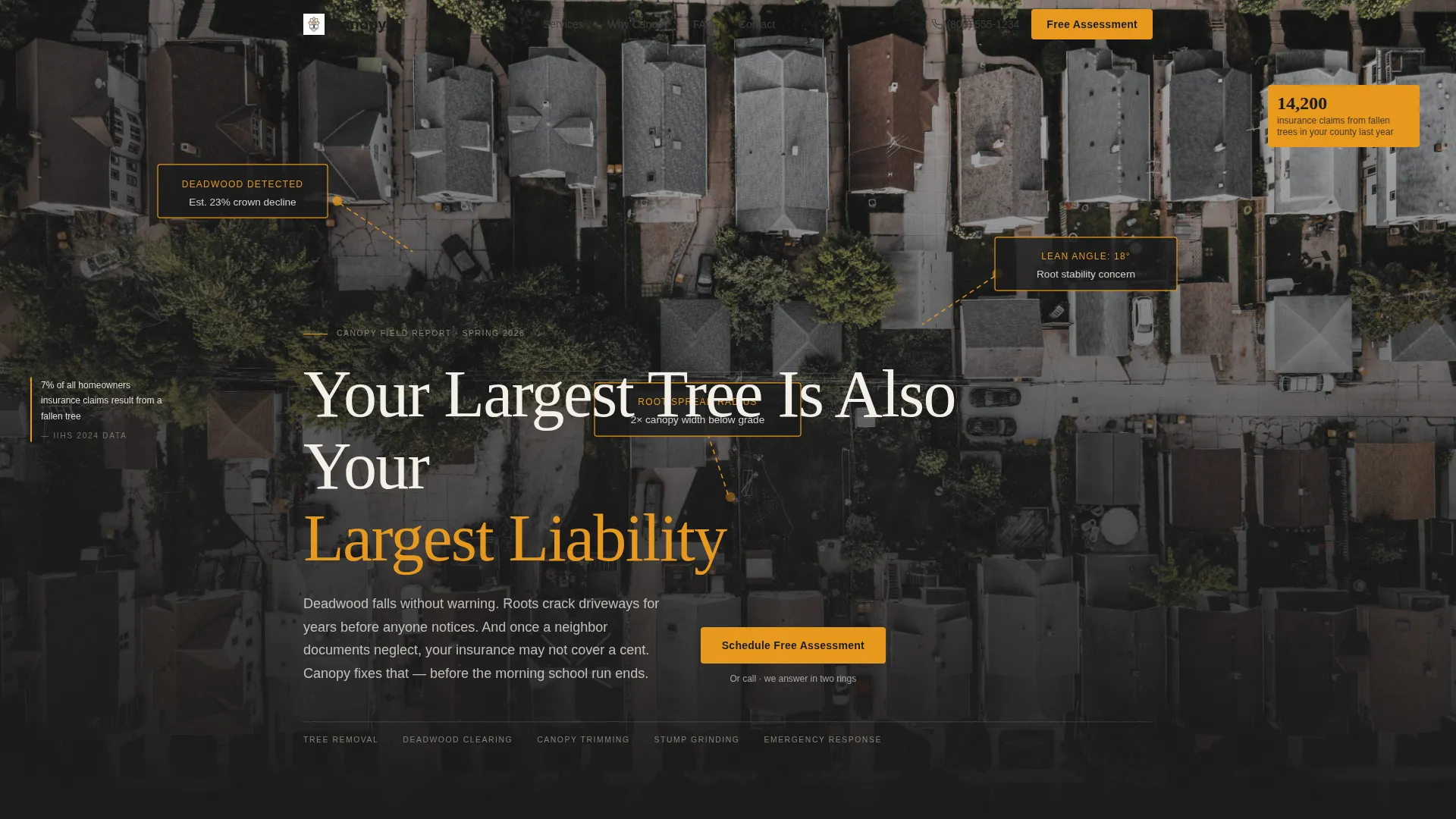
- A full-width data storytelling header with annotation overlays and typographic hazard callouts
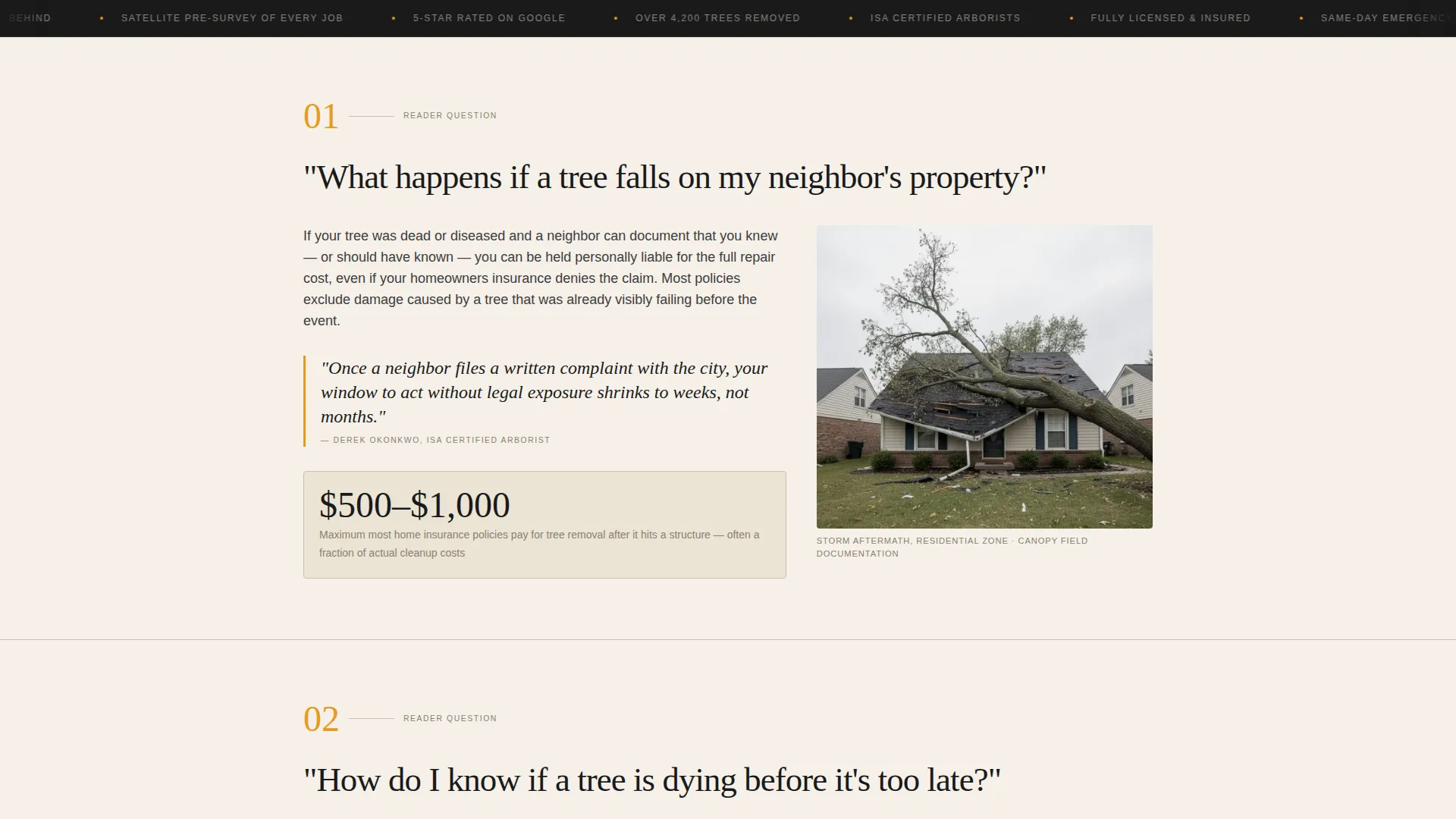
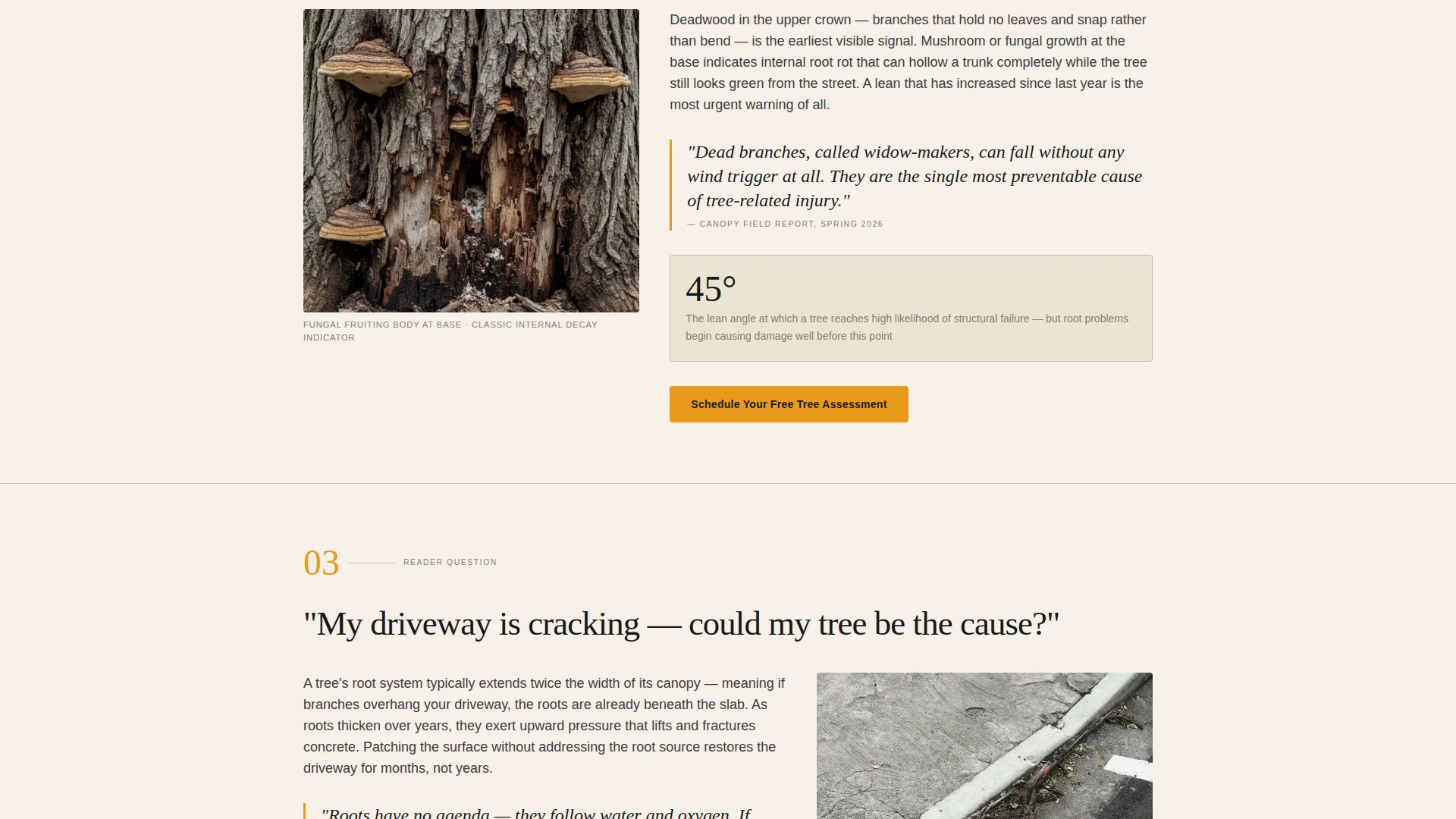
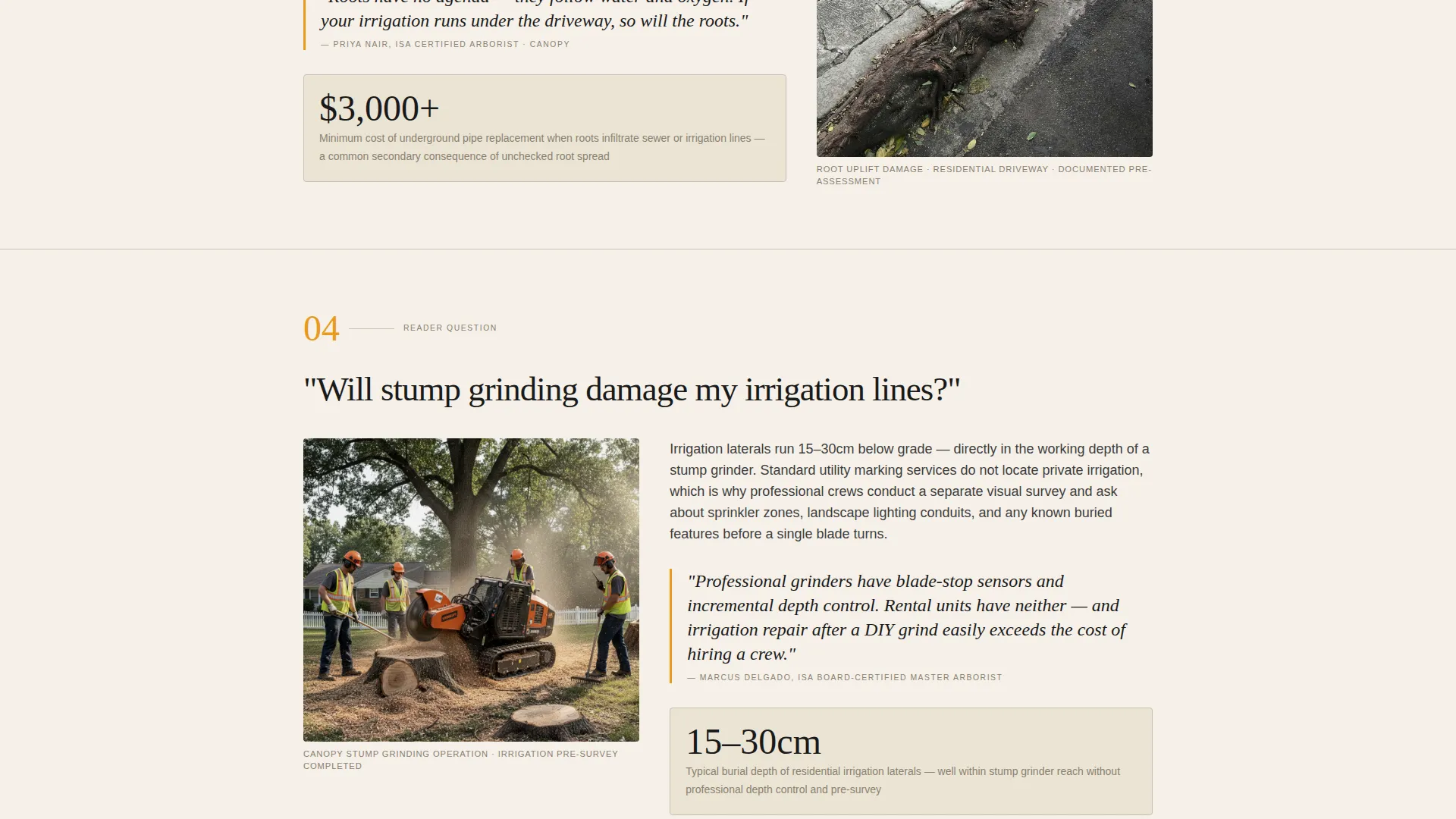
- A FAQ-driven scroll structure where each section answers one homeowner question with an editorial answer, a documentary photograph, and a pull-quote stat
- A sticky navigation bar with an always-visible amber call-to-action button plus an inline booking form that appears after every third question block
Feature list
A brief overview of the standout components built into this template.
Data Storytelling Header
The header opens as a full-width editorial composition. A bold serif headline sits over a softly desaturated aerial photograph of a residential canopy. Hand-drawn-style annotation lines point to specific hazard indicators, including deadwood percentage, lean angle, and root spread radius. Amber typographic callouts reference local storm damage statistics to establish immediate credibility.
FAQ-Driven Scroll Structure
Each scroll section is built around a single homeowner question in large display serif type. The question opens into a two-to-three sentence editorial answer paired with a documentary-style photograph and an amber sidebar stat or pull quote from a certified arborist. The rhythm escalates naturally from informational questions to cost-surfacing to seasonal urgency.
Sticky Navigation with Persistent call to action
A sticky navigation bar keeps the primary call-to-action button visible at all times as the visitor scrolls. The amber "Schedule Your Free Tree Assessment" button anchors in the nav and reappears after every third question block, reducing the friction of finding a booking entry point.
Inline Booking Form
The lightweight inline form collects the address for satellite property preview, the number of trees of concern, the service type needed, and a preferred date with a default set to the next available morning slot. It opens directly on the page without redirecting the visitor to a separate booking tool.
Pull Quote Phone Conversion Path
A secondary conversion element is styled as a pull quote reading "Rather just call? We answer in two rings." The clickable phone number catches high-intent visitors who arrived mid-crisis from a Facebook ad and prefer immediate voice contact over filling out a form.
Ink & Paper Visual System
The entire page uses a four-tone color system: deep editorial black, warm newsprint cream, woodcut charcoal, and safety-vest amber reserved for interactive elements. Photography is desaturated just enough to feel documented rather than advertised. Section dividers are thin black rules, and margins are generous to support a broadsheet reading experience.
Page sections overview
| Section | Purpose |
|---|---|
| Sticky Navigation Bar | Keeps booking call to action visible throughout scroll |
| Editorial Header Spread | Establishes hazard credibility with annotated aerial imagery |
| Question Block One | Opens with informational homeowner curiosity questions |
| Inline call to action Block | First booking form appearance after third question |
| Question Block Two | Surfaces hidden costs and liability implications |
| Inline call to action Block | Second booking form reinforcement mid-page |
| Question Block Three | Addresses timing, seasons, and urgency triggers |
| Final Booking Form | Primary conversion form with full field set |
| Phone Pull Quote | Secondary call path for high-intent direct callers |
Design & branding system
The visual identity is built on an Ink & Paper color system that feels like a freshly printed broadsheet. Every element serves the editorial tone and reinforces the sense that this is expert journalism, not advertising.
- Four core tones: deep editorial black (#1A1A1A), warm newsprint cream (#F5F0E8), woodcut charcoal (#3D3D3D), and safety-vest amber (#E8991C) used only for calls to action, pull quotes, and interactive highlights
- Typography uses bold serif display fonts for headlines and questions, with charcoal body text set on cream for maximum readability and editorial warmth
- Photography is desaturated just enough to feel documentary; thin black horizontal rules divide sections; margins are kept generous to let content breathe
Mobile & speed optimization
The layout is designed to translate the editorial experience cleanly to smaller screens without losing the visual hierarchy that makes the desktop version persuasive.
- The sticky navigation and amber call to action button remain accessible on mobile, keeping the booking path visible regardless of scroll depth
- Question blocks reflow into single-column reading cards on smaller viewports, preserving the FAQ rhythm and pull-quote visibility
- The inline booking form is structured with minimal fields to reduce tap friction and keep the conversion path short on touch devices
How this template helps you convert
The page is engineered so that by the time a visitor reaches the booking form, they have already answered their own objections through the editorial content above it.
- The FAQ scroll structure mirrors the actual questions a homeowner asks before calling a tree service, building trust through relevance rather than persuasion
- The amber call to action button appears in the sticky nav and recurs after every third question block, so a visitor is never more than one scroll from a booking entry point
- The secondary pull-quote phone link catches crisis-driven visitors who came from a Facebook ad and want immediate reassurance rather than a form
Other information about this template
This template is part of a broader set of editorial landing page designs built for professional service businesses running paid social campaigns. A few additional details worth noting:
- The template is categorized under Professional Services and Tree Service Marketing, making it relevant for operators in suburban and residential markets
- The creative direction draws from a Transparent Process editorial style, where showing real hazard data and arborist expertise replaces generic service claims
- The Sidebar Companion template style means key supporting stats and pull quotes sit alongside editorial answers rather than interrupting them
- The Legal Shield theme informs the liability-aware framing throughout, with sections addressing neighbor property liability, insurance claim risk, and seasonal storm timing
- The Partnership and B2B landing-page direction also makes this template adaptable for tree service companies pitching property management firms or HOA accounts alongside direct homeowner traffic
Theme
Legal Shield
Creative direction
Transparent Process
Color system
Ink & Paper
Style
Sidebar Companion
Direction
Partnership/B2B
Page Sections
Data Storytelling Editorial Header
Faq-driven Scroll Layout
Sticky Navigation with Recurring Call to Action
Lightweight Inline Booking Form
Pull Quote Phone Conversion Path
Ink & Paper Four-tone Color System
Related questions
Can I edit the homeowner questions in the FAQ scroll sections?
Does the inline booking form connect to a scheduling tool?
Is this template suitable for emergency tree removal campaigns?
Can this template work for a property management audience?
How is the amber accent color used across the page?