Fruit & Vegetable Farming Professional Website Template
Capsicum is a zigzag landing page template built for a specialty pepper and chili farm. It guides visitors through a scroll-linked growing timeline, from seed selection in January to harvest in October, using botanical illustration visuals and a resource-led approach that earns email signups by teaching first and converting second.
by Rocket studio
Quick summary
Capsicum is a single-page, scroll-driven landing page template for a named pepper farm selling direct to craft kitchens, pitmaster hobbyists, and small-batch sauce makers. A hand-drawn botanical hero illustration anchors the page, and every scroll step moves visitors through the full growing season while offering downloadable resources at each stage.
Who this template is for
This template is designed for specialty agriculture businesses that sell direct to serious buyers. It works best when the brand story, the growing process, and the product quality all need to be communicated together on one page.
- Pitmaster hobbyists searching for superhot pepper varieties unavailable at grocery stores
- Small-batch hot sauce entrepreneurs sourcing single-origin peppers by the flat
- Restaurant chefs who want a named farm credited on their menu
What problem this template solves
Generic farm websites rarely communicate the craft and provenance that specialty buyers need before they commit to a bulk order. Buyers visiting this page are not casual shoppers. They want to know the cultivar, the soil, and the season before they reach for a credit card.
- No clear way to showcase rare cultivar specificity and farm credibility at the same time
- Email capture that feels transactional rather than earned through useful content
- Visual layouts that do not reflect the seasonal, hands-on nature of pepper farming
What you get with this template
You get a fully structured zigzag landing page built around a Timeline Progression creative direction. Each section maps to a real stage of the growing calendar, and the layout alternates left and right to mirror the physical rhythm of walking greenhouse rows.
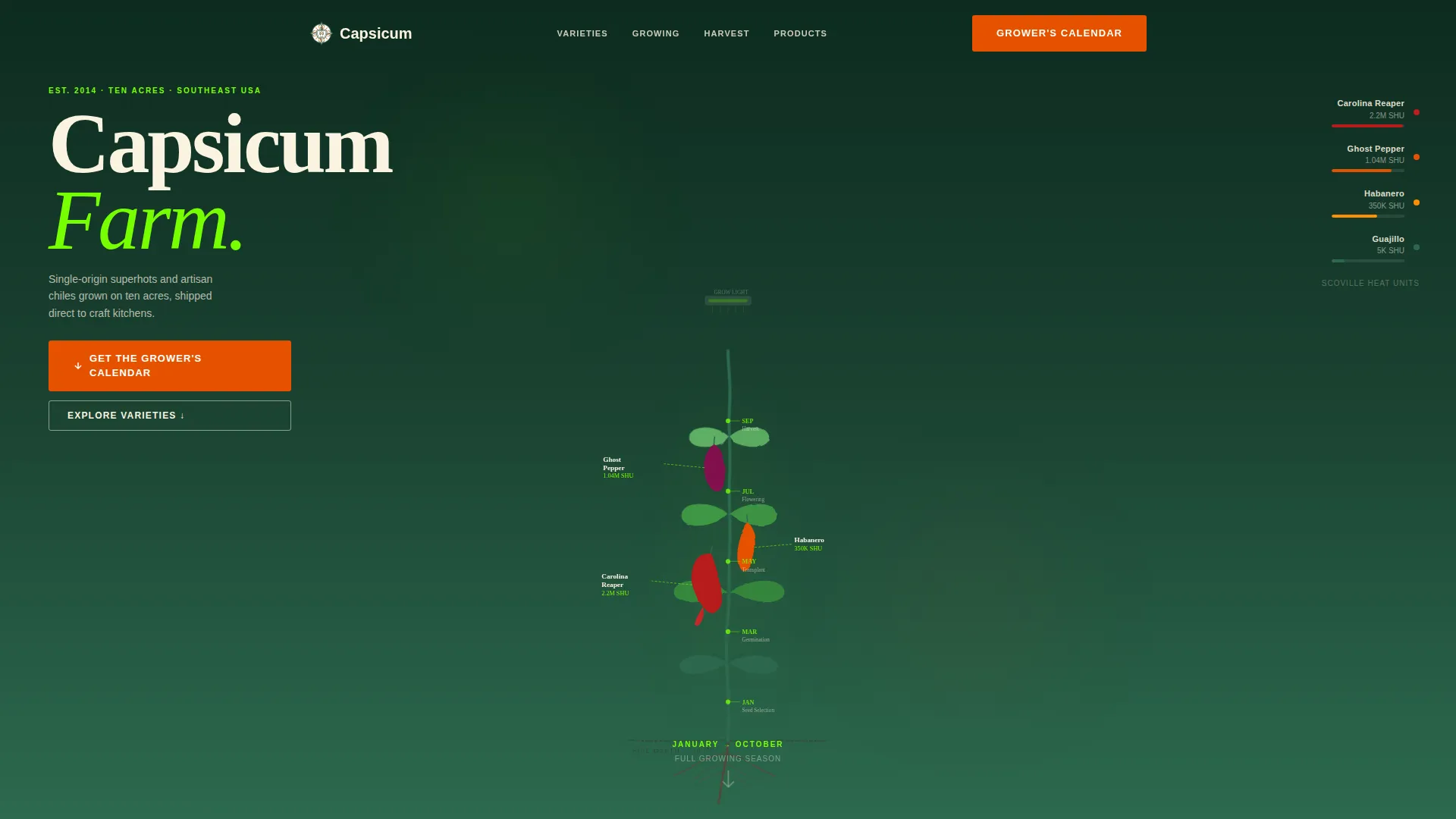
- A parallax botanical SVG hero illustration annotated with Scoville ratings, growing-season dates, and soil-depth markers
- Eight zigzag timeline sections progressing from seed selection through shipping, with scroll-linked color temperature shifts from cool green to deep harvest orange
- Inline resource card components at each stage offering downloadable guides unlocked via a single email capture field
Feature list
This template includes a focused set of built-in components that work together to tell the farm's story and capture leads through genuine content value.
Parallax Botanical Hero Illustration
A tall, hand-drawn cross-section of a pepper plant fills the hero viewport. Roots anchor the bottom, the stem climbs center-frame, and ripe pods hang at eye level with dotted leader lines connecting each variety name to its heat scale. A subtle parallax effect makes the plant appear to grow upward as visitors arrive.
Scroll-Linked Timeline Sections
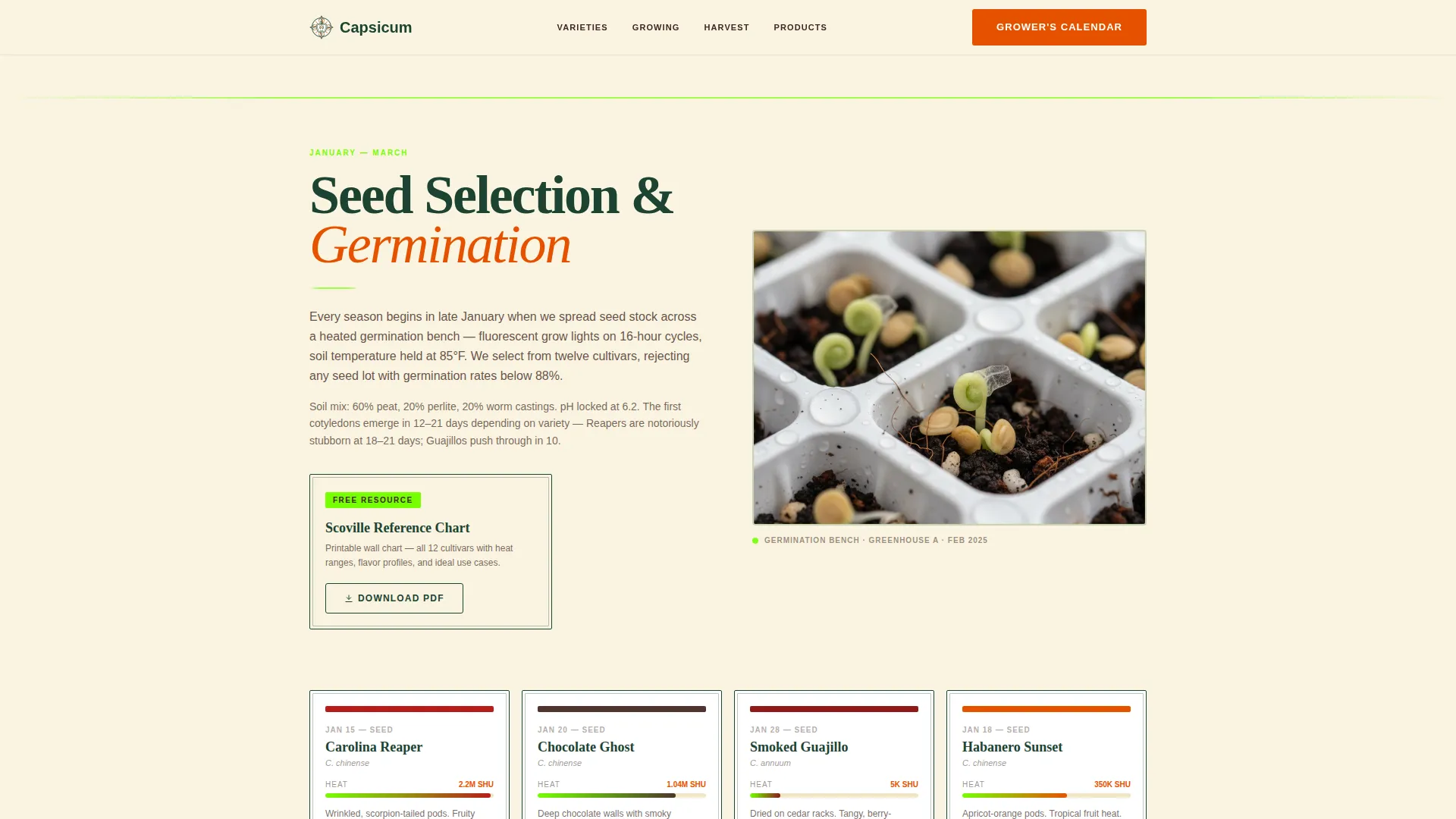
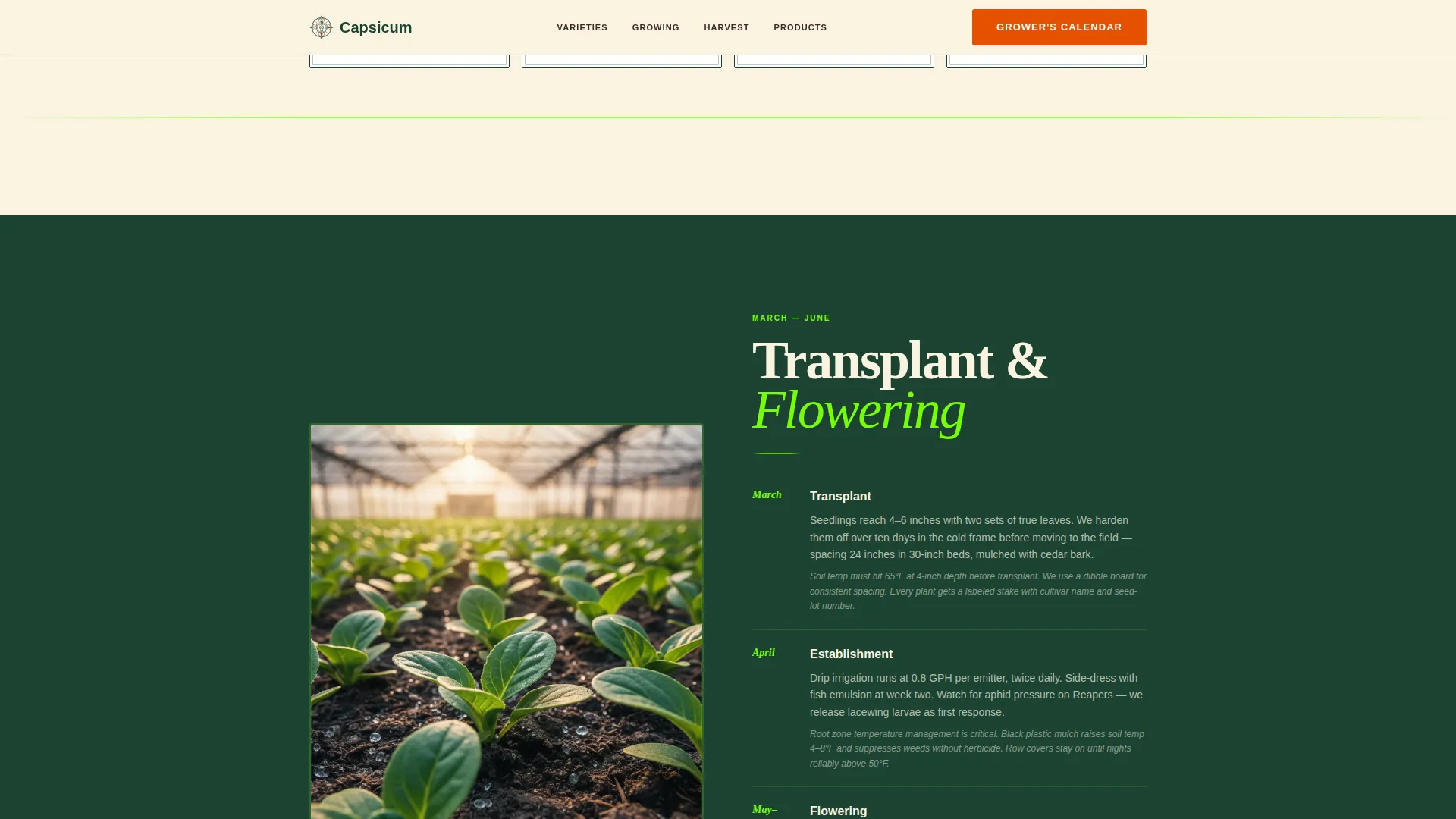
Eight zigzag sections each represent one stage of the growing calendar: seed selection, germination trays, transplant, flowering, fruiting, harvest, drying, and shipping. The alternating left-right layout and progressively warming color temperature make the scroll feel like the season heating up.
Resource Card Downloads at Every Stage
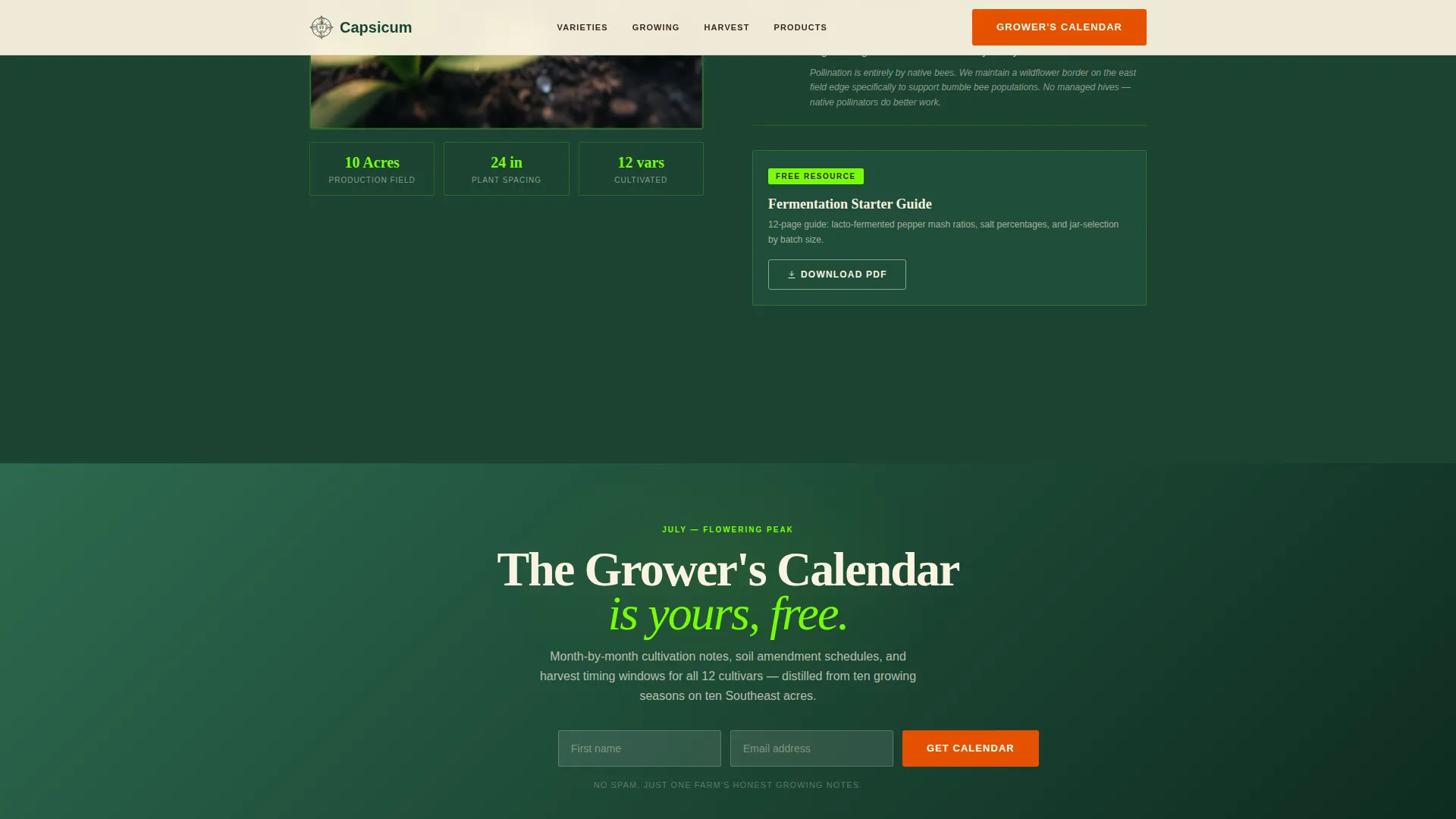
Each timeline stage includes a secondary resource card. Downloadable items include a printable Scoville reference chart, a fermentation starter guide, and a seed-saving PDF. All are unlocked with the same first-name and email capture, reducing friction across the page.
Grower's Calendar Email Capture
The primary call to action asks only for a first name and email address. It appears first at the flowering-stage midpoint and repeats at the harvest section, placed after visitors have already absorbed enough about cultivar selection and soil preparation to find the calendar genuinely useful.
Cultivar Annotation Hover Interactions
Visitors hovering over varieties in the illustration and timeline sections can read inline annotations. This keeps the page educational and builds the named-farm credibility that restaurant chefs and sauce entrepreneurs are looking for.
Three-Audience Products Section
A dedicated section breaks the farm's customer base into three clear profiles: pitmaster hobbyists, small-batch sauce entrepreneurs, and restaurant chefs. Product formats (whole pods, fermented mash, small-batch flake) are matched to each buyer type.
Page sections overview
| Section | Purpose |
|---|---|
| Hero Botanical Illustration | Parallax SVG plant cross-section introduces varieties and season data |
| Seed Selection Stage | Cultivar profiles and cool-green palette open the timeline in January |
| Germination Trays Stage | Early growth credibility shown through process detail and macro imagery |
| Transplant and Flowering | Warming palette and process photography build mid-season confidence |
| Harvest and Drying | Deep orange palette and primary Grower's Calendar call to action |
| Products and Audience | Three buyer profiles matched to whole pods, mash, and flake formats |
| Footer Row | Single-row linear footer closes the page |
Design & branding system
The visual identity follows a Garden and Growth theme using the Rainforest color system. Every color decision is grounded in the physical experience of the farm itself.
- Canopy green (#1B4332) and warm off-white (#FAF3E0) alternate as section backgrounds; loam brown (#3E2723) carries all body text; habanero orange (#E65100) anchors accent elements; chartreuse (#76FF03) is reserved for hover states and callout badges
- Typography pairs DM Sans for body text with Fraunces for display headings, giving the page a botanical-editorial warmth that matches the hand-drawn illustration style
- Thin chartreuse rules act as section dividers, and the scroll itself shifts color temperature from cool early-season greens to deep harvest oranges as visitors progress
Mobile & speed optimization
The template is built desktop-first to match how craft buyers and trade purchasers typically research suppliers, while maintaining full mobile support so no visitor is locked out.
- Server Components power static sections for consistent load behavior; Client Components handle parallax and scroll-linked animations via GSAP ScrollTrigger
- Staggered section reveals and scroll-triggered counters add animation depth without requiring custom scripting from the user
- The zigzag layout reflows cleanly on smaller screens, keeping the timeline readable and the resource card downloads accessible on any device
How this template helps you convert
The conversion strategy is built around teaching before asking. By the time a visitor reaches the email capture form, they have already learned enough to want what is being offered.
- Each timeline stage delivers a piece of genuine value (a chart, a guide, a PDF) before the primary call to action appears, so the Grower's Calendar feels like a natural continuation rather than an interruption.
- The single-field email capture (first name and email only) removes friction at every resource touchpoint, and the same capture unlocks all secondary downloads so visitors never feel asked twice.
- Named cultivar specificity, harvest volume context, and the three-audience products section give trade buyers the credibility signals they need to move from browsing to contacting.
Other information about this template
This template is part of the Agriculture and Environment category under the Fruit and Vegetable Farming subcategory, specifically positioned within the Pepper and Chili Farm niche. It is localized for English-language audiences using United States dollar pricing, imperial measurements, and Southeast United States geography references.
- The animation layer uses GSAP ScrollTrigger for the parallax SVG hero, scroll-linked color temperature shifts, and staggered section reveals
- The header concept is an Infographic style, using a botanical-illustration approach with fine ink lines and watercolor fills rather than stock photography
- The template style is Zigzag and Alternating, and the landing-page direction is Content and Resource, meaning lead generation is driven through educational content rather than direct product promotion
Theme
Garden & Growth
Creative direction
Timeline Progression
Color system
Rainforest
Style
Zigzag/Alternating
Direction
Content/Resource
Page Sections
Parallax Botanical SVG Hero
Scroll-linked Growing Timeline
Resource Card Downloads
Grower's Calendar Lead Capture
Three-audience Products Section
Cultivar Hover Annotations
Related questions
Who is this landing page template built for?
Do I need design or animation experience to use this template?
How does the email capture work across the page?
Can I update the pepper varieties and product formats shown?
Is this template suitable for a farm that sells multiple pepper formats?