Chisel - Sculptural Portfolio Landing Page Template
Chisel is a sculptural portfolio landing page built for artists who work at monumental scale. It pairs a scroll-jacked 360-degree hero with layered case study chapters that walk visitors through every stage of the creative process. The result feels less like a website and more like a hand-bound studio monograph brought to life on screen.
by Rocket studio
Quick summary
Chisel is a single-page, overlap-layered portfolio template designed for sculptors working across stone, steel, and mixed materials. It guides gallery curators, corporate art consultants, and advanced students through a full process narrative, from raw material to installed piece, using a scroll-driven, monograph-inspired visual language.
Who this template is for
This template is built for serious sculptors whose work lives in public and institutional spaces. It speaks to artists who need to communicate both aesthetic depth and professional credibility to demanding audiences.
- Gallery curators scouting anchor works for upcoming exhibitions
- Corporate art consultants sourcing large-scale commissions for new headquarters
- Master of Fine Arts students and early-career sculptors who want to document process with the same rigor they apply in the studio
What problem this template solves
Most portfolio templates treat sculpture like flat photography. They display finished images without context, leaving curators and consultants with no sense of scale, process, or intent. That gap costs commissions.
- Visitors bounce before they understand the depth of the work
- No narrative structure means no emotional investment before the ask
- Generic portfolio layouts feel mismatched to the gravitas of monumental sculpture
What you get with this template
You get a complete single-page layout built around process storytelling. Every section is designed to earn trust before asking for anything in return.
- A scroll-jacked hero that locks the viewport and orbits a sculpture 360 degrees before revealing the artist's name
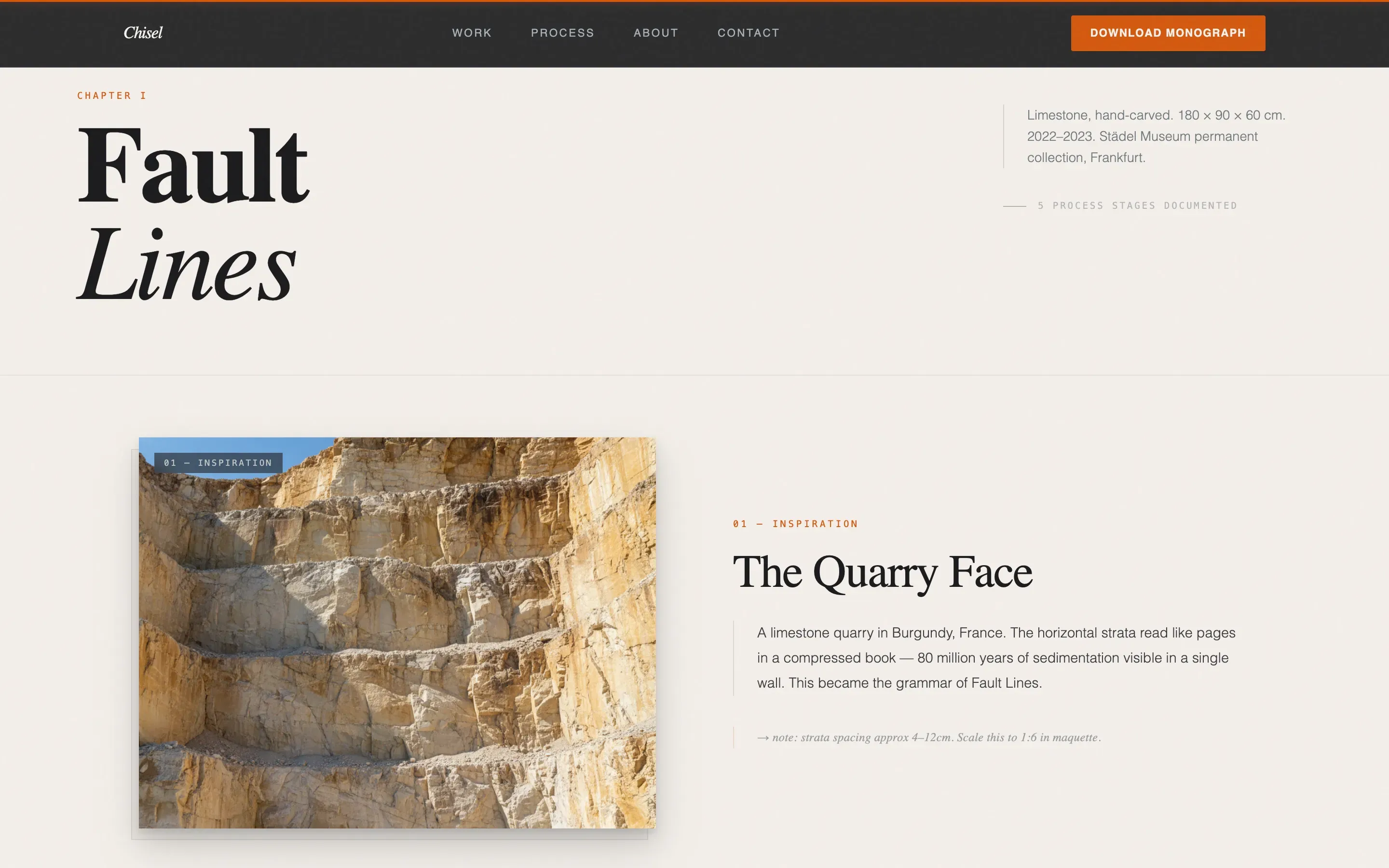
- Full layered case study chapters, each walking through five stages from raw inspiration to installed piece
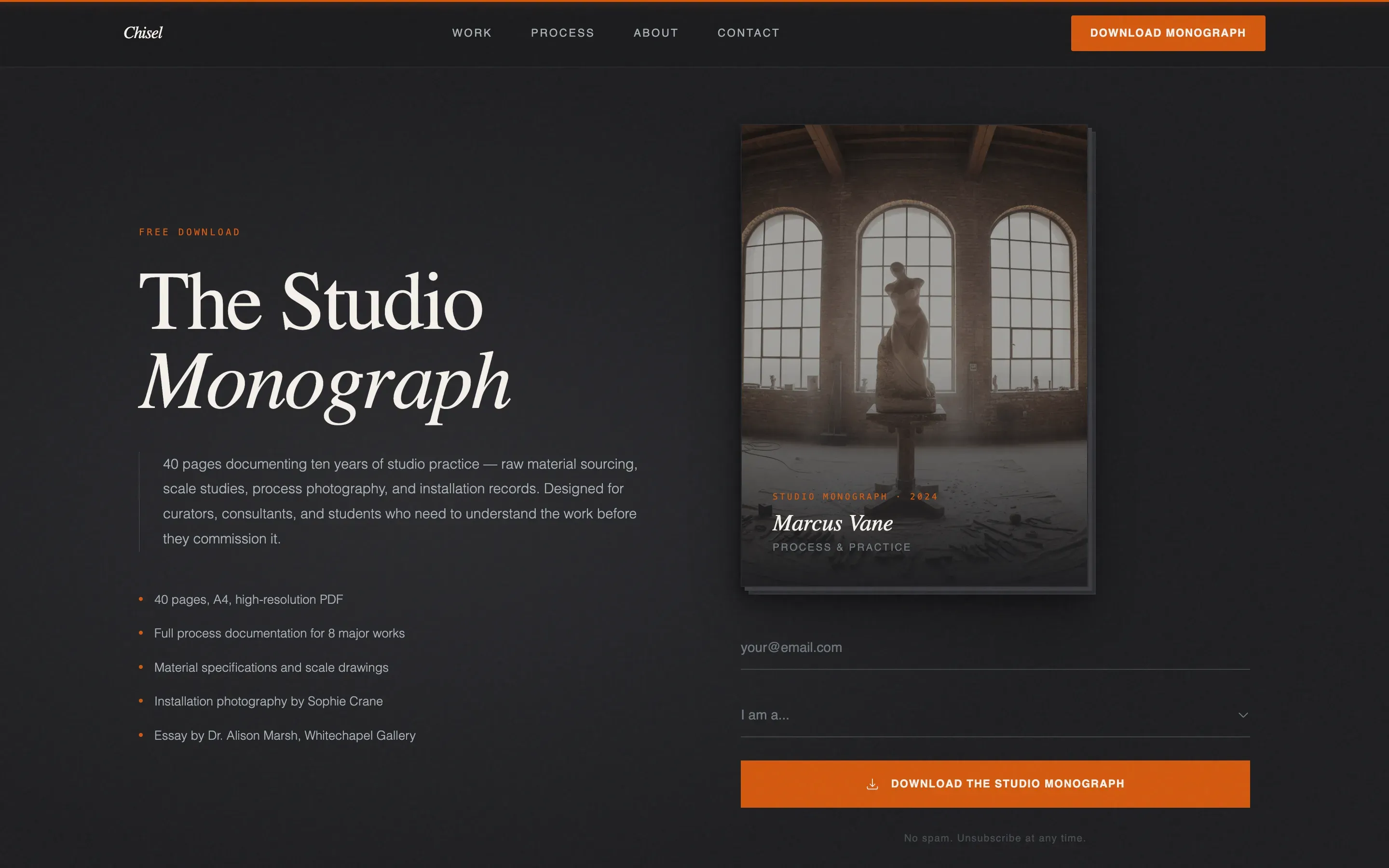
- A gated monograph download form and a quiet secondary email subscription path placed at chapter closes
Feature list
A focused set of built-in design and layout capabilities makes this template feel purpose-built rather than adapted from a generic portfolio kit.
Scroll-Jacked 360-Degree Hero
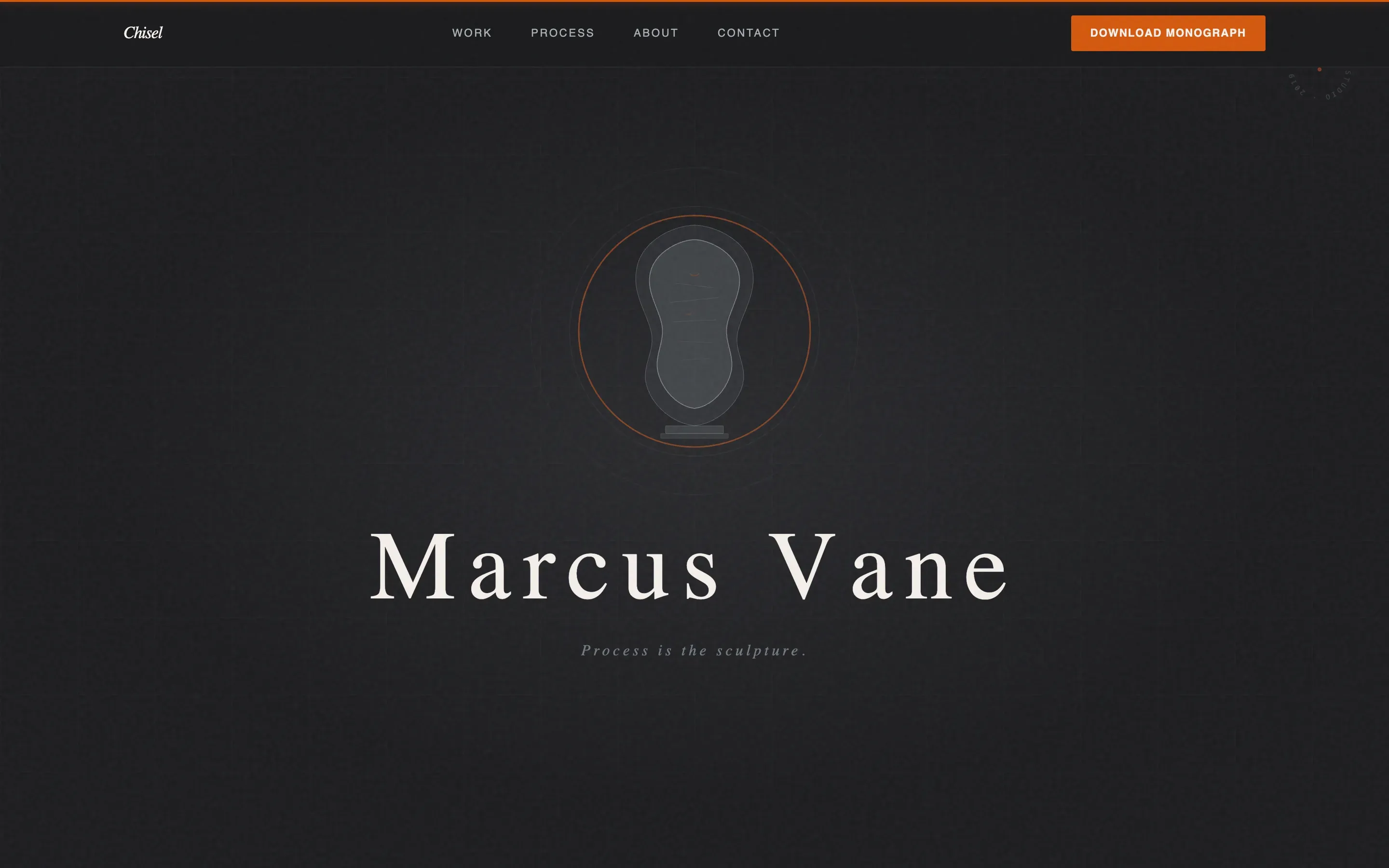
The opening viewport locks on load. The visitor's scroll wheel rotates a high-resolution sculpture model through a full 360-degree orbit against a forge-black background. Only after the full rotation completes does the sculptor's name letterpress-stamp onto the screen, one serif character at a time, followed by a single steel-gray tagline. The pause forces attention in the same way a gallery entrance commands silence.
Five-Stage Case Study Chapters
Each sculpture receives its own layered chapter that scrolls vertically through five distinct stages: an inspiration photograph, a material selection and scale maquette shot, a mid-process studio documentation image with dust in the air, a macro detail of surface texture, and the final piece installed in its architectural context. Panels overlap and peel away as the visitor scrolls, each layer revealing the next like lifting tissue paper from a catalogue entry.
Handwritten Margin Notes
Between case study chapters, the sculptor's handwritten margin notes appear in a script font. Measurements, doubts, and material costs surface as authentic artifacts of real labor. This detail grounds the narrative and builds the kind of trust that polished portfolio grids never reach.
Gated Monograph Download Form
After the second case study, a primary call-to-action block invites visitors to download a free 40-page process book in portable document format (PDF). The form collects an email address and a single dropdown identifying the visitor's role: curator, collector, press, student, or architect. The placement is deliberate, the work has already proven its depth before any ask is made.
Quiet Studio Dispatches Subscription
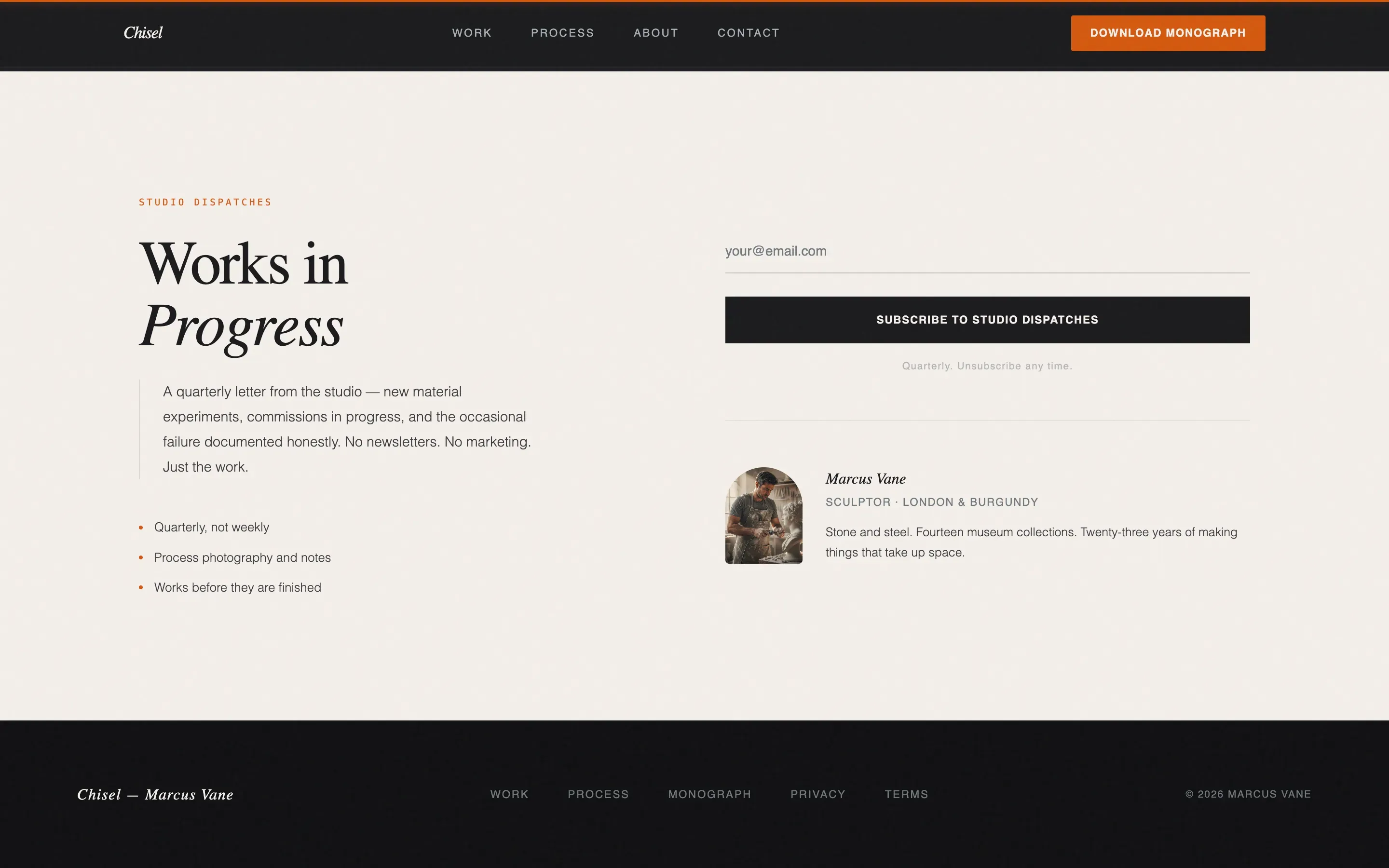
A secondary subscription path sits as a plain text link at the close of each chapter. It invites visitors to subscribe to quarterly studio dispatches documenting works in progress. The low-friction placement earns the sign-up through demonstrated generosity rather than urgency.
Overlap and Layered Panel System
Every content panel overlaps its neighbor with visible drop shadows that mimic stacked sheets of handmade paper. Images bleed past their container edges as if the work itself refuses to be framed. The alternating forge-black and torn-rag white backgrounds give the page a rhythm that feels like turning heavy pages in a bound monograph.
Page sections overview
| Section | Purpose |
|---|---|
| Scroll-Jacked Hero | Orbits hero sculpture 360 degrees before revealing artist name |
| Name Reveal Sequence | Letterpress-stamps sculptor's name one character at a time |
| Case Study One | Five-stage chapter from inspiration photo to installed piece |
| Case Study Two | Second sculpture narrative with layered panel reveal |
| Monograph Download Form | Gated PDF offer with role-select dropdown after second chapter |
| Handwritten Margin Notes | Script-font studio notes placed between case study chapters |
| Additional Case Studies | Further sculpture chapters following the same five-stage format |
| Studio Dispatches Link | Quiet secondary subscription path at each chapter close |
Design & branding system
The visual identity follows an Ink and Paper theme built on a Monochrome Steel color system. Every color choice and typographic decision reinforces the feeling of a charcoal sketch on heavyweight cotton paper left open beside an arc welder.
- Colors: forge-black (#1A1A1D), brushed steel (#71797E), torn-rag white (#F5F0EB), and kiln-hot orange (#D4580A) reserved for interactive states and progress indicators only
- Typography: heavy steel-gray serif for the name reveal, a script font for handwritten margin notes, and clean body copy that reads like catalog text
- Spatial system: alternating dark and light panel backgrounds, overlap drop shadows mimicking stacked handmade paper, and full-bleed images that spill past container edges
Mobile & speed optimization
The layout is designed to preserve the immersive, layered experience across screen sizes. The scroll-jacked hero and panel overlap system adapt to smaller viewports while keeping the monograph feel intact.
- Layered panels and bleed images reflow for touch-based scrolling without losing the overlap aesthetic
- The monograph download form and role-select dropdown remain fully operable on mobile screens
- Typography scaling keeps the heavy serif name reveal and script margin notes legible at every breakpoint
How this template helps you convert
The page is structured as a content and resource destination. It earns trust through process depth before presenting any conversion moment.
- The 360-degree hero and five-stage case study chapters demonstrate craft and scale so thoroughly that curators and consultants arrive at the form already convinced of the work's institutional quality.
- The gated monograph download converts high-intent visitors by offering genuine value, a 40-page PDF process book, in exchange for an email and a role identifier, giving the sculptor a segmented list of curators, collectors, press contacts, students, and architects.
- The quiet Studio Dispatches text link at each chapter close captures a secondary audience who are not ready to download but want to stay connected, building a long-term relationship through demonstrated generosity.
Other information about this template
This template is categorized under Portfolio and Agency, with a specific focus on the sculptor interactive portfolio niche. It is built as a single overlap and layered landing page, which means all content lives in one continuous scroll rather than across multiple pages.
- The Ink and Paper theme and Monochrome Steel color system were selected specifically to match the material vocabulary of stone and steel sculpture
- The Case Study Narrative creative direction and Scroll-Jacked Experience header concept are both built into the template structure, not optional add-ons
- The Content and Resource landing page direction means the primary conversion mechanism is the free PDF monograph rather than a direct contact or booking form
- The template style is suited to artists whose process is as compelling as their finished work, particularly those pursuing museum, gallery, and corporate placement
Theme
Ink & Paper
Creative direction
Case Study Narrative
Color system
Monochrome Steel
Style
Overlap/Layered
Direction
Content/Resource
Page Sections
Scroll-jacked 360-degree Hero
Five-stage Case Study Chapters
Handwritten Margin Notes
Gated Monograph Download Form
Quiet Studio Dispatches Subscription
Overlap and Layered Panel System
Related questions
Who is this landing page template designed for?
What is the monograph download form and how does it work?
Can I add more sculpture case studies beyond the two shown?
What does the scroll-jacked hero actually do?
Is this template suitable for a sculptor who also takes commissions?