Psychologist FAQ Website Template
Clarity is a zigzag landing page template built for licensed psychologists offering virtual therapy. It opens with a warm multi-step intake form, then guides hesitant visitors through a structured FAQ-driven scroll that answers real objections before asking for anything. The design uses a teal, charcoal, linen, and gold palette to feel clinical yet genuinely human.
by Rocket studio
Quick summary
Clarity is a single-page template designed for psychologist virtual consultation practices. It leads with a gentle multi-step intake form, then alternates FAQ questions and honest answers in a zigzag layout. The goal is to dissolve hesitation before the visitor ever sees a call-to-action button, earning trust the way a good therapist earns trust: by listening first.
Who this template is for
This template suits licensed psychologists and mental health practitioners who offer video therapy sessions. It works especially well for solo practitioners and small practices that need a focused, conversion-ready online presence without a complex multi-page site.
- Psychologists providing cognitive behavioral therapy (CBT), trauma processing, or anxiety management via video
- Practices targeting burned-out professionals, new mothers navigating postpartum stress, or college students on long campus counseling waitlists
- Clinicians who want a warm, credible first impression that reduces client anxiety before the first contact
What problem this template solves
A therapist's biggest marketing challenge is not awareness, it is hesitation. Potential clients arrive already anxious. Generic booking pages make that worse. Clarity is designed to meet visitors where they are emotionally, answer the questions they are too afraid to type into a contact form, and guide them toward action gently.
- Visitors feel judged by clinical, transactional layouts that skip trust-building entirely
- First-time therapy seekers carry specific objections: cost, effectiveness, emotional vulnerability on camera, and whether the therapist will understand them
- Those objections go unanswered on most practice websites, causing quiet drop-offs at midnight when the visitor finally found the courage to look
What you get with this template
You get a fully structured zigzag landing page that combines a multi-step intake form with a conversational FAQ scroll. Every section is intentionally sequenced to move a hesitant visitor toward the primary call to action at a human pace.
- A five-section page layout covering hero intake, four alternating FAQ pairs, and a footer
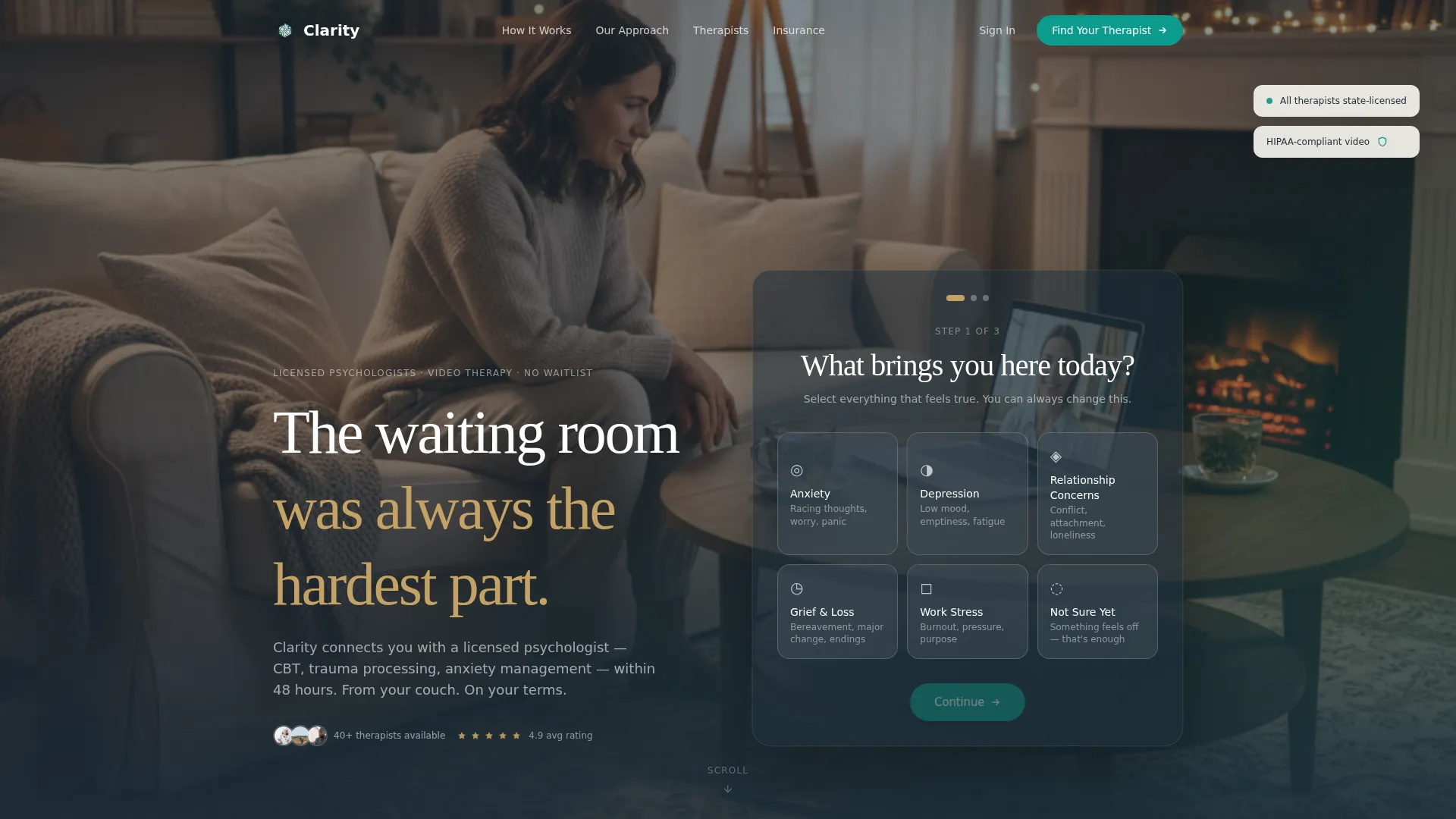
- A multi-step form with soft-cornered tile selection, a warm background hue shift on selection, and deliberate step transitions
- A secondary lead-capture path offering a free downloadable PDF guide gated behind only a first name and email
Feature list
This template was designed around a specific conversion challenge: turning a skeptical, emotionally cautious visitor into a willing first-time client.
Multi-Step Intake Form with Tile Selection
The header form opens with one generous question: "What brings you here today?" Visitors tap a soft-cornered tile from options including Anxiety, Depression, Grief, Work Stress, and more. Each selection subtly shifts the teal background hue, acknowledging the answer without judgment. Steps two and three gather preferred session times and insurance type, each screen minimal and unhurried.
Zigzag FAQ Conversation Layout
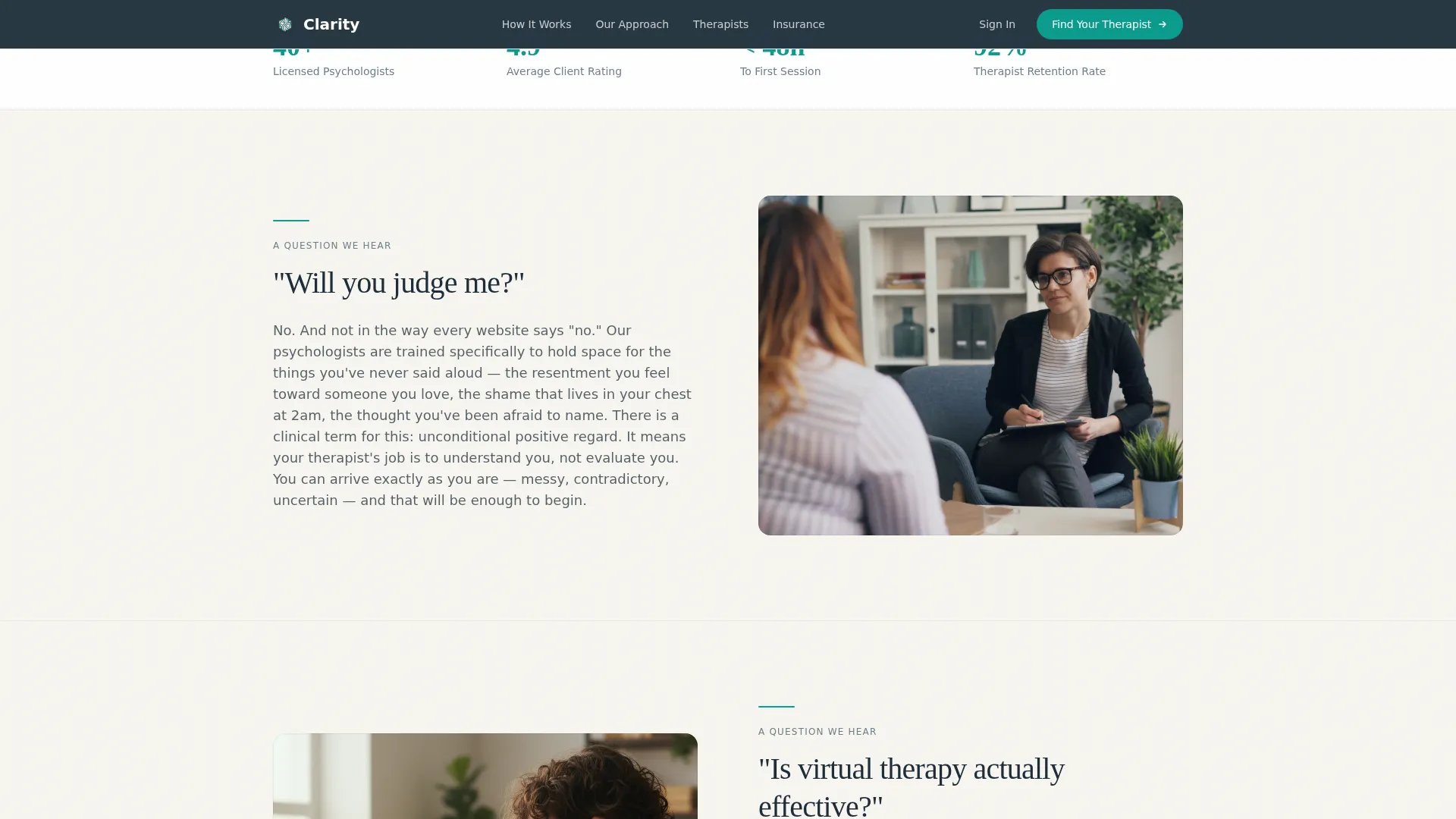
The scroll below the form is structured as a therapeutic dialogue. Real questions that hesitant first-timers type at midnight anchor each section on alternating sides. The paired answers are direct and human, not marketing copy. The rhythm of question, space, answer, space builds steady trust as the visitor scrolls.
Repeating Primary Call-to-Action Placement
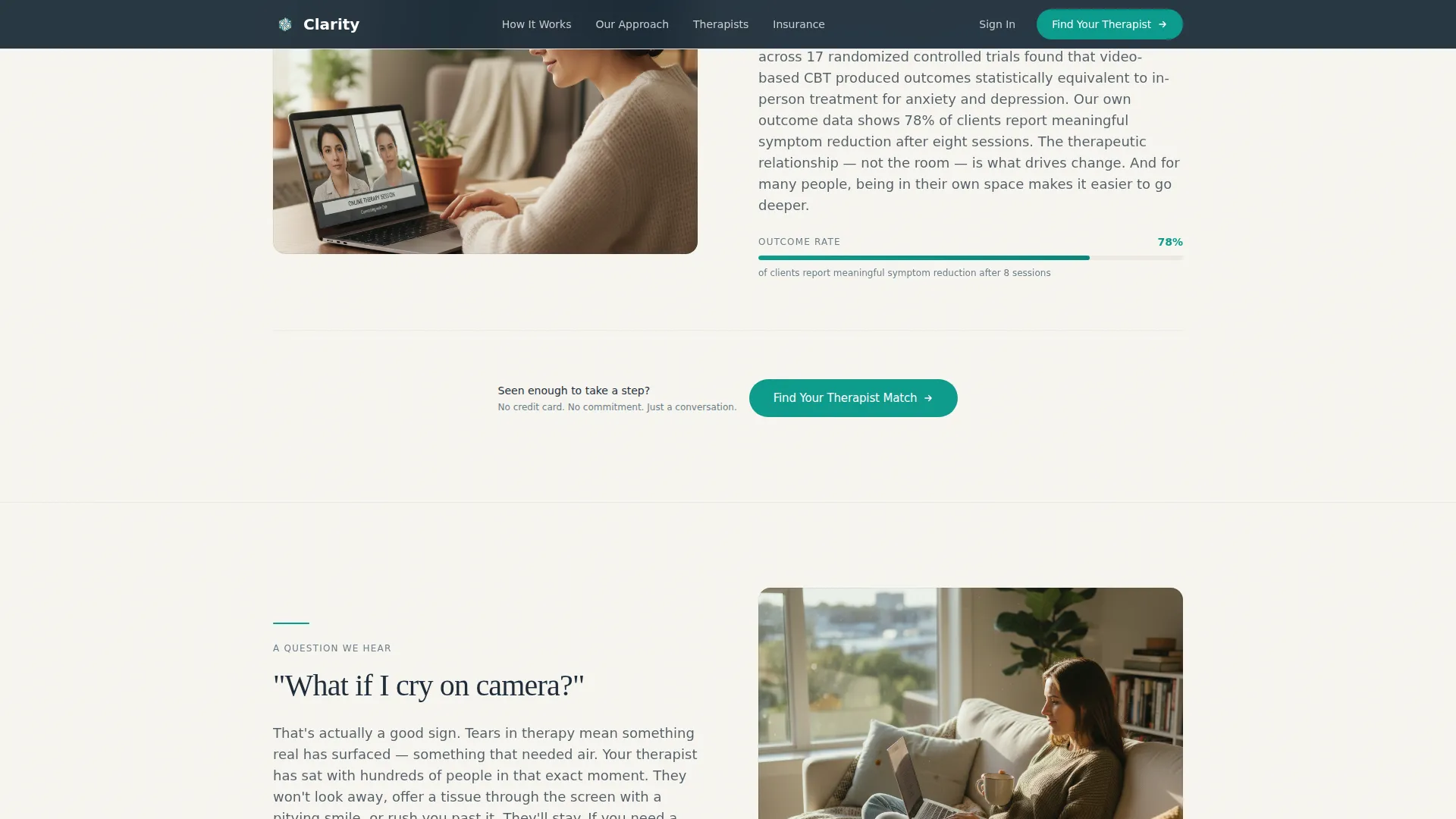
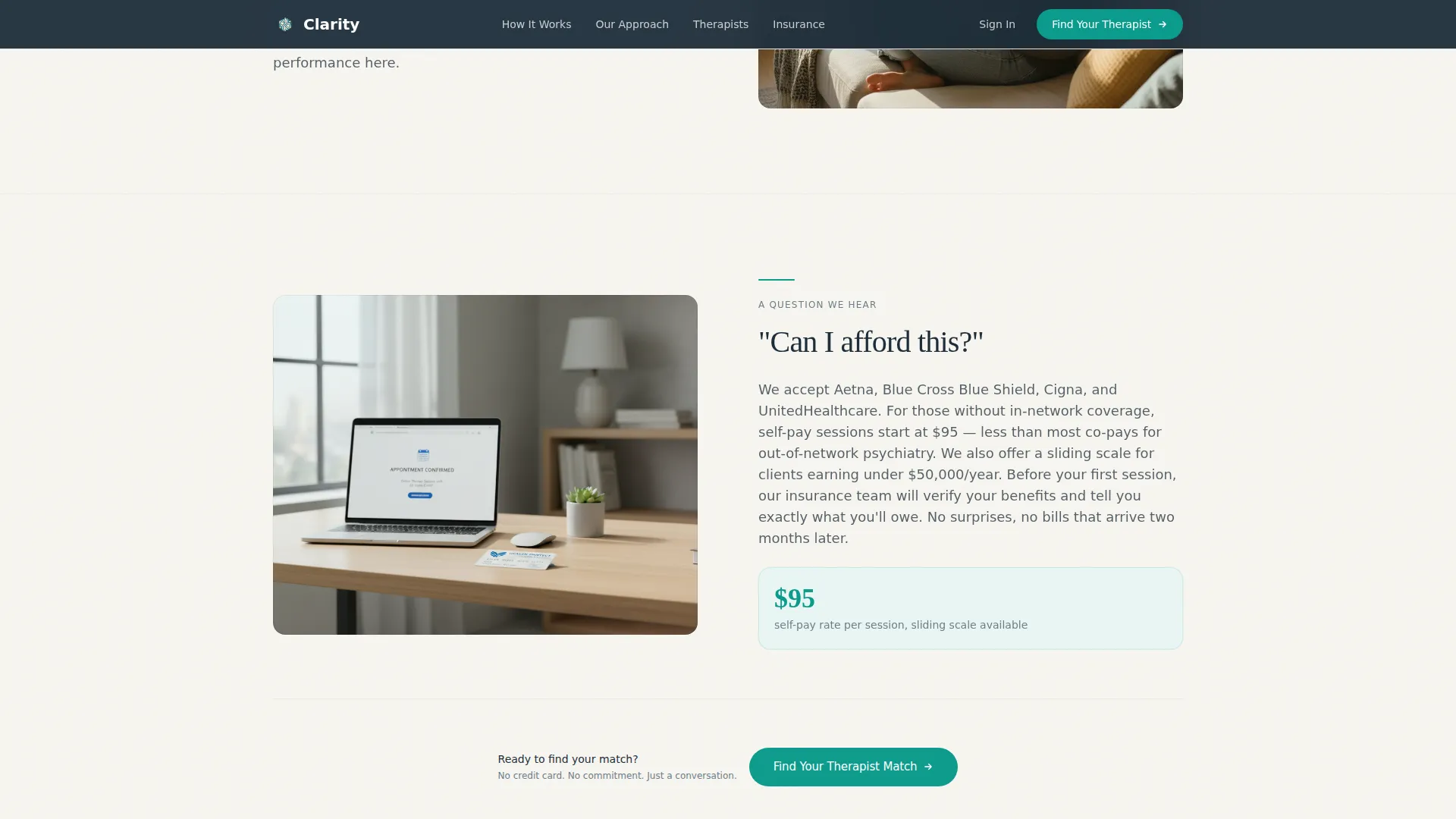
A "Find Your Therapist Match" button appears after every third FAQ pair. It links to a guided matching quiz rather than a hard booking page, reducing the perceived commitment at each touchpoint and keeping the path forward open.
Free PDF Lead-Capture Path
A secondary conversion path offers a downloadable PDF titled "Your First Session: What to Expect." The opt-in gate requires only a first name and email address, no phone number, keeping the barrier low for visitors who are not yet ready to book.
Scroll-Linked Animations and Form Transitions
The template includes medium-intensity scroll-linked blur on the hero background, staggered fade-ins on content blocks, deliberate form step transitions, and an animated progress bar paired with outcome data in the effectiveness FAQ section.
Social Proof Integration Points
The layout includes dedicated placements for outcome statistics, therapist credentials, and client transformation quotes. These elements are positioned to support the FAQ answers contextually, so proof appears where the objection is raised.
Page sections overview
| Section | Purpose |
|---|---|
| Hero intake form | Opens with multi-step form asking what brings the visitor today |
| Will you judge me | Zigzag left section addressing safety and non-judgment |
| Is therapy effective | Zigzag right section with outcome data and animated progress bar |
| What if I cry | Zigzag left section covering emotional comfort and video logistics |
| Can I afford this | Zigzag right section explaining insurance transparency with a call to action |
| Footer layout | Horizontal flow footer closing the page with navigation and trust signals |
Design & branding system
The visual identity follows a warm clinical direction. The palette feels like a therapist's office designed by an architect: precise enough to feel trustworthy, warm enough to feel safe.
- Colors: clinical teal (#0D9B8C) as the primary anchor, deep charcoal (#1E2D3A) for body text and grounding sections, soft linen white (#F7F5F0) for breathing room between content blocks, and muted gold (#C4A265) for interactive elements and progress indicators
- Typography: DM Sans for body text warmth and readability, paired with Fraunces serif headlines that add a literary and human quality to key statements
- Visual style: scroll-blur cinematic hero background, staggered fade-in content blocks, and subtle tile-selection color shifts that respond to user input without dramatic effect
Mobile & speed optimization
The template is built with a mobile-first priority. The primary audience browses at midnight on a phone, often in a private, low-light setting. Every layout decision reflects that context.
- Static hero section with client-side components loaded only for the intake form and scroll animations, keeping initial load fast
- Touch-friendly tile selection in the multi-step form, with large tap targets and minimal text per step
- Single-column zigzag stack on smaller screens, maintaining the question-answer rhythm without horizontal layout complexity
How this template helps you convert
Clarity does not ask for commitment before it gives value. The entire page is structured around earning the click, not demanding it.
- The multi-step intake form opens the page as an act of care rather than a data grab. Visitors answer one question at a time, which lowers perceived effort and increases form completion likelihood.
- Each FAQ section eliminates a specific objection before the visitor carries it to the exit. By the time the "Find Your Therapist Match" button appears, the visitor has already been heard, informed, and reassured three times over.
Other information about this template
Clarity was designed specifically for the psychologist virtual consultation niche within the broader Health and Medical category. It is part of a template system organized around intersection-matched use cases, meaning the layout decisions, color system, and content architecture were chosen to serve this exact practice type.
- Template style: Zigzag/Alternating single-page layout
- Theme classification: Medical Clarity
- Color system label: Teal Catalyst
- Creative direction: FAQ-Driven
- Header concept: Multi-Step Form
- Landing page direction: Content and Resource destination
- Localization: English (United States), pricing in USD, dates in MM/DD/YYYY format
- The footer uses a horizontal flow pattern suited to a clean, minimal closing section
Theme
Medical Clarity
Creative direction
FAQ-Driven
Color system
Teal Catalyst
Style
Zigzag/Alternating
Direction
Content/Resource
Page Sections
Multi-step Intake Form with Tile Selection
Zigzag FAQ Conversation Layout
Repeating Primary Call-to-action Placement
Free PDF Lead-capture Path
Scroll-linked Animations and Progress Bar
Social Proof Placement Points
Related questions
Can I change the therapy focus areas shown in the intake form tiles?
Does the template support a PDF opt-in without requiring a phone number?
Is this template suitable for a solo psychologist or only for group practices?
Can I update the FAQ questions and answers to match my own practice voice?
What does the Find Your Therapist Match button link to by default?