Wood & Furniture Manufacturing Professional Website Template
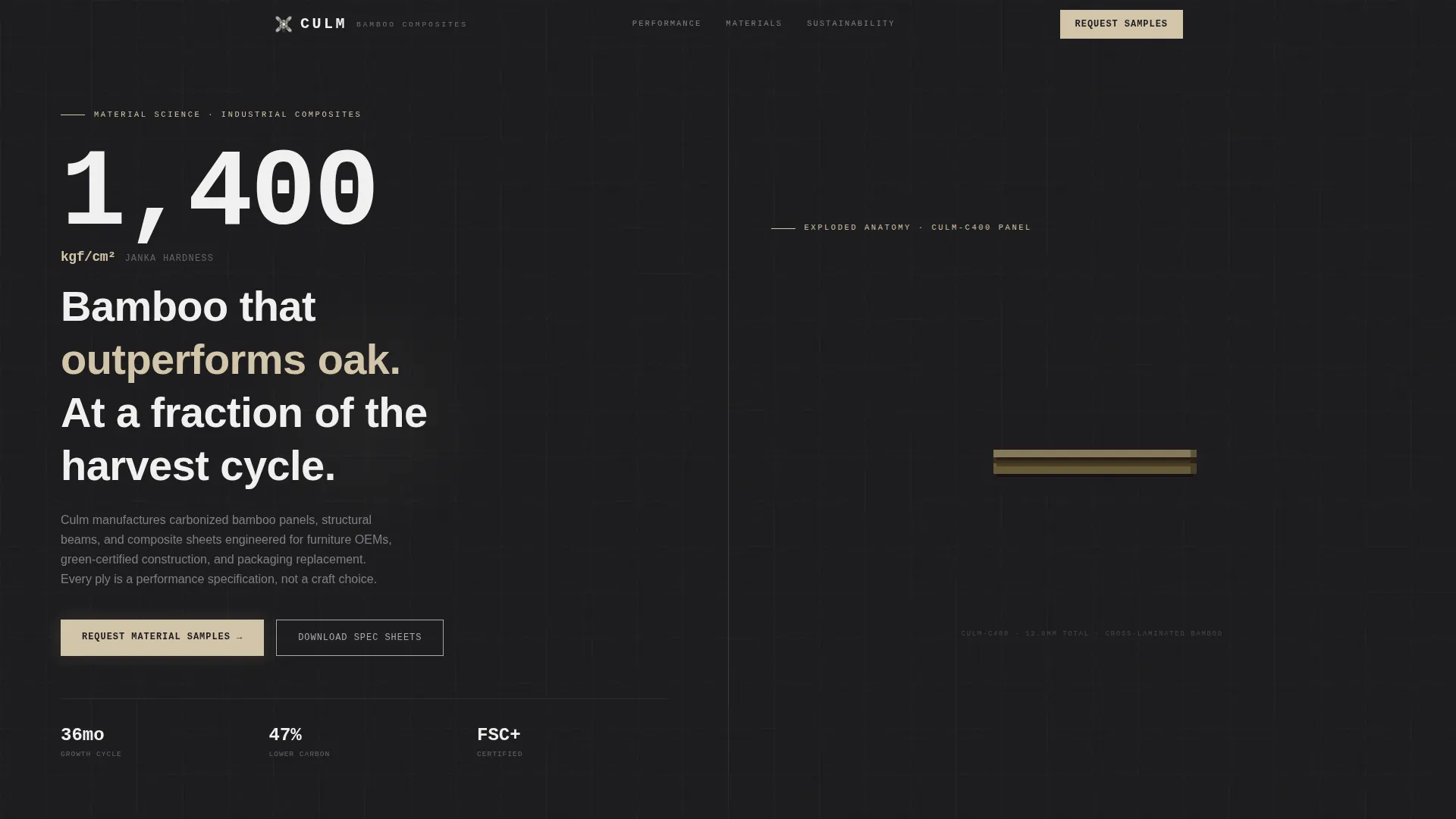
Culm is a split-screen industrial landing page template built for bamboo composite manufacturers. It leads with performance data, uses a Monochrome Steel visual identity, and drives B2B conversion through two clear paths: a material sample request form and a gated specification sheet download. Every section opens with an oversized number before the explanation arrives.
by Rocket studio
Quick summary
Culm is a single-page, split-screen (50/50) landing page template designed for industrial bamboo composite manufacturers. It targets procurement managers, construction firms, and packaging engineers. The layout leads with hard performance data, an exploded-view header, and two conversion paths that feel like logical next steps rather than sales pressure.
Who this template is for
This template is built for businesses that manufacture and sell industrial-grade bamboo materials at scale. It speaks to technical buyers who need proof before they can commit.
- Procurement managers at furniture original equipment manufacturers sourcing sustainable hardwood alternatives
- Construction firms bidding on green-certified projects who need certified material data
- Packaging engineers replacing single-use plastics with structural bamboo moldings
What problem this template solves
Industrial bamboo composites are frequently dismissed because buyers assume the material is artisanal rather than engineered. The template fixes that perception problem by leading with data and only following with copy.
- Performance numbers like hardness ratings and tensile strength comparisons arrive before any paragraph text
- Engineers who need specification data before internal sign-off have a dedicated gated download path
- The form captures company name, industry vertical, annual volume, and work email so follow-up is immediately actionable
What you get with this template
You get a fully structured, single-page B2B landing page layout with every section pre-built around industrial material marketing. No placeholder logic or generic blocks are used anywhere.
- An exploded-view header that labels fiber direction, adhesive layers, carbonization gradient, and outer finish using leader lines and monospaced type
- Stats-first split-screen sections pairing oversized performance numbers with supporting comparison charts and diagrams
- A dual-conversion layout with a mid-page and footer sample request form, plus a secondary email-gated specification sheet download
Feature list
This template is built around a small set of deliberate, high-impact components. Each one serves the B2B buyer journey from first impression to conversion.
Exploded View Header
The header deconstructs a bamboo composite panel into its layered anatomy shown in isometric space against a charcoal background. Thin leader lines and monospaced specification text label each ply, communicating material science rather than craft.
Stats-First Split Screens
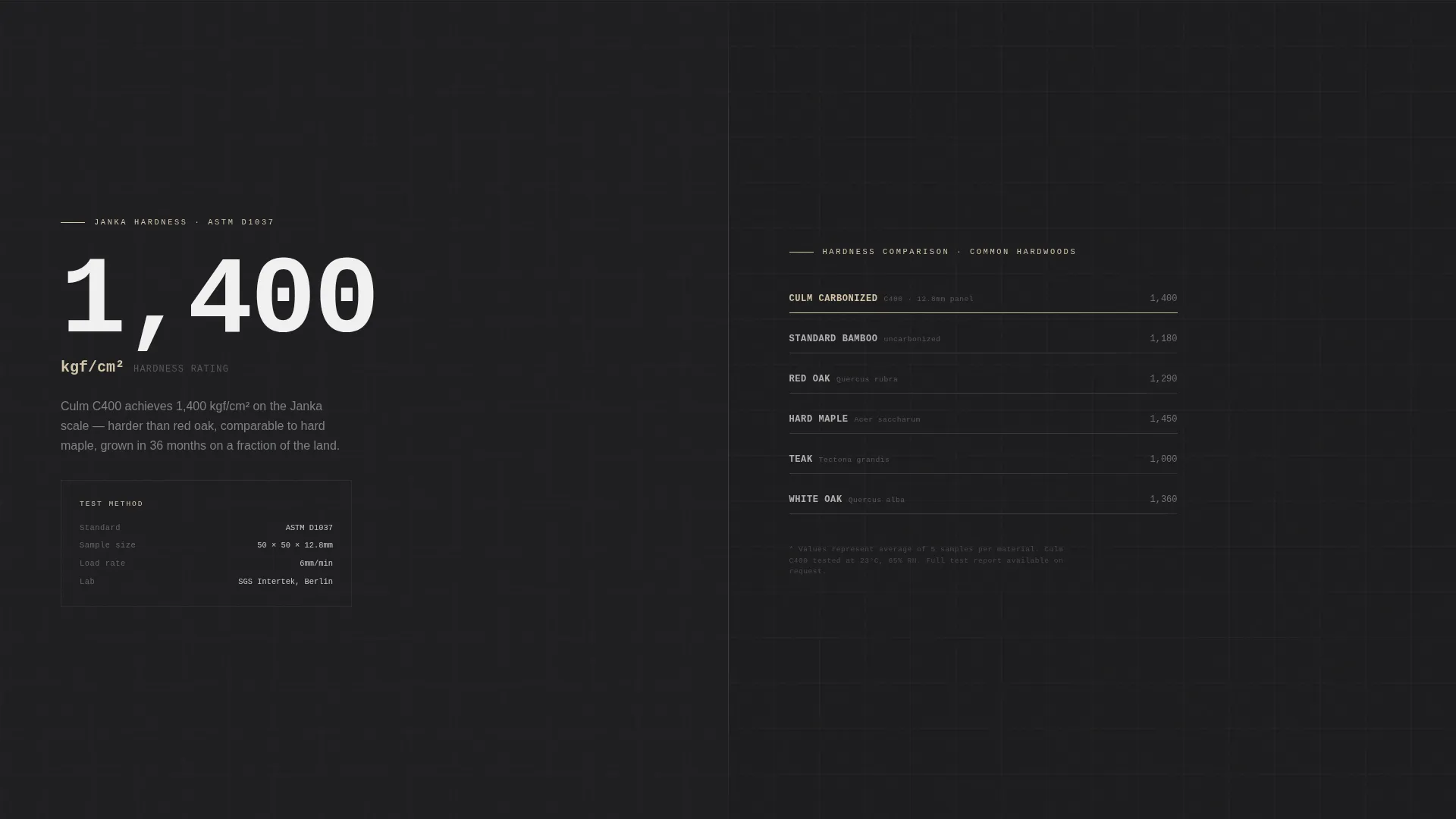
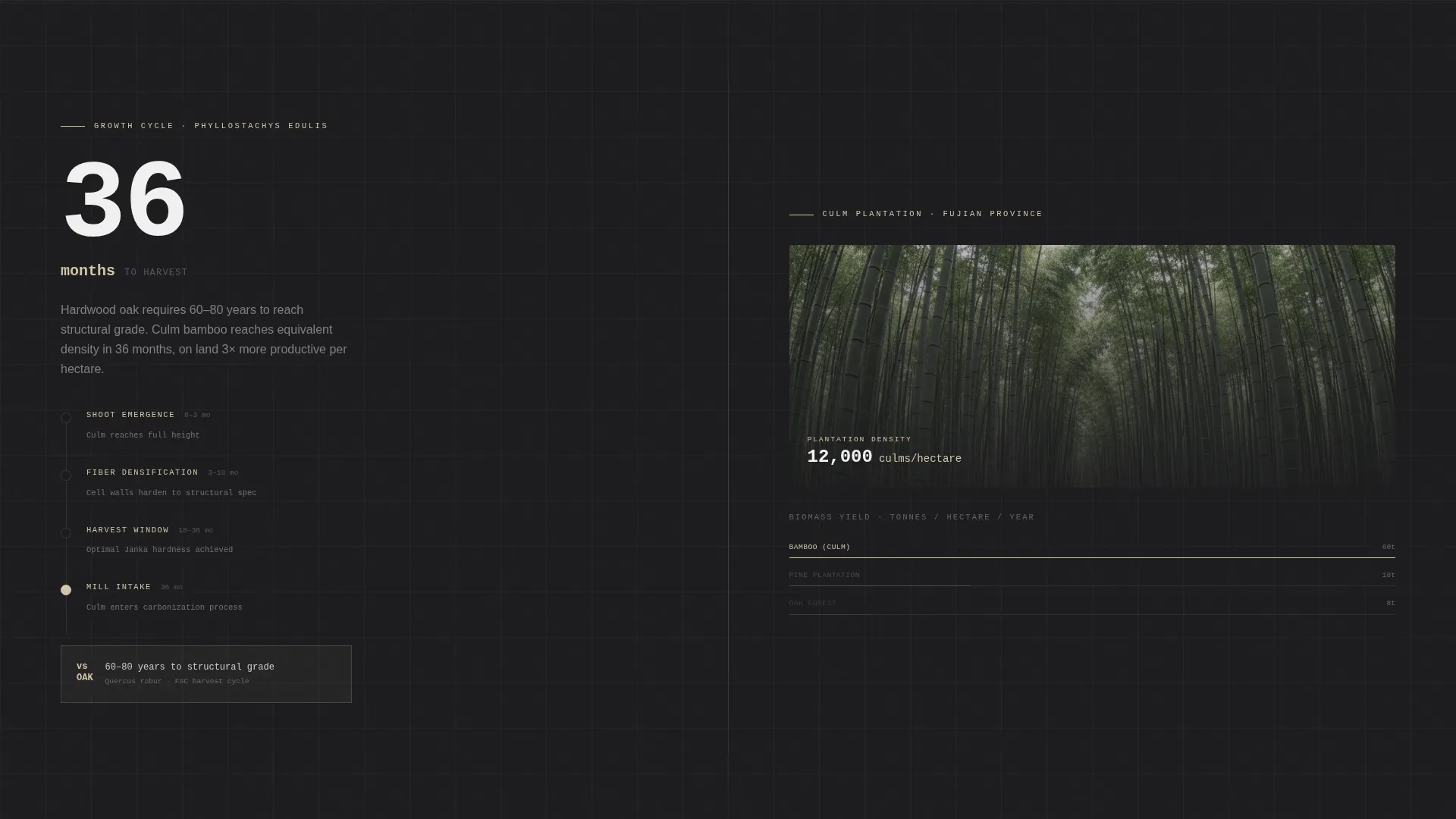
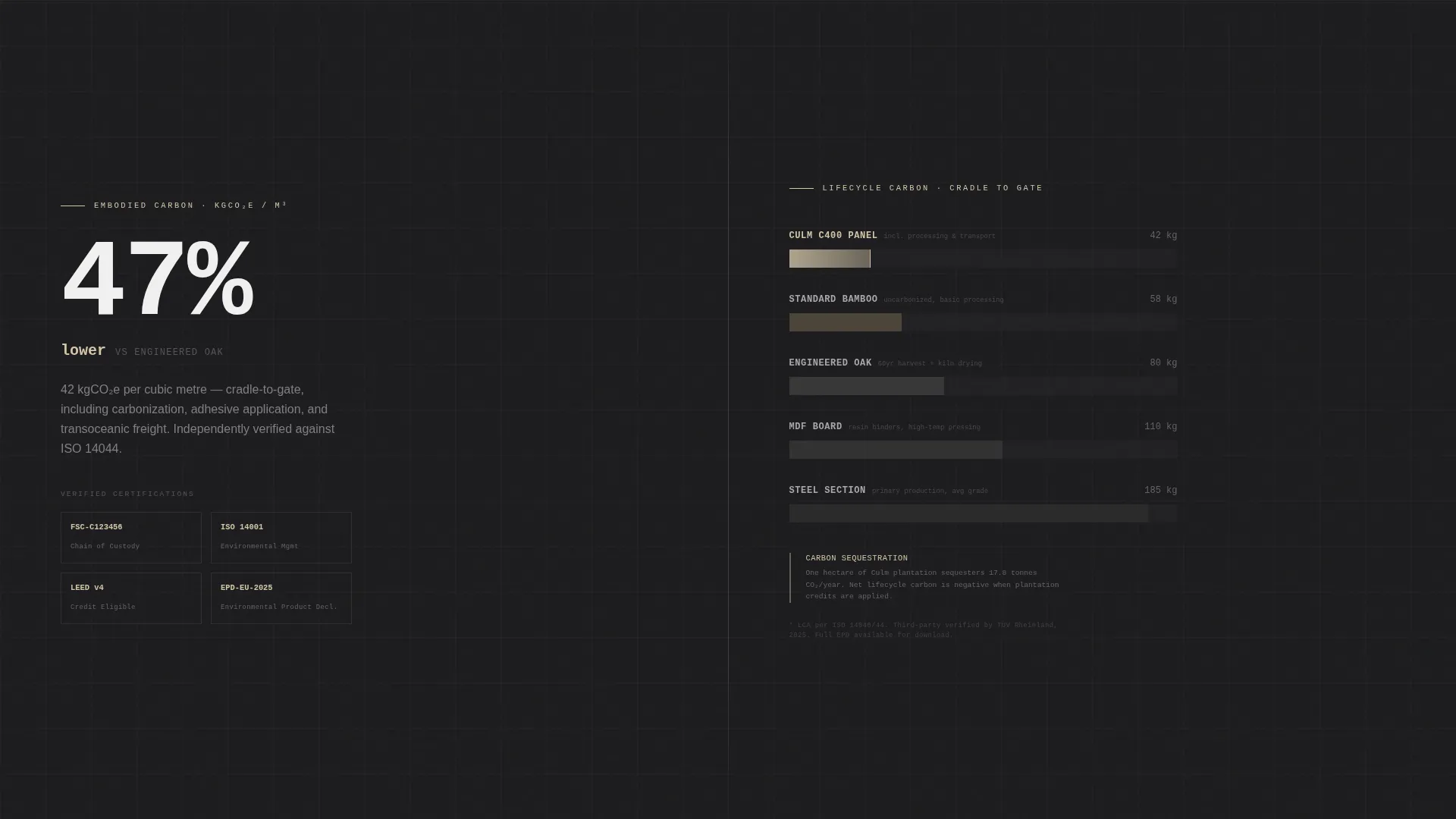
Every content section opens with a single oversized number on one half of the screen. The opposite half reveals a supporting chart or diagram, turning each section into a data-led argument before any paragraph text loads.
Dual Conversion Path Layout
The primary call to action, "Request Material Samples," is anchored at the page midpoint and footer. A secondary path offers "Download Spec Sheets" gated behind email only, capturing engineers who need data before they can champion the material internally.
B2B Sample Request Form
The form captures company name, industry vertical (furniture, construction, packaging, or other), estimated annual volume in cubic meters, and a work email. Each field is chosen to make follow-up immediately useful.
Monochrome Steel Visual System
The color palette uses mill-floor charcoal, machined aluminum, raw bamboo straw as the sole warm accent, and forge-white for data callouts. The result feels like a CNC machine shop where the only organic element is the material itself.
Performance Comparison Sections
Dedicated split-screen sections present a Janka hardness comparison chart, a growth-cycle diagram contrasting 36-month bamboo with 60-year hardwood harvest timelines, and an embodied-carbon lifecycle bar graph showing a 47% lower carbon figure.
Page sections overview
| Section | Purpose |
|---|---|
| Exploded View Header | Establish engineering credibility through labeled composite anatomy |
| Hardness Stats Block | Lead with 1,400 kgf/cm² and Janka comparison chart |
| Growth Cycle Block | Show 36-month harvest advantage versus hardwood timelines |
| Embodied Carbon Block | Present 47% lower carbon figure with lifecycle bar graph |
| Mid-Page call to action | Anchor the primary sample request form at scroll midpoint |
| Spec Sheet Download | Gate secondary download behind email for engineer-led buyers |
| Footer call to action | Repeat primary sample request form for late-scroll conversion |
Design & branding system
The visual identity follows an Industrial Raw theme expressed through a Monochrome Steel color system. Every color choice reinforces the idea that this is a material science product, not a lifestyle brand.
- Mill-floor charcoal (#1C1C1E) as the dominant background, machined aluminum (#A8A9AD) for secondary surfaces, raw bamboo straw (#D4C5A9) as the sole warm accent, and forge-white (#F0F0F0) for data callouts and negative space
- Monospaced type is used for specification text and leader line labels in the header, reinforcing engineering precision throughout the page
- The overall aesthetic evokes a CNC machine shop: steel, concrete, and fluorescent honesty, with the bamboo material itself as the only organic element in the composition
Mobile & speed optimization
The split-screen (50/50) layout is structured to reflow cleanly on smaller screens so that data callouts and comparison visuals remain readable without horizontal scrolling.
- Oversized stats and chart panels are designed to stack vertically on mobile, preserving the data-first reading order
- The lean color palette and minimal decorative elements keep the visual layer lightweight and fast to render
- Both conversion forms are positioned to remain accessible at mid-page and footer scroll points on all screen sizes
How this template helps you convert
The page is engineered around a single insight: technical B2B buyers trust data before they trust a pitch. Every layout decision serves that conversion logic.
- Performance data leads every section, so by the time a buyer reaches the sample request form, the material has already made its case through numbers and charts alone.
- The dual-path conversion design separates action-ready procurement buyers (sample request) from research-stage engineers (spec sheet download), capturing both audiences without sending either to a dead end.
Other information about this template
This template is categorized under Manufacturing and Industrial, with a specific focus on the Wood and Furniture Manufacturing subcategory and the Bamboo Product Manufacturer niche. It carries an intersection match score of 13, reflecting a precise alignment between its design system, creative direction, and target buyer profile.
- The template style is Split Screen (50/50), which is the defining structural choice throughout the layout
- The creative direction is Stats-First Impact, meaning every scroll step leads with a number before any explanatory copy appears
- The header concept is an Exploded View, a format borrowed from industrial engineering drawing conventions
- The landing page direction is Partnership and B2B conversion, meaning the design prioritizes qualified lead capture over broad awareness
- The theme is Industrial Raw, and the Monochrome Steel color system was selected specifically to support that theme
Theme
Industrial Raw
Creative direction
Stats-First Impact
Color system
Monochrome Steel
Style
Split Screen (50/50)
Direction
Partnership/B2B
Page Sections
Exploded View Header
Stats-first Split-screen Sections
Dual Conversion Path Layout
B2B Sample Request Form
Performance Comparison Sections
Monochrome Steel Color System
Related questions
Who is this landing page template designed for?
What conversion actions does the template support?
Can I adapt this template for a different industrial material?
What does the exploded-view header actually show?
Does the template include the actual charts and data?