Artisan Yogurt & Kefir Brand Landing Page Template
The Culture artisan small batch yogurt and kefir brand landing page template is a masonry-style, Pinterest-inspired single-page design built for small-batch creameries. It blends scrapbook-collage visuals with a Parchment and Rust color palette, sensory storytelling, and an event-registration flow that guides farmers' market regulars and fermentation enthusiasts toward reserving a seat at seasonal open-days and workshops.
by Rocket studio
Quick summary
Culture is a Masonry/Pinterest landing page template designed for artisan yogurt and kefir brands. It pairs a warm Parchment and Rust visual identity with a sensory-led scroll experience, guiding visitors through sight, smell, taste, touch, and sound before presenting the primary event-registration call to action. The template is built for creameries that lead with craft, provenance, and living cultures rather than mass-market efficiency.
Who this template is for
This template suits any small-batch dairy producer, fermentation workshop host, or creamery owner who wants to present their yogurt and kefir as a genuine, handcrafted food experience rather than a shelf product. It is equally useful for a yogurt maker operating at a single farmers' market stall and for an established artisan dairy brand running seasonal creamery open-days.
- Small-batch creameries selling raw milk yogurt, milk kefir, or cultured dairy at farmers' markets or direct-to-consumer
- Fermentation educators and workshop hosts who need a registration page that feels as warm and inviting as the event itself
- Artisan food brands whose customers read every ingredient label and care deeply about provenance, organic sourcing, and living cultures
What problem this template solves
Most generic food landing pages flatten sensory products into bullet lists and price tables. For a creamery whose yogurt is thicker than store bought yogurt and whose kefir carries a flavor no supermarket shelf can replicate, that approach loses the sale before trust is built. Visitors arrive curious but leave unconvinced because no visual or narrative cue connects them to the product's living quality.
- There is no emotional journey, so the unique taste and texture of small-batch, slow-fermented dairy never lands
- Generic layouts cannot carry the weight of ingredient transparency, provenance storytelling, or the specific health benefits that persuade a careful buyer to act
- A flat registration form feels transactional; the invitation to a creamery open-day or fermentation workshop should feel personal and warm
What you get with this template
This template delivers a fully structured, single-page layout that moves from sensory discovery to confident registration in one seamless scroll. Every section is pre-built and visually coordinated within the Parchment and Rust color system, so a yogurt maker can drop in content and launch without starting from scratch.
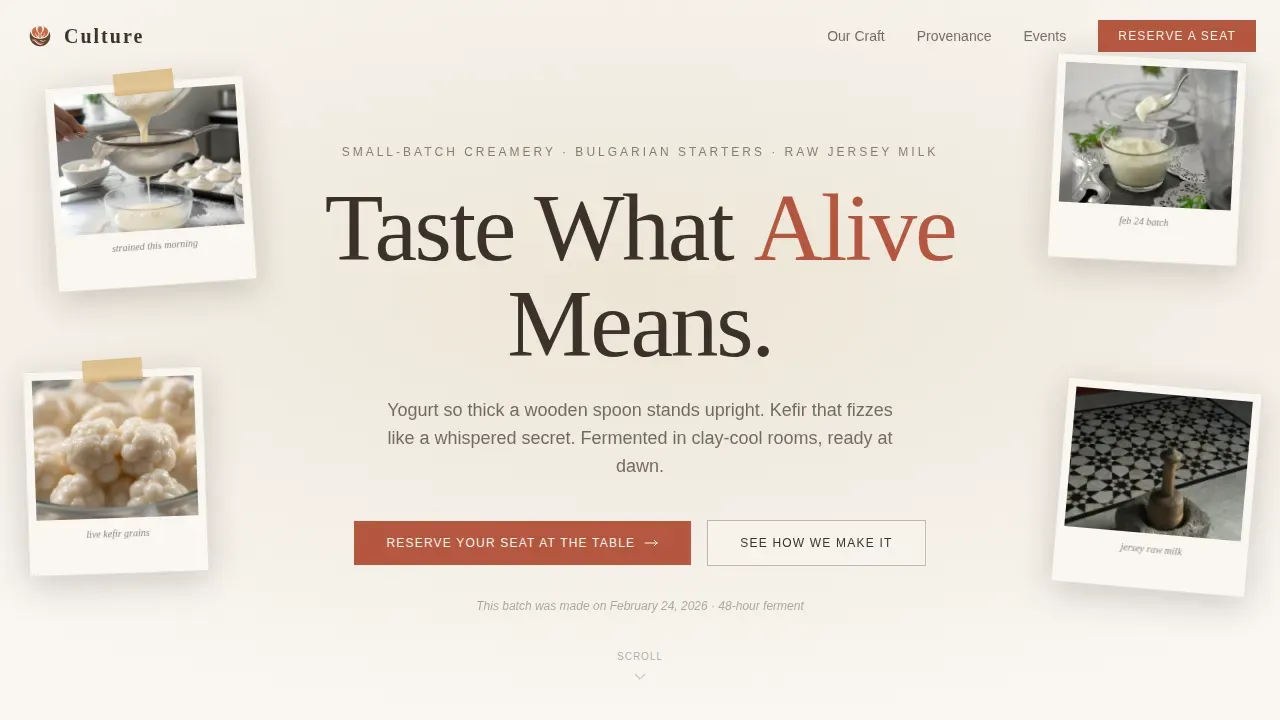
- A scrapbook-collage hero section with rotated Polaroid cards, torn-edge photographs, and a hand-set serif headline
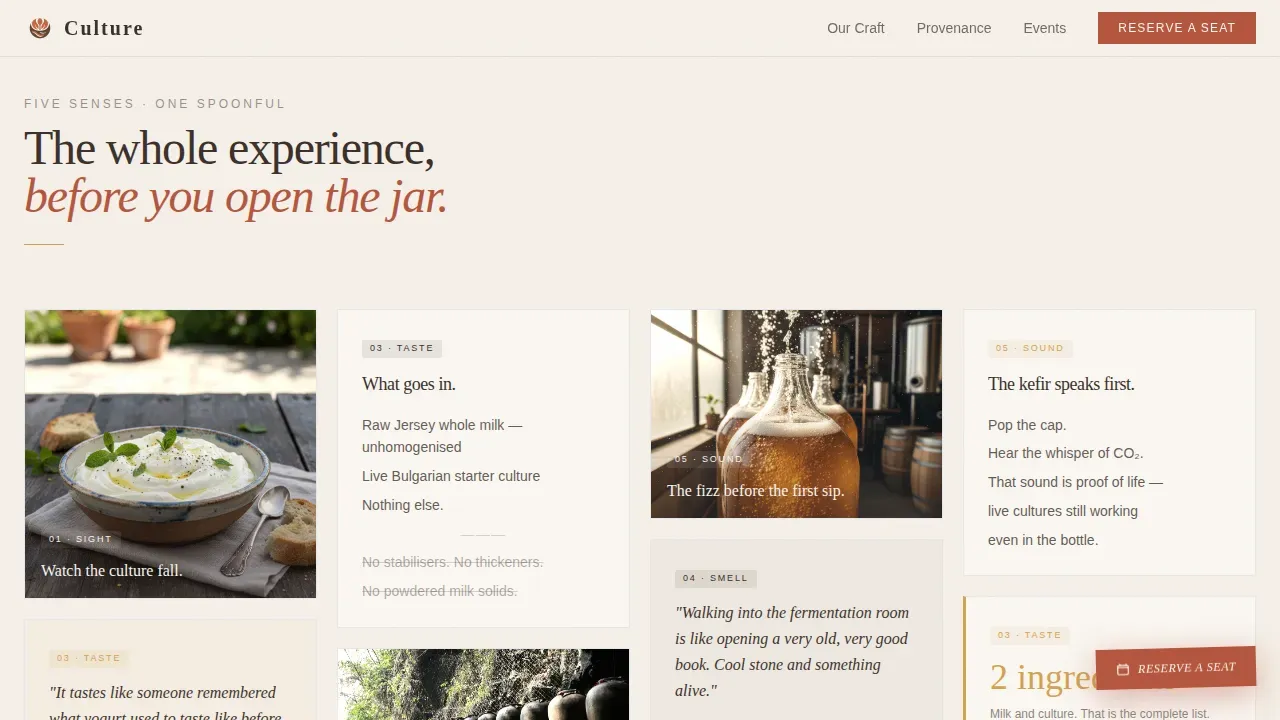
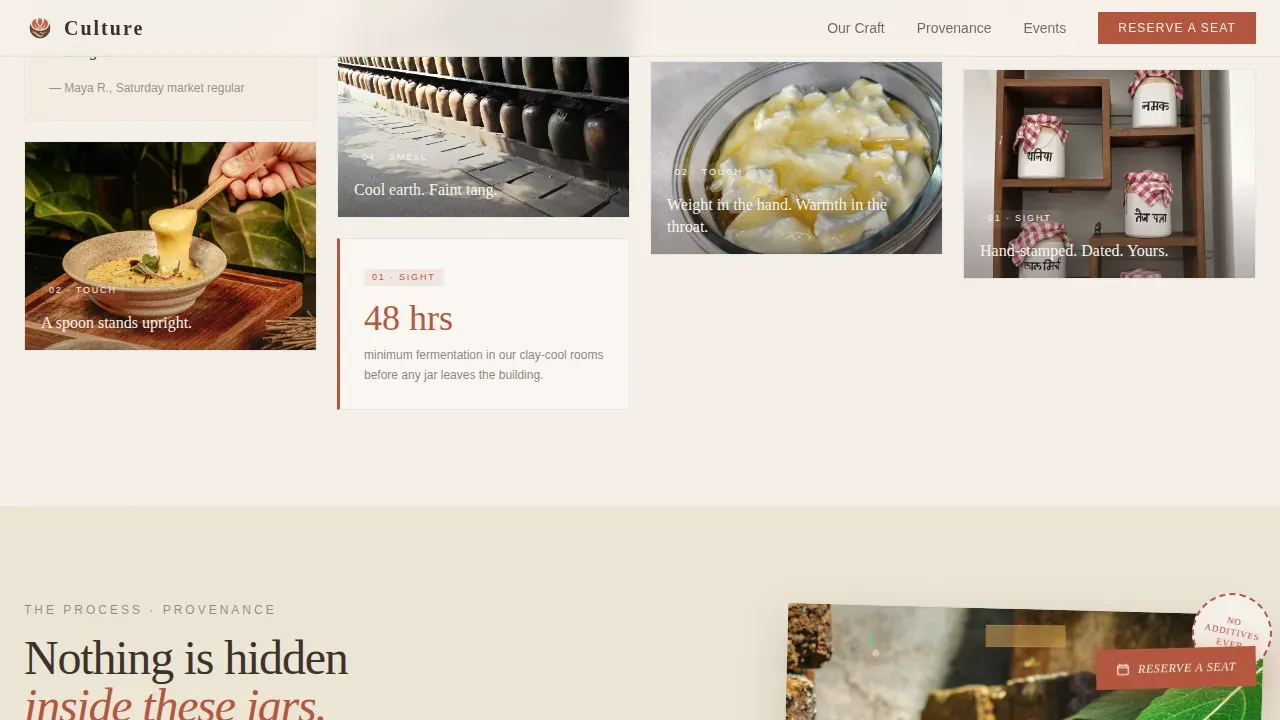
- A Masonry/Pinterest sensory grid with varied-height cards mapping sight, touch, taste, smell, and sound
- A warm event-registration section with an embedded form, a sticky call-to-action badge, and a secondary Culture Club email-capture path
Feature list
Scrapbook Collage Hero Section
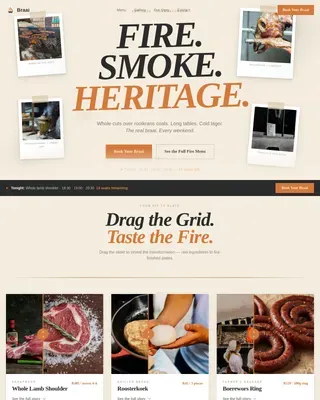
The header is a collage composition of torn-edge photographs layered at slight rotations over a parchment field. Images of milk pails, speckled ceramic bowls mid-pour, kefir grains glistening under light, and hand-stamped date labels sit together the way photographs sit on a grandmother's refrigerator door. A washi-tape Polaroid of hands straining yogurt through cheesecloth anchors the composition. The serif headline "Taste What Alive Means" appears hand-set above the grid, written in Fraunces with terracotta rust as the primary color.
Masonry Sensory Grid
The Pinterest-style masonry grid drives the scroll by moving through five senses. Each card is a different texture of experience: a slow-motion pour showing visible culture strands for sight, a spoon breaking surface tension for touch, a named customer quote describing the tangy flavor for taste, the cool stone fermentation room for smell, and a looping carbonation clip for sound. Cards vary in height and width. Some hold a single oversized photograph; others stack a recipe fragment over a torn ingredient list. The rhythm is unhurried and the layout breathes.
Event Registration Card
The primary call to action, "Reserve Your Seat at the Table," appears first as a hand-lettered badge pinned to the masonry grid after the third row. A warm invitation card holds an embedded form asking for a first name, a preferred event date from a dropdown of upcoming sessions, and one optional field inviting visitors to share what they are most curious to taste. By the time this form appears, the visitor has already moved through the full sensory narrative. The click feels like accepting an invitation, not completing a transaction.
Sticky Call-to-Action Badge
After the event-registration card loads on scroll, the primary call-to-action badge fixes gently to the bottom-right corner of the viewport. It remains visible throughout the rest of the page without interrupting the reading experience. This persistent element keeps the registration path accessible for visitors who need more time to browse before deciding to book.
Scrolling Testimonials and Culture Club Capture
A scrolling marquee section carries named customer quotes with specific sensory descriptions, covering taste, texture, and the health benefits of active, slow-fermented dairy. Below the marquee, a secondary path invites visitors to join the Culture Club mailing list with just an email address. This two-path approach converts both the visitor who is ready to book an event and the visitor who needs a lower-commitment first step.
Provenance Split Section
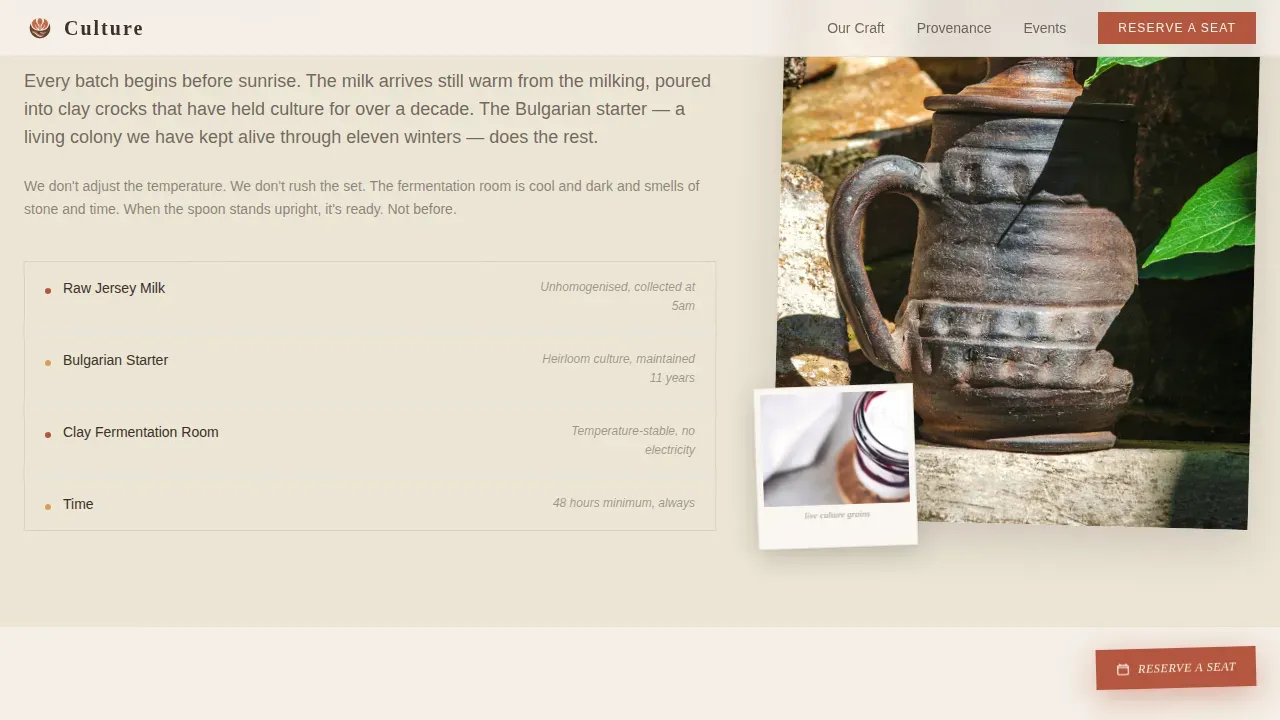
A 60/40 asymmetric split section tells the process narrative alongside close-up ingredient photography. This section carries the ingredient transparency that careful buyers expect: the source of the raw milk, the origin of the yogurt starter cultures, and the conditions of the clay-cool fermentation rooms. No chemicals or artificial shortcuts are implied. The copy and imagery together produce the sourcing credibility that separates a genuine artisan creamery from a commodity dairy brand.
Page sections overview
| Section | Purpose |
|---|---|
| Hero Collage Header | Sets sensory tone with rotated Polaroid cards and serif headline |
| Masonry Sensory Grid | Guides visitors through five senses via varied-height Pinterest cards |
| Provenance Split | Delivers 60/40 asymmetric process narrative and ingredient close-ups |
| Event Registration Card | Hosts embedded form with date dropdown and optional taste question |
| Testimonials Marquee | Scrolling named quotes covering taste, texture, and probiotic benefits |
| Culture Club Capture | Secondary email-only signup for visitors not yet ready to register |
| Footer Arc Split | Logo and tagline left, navigation links right, pattern-seven layout |
Design & branding system
The visual identity follows a Pastoral Calm theme built entirely on the Parchment and Rust color system. Every color carries an analog warmth: unbleached linen as the dominant background, terracotta glaze anchoring headlines and hover states, raw honeycomb amber highlighting calls to action and interactive badges, and deep cultured brown sitting quietly as the body-text base. The palette feels like a stack of well-used recipe cards left in a sunny kitchen window, warm and foxed at the edges.
- Typography pairs Fraunces (a variable serif with optical-size warmth) for headlines with Manrope (a clean geometric sans) for body text, creating a contrast between handcrafted feel and everyday readability
- Animation is set to high: floating Polaroids, masonry stagger reveals on scroll, a marquee scroll for testimonials, and a scroll-linked call-to-action badge with card-tilt hover interactions
- Interactivity includes hover reveals on masonry cards, the embedded registration form, the sticky badge, and card-tilt effects that make the page feel tactile rather than flat
Mobile & speed optimization
This template is built with equal device priority, recognizing that farmers' market visitors check availability on mobile while fermentation hobbyists browse on desktop. The layout adapts the masonry grid, collage header, and sticky badge for smaller screens without sacrificing the sensory richness that makes the page convincing.
- Native CSS scroll and Intersection Observer power the reveal animations, keeping the experience smooth without heavy JavaScript libraries
- The masonry grid reflows naturally on mobile, preserving card variety and the unhurried reading rhythm that the Sensory Appeal creative direction requires
- The sticky call-to-action badge and registration form remain fully functional and properly sized on touch screens, so a visitor at a market stall can register in seconds
How this template helps you convert
The conversion architecture works by earning trust before asking for anything. Sensory storytelling, provenance evidence, and live testimonials all arrive before the registration form, so the visitor is already emotionally invested when the call to action appears.
- The scrapbook hero and masonry sensory grid establish the flavor, texture, and living quality of the yogurt and kefir before a single product claim is made, so the visitor's imagination is already at the creamery table when the form loads
- The hand-lettered badge pinned to the grid after the third row introduces the primary call to action at the exact moment trust has peaked, then the sticky badge keeps that path open for visitors who want to keep reading before they commit
- The two-path approach, one for event registration and one for the Culture Club email list, captures visitors at different stages of readiness, turning a single scroll into two conversion opportunities without feeling pushy
Other information about this template
This template is purpose-built for the artisan dairy and fermentation niche, where buyers research carefully and pay a premium for genuine craft. The design and copy structure reflect what the modern kefir and yogurt market actually responds to: ingredient transparency, sensory proof, and clear sourcing language.
- Kefir is a traditional fermented milk drink prepared in homes across eastern Europe and the middle east for centuries. It carries a complex blend of beneficial bacteria and yeast organisms passed down through actual kefir grains. When fresh milk is cultured into kefir, its vitamins and minerals become more bioavailable, making them easier for the body to absorb.
- Milk kefir can be mild and drinkable or thick and tangy depending on culturing temperature and longer fermentation time. It can even be drained to produce a soft kefir cheese similar in texture to greek style yogurt, or ripened further into a flavorful aged cheese. Water kefir offers a lighter, dairy-free probiotic beverage option for visitors with lactose intolerance.
- A proper yogurt starter culture is not store bought yogurt scraped from a supermarket tub. It is a living starter containing specific strains of beneficial bacteria, often thermophilic cultures that thrive at higher temperatures. Thermophilic culture types typically produce thicker yogurt and a more pronounced tangy flavor than mesophilic cultures, which propagate best at room temp without preheating the milk.
- There are many cultures to choose from. Greek yogurt starters deliver the dense, strained texture that produces whey as a by-product. Bulgarian starter cultures carry a sharper lactic acid profile. Heirloom starters can be saved batch after batch, while direct-set cultures produce one single batch before a new starter is needed. The culturing temperature you maintain will largely determine the final texture and flavor of every batch.
- Raw milk yogurt made from raw milk carries enzymes that boiled or pasteurized milk cannot offer. Enzymes and good bacteria present in unheated milk contribute to digestive health and gut health in ways that heat-treated dairy may reduce. Organic raw milk with no added chemicals is the preferred base for creameries emphasizing ingredient transparency.
- Visitors can drink kefir straight, use it in smoothies, stir it into breakfast bowls, or incorporate it into a savory recipe alongside olive oil and fresh fruit. The amino acids and probiotics in slow-fermented dairy food contribute to overall health benefits that health-conscious buyers actively seek out. The template's content sections are structured so a yogurt maker can communicate all of this without the page feeling like a supplement advertisement.
- For plant-based visitors, the template's content sections can accommodate notes about alternatives such as water kefir or fermented grains-based options. Rejuvelac, a fermented liquid made from sprouted grains, can be used as a starter in vegan recipes. It can be blended with soaked cashews and salt to produce a dairy-free sour cream. After culturing for 48 hours, that mixture can be strained to achieve a thicker consistency similar to cream cheese, a useful note to store in a recipe card section of the page.
- The global kefir market stood at USD 1,305.4 million in 2024 and is projected to grow to USD 1,914.9 million by late 2035, rising at a 3.7% compound annual growth rate from 2025 to 2035. Demand for probiotic-fortified functional foods has expanded significantly, and milk kefir holds the largest share of that market. Lifeway Foods leads with a wide range of flavored kefir drinks, while Danone drives kefir through its global dairy platform. Small local producers like the brand this template is built for compete on craft, organic sourcing, and the kind of sensory trust that no mass-market label can manufacture.
- The organic kefir segment is growing as buyers demand transparency and prefer non-GMO options. Plant-based kefir variants are gaining ground alongside traditional dairy kefir due to rising lactose intolerance awareness. This template's ingredient-transparency and provenance sections are designed to address exactly those buyer concerns before a skeptical visitor can raise them.
Theme
Pastoral Calm
Creative direction
Sensory Appeal
Color system
Parchment & Rust
Style
Masonry/Pinterest
Direction
Event Registration
Page Sections
Scrapbook Collage Hero with Serif Headline
Masonry Sensory Pinterest Grid
Event Registration Invitation Card
Sticky Call-to-action Badge
Scrolling Testimonials with Culture Club Capture
Provenance Split with Ingredient Transparency
Related questions
Can I use this template for a fermentation workshop business rather than a product brand?
Does the template support both event registration and email list signups at the same time?
Can I adapt the masonry sensory grid to feature my own yogurt and kefir products?
Is the color palette and typography fixed, or can I adjust it to match my brand?
What kind of imagery works best in this template?