Dhoop - Aromatic Incense Landing Page Template
Dhoop is a bento grid landing page template built for agarbatti and incense stores. It combines a Neo-Retro visual theme with a Cloud Canvas color system, a mood-driven search header, and a five-question scent quiz. The result is a sensory-first shopping experience that guides every visitor from curiosity to a personalized product recommendation.
by Rocket studio
Quick summary
Dhoop is a single-page incense store template with a bento grid layout and a Neo-Retro aesthetic. It opens with a mood-driven search box, flows through a cinematic unboxing narrative, and closes with a five-question visual quiz that delivers a personalized sampler recommendation. The design feels like old-world warmth filtered through clean, modern light.
Who this template is for
This template is built for sellers and brand builders in the aromatic retail space. It suits anyone who wants a storefront that communicates craft, ritual, and sensory quality before a visitor ever adds anything to a cart.
- Puja-room keepers and devotional product sellers restocking daily ritual supplies
- Yoga studio owners and wellness brands searching for a signature scent identity
- Gifting-focused entrepreneurs curating festive hampers for Diwali and housewarmings
What problem this template solves
Most incense store pages look like overcrowded catalog pages. They list hundreds of SKUs and leave the visitor guessing which product suits their space or mood. Dhoop flips that experience entirely.
- Visitors arrive without a product name in mind and leave with a specific, personalized recommendation
- The quiz funnel removes overwhelm by narrowing two hundred options down to three sticks made for that person's room
- The sensory narrative builds trust in product quality before any price point appears
What you get with this template
You get a complete, ready-to-adapt bento grid landing page with a clear conversion path built in. Every section is designed to move a visitor from curiosity to purchase without friction.
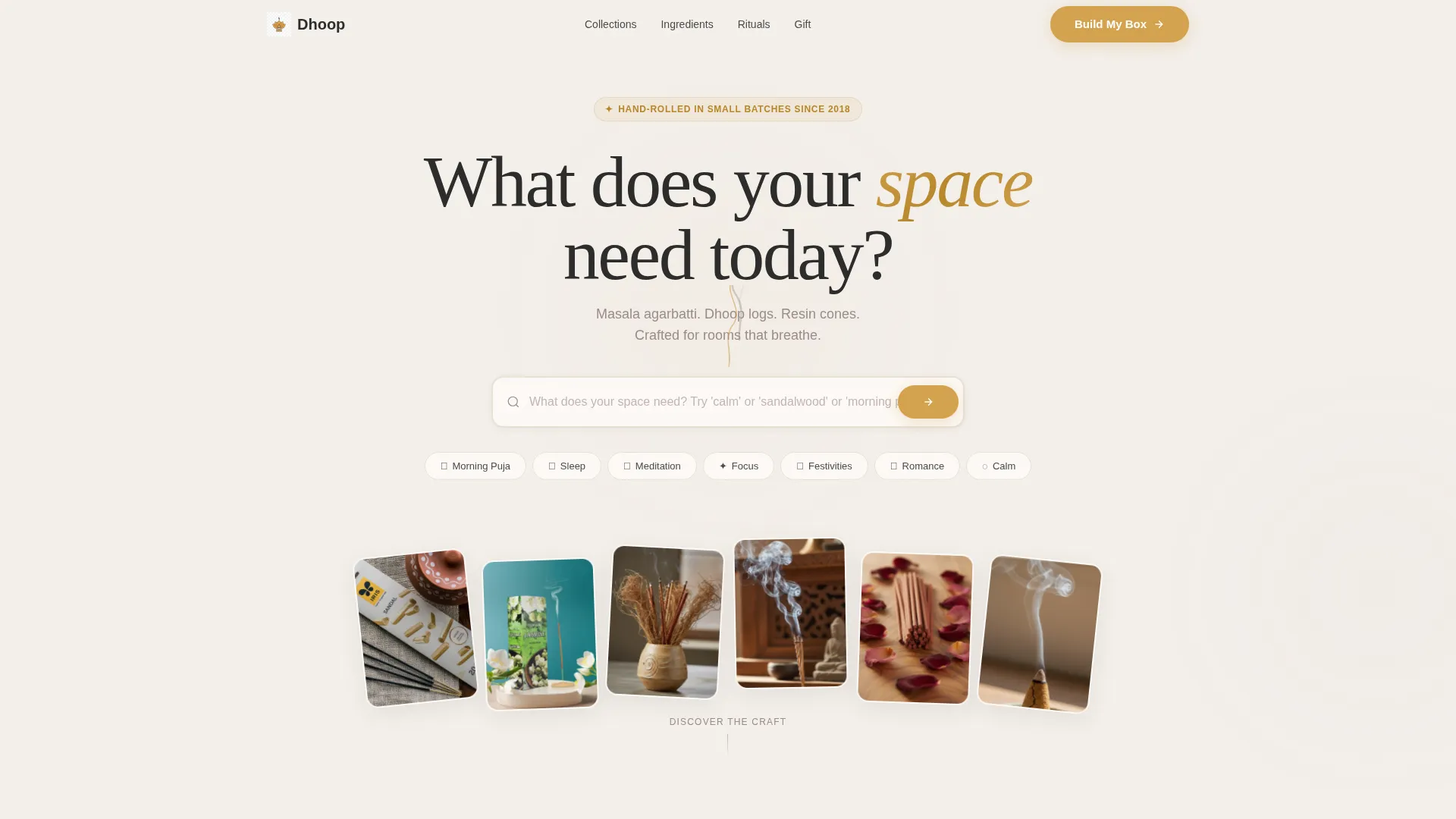
- A vintage-styled search header with mood-based placeholder text and floating category tags
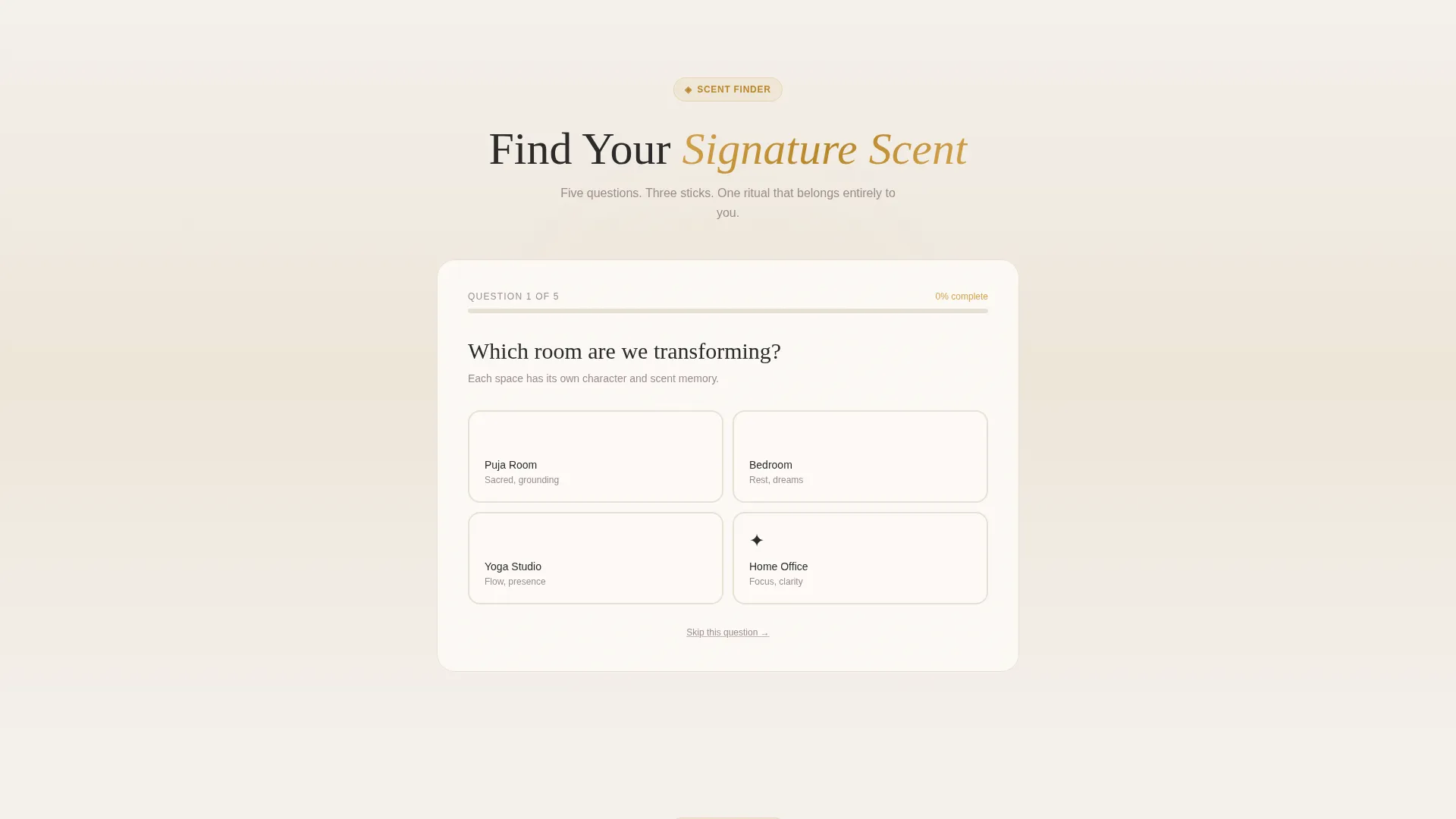
- A five-question visual scent quiz with illustrated bento card responses and a "Build My Box" cart action
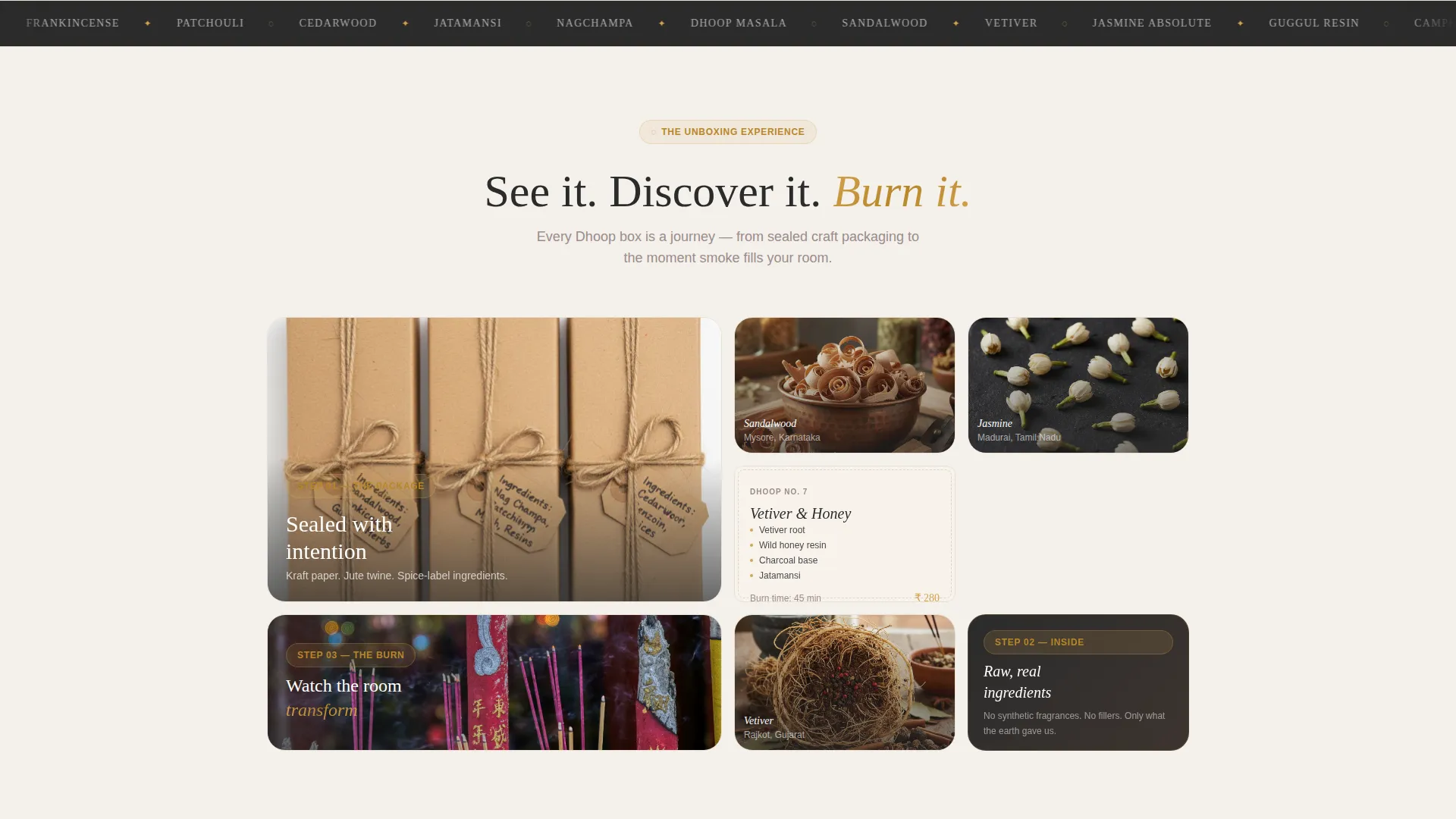
- An unboxing narrative grid that escalates from sealed packaging to raw ingredients to burning sticks
Feature list
This template delivers a focused set of built-in components, each designed to serve a specific moment in the visitor's journey.
Mood-Driven Search Header
The header centers a vintage-styled search box on a soft ash white background. A single illustrated smoke wisp curls upward from the input field. Placeholder text invites visitors to type a mood or ritual rather than a product name, lowering the barrier to engagement from the very first second.
Bento Grid Layout with Parallax Tiles
The page is built on an asymmetric bento grid where every cell carries its own visual weight. Each tile has a subtle parallax shift, giving the impression that contents are floating upward like rising smoke. The grid adapts its proportions across sections to frame packaging, ingredients, and burning sticks differently.
Unboxing Experience Narrative
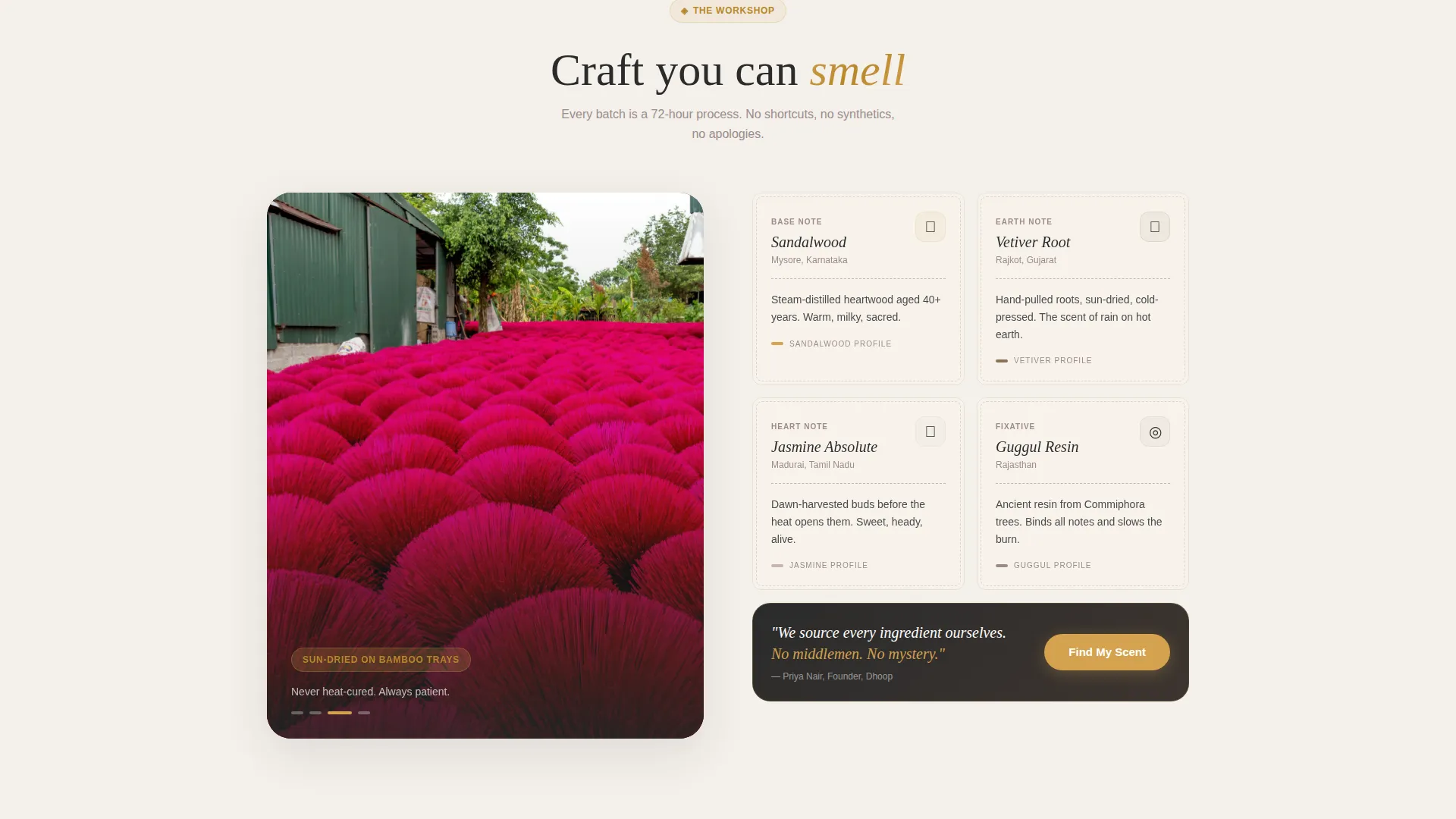
Three distinct scroll stages tell a complete product story. The first grid shows sealed packages styled like spice labels. The second reveals macro photography of raw ingredients across asymmetric tiles. The third presents long-exposure smoke photography against dark backgrounds, one plume per stick variety.
Five-Question Visual Scent Quiz
The primary conversion path is a five-step quiz launched by the "Find Your Signature Scent" call to action. Each question uses illustrated bento cards: room type, time of day, raw ingredient instinct, burn format preference, and mood word tiles. Results deliver a three-stick sampler recommendation with a direct "Build My Box" cart button.
Floating Mood Tag Navigation
Below the search bar, hand-lettered category tiles float as secondary navigation: Sleep, Meditation, Festivities, Focus, and Romance. These tags give quiz-skippers an alternative browsing entry point and reinforce the mood-first identity of the brand.
Neo-Retro Typography System
The template pairs a clean geometric sans-serif for body and user interface text with a decorative Devanagari-inspired display face on feature words. The collision of these two voices creates the feeling of a 1970s incense tin redesigned by a Scandinavian studio, giving the brand a distinct and memorable personality.
Page sections overview
| Section | Purpose |
|---|---|
| Mood Search Header | Entry point inviting mood-based discovery |
| Floating Tag Navigation | Quick access by ritual or feeling |
| Sealed Packaging Grid | Introduces products through spice-label styling |
| Raw Ingredients Grid | Reveals story behind each scent |
| Burning Sticks Grid | Shows sticks lit with long-exposure smoke |
| Scent Quiz Flow | Guides visitor to personalized sampler |
| Quiz Results Card | Delivers recommendation with cart action |
| Full Catalog Path | Browse fallback via header search |
Design & branding system
The visual identity is built on the Cloud Canvas color system, a palette that feels like opening your grandmother's brass puja cabinet with modern lighting turned up. Every color choice reinforces warmth, craft, and sensory calm.
- Soft ash white (#F4F0EB) as the primary background, evoking unbleached handmade paper
- Muted saffron (#D4A24E) on all accents and hover states, with deep charcoal (#2B2B2B) anchoring typography and dusted mauve (#9C8B8B) threading through secondary cards like a haze of smoke
Mobile & speed optimization
The bento grid layout is structured to reflow naturally on smaller screens without losing its visual rhythm. Parallax effects and asymmetric tile proportions are designed with touch-first scrolling in mind.
- Grid cells resize and restack so the unboxing narrative reads clearly on mobile without horizontal overflow
- Quiz cards are sized and spaced for tap interaction, keeping each question easy to answer on a phone screen
How this template helps you convert
The template is designed around one insight: a visitor who knows exactly which three sticks belong in their room is far more likely to buy than one browsing a full catalog. Every design and layout decision supports that goal.
- The quiz funnel reduces decision fatigue by replacing a catalog of hundreds of products with a single, personalized three-stick sampler recommendation and a one-tap "Build My Box" cart action.
- The unboxing narrative builds ingredient-level trust before any pricing appears, making the purchase feel considered rather than impulsive.
- The mood search header and floating tag tiles offer a parallel path for visitors who prefer to browse, ensuring no visitor leaves without a clear next step.
Other information about this template
This template is part of a curated set built around the intersection of Indian specialty retail and modern bento grid design. It is especially well-suited for agarbatti brands that want to stand out in a market dominated by generic product listings.
- The template style is classified as Bento Grid with a Neo-Retro theme, making it well matched for brands that carry handmade or artisanal product lines
- The Cloud Canvas color system and Unboxing Experience creative direction are a matched intersection pair, meaning the visual flow and narrative structure reinforce each other by design
- The Quiz/Assessment landing page direction makes this template a strong fit for discovery-led retail, where the visitor does not yet know which product they want
Theme
Neo-Retro
Creative direction
Unboxing Experience
Color system
Cloud Canvas
Style
Bento Grid
Direction
Quiz/Assessment
Page Sections
Mood-driven Search Header
Bento Grid with Parallax Tiles
Unboxing Experience Narrative
Five-question Visual Scent Quiz
Floating Mood Tag Navigation
Neo-retro Typography System
Related questions
Can I use this template without running the scent quiz?
How many sections does the landing page include?
Can I adapt the quiz questions for a different product range?
Is this template suitable for festive or seasonal campaigns?
What typography styles does the template use?