Distillery & Spirits Booking Website Template
Alambic is a full-width immersive booking landing page built for artisan cognac and brandy houses. It guides private collectors, sommeliers, and experience-seeking couples through a scroll-driven origin story, then converts them with a structured booking module. Every detail, from the mosaic hero to the single-cask allocation path, reflects the patience and craft of generational distillers.
by Rocket studio
Quick summary
Alambic is a single-page booking landing page designed for artisan cognac houses rooted in tradition. It blends immersive visual storytelling with a clear conversion path, letting distillers present their craft honestly and beautifully. The layout moves visitors from curiosity to committed booking through four scroll chapters, each one deeper into the house's story.
Who this template is for
This template suits businesses and makers whose work rewards patience and explanation. It is built for distillers who need more than a mediocre brochure page.
- Artisan cognac and brandy houses offering distillery visits, blending ateliers, and cellar tastings
- Private-allocation producers targeting collectors and sommeliers who research carefully before committing
- Experience-focused spirits brands that want storytelling and booking to live on the same page
What problem this template solves
Most booking pages for artisan spirits feel mediocre. They push a date-picker before the visitor understands what makes the house worth visiting. This template solves that by letting the story build trust first, then presenting the booking form at the moment visitors are genuinely ready.
- Visitors leave before booking because the page fails to communicate the depth of the experience
- Collectors and sommeliers need detail and atmosphere, not a generic contact form found on any hospitality site
- Distillers lose credibility when their digital presence does not match the quality of what is in the bottle
What you get with this template
The template delivers a fully structured, scroll-driven landing page that carries visitors from arrival to confirmed booking without friction. Every section is built around a specific conversion moment.
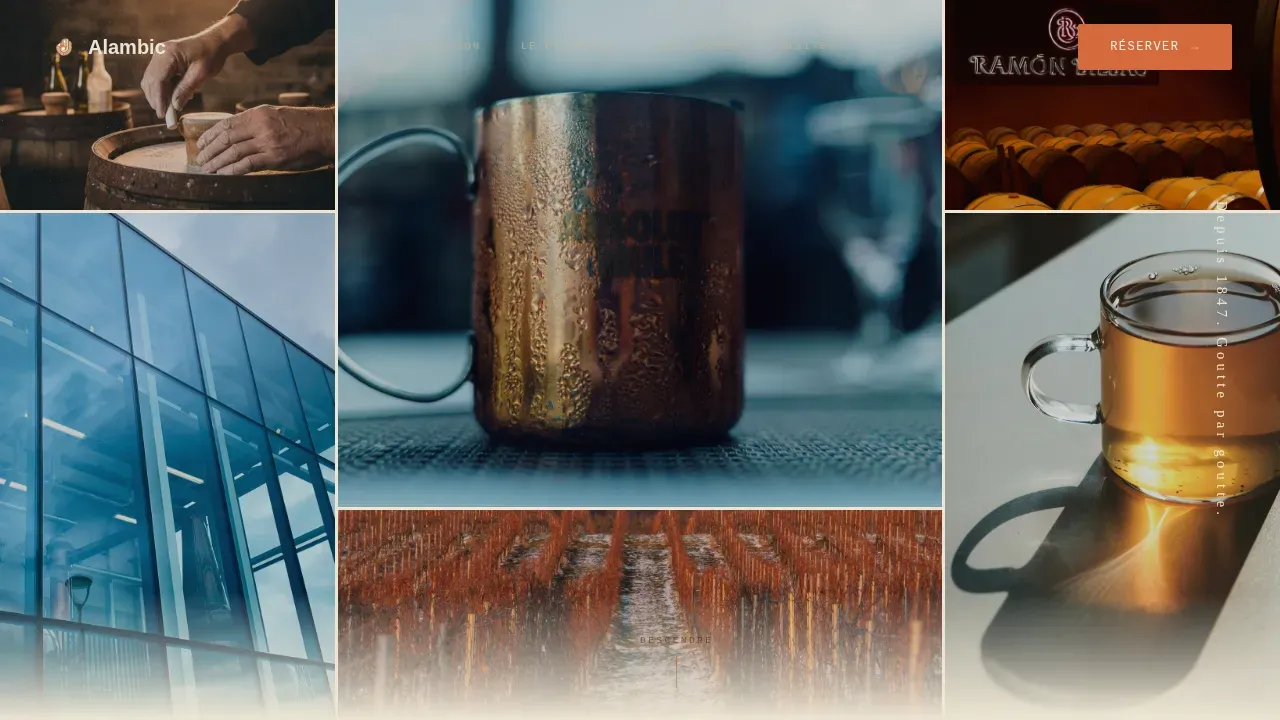
- A nine-frame Photo Grid Mosaic hero with a timed vertical text reveal in French and English
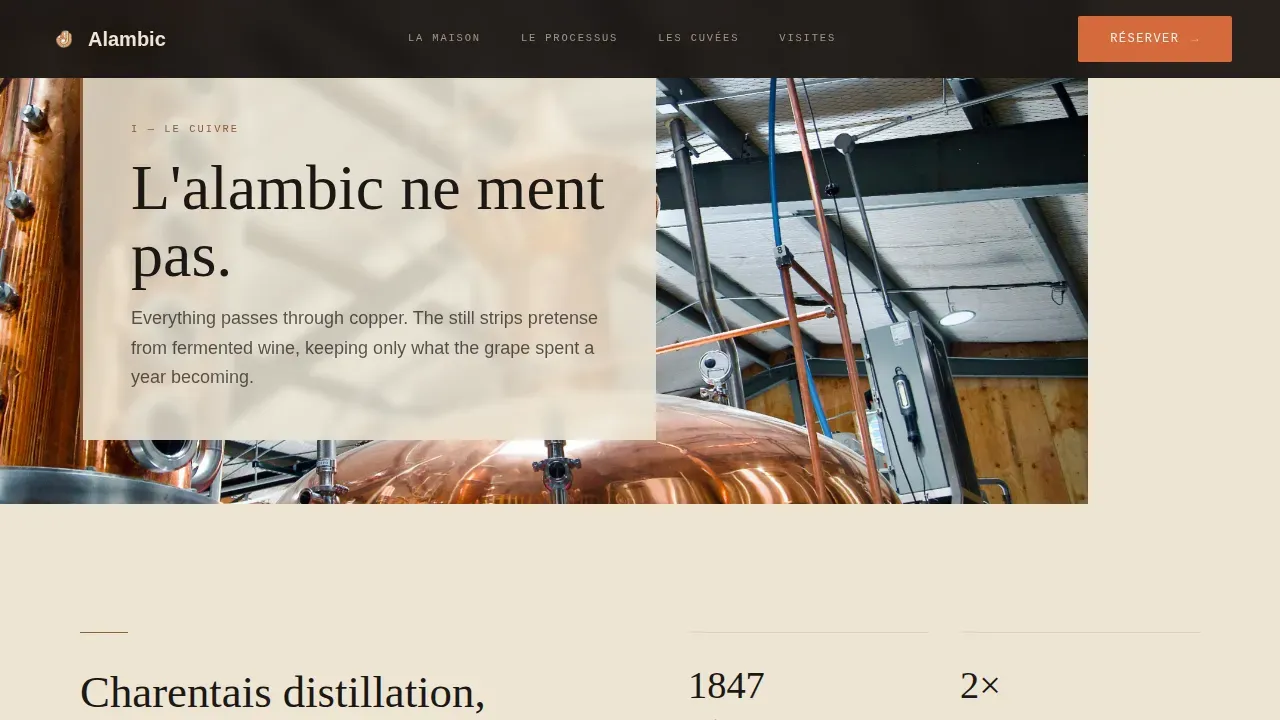
- Four parallax scroll chapters, each representing one material in the production story: copper, oak, glass, and earth
- A full interactive booking module with an experience selector, group-size options, and a calendar styled in toasted cedar and persimmon
Feature list
A paragraph introduces what this section covers: the six core capabilities of this template, each built directly from the source brief.
Nine-Frame Mosaic Hero with Text Reveal
The header fills the viewport with nine irregularly sized photographic frames, arranged like a shoji screen. After two seconds, a single vertical line of sumi-ink text writes itself downward, revealing the house motto. The reveal creates an immediate sense of time and ritual.
Parallax Scroll Story Chapters
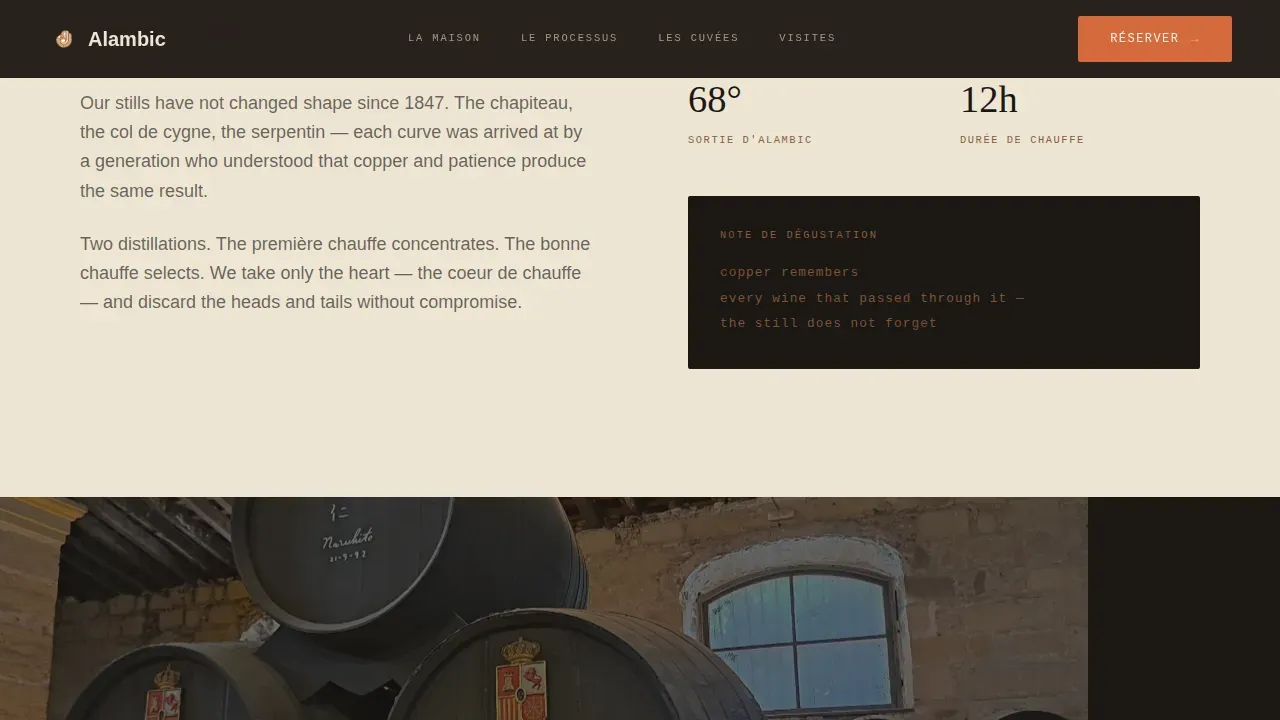
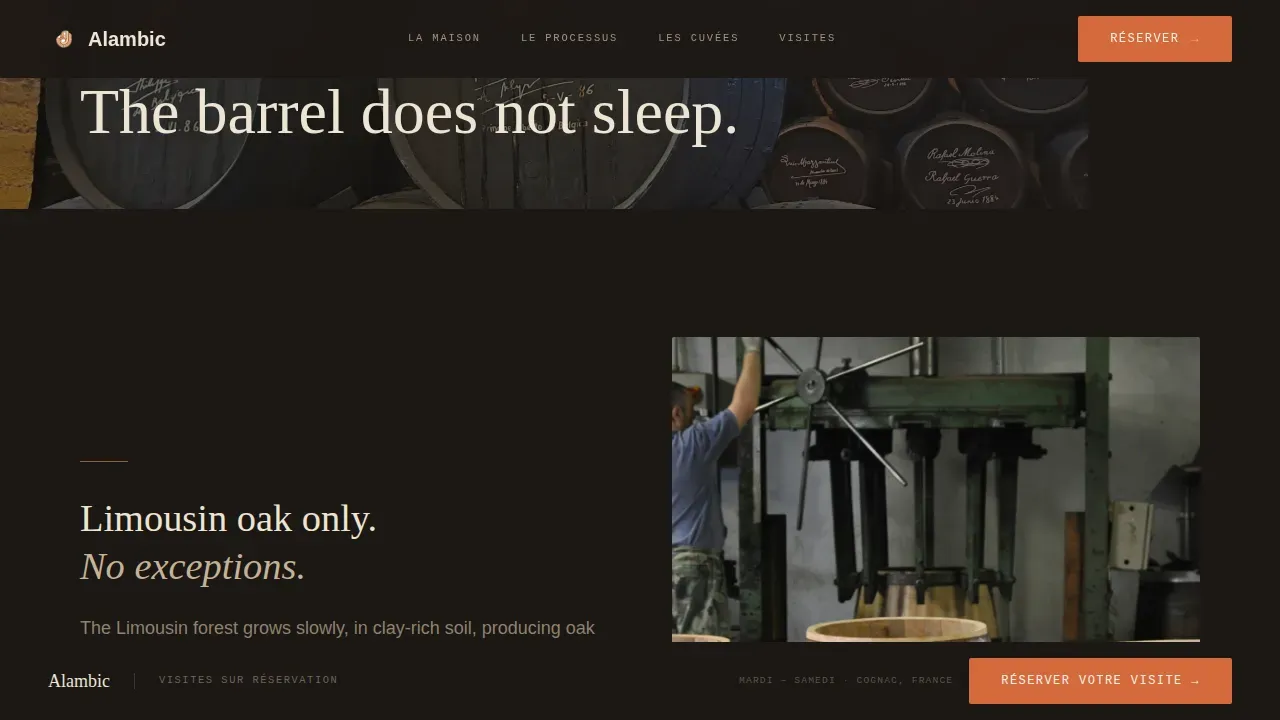
Four full-width atmospheric photographs parallax-scroll beneath translucent text overlays. Each chapter covers one stage of the distillers' process: the copper still, the oak barrel, the glass bottle, and the winter vineyard. Sections grow longer and type grows larger as you scroll, mimicking the slowness of aging.
Interactive Booking Module
The primary booking form asks visitors to choose their preferred experience, select a date from a styled calendar, and specify group size. An optional open-text field invites guests to share what they drink, letting distillers personalize each visit. A persistent booking bar appears after the second section so the call to action is never far away.
Single-Cask Allocation Request Path
A secondary conversion path appears only within the Glass chapter, targeting collectors who scroll deep enough to find it. The allocation request is visually separated from the main booking flow, keeping the two audiences distinct without cluttering the page.
Haiku-Style Tasting Notes Display
Each Oak chapter product entry presents tasting notes in a constrained haiku format set in IBM Plex Mono. This treatment highlights aromas and flavors with restraint, matching the wabi-sabi design philosophy rather than listing notes in a generic table.
Rotating Product Image Module
A single rotating product image sits alongside each chapter's process details. The module keeps the bottle visually present without interrupting the narrative, giving distillers a natural product showcase within the story.
Page sections overview
| Section | Purpose |
|---|---|
| Mosaic Hero Header | Establish atmosphere and house identity through a timed nine-frame reveal |
| Copper Origin Chapter | Introduce the still and distillation story with parallax photography |
| Oak Aging Chapter | Present barrel aging philosophy, tasting notes, and rotating product image |
| Glass Allocation Chapter | Showcase single-cask offerings and surface the private allocation request path |
| Booking Climax Module | Convert visitors with the full experience-selector, calendar, and group-size form |
| Arc Split Footer | Close with logo, tagline, and navigation links in a clean split layout |
Design & branding system
The visual identity pairs a Warm Artisan theme with a Japanese Zen color palette, an unexpected combination that replaces expected opulence with quiet warmth. Typography choices reinforce the editorial restraint throughout.
- Colors: tatami sand (#C4B396) for backgrounds, sumi ink (#1C1714) for all body text, toasted cedar (#8B5E3C) for section accents, and persimmon (#D46A3C) for all interactive states including the booking calendar
- Typography: DM Serif Display for editorial headlines, Fraunces for subheadings, IBM Plex Mono for tasting notes and process details
- Spacing and whitespace expand as the page descends, deliberately slowing the reading pace to reflect the patience of long-year aging
Mobile & speed optimization
The template is built desktop-first, serving collectors and sommeliers who research on larger screens. It remains fully responsive down to 375px for guests booking on mobile devices.
- Static sections use server components to reduce load time; the booking module and animations run as client components
- The mosaic hero, parallax chapters, and staggered reveals are implemented as high-animation elements with graceful fallback layouts on smaller screens
How this template helps you convert
The page is structured so that commitment builds naturally with each scroll. Distillers do not have to choose between telling their story and capturing bookings.
- The persistent booking bar appears after the second chapter, giving visitors a low-friction path to reserve before reaching the full module
- The full booking module at the page's climax presents a clear, experience-led form at the moment when visitors have absorbed the complete story and are most likely to act
Other information about this template
This template draws context from the broader world of artisan cognac production and is well suited for houses whose work reflects that tradition. Several real-world reference points help frame the kind of audience and context it serves.
- Cognac production has roots in France dating to the 14th century, when the first documented evidence of distillation appeared; by the mid-16th century, distillers had formed organized guilds across the Charente region
- The term eau-de-vie refers to distilled spirits produced from fermented fruit, including cognac, and the production process involves meticulous blending that can span from several year cycles to multiple decades
- Artisan houses near La Rochelle and the surrounding region benefit from a distinct climate and soil that contribute natural character to the spirit over time
- The Galerie de l'Alambic in Fouras is a reference point for the kind of range this template can present: cognacs aged between 4 and 40 years, alongside regional liqueurs such as Pineau des Charentes and fruit-infused varieties
- Philippe Godard cognacs, sourced from Premier Cru vineyards of Grande Champagne and available as VSOP, Napoleon, XO, and Extra, represent the tier of offering this template is designed to support
- Local distillers who operate on a direct producer-to-consumer model, promoting traceability and transparency, will find the allocation request path and open-text booking field particularly aligned with that approach
- The template is established as a tool for houses that recommend their experience directly, without relying on intermediaries or a lot of third-party marketing infrastructure
- Water quality, sourcing, and natural fermentation processes are often part of a house's story; the tasting notes and process-detail sections give distillers room to communicate those details honestly
- This template can support bilingual French and English copy, with EUR pricing implied and French date formatting available in the booking calendar, making it practical for houses that attract visitors from outside the town or region
- The health and responsible enjoyment framing can be incorporated in footer or legal copy areas that the template leaves open for customization
Theme
Warm Artisan
Creative direction
Origin Story
Color system
Japanese Zen
Style
Full-Width Immersive
Direction
Booking/Scheduling
Page Sections
Nine-frame Mosaic Hero with Text Reveal
Parallax Scroll Story Chapters
Interactive Booking Module
Single-cask Allocation Request Path
Haiku-style Tasting Notes Display
Rotating Product Image Module
Related questions
Can distillers customize the experience options in the booking form?
Is the single-cask allocation path visible to all visitors?
Does the template support bilingual French and English copy?
What makes this different from a generic hospitality booking page?
Can this template work for artisan spirits producers outside the Cognac region?