Certified Regional & Specialty Restaurant Appointment Booking Website Template
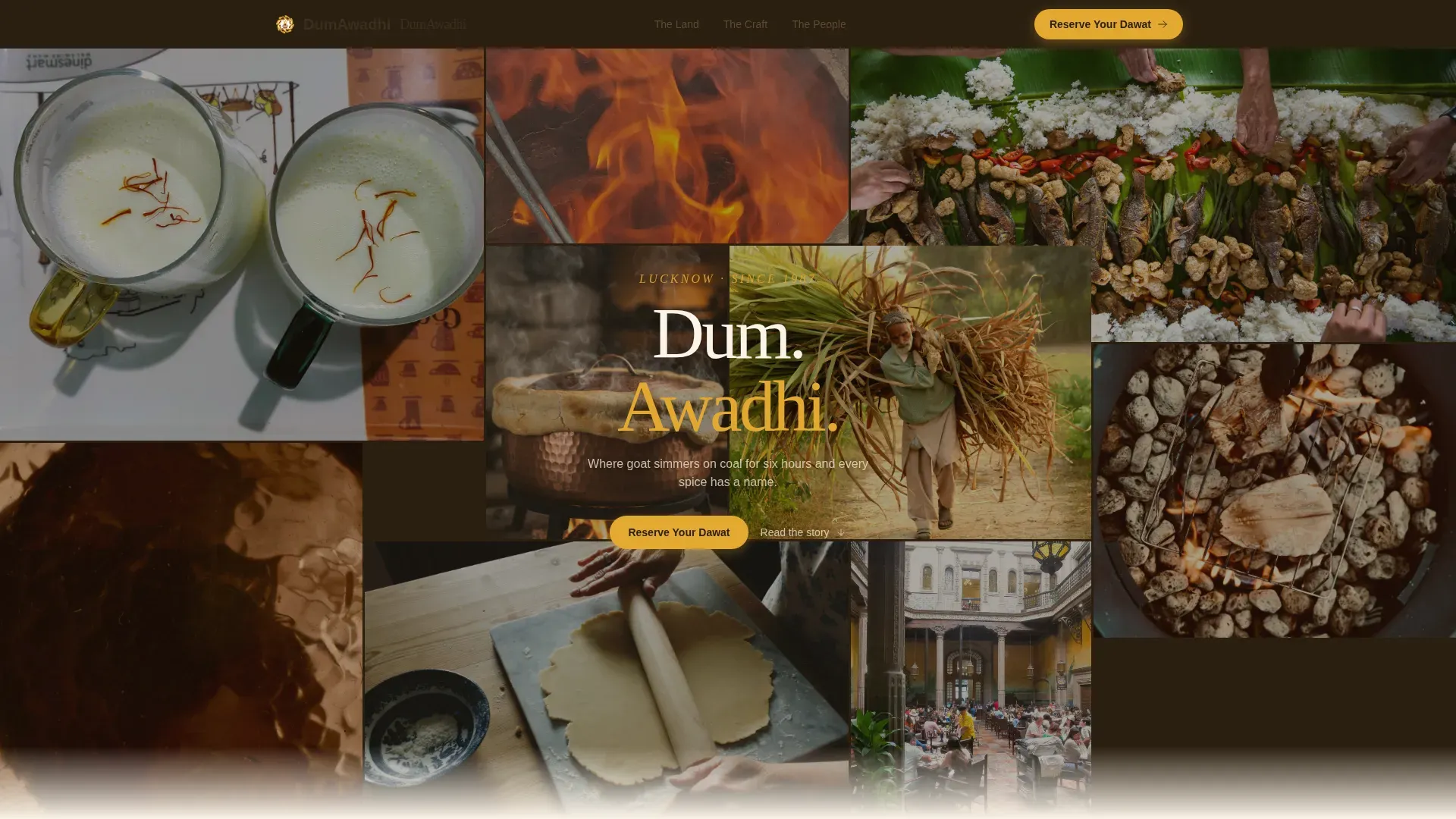
Dum is a modular card-grid landing page template for heritage Awadhi cuisine restaurants. It tells an origin story through scroll-triggered card reveals, a nine-frame photo mosaic header, and a full-width "Reserve Your Dawat" event registration form. Built for wedding planners, anniversary couples, and food writers who expect every ingredient and technique to have a name.
by Rocket studio
Quick summary
Dum is a single-page template designed for Awadhi cuisine restaurants that earn their bookings through storytelling. A nine-frame photo mosaic opens the experience. Scroll-triggered card modules then trace land, craft, and people before landing on a Dawat registration form. Every section makes the case that this food tradition deserves a milestone occasion.
Who this template is for
This template fits restaurants where the food carries genuine lineage and the audience expects proof. It is built for operators who want visitors to feel invited into a tradition, not just a dining room.
- Wedding planners scouting rehearsal dinner venues who research on desktop before committing
- Anniversary couples and food writers seeking authentic flavors and last-remaining regional techniques
- Heritage restaurant owners who need to share their sourcing story, chef lineage, and craft methods
What problem this template solves
Most restaurant pages lead with a menu and a booking button. That approach fails when the restaurant's real value is ancestral technique, named farms, and a century-old cooking method. Visitors cannot find a reason to trust the occasion with a place they do not yet understand.
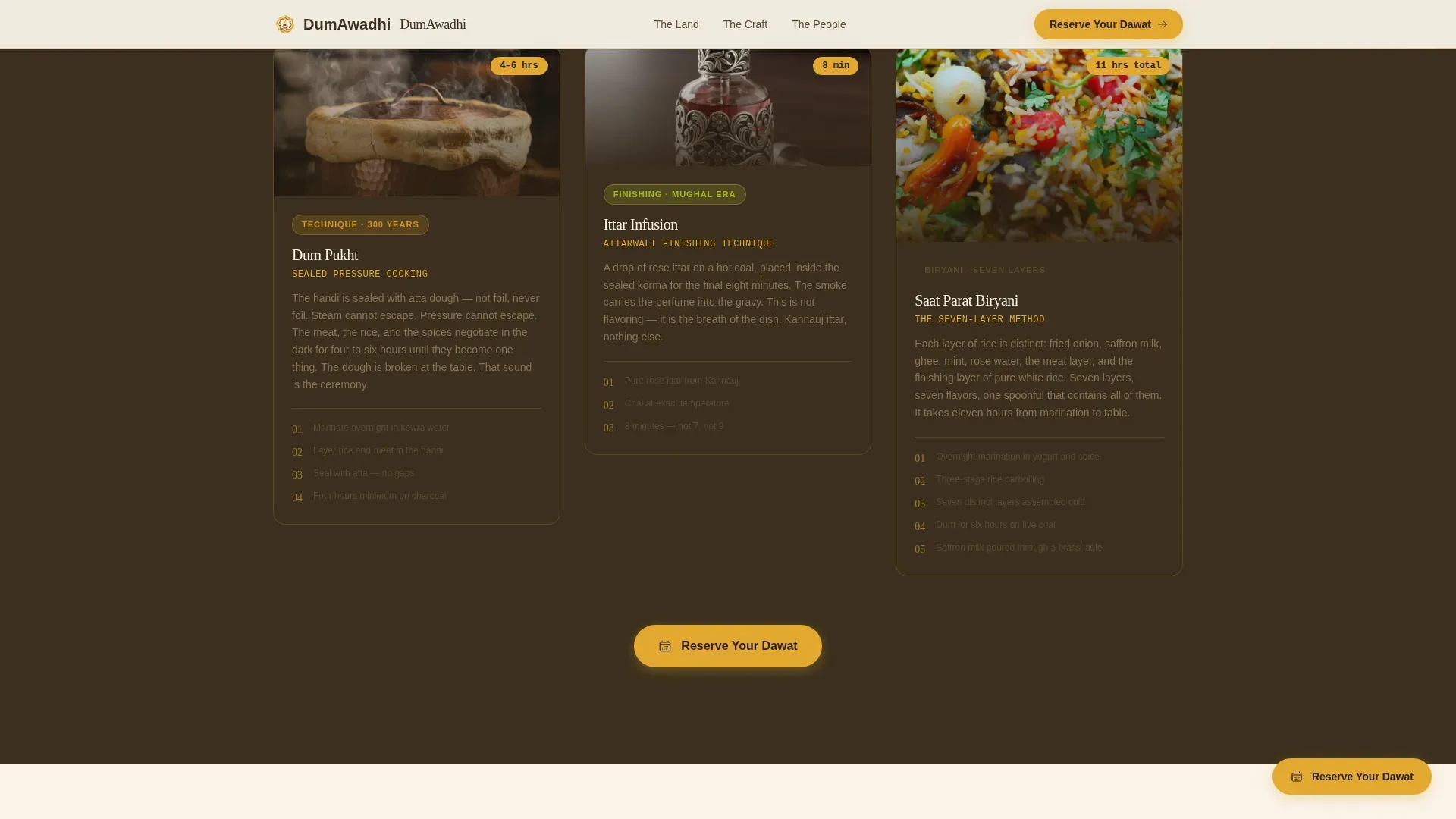
- A generic booking page cannot communicate why dum pukht slow-cooking or ittar-infused finishing matters
- Food writers and wedding planners need sensory language and high-quality visuals before they commit
- Without a structured origin story, the restaurant looks like any other fine-dining option in a competitive market
What you get with this template
This template delivers a complete single-page flow for building a reservation-driven Awadhi restaurant experience. Every section is modular, customizable, and purpose-built for event registration.
- A nine-frame Photo Grid Mosaic header with hover states and no single dominant image
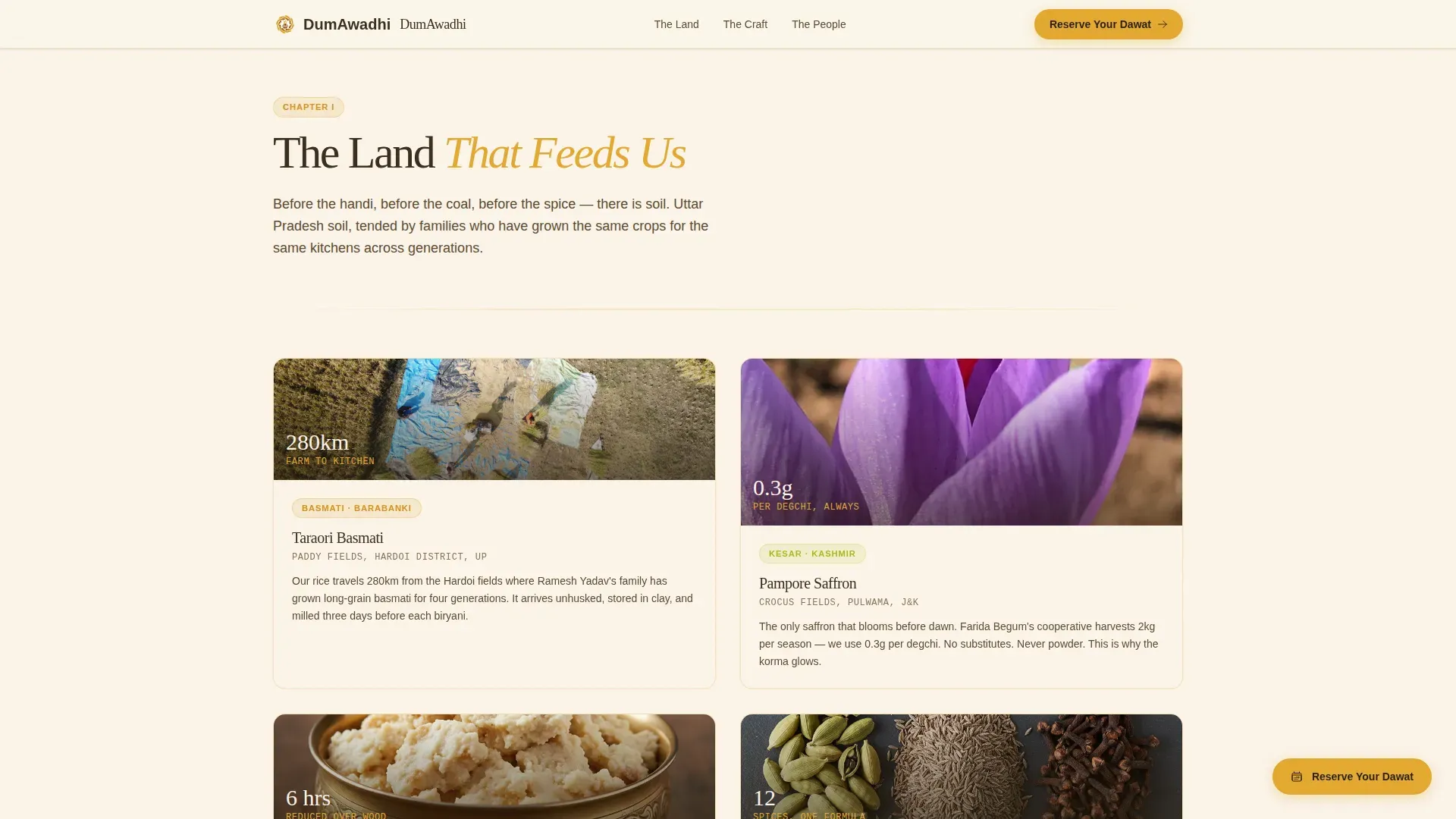
- Scroll-triggered card rows covering land sourcing, cooking techniques, and people portraits
- A full-width "Reserve Your Dawat" form with occasion selector, guest-count slider, preferred date, and a personal textarea
Feature list
This template ships with six core building blocks designed around the Origin Story creative direction and the Event Registration goal.
Nine-Frame Photo Mosaic Header
Nine unevenly sized image frames fill the viewport. Each frame is a chapter: saffron threads, a glowing tandoor, dum biryani's sealed lid being cracked open. Hover depth states add life without distracting from the food story.
Origin Story Card Grid
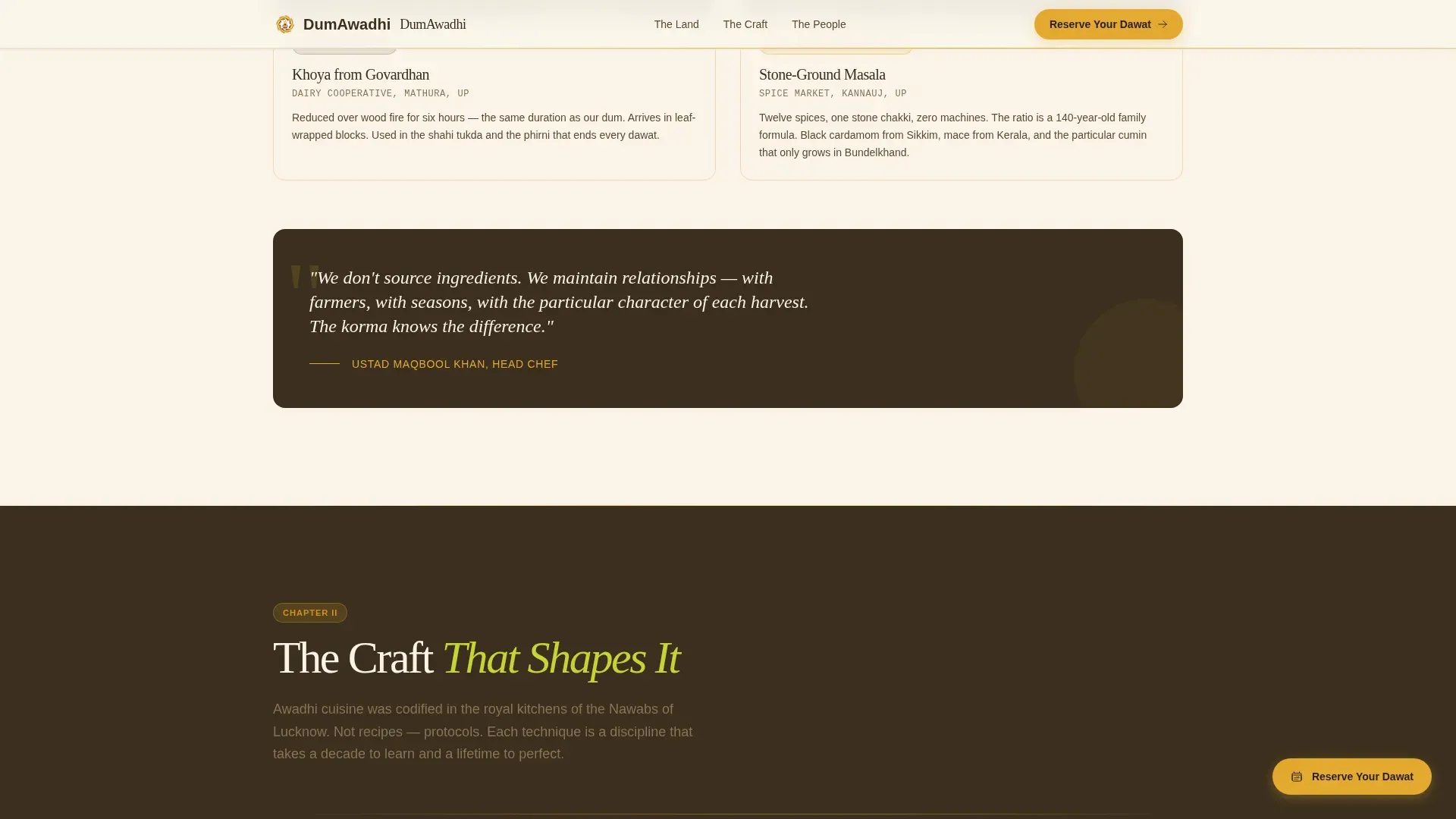
Modular card rows unfold in three acts: The Land, The Craft, and The People. Cards grow larger as the story deepens, making the scroll feel intentional and unhurried rather than transactional.
Dawat Event Registration Form
The full-width form collects occasion type, guest count via a stepped slider, preferred date, and a single textarea asking what the evening means to the guest. A floating "Reserve Your Dawat" button appears after the third card row for early capture.
PDF Menu Gate
A secondary conversion path offers a downloadable Dawat menu behind an email field only. This captures browsers not yet ready to reserve, building an audience for follow-up without friction.
Social Proof Card Integration
Food writer pull quotes, occasion testimonials, and recognition mentions are woven into the card grid. Testimonials from past attendees build credibility and influence decisions at the exact moment visitors are evaluating the restaurant.
Floating Call-to-Action Button
A scroll-triggered floating button enters after the third card row. It stays visible without obstructing the story, guiding users toward registration at the right moment in the narrative.
Page sections overview
| Section | Purpose |
|---|---|
| Photo Grid Mosaic | Opens with nine frames; sets the sensory and cultural tone |
| The Land Cards | Traces ingredient sourcing from named farms in Uttar Pradesh |
| The Craft Cards | Explains dum pukht, ittar finishing, and seven-layer biryani |
| The People Cards | Introduces chef lineage, coppersmith, and sugarcane farmer |
| Floating Reserve Button | Captures early intent after the third card row |
| Reserve Your Dawat | Full-width event registration form with all booking fields |
| PDF Menu Gate | Secondary email-capture path for undecided visitors |
| Footer Arc Split | Logo and tagline left, navigation links right |
Design & branding system
The Agrarian Root theme uses a Citrus Burst color palette that feels like a brass thali catching morning light in a mustard field. Typography pairs Fraunces editorial serif headlines with DM Sans body text, making food copy both authoritative and readable.
- Turmeric (#E2A832), Raw Mango (#C5D631), Smoked Earth (#3B2F1E), and Eggshell (#FAF3E8) define the four-color system
- Cards sit on the eggshell ground with turmeric borders; smoked earth anchors headers and navigation
- Vibrant colors associated with Indian festivals create a warm, inviting atmosphere across every section
Mobile & speed optimization
The template is desktop-first to serve wedding planners who research on larger screens. It responds cleanly to mobile, making the card grid and form usable on any device.
- Static sections use server-rendered components to keep initial load light
- The interactive form, guest slider, and floating button run as client components to avoid blocking the page
- Images are structured for compression so site responsiveness stays strong and bounce rates stay low
How this template helps you convert
Rich sensory imagery and a streamlined registration design work together to drive Dawat bookings. The page earns the click by making visitors feel they are requesting entry into a tradition.
- Event details, occasion type options, and a clear call-to-action appear prominently, reducing friction at the decision point and guiding user actions toward reservation
- Social sharing buttons and pull-quote testimonials let satisfied guests share their experience, extending reach organically and building credibility for authentic flavors
- A limited seating message or urgency prompt can be added to the registration section, making the template ready to drive faster conversions when availability tightens
Other information about this template
This template is a strong fit for any heritage food business in India building a reservation-first digital presence. It is equally practical for operators making the case for a unique dining concept in a market full of generic options.
- Wedding planners often share event venue research with partners; the PDF menu gate and social sharing buttons make it easy to share the restaurant's story beyond the first visit
- Highlighting native dish names such as kakori kebab, dum biryani, and roomali roti conveys cultural significance and helps find an audience passionate about real India food traditions
- Showcasing awards, guide mentions, or recognition for authenticity helps differentiate the restaurant and supports the Origin Story narrative
- This template is a suitable starting point for any India-based food concept building a credibility-first landing page, including emerging regional cuisine brands looking to compete in a crowded market
- The dum authentic awadhi cuisine event registration landing page template ships ready to customize with your own imagery, copy, color tokens, and form endpoints
Theme
Agrarian Root
Creative direction
Origin Story
Color system
Citrus Burst
Style
Card Grid (Modular)
Direction
Event Registration
Page Sections
Nine-frame Photo Mosaic Header
Origin Story Card Grid
Dawat Event Registration Form
PDF Menu Email Gate
Social Proof Card Integration
Scroll-triggered Card Animations
Related questions
Can I customize the card content to highlight my own signature dishes?
How does the Reserve Your Dawat form work?
Can I add urgency messaging to the registration section?
Is the template suitable for food events beyond private dining?
Does the template include a secondary path for visitors not ready to book?