Chronic Pain Care Specialist Booking Website Template
Ease is a split-screen landing page template built for interventional chronic pain specialist clinics. It leads with clinical outcome statistics, a real-voice testimonial card, and a three-step progressive assessment form. The Forest Trust color system and Organic Flow visual style create a calm, credible first impression that moves pain patients from doubt to booked appointment.
by Rocket studio
Quick summary
Ease is a single-page lead generation template designed for chronic pain specialist clinics. It opens with a 50/50 split-screen hero featuring a testimonial card and a headline outcome statistic. Stats-First Impact pacing builds clinical trust before any form appears. The result is a page that earns belief before it asks for a name.
Who this template is for
This template is built for interventional pain clinics that treat patients who have already tried conventional medicine without lasting relief. It suits practices that rely on nerve root, trigger point, and adhesion work rather than prescription-first approaches.
- Chronic pain specialist clinics seeking more booked assessments
- Practitioners treating desk workers, retirees, and labor-intensive workers with persistent pain
- Clinics that want to reduce medication dependency and communicate that mission clearly online
What problem this template solves
Pain patients arrive at clinic websites carrying skepticism. They have heard "just stretch more" from multiple providers. A generic clinic page does nothing to change that. This template solves the credibility gap by leading with verifiable outcomes before asking anything personal.
- Visitors leave standard clinic pages unconvinced because emotional and clinical proof arrive too late
- A three-doctor history of dismissal means patients need numbers and human stories, not stock imagery
- Most clinic pages ask for contact details before earning trust, causing drop-off before the form is reached
What you get with this template
The template delivers a complete, section-led landing page flow that takes a visitor from skeptical stranger to assessment request. Every section has a defined job, and no section asks for commitment before the previous one has delivered value.
- A split-screen hero with a testimonial card, a hard-working outcome statistic, and a primary call-to-action
- Alternating stat-and-narrative panels, an interactive pain-impact calculator, and a three-step progressive assessment form
- A secondary lead capture path via a downloadable treatment guide for visitors not yet ready to book
Feature list
This section covers the core built-in capabilities that make the template work as a lead generation tool for pain clinics.
Split-Screen Hero with Testimonial Card
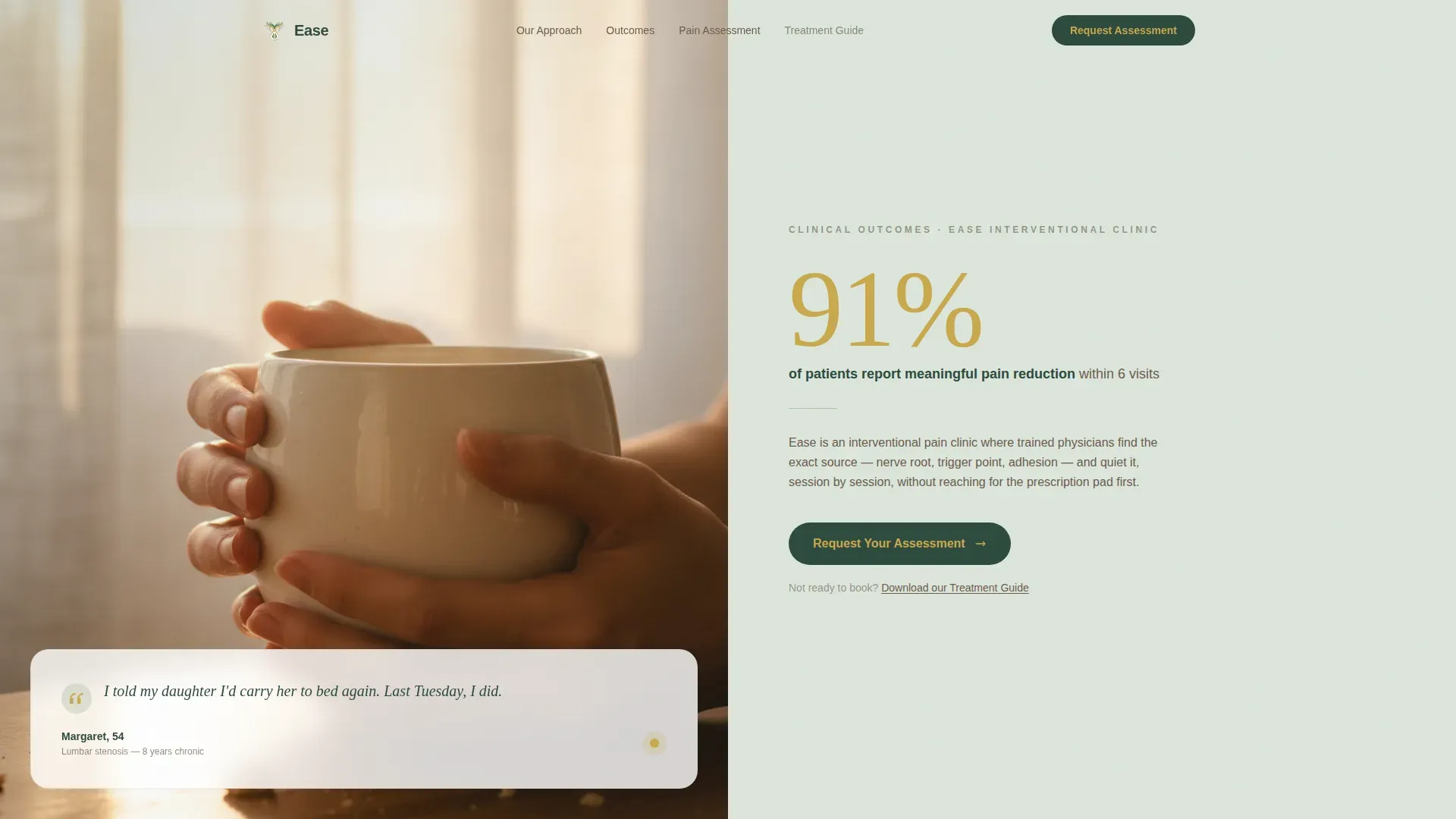
The hero divides the viewport 50/50. The left side holds a close, warm photograph composition alongside a serif quote card. The right side presents the clinic's headline outcome statistic in large type plus a one-line descriptor and the primary call-to-action button. There is no hero animation; stillness is intentional.
Stats-First Impact Panels
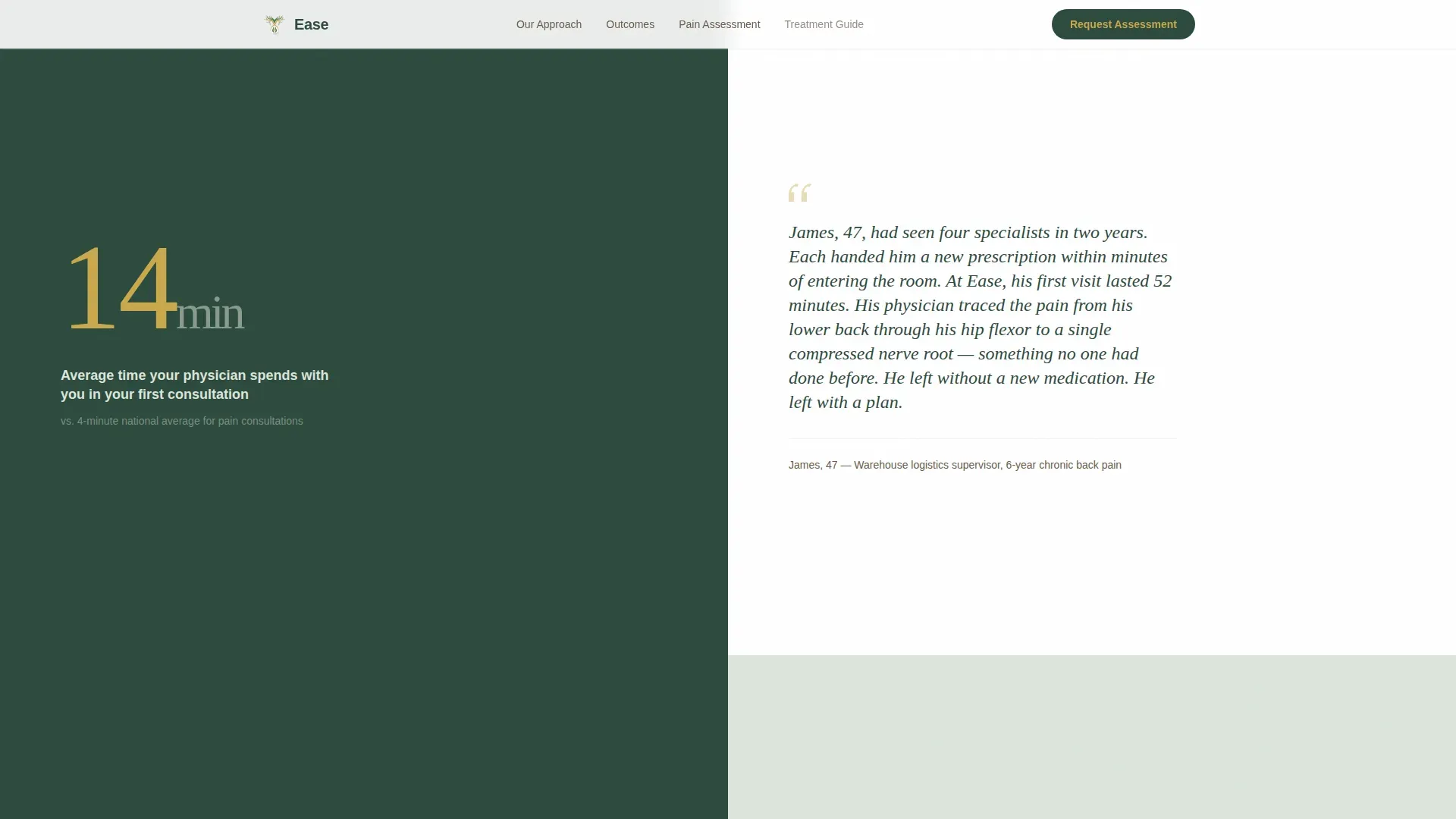
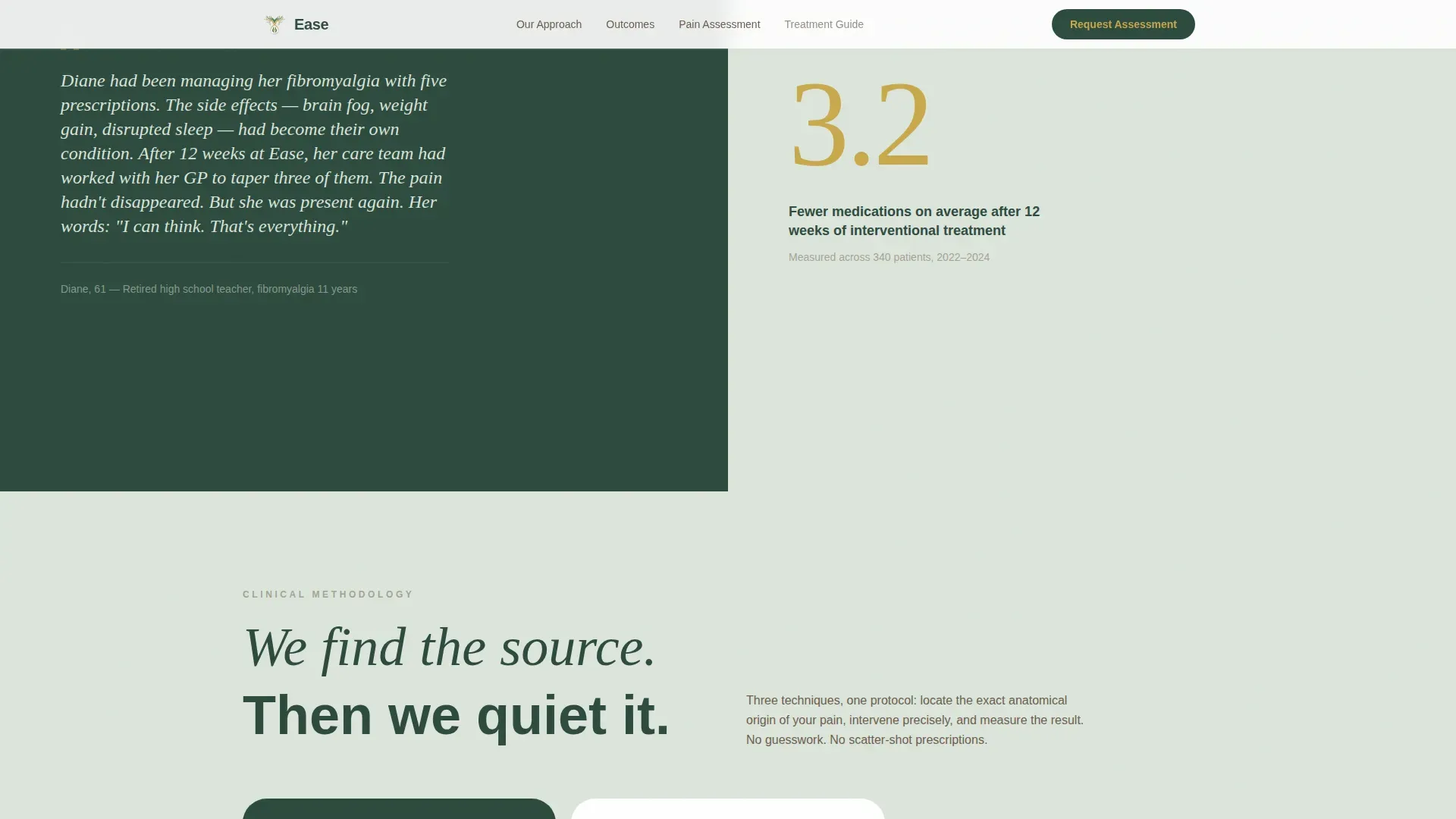
Alternating scroll sections open with a clinical outcome number rendered in oversized quiet gold type on the left panel. The right panel delivers the human story behind the number: a short paragraph, a patient's first name, age, and condition. The rhythm builds an evidence-based and personal case simultaneously.
Interactive Pain-Impact Calculator
A three-question calculator lets visitors assess their own situation before committing to a form. It returns a personalized summary based on their answers. This keeps hesitant visitors engaged and moves them toward the assessment form with context already established.
Three-Step Progressive Assessment Form
The form reveals itself in three disclosed steps. Step one uses a clickable body map for pain location. Step two uses dropdowns for duration and current treatments. Step three collects name, phone number, and preferred appointment window. Progressive disclosure reduces form anxiety and improves completion rates.
Secondary Email Capture Path
A "Download Our Treatment Guide" option runs alongside the primary call-to-action. It captures an email address for visitors who are not yet ready to book. This gives the clinic a nurture channel without requiring an immediate commitment.
Persistent Bottom-Bar Call-to-Action
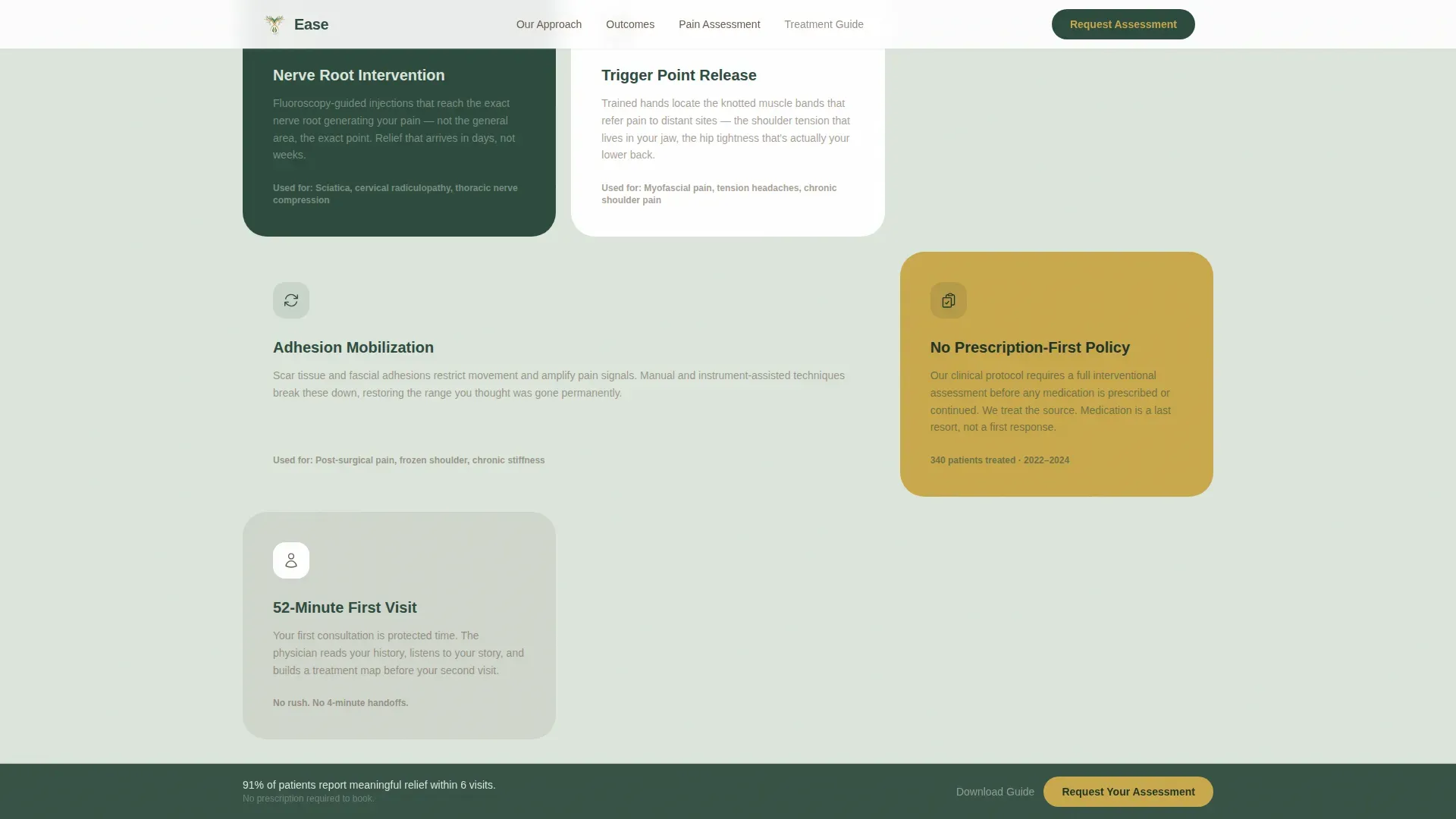
After the third scroll section, a persistent bottom bar carries the primary call-to-action. It remains visible as the visitor reads deeper into the page, reducing the distance between decision and action at any point in the scroll journey.
Page sections overview
| Section | Purpose |
|---|---|
| Split-screen hero | Opens with testimonial card, outcome stat, and primary call-to-action |
| Stats differentiator panels | Alternating number-then-narrative blocks building clinical credibility |
| Treatment approach | Explains interventional technique with clinical context |
| Pain-impact calculator | Three-question interactive tool returning a personalized summary |
| Progressive assessment form | Three-step body map, history, and contact collection |
| Footer | Single-row linear pattern with clinic essentials |
Design & branding system
The visual identity follows an Organic Flow theme rooted in the Forest Trust color system. Every color choice is purposeful: greens lower tension, browns provide grounding, and gold appears only where the page asks something of the visitor.
- Deep moss (#2D4A3E) anchors primary text and the call-to-action button background; soft lichen (#C6D2C4) and white alternate as section backgrounds; weathered bark (#6B5B4B) carries body copy
- Quiet gold (#C9A84C) is reserved for call-to-action labels, oversized stat figures, and key data points, never used decoratively
- Typography pairs Instrument Serif for testimonial quotes and headlines with Plus Jakarta Sans for body text, creating clinical warmth without sterility
Mobile & speed optimization
The template is built desktop-first but includes full mobile responsiveness so patients researching on a phone receive the same credibility signals as desktop visitors.
- Static sections use server-rendered components to keep initial load lean; the interactive body map, calculator, and form run as client components
- GSAP ScrollTrigger powers low-to-medium reveal animations; the hero section intentionally carries no animation, preserving the stillness the design requires
- A subtle grain texture adds tactile depth without adding meaningful visual weight or load overhead
How this template helps you convert
The page is structured so clinical credibility always arrives before any request for personal information. By the time a visitor reaches the form, the template has already made a data-backed case.
- The headline stat ("91% of patients report meaningful pain reduction within 6 visits") appears immediately beneath the hero testimonial card, establishing trust at first glance before any scroll occurs.
- Each stat-and-narrative panel deepens the argument with specific outcome numbers and real patient context, so hesitant visitors accumulate evidence naturally as they read.
- The three-step progressive form and the secondary guide download give visitors two commitment levels to choose from, removing the all-or-nothing pressure that causes abandonment.
Other information about this template
This template is localized for a United States audience. Date formats follow MM/DD/YYYY, phone fields accept standard US format, and all copy assumes English as the primary language.
- The pain-impact calculator and the interactive body map are client-side components; they require no external service connection to function within the template
- The footer follows a linear single-row pattern and is designed to carry clinic essentials without visual weight that competes with the conversion flow above it
- The template is suited to clinics positioning themselves as an alternative to high-volume, low-contact primary care, and the 14-minute first-consultation stat and 3.2 fewer medications outcome figure are built into the differentiator panel layout as editable content blocks
Theme
Organic Flow
Creative direction
Stats-First Impact
Color system
Forest Trust
Style
Split Screen (50/50)
Direction
Lead Generation
Page Sections
Split-screen Testimonial Hero
Stats-first Differentiator Panels
Interactive Pain-impact Calculator
Three-step Progressive Assessment Form
Secondary Treatment Guide Download
Persistent Bottom-bar Call-to-action
Related questions
Who is this landing page template designed for?
Can I replace the clinical statistics with my own clinic data?
What does the three-step assessment form collect from visitors?
Is there a way to capture leads who are not ready to book an appointment?
How does the pain-impact calculator work?