Rheumatology Medicine Booking Website Template
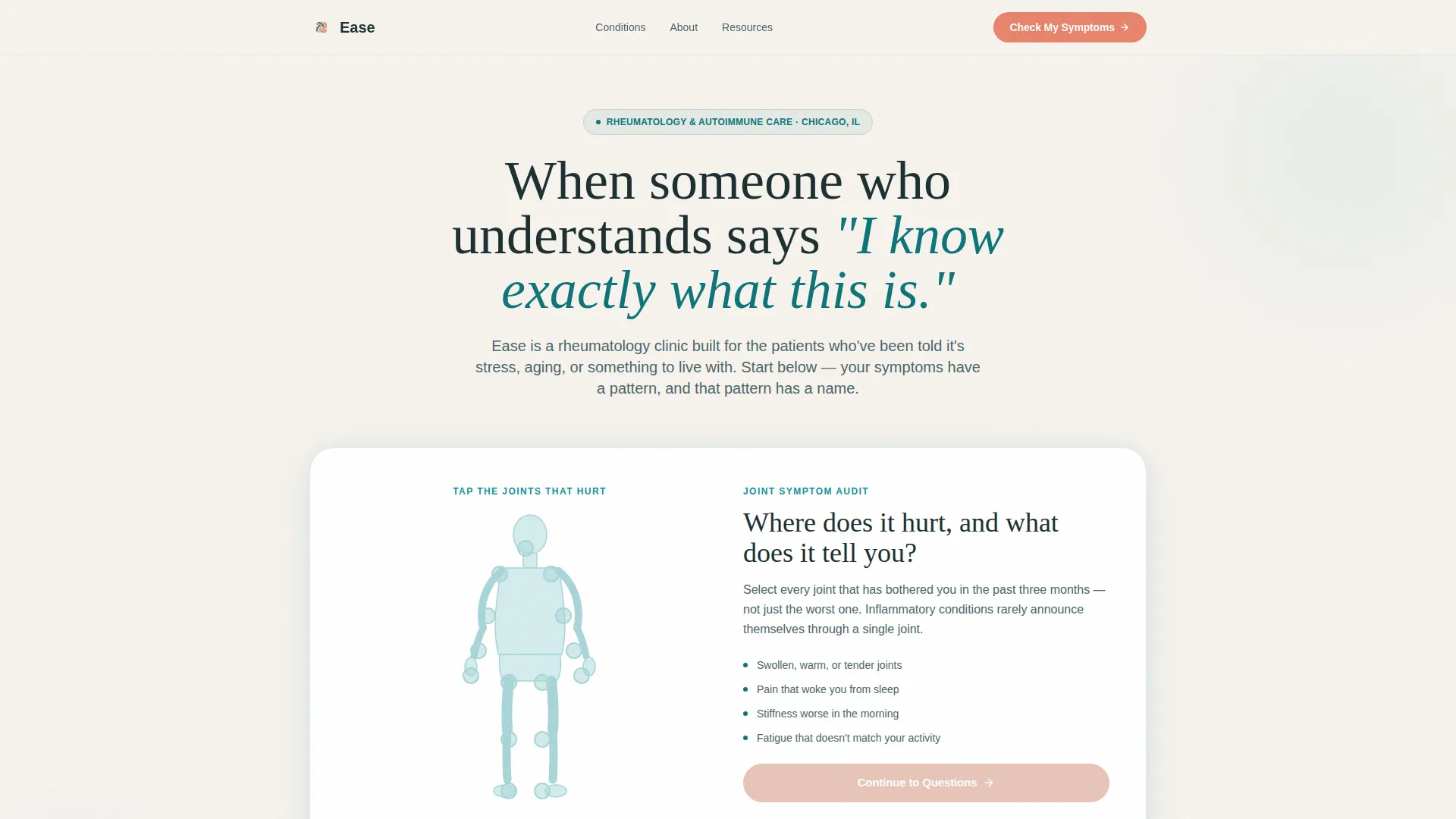
Ease is a rheumatology clinic landing page template built around a zigzag, checklist-driven layout and an interactive Joint Symptom Audit. It guides symptom-aware visitors through a structured self-assessment, then delivers educational content in alternating sections, moving them toward downloading a Rheumatology Readiness Guide or booking a consultation with confidence.
by Rocket studio
Quick summary
Ease is a single-page rheumatology clinic template with an interactive symptom calculator, alternating checklist sections, and a resource-led conversion path. It pairs clinical credibility with therapeutic warmth to help visitors name their pain, understand their options, and take a clear next step.
Who this template is for
This template is built for rheumatology clinics and specialist centers that want to convert anxious, symptom-aware visitors into informed patients. It speaks directly to people who are searching for answers before they pick up the phone.
- Women in their forties noticing unexplained swollen joints or morning stiffness
- Weekend athletes dealing with persistent joint pain that outlasted an injury
- Parents of teenagers recently diagnosed with juvenile idiopathic arthritis (JIA)
What problem this template solves
Many rheumatology clinics lose potential patients at the awareness stage. Visitors arrive confused, unsure whether their pain is inflammatory or mechanical, and they leave without acting. This template gives them a structured way to make sense of their symptoms before booking.
- Vague joint pain feels unactionable until it is named and contextualized
- Patients delay care because they lack language for what they are experiencing
- Clinics miss leads from visitors who are not yet ready to call but would download a free guide
What you get with this template
This template delivers a fully structured, single-page clinic layout with purpose-built sections for education, trust-building, and lead capture. Every block serves a specific role in the patient decision journey.
- An interactive Joint Symptom Audit with a body map, five progressive questions, and a gradient result bar
- Alternating zigzag content sections covering inflammatory pain signs, blood work explanations, and conditions treated
- A dual conversion path: a downloadable Rheumatology Readiness Guide form and a lightweight symptom-print option
Feature list
This template is built around one core idea: give confused visitors a structure to understand their symptoms, then give the clinic a clear path to follow up. Every feature below supports that goal directly.
Joint Symptom Audit Calculator
Visitors tap affected areas on a minimal human body silhouette, then answer five progressive questions covering morning stiffness duration, symptom symmetry, family history of autoimmune conditions, fatigue, and age of onset. The result renders instantly as a soft gradient bar shifting from teal to coral, mapping their symptom profile against common rheumatologic conditions without offering a diagnosis.
Checklist-Driven Zigzag Sections
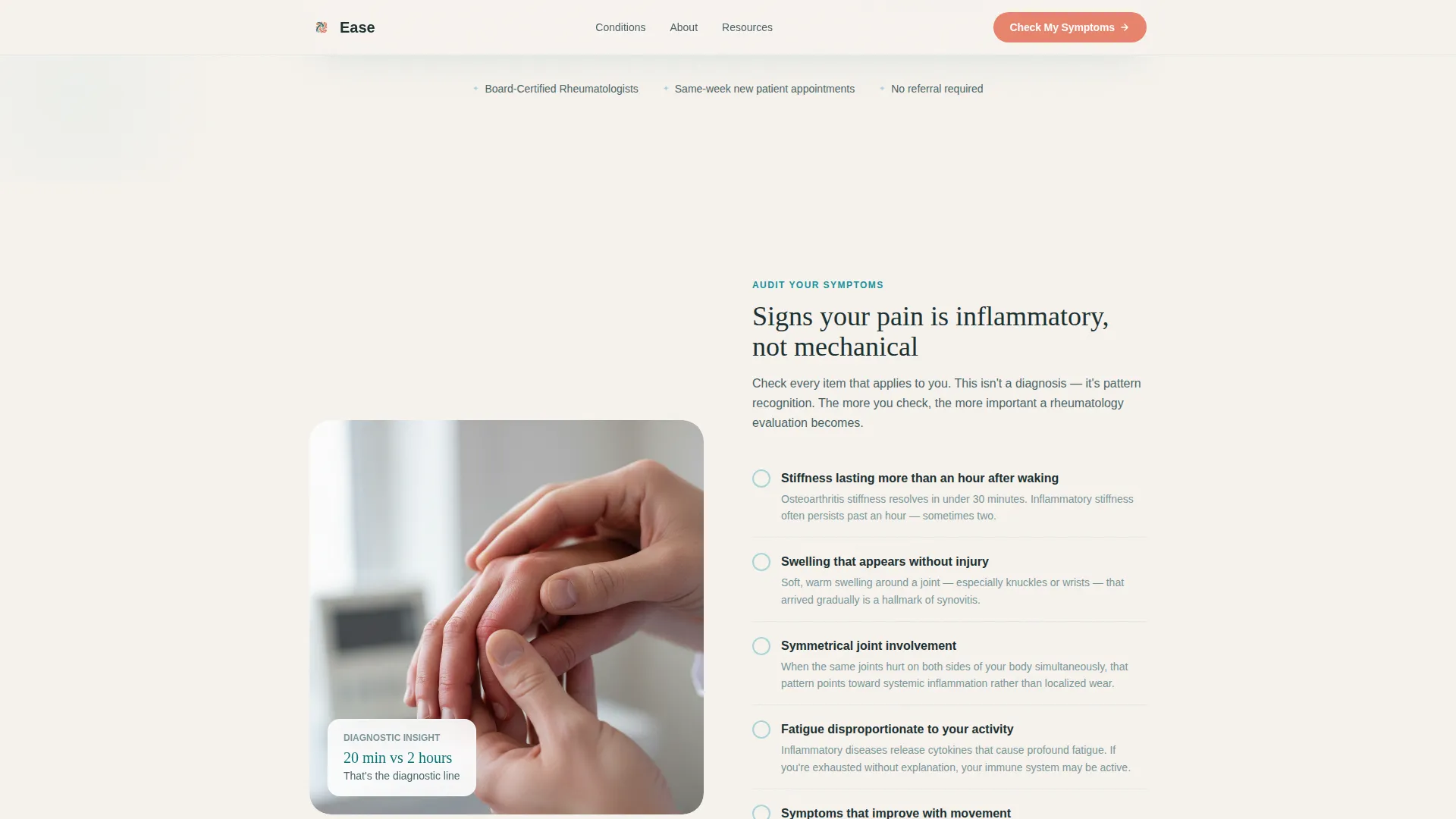
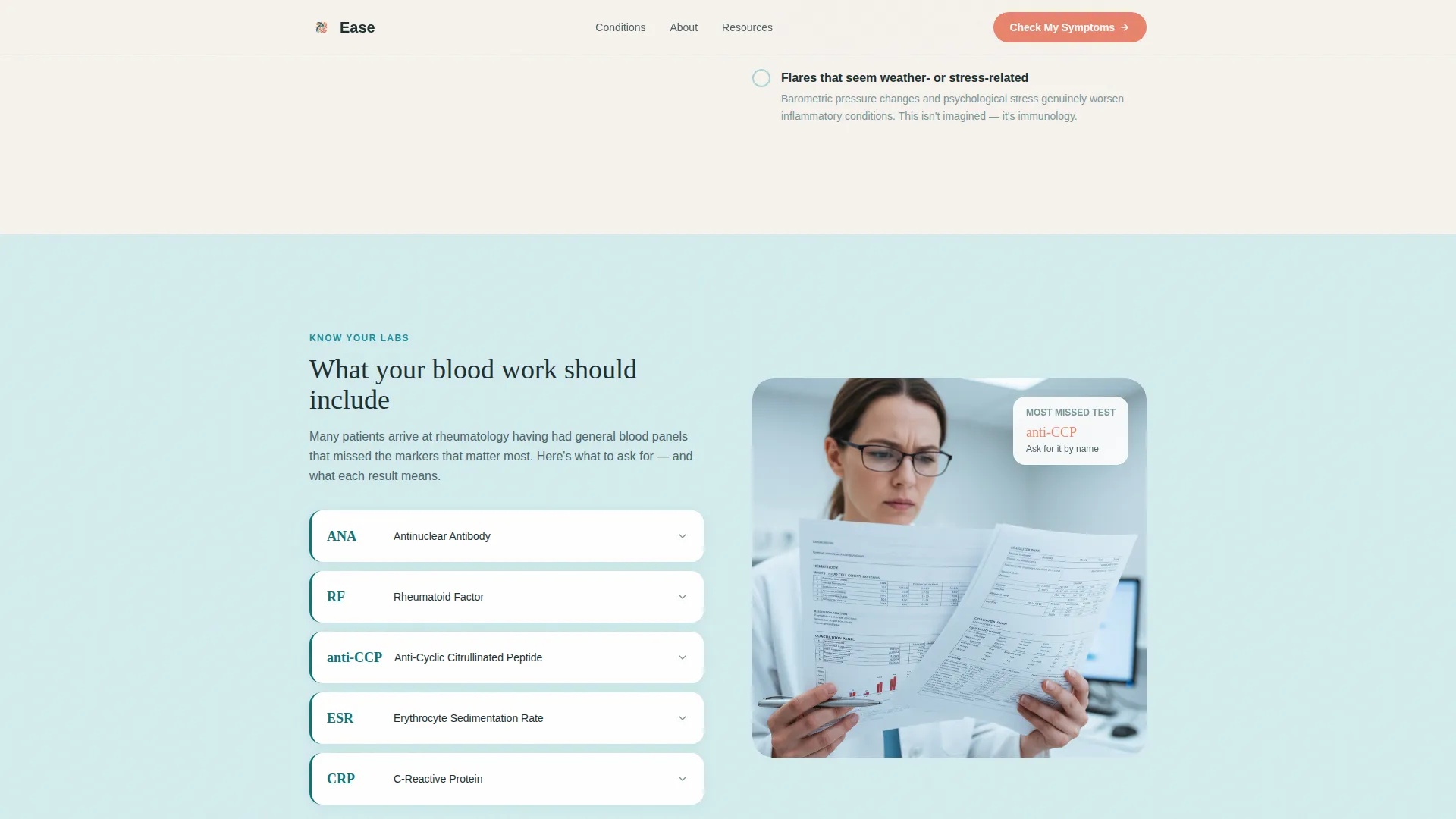
Each alternating section presents one dimension of rheumatologic care as a practical audit. The left-aligned section lists six signs that pain is inflammatory rather than mechanical. The right-aligned section explains what blood work should include, covering antinuclear antibody (ANA), rheumatoid factor (RF), anti-cyclic citrullinated peptide (anti-CCP), erythrocyte sedimentation rate (ESR), and C-reactive protein (CRP) in plain language.
Conditions Treated Card Grid
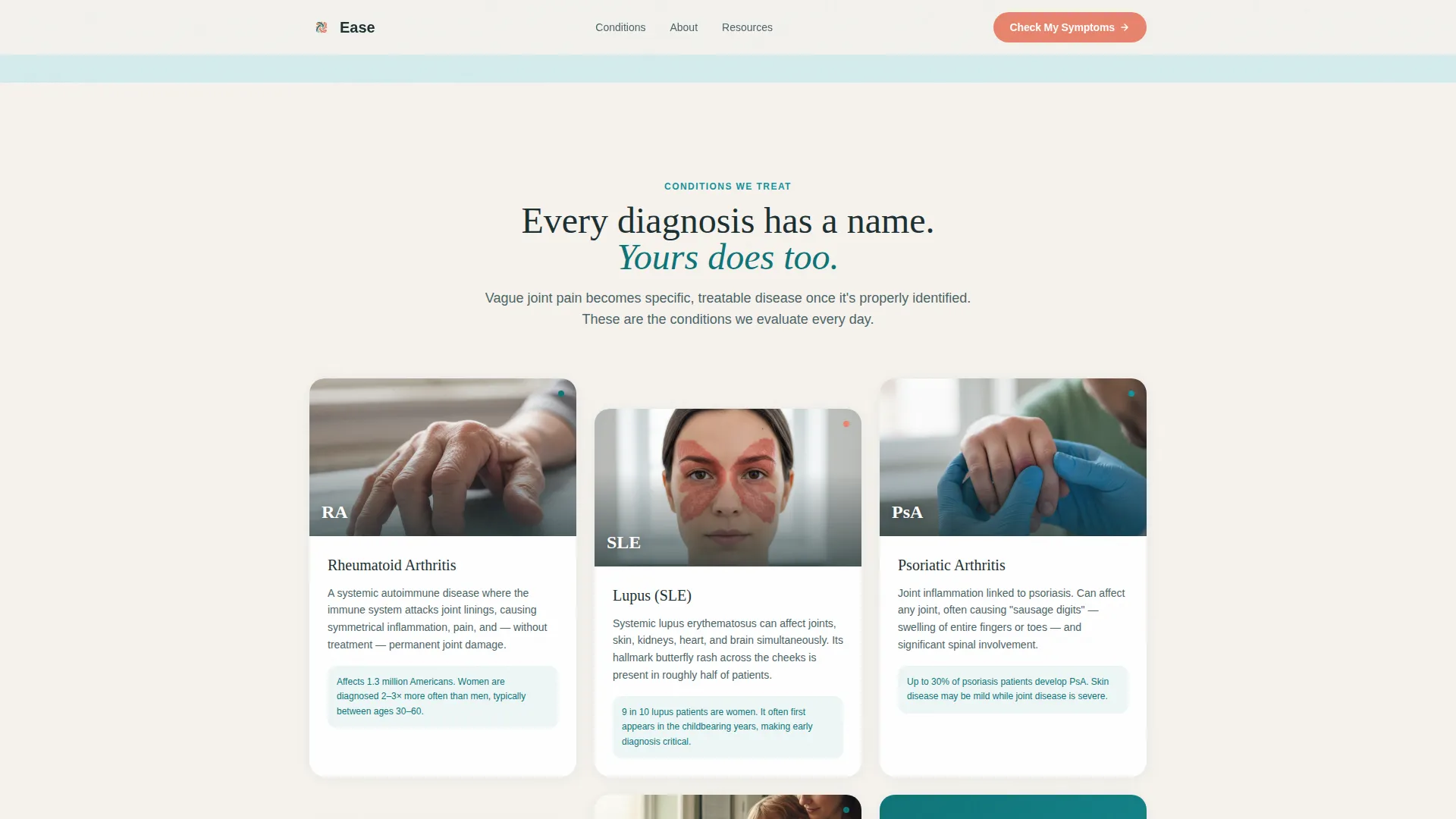
A staggered offset card layout presents the five core conditions the clinic addresses: rheumatoid arthritis, lupus, psoriatic arthritis, gout, and juvenile idiopathic arthritis. Each card gives the condition a specific identity, helping visitors recognize their situation and reducing the sense that their case is unusual.
Dual Lead Capture Forms
The primary call to action is a coral-button form asking for first name, email, and the condition of greatest concern via a dropdown. The secondary path, "Print My Symptom Audit Results," requires only an email address and captures visitors who prefer to bring something tangible to their next doctor's appointment.
Patient Testimonial Section
Three patient voices with condition-specific context appear in a dedicated testimonials block. Named individuals with recognizable symptom stories build social proof without generic language, making the clinic feel familiar before the first appointment.
Scroll-Reveal Animation System
Medium-intensity scroll reveals and staggered entrance animations guide attention through the page. The calculator's gradient animation responds to user input in real time, reinforcing engagement without slowing initial load.
Page sections overview
| Section | Purpose |
|---|---|
| Hero + Calculator | Opens with Joint Symptom Audit tool and instant gradient result bar |
| Inflammatory Pain Signs | Left-image zigzag with six-item checklist distinguishing inflammatory from mechanical pain |
| Blood Work Explainer | Right-image zigzag listing key rheumatology lab markers in plain language |
| Conditions Treated Grid | Staggered card layout covering five core rheumatologic conditions |
| Patient Testimonials | Three named patient stories with condition-specific detail |
| Page Footer | Linear single-row footer with essential clinic links and contact information |
Design & branding system
The visual identity uses a Soft Gradient theme built on the Teal Catalyst color system. The palette feels clinical enough to earn trust and warm enough to feel approachable, like a heated therapy pool that puts visitors at ease the moment they arrive.
- Deep therapeutic teal (#0D7377) anchors headlines, interactive elements, and primary navigation
- Muted seafoam (#A8D5D8) washes alternating section backgrounds; warm pearl (#F7F3EE) serves as the primary canvas
- Quiet coral (#E8836B) marks every primary button and alert state, keeping calls to action unmistakably visible
- Fraunces serif typeface carries headlines with warmth and authority; DM Sans handles body copy with clean legibility
Mobile & speed optimization
This template is built mobile-first, reflecting the reality that many rheumatology patients search for answers late at night from a phone. The layout prioritizes readability and tap-friendly interaction at every breakpoint.
- The Joint Symptom Audit calculator is structured as a client component for responsive interactivity
- Static educational sections are structured as server components to support fast initial load
- Zigzag sections reflow cleanly on smaller screens without losing the checklist or image context
How this template helps you convert
The page is designed as a content-resource funnel. It does not ask visitors to commit immediately. Instead, it builds a quiet, accumulating case that their symptoms deserve specialist attention, then offers two low-friction ways to take action.
- The Joint Symptom Audit delivers a personalized result early in the page, creating immediate relevance and motivating visitors to keep reading and then download the guide
- The checklist and blood work sections add layers of clinical context that turn passive readers into informed, prepared patients who arrive at appointments ready to engage
Other information about this template
This template fits naturally within the broader category of health and medical landing pages designed for specialist clinics. It is particularly well-suited for rheumatology medicine practices looking to reach patients at the research and awareness stage of their care journey.
- The template style is Zigzag/Alternating with a Checklist and Audit creative direction, making it effective for educational content that builds progressively
- The header concept is a Calculator/Estimator, a format proven to drive engagement by giving visitors an immediate, personalized output
- The landing page direction is Content/Resource, meaning the primary conversion goal is guide download rather than direct booking
- The Teal Catalyst color system and Soft Gradient theme are consistent across all sections for a unified, professional clinic presentation
Theme
Soft Gradient
Creative direction
Checklist & Audit
Color system
Teal Catalyst
Style
Zigzag/Alternating
Direction
Content/Resource
Page Sections
Interactive Joint Symptom Audit
Checklist-driven Zigzag Layout
Conditions Treated Card Grid
Dual Lead Capture Path
Patient Testimonials Block
Scroll-reveal Animation System
Related questions
Does this template include the actual Rheumatology Readiness Guide content?
Can I edit the conditions listed in the card grid section?
Is the Joint Symptom Audit a real diagnostic tool?
Who is the secondary email capture path designed for?
Is this template suitable for a solo rheumatologist rather than a full clinic?