Elite Sodium Guide Landing Page Template
Savor is a masonry-style landing page template built for low-sodium cookbook creators and recipe bloggers. It pairs editorial food photography with a warm Sunset Gradient palette and staggered scroll animations to prove that healthy cooking is genuinely delicious. The layout drives direct sales at $29 while offering a free recipe email capture for visitors who need more convincing before they buy.
by Rocket studio
Quick summary
Savor is a single-page, masonry-layout landing page template designed for low-sodium cookbook authors and recipe bloggers. It uses a cinematic hero image, Pinterest-style recipe card grids, a full-width interstitial, a social proof section, and a floating buy button to move visitors from curiosity to purchase. The visual system is built around warm editorial tones that make every dish look worth cooking.
Who this template is for
This template was created for a very specific kind of creator: someone who believes that cooking without salt does not mean cooking without joy. If you are publishing a cookbook, running a recipe blog, or selling a digital food guide aimed at health-conscious readers, Savor gives you a ready-made sales page that feels as premium as the food it promotes.
- Low-sodium cookbook authors selling direct to readers at a fixed price point
- Recipe bloggers targeting newly diagnosed hypertension patients, cardiac rehab graduates, and home cooks caring for aging family members
- Food and wellness creators who need a visually rich landing page that converts browsers into buyers
What problem this template solves
The core challenge for anyone selling low-sodium recipes is perception. Visitors arrive with a quiet fear: that eating for their health means eating food that is disappointing. That assumption kills conversions before a single word is read. Savor is designed to destroy that assumption on first scroll.
The template solves several connected problems at once:
- It replaces the "medicine food" perception with editorial-grade food photography and confident copy, proving that low-sodium dishes can be genuinely beautiful and delicious
- It gives creators a structured sales path from visual proof to purchase, with a floating call-to-action button and a secondary email capture for visitors who are not ready to buy immediately
- It handles both the emotional and practical sides of the decision: testimonials from real readers address fear, while the sodium comparison callout and nutritional framing address logic
What you get with this template
Savor ships as a fully designed, section-complete landing page. Every section is pre-built and visually connected. You get a layout that is ready to populate with your own photography, copy, and pricing without needing to design from scratch.
- A full-viewport cinematic hero section with parallax behavior and an editorial serif headline overlay
- A two-wave masonry recipe card grid with staggered scroll-reveal animations powered by GSAP ScrollTrigger, plus a full-width interstitial section between the two waves
- A social proof section for reader testimonials, a floating buy button pinned after the first scroll, and an email capture modal for free recipe lead generation
Feature list
This template brings together a focused set of design and layout features, each chosen to serve one goal: make low-sodium cooking look irresistible and make the purchase feel natural.
Cinematic Full-Viewport Hero
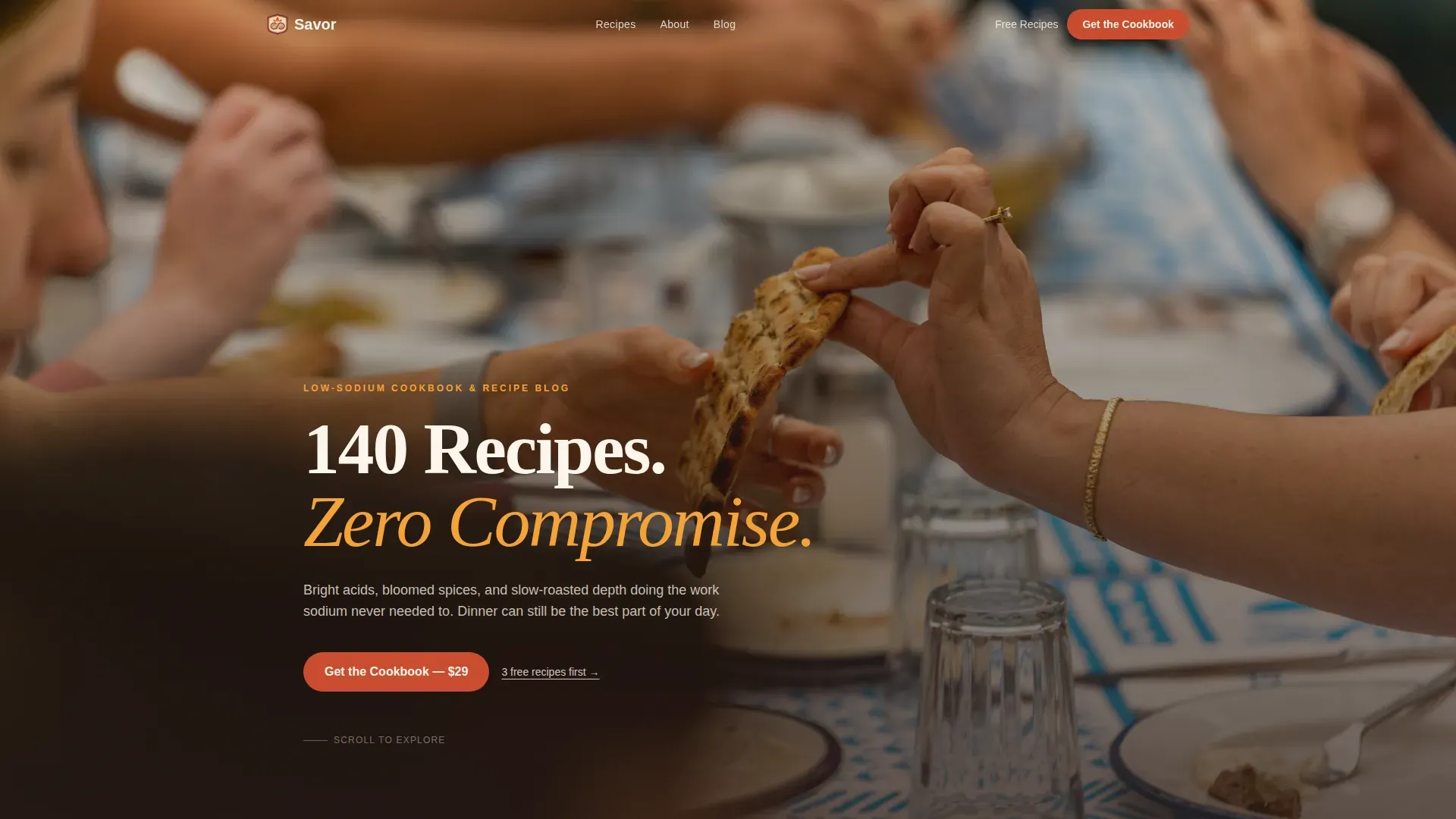
The hero section fills the entire screen with a lifestyle overhead shot. A sun-drenched table covered in finished dishes, hands mid-reach tearing warm bread, a mortar still rocking with freshly cracked coriander seeds, and steam rising from a tagine all appear in the frame. The editorial serif headline "140 Recipes. Zero Compromise." sits over the scene in elegant type. A parallax scroll effect gives the image depth as visitors begin to move down the page.
Staggered Masonry Recipe Grid
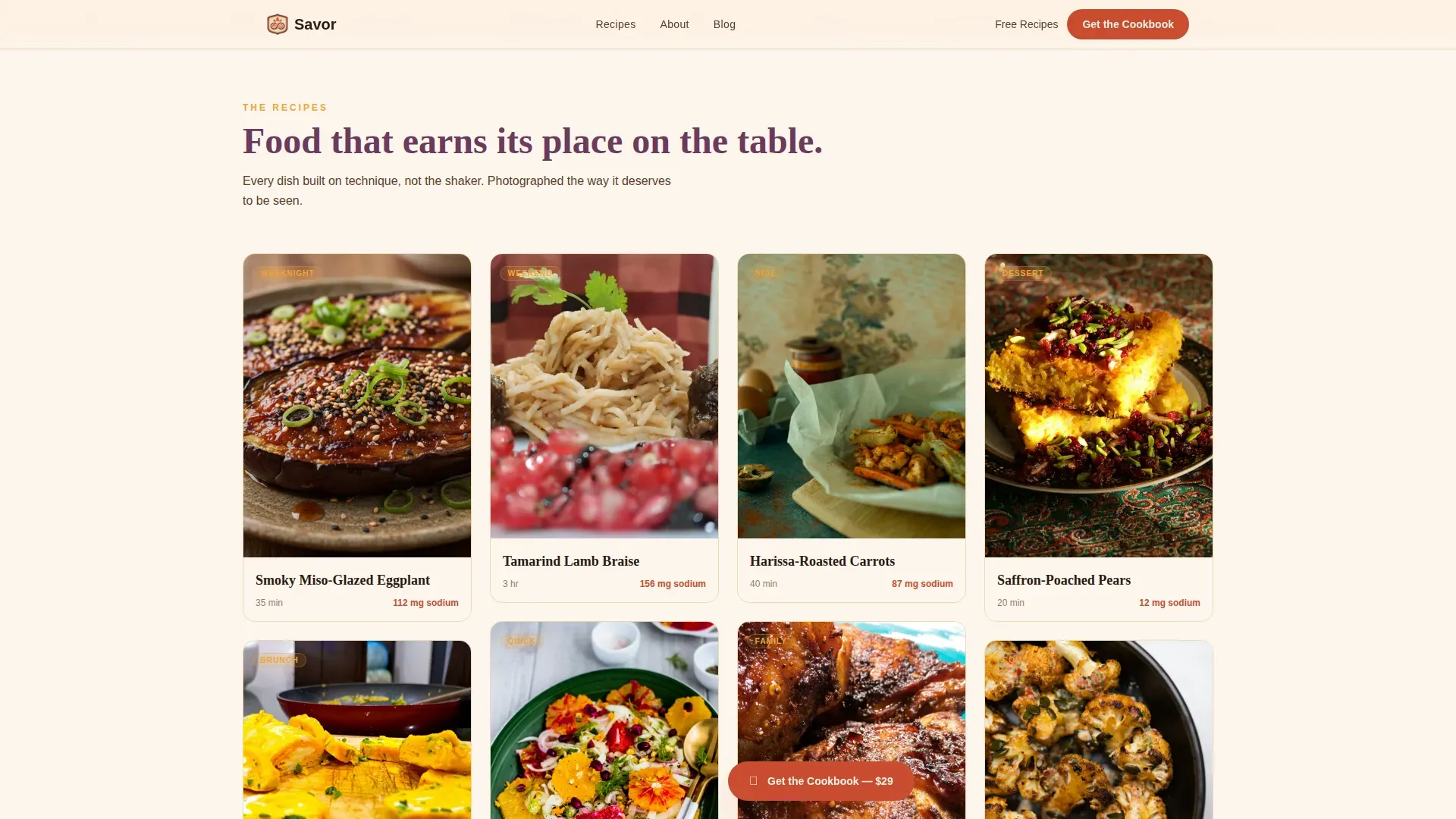
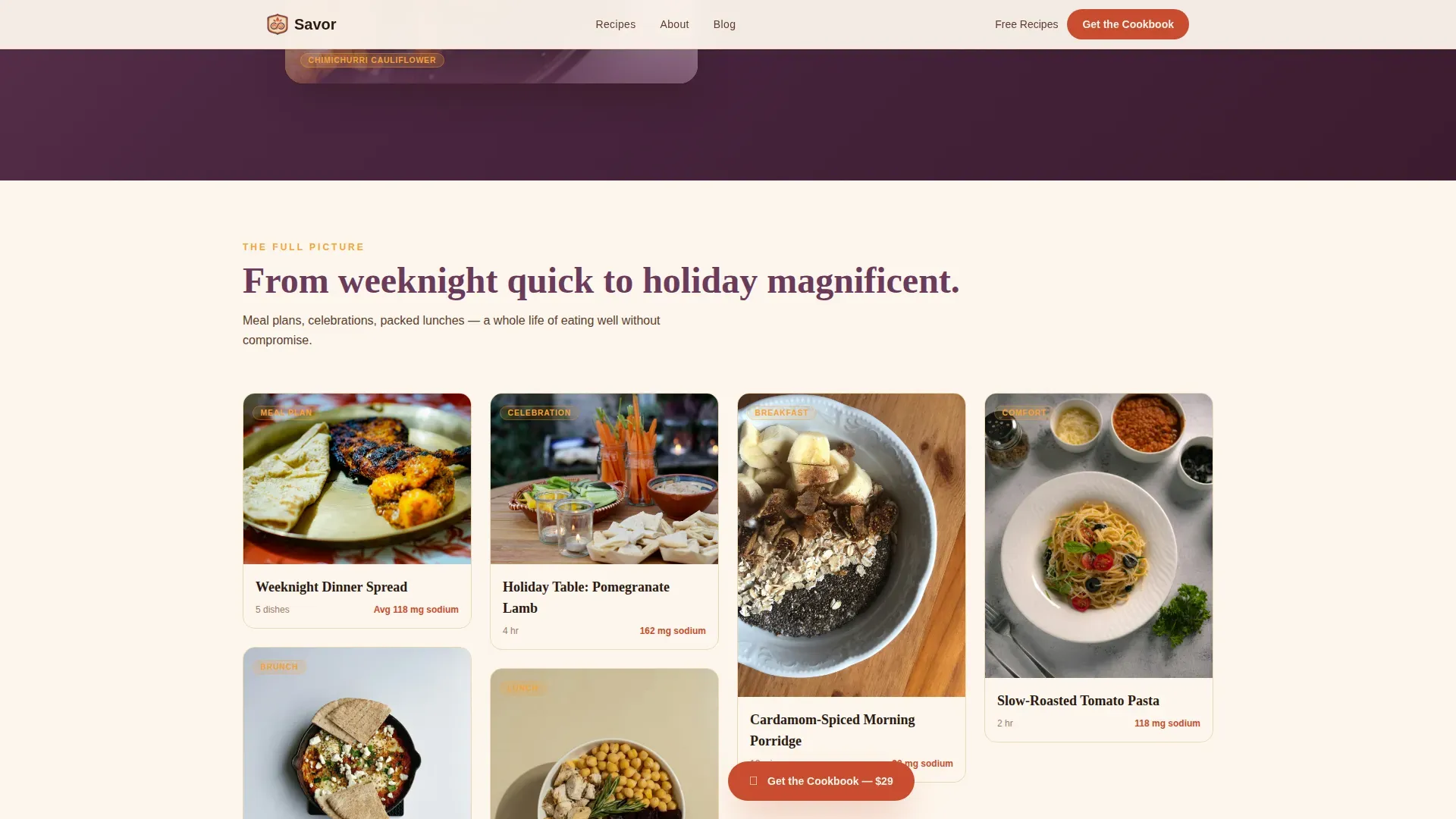
The template includes two waves of masonry recipe cards. Each card is a proof point: a beautifully photographed dish that shows visitors what low-sodium cooking actually looks, smells, and tastes like. Cards load in staggered waves using GSAP ScrollTrigger animations, mimicking the rhythm of courses arriving at a table. The second wave escalates from single-recipe cards to styled spreads, including a weeknight dinner plan, a holiday table layout, and a packed lunch arrangement.
Full-Width Interstitial Section
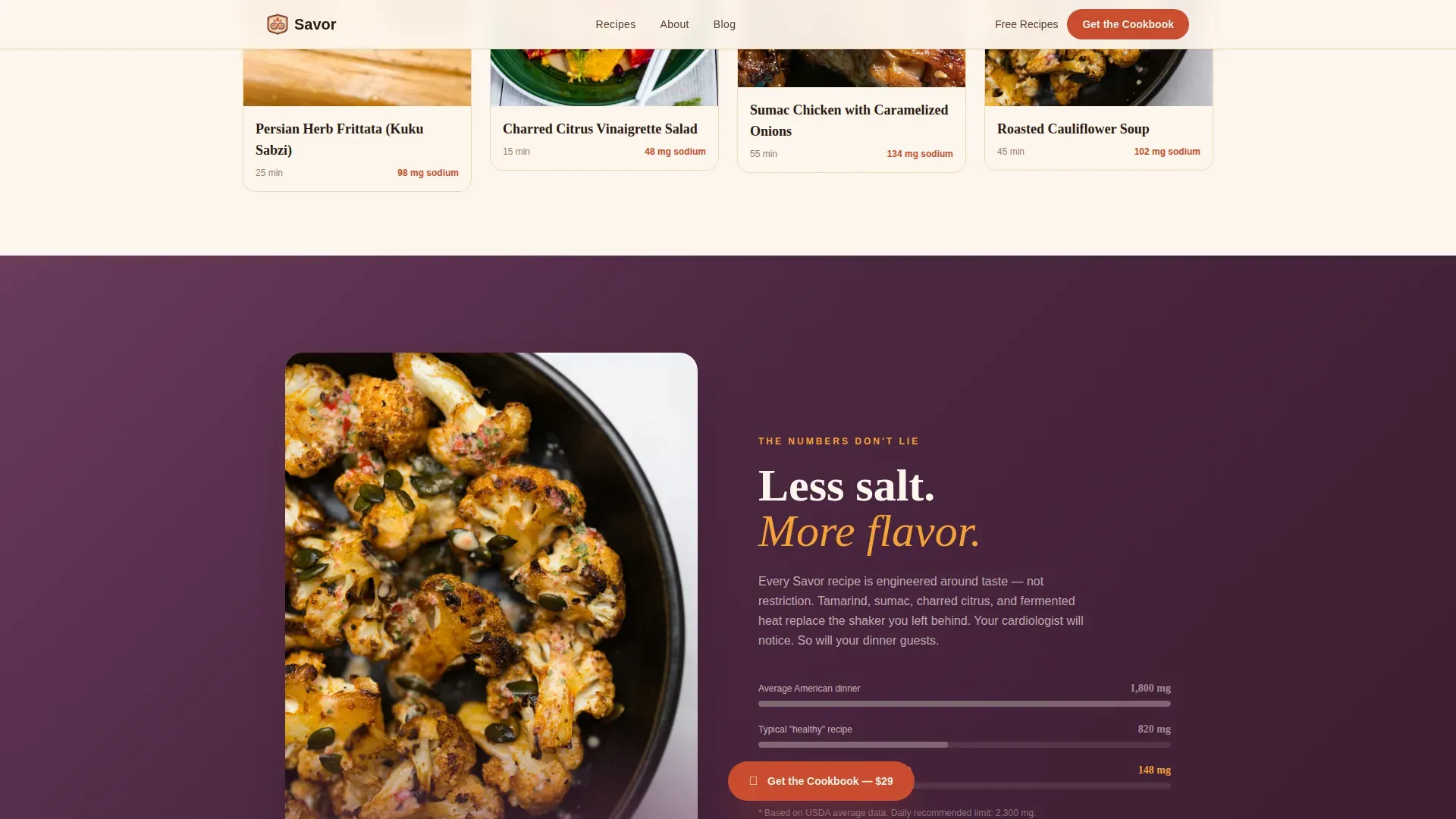
Between the two masonry grid waves, the page pauses for a cinematic interstitial. A slow-motion pour of chimichurri over roasted cauliflower occupies the full width of the screen. Alongside the visual, a sodium comparison callout delivers a factual, reassuring message about what low-sodium cooking actually means in practice. This section bridges the emotional pull of beautiful food with the practical logic that health-focused buyers need.
Floating Buy Button
After the visitor scrolls past the hero, a roasted tomato red buy button appears as a pinned floating element. It reads "Get the Cookbook at $29" and stays visible throughout the scroll journey. This persistent call-to-action means the purchase option is always one tap away, regardless of where the visitor is on the page. The scroll-linked behavior is handled through GSAP for smooth entry and positioning.
Email Capture Modal
Not every visitor is ready to buy on the first visit. The template includes a secondary conversion path: a free recipe offer that triggers an email capture modal. Visitors can receive three free recipes by entering their email address. This path builds a mailing list while keeping the primary purchase flow clean and uninterrupted.
Social Proof Section
A dedicated testimonials section surfaces reader voices. The layout is designed to show specific, outcome-based quotes from cardiac rehab graduates and home cooks. These are not generic reviews. They carry the weight of real dietary need and real relief, which is exactly what a hesitant buyer needs to see before committing.
Page sections overview
| Section | Purpose |
|---|---|
| Hero lifestyle shot | Sets the visual and emotional tone immediately |
| Masonry grid wave one | Proves low-sodium food looks magnificent |
| Full-width interstitial | Delivers sodium comparison and cinematic pause |
| Masonry grid wave two | Escalates from single recipes to full menus |
| Social proof section | Builds trust through reader testimonials |
| Floating buy button | Keeps the purchase path always visible |
| Email capture modal | Converts hesitant visitors into email leads |
| Footer section | Closes with warm parchment minimal layout |
Design & branding system
Savor uses a Haute Craft visual identity built on a Sunset Gradient color system. The palette was chosen to feel like a wooden cutting board at golden hour: turmeric dust on the counter, a cast-iron skillet still smoking, the last light of day turning every dish into a still life. The system feels simultaneously warm, premium, and deeply appetizing.
- Four-color Sunset Gradient palette: warm saffron (#F4A235) for tags and hover states, roasted tomato red (#C94C2F) for primary calls to action, dusky plum (#6B3A5B) for headlines, and soft parchment (#FDF6EC) as the base for every card and background surface
- Typography pairing using Fraunces as the serif display face for headlines and DM Sans as the body typeface, creating a contrast between editorial authority and everyday readability
- Card hover states use saffron highlights, primary action buttons use tomato red, and plum anchors the most important copy so the visual hierarchy always guides the eye toward the next action
Mobile & speed optimization
Most visitors browsing for cooking ideas and low-sodium recipes arrive on their phones. This template is designed mobile-first, meaning every layout decision starts from the smallest screen and scales up. The masonry grid reflows cleanly, the floating button remains correctly positioned, and the hero image maintains its compositional impact on narrow viewports.
- Lazy loading is built into the image handling for masonry card sections, so the page does not attempt to load all photography at once
- Server Components handle static sections of the layout, reducing the amount of JavaScript that needs to run on the client side for non-interactive parts of the page
- The email capture modal and floating button are both optimized for touch targets, making the two primary conversion actions easy to complete on a phone screen
How this template helps you convert
Every structural decision in Savor is oriented toward one outcome: turning a curious visitor into a buyer or a lead. The page does not rely on a single persuasion moment. Instead, it builds a cumulative case across every scroll.
- The hero section establishes desire immediately. Before any copy is read, the overhead lifestyle shot communicates abundance, warmth, and pleasure. Visitors feel something before they think something, and that emotional opening is what keeps them scrolling through the rest of the page.
- The masonry grid acts as the primary sales engine. Each recipe card is a visual proof point that low-sodium cooking produces food that looks this good, tastes this good, and belongs on a real table. By the time visitors reach the second grid wave with its styled spreads and full menus, the purchase feels less like a transaction and more like accepting an invitation.
- The floating buy button and email modal ensure no visitor leaves without a clear next step. Buyers tap the floating button. Hesitant visitors give their email for three free recipes, entering a follow-up sequence. Both paths are always available and never compete with each other visually.
Other information about this template
Savor sits at the intersection of serious culinary tradition and modern health-conscious cooking. Understanding that context makes the template more effective to use and easier to customize for your specific audience.
The concept of haute cuisine has deep roots. Its foundations trace back to the 17th century with French chef La Varenne, who published the first true French cookbook and included the earliest known reference to roux using pork fat. French cuisine encompasses the full cooking traditions and practices of France and has shaped the way the world thinks about gourmet cookery. Marie-Antoine Careme refined French cuisine and formalized the mother sauces. Georges Auguste Escoffier is acknowledged as the central figure in the modernization of haute cuisine. Escoffier published Le Guide Culinaire in 1903, which established the fundamentals of French cookery as a formal system. The French Revolution abolished the guild system, which opened food production and culinary creativity to anyone who wished to participate. Culinary tourism and the Guide Michelin helped bring the cuisine of urban elites and the French countryside to a much wider audience from the 20th century onward. French gastronomy was added by UNESCO to its list of the world's intangible cultural heritage in November 2010. Nouvelle cuisine later pushed the tradition further, emphasizing freshness, lightness, and clarity of flavor using modern techniques and equipment. French cuisine varies according to the season, with summer favoring salads and fruit-forward dishes, and each region carrying its own distinctive culinary identity. This historical lineage is what the Haute Craft theme in Savor draws from: the idea that rigorous technique, high-quality ingredients, and beautiful presentation are not compromised by dietary constraints.
The low-sodium cooking approach that this template supports is not about subtraction. It is about substitution and elevation. Fresh herbs and bloomed spices replace the role that salt typically plays. Acids like citrus and vinegar brighten dishes in ways that sodium never could. Slow-roasting and careful food preparation develop depth of flavor that makes each dish taste complete. Culinary techniques such as making homemade broths, grilling, steaming, and building layered spice profiles all contribute to recipes that feel genuinely gourmet. Every recipe in a cookbook built with this template's principles should include full nutritional calculations so health-conscious buyers can trust what they are eating. Full nutritional facts, especially low-sodium counts, give readers the confidence to cook freely without second-guessing every ingredient.
This template also fits well within a broader cookbook marketing strategy. The page clearly supports listing buying options such as a standard edition, an ebook edition, and a signed copy edition. Offering a free recipe download in exchange for an email address is built directly into the template's modal system. Sample recipes function as proof of quality, and the visual grid makes each one feel like an endorsement. Expert endorsements from chefs, nutritionists, or culinary influencers can be placed in the social proof section to reinforce the cookbook's credibility. User-generated content such as photos and reviews from early readers validates the collection's quality before a visitor has spent a single dollar.
For creators thinking about the Sacramento-area food community and similar regional audiences, or for any creator with a strong local following, the template's testimonial section can be tailored to reflect specific community voices and regional recipe associations.
AI tools have changed how creators approach the cookbook creation process. Some platforms allow users to input specific dietary needs and generate tailored recipes based on those preferences. AI tools can also help generate nutritional information for recipes, which is especially useful for a health-focused collection. Some applications allow creators to build interactive recipe experiences that update based on reader feedback. Whether you use AI assistance or develop every recipe entirely by hand, the Savor template gives your finished cookbook a sales page that does justice to the work.
The template's design system, animation behavior, and section architecture are all configured to serve a direct-to-consumer sales model. Customers arrive, experience the food visually, trust the testimonials, and either buy or join the mailing list. That is the full conversion loop, and every element in the layout is built to support it.
- The Haute Craft theme combines artisan warmth with editorial food photography for a premium feel that fits the $29 price point
- The collection of 140 recipes is the core value proposition, and the masonry grid is the primary tool for communicating that breadth and quality
- The Sacramento food community and similar tight-knit regional cooking associations are natural early audiences for this kind of health-focused cookbook launch
- The template supports both hardcover and ebook purchase flows, making it flexible for creators who sell through multiple edition formats
- The floating buy button, email modal, and social proof section all function as part of a single coordinated conversion system
Theme
Haute Craft
Creative direction
Immersive Visual
Color system
Sunset Gradient
Style
Masonry/Pinterest
Direction
Direct Sales
Page Sections
Cinematic Hero with Parallax Scroll
Two-wave Staggered Masonry Grid
Full-width Sodium Comparison Interstitial
Persistent Floating Buy Button
Free Recipe Email Capture Modal
Testimonials Social Proof Section
Related questions
Who is this landing page template designed for?
Can I use this template to offer free recipes alongside the paid cookbook?
What sections does this landing page include?
Does the masonry grid work on mobile devices?
What typography and colors does this template use?