Authoritative Nonprofit Landing Page Template
Equity is a hero-dominant landing page template built for economic equality research institutes and policy think tanks. It combines oversized movement typography, a live wealth-gap counter, a four-era scroll timeline, ungated key findings, and a gated dataset download flow, giving doctoral researchers, congressional staffers, and nonprofit grant writers the authoritative sourcing environment they need.
by Rocket studio
Quick summary
Equity is a single-page template designed for economic inequality research organizations that need to earn trust fast. It opens with a full-viewport hashtag hero and a real-time wealth-gap counter, then guides visitors through a four-era policy timeline before offering gated dataset downloads. The page teaches first and asks second, a deliberate content-to-conversion structure.
Who this template is for
This template is purpose-built for institutions that sit at the intersection of rigorous research and public policy. If your organization produces longitudinal data on U.S. wealth inequality and needs a page that matches the seriousness of that work, this template fits.
- Doctoral researchers and academic institutions hunting citable, longitudinal datasets
- Congressional staffers and policy advocates building markup language or briefing documents
- Nonprofit directors and grant writers who need ironclad sourcing to anchor funding narratives
What problem this template solves
Policy research organizations often struggle to present dense, data-heavy work in a way that earns immediate credibility and moves visitors toward a resource download. Generic nonprofit templates lack the visual authority and structured content flow that serious policy audiences expect.
- Visitors leave without downloading because the page never demonstrates the quality of the underlying research
- Ungated findings are buried too deep, so trust is never built before the conversion ask
- Timeline-driven narratives and interactive data visualizations are missing from standard templates
What you get with this template
You get a fully structured, hero-dominant landing page that combines editorial weight with conversion mechanics. Every section is sequenced to build trust before asking for anything.
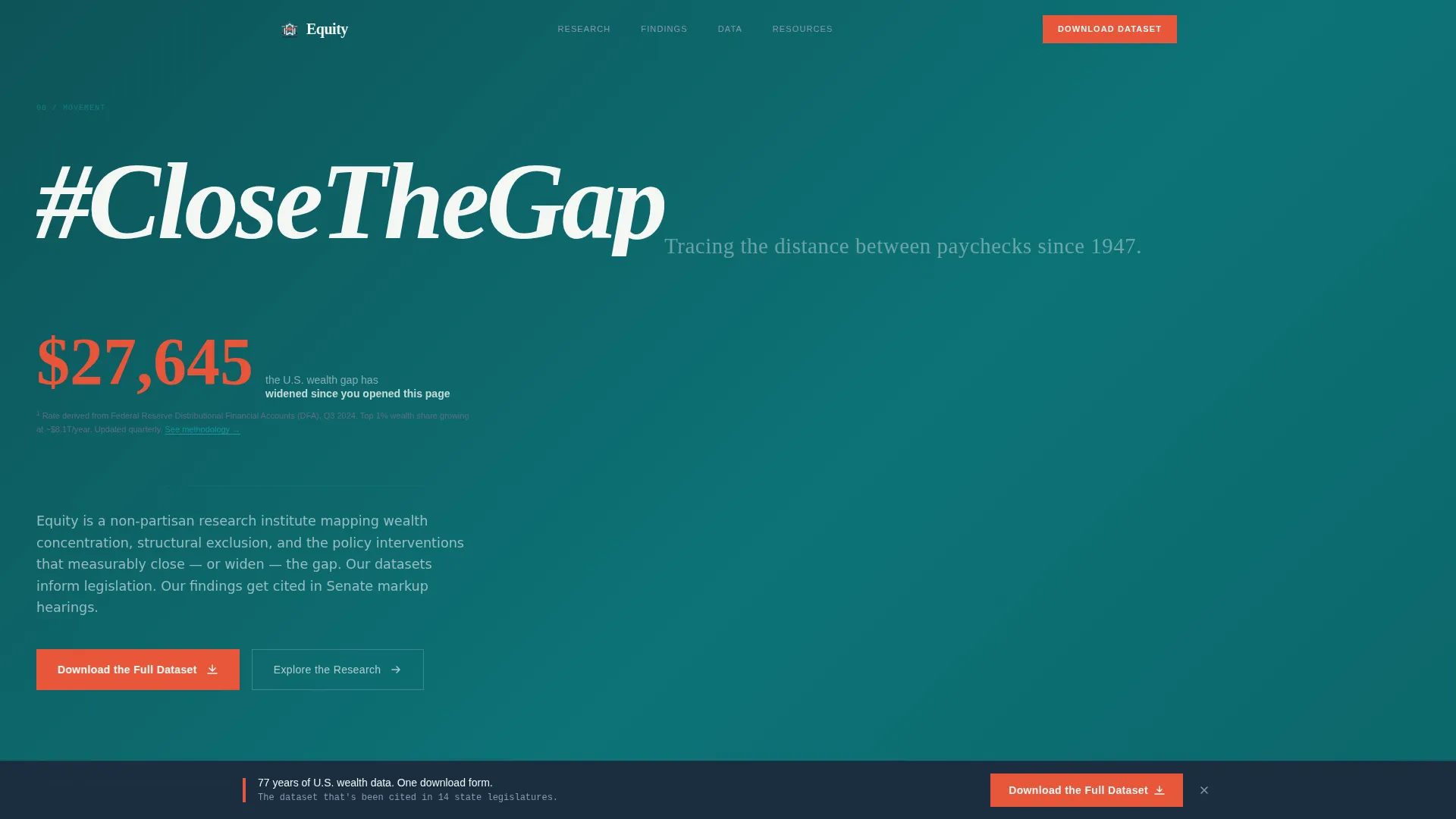
- A full-viewport hero with animated gradient background, oversized hashtag typography, and a real-time dollar counter tracking wealth-gap growth since page load
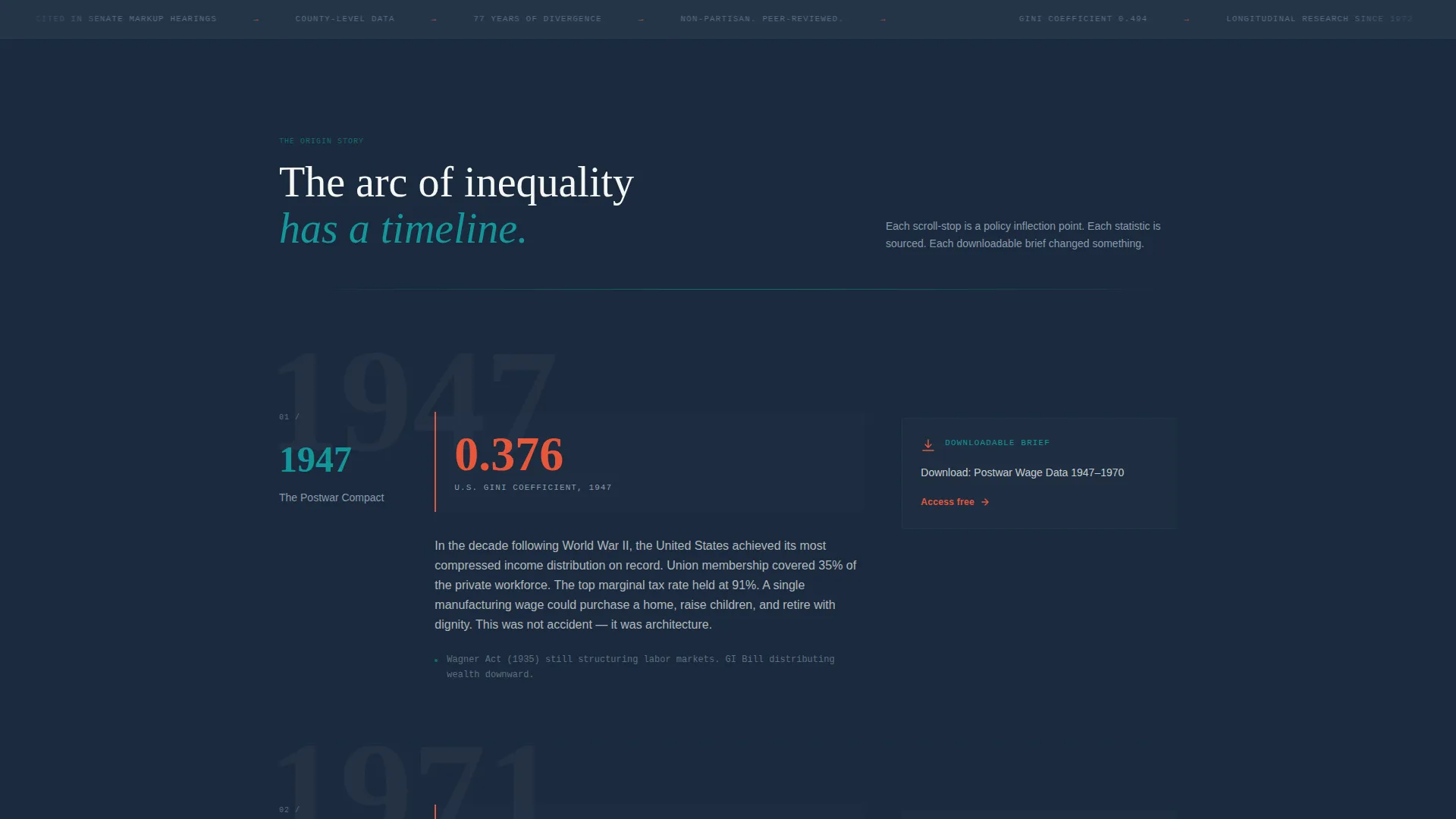
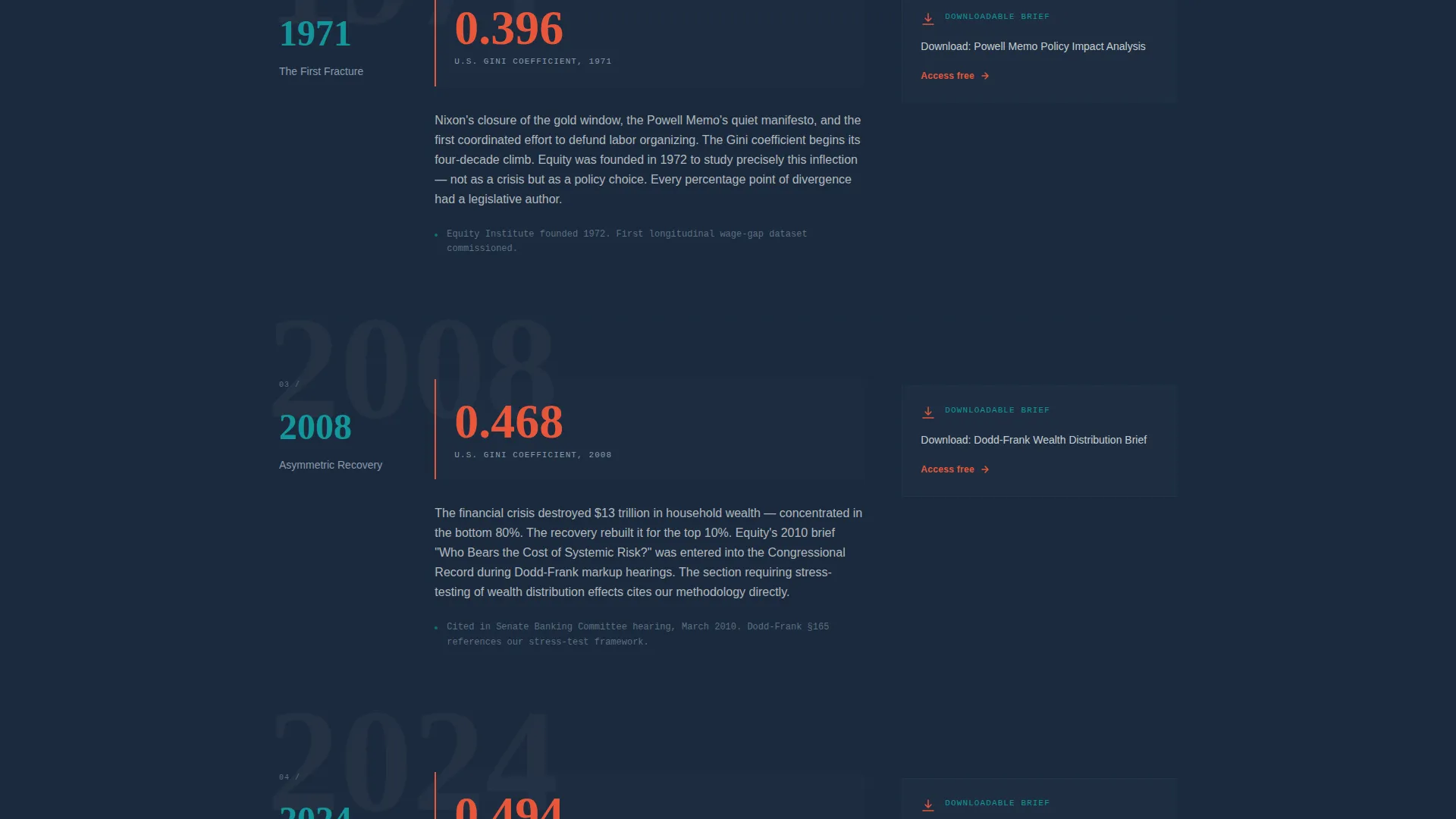
- A four-scroll-stop timeline spanning postwar America to the present, each era carrying one anchor statistic, one narrative paragraph, and one downloadable resource
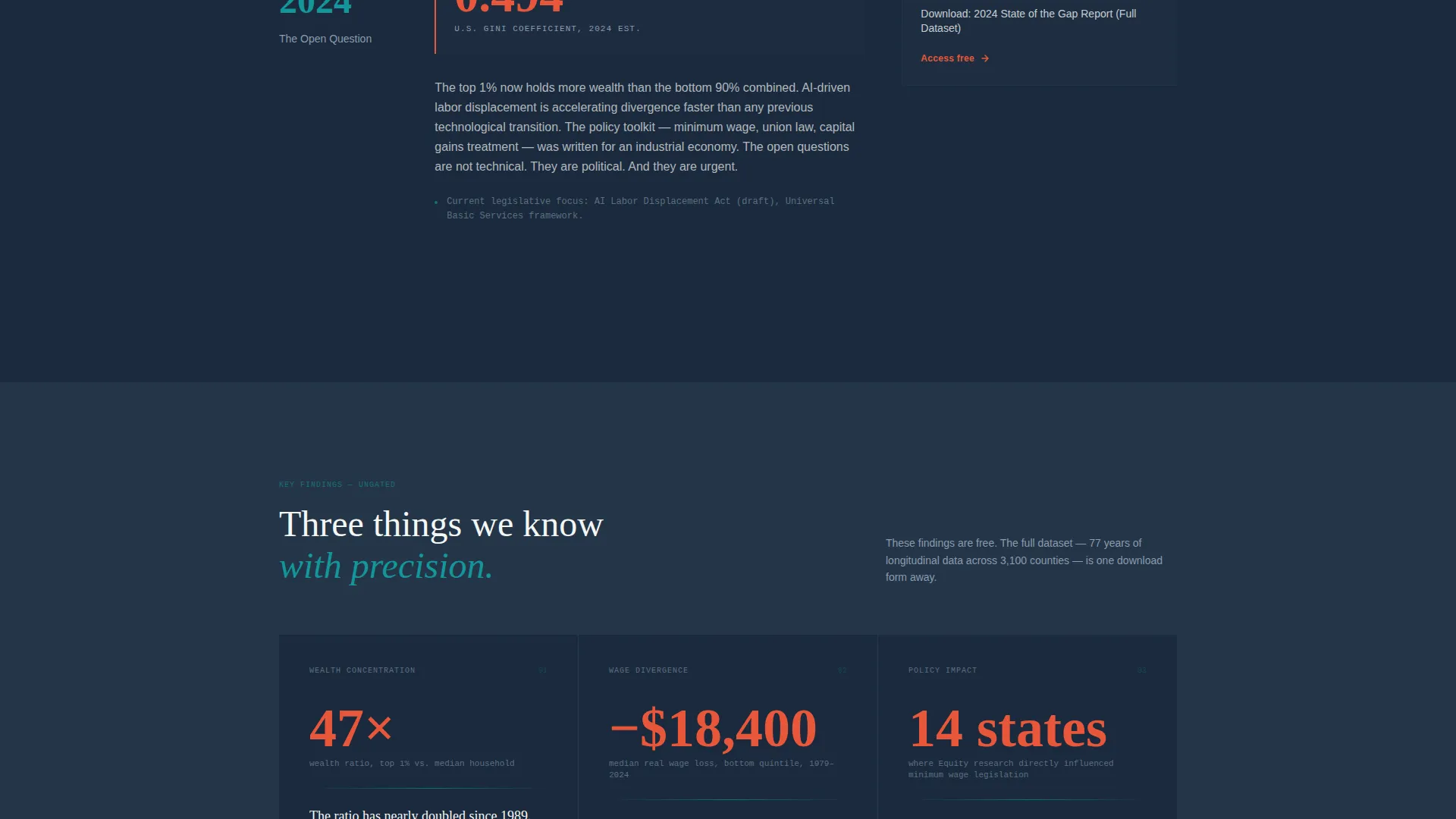
- Three ungated key findings with coral-accented statistics, two interactive data visualizations, and a gated resource library with a dual conversion path
Feature list
A paragraph introducing the core feature set: this template packages movement-level visual impact with the structured, sourced presentation that policy audiences trust. Each feature below reflects a specific design or functional decision described in the brief.
Full-Viewport Hashtag Hero
The hero section consumes ninety percent of the viewport. The phrase #CloseTheGap renders in oversized, weighted Fraunces serif typography against an animated slow-drift gradient moving from midnight slate to deep teal. A live counter beneath the headline ticks upward in real time, showing the dollar amount the U.S. wealth gap has widened since the visitor opened the page. A footnote citation anchors the number at the bottom edge of the screen.
Four-Era Scroll Timeline
The timeline section structures the page's narrative as a journey through economic history. Four scroll-stops move from the postwar era through policy inflection points, legislative research impact, and present-day open questions. Each stop holds one anchor statistic, one paragraph of narrative context, and one linked downloadable resource, building the visitor's knowledge base before they reach the conversion zone.
Ungated Findings and Interactive Charts
Three key findings are presented in full before any content is gated. Each finding is visually anchored by a catalyst coral accent statistic. Two interactive data visualizations built with Recharts follow: a Gini coefficient trend chart and a policy impact chart. Visitors see the quality of the research before they are ever asked to provide contact details.
Dual Conversion Path with Persistent Download Bar
The primary call to action reads "Download the Full Dataset" and captures institutional email address, role, and area of focus. A persistent but unobtrusive bottom bar appears after the second scroll-stop and stays visible through the resource library section, where it expands into a full-width block. A secondary path offers "Subscribe to the Policy Brief" requiring only an email address.
Teal Catalyst Color System and Editorial Typography
Deep institutional teal (#0D7377) anchors headers and data visualizations. Midnight slate (#1B2A3D) grounds body text and backgrounds. Chalk white (#F4F7F5) gives research content room to breathe. Catalyst coral (#E8573A) is reserved exclusively for interactive elements, download buttons, and the single most important statistic per scroll-stop. Fraunces serif handles all display type; DM Sans handles body and mono-style elements.
Page sections overview
| Section | Purpose |
|---|---|
| Hero: #CloseTheGap | Full-viewport hashtag headline with animated gradient and live real-time wealth-gap counter |
| Timeline: Four Eras | Scroll-stop journey from 1945 to today with anchor stats, narrative paragraphs, and downloadable resources |
| Key Findings | Three ungated research findings with catalyst coral accent statistics |
| Data Visualizations | Two interactive Recharts charts: Gini coefficient trend and policy impact |
| Resource Library | Gated dataset download form and secondary policy brief subscription path |
| Footer | Horizontal flow layout with organizational links and contact information |
Design & branding system
The visual identity follows an Educational Guide theme. The goal is a page that reads like a university press monograph until a flash of urgency reminds you the numbers represent real people.
- Color palette: midnight slate (#1B2A3D) backgrounds, deep institutional teal (#0D7377) headers and data accents, chalk white (#F4F7F5) content areas, catalyst coral (#E8573A) reserved for interactive elements and priority statistics
- Typography: Fraunces serif for all display headings and hero type, DM Sans for body copy and mono-style data labels
- Visual approach: no stock photography, no illustrations; the design relies entirely on typography, color, live data, and interactive charts
Mobile & speed optimization
The template is built desktop-first to serve the primary audience of doctoral researchers and policy staffers who work on large screens with multiple windows open. Mobile layout is fully responsive for secondary audiences accessing content on the go.
- Desktop-first layout prioritizes wide data visualization rendering and full-width scroll-stop typography
- Responsive mobile breakpoints ensure the timeline, charts, and download forms remain readable and functional on smaller screens
- Server Components handle static content sections; Client Components are scoped to the live counter, Recharts visualizations, and scroll-triggered animations
How this template helps you convert
This template is structured around a content-first conversion philosophy. Visitors receive value before they are ever asked to give anything in return.
- The page gives away three key findings and two interactive data visualizations before gating any content, so visitors arrive at the download form already trusting the research quality and needing more
- The persistent bottom bar introduces the dataset download call to action after the second scroll-stop, keeping the offer visible without interrupting the learning flow
- The dual conversion path captures high-intent visitors through the full dataset form and lower-friction visitors through the policy brief email subscription, expanding the total addressable audience
Other information about this template
This template is part of a broader set of intersection-matched designs pairing specific creative directions with nonprofit and research use cases. A few additional details worth knowing:
- The template is categorized under Community & Nonprofit with a subcategory focus on economic equality nonprofit organizations
- The Hashtag/Movement header concept and Origin Story creative direction are paired intentionally: the hero creates emotional urgency while the timeline provides the intellectual foundation that earns the conversion
- The footer uses a Vercel Horizontal Flow pattern, providing a clean, credibility-appropriate close to the page
- The Teal Catalyst color system was selected specifically for its ability to balance institutional authority with data-forward urgency, making it well-suited to think tanks, policy institutes, and academic research centers publishing U.S.-focused economic data
Theme
Educational Guide
Creative direction
Origin Story
Color system
Teal Catalyst
Style
Hero-Dominant (90/10)
Direction
Content/Resource
Page Sections
Full-viewport Hashtag Hero with Live Counter
Four-era Scroll-stop Timeline
Ungated Findings with Interactive Data Charts
Dual Conversion Path and Persistent Call to Action Bar
Teal Catalyst Visual Identity System
Related questions
Who is this landing page template designed for?
What conversion actions does this template support?
Does the template include real data or placeholder content?
Can I customize the timeline eras and downloadable resources?
What does the live wealth-gap counter require to work?