Essence — Ritual Japanese Skincare Landing Page Template
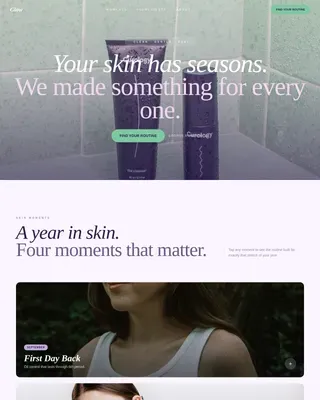
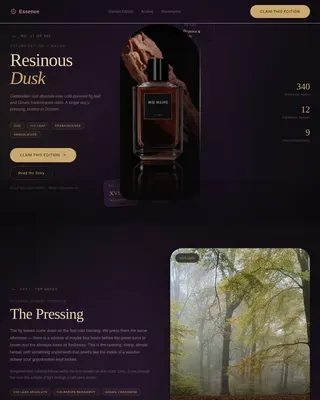
Tsuki is a modular card grid landing page template built for Japanese botanical skincare brands. It simulates an unboxing scroll experience, revealing a hero product trio, prefecture-mapped ingredient stories, and a freemium trial form. The Lavender Dream color system, editorial typography, and scroll-linked animations work together to earn trust before the first call to action appears.
by Rocket studio
Quick summary
Tsuki is a single-page landing page template designed for Japanese beauty brands running a freemium or trial-kit conversion model. It uses a modular card grid layout to walk visitors through an unboxing journey, from the first cinematic hero shot to handwritten testimonial cards and a qualifying trial form. Every section is built to slow the visitor down and let the product story do the work.
Who this template is for
This template suits founders and marketers who sell thoughtful, ingredient-led skincare rooted in Japanese formulation. It is equally useful for a solo brand launching a debut ritual kit or a small team preparing a seasonal product drop.
- Direct-to-consumer skincare brands targeting post-K-beauty audiences and minimalist buyers
- Gift-focused beauty stores wanting a landing page that feels precious without loud luxury signaling
- Brand builders who plan to lead with a free trial offer before asking for a full purchase
What problem this template solves
Many beauty landing pages sell the product before the visitor is ready to trust it. Tsuki solves this by letting the scroll story earn that trust first. By the time the call to action appears, visitors have already mentally unboxed the kit.
- Visitors bounce when a page feels generic; Tsuki's cinematic structure gives them a reason to stay and keep watching
- Brands struggle to communicate subtle, ingredient-driven value; the flip-card grid and prefecture origin details make that story visible
- A flat product page cannot convey texture, ritual, or scent; Tsuki's sensory-moment sections and animation patterns address that gap
What you get with this template
You get a complete, single-page layout built around a deliberate unboxing scroll movement. Each section is a distinct moment that deepens the visitor's connection with the product before asking for anything.
- A hero section with a lifestyle shot composition, Japanese vertical logotype fade-in, and a primary "Try the Ritual Free" call to action
- A modular card grid with flip interactions, a ritual steps row, full-bleed sensory moments, handwritten-style testimonial cards, and an animated "What's Inside" breakdown
- A trial conversion form capturing name, shipping address, and a single qualifying question with a secondary "Build a Full Box" path for purchase-ready visitors
Feature list
This template's features are drawn directly from its brief. Each one serves a specific role in moving a visitor from curious to committed.
Scroll-Linked Unboxing Animation
The scroll experience simulates peeling back tissue paper layer by layer. Each card row appears as if it is being lifted from a curated parcel. This pacing mirrors the calm, unhurried character of Japanese ritual and keeps visitors engaged through the full page.
Flip Card Product Grid
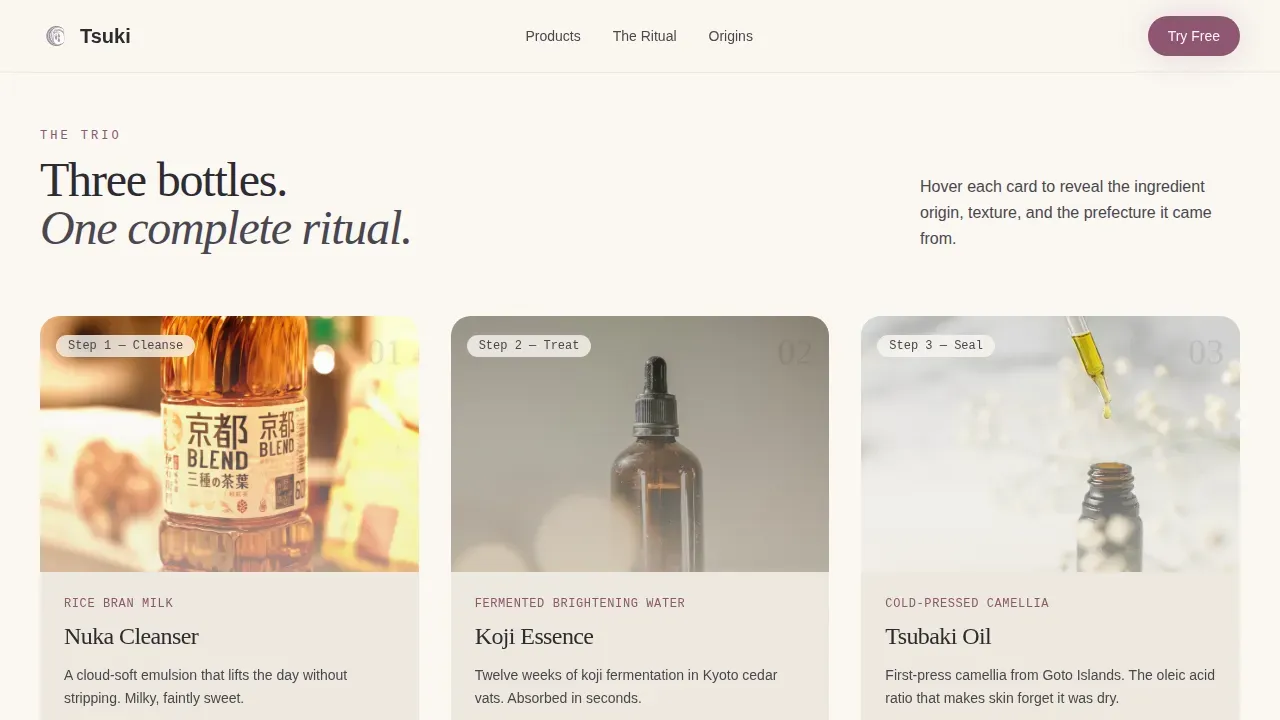
The hero trio row, featuring the rice bran cleanser, fermented essence, and camellia oil, uses hover-activated flip cards. The front face shows the product. The back reveals texture swatches, ingredient origins mapped to Japanese prefectures, and ritual step numbers. This detail-first approach speaks directly to visitors who read ingredient lists before making any decision.
Sensory Moment Sections
Between tight two-column grids, the template opens into full-bleed visual breaks. These include a macro shot of rice ferment, a slow video of oil dropping into a palm, and other tactile references. These moments let the page breathe and give the visitor a pause similar to the cedar-scented moment before lifting the first bottle from a Kyoto parcel.
Freemium Trial Conversion Form
The primary call to action offers a three-product sample kit for shipping cost only. The form captures name, shipping address, and one casual qualifying question about the visitor's current routine. A secondary path lets visitors move directly to a full-box purchase. This split keeps the page useful for both browsers and buyers.
Handwritten Testimonial Cards
Social proof appears as handwritten-style cards that feel personal and earned rather than corporate. The template also references a "2,400 ritual kits sent" metric to reinforce credibility. Clear and concise product details alongside real customer voices build the kind of trust that polished brand copy alone cannot complete.
Animated What's Inside Breakdown
A dedicated section animates each product lifting out of an illustrated box. This gives visitors a clear, visual inventory of what arrives in the trial kit. It answers the practical question before they fill in the form and removes the hesitation that comes from not knowing exactly what they will receive.
Page sections overview
| Section | Purpose |
|---|---|
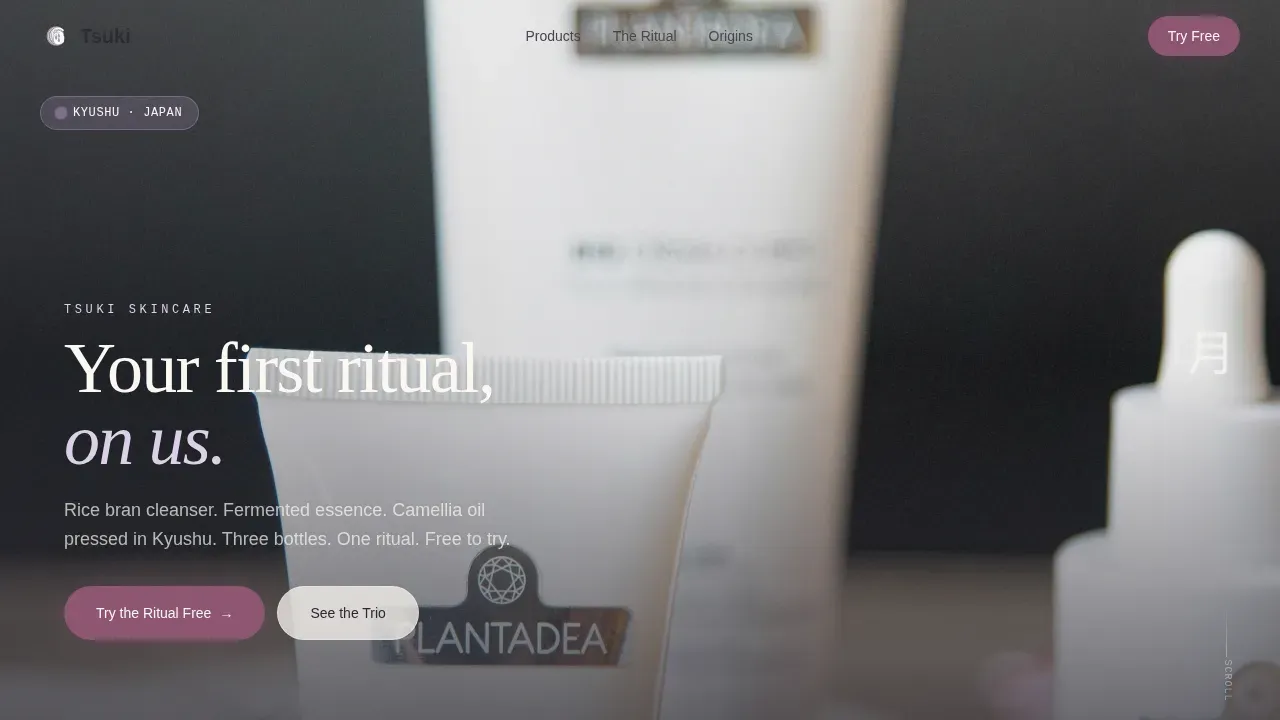
| Hero Lifestyle Shot | Introduces the brand mood with a cinematic overhead image, vertical Japanese logotype fade-in, and the primary trial call to action |
| Product Trio Grid | Presents the three hero products in a flip-card modular grid with texture swatches and prefecture ingredient origins on the reverse |
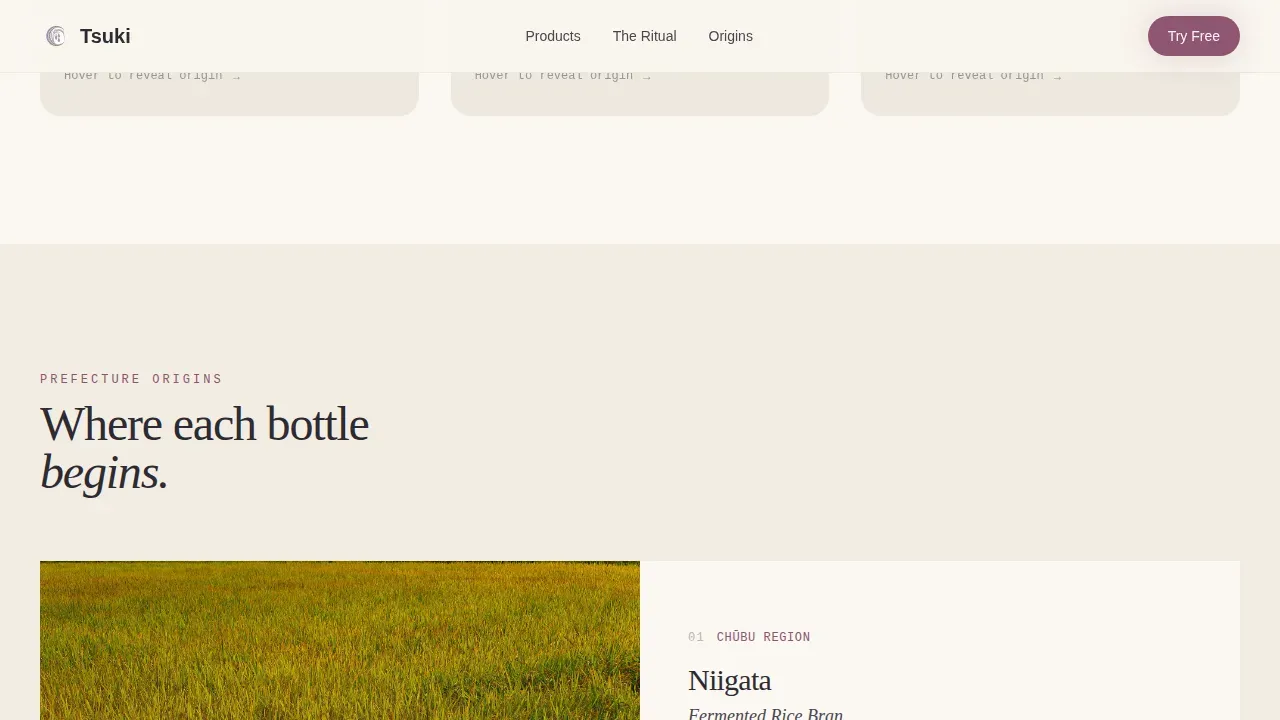
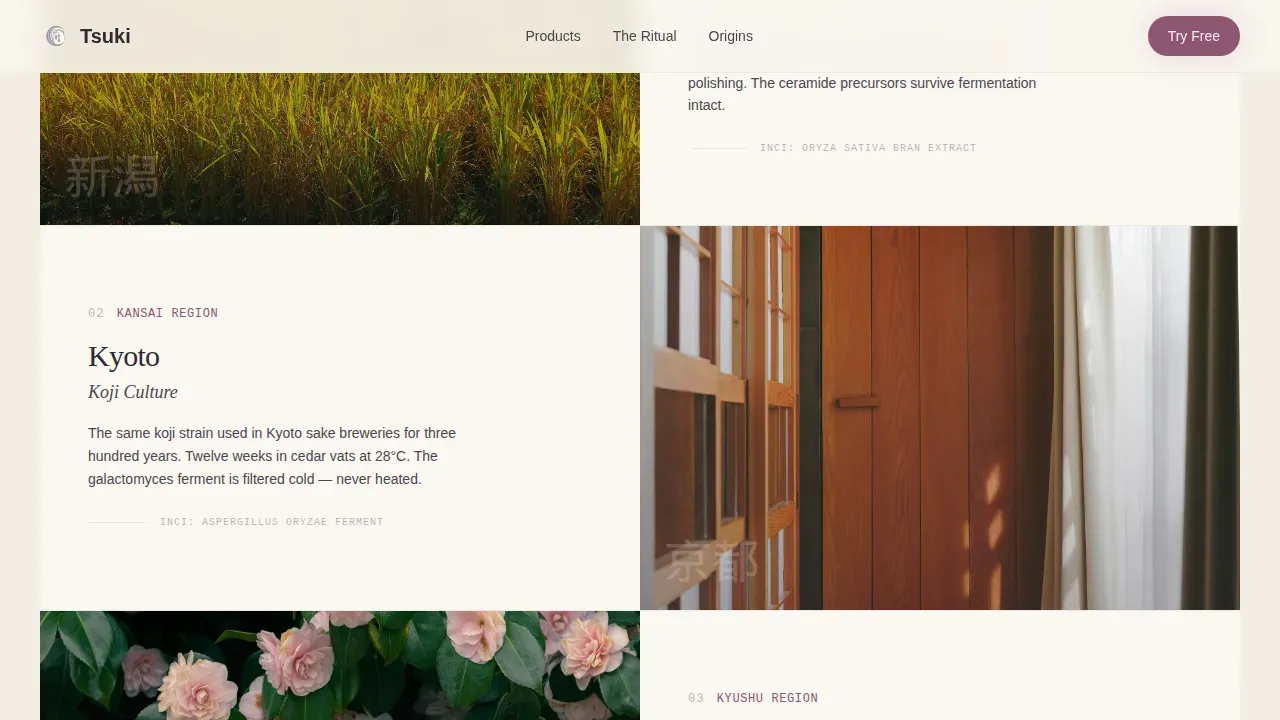
| Ritual Steps Row | Explains the three-step ritual sequence with ingredient origins mapped to specific Japanese prefectures |
| Sensory Moments | Full-bleed visual breaks including macro product photography and an oil-drop video to communicate texture and craft |
| Testimonial Cards | Handwritten-style social proof cards and the 2,400 kits sent metric to establish trust and credibility |
| What's Inside Breakdown | Animated product lift-out illustration showing exactly what arrives in the trial kit |
| Trial Conversion Form | Name, address, and qualifying question form with a secondary Build a Full Box path |
| Footer Arc Split | Logo and tagline on the left, navigation links on the right, and social icons in a Pattern 7 Arc Browser Split layout |
Design & branding system
The visual identity follows the Lavender Dream color system. Soft wisteria, shoji screen white, ink stone charcoal, and warm plum create a palette that feels like late afternoon light falling through a wisteria trellis. The style sits at the intersection of wabi-sabi minimalism and editorial luxury, a modern sensibility grounded in traditional Japanese aesthetics.
- Colors: soft wisteria (#C4A6D6) as the primary tone, shoji white (#FAF7F2) for backgrounds, ink charcoal (#2D2A32) for typography and borders, warm plum (#8E5572) for hover states and call-to-action elements
- Typography: Fraunces serif for editorial headings, DM Sans for body and interface text, IBM Plex Mono for ingredient labels and origin details, creating a layered type system with clear visual hierarchy
- Motion and texture: scroll-linked tissue reveals, staggered card animations, CSS transform-only GPU rendering, and Intersection Observer triggers for clean, performant reveals
Mobile & speed optimization
The template is designed desktop-first with a strong mobile adaptation. The cinematic unboxing scroll experience translates to touch-based devices through careful layout reflow and retained animation logic.
- Lazy image loading is built into the image grid to keep the page responsive as heavy lifestyle photography loads progressively
- CSS transforms handle all animation states, keeping rendering on the GPU and avoiding layout shifts during scroll interactions
- The qualifying form and flip-card grid reflow cleanly for narrower viewports, so mobile visitors experience the same story flow without missing key details
How this template helps you convert
Tsuki does not ask for the sale at the top of the page. It earns the click by letting visitors experience the full story first. By the time the trial form appears, the visitor has already made the emotional decision.
- The scroll sequence builds desire in stages, first through sensory mood, then through ingredient specificity, then through social proof, so the call to action feels like a natural next step rather than an interruption
- The qualifying question ("What does your current routine look like?") functions as a low-friction filter that makes visitors feel understood rather than sold to, increasing the likelihood they complete and submit the form
Other information about this template
This template draws on a rich tradition of Japanese moon lore and craft to inform its visual and narrative character. Japan has a tradition called Tsukimi, which involves moon viewing and appreciating the beauty of the full harvest moon. Tsukimi dango, or mooncakes, are eaten during Tsukimi celebrations and represent the full moon. Japan celebrates two moon viewing nights: the full moon on the fifteenth night and the imperfect moon on the thirteenth night. The moon holds deep cultural significance across many episodes of Japanese history and folklore. In Japanese culture, it is considered bad luck to point at the moon, as it is believed to insult the moon deity. The moon is also associated with various superstitions in Japan, including beliefs about newborns and moonlight.
The tradition of moon viewing was imported from China during the Heian era, with the first recorded moon viewing banquet held at the Imperial Court in 909 CE. This history from China spread across Japanese culture and eventually became one of Japan's most beloved seasonal rituals. The moon remains a central character in poems, stories, and seasonal celebrations across Japan to this date.
The template name Tsuki means "moon" in Japanese, and this meaning runs through its design and narrative system. The gold tones referenced in the color vocabulary, including warm color gold details in call to action buttons and logotype treatments, echo the gold light of a harvest moon on a clear night. This gold appears visible throughout the design as a warm accent that complements the soft wisteria primary palette. The moon's glow, like the sun at dusk, informs every tonal decision in the Lavender Dream system.
Traditional Japanese beauty tools reflect a deep cultural heritage and attention to detail, with craftsmanship techniques passed down through generations. Japanese combs, such as the Tsuki Gold Comb, are designed to reduce friction and preserve hair health. Their ergonomic character and high-quality materials make them an example of functional beauty that has stood the test of age. This same philosophy, that beauty tools and rituals should shine through their precision and care, informs the tone of the Tsuki template.
The brand name Tsuki appears in the full template title: the tsuki ritual unboxing japanese beauty landing page template. Tsuki is built for modern direct-to-consumer stores that want to communicate the complete story of their formulations without noise. It suits brands that plan to spread their product story through a deliberate, sensory-led experience rather than through loud promotional patterns.
- The template references Japanese culture through typography (vertical Japanese logotype, kanji details), prefecture-level ingredient mapping, and a scroll narrative inspired by the unboxing rituals of Japanese gift-giving
- Brands interested in the freemium trial model will find the qualifying question form and dual-path conversion structure ready to accept and route both trial seekers and full-box buyers
- The footer follows Pattern 7 (Arc Browser Split) with logo and tagline on the left, navigation links on the right, and social icon clusters
Theme
Marketplace Grid
Creative direction
Unboxing Experience
Color system
Lavender Dream
Style
Card Grid (Modular)
Direction
Freemium/Trial
Page Sections
Scroll-linked Unboxing Animation
Flip Card Product Grid
Full-bleed Sensory Moments
Freemium Trial Conversion Form
Handwritten Testimonial Cards
Animated What's Inside Breakdown
Related questions
Who is this landing page template best suited for?
Can I customize the colors and typography?
Does the template include the trial form and qualifying question?
What animation and interaction features are included?
Is this template suitable for mobile visitors?