Renewable Energy Company Cost Calculator Website Template
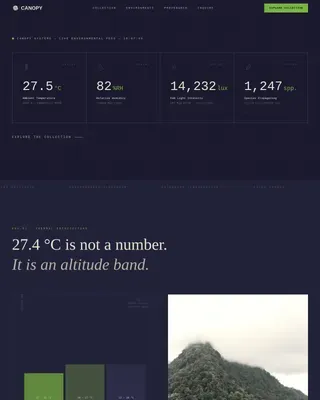
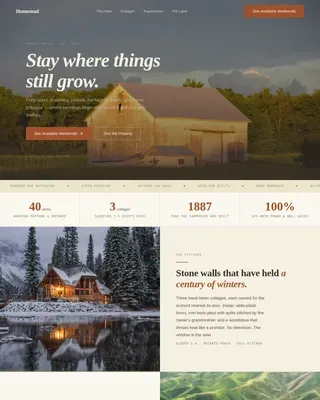
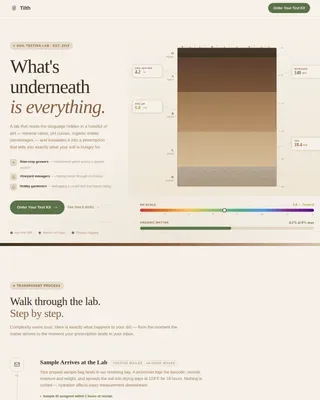
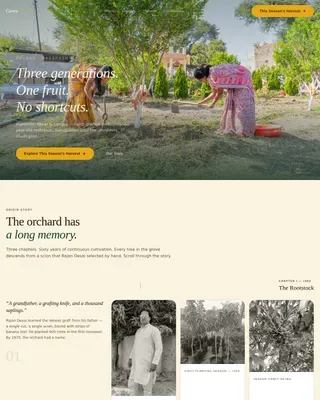
Ferment is a zigzag-layout biogas energy landing page template built for waste-to-energy operators, dairy farmers, and municipal waste managers. It pairs an industrial-botanical visual identity with a seasonal narrative scroll, an ungated biogas calculator, and a gated feedstock guide download form. The result is a credible, lead-generating page that earns trust before it asks for contact details.
by Rocket studio
Quick summary
Ferment is a single-page biogas energy landing page template designed for operators in the biomass and biogas industry. It follows a seasonal documentary scroll, alternating photographic panels with data callouts across four agricultural seasons. A built-in biogas calculator gives value before the gated feedstock guide form asks for anything. The design is raw, editorial, and rooted in real working-site aesthetics.
Who this template is for
Ferment is built for businesses and operators who turn organic waste into measurable energy output. It speaks directly to people whose daily reality involves feedstock logistics, digester performance, and waste disposal costs. The template tailors its message to three distinct operator types, so every visitor feels the content was written for them.
- Dairy farmers managing large amounts of slurry and looking to reduce energy costs through on-site biogas production
- Municipal waste managers chasing landfill diversion targets and needing a credible resource to attract processing partners
- Food processors paying to haul away pomace, spent grain, or other organic waste streams that could instead fuel their own heating systems
What problem this template solves
Biogas plant operators and waste-to-energy developers face a consistent communication gap. The science of anaerobic digestion is compelling, but it rarely reaches the right audience in a format that is easy to trust and act on. Generic landing page designs fail to reflect the grit and credibility of a real working biogas plant. Ferment fixes that.
- Visitors leave without understanding what the biogas production process actually delivers in measurable terms, so this template anchors every section to real data: gas output curves, carbon offset tonnage, and digestate nutrient profiles
- Operators struggle to segment their pitch across dairy, municipal, and food-processing audiences, so the three-step gated form qualifies each lead by operation type and annual waste volume before collecting an email
- Prospects want proof of value before committing contact details, so the ungated biogas calculator lets them input their feedstock mix and see estimated kilowatt-hour output instantly
What you get with this template
Ferment delivers a fully structured, conversion-ready landing page built around the biogas production cycle. Every section has a defined job: attract, educate, qualify, convert. The template ships with layout, typography, color system, animation direction, and section copy framework all resolved.
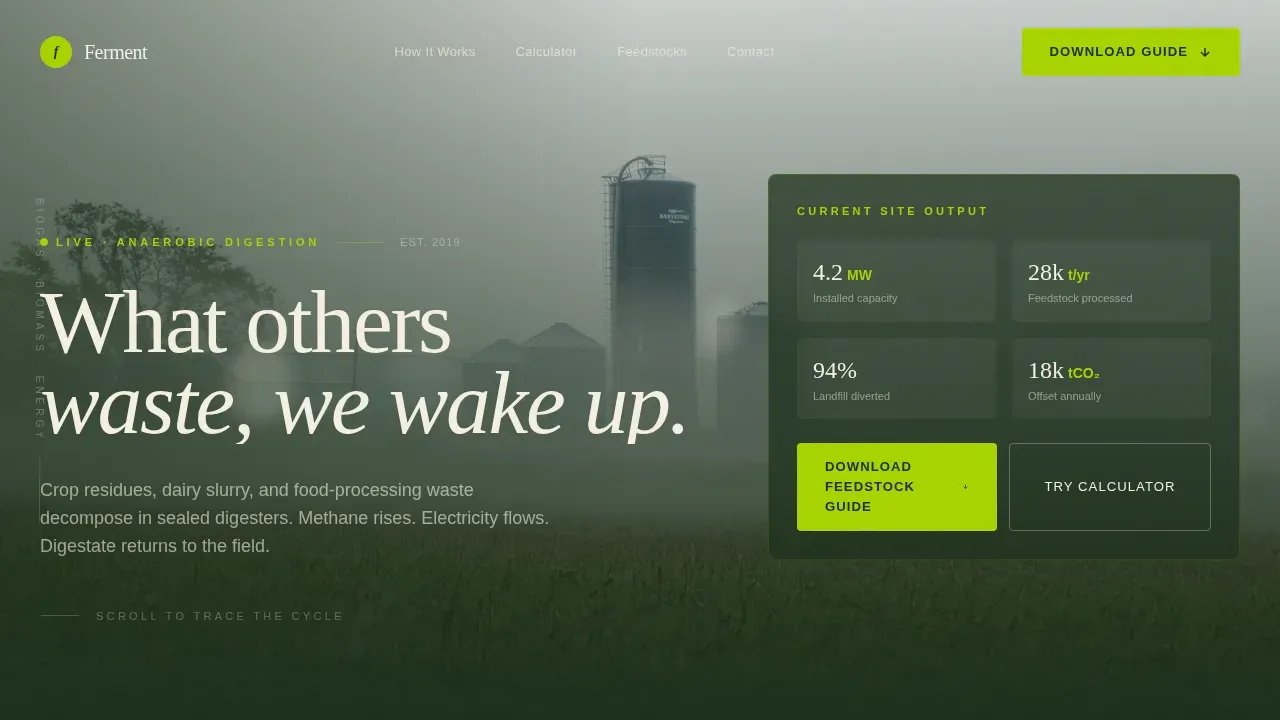
- A cinematic hero section with a dawn site photograph concept, theatrical headline reveal, and a glass call-to-action card anchored by the line "What others waste, we wake up"
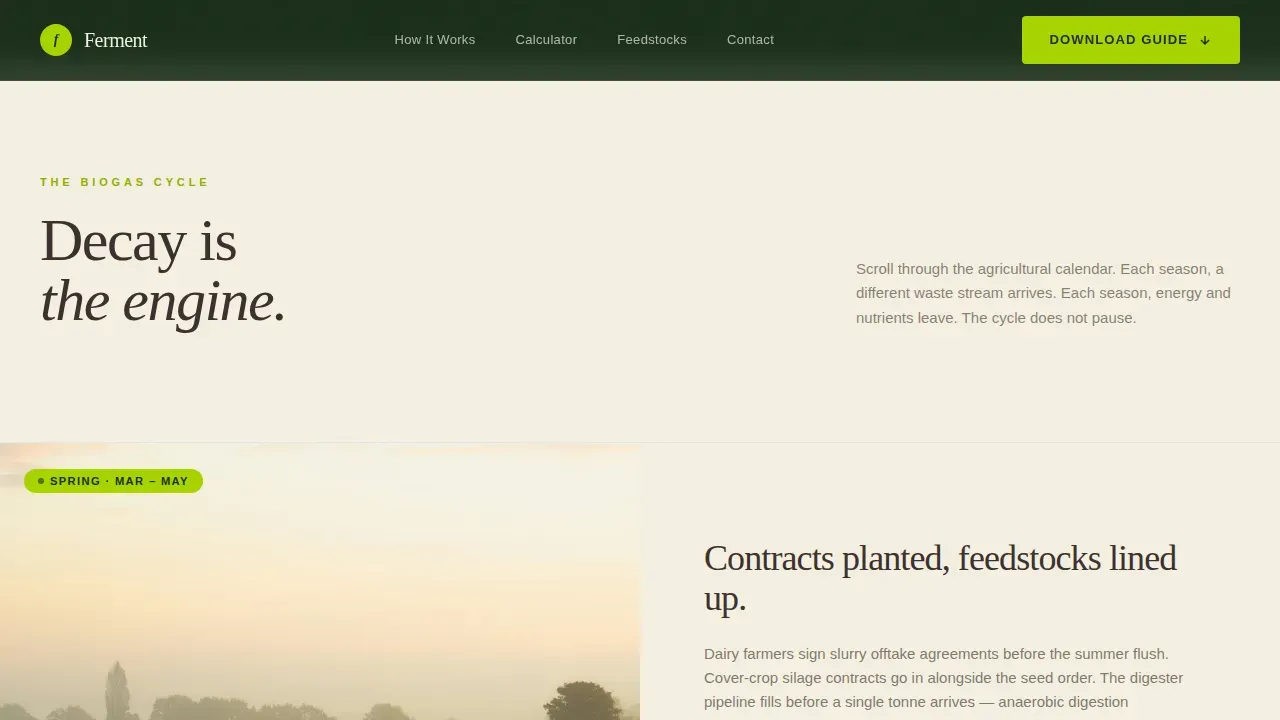
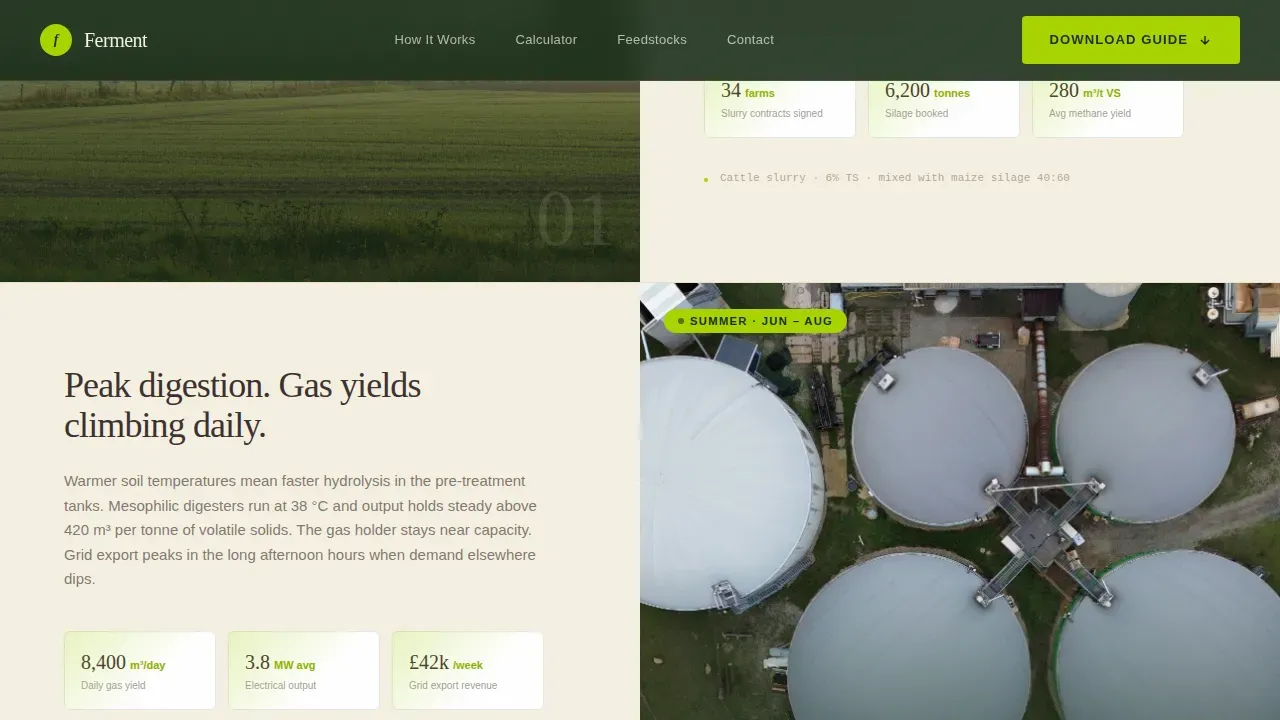
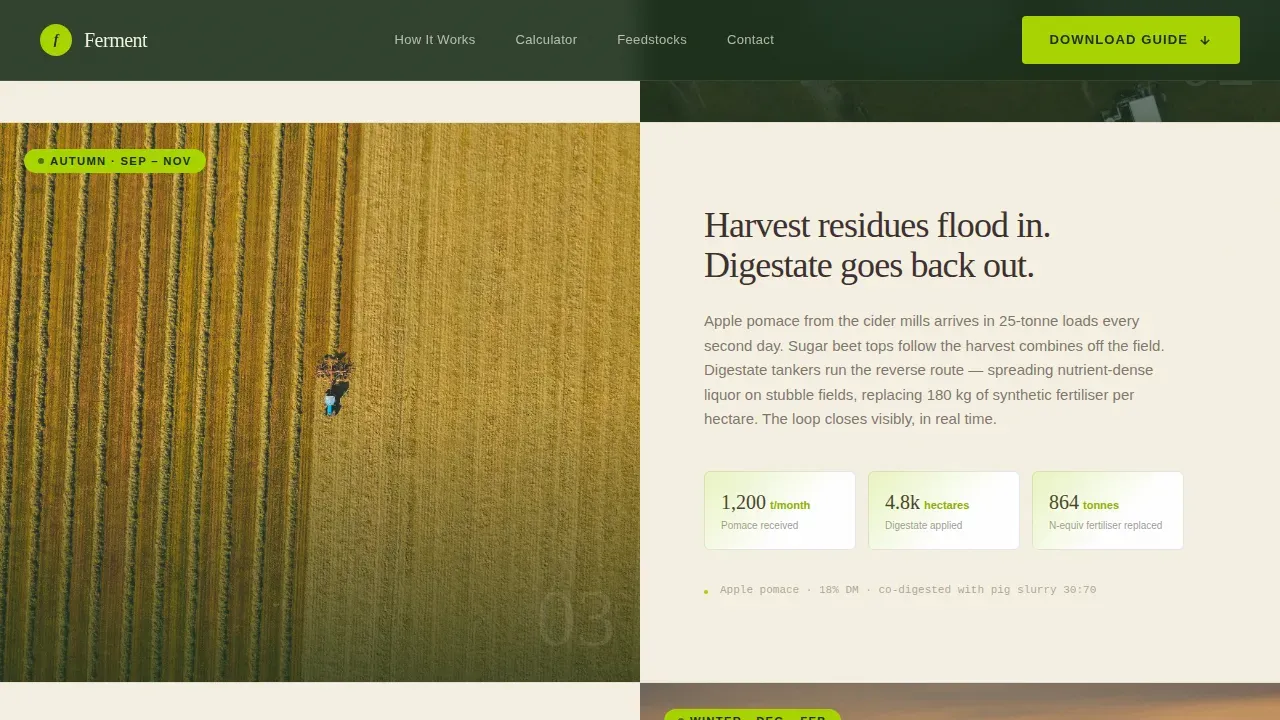
- Four zigzag seasonal sections mapped to Spring, Summer, Autumn, and Winter, each pairing a left- or right-aligned seasonal photograph with a right- or left-aligned data panel showing gas yields, carbon offset figures, and digestate profiles
- A three-step gated form that collects operation type, annual waste volume range, and email in sequence, then delivers a PDF comparing gas yields per tonne across twenty common feedstock substrates
Feature list
Ferment is structured around six core capabilities that work together to educate, qualify, and convert biogas industry visitors.
Seasonal Zigzag Narrative Layout
The template uses a four-panel zigzag structure mapped to the agricultural calendar. Spring covers feedstock collection and contract signing. Summer shows peak anaerobic digestion and climbing gas yields. Autumn brings harvest residues and digestate spreading. Winter demonstrates stored energy carrying demand through peak periods. Each panel alternates a seasonal photograph with a data panel, so the visitor experiences time passing and value compounding as they scroll.
Ungated Interactive Biogas Calculator
An embedded calculator lets visitors input their feedstock mix and see estimated kilowatt-hour output before any form appears. This ungated tool gives genuine value immediately. It demonstrates how different organic materials, from animal manure to food waste to crop residues, produce biogas at different rates. The calculator builds trust and makes the gated feedstock guide feel like a natural next step rather than a barrier.
Three-Step Segmented Lead Form
The gated download form qualifies leads progressively. Step one asks for operation type: farm, municipality, or processor. Step two asks for annual waste volume range. Step three collects email. This sequence means every lead arrives pre-segmented, which helps operators tailor follow-up communication to each audience. The downloadable PDF compares gas yields per tonne across twenty common substrates, giving the guide genuine standalone value.
Industrial-Botanical Visual System
The color system pairs deep loam brown and anaerobic black-green for backgrounds with new-shoot chartreuse for call-to-action elements and data callouts, and mycorrhizal cream for breathing space between dense sections. Fraunces display serif handles headlines, bringing editorial weight to data-heavy panels. DM Sans covers body copy, keeping technical information readable at any size. The result is a visual identity that feels like a real biogas plant site, not a stock-photo brochure.
Proof Strip with Social Metrics
A dedicated proof strip carries carbon offset tonnage, digestate nutrient profile data, and client type badges for dairy, municipal, and food-processing operators. These metrics are displayed as animated counters, so the numbers feel live rather than static. The strip functions as a credibility anchor between the calculator and the download form, reinforcing that the biogas production data behind this operation is real and verifiable.
GSAP ScrollTrigger Animation System
The template uses GSAP ScrollTrigger reveals throughout. Section panels fade and slide into view as the visitor scrolls. The marquee in the proof strip runs continuously. Counter animations fire when the proof strip enters the viewport. The calculator responds reactively as inputs change. These animations are designed to feel purposeful rather than decorative, guiding attention toward data callouts and call-to-action elements at each stage of the scroll.
Page sections overview
| Section | Purpose |
|---|---|
| Hero Dawn Shot | Establish site credibility and deliver the headline reveal with a glass call-to-action card |
| Spring Feedstock Panel | Show feedstock collection, contract context, and cover crop planting data |
| Summer Digestion Panel | Display peak anaerobic digestion performance and climbing gas yield curves |
| Autumn Harvest Panel | Present harvest residue intake volumes and digestate field-spreading data |
| Winter Storage Panel | Demonstrate stored energy output and grid contribution during demand spikes |
| Biogas Calculator | Let visitors estimate kilowatt-hour output from their own feedstock mix, ungated |
| Feedstock Guide Form | Gate the substrate PDF behind a three-step operation-profiling form |
| Proof Strip | Display carbon offset metrics, digestate profiles, and client type badges |
| Footer | Linear single-row footer with navigation and contact anchors |
Design & branding system
Ferment uses an industrial-botanical visual language that makes decay feel like productivity. The palette was chosen specifically to reflect the biogas production environment: darkness that feeds brightness, decomposition as the precondition for color. Every color plays a structural role, not just a decorative one.
- Background sections use deep loam brown (#3B2F2F) and anaerobic black-green (#1A2E1A), grounding the layout in the physicality of a real digester site
- Chartreuse (#A8D400) fires up call-to-action buttons, data callouts, and counter figures, making yield numbers and download prompts impossible to miss
- Mycorrhizal cream (#F5F0E1) creates open space between dense data panels, giving the eye room to process before the next section loads
Mobile & speed optimization
Ferment is built desktop-first, reflecting the reality that dairy farmers, waste managers, and food processors typically research biogas plant options on desktop browsers during working hours. Full mobile responsiveness is included so the page holds together at every screen size.
- The zigzag layout stacks vertically on smaller screens, preserving the seasonal narrative and keeping photograph and data panel pairs readable without horizontal scrolling
- Server Components handle all static sections, including the hero, seasonal panels, proof strip, and footer, keeping the page load lean while Client Components manage the interactive calculator and multi-step form
How this template helps you convert
Ferment is structured around a content-first conversion model. It gives value at every stage before asking for anything, so when the download form appears, it feels like a logical deepening rather than a demand.
- The ungated biogas calculator delivers immediate, personalised output estimates based on the visitor's own feedstock mix, making the page useful from the first interaction and establishing the operator's technical credibility before any form appears
- The three-step segmented form collects operation type and waste volume before email, so the lead arrives pre-qualified and the gated feedstock guide, comparing gas yields per tonne across twenty substrates, feels like a reward rather than a toll
Other information about this template
Ferment sits at the intersection of the Agriculture and Environment category and the Renewable Energy Company subcategory, with a specific niche focus on the biomass and biogas industry. The template is built to communicate the full economic and environmental case for biogas production.
- Biogas production helps reduce greenhouse gas emissions by converting organic waste into renewable energy, and this template structures that message with data-backed callouts rather than vague claims
- The anaerobic digestion process used in biogas production recycles organic materials, turning them into energy and digestate, and the seasonal panels make that process visible and tangible for non-technical visitors
- Biogas systems can reduce operational costs by using organic waste streams to power equipment and buildings, and the calculator section makes that saving concrete before the visitor reaches the form
- Biogas can be refined to natural gas standards and used as vehicle fuel, or upgraded to renewable natural gas (RNG, meaning biomethane suitable for injection into the natural gas grid), and the template can accommodate these use cases in the data panels
- The digestate produced from anaerobic digesters can be marketed as organic fertilizer, creating additional revenue streams beyond electricity sales, and the proof strip section includes digestate nutrient profile data to support that claim
- Biogas can power generators to produce electricity, generating revenue in two ways: selling electricity back to the grid and earning carbon credits traded on various platforms
- Turning waste into fuel through the process called anaerobic digestion involves four stages: hydrolysis, acidogenesis, acetogenesis, and methanogenesis, and incorporating diagrams of the anaerobic digestion process into the seasonal panels enhances visual appeal for technical visitors who want to delve deeper
- During the biogas production process, microorganisms break down organic matter inside sealed anaerobic digesters in an oxygen free environment, producing biogas as a by-product that contains primarily methane and carbon dioxide, along with traces of water vapor and hydrogen sulfide that require pre treatment and water scrubbing before the gas is usable
- Feedstock collection draws from agricultural waste such as crop residues from wheat fields, animal manure, food waste, sewage sludge, and wastewater treatment plant outputs, and the downloadable feedstock guide covers twenty common substrates with gas yield data per tonne
- Maintaining an optimal pH level between 6.8 and 7.5 and managing retention time are essential parameters for bacterial health in biogas production, and this technical depth can be surfaced through the data panels for visitors who want to understand the science
- Carbon credits serve as an additional revenue source for any biogas plant, and the proof strip is designed to display carbon offset tonnage alongside digestate profiles and client badges
- Biogas production templates like Ferment give the biogas industry a solid foundation for communicating complex concepts in structured, visual formats that streamline operations and reduce the time needed to build compelling pitch materials
- This template is compatible with Google Slides adaptation workflows, and a PowerPoint template version can be derived from the same design system for use in investor presentations, feasibility briefings, and stakeholder workshops where static slide decks are preferred over live web pages
- Environmental educators and renewable energy consultants can also use the Google Slides and PowerPoint template layouts to explain the anaerobic digestion process, biogas production mechanics, and emission reductions to policy audiences or community groups
- Eco friendly practices, sustainable energy solutions, and a commitment to a more sustainable future are embedded in the page narrative rather than treated as slogans, reflecting a genuine operational philosophy rather than marketing language
- Building new biogas systems is projected to create large amounts of employment opportunity, including over 335,000 temporary construction roles and 23,000 permanent jobs, making the economic case for biogas production relevant to policy makers as well as private operators
- Climate change mitigation through methane emissions capture, the displacement of fossil fuels, and the delivery of a cleaner alternative to landfill or incineration are all narratives the template supports with data-driven callouts and proof metrics
Theme
Garden & Growth
Creative direction
Seasonal/Moment
Color system
Botanical
Style
Zigzag/Alternating
Direction
Content/Resource
Page Sections
Seasonal Zigzag Narrative Scroll
Ungated Interactive Biogas Calculator
Three-step Segmented Lead Capture Form
Industrial-botanical Color and Typography System
Proof Strip with Animated Metrics
GSAP Scrolltrigger Animation Framework
Related questions
What types of feedstock does this template focus on?
Does the biogas calculator require the visitor to submit their email?
Can this template communicate the financial case for a biogas plant investment?
Is this template suitable for a municipal waste management operator as well as a dairy farmer?
What animation and interactivity does this template include?