Mexican Dining Professional Website Template
Mesa is a luxe minimal Mexican tasting menu landing page template built for fine-dining restaurants ready to sell twelve-course experiences through immersive storytelling. The modular card grid design, warm sunset palette, and scrapbook header make every section feel like a travel journal. Visitors taste the story before they ever see the reservation form.
by Rocket studio
Quick summary
Mesa is a single-page, card-grid landing page template built for a Mexican tasting menu experience. It pairs a Collage/Scrapbook header with an Origin Story scroll to turn a restaurant menu into a narrative journey. The design earns the reservation click by leading with food, memory, and place before ever asking for a date or email.
Who this template is for
This template is built for restaurant owners, chefs, and event hosts who sell high-touch dining experiences. It speaks directly to businesses where the story behind the dishes matters as much as the food itself.
- Fine-dining Mexican restaurant teams launching a tasting menu or seasonal event
- Corporate event hosts who need to impress visiting partners with a polished, bookable experience
- Anniversary dining concepts where customers expect something personal, not just a restaurant menu PDF
What problem this template solves
Most restaurant menu pages bury the emotional hook. A generic menu design lists dishes without context, and customers click away before the reservation form ever loads. Mesa fixes this by letting the food and its origins do the convincing first.
- A standard restaurant menu template cannot convey a twelve-course story or regional origin across ten Mexican states
- Visitors need to feel something before they commit to a high-ticket booking, and flat menu templates do not build that trust
- Without thoughtful design, the gap between "interesting restaurant" and "I will reserve a seat tonight" stays wide
What you get with this template
Mesa delivers a complete, ready-to-launch landing page structure. Every section is pre-designed so you can customize the content without needing graphic design skills.
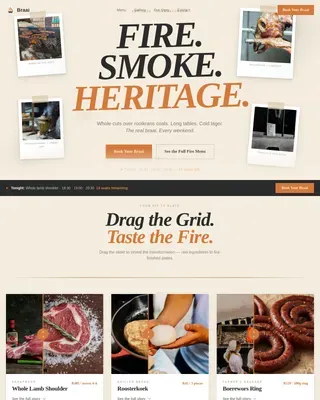
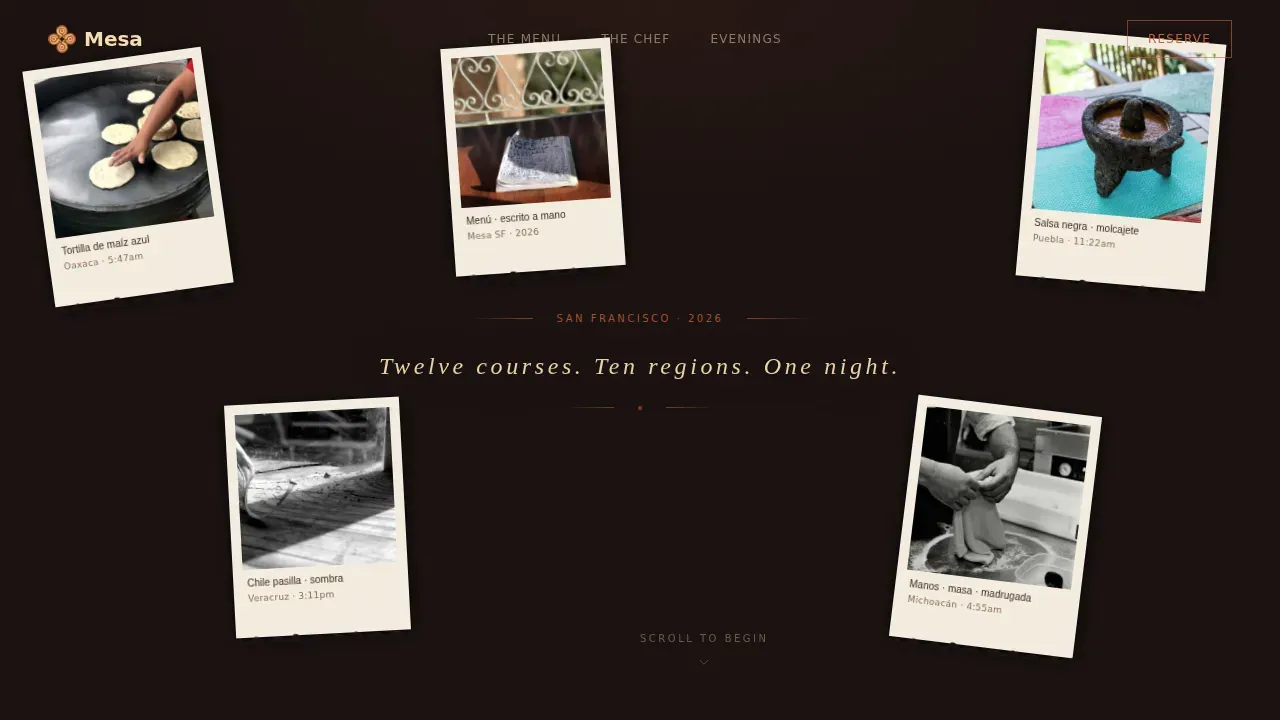
- A Polaroid scrapbook hero header with overlapping, angled cards and a tagline that materializes after the eye wanders the collage
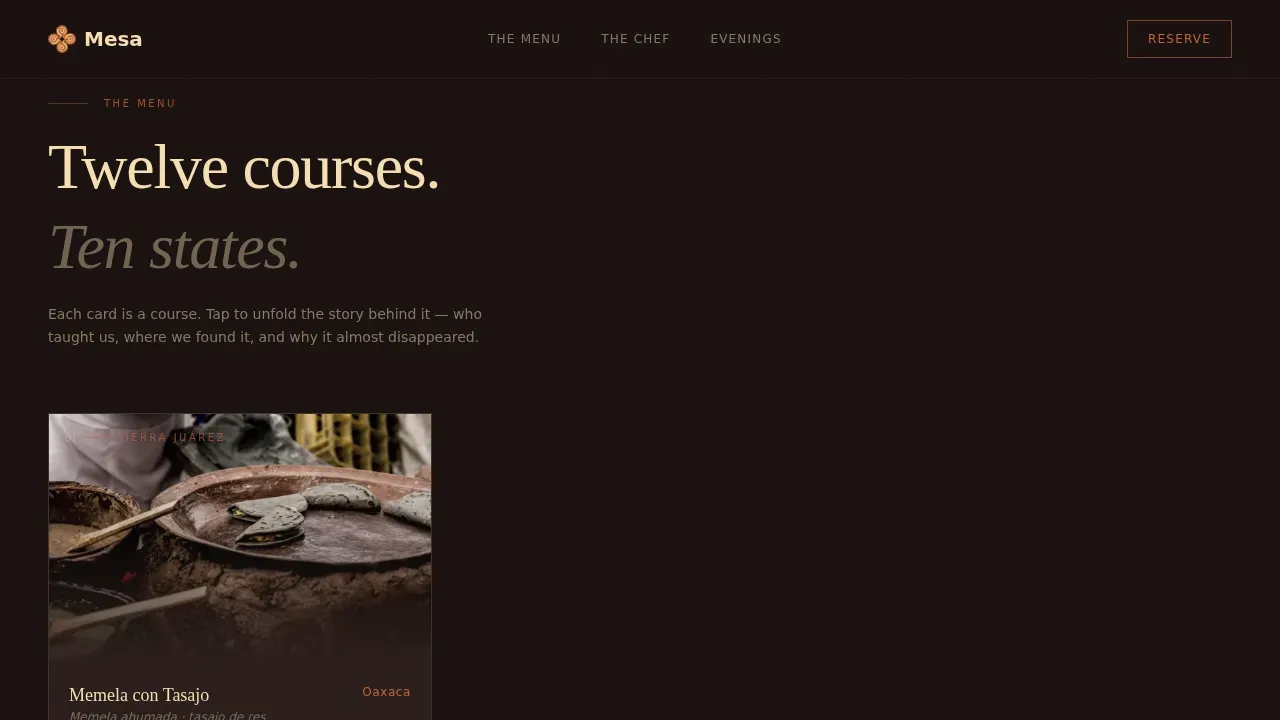
- A modular bento card grid where each card maps to a Mexican state and course, with a flip interaction that reveals the origin story
- A reservation section with a date selector, party-size field, dietary notes input, a primary "Reserve Your Seat" call to action, and a secondary "Gift This Experience" path
Feature list
A paragraph introducing the features: Mesa's features are drawn directly from its core purpose, converting curious visitors into confirmed reservation holders through design and storytelling working together.
Polaroid Scrapbook Hero Header
Five overlapping Polaroid-style cards sit at gentle angles across the viewport. Each card shows a food or kitchen image with a torn-edge texture and a faint timestamp. A single tagline materializes in the center gap only after the eye has had a beat to wander. The header sets the tone without using a single word of sales copy.
Modular Course Card Grid
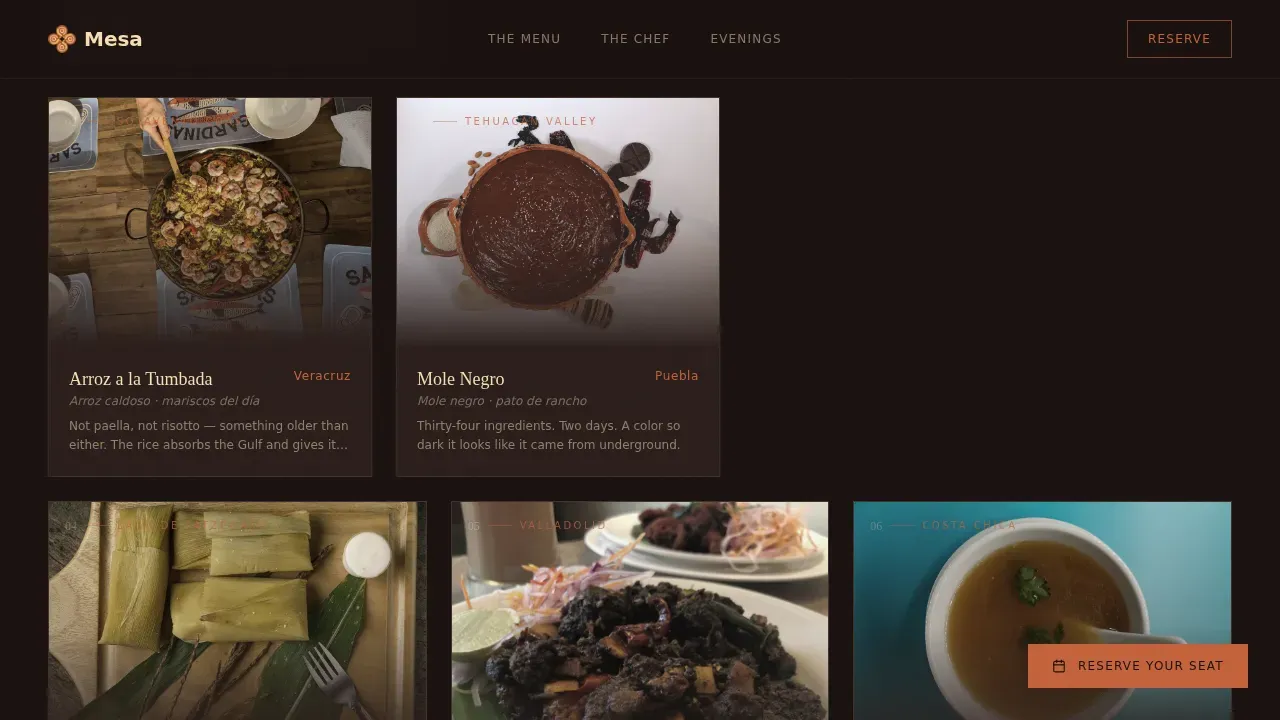
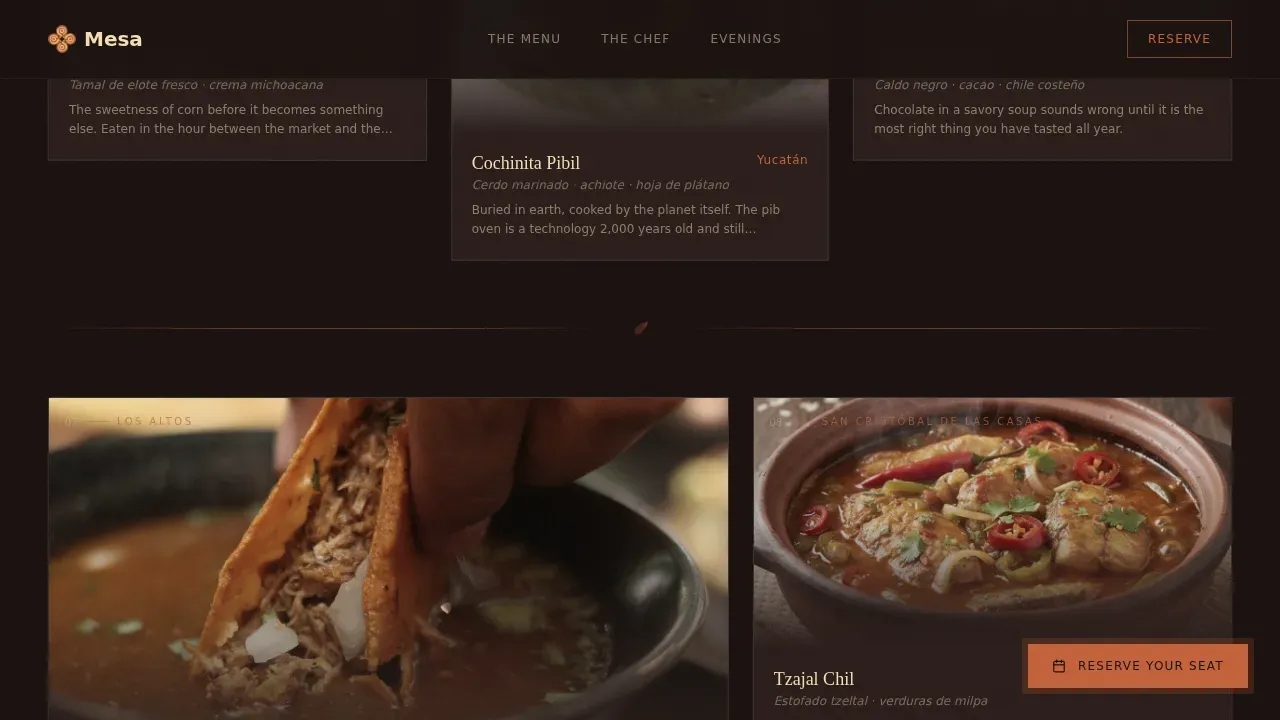
Each card in the grid represents one course tied to a specific Mexican state. The grid starts sparse and grows in clusters, mirroring how the tasting menu itself builds from a single amuse-bouche to shared plates. Cards flip or expand to display a short origin-story paragraph about who taught the chef the dish.
Floating and Anchored Reservation calls to action
The primary "Reserve Your Seat" button appears first as a floating element after the third card row. It then anchors again at the bottom of the page. This two-point placement means the invitation to book arrives only after visitors have already engaged with the menu story.
Travel Journal Chef Section
A dedicated chef origin section reads like chapters in a travel journal. It builds credibility by sharing which regional hands shaped each dish and why certain preparations disappeared from modern restaurant menus. The section uses narrative, not bullet points, to hold attention.
Bento Testimonial Grid
Three social proof blocks sit in an asymmetric bento-style grid. Each testimonial includes a named voice, an occasion context, and a city of origin. This gives prospective customers specific, believable reference points rather than generic praise.
Minimal Reservation Form
The booking form includes a date selector showing only available evenings, a party-size field for groups of two to eight, an open dietary notes field, and an email input. A secondary call to action for gifting the experience sits directly below the primary button, capturing a second buyer intent without cluttering the design.
Page sections overview
| Section | Purpose |
|---|---|
| Hero Scrapbook Collage | Opens the experience with overlapping Polaroid cards and a delayed tagline reveal |
| Courses Card Grid | Displays each course as a flippable card tied to a Mexican state and origin story |
| Chef Origin Story | Builds credibility through a travel-journal narrative about regional culinary roots |
| Testimonials Bento Grid | Shares named guest voices across occasion types to build trust |
| Reservation Form | Captures booking details with date, party size, dietary notes, and email |
| Page Footer | Displays logo and tagline on the left with navigation links on the right |
Design & branding system
Mesa uses a Sunset Gradient color system built around four warm tones. The palette feels like watching the sky move from ember to honey to darkness over a Oaxacan sierra. Typography combines a serif display face with a clean body typeface to balance warmth with legibility.
- Colors: burnt maguey black (#1A1110) for backgrounds, adobe clay (#C4623A) as the primary tone, ripe papaya (#E8913A) as an accent, and pale mezcal gold (#F5DEB3) as a luminous highlight on hover states and card borders
- Typography: Fraunces for display headings, DM Sans for body copy
- Graphic elements including icons and illustrations carry a scrapbook and travel-journal texture throughout, while the gradient appears sparingly on cards as they enter the viewport
Mobile & speed optimization
Mesa is designed desktop-first to match the anniversary and corporate booking context where most conversions happen on larger screens. The layout still responds gracefully for mobile visitors.
- Static sections use server-rendered components to keep load times low on non-interactive parts of the page
- Interactive elements including the course card flip, reservation modal, and floating call-to-action button are handled on the client side to keep the rest of the page fast
- The scrapbook header and card grid animations use staggered IntersectionObserver triggers, so graphics and illustrations load progressively rather than all at once
How this template helps you convert
Mesa earns the reservation by making visitors feel something before the booking form appears. The design sequence is deliberate and tested against high-intent dining audiences.
- The scrapbook hero and course card stories create emotional investment early, so by the time the "Reserve Your Seat" button floats into view, the visitor already wants the seat
- The two-point call to action placement (floating mid-page and anchored at bottom) means customers who need more convincing see the invitation again without the page feeling pushy
- The secondary "Gift This Experience" path captures gift-buyers in the same flow, adding a second conversion route without a separate page or template
Other information about this template
Mesa sits alongside other well-known Mexican menu templates in the broader landscape of restaurant menu design. Platforms like Canva offer free Mexican menu templates that are customizable for everyday dining. Template.net provides professionally designed Mexican menu templates that allow customization without graphic design skills. Venngage offers a colorful minimalist Mexican restaurant menu template that is easy to customize and visually appealing. Mesa occupies a different tier: it is purpose-built to promote a luxury experience, not to list a la carte dishes.
- No-code menu design tools let users create professional-looking menus without extensive skills, and Mesa follows that same principle by making it easy to customize colors, graphics, and text without adjusting code
- Users can save and download assets, and the printable structure means the menu design can extend to physical collateral depending on your production setup
- A well-designed restaurant menu can significantly boost sales by presenting dishes in a way that feels considered and alive, and that is the core promise of every section in this template
- Menu templates used across both print and digital channels help promote a consistent brand, and Mesa's warm color system and travel-journal illustrations are built to share well across email, social, and in-person settings
- The mesa luxe minimal mexican tasting menu landing page template is the right starting point for any restaurant business ready to sell a tasting experience that lives beyond a standard menu
Theme
Luxe Minimal
Creative direction
Origin Story
Color system
Sunset Gradient
Style
Card Grid (Modular)
Direction
Event Registration
Page Sections
Polaroid Scrapbook Hero Header
Modular Course Card Grid
Floating and Anchored Reservation Ctas
Travel Journal Chef Narrative Section
Bento-style Testimonial Grid
Minimal Event Reservation Form
Related questions
Can I customize the colors and fonts in this template?
Is this template suitable for a one-night pop-up or a recurring tasting event?
Do I need graphic design experience to get started with this template?
Can the template support a gift-booking flow for customers buying on someone else's behalf?
How does this template differ from a standard restaurant menu template?