Authoritative Patentagent Landing Page Template
A precision-built landing page for patent agent practices, designed to turn credibility into client inquiries. The template uses an editorial zigzag layout, a monochrome steel palette, and a credential-forward header to signal authority from the first scroll. It guides solo inventors, startup teams, and R&D directors toward a free patentability assessment with a structured lead-capture form.
by Rocket studio
Quick summary
This is a single-page lead generation template built for patent agent practices. It opens with a credential badge array, moves through alternating case-narrative sections, and closes with two conversion paths: a patentability assessment form and a downloadable inventor checklist. The design feels like a USPTO office action on brushed steel, austere, credible, and built to convert serious inventors.
Who this template is for
This template is made for patent agent practices that need to communicate deep technical authority and turn website visitors into qualified leads. It suits practitioners who work across invention stages, from provisional filings through prosecution and continuation strategies.
- Solo patent agents or small practices serving individual inventors and startups
- Patent professionals handling complex portfolios for mid-size manufacturers and R&D teams
- Practitioners who need a polished online presence without a custom design build
What problem this template solves
Patent agent practices often struggle to communicate their technical depth online. A generic service page fails to distinguish a skilled prosecuting agent from a commodity filing service. Visitors leave before they understand the stakes.
- Inventors and CTOs can not quickly assess whether an agent understands their technology sector
- The typical contact form offers no structured intake, leading to unqualified or incomplete inquiries
- Without visible credentials and case context, trust is slow to build and leads stall
What you get with this template
You get a fully structured, single-page layout that leads visitors from credential recognition through case evidence and into a concrete conversion action. Every section is purposeful and ordered to build trust progressively.
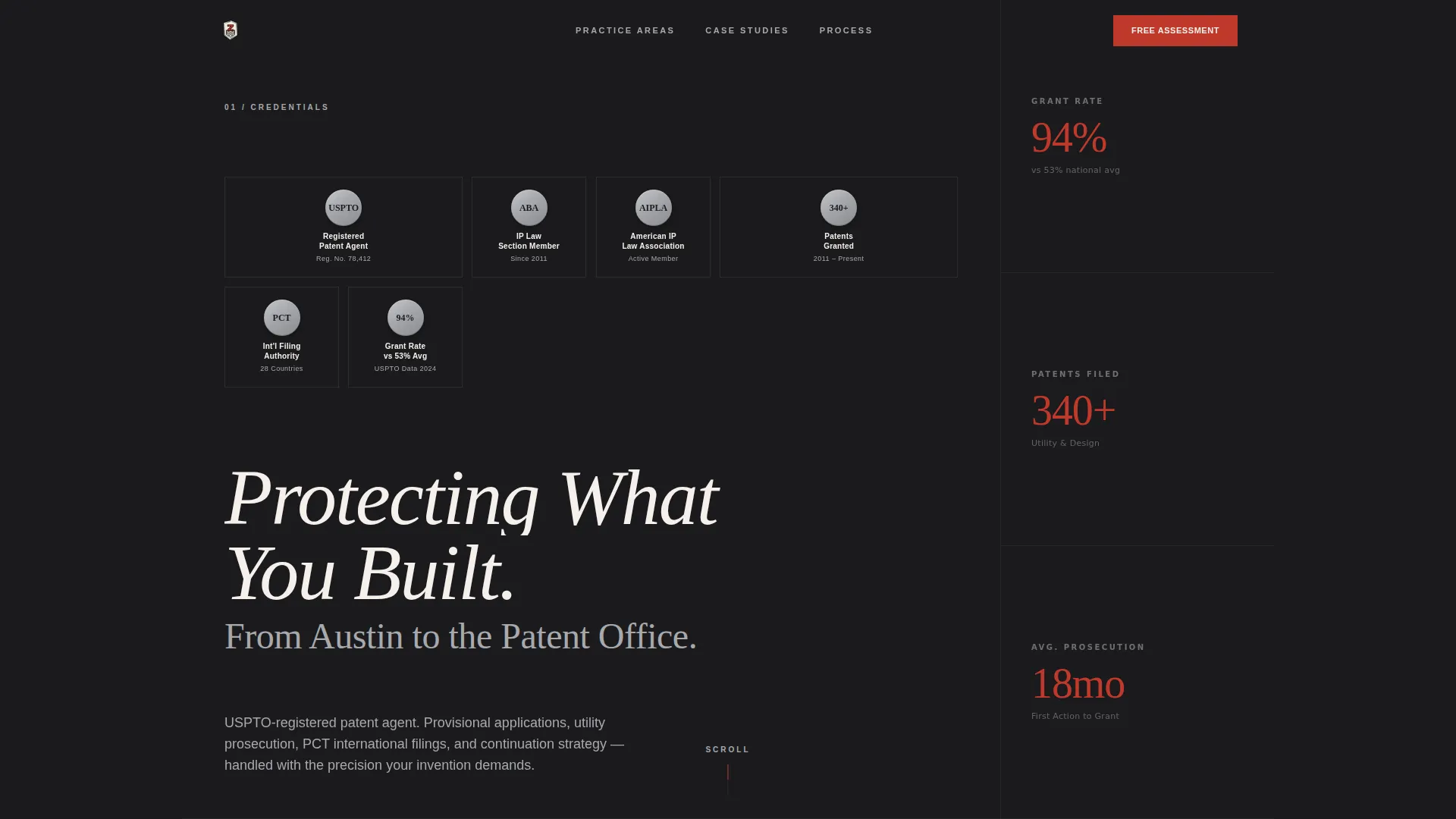
- A badge-grid header section displaying USPTO registration seals, bar association emblems, technology-council honors, and client-count milestones
- A zigzag alternating layout pairing industry logo clusters with short magazine-style case narratives covering the problem, prior-art obstacle, claim strategy, and grant outcome
- A primary lead-capture form collecting invention title, technology category, filing urgency, and a brief description, plus a secondary email-gated checklist download
Feature list
This template packages several purpose-built components that reflect the workflow of a patent agent practice and the decision journey of a prospective client.
Credential Badge Header Grid
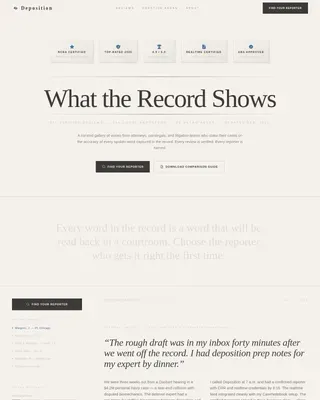
The header replaces hero photography with an editorial grid of authority markers. USPTO registration seals, bar association emblems, technology-council honors, and client-count milestones are rendered in metallic aluminum against forge black. A serif headline in large editorial type fades up between the badges: "Protecting What You Built. From [City Name] to the Patent Office."
Zigzag Case Narrative Sections
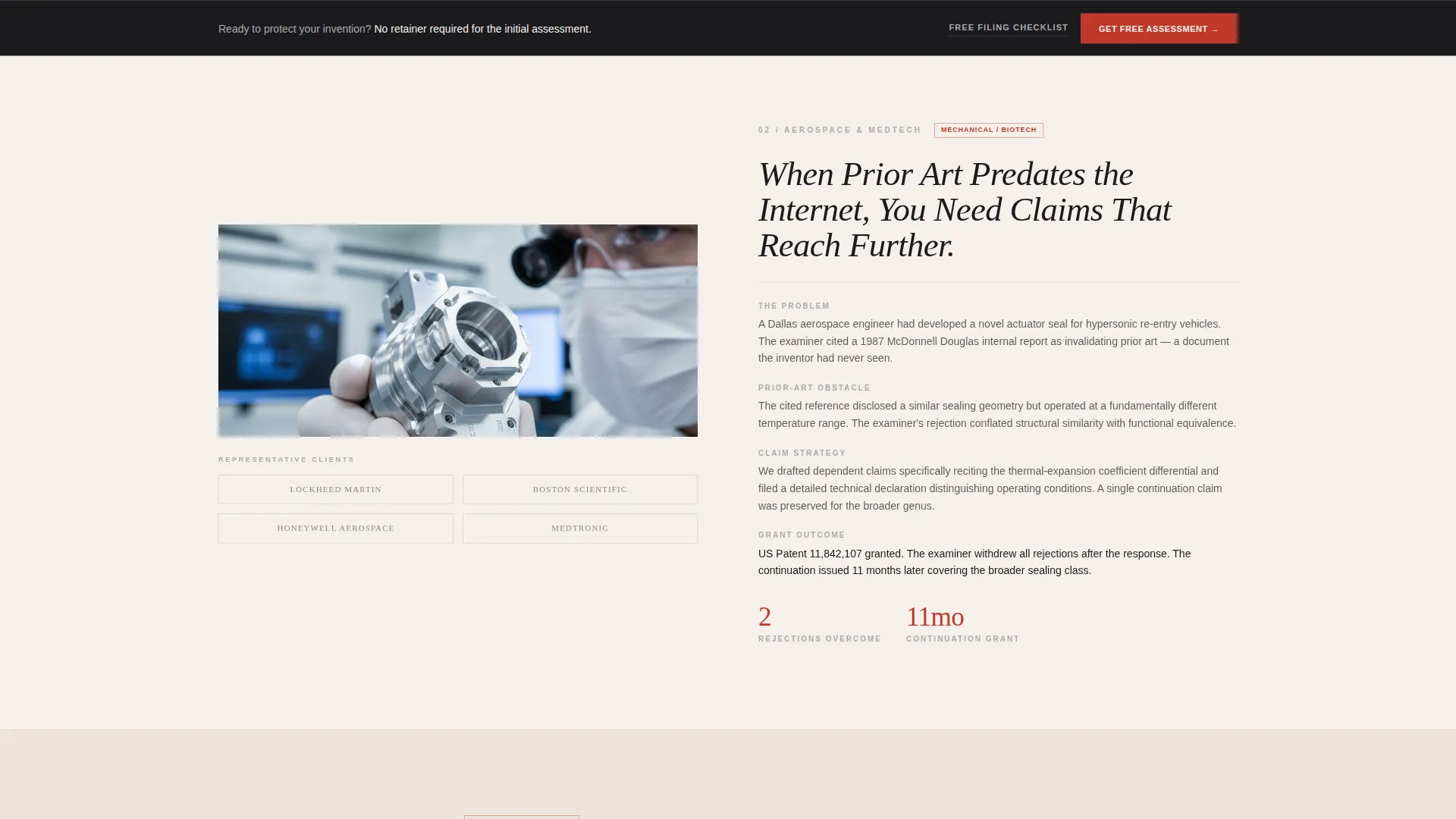
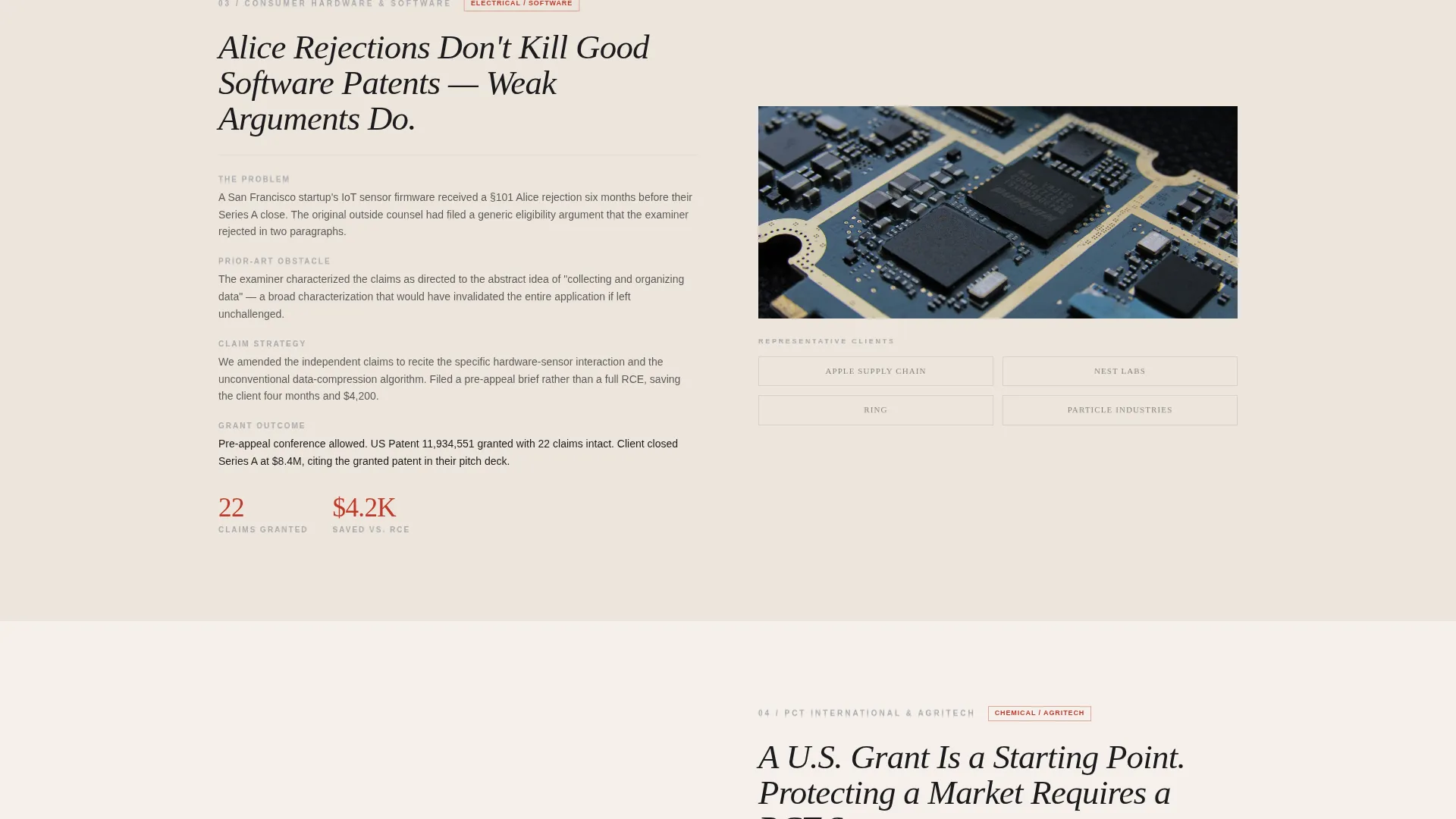
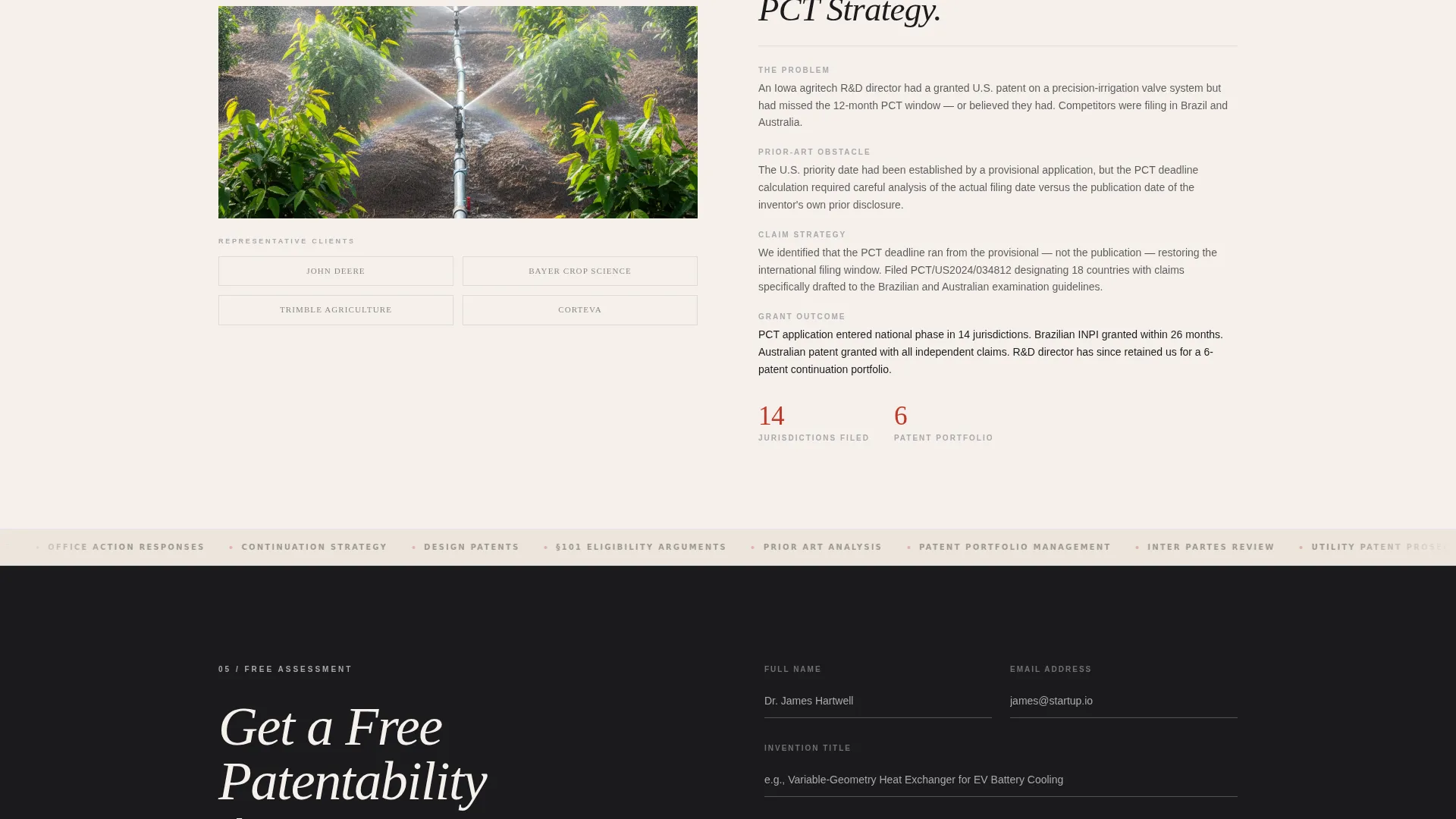
Each alternating section pairs a client-industry logo cluster on one side with a magazine-style case story on the other. The narrative covers the invention problem, the prior-art obstacle, the claim strategy used, and the grant result. Stakes escalate across sections, from simple utility filings to continuation and PCT (Patent Cooperation Treaty) international strategies, so each visitor type sees their own complexity reflected.
Dual Conversion Path Design
The template includes two structured conversion paths. The primary call to action, "Get a Free Patentability Assessment," appears after the third zigzag section and again in a sticky footer bar. A secondary path offers a downloadable "Inventor's Filing Checklist" PDF behind an email gate for earlier-stage leads who are not yet ready for a consultation.
Structured Lead Intake Form
The patentability assessment form collects four data points: invention title, technology category (via a dropdown covering mechanical, electrical, software, chemical, biotech, and other), filing urgency (via a dropdown covering pre-disclosure, post-disclosure, and office-action response), and a brief description textarea. This structure pre-qualifies inquiries before the first conversation.
Sticky Footer Call-to-Action Bar
A persistent footer bar keeps the primary call to action visible throughout the scroll. It reinforces the free assessment offer without interrupting the reading flow of the case narrative sections above it.
Editorial Monochrome Steel Palette
The color system uses four values: forge black (#1B1B1E), machined aluminum (#A8A9AD), patent-document cream (#F5F0EB), and examiner's red (#C0392B). Red is reserved exclusively for calls to action and key data points, keeping the accent meaningful and visually arresting against the neutral field.
Page sections overview
| Section | Purpose |
|---|---|
| Badge Grid Header | Establish authority with credential seals and a serif headline |
| Zigzag Section One | Introduce client industries and a utility filing case narrative |
| Zigzag Section Two | Deepen credibility with a continuation strategy case story |
| Zigzag Section Three | Escalate to PCT international filing complexity and outcomes |
| Assessment Form | Capture qualified leads with a structured intake form |
| Checklist Download | Gate an inventor PDF behind an email capture for early-stage leads |
| Sticky Footer Bar | Persist the primary call to action across the full scroll experience |
Design & branding system
The visual identity follows an Editorial Magazine theme built on a Monochrome Steel color system. The design evokes a freshly printed office action laid on a brushed-steel desk: austere, precise, and impossible to dismiss.
- Typography uses large serif editorial type for headlines and precise body copy, with no decorative illustration or stock photography anywhere on the page
- The four-color palette (forge black, machined aluminum, patent-document cream, and examiner's red) keeps every element purposeful, with red restricted to calls to action and key data points
- Badge and emblem elements use metallic aluminum rendering with subtle bevel to reinforce the authority-first visual strategy
Mobile & speed optimization
The layout is built to translate its editorial authority cleanly to smaller screens. The zigzag alternating structure reflows gracefully without losing the pairing logic between logo clusters and case narratives.
- The sticky footer call-to-action bar adapts to mobile viewport sizing so the assessment prompt remains accessible at all scroll positions
- The form dropdowns and textarea are sized for comfortable touch interaction, reducing friction for inventors filing inquiries on mobile devices
How this template helps you convert
The page is structured as a progressive trust sequence, not a brochure. Each section earns the next scroll, and the conversion architecture is layered to capture leads at different readiness levels.
- The credential badge header immediately signals professional standing, reducing the visitor's first-instinct skepticism before any claim is made in body copy.
- The escalating zigzag case narratives mirror the visitor's own complexity back at them, making the practice feel relevant whether the lead is a solo inventor or an R&D director managing a portfolio.
- The dual conversion path captures both ready-to-engage leads through the assessment form and research-stage leads through the checklist download, so no traffic leaves without a touchpoint.
Other information about this template
This template is purpose-built for the patent agent service niche within the broader professional services category. It is suitable for practitioners who want a credible online presence that doubles as a structured intake system.
- The page type is a single-page landing page, not a multi-page website, keeping the visitor focused on one clear action
- The template supports location-specific positioning through the headline placeholder "[City Name]," making it adaptable for practitioners in any metro market
- Industry logo cluster placeholders cover aerospace, medtech, consumer hardware, and agritech, reflecting the diverse technology sectors a patent agent practice typically serves
- The "Inventor's Filing Checklist" secondary offer is designed to capture leads who are in early research mode, a segment that often converts to paying clients after a discovery period
Theme
Educational Guide
Creative direction
Team & People
Color system
Navy Authority
Style
Split Screen (50/50)
Direction
Lead Generation
Page Sections
Credential Badge Header Grid
Zigzag Case Narrative Layout
Structured Lead Intake Form
Dual Conversion Path Design
Sticky Footer Call-to-action Bar
Editorial Monochrome Steel Palette
Related questions
Who is the primary audience for this landing page template?
What conversion actions does the template support?
Can I adapt the location and industry details to my practice?
Does the template use photography or stock imagery?
What is the purpose of the sticky footer bar?