Heirloom Korean Cuisine Landing Page Template
Dolsot is a gallery and detail landing page template built for a stone bowl bibimbap restaurant. It guides visitors through a day-in-the-life scroll from dawn prep to golden-hour dining, with a Polaroid scrapbook hero, immersive gallery clusters, and two well-placed calls to action that turn a hungry visitor into a confirmed order.
by Rocket studio
Quick summary
Dolsot is a single-page restaurant template shaped around the full sensory rhythm of dolsot bibimbap. It opens with a collage hero, unrolls through five thematic gallery sections, and closes with an evening dining scene and a repeated call to action. Every scroll adds warmth, texture, and appetite until clicking feels like the natural next step.
Who this template is for
This template suits restaurant owners and operators who want their landing page to feel as crafted as the food they serve. It is built specifically for bibimbap and Korean food dining concepts where storytelling matters as much as the menu.
- Stone bowl bibimbap restaurants wanting to show the craft behind the dish
- Korean food dining spots replacing a static PDF menu with an immersive scroll experience
- Food-curious independent restaurants building their first conversion-focused landing page
What problem this template solves
Most restaurant landing pages show a photo and a phone number. That is not enough when your dish is dolsot bibimbap, a hot stone bowl experience that sizzles, steams, and creates crispy rice at the bottom as you eat. Visitors need to feel the heat before they decide to visit.
- Generic templates cannot communicate the sensory drama of a stone bowl dish served at the table
- Flat menu pages lose mobile visitors who want atmosphere, not just a list of items
- Restaurants with a strong food story have no structured layout to tell it section by section
What you get with this template
You get a fully designed, section-led landing page that moves from farm origin to finished bowl in one continuous scroll. The template includes five named content sections, a scrapbook-style hero, two primary calls to action, and a floating secondary reservation button.
- A five-section day-in-the-life page structure with gallery clusters and expandable detail panels
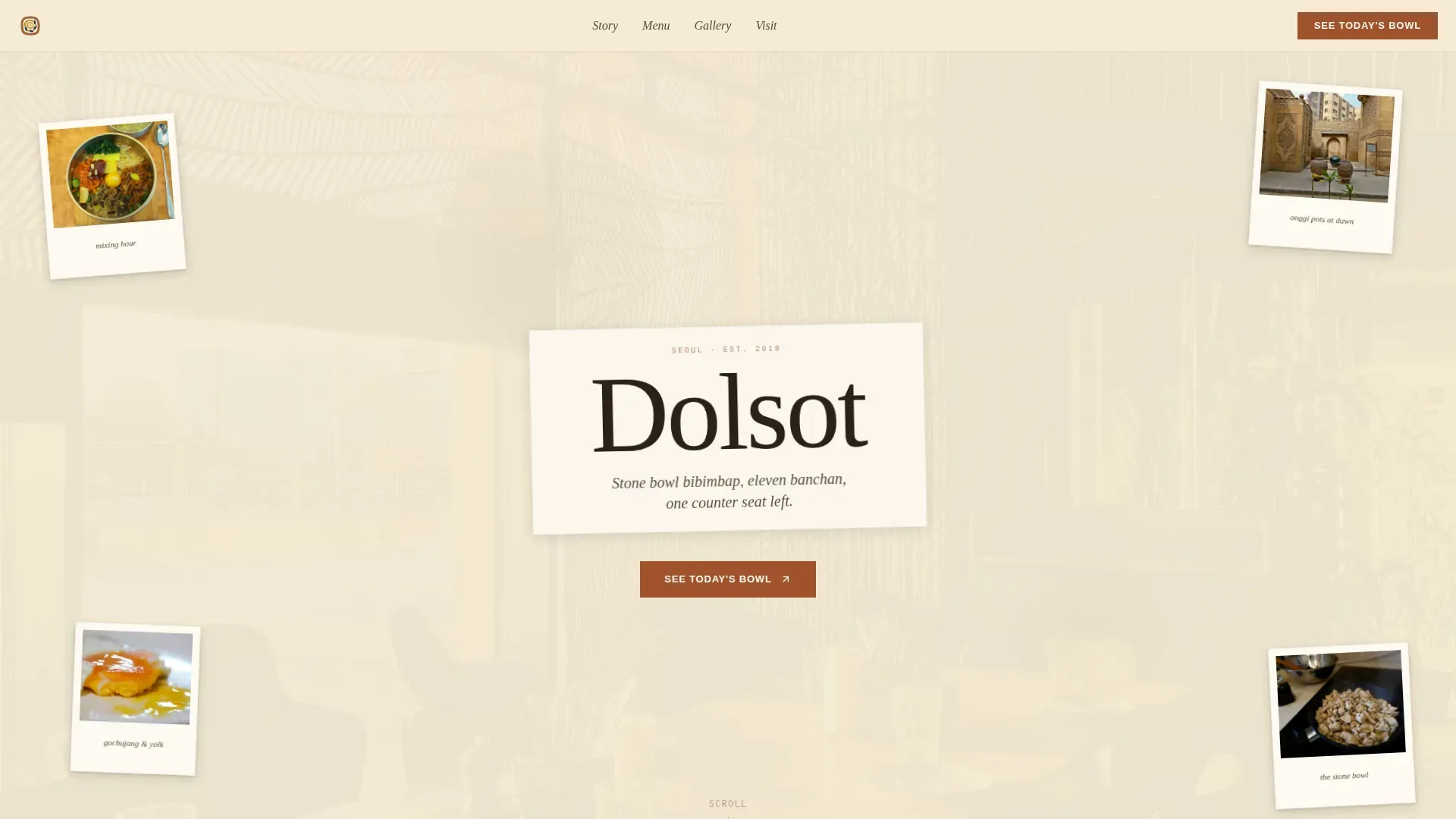
- A Polaroid collage hero with brushstroke display type and an above-the-fold call-to-action button
- Guest testimonial placement in the evening dining section and a repeat call to action at page close
Feature list
A single paragraph introduces what makes this template work as a complete system, then each feature gets its own focused description below.
This template is engineered around one idea: the visitor should feel hungry before they reach the order button. Every layout decision, animation trigger, and content zone serves that single goal.
Polaroid Scrapbook Hero Collage
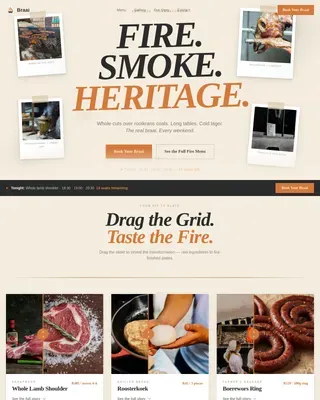
The header is a collage of overlapping Polaroid-style photographs set at gentle angles on a parchment background. One image shows hands mixing bibimbap with long silver chopsticks. Another captures morning light on fermentation pots. A third features gochujang swirled into an egg yolk. Handwritten Korean labels annotate each image. A torn-paper menu card with brushstroke type sits slightly askew at the center.
Day-in-the-Life Scroll Structure
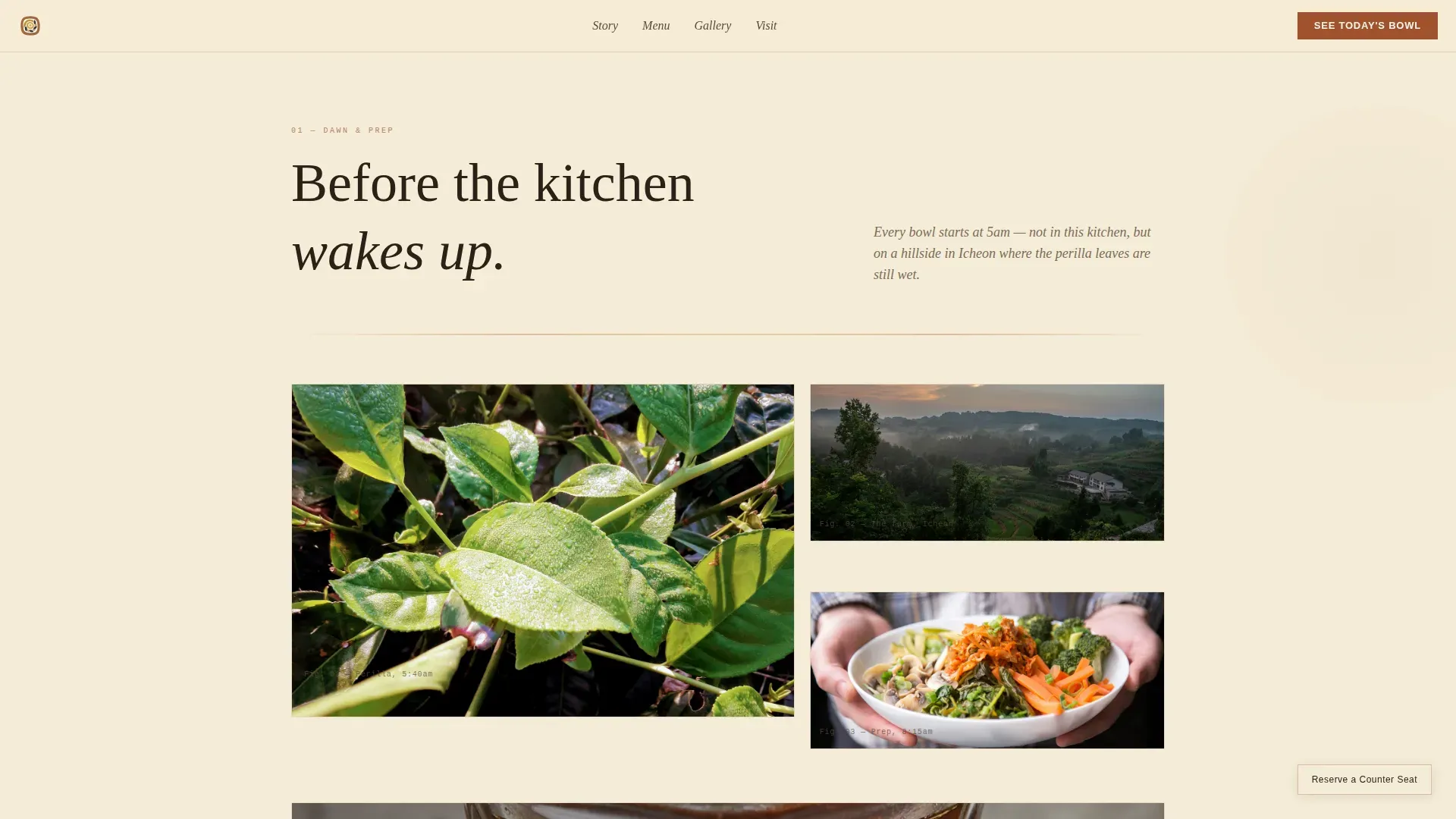
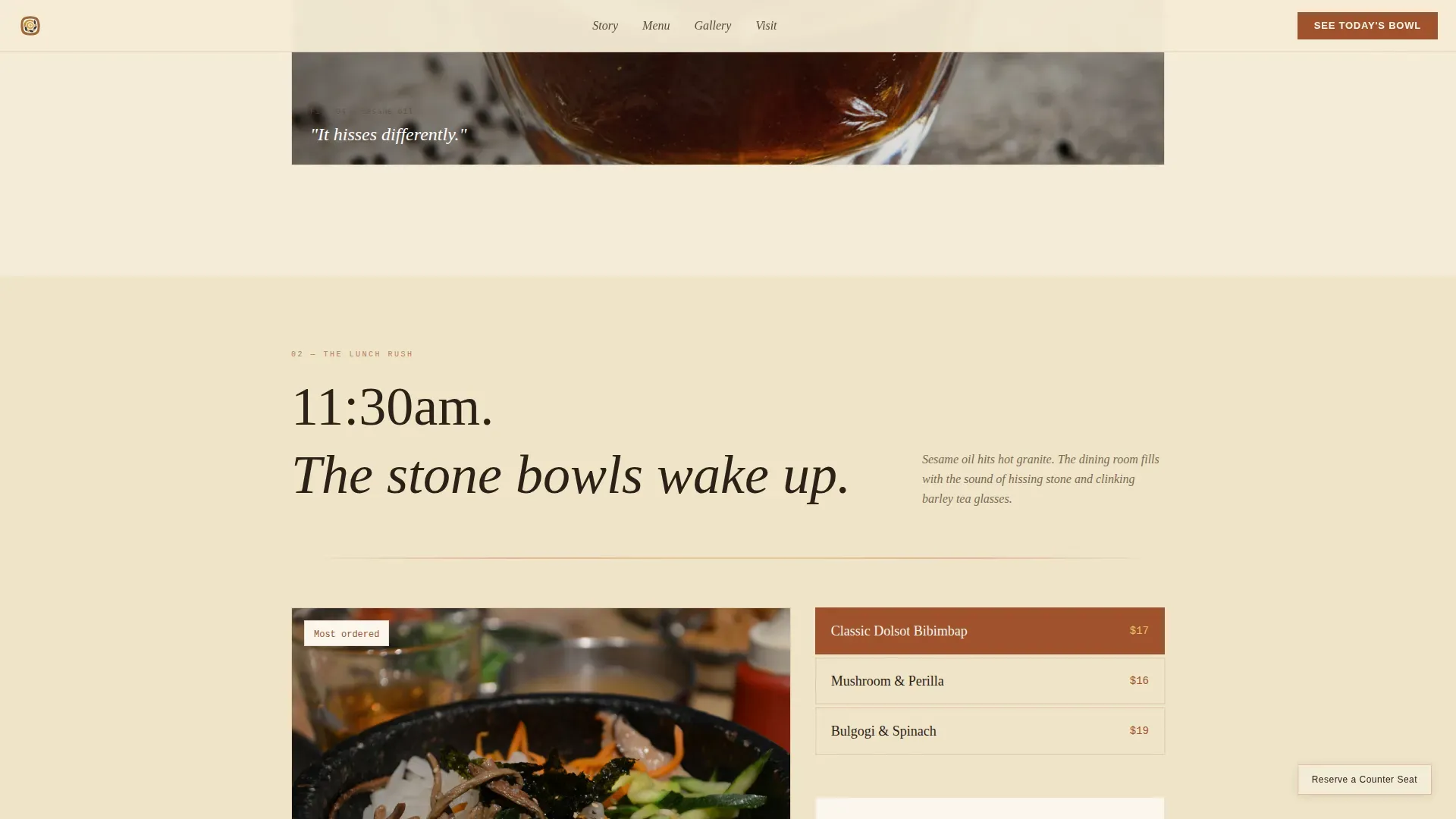
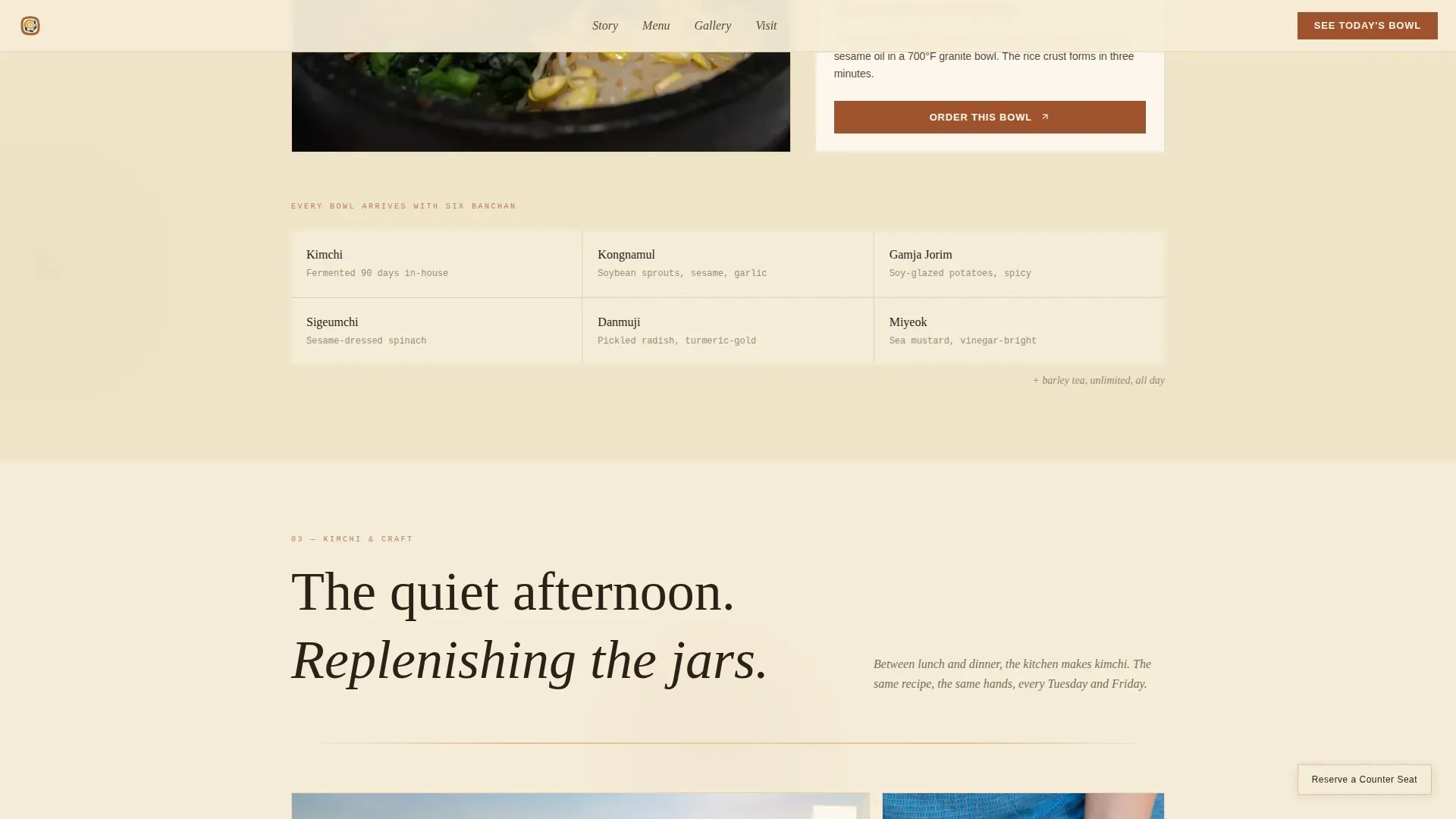
Five sequential gallery clusters follow the restaurant's actual daily rhythm. Dawn shows the farm where perilla leaves are still wet. Mid-morning covers vegetable prep with julienned vegetables in five colors. The lunch rush section captures steam and clinking stone bowls. A quiet afternoon section covers kimchi jar replenishment. The evening section shows the dining room at golden hour with embedded guest voices.
Gallery with Expandable Detail Panels
Each gallery cluster opens into a detail panel that carries a recipe story or ingredient origin note. Visitors do not just see a finished bowl; they read about the sesame oil that hisses against superheated granite, the minced garlic folded into the bibimbap sauce, and the banchan dishes that arrive before the meal begins.
Two-Path Conversion Layout
The primary call to action, "See Today's Bowl," appears first beneath the hero collage and repeats after the evening dining section. A secondary "Reserve a Counter Seat" button floats as a subtle parchment-toned element in the corner. Both paths are available without interrupting the scroll experience.
CSS Scroll Reveals and Scrapbook Card Tilts
Sections animate in using CSS scroll reveals with Intersection Observer staggering. Gallery images scale subtly on hover. Scrapbook cards tilt on entry. The hero runs as a slideshow. No heavy JavaScript libraries are required for these effects.
Testimonial Display in Evening Section
Guest voices appear inside the evening dining section, tied to specific named dishes. The placement is deliberate: by the time visitors reach this section, they have already traveled through dawn prep, the lunch rush, and kimchi afternoon. The testimonials land at the moment of peak appetite.
Page sections overview
| Section | Purpose |
|---|---|
| Hero Scrapbook Collage | Opens the page with Polaroid-style images, brushstroke title, and primary call to action |
| Dawn and Prep | Farm origins gallery with handwritten labels and ingredient stories |
| Lunch Rush Gallery | Stone bowl detail panels, featured bibimbap bowls, steam and texture imagery |
| Kimchi and Craft | Fermentation afternoon, banchan origin stories, ingredient close-ups |
| Evening Dining | Golden-hour dining room, guest testimonials, repeated call to action |
| Minimal Footer | Horizontal flow footer with essential links |
Design & branding system
The visual identity follows a Pastoral Calm theme built from a Parchment and Rust color system. Every color choice references something physical: hanji paper, worn earthenware, charred sesame, pickled radish. Typography pairs a serif display face with a clean body typeface and a monospaced label font for captions.
- Parchment (#F5ECD7) background, Rust (#A0522D) primary, Gold (#D4A843) interactive highlights, Charcoal (#2B2118) text
- Fraunces for display headings, DM Sans for body and interface text, IBM Plex Mono for labels and captions
- Warm earthy tones across the full scroll create an authentic, unhurried atmosphere consistent with the restaurant's character
Mobile & speed optimization
The template is designed desktop-first but includes a mobile adaptation built into the layout. The scrapbook hero collage reconfigures into a vertical stacking layout on smaller screens so no image or label is lost.
- Native CSS smooth scroll replaces heavy JavaScript scroll libraries for lean interaction
- Server Components handle all static content, keeping initial load light
- Scrapbook card tilts and stagger animations are built with Intersection Observer, not scroll-bound JavaScript loops
How this template helps you convert
This template earns the click by building appetite one section at a time. Conversion is not forced early; it is the natural result of a complete sensory journey.
- The hero places "See Today's Bowl" above the fold with immediate visual pull from the Polaroid collage and brushstroke title, giving every visitor a clear first path before they scroll.
- Each gallery section adds a layer of flavor, detail, and warmth, so by the time the visitor reaches the evening dining section and sees guest testimonials tied to specific dishes, clicking the repeated call to action feels like reaching for chopsticks rather than making a decision.
Other information about this template
This section covers additional practical context and ingredient-level details that help buyers understand what the Dolsot warm stone bowl bibimbap restaurant landing page template is designed to communicate.
Dolsot bibimbap is a Korean mixed rice dish served in a hot stone bowl. The word bibimbap means mixed rice in Korean, and it is one of the most beloved dishes in Korean cuisine. The dish is dish served with colorful vegetables, meat, a fried egg on top, and bibimbap sauce on the side. The bibimbap sauce ingredients typically include gochujang sauce, sesame oil, and minced garlic. Gochujang is a Korean fermented chili paste central to Korean cooking.
The dolsot itself is the star of the experience. A korean hot stone bowl or korean stone pot retains heat far longer than a regular bowl, allowing the rice at the bottom to become crunchy rice known in Korean as nurungji. That crispy rice is what makes dolsot bibimbap unique compared to any version made in a frying pan or standard vessel. The sizzling sound when the stone pot is brought to the table is part of the dining theater this template is built to convey visually.
Making dolsot bibimbap at home involves several steps. Cooks blanch spinach and rinse it in cold water, then set aside. Bean sprouts are cooked separately in a pan with a little sesame oil and set aside. Shiitake mushrooms are sliced thin and sauteed with minced garlic over medium heat, then set aside again. Marinade ingredients for any meat component typically include soy sauce, sesame oil, and minced garlic. Short grain rice, specifically cooked short grain rice or fluffy rice, goes into a preheated dolsot bowl that has been coated with vegetable oil. A raw egg or egg sunny side up is placed on top of the rice before serving.
The cook time for the rice at the bottom to turn into crispy rice depends on heat level. Most recipes use high heat for the first minute or two, then reduce. The dolsot should be preheated to retain heat properly. Once assembled, you serve immediately. A homemade version made in a cast iron skillet can approximate the crispy rice effect, though it will not replicate the full korean stone experience.
This template reflects those details in its storytelling structure. The dawn and prep section covers farm origins and vibrant vegetables. The lunch rush section captures steam, soy sauce aromas, and sesame seeds scattered on the finished bowl. The kimchi and craft section shows bean sprouts and fermented sides. Every detail panel can reference the dish served that day, making the page feel like a live menu rather than a fixed brochure.
Additional notes for buyers:
- The template supports USD pricing and English locale out of the box
- The footer uses a minimal horizontal flow pattern suitable for a neighborhood dining concept
- Dolsot bibimbap prep time context can be added to detail panels to help first-time visitors understand the care behind each bowl
- The egg displayed in gallery images can appear as a fried egg or sunny side up depending on the photograph chosen
- Korean rice, specifically short grain rice, is central to the dish; the template's ingredient story panels are sized to carry that kind of detail naturally
- Bean sprouts, blanch spinach notes, and cold water rinse steps can populate the dawn and prep detail panels
- Korean stone material context (granite, ceramic, or clay) can inform the kimchi and craft section copy
- Nutrition information and nutrition calories details can be added to the menu spotlight panel within the template structure
- The template is not just a meal showcase; it is a full food narrative that earns each order
Theme
Pastoral Calm
Creative direction
Day-in-the-Life
Color system
Parchment & Rust
Style
Gallery + Detail
Direction
Click-Through
Page Sections
Polaroid Scrapbook Hero with Brushstroke Title
Five-section Day-in-the-life Scroll
Gallery Clusters with Expandable Detail Panels
Two-path Conversion System
CSS Scroll Reveals and Scrapbook Card Animations
Evening Dining Section with Guest Testimonials
Related questions
What kind of restaurant is this template designed for?
Can I adapt the day-in-the-life scroll sections for a different menu focus?
Does this template support online ordering and reservations?
How does the scrapbook hero work on mobile devices?
Can I add bibimbap recipe or ingredient details to the page?