Lupus Care Professional Website Template
Flare is a single-column landing page template built for lupus clinical trial finders. It guides patients through a warm, transparent experience, from subtype selection to a progressive intake questionnaire, using a watercolor-inspired visual system, expandable process steps, and credibility anchors that answer every reasonable concern before asking for anything.
by Rocket studio
Quick summary
Flare is a compassionate, single-column landing page template designed to connect lupus patients with actively recruiting clinical trials. It uses a transparent, step-by-step layout that builds trust before it asks for anything. The visual style is warm and organic, the interactions are gentle and progressive, and every section is ordered to reduce patient anxiety.
Who this template is for
This template was designed for organizations running lupus clinical trial recruitment. It speaks directly to the people most likely to land on that page, and it gives them a reason to stay.
- Patient advocacy platforms and clinical research organizations (CROs) matching lupus patients to open trials
- Healthcare marketers building recruitment pages for lupus nephritis, systemic lupus erythematosus (SLE), cutaneous lupus, or pediatric lupus studies
- Rheumatology practices or research institutions that need a clear, humane intake experience for prospective trial participants
What problem this template solves
People living with lupus are tired of vague resources and unanswered questions. When they land on a clinical trial page, fear and confusion usually drive them away before they ever submit a form. This template fixes that.
- It answers patient fears in order: how matching works, what a trial actually involves, and who is running it
- It removes cognitive load from the intake flow by revealing one question at a time inside a progressive questionnaire
- It builds trust through visible credibility signals before any personal information is requested
What you get with this template
The template delivers a complete, ready-to-customize single-column landing page with all major sections pre-structured and interactive components already mapped out.
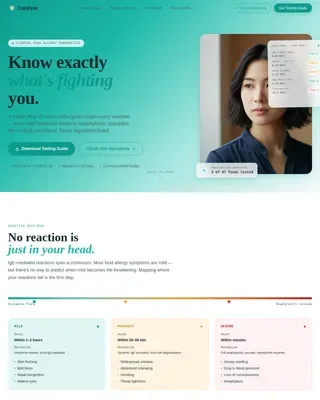
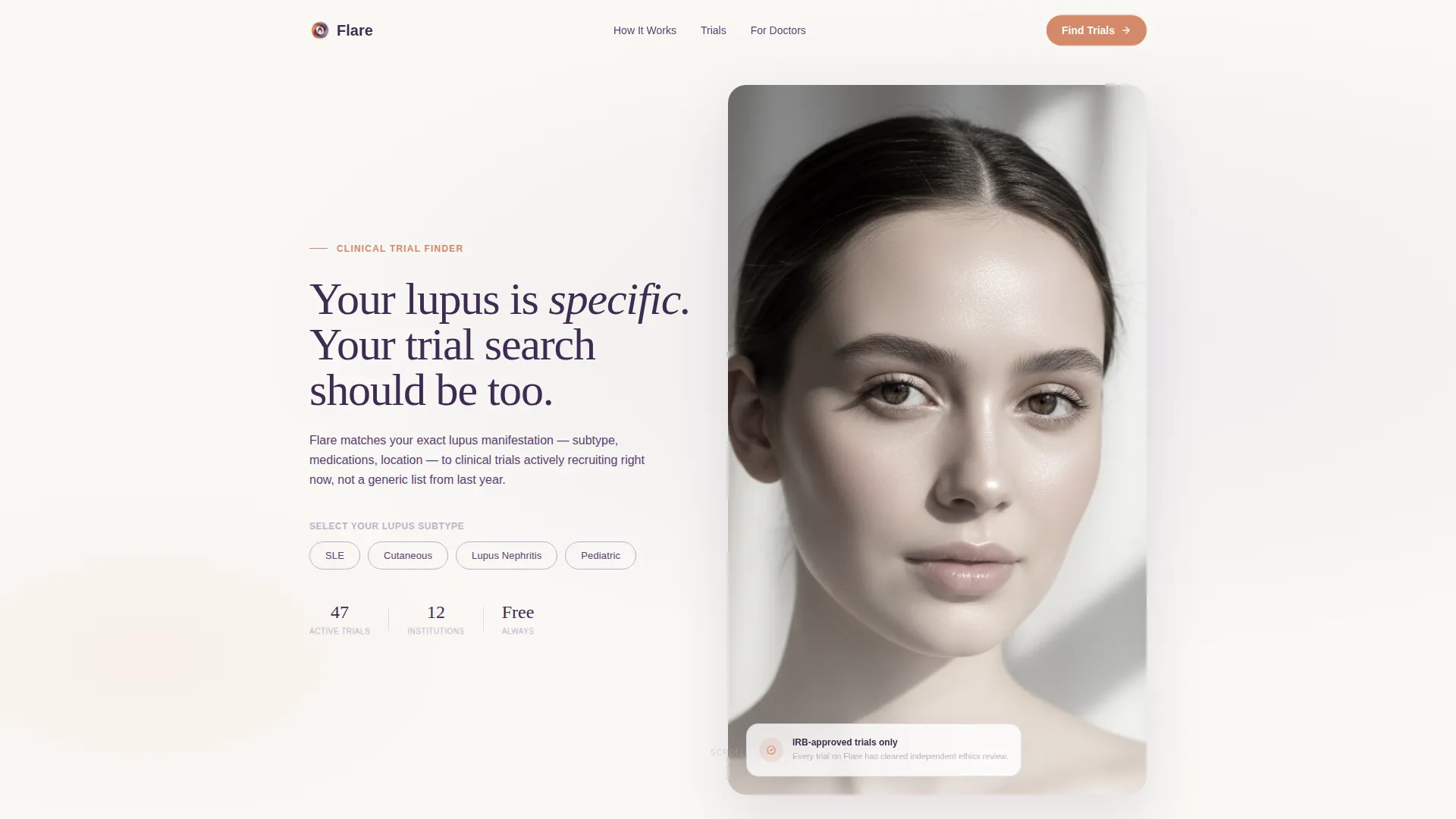
- A hero section with a subtype pill toggle (SLE, Cutaneous, Lupus Nephritis, Pediatric) and a left-aligned headline over a real, unretouched subject photograph
- An expandable three-step matching process, a week-by-week trial timeline, and a principal investigator credibility section
- A progressive inline questionnaire as the primary call to action, plus a secondary email-gated PDF download path
Feature list
This template includes the following core capabilities, each grounded in the source brief.
Subtype Pill Toggle Selector
Four soft pill-shaped toggles in the hero section let visitors self-identify their lupus subtype immediately: SLE, Cutaneous, Lupus Nephritis, or Pediatric. This single interaction signals relevance before the visitor reads a single word of body copy.
Expandable Three-Step Matching Flow
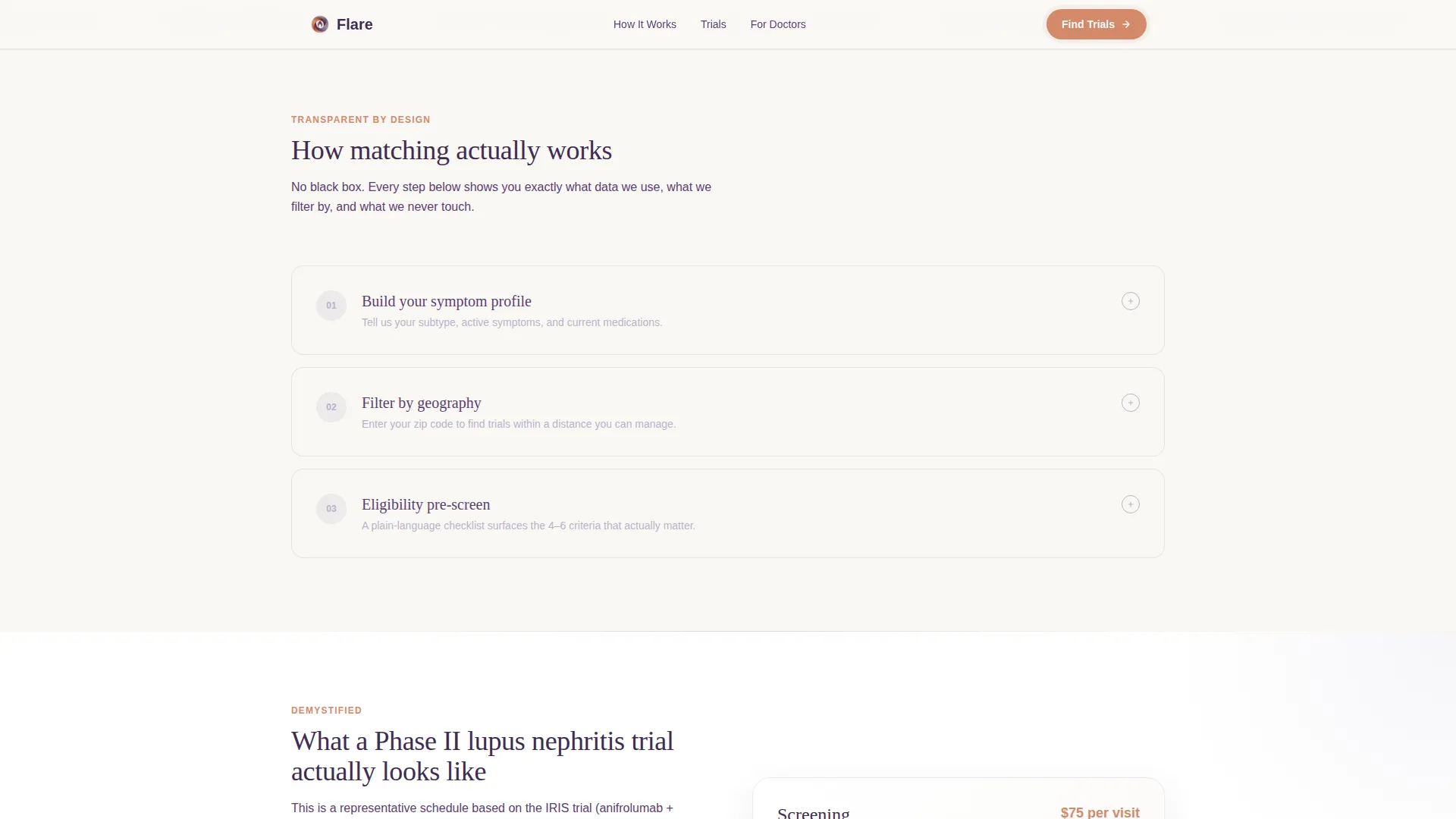
The "How Matching Works" section uses a vertical accordion layout. Each of the three steps, symptom profile, geographic filtering, and eligibility pre-screen, expands on click to reveal exactly what data is collected and what is never shared. This reduces the single biggest barrier to trial participation: distrust of the process.
Week-by-Week Trial Timeline
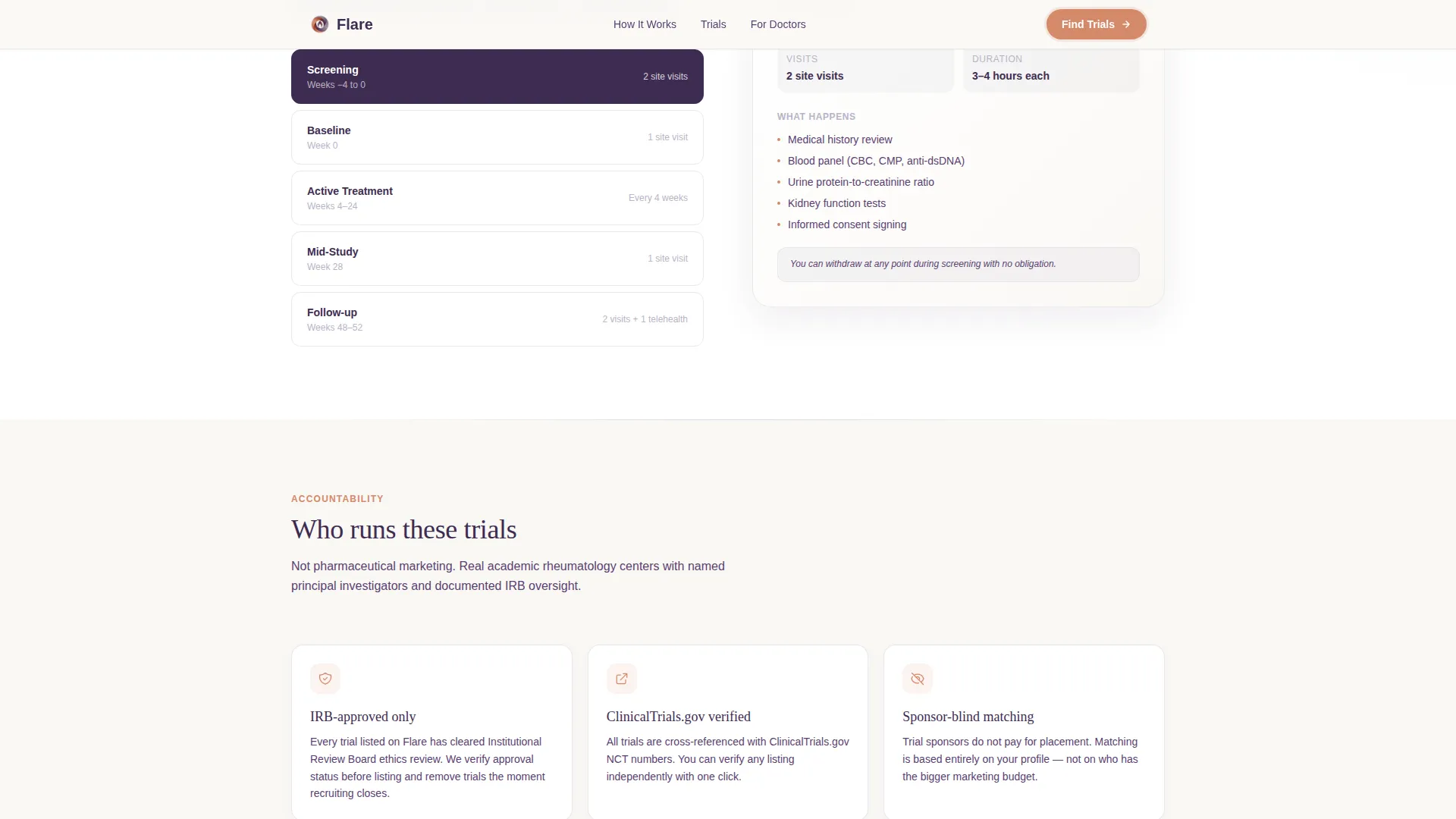
A detailed, demystifying section shows what a real Phase II lupus nephritis trial looks like week by week. Visit frequency, bloodwork requirements, and compensation details are presented plainly so patients can picture their own participation before committing.
Progressive Inline Questionnaire
The primary call to action is a multi-step inline form that reveals one field at a time: lupus subtype, current medications, zip code, then email. Reducing each decision to a single step lowers drop-off and respects the cognitive load of someone managing a chronic illness.
Email-Gated PDF Secondary Path
A secondary conversion path offers a downloadable resource titled "Questions to Ask Your Rheumatologist About Trials," gated by email only. It gives hesitant visitors a low-commitment reason to engage without requiring them to complete the full questionnaire.
Credibility Anchor Section
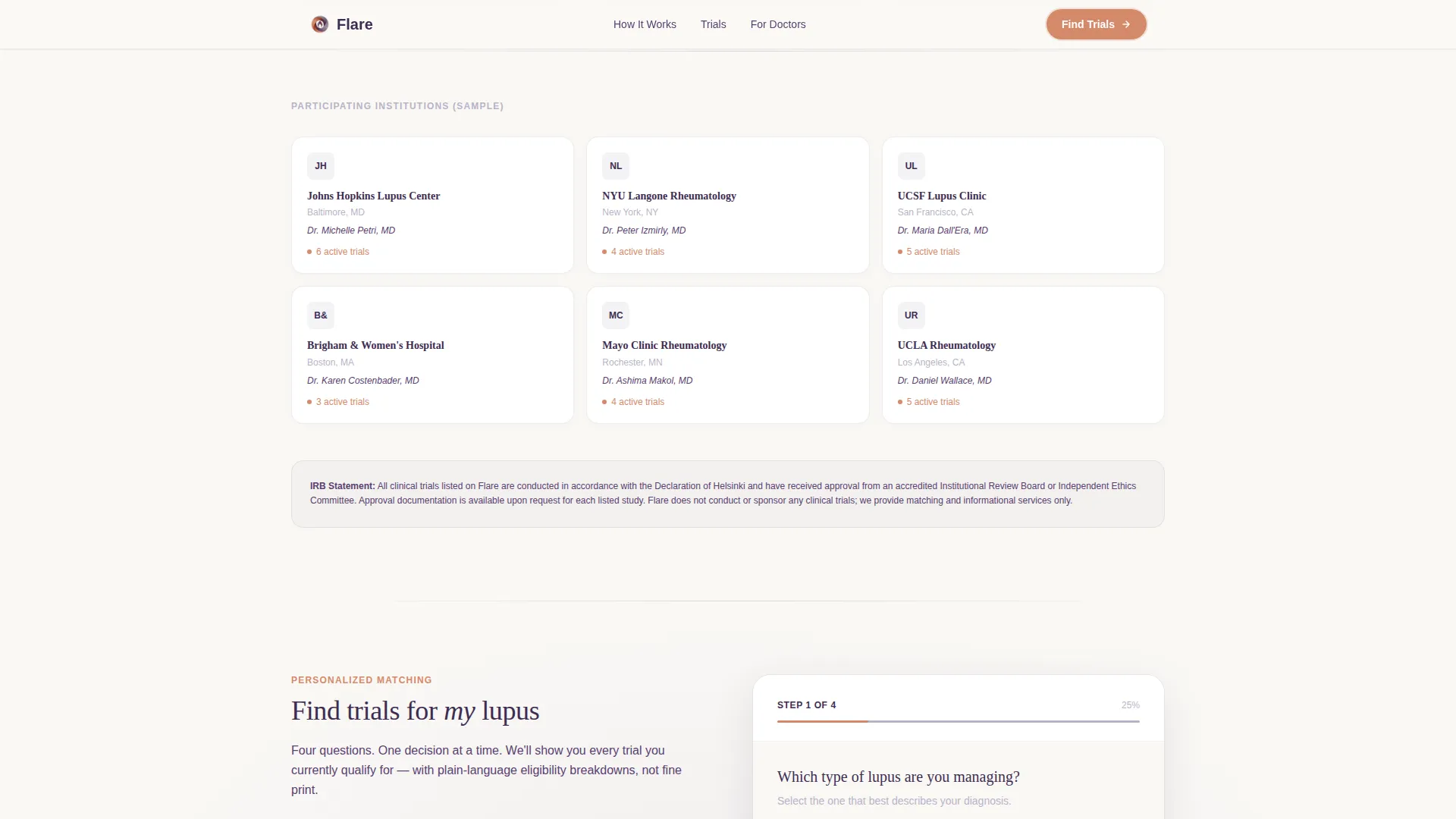
The "Who Runs These Trials" section presents institution logos, principal investigator names, and Institutional Review Board (IRB) approval language in plain view. Nothing is buried in footnotes. This section transforms abstract trust into concrete accountability.
Page sections overview
| Section | Purpose |
|---|---|
| Hero with Toggles | Establish relevance, capture subtype selection |
| How Matching Works | Demystify the process, expand fears away |
| Trial Timeline | Show what participation actually looks like |
| Who Runs Trials | Anchor credibility with real names and institutions |
| Find Trials Form | Convert visitors through a progressive questionnaire |
| PDF Secondary Path | Offer a low-commitment second conversion option |
| Footer | Provide navigation and brand tagline |
Design & branding system
The visual identity follows an Organic Flow theme using a Cloud Canvas color palette. Every color choice reinforces calm and warmth over anything clinical or sterile.
- Background in soft warm white (#FAF8F5), section dividers and secondary text in muted lavender-gray (#B8B3C8), and deep plum (#3E2C51) anchoring all headlines
- Terracotta (#D4896A) used exclusively for buttons and progress indicators, creating a consistent and gentle action signal
- Typography pairing of Fraunces serif for headlines and DM Sans for body copy, grounded and warm without being decorative
Mobile & speed optimization
This template is built with a mobile-first priority because the target audience researches during appointments, during flares, and late at night on their phones.
- All interactive components, pill toggles, accordion steps, and the progressive questionnaire, are designed as client-side components only, keeping the base page static and fast to load
- Single-column layout naturally adapts to small screens without requiring separate mobile breakpoints for major sections
- Animation uses gentle upward fades and staggered reveals, intentionally kept at medium intensity to avoid battery drain and motion sensitivity concerns
How this template helps you convert
The conversion strategy is built into the page order itself. Trust is earned section by section before the ask ever appears.
- The hero pill toggle creates immediate personal relevance, so visitors feel the page is speaking to their specific diagnosis from the first second
- The three transparency sections, matching process, trial timeline, and credibility anchors, resolve the most common objections quietly, so that by the time the questionnaire appears, hesitation has already been addressed
- The progressive questionnaire reduces the perceived effort of signing up to a single decision at a time, and the secondary PDF path captures visitors who are not yet ready to commit to the full form
Other information about this template
This template is built to support healthcare and patient advocacy use cases where trust is the primary conversion currency.
- The landing page is category-matched to Health & Medical, with a specific focus on the Lupus Care subcategory and the Lupus Clinical Trial Finder niche
- The footer uses a split layout with logo and tagline on the left and navigation links on the right, maintaining clean page closure without distraction
- Animation intensity is deliberately moderate, using accordion expand on click and staggered fade-in reveals to feel attentive rather than performative
Theme
Organic Flow
Creative direction
Transparent Process
Color system
Cloud Canvas
Style
Single Column Flow
Direction
Content/Resource
Page Sections
Subtype Pill Toggle in Hero
Expandable Matching Process Steps
Phase II Trial Timeline Section
Progressive Inline Questionnaire
Email-gated PDF Download Path
Credibility Anchor Section
Related questions
Who is the intended audience for this landing page template?
Can this template support multiple lupus subtypes at once?
How does the progressive questionnaire work?
What is the secondary conversion path?
Is this template customizable for different trial sponsors or institutions?