Creative Director Portfolio Complete Pre-Launch Website Template
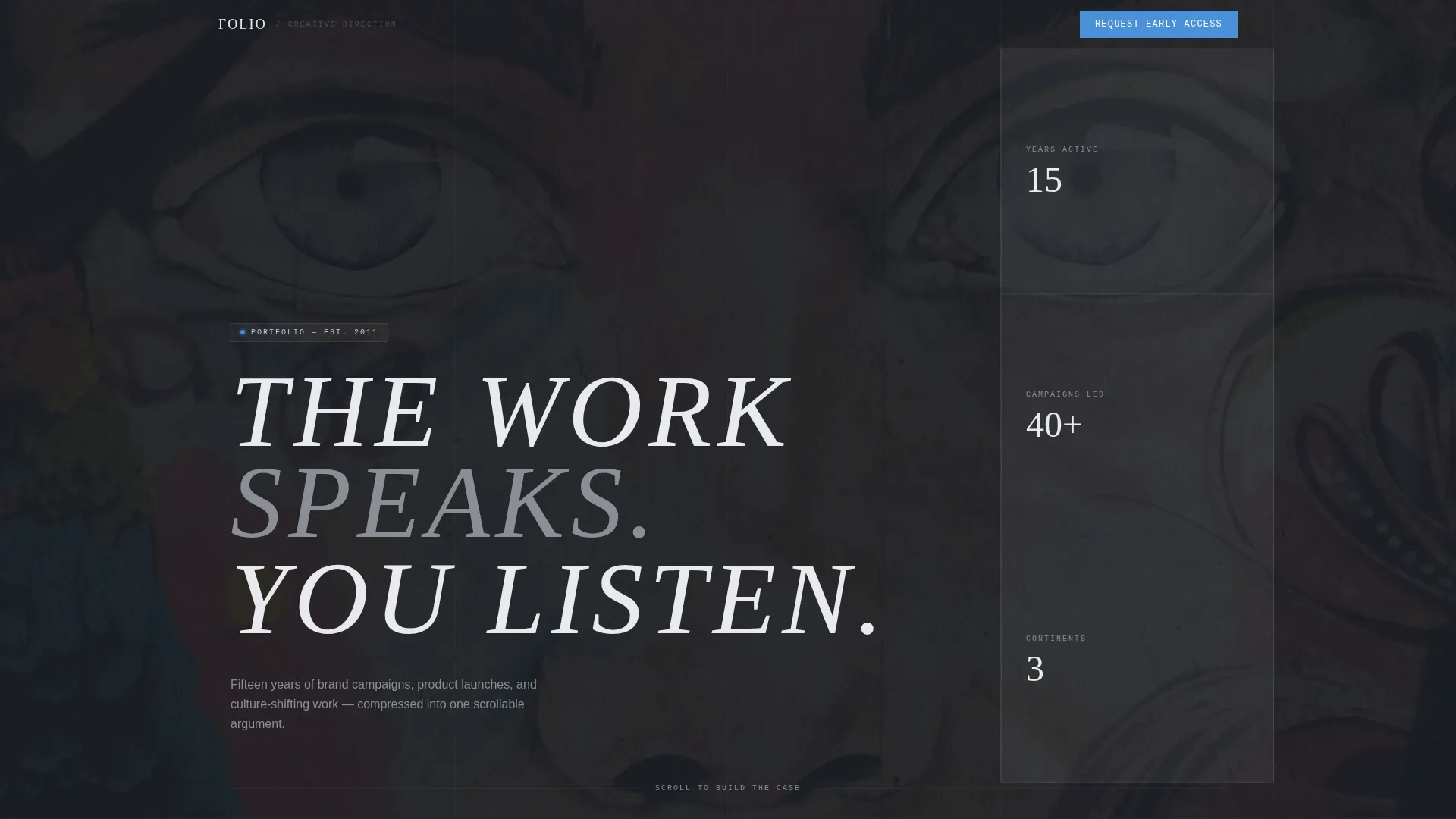
Folio is a single-page creative director portfolio landing page built on an asymmetric 60/40 grid with a Tech Glass visual identity. It turns fifteen years of brand campaigns, product launches, and cultural work into a scrollable, manifesto-driven case for creative leadership. The full portfolio is gated behind a waitlist call to action, making scarcity part of the pitch.
by Rocket studio
Quick summary
Folio is a high-impact, single-scroll creative director portfolio landing page. It pairs a manifesto-driven narrative with an asymmetric grid layout to build a prosecutorial case for creative leadership. The design uses a Monochrome Steel palette and a Tech Glass visual theme. A gated waitlist call to action controls access and signals selective availability.
Who this template is for
This template is built for senior creative professionals who need to present a body of work with authority. It speaks directly to people whose reputation precedes them but whose portfolio has not yet caught up.
- Creative directors with multi-year track records in brand, product, or cultural work
- Independent creative leaders positioning themselves for executive hires or agency partnerships
- Founders and senior creatives launching a selective client roster or personal consultancy
What problem this template solves
Most portfolio pages dump work without context. They show deliverables but never argue why the work mattered. Hiring decision-makers, agency founders, and startup CEOs need to feel conviction fast.
- A standard portfolio grid fails to communicate creative philosophy or strategic thinking
- Scrolling through case studies without a narrative arc loses high-intent visitors before they reach the pitch
- Generic templates look like every other portfolio, making it impossible to signal taste before proving availability
What you get with this template
You get a fully structured, single-page landing page built around a scrollable manifesto format. Every section escalates the argument from craft to strategy to cultural impact.
- A Giant Headline Centered header with tracked-out sans-serif typography set against a gunmetal background
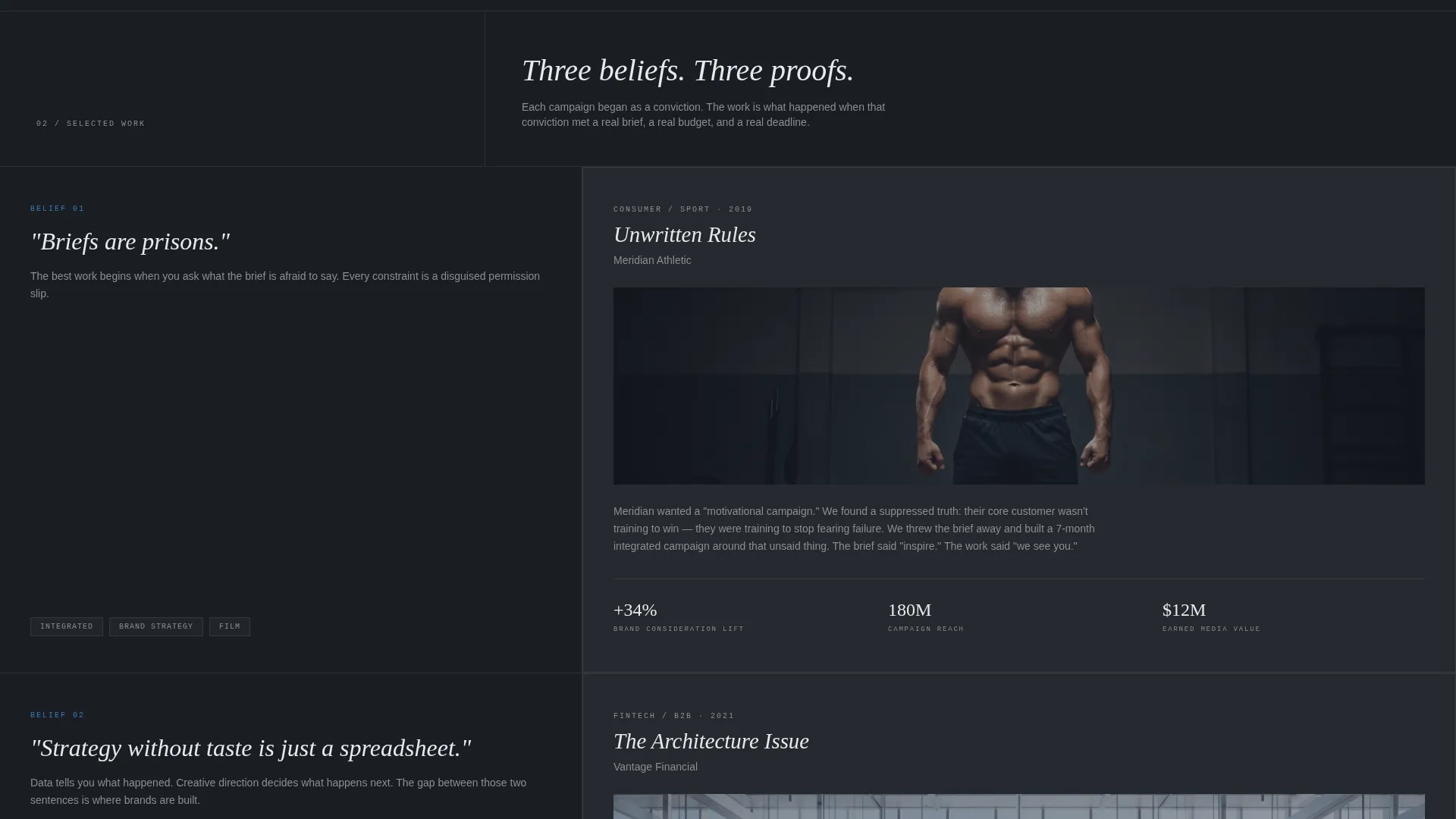
- An asymmetric 60/40 grid pairing belief statements in the narrow column with proof-of-work in the wide column
- A gated waitlist section with an email field, an optional "What are you hiring for?" field, and a secondary micro-call-to-action linking to a process journal
Feature list
This section describes the core built-in capabilities of the Folio template.
Giant Headline Centered Header
The header opens with one line of massive, tracked-out sans-serif type reading "THE WORK SPEAKS. YOU LISTEN." set in polished chrome against deep gunmetal. A frosted-glass blur animates behind the letterforms. No image, no face, no logo. The typography itself functions as the first creative statement.
Asymmetric 60/40 Manifesto Grid
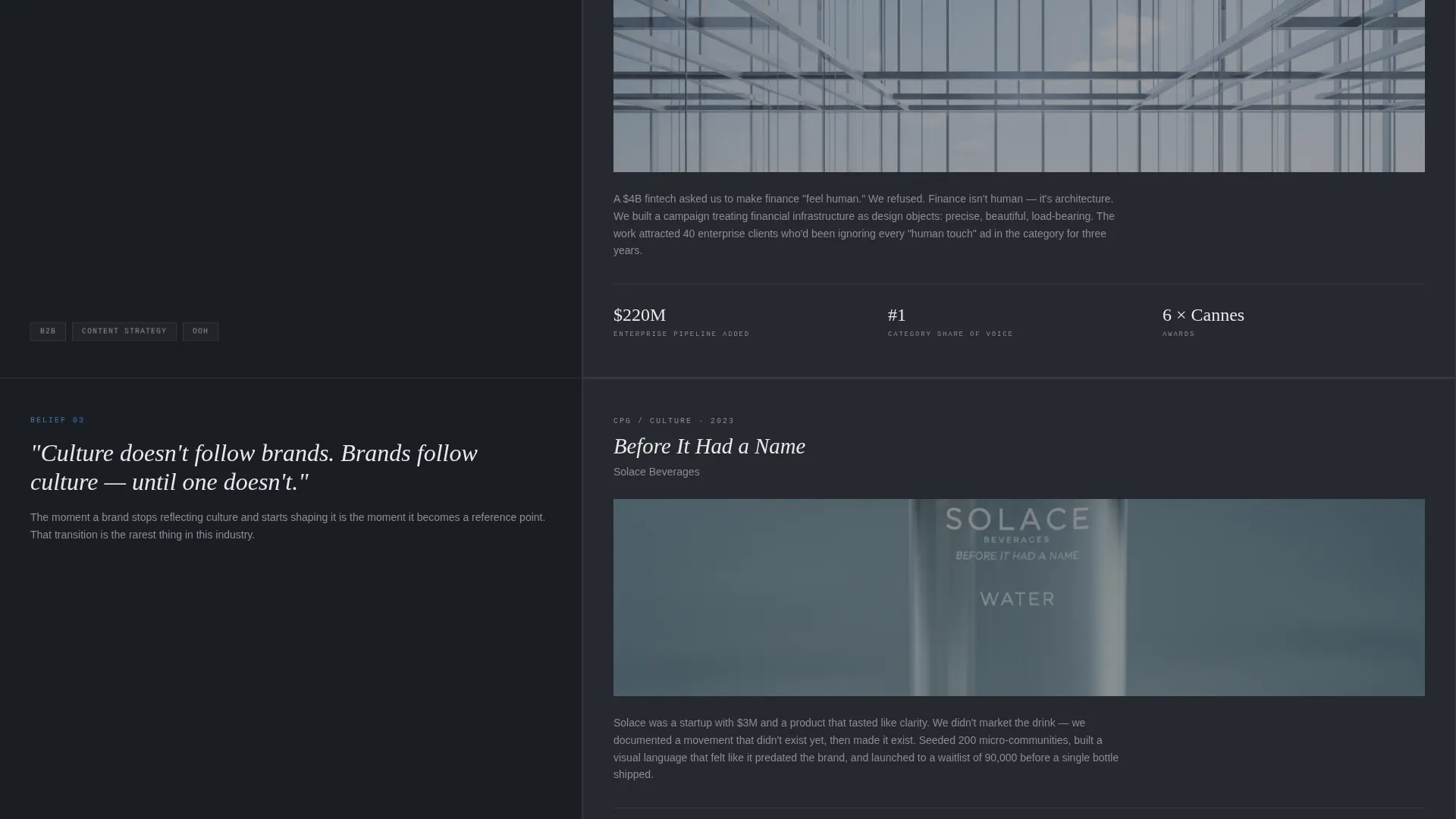
Each content section uses a 60/40 column split. The narrow 40-percent column carries a belief statement. The wide 60-percent column delivers the case study that proves it. The structure escalates from craft-focused early sections through strategy-driven mid-sections to cultural-impact final sections.
Gated Waitlist Call-to-Action
The primary call-to-action reads "Request Early Access" and includes a single email input field plus an optional field asking "What are you hiring for?" The scarcity framing is built into the copy and layout. A secondary micro-call-to-action at the page bottom reads "Follow the Build" and links to a process journal.
Tech Glass Visual Theme
The page uses a Monochrome Steel color system: deep gunmetal (#1A1D23), polished chrome (#C0C4CC), frosted panel white (#E8EAED at 60% opacity), and a signal-blue accent (#4A90D9). The blue is reserved exclusively for interactive states and the waitlist call-to-action. Every surface is engineered to reflect rather than emit warmth.
Scrollable Narrative Arc
The page is structured as a prosecutorial scroll. Early sections establish craft. Middle sections reveal strategic thinking. Final sections demonstrate cultural impact. The visitor does not browse work; they follow a building argument toward a single conclusion.
Page sections overview
| Section | Purpose |
|---|---|
| Giant Headline Header | Opens with tracked typography as a bold creative statement |
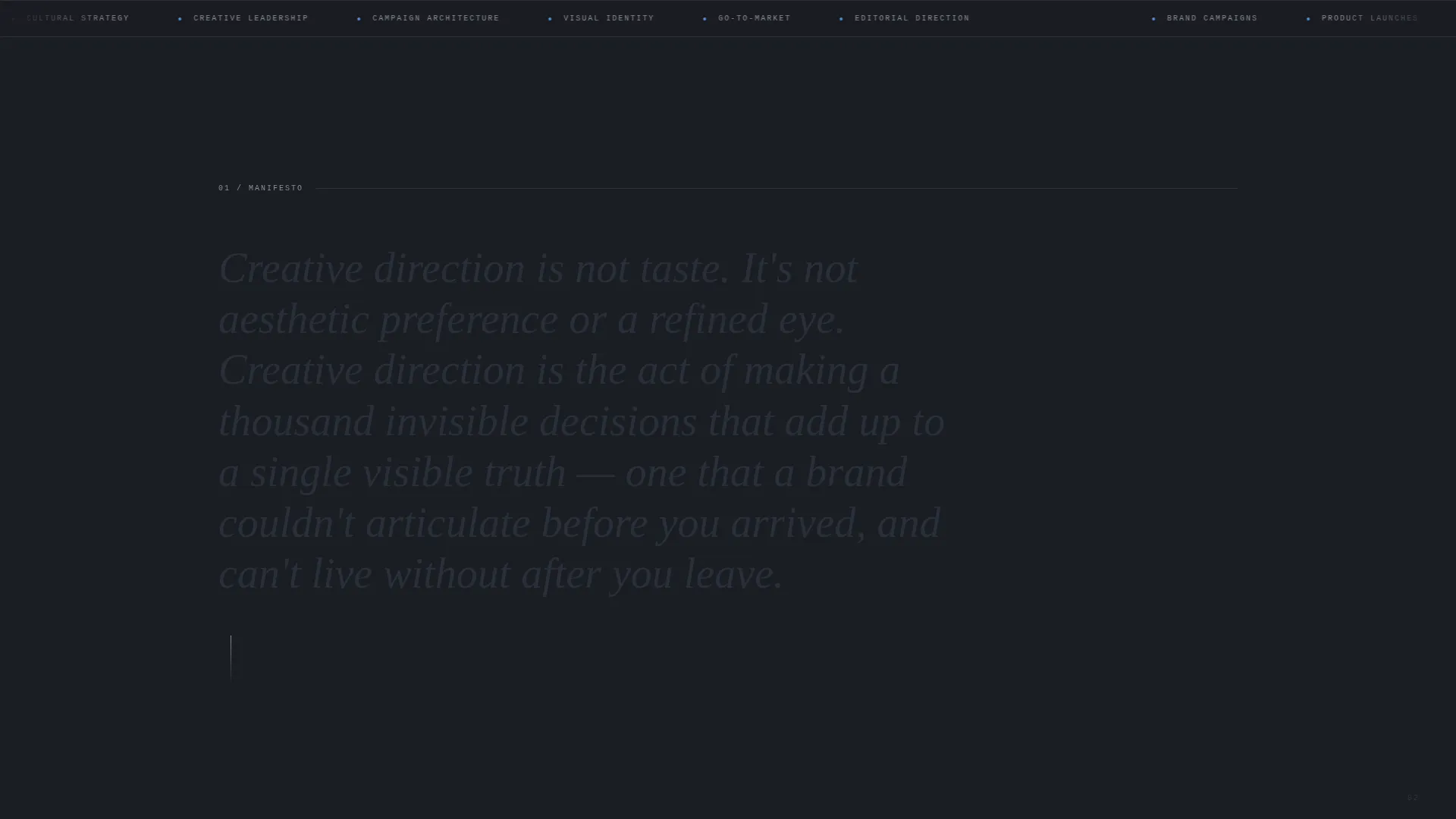
| Personal Manifesto Declaration | Sets the creative philosophy before any work is shown |
| Craft Case Studies | Proves executional skill through early asymmetric grid sections |
| Strategy Case Studies | Elevates the argument from output to decision-making |
| Cultural Impact Section | Demonstrates work that moved culture, not just metrics |
| Waitlist call to action Block | Gates full portfolio access and captures high-intent leads |
| Secondary Micro-call to action | Links to process journal to keep warm visitors engaged |
Design & branding system
The visual identity follows a Tech Glass theme throughout. The palette uses no warm tones and no apologetic softness. Every color choice is deliberate and load-bearing.
- Deep gunmetal (#1A1D23) as the primary background, polished chrome (#C0C4CC) for headline type, and frosted panel white (#E8EAED at 60% opacity) for layered surface elements
- Signal blue (#4A90D9) appears only on interactive states and the waitlist call-to-action, keeping its visual weight concentrated and meaningful
- Typography is large-scale, tracked-out sans-serif; the type itself carries creative direction without relying on photography or illustration
Mobile & speed optimization
The template is designed so the single-page scroll remains coherent on smaller screens. The asymmetric grid adapts to maintain hierarchy even when columns restack.
- The 60/40 column layout is structured to reflow cleanly so belief statements and case study content stay paired and readable at mobile widths
- The frosted-glass blur effect behind the header type is contained to the opening section, keeping visual complexity front-loaded and the rest of the scroll lightweight
- The waitlist form uses a minimal two-field structure, reducing friction for visitors completing the call-to-action on a phone
How this template helps you convert
The page earns the signup by proving taste before proving availability. Every design and copy decision builds toward a single, high-confidence action.
- The manifesto structure filters visitors naturally. CMOs, agency founders, and startup CEOs who reach the waitlist section have already read a case for creative leadership, not just viewed a gallery.
- The scarcity framing built into the waitlist copy ("limited roster, selective clients") makes the "Request Early Access" call-to-action feel like an invitation rather than a form submission.
- The secondary "Follow the Build" micro-call-to-action captures visitors who are interested but not yet ready to commit, keeping them connected through a process journal rather than losing them entirely.
Other information about this template
This template is purpose-built for the creative director case study portfolio niche. It is designed for professionals who want their landing page to function as a living brief, not a static resume.
- The page structure supports a "coming soon" or waitlist launch strategy, making it useful during a personal rebrand, a consultancy launch, or a selective client roster announcement
- The manifesto creative direction format makes this template well-suited for use on platforms like Framer, where scroll-driven layouts and glass-effect visual treatments are native to the design environment
- The combination of a Tech Glass theme with Monochrome Steel color system positions the page in a premium, modern visual category distinct from warm editorial or colorful agency portfolio styles
Theme
Tech Glass
Creative direction
Manifesto
Color system
Monochrome Steel
Style
Asymmetric Grid (60/40)
Direction
Waitlist/Coming Soon
Page Sections
Giant Headline Centered Header
Asymmetric 60/40 Manifesto Grid
Gated Waitlist Call-to-action
Tech Glass Visual Theme
Scrollable Prosecutorial Narrative
Related questions
Can I use this template before my full portfolio is ready?
Do I need a photo, logo, or hero image for this template?
How does the 60/40 asymmetric grid work?
Who is this landing page template designed for?
What does the secondary micro-call to action at the bottom do?