Immersive Game Designer Portfolio Landing Page
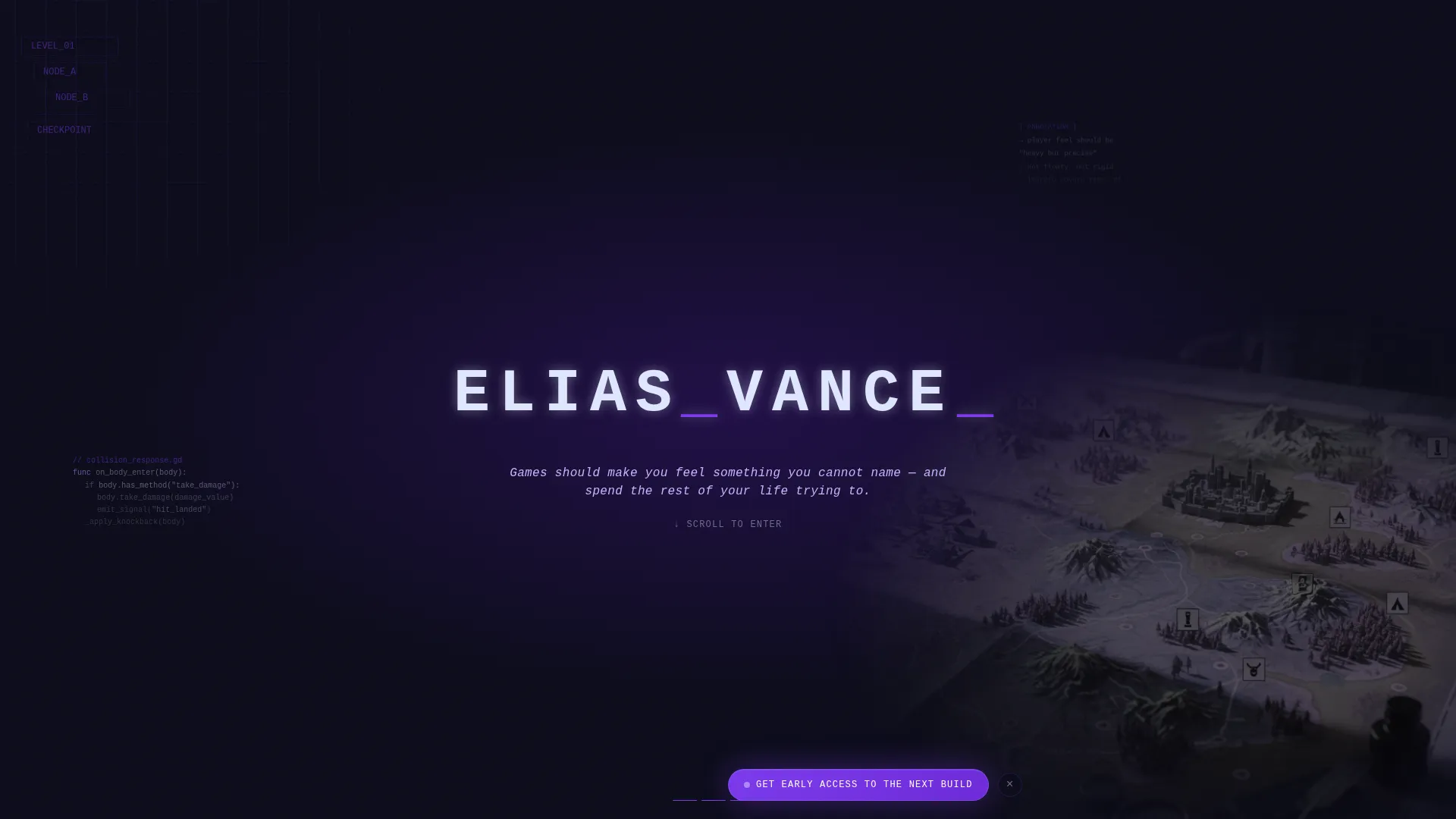
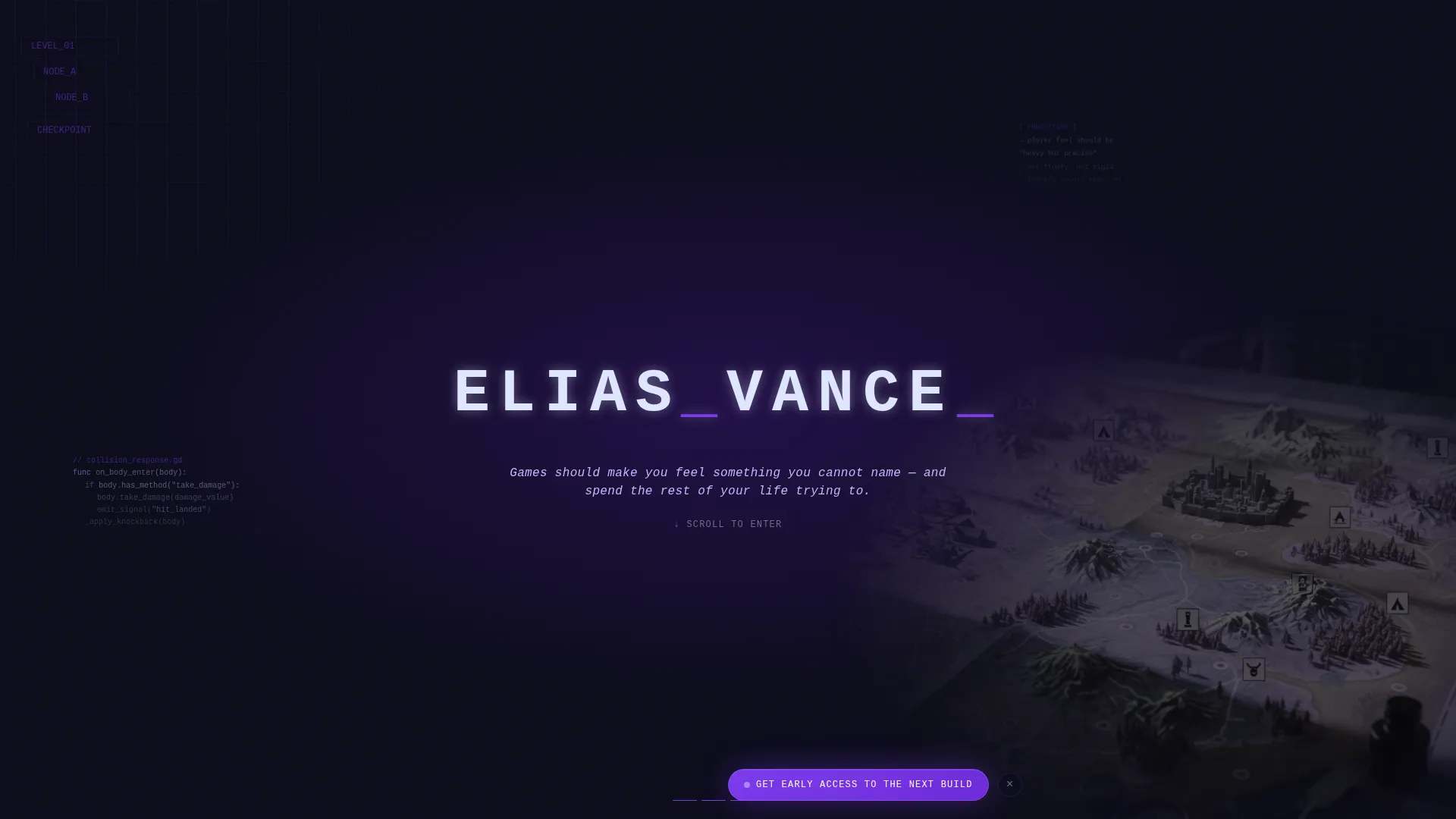
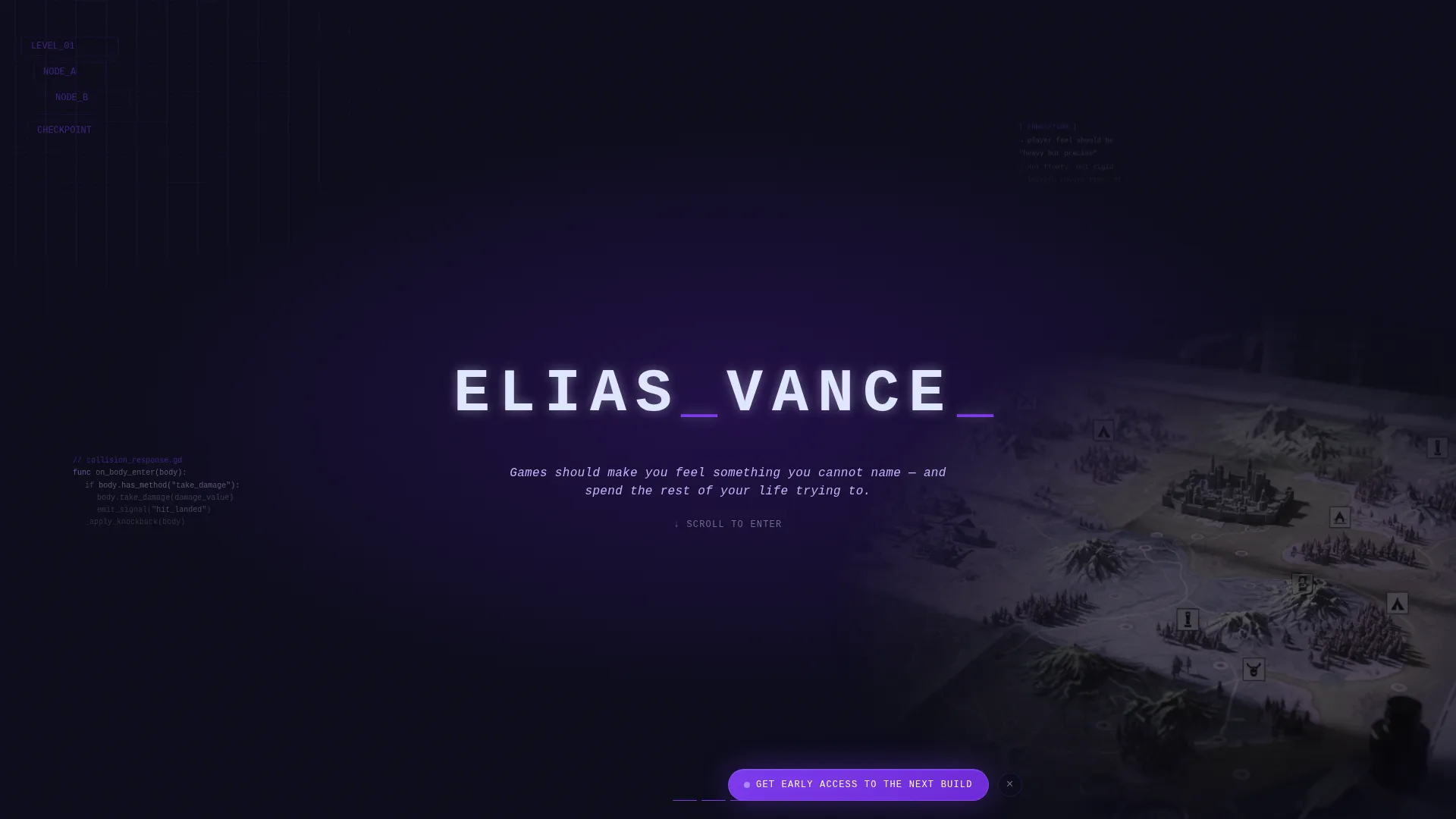
Forge is a full-width immersive landing page template built for game designers who want their portfolio to feel like an experience. It opens with a cinematic scroll-jacked hero sequence, moves through process, shipped work, and a curiosity-driven next-project tease, then closes with a minimal waitlist form. Dark, electric, and obsessively detailed.
by Rocket studio
Quick summary
Forge is a single-page immersive portfolio template designed for game designers. It pairs a four-scroll cinematic hero sequence with three distinct content acts covering process, shipped work, and an unrevealed next project. A persistent waitlist call to action captures signups from publishers, studio leads, and fellow designers before they ever reach the footer.
Who this template is for
This template is built for creative professionals in the game design space who need a portfolio that communicates craft before credentials. It speaks to people whose work has texture, history, and intent behind it.
- Independent game designers building a presence to attract studio collaborations or publishing interest
- Indie studio leads or publishers who want to evaluate a designer's process and taste, not just their shipped titles
- Game design bloggers and creative practitioners who want to combine a portfolio showcase with a waitlist for an upcoming project
What problem this template solves
Most portfolio templates treat a game designer like a developer with a resume. They present titles in a grid, list skills in a sidebar, and ask visitors to draw their own conclusions. Forge solves the opposite problem: it builds the case for you, sequentially and cinematically.
- Standard portfolio layouts fail to communicate creative voice, obsession, or process depth to publishers and collaborators
- Designers with an unrevealed next project have no structured way to build early anticipation and collect a segmented audience before launch
- Generic templates cannot carry the visual weight or tonal specificity that distinguishes a game designer's portfolio from a freelancer's brochure
What you get with this template
Forge delivers a complete single-page layout structured around three narrative acts, preceded by a scroll-locked cinematic introduction. Every section has a defined purpose and a clear visual language that holds together from the first cursor blink to the final form submission.
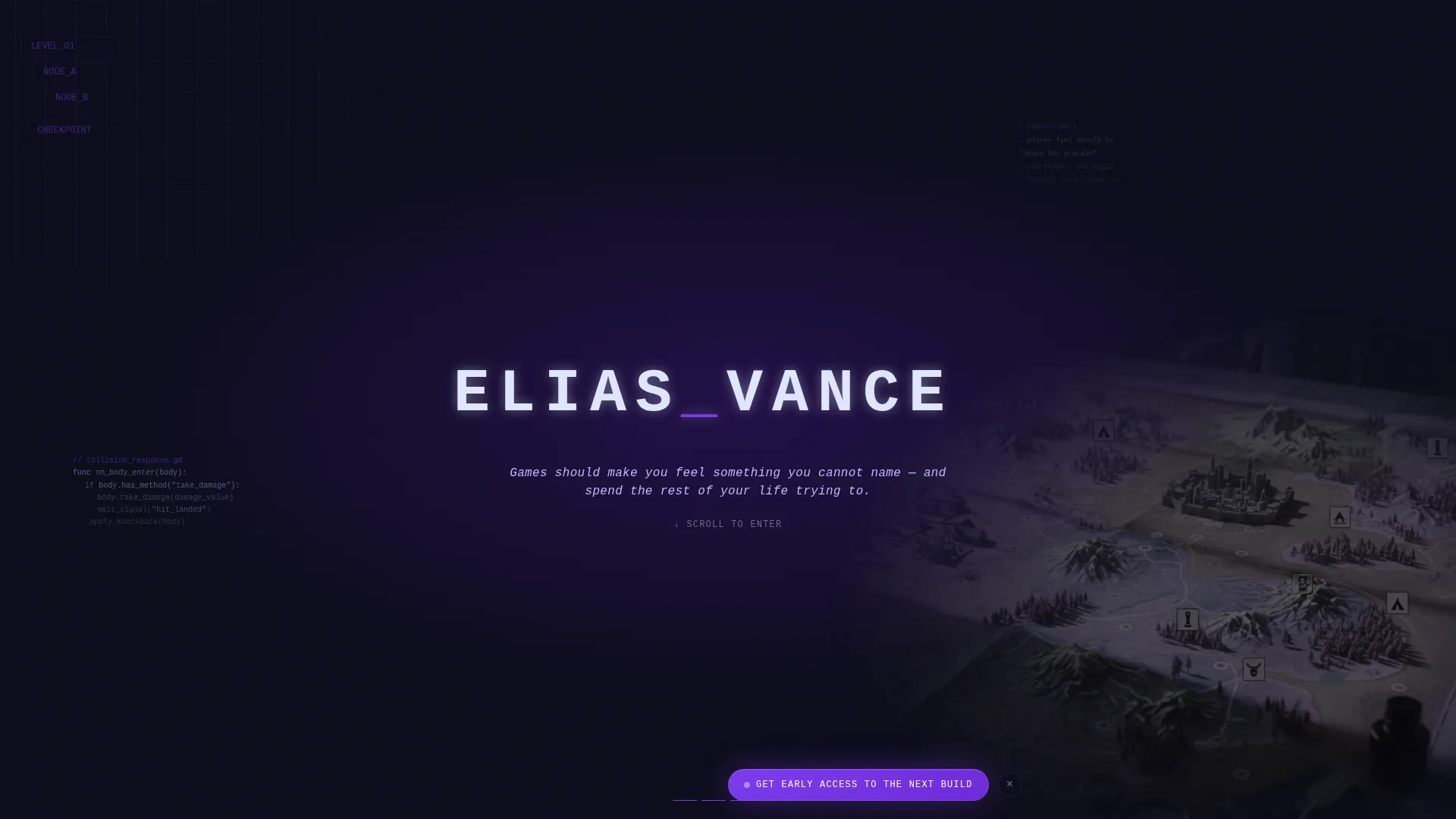
- A four-scroll-length cinematic hero with parallax layers, letter-by-letter name assembly, and a one-sentence designer manifesto
- Three themed content acts covering design process artifacts, shipped gameplay captures, and a redacted next-project tease with an inline waitlist form
- A persistent floating pill call-to-action and a minimal two-field email signup that segments respondents as either Designer or Player
Feature list
Forge ships with six core features derived directly from its brief. Each one serves the template's central purpose: prove taste, show process, and convert curiosity into a waitlist signup.
Scroll-Jacked Cinematic Hero
The hero section locks the viewport and guides the visitor through a four-scroll parallax sequence. Game art layers, user interface wireframes, and code fragments drift into frame at staggered depths. The designer's name assembles letter by letter in a monospaced typeface, followed by a single-sentence manifesto. No navigation and no logo appear during this sequence.
Three-Act Narrative Structure
The page body unfolds in three distinct acts. Act I presents process artifacts including sketchbook scans, annotated prototypes, and design journal field notes. Act II showcases shipped work through gameplay captures that autoplay with sound design fading in on scroll intersection. Act III teases the next unnamed project through redacted documents and cropped concept art designed to create hunger rather than satisfy it.
Full-Viewport Color Wash Transitions
Each act transition uses a full-viewport color wash that sweeps from deep indigo to electric violet. These scene-cut moments mark the shift between acts visually, reinforcing the cinematic pacing of the page as the visitor scrolls forward.
Persistent Pill Call to Action
After the scroll-jack sequence releases, a floating pill button materializes and remains visible as the visitor moves through all three acts. The call to action reads "Get Early Access to the Next Build" and stays accessible without interrupting the reading flow.
Minimal Segmented Waitlist Form
The waitlist form appears twice: once after the scroll-jack releases as a persistent element, and once anchoring Act III beside the redacted project reveal. It asks only for an email address and a single Designer or Player toggle. No extra fields and no friction.
Atelier Studio Dark Visual Identity
The template's visual system is built on a void black canvas with deep indigo section pools, electric violet hover and active accents, and pale phosphor body text. JetBrains Mono handles hero and code-style elements while DM Sans carries the body. The result feels like a development environment at night where the work itself is the only light source.
Page sections overview
| Section | Purpose |
|---|---|
| Cinematic Hero Sequence | Locks viewport, assembles designer name and manifesto across four scroll lengths |
| Act I: Process | Displays sketchbook scans, annotated prototypes, and design journal field notes |
| Act I to II Transition | Full-viewport indigo-to-violet color wash marking the scene shift |
| Act II: Shipped Work | Autoplays gameplay captures with intersecting sound design fade-in |
| Act II to III Transition | Full-viewport color wash introducing the final narrative act |
| Act III: Next Project | Shows redacted documents and cropped concept art to tease the unrevealed project |
| Waitlist Form Block | Anchors Act III with email field and Designer or Player toggle |
| Persistent Pill call to action | Floats across all post-hero sections with early-access signup prompt |
| Minimal Footer | Superhuman-style extreme minimal footer closing the page |
Design & branding system
Forge uses a tightly controlled Electric Indigo color system built to feel like a design studio running late into the night. Every color decision reinforces the sense that the only light in the room is coming from the work itself.
- Color palette: void black (#0B0B1A) as the dominant canvas, deep indigo (#2E1065) pooling in section backgrounds, electric violet (#7C3AED) on hover states and active accents, and pale phosphor (#E0E7FF) for body text
- Typography pairing: JetBrains Mono for the hero name assembly and code-aesthetic elements, DM Sans for all body copy and supporting text
- Visual style: Atelier Studio dark workshop aesthetic with high-animation cinematic pacing, parallax depth layers, and intersection-triggered interactions throughout
Mobile & speed optimization
Forge is built as a desktop-first template. The cinematic scroll-jack sequence, parallax depth layers, and intersection-triggered autoplay are all designed around the desktop browsing experience that publishers and studio leads typically use.
- Animation layer uses GPU-accelerated transforms only, keeping transitions smooth without relying on layout-triggering properties
- Scroll behavior is managed through CSS scroll-snap and Intersection Observer, which coordinate the hero sequence and autoplay triggers without heavy scripting overhead
- Desktop-first layout priority reflects the target audience context: game designers and publishers reviewing portfolios are predominantly on desktop environments
How this template helps you convert
Forge converts visitors by earning trust before asking for anything. The page sequences the visitor through evidence of craft, then uses unresolved curiosity about the next project as the final motivator to sign up.
- The cinematic hero and process act establish creative credibility immediately, so publishers and studio leads arrive at the waitlist form already convinced of the designer's taste and depth
- The persistent floating pill call to action keeps the signup prompt visible throughout all three acts without disrupting the immersive reading experience, reducing the chance that an interested visitor leaves before acting
- The Act III redacted reveal deliberately withholds just enough about the next project to make the waitlist feel like access rather than obligation, converting curiosity into a form submission
Other information about this template
Forge is categorized under Portfolio and Agency templates, specifically within the Game Designer Portfolio and Game Designer Blog subcategory. It is a full-width immersive layout intended for single-page deployment as a creative portfolio and waitlist landing page.
- Template style: Full-Width Immersive, Atelier Studio theme with an Electric Indigo color system and Cinematic Sequence creative direction
- Landing page direction: Waitlist and Coming Soon, structured to build an audience for an unrevealed next project while simultaneously serving as a live portfolio
- Header concept: Scroll-Jacked Experience with a four-length parallax sequence, no traditional navigation or logo present during the cinematic introduction
- The footer follows a Superhuman Extreme Minimal pattern, keeping the close of the page as clean and intentional as the opening
Theme
Atelier Studio
Creative direction
Cinematic Sequence
Color system
Electric Indigo
Style
Full-Width Immersive
Direction
Waitlist/Coming Soon
Page Sections
Scroll-jacked Cinematic Hero
Three-act Narrative Page Structure
Full-viewport Color Wash Transitions
Persistent Floating Pill Call to Action
Minimal Segmented Waitlist Form
Atelier Studio Dark Visual Identity
Related questions
Who is Forge built for?
Does the template include a way to collect early signups?
Is this template suitable for a designer who has not shipped a game yet?
Can this template be used as an ongoing blog as well as a portfolio?
What makes the waitlist form different from a standard contact form?