Glass Blower Portfolio Professional Website Template
Molten is a dark immersive horizontal scroll landing page built for glass blowing studios that create sculptural, one of a kind works. It places each finished piece against void black, letting light and color carry all the meaning. The template draws in interior designers, gallery curators, and private collectors through atmosphere-first storytelling and a dual call-to-action path toward the filterable archive.
by Rocket studio
Quick summary
Molten is a single-page horizontal scroll portfolio landing page for glass blowing studios. Every panel is built around darkness and light, letting each sculptural object become its own focal point against a void black background. The template is aimed at artists who create one of a kind works and need a digital space that earns desire before asking for commitment.
Who this template is for
This template is designed for working glass artists whose practice sits at the intersection of fine arts craft and luxury object making. It speaks directly to the kind of artist who has spent a long period refining a signature technique and now needs a digital presence that matches the seriousness of the work itself.
The visual language is intentionally elevated. It suits studios that sell to high-end buyers, place work in prestigious spaces, and treat the portfolio as the primary sales instrument. If your work explores the boundary between sculpture and light, this template was built with you in mind.
- Glass blowing studios and independent artists who create collectible, sculptural, or gallery-grade works
- Interior design professionals who also maintain a portfolio of commissioned art installations
- Emerging and established artists preparing for a solo exhibition, a solo show, or an institutional placement
What problem this template solves
Most portfolio templates are built for painters or illustrators. They assume a grid of images and a short bio. A glass artist's work does not translate well into a flat, bright, catalog-style layout. The object lives in three dimensions. It bends and refracts light. It needs darkness to reveal its full color range. Standard templates flatten that quality entirely.
This template solves the presentation gap by treating the landing page itself as a curated exhibition space. The horizontal scroll format turns browsing into a gallery walk. The void black environment makes each piece luminous. The technique passages add context without cluttering the visual field.
- Artists who need a portfolio that communicates luxury and craftsmanship to interior design clients, curators, and collectors
- Studios whose past work has been misrepresented by generic, bright-background portfolio templates that undercut the drama of hand-blown glass
- Creators who want to combine finished-work presentation with raw process documentation in a single, cohesive digital experience
What you get with this template
The template delivers a fully structured, dark-theme horizontal scroll landing page with five distinct panel zones. Each zone has a clear purpose within the visitor journey. The overall composition moves from atmospheric arrival through gallery immersion, process education, and finally to a dual conversion path.
Everything is built around the art. No distractions compete with the glass objects on screen. The template gives you a complete starting structure so you spend your energy on photography and copy, not on building page architecture from scratch.
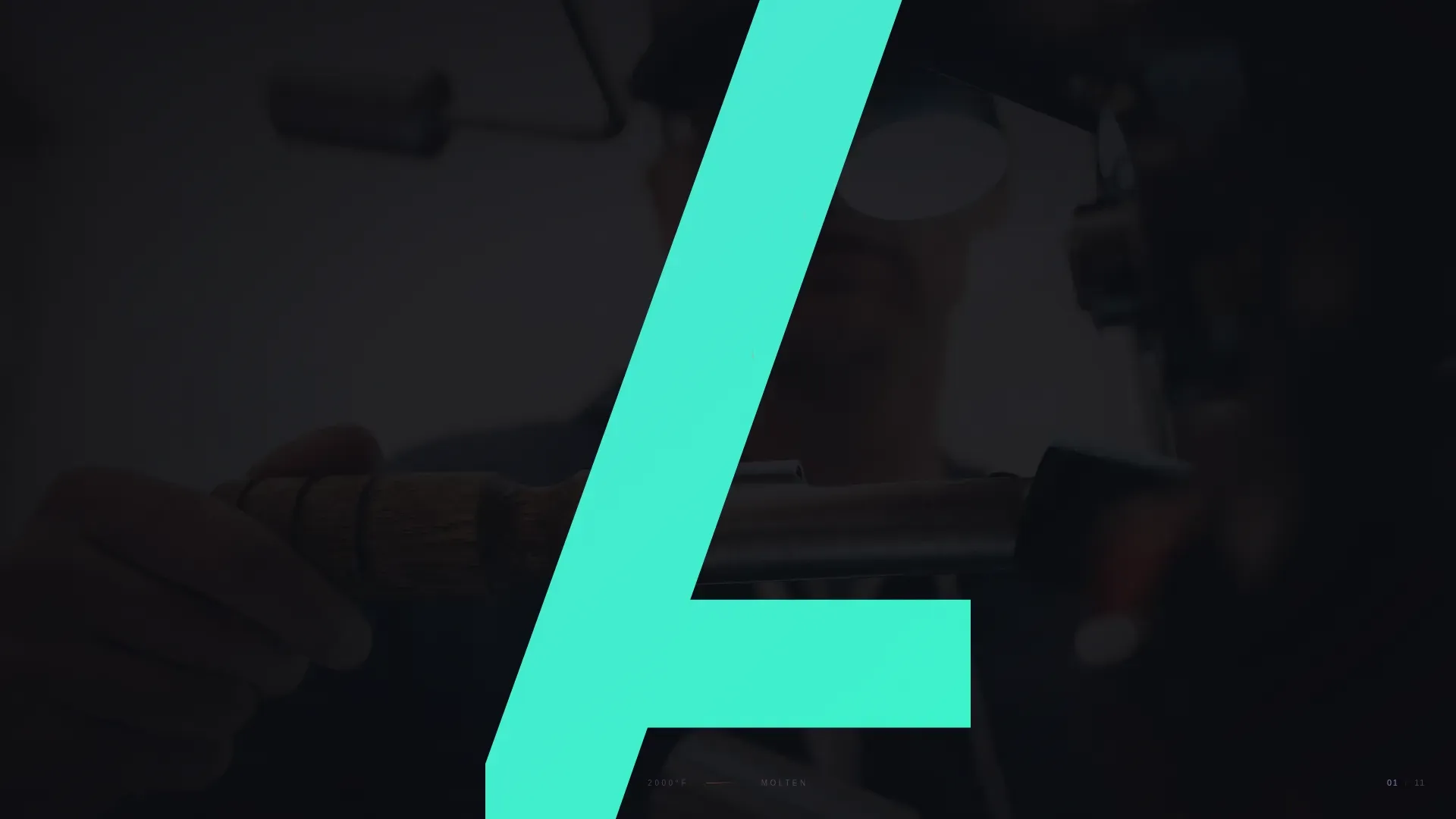
- A hero section with oversized clipped typography and a low-opacity video loop behind the letterforms, creating an immediate sense of furnace heat and artistic identity
- A horizontal gallery walk with individual piece panels, brief technique passages in thin opal type, and a full-viewport process video interruption midway through the scroll
- A dual call-to-action section presenting "Enter the Archive" and "Watch the Process" as two parallel paths into deeper engagement
Feature list
This section describes the core capabilities built into the Molten template as defined in the source brief.
Horizontal Scroll Gallery Architecture
The entire landing page runs on a horizontal scroll axis. Visitors move laterally through the panels the way they would walk through a dimly lit exhibition hall. Each panel is a self-contained composition: one glass object, pure black, and enough negative space to let the object's internal color shifts read clearly. The rhythm alternates between still object panels and text passages describing specific techniques such as cane pulling, incalmo, and murrine. This structure transforms browsing into a choreographed experience rather than a passive image scan. The horizontal format is unusual enough to hold attention and signal that the studio treats its digital space with the same care it applies to the work itself.
Immersive Hero with Clipped Typography
The hero opens with a single massive word set at two hundred viewport-width percent. Only the middle third is visible, clipped so the letterforms feel monumental rather than legible. Behind the type, a video loop of molten glass rotating on a blowpipe plays at ten percent opacity, breathing heat into the background without distracting from the typographic focal point. The gradient on the letters cycles slowly between opal violet and teal, mimicking the way light shifts through a prism inside a finished vessel. No navigation, no scroll cue, no supporting text competes for attention. The hero functions as a single intense image that places the visitor inside the studio atmosphere immediately.
Full-Viewport Process Video Panel
Midway through the horizontal scroll, the gallery walk pauses for a full-viewport video panel. This sixty-second continuous take follows a single piece from gather to finished form. The camera stays close enough to communicate radiant heat. This interruption serves a deliberate editorial function: it shifts the viewer's perception from finished object to creative process, building a sense of witnessing something private and skilled. The alternation between stillness and motion, silence and roar, is core to how the template earns emotional investment before presenting any call to action.
Dual Conversion Path with Magnetic Buttons
The archive section at the end of the scroll presents two parallel calls to action. "Enter the Archive" opens a filterable catalog of available and sold works organized by series, technique, and year. "Watch the Process" links to a long-form documentary reel. Both buttons are built as magnetic elements that respond to cursor proximity, drawing the pointer slightly toward the button center. The design avoids any hard-sell language. Instead, the page positions archive access as a privilege earned through the preceding gallery experience. This approach is highly valued by audiences who distrust transactional design.
AI Iridescent Color System
The palette is structured around void black as the dominant field. Kiln ember orange, molten opal violet, and shifting teal appear only as light sources within the composition, never as background fills. This mirrors the way a darkened studio looks when the furnace mouth is the only source of illumination. The iridescent color system means the palette shifts subtly with cursor interaction and hover states, giving the page a living quality that static designs cannot achieve. The teal is reserved for cursor trails and hover states, so it only appears when the visitor is actively engaging.
GSAP ScrollTrigger Animation System
Every reveal in the template is driven by GSAP ScrollTrigger. Panels blur into focus as they enter the viewport. Text passages fade and translate on the horizontal axis. The process video panel triggers automatically as it enters the scroll position. The cursor leaves a teal trail across the dark field. These animation layers create high energy movement throughout the browsing experience without relying on autoplay audio or forced transitions. The animation system is calibrated to feel like the work itself: controlled, deliberate, and slightly hypnotic.
Page sections overview
| Section | Purpose |
|---|---|
| Hero Typography Panel | Establishes studio identity through oversized clipped letterforms and a low-opacity furnace video loop |
| Horizontal Gallery Walk | Presents individual sculptural pieces against void black with lateral scroll navigation |
| Technique Text Passages | Provides brief process context for cane pulling, incalmo, and murrine between gallery panels |
| Process Video Panel | Full-viewport sixty-second documentary take creating a raw creative process interruption |
| Archive Call to Action | Dual conversion path: "Enter the Archive" catalog and "Watch the Process" documentary reel |
| Minimal Footer | Extreme minimal footer closing the page without visual competition |
Design & branding system
The Molten template uses a dark immersive visual language built entirely around the logic of a working glass studio at night. Everything recedes into black so the objects become the sole source of color. This is not a decorative choice. It is a structural one: the darkness is load-bearing, making every piece of glass on screen appear to emit its own light.
The typography pairs an ultra-thin serif at display size with a clean body face for technique passages. The contrast between the monumental hero letterform and the small, quiet body text mirrors the contrast between the furnace's roar and the silence of a finished object on a shelf. The color palette cycles slowly in interactive states, giving the design a sense of living breath.
- Void black (#0B0B0F) as the dominant background field, deep petroleum (#1A1A2E) for panel depth, kiln ember (#FF6A2F) and molten opal (#C4A7FF) as the primary color accents drawn from the glass objects themselves
- Shifting teal (#2FFFC8) reserved exclusively for hover states, cursor trails, and interactive focus moments so the color carries meaning only when the visitor is active
- Ultra-thin serif for display typography, clean sans-serif for body copy and technique passages, with all text rendered at low contrast against black to keep the visual hierarchy from competing with the glass images
Mobile & speed optimization
The template is designed desktop-first because the horizontal scroll experience is most powerful on a wide screen. The full gallery walk, the lateral movement between panels, and the scale of the hero typography all read best in a landscape viewport. However, the template includes a mobile fallback that converts the horizontal flow into a vertical scroll sequence so the content remains fully accessible on smaller screens.
The video loop in the hero plays at ten percent opacity and is intentionally lightweight in its visual role. The gallery panels use lazy-loaded images so only the visible or near-visible panel loads at any given moment. These structural choices help the page stay responsive without sacrificing the high-quality media that makes the template work.
- Desktop-first horizontal scroll layout with a vertical fallback for mobile devices, ensuring the dark theme remains legible across screen sizes without causing visual strain
- Lazy-loaded gallery panels and a low-opacity background video loop to manage media weight during the browsing session
- High-quality image support for individual piece photography shot against pure black, preserving the internal color detail that makes hand-blown glass objects compelling on screen
How this template helps you convert
The Molten template does not use urgency tactics or aggressive calls to action. It converts through a different mechanism: atmosphere and desire. By the time a visitor reaches the archive section, they have already walked through the gallery, read the technique passages, and watched the process video. The conversion moment arrives after a complete experience, not before.
This sequencing matters enormously for the target audience. Interior designers sourcing statement pieces need to trust the studio before recommending a work to a client. Gallery curators need to feel that the artist's world view is coherent and fully formed. Private collectors need to feel that entering the archive is an act of connoisseurship, not a shopping click.
- The hero section establishes immediate authority through scale, darkness, and the suggestion of active craft, setting the emotional context for everything that follows and making the studio feel like a serious art world presence rather than a hobbyist operation
- The gallery walk builds desire panel by panel, with technique passages adding intellectual depth alongside visual beauty, so by the midpoint the visitor is already invested in the creative process and curious about what else exists in the catalog
- The dual call-to-action path at the end respects the visitor's interest level by offering two distinct entry points, one for buyers ready to browse available works and one for viewers who want to understand the practice more deeply before committing
Other information about this template
The Molten template sits within a long line of portfolio formats that place the art above all else. Its approach draws from the logic of gallery architecture: remove everything that does not serve the work, then let the work speak at full volume. This philosophy connects the template to a broader world of fine arts presentation traditions, where the installation of objects in space is itself a meaningful act.
Artists working across diverse disciplines, from painting and drawing to sculpture and mixed media, have spent a long period evolving how they present their own work online. The past few years have seen a clear shift: collectors and curators now expect a digital portfolio to feel like a curated space, not a product catalog. The Molten template responds to that shift directly.
The template also connects to broader conversations in the visual arts and fine arts communities about how craft-based disciplines should position themselves in contemporary digital spaces. Glass blowing sits within a long line of art history that includes both functional and purely sculptural object making. The work of contemporary artists in glass, ceramic, and metal has grown highly valued in the art market, placing it alongside painting, drawing, collage, and other traditional fine arts disciplines.
The template's color thinking draws on a deep understanding of how glass objects behave as light sources. Unlike a landscape painting or a figure drawing where the picture plane holds the image flat, a glass vessel has depth that shifts with the angle of view. The template's dark background and glowing accent system honor that three-dimensional light behavior on a two-dimensional screen.
Building a portfolio for an artist who works at the fine arts level often involves navigating the space between gallery representation and direct collector relationships. The Molten template supports both paths: the archive can serve as a quiet catalog for collector outreach while the gallery walk functions as the kind of immersive presentation an art critic or curator might encounter at an opening. The template's extreme minimal footer, structured on a clean and quiet closing note, ensures the final impression is polish rather than clutter.
The template's design principles align with what educators at every major art institute and fine arts school teach about presentation: let the work occupy center stage, use negative space generously, and trust the viewer to engage without being prompted at every step. Students at institutions that focus on fine arts and visual arts training will recognize these principles immediately. Artists who studied in environments ranging from small craft schools to programs affiliated with institutions like the Pratt Institute will find the design sensibility familiar and immediately credible.
No-code platforms can streamline the process of building a portfolio for artists, enabling them to focus more on their creative work rather than on technical construction. AI-powered no-code tools allow artists to create and manage their portfolio websites without needing extensive programming knowledge. AI tools can assist artists in generating content for their portfolio websites, such as descriptions and page layouts, based on their input. Artists can use these tools to quickly iterate on portfolio designs, allowing for rapid experimentation and updates. No-code tools can also help artists integrate additional functionalities into their portfolio sites, such as social media links, without coding.
The template supports high-quality media including large, high-resolution images and video content. Effective landing pages for glass artworks use a clear flow that guides visitors toward specific actions, and the Molten template is structured precisely around this principle.
- The template's visual identity is designed for the luxury and fine arts collector market, connecting glass blowing to the long line of highly valued studio craft disciplines that includes metal work, ceramic sculpture, and textile arts
- The dark color strategy, deep black and charcoal with glowing orange accents, is consistent with how world-class museum installations light glass and ceramic objects, giving the template credibility in institutional contexts
- The template is suitable for diverse portfolio content from a single focused series to a broader body of work spanning multiple techniques and years, giving the artist flexibility in how they organize the archive behind the main page
- Art institute faculty, museum curators, and gallery directors who review portfolio sites will recognize the design's seriousness; the template avoids the common mistake of over-explaining work that should be encountered directly
- Artists from the east coast studio craft tradition, as well as those working in international contexts including communities near the arctic circle where natural light and glass share a compelling cultural resonance, will find the atmospheric approach relevant to their practice
- The "liquid glass" aesthetic, characterized by dark backgrounds, translucent frosted glass panels, and vibrant glowing elements, is a current direction in both interface design and in how contemporary artists are presenting immersive digital spaces for their work
- The template's approach to natural history and the human condition, while not explicit in any section heading, lives in the technique passages: naming processes like incalmo and murrine connects the work to centuries of craft history and positions the artist within a global conversation about making art with fire and sand



Theme
Dark Immersive
Creative direction
Immersive Visual
Color system
AI Iridescent
Style
Horizontal Scroll
Direction
Content/Resource
Page Sections
Horizontal Scroll Gallery Walk
Immersive Hero with Clipped Giant Headline
Full-viewport Process Video Panel
Magnetic Dual Call-to-action Section
AI Iridescent Dark Color System
GSAP Scrolltrigger Animation Layer
Related questions
Is this template suitable for a solo exhibition announcement?
Can this template work for fine arts disciplines beyond glass blowing?
How does the dual call-to-action path serve different visitor types?
Does the template support high-resolution images and video content?
Who is the ideal buyer for this template?