Mutual Aid Network Landing Page Template
Gather is a heartfelt mutual aid landing page template built for neighborhood networks that pool groceries, share rides, and pass along what they have. A hero-dominant single-page layout with a manifesto hero, community photo gallery, stat blocks, and a lightweight event registration form, it turns first-time visitors into Saturday volunteers before they ever feel asked.
by Rocket studio
Quick summary
Gather is a warm, mobile-first mutual aid landing page template designed for neighborhood-scale giving and receiving. It opens with a full-viewport manifesto hero in deep teal, flows through a mosaic community gallery with real-neighbor stat blocks, explains three simple roles, and closes with a lightweight "Show Up Saturday" registration form. The whole page earns trust before it asks for anything.
Who this template is for
This template was built for the people already doing the work on the ground. It fits anyone running a neighborhood-scale mutual aid network who needs a page that feels human, not institutional.
- Block captains and community organizers coordinating coat drives, food runs, or shift sign-ups
- Volunteers and neighbors who want to offer groceries, rides, childcare, clothing, or time
- Families and individuals quietly searching for help with school supplies, diapers, or a ride to a medical appointment
What problem this template solves
Most community pages look like government forms or charity websites. They lead with logos, statistics, and donation buttons. The person who just lost their job or the retiree who wants to tutor but does not know where to show up needs something warmer than that.
- Generic nonprofit templates feel cold and transactional, creating distance instead of trust
- Visitors leave before they understand what the network actually does or how simple it is to join
- High-commitment sign-up flows push away people who are curious but not yet ready to commit
What you get with this template
You get a fully structured, single-page layout that moves visitors from skepticism to registration through a clear emotional arc. Every section has a defined job, and together they build the case for showing up on Saturday.
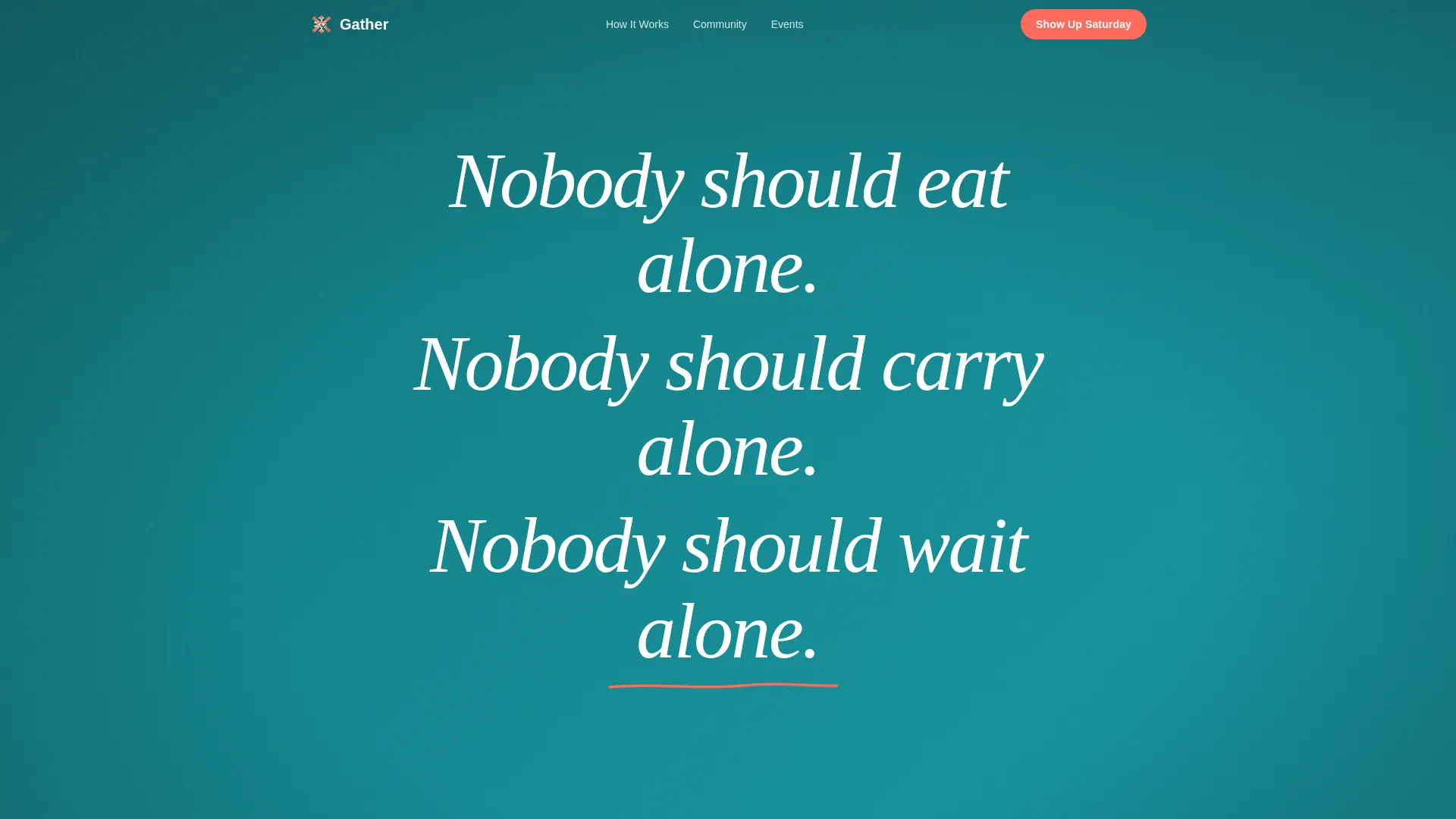
- A full-viewport manifesto hero with scroll-reveal text lines and a coral underscore bloom animation
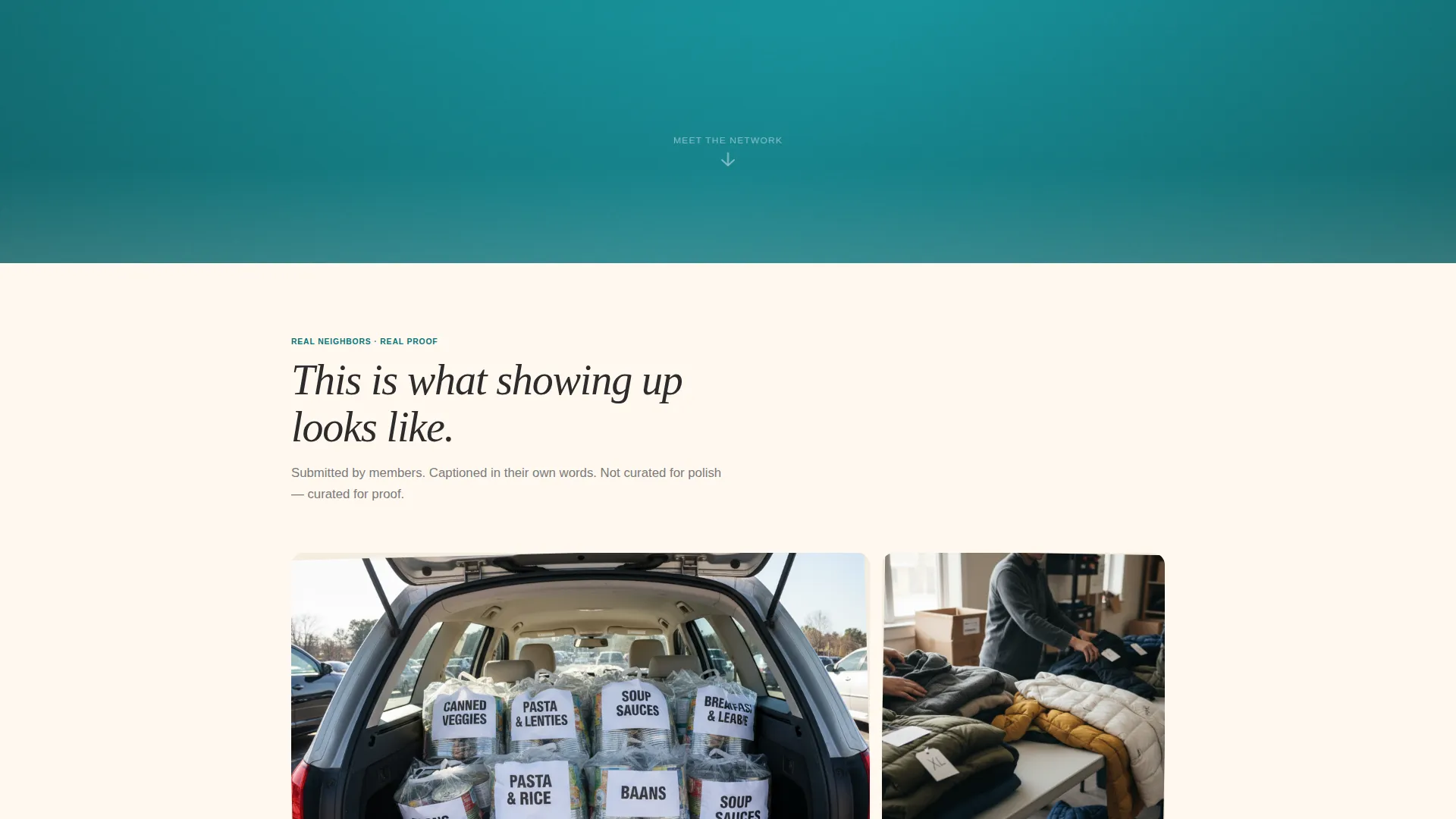
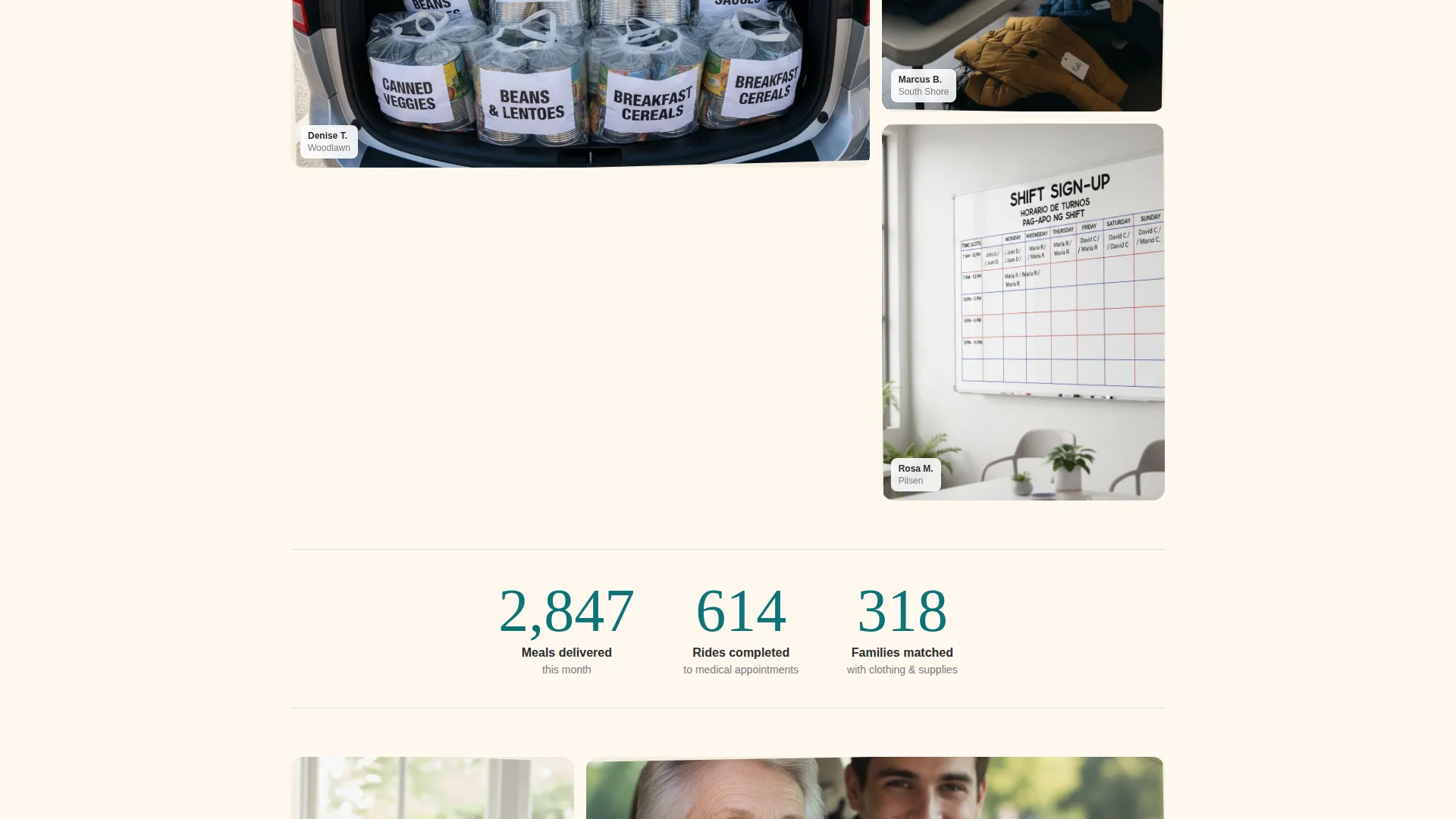
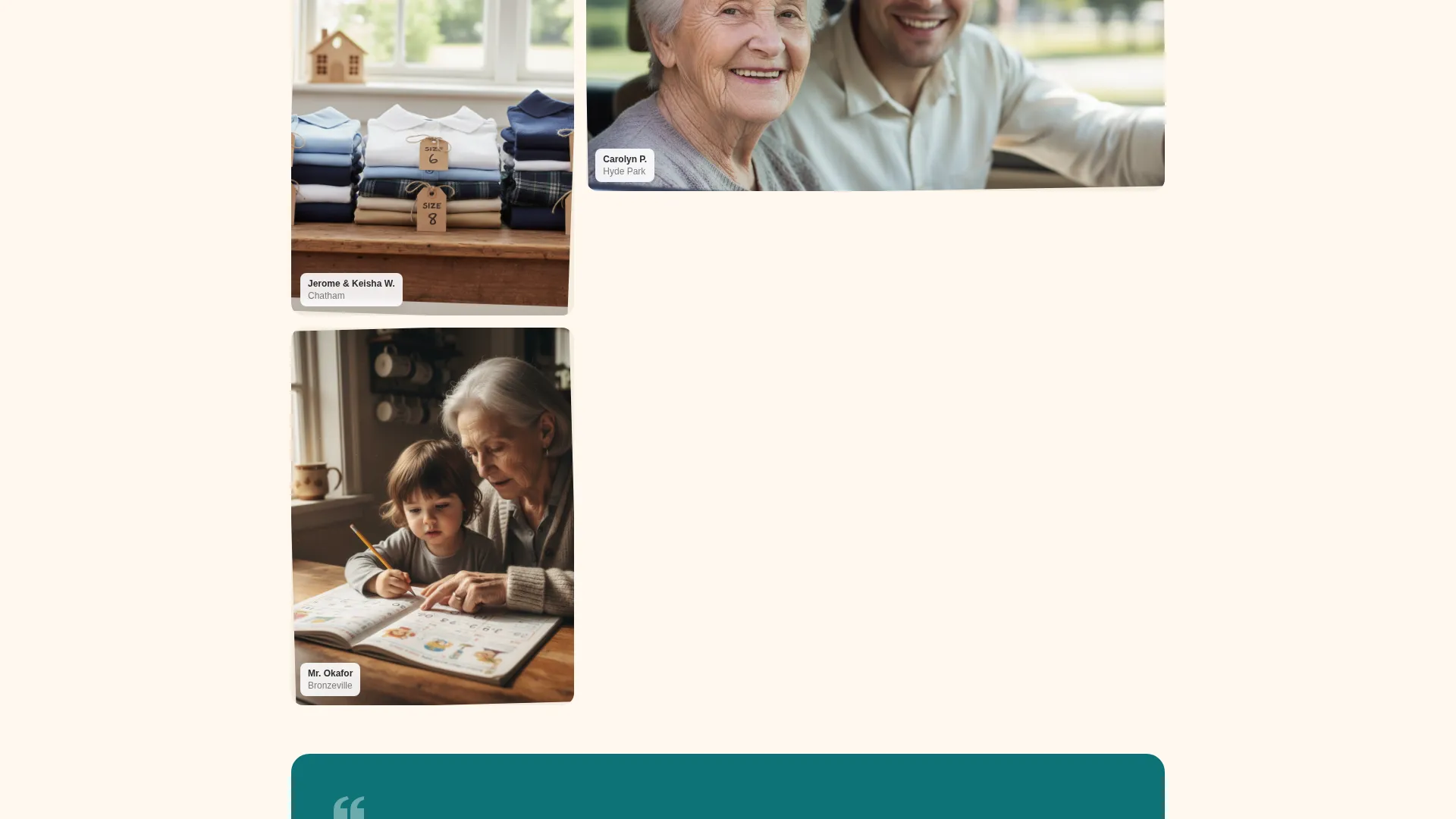
- A community gallery section with a mosaic photo grid, first-name captions, and alternating hand-counted stat blocks
- A three-role "How Gather Works" bento layout, an event registration form, a text-list escape hatch, and a minimal footer
Feature list
This template includes purpose-built features drawn directly from the Gather design brief. Each one serves the core goal: connect neighbors who can give with neighbors who need help.
Scroll-Reveal Manifesto Hero
The hero fills ninety percent of the viewport with white hand-lettered-style type over a slow-panning teal gradient. Each line of the manifesto appears on scroll as if being written in real time, with a coral underscore that blooms beneath the final word. A pulsing downward arrow signals there is more below.
Mosaic Community Gallery
Member-submitted photographs are arranged in a loose, unperfected grid that prizes proof over polish. Each image carries a first name, a neighborhood, and one sentence about what that person gave or received. The layout creates the feeling of a community bulletin board, not a brand campaign.
Hand-Counted Stat Blocks
Between photo clusters, short data blocks surface key numbers, such as meals delivered, rides completed, and families matched, in large teal numerals. The style feels hand-counted and honest rather than dashboarded and distant. These blocks alternate with photo clusters to balance feeling and evidence.
Floating "Show Up Saturday" Button
Once the hero scrolls out of view, a coral call-to-action button pins itself to the screen and follows the visitor down the page. It opens a lightweight registration form asking only for a first name, zip code, a single dropdown, and an optional phone number. The form appears only after the visitor has already met the network through the gallery.
Three-Role "How Gather Works" Section
An asymmetric bento layout presents three simple entry points: Bring, Need, and Give Time. This section removes ambiguity for first-time visitors and gives everyone a clear place to land, whether they have surplus goods, need support, or want to volunteer hours.
Low-Commitment Text List Sign-Up
A secondary text link beneath the registration form reads "Just watching for now? Join the text list." This escape hatch keeps lower-commitment visitors inside the network rather than letting them leave empty-handed.
Page sections overview
| Section | Purpose |
|---|---|
| Manifesto Hero | Opens with full-viewport teal gradient and scroll-reveal manifesto quote |
| Community Gallery | Mosaic photo grid with first-name captions and alternating stat blocks |
| How Gather Works | Three-role bento layout explaining Bring, Need, and Give Time |
| Show Up Saturday | Inline or modal event registration form with coral call-to-action |
| Text List Escape | Secondary low-commitment sign-up for visitors not ready to register |
| Minimal Footer | Single-row linear footer with essential links |
Design & branding system
The visual identity follows a Family First theme expressed through the Teal Catalyst color system. The palette is deliberately earnest and warm, built to feel like a hand-painted sign on a community center door rather than a polished nonprofit campaign.
- Deep community teal (#0D7377) dominates the hero and large display elements, carrying authority without feeling institutional
- Warm kitchen-light cream (#FFF8F0) fills the body background, letting content breathe between teal and coral moments
- Bright catalyst coral (#FF6B5B) is reserved exclusively for buttons and urgent callouts, sparking action without feeling corporate
- Charcoal pencil (#2C2C2C) handles all body text for clean, readable contrast on cream backgrounds
- Fraunces is used for the manifesto and display type; DM Sans handles body copy and interface elements
Mobile & speed optimization
Both the block captain on her porch and the father searching from his phone are the primary audience. The template is built mobile-first from the ground up, so the experience on a small screen is never an afterthought.
- Images in the community gallery are lazy-loaded so the page begins rendering quickly even on slower mobile connections
- Scroll-reveal and underscore bloom animations are handled with GPU-accelerated CSS so they stay smooth without draining battery
- The floating call-to-action button is sized and positioned for thumb reach on mobile viewports
How this template helps you convert
The page is structured so that visitors earn trust before they are ever asked to do anything. By the time the registration form appears, the visitor has already read the manifesto, seen real neighbor faces, and understood the three ways to participate.
- The scroll-reveal hero creates an emotional connection in the first few seconds, using words alone to communicate the weight and warmth of the network before any data or asks appear.
- The community gallery alternates real photographs with hand-counted stat blocks, building both heart-level trust and evidence-based credibility in a single scroll.
- The floating coral button and low-commitment text-list link give visitors two clear next steps at different levels of readiness, reducing drop-off for people who are curious but not yet certain.
Other information about this template
This template is part of a broader library of community and nonprofit landing page designs. A few additional details are worth knowing before you use it.
- The template style is Hero-Dominant (90/10), meaning the hero section commands ninety percent of the initial viewport and the remaining content follows in a supporting role
- Animation intensity is set to high, including scroll-reveal per line, staggered gallery entry, floating button appear-on-scroll, and the coral underscore bloom
- The page is localized for English-language, United States neighborhood contexts
- No stock photography is specified in the hero; the manifesto design relies on typography and gradient alone
- The community gallery is designed to accept real member-submitted photos rather than curated stock imagery, which reinforces authenticity
- The footer follows a Pattern 1 Linear Single-Row layout, keeping the close of the page minimal and uncluttered
Theme
Family First
Creative direction
Community Gallery
Color system
Teal Catalyst
Style
Hero-Dominant (90/10)
Direction
Event Registration
Page Sections
Scroll-reveal Manifesto Hero
Mosaic Community Gallery
Hand-counted Stat Blocks
Floating Event Registration Button
Three-role Bento Layout
Low-commitment Text List Escape Hatch
Related questions
Can I use this template without real member photos?
Is this template right for a small neighborhood group?
How does the Show Up Saturday registration form work?
What happens if a visitor is not ready to register for the event?
Can I edit the three roles in the How Gather Works section?