Lupus Support Group Landing Page Template
Gather is a warm, single-page landing page built for a lupus peer support community. It guides visitors toward reserving a seat at weekly virtual meetings through emotional storytelling, real member testimonials, and a low-friction scheduling flow. The design uses a soft forest-inspired palette and alternating zigzag sections to feel inviting and safe from the very first scroll.
by Rocket studio
Quick summary
Gather is a booking-focused landing page for a lupus peer support group. It combines a centered hero headline, a testimonial mosaic in alternating zigzag layout, an inline session scheduler, and a secondary email sign-up path. The result is a warm, judgment-free entry point that moves visitors from first impression to reserved seat with minimal friction.
Who this template is for
This template is built for lupus community organizers and peer support facilitators who need a heartfelt, conversion-ready landing page. It speaks directly to people living with chronic illness and those who support them.
- Newly diagnosed women in their thirties who are still adjusting to life with lupus
- Long-term lupus patients managing disability paperwork or isolation on their own
- Caregiving partners who need community reassurance as much as their loved ones do
What problem this template solves
Finding community after a lupus diagnosis is hard. Most online spaces feel clinical, overwhelming, or require too much explanation just to belong. This template removes those barriers entirely.
- It leads with emotional safety before asking for any commitment
- It replaces long sign-up forms with a first-name and email field only
- It gives hesitant visitors a quieter path in through a weekly check-in email option
What you get with this template
You get a complete, single-page layout designed around booking and belonging. Every section earns its place by reducing hesitation and building trust.
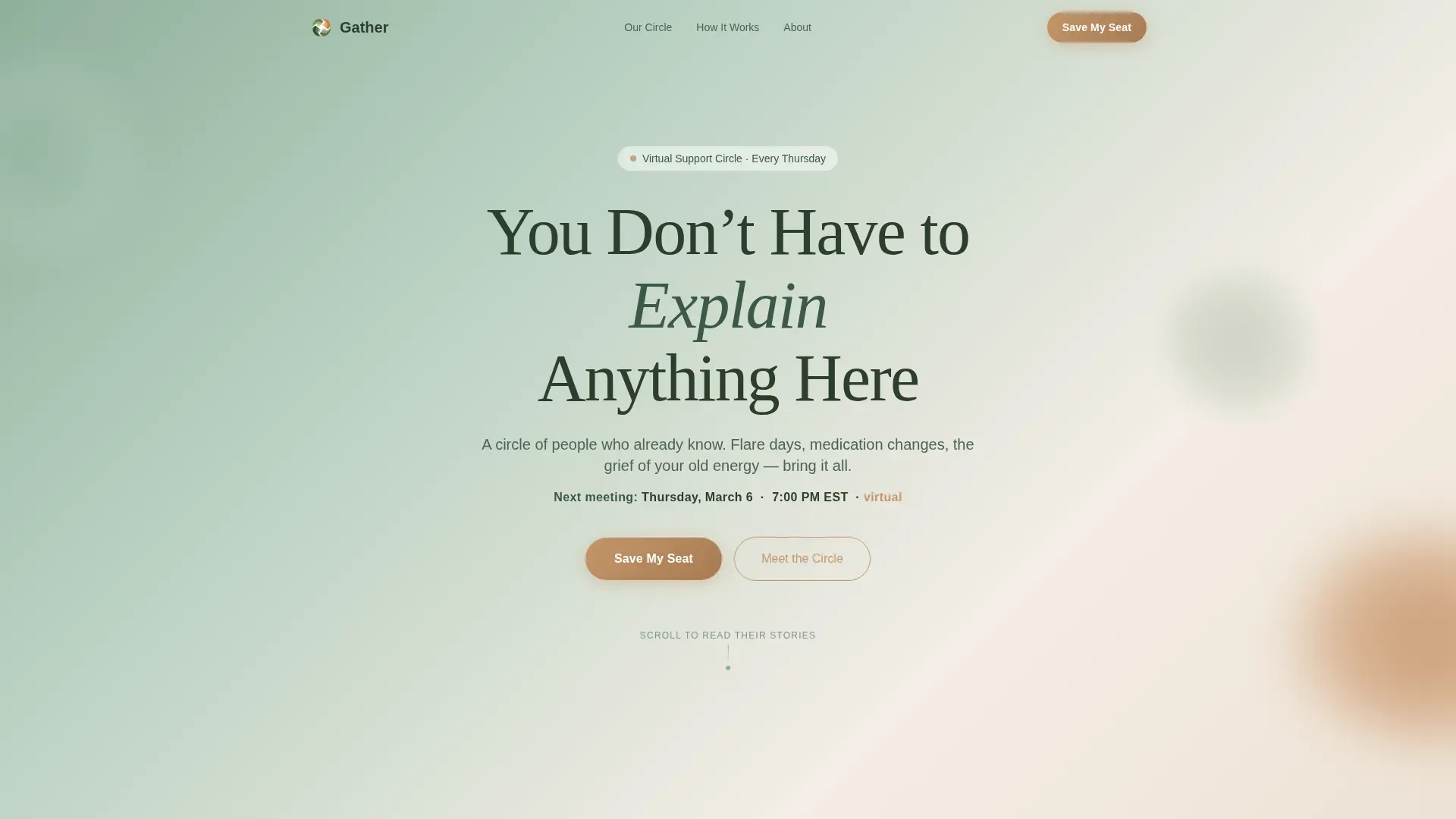
- A hero section with a centered headline and meeting date details on a sage-to-birch gradient
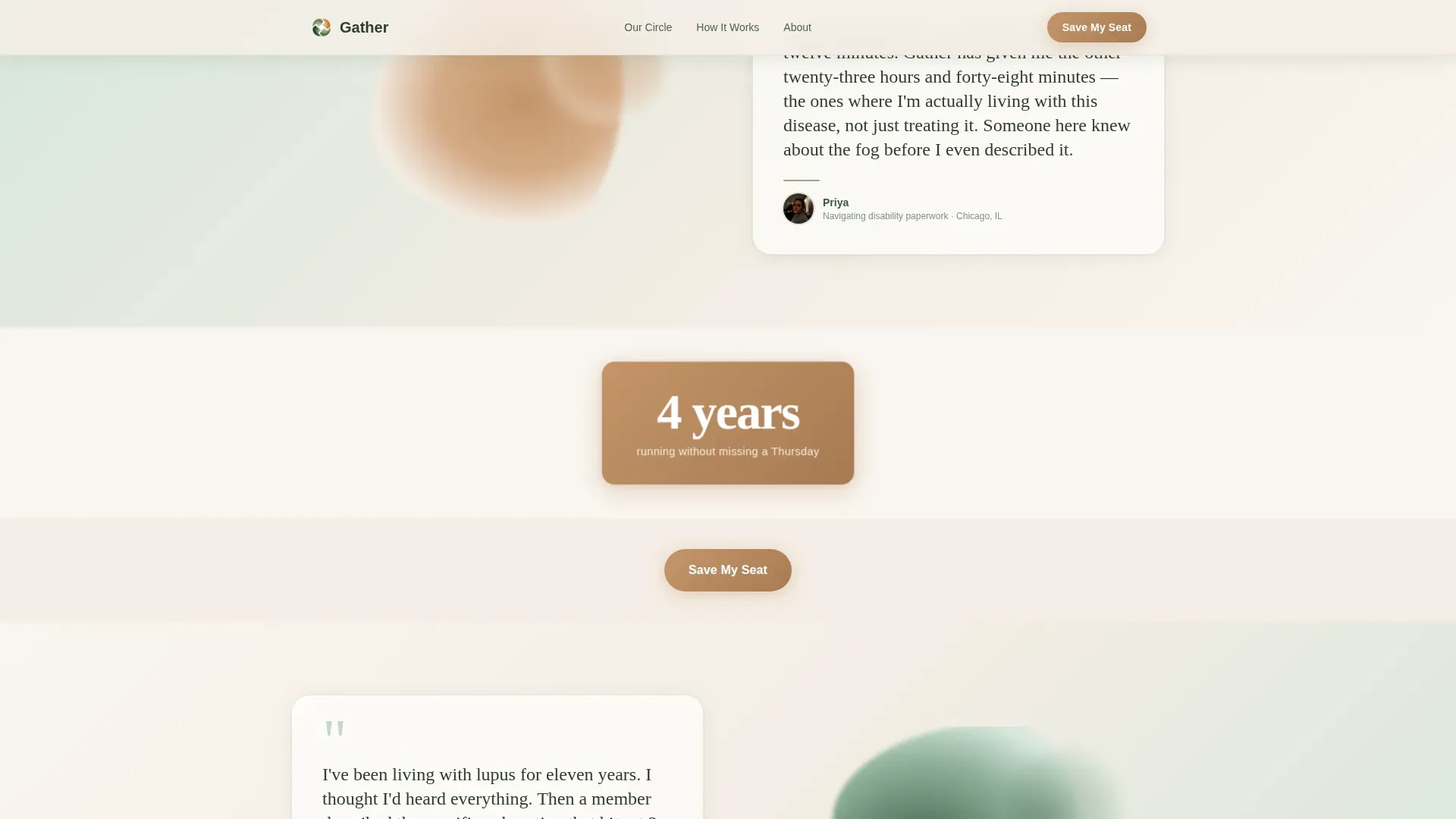
- A zigzag testimonial mosaic with floating social-proof stat callouts between story pairs
- An inline scheduling widget showing the next three upcoming sessions with spots remaining
- A secondary soft call-to-action email path for visitors who are not ready to commit yet
- A final heartwood amber call-to-action banner and an arc-style footer
Feature list
This template is built around six purposeful components that work together to lower hesitation and increase seat reservations.
Centered Hero Headline
The hero opens with a single large serif headline set on a sage-to-birch soft gradient. Below it sits the next meeting date, time, and the word "virtual" in moss. Whitespace does the heavy lifting. No competing imagery distracts from the message.
Zigzag Testimonial Mosaic
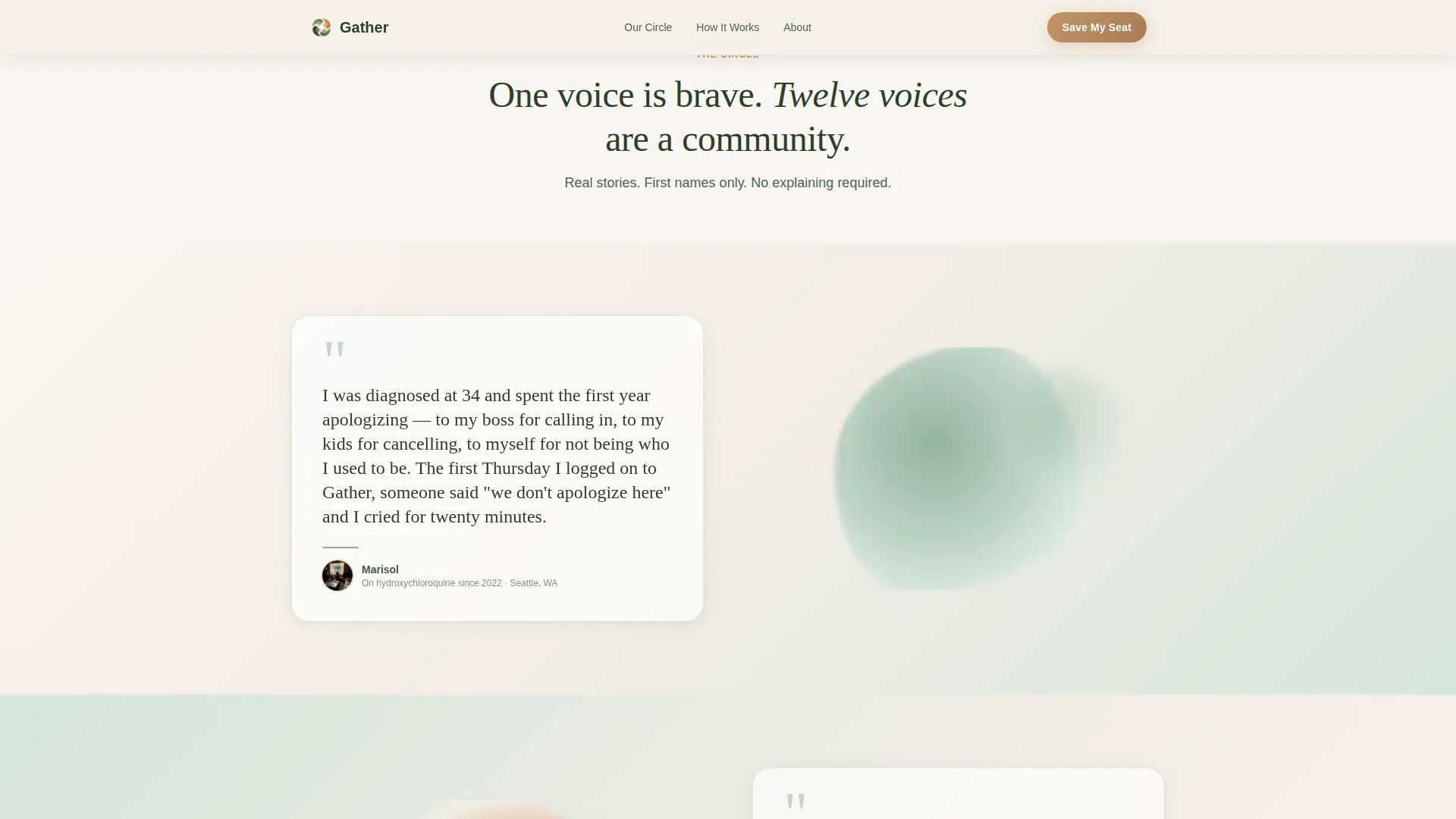
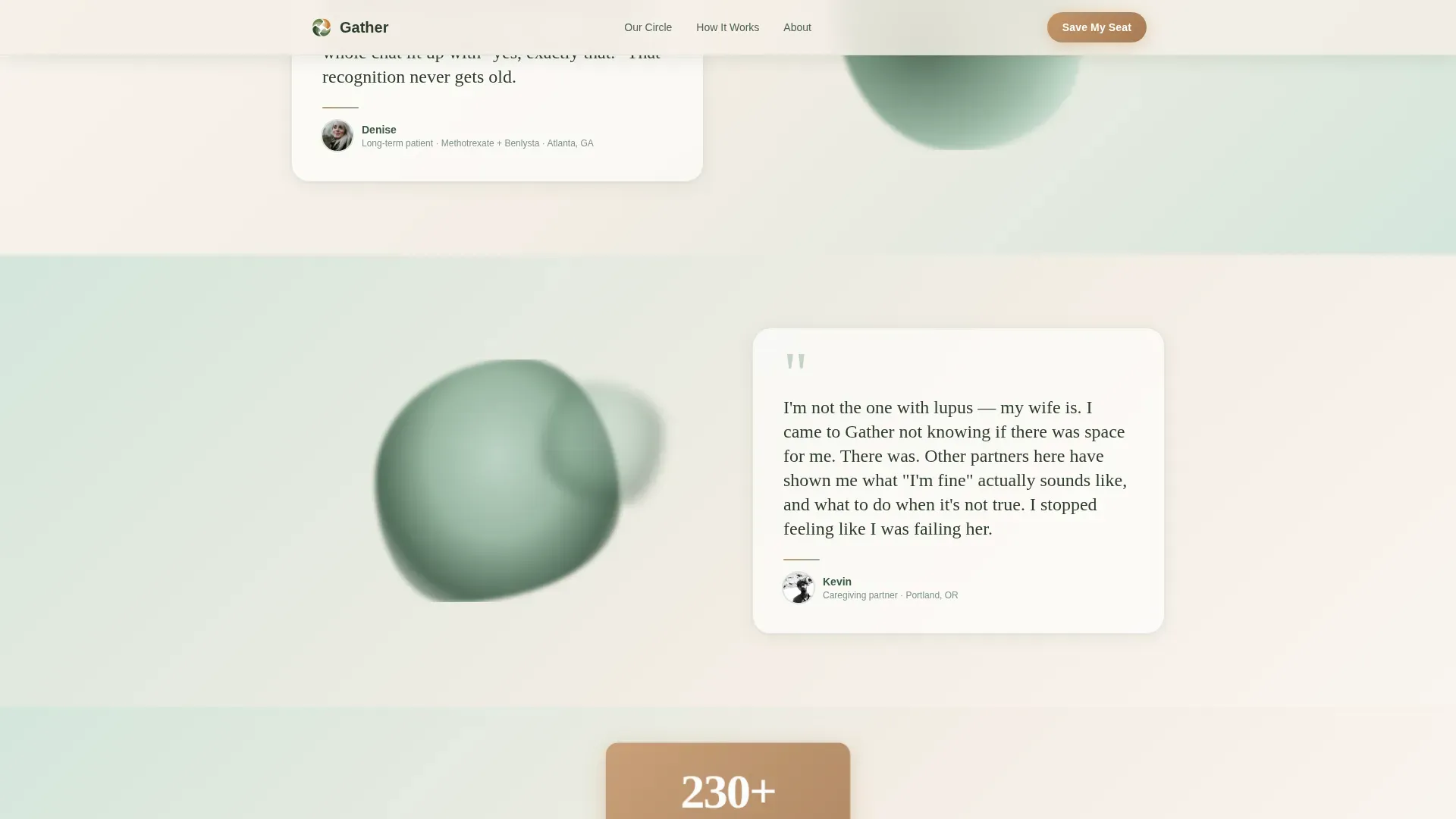
Alternating sections pair a real first-name member story on one side with a soft watercolor-style gradient shape on the other. Stories are two to three sentences each, raw and specific. The layout builds from one voice to twelve, turning individual bravery into visible community.
Floating Stat Callouts
Between every second testimonial pair, a single social-proof statistic floats in heartwood amber. Stats like member count, years running, and weekly meeting cadence appear as standalone callouts. They reinforce trust without interrupting the emotional flow of the stories.
Inline Session Scheduler
The scheduling widget sits inline on the page and displays the next three upcoming meeting dates. Each session shows remaining spots so visitors feel the real-time pull of limited availability. The form collects only a first name and email address.
Secondary Email Path
Below the scheduler, a quieter call to action invites hesitant visitors to receive a Sunday check-in email instead. A single email field is all it takes. This path keeps the door open for people who are not yet ready to show up live.
Scroll-Reveal Animation System
Sections animate into view using staggered fade and float effects as the visitor scrolls. This pacing feels gentle rather than flashy, matching the emotional tone of the page. Interactive elements like the scheduler and email form are handled as client components.
Page sections overview
| Section | Purpose |
|---|---|
| Hero Headline | Opens with emotional safety and meeting details |
| Save My Seat call to action | First booking prompt directly beneath the hero |
| Testimonial Pair One | First alternating story and gradient shape |
| Testimonial Pair Two | Second alternating story with stat floater |
| Testimonial Pair Three | Third alternating story and gradient shape |
| Testimonial Pair Four | Fourth story with second stat floater |
| Scheduling Widget | Inline session picker with spots and sign-up form |
| Sunday Email Path | Soft secondary opt-in for hesitant visitors |
| Final call to action Banner | Amber repeat of the primary booking call to action |
| Arc Footer | Logo and tagline left, navigation links right |
Design & branding system
The visual identity follows a Soft Gradient theme built on the Forest Trust color system. Every color choice serves an emotional purpose, not just an aesthetic one.
- Deep moss (#3B5945) and healing sage (#8FB09A) anchor alternating section backgrounds in left-to-right breathing gradients
- Sunlit birch (#F4EDE4) carries body text areas and open whitespace, keeping the reading experience calm and airy
- Heartwood amber (#C4956A) appears only on buttons, links, and stat callouts, acting as a warm guiding hand through the page
Mobile & speed optimization
This template is built mobile-first, recognizing that many members are likely reading from bed or a couch during a flare. Every layout decision prioritizes thumb-friendly navigation and readable text at smaller sizes.
- Static content sections are structured as server components to keep the initial page load light
- The interactive scheduler and email form run as client components, keeping interactivity scoped and focused
- Scroll-reveal animations use AOS-style staggered fades that feel gentle on lower-powered devices
How this template helps you convert
Every design and copy decision on this page reduces the distance between a visitor's first hesitation and their first reserved seat.
- The hero headline leads with emotional permission, removing the need for visitors to justify their attendance before they even read on
- The testimonial mosaic builds social proof progressively, so by the time the scheduler appears, the visitor already feels like they belong
- The secondary email path captures visitors who are not ready to book, keeping them connected until they are
Other information about this template
This template is part of a broader set of health and wellness community templates designed for peer support and virtual group booking use cases. A few additional details worth noting:
- Typography uses Fraunces for serif display headlines and DM Sans for body text, pairing editorial warmth with clean readability
- Animation intensity is set to medium, using AOS-style scroll reveals and staggered fades that respect the pace of a tired reader
- The footer follows Arc pattern layout: logo and tagline aligned left, navigation links aligned right
- The page is localized for a United States audience, with meeting times displayed in Eastern Standard Time
- This template is well suited for lupus advocacy organizations, chronic illness peer circles, and virtual support group facilitators looking for a compassionate, low-barrier entry point
Theme
Soft Gradient
Creative direction
Testimonial Mosaic
Color system
Forest Trust
Style
Zigzag/Alternating
Direction
Booking/Scheduling
Page Sections
Centered Hero with Meeting Details
Zigzag Testimonial Mosaic
Floating Social Proof Stats
Inline Session Scheduler
Secondary Sunday Email Path
Scroll-reveal Animation System
Related questions
How many sessions does the scheduling widget show?
What information does the sign-up form collect?
Can someone join without booking a live session?
How many testimonials does the mosaic section include?
Is this template suitable for other chronic illness support groups?