Intimate Brazilian Dining | Free Website Template | Rocket
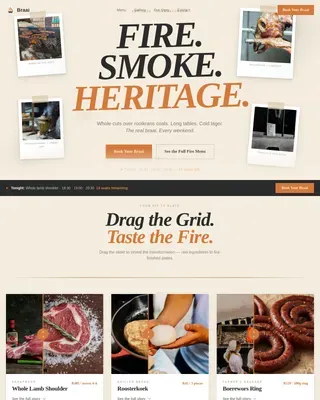
Mesa is a hero-dominant landing page template built for intimate Brazilian supper clubs running a rotating, neighborhood-based dining series. It combines cinematic close-up photography, a Fire & Earth color system, live seat-count event cards, and a dual conversion path, one for guests claiming seats, one for hosts opening their tables, all inside a single, story-driven page.
by Rocket studio
Quick summary
Mesa is a single-page template designed for pop-up Brazilian supper clubs that rotate across neighborhood homes and lofts. The design feels warm, candid, and urgent. A full-viewport picanha close-up opens the page. Three upcoming event cards with live seat counts follow. Guests claim seats in seconds. Hosts apply to open their tables at the bottom.
Who this template is for
This template is a strong choice for anyone building a reservation-driven dining experience around intimate, location-rotating supper club events. The layout is purpose-built for food-forward operators who want to sell seats, not just tell stories.
- Pop-up supper club operators running weekly or bi-weekly Brazilian dining events across rotating venues
- Independent chefs and culinary teams creating exclusive, communal tables for small groups of friends and couples
- Aspiring hosts who want to learn how to open their house and cook alongside a professional chef
What problem this template solves
Most restaurant and event templates are built for fixed venues. They show a menu, display hours, and invite a reservation. That approach fails for a rotating supper club where the location changes every week and scarcity is the entire point.
- Guests cannot find upcoming events clearly, this template surfaces three upcoming tables with neighborhoods, dates, and remaining seats front and center
- There is no urgency built into generic booking pages, live seat counts on every card make hesitation feel worth noticing
- Secondary conversion paths for potential hosts are often buried, this template gives the "Open Your Table" path its own dedicated section at the end
What you get with this template
You get a complete, production-ready landing page designed around two conversion goals: selling seats and recruiting hosts. Every section earns its place by moving a visitor one step closer to a decision.
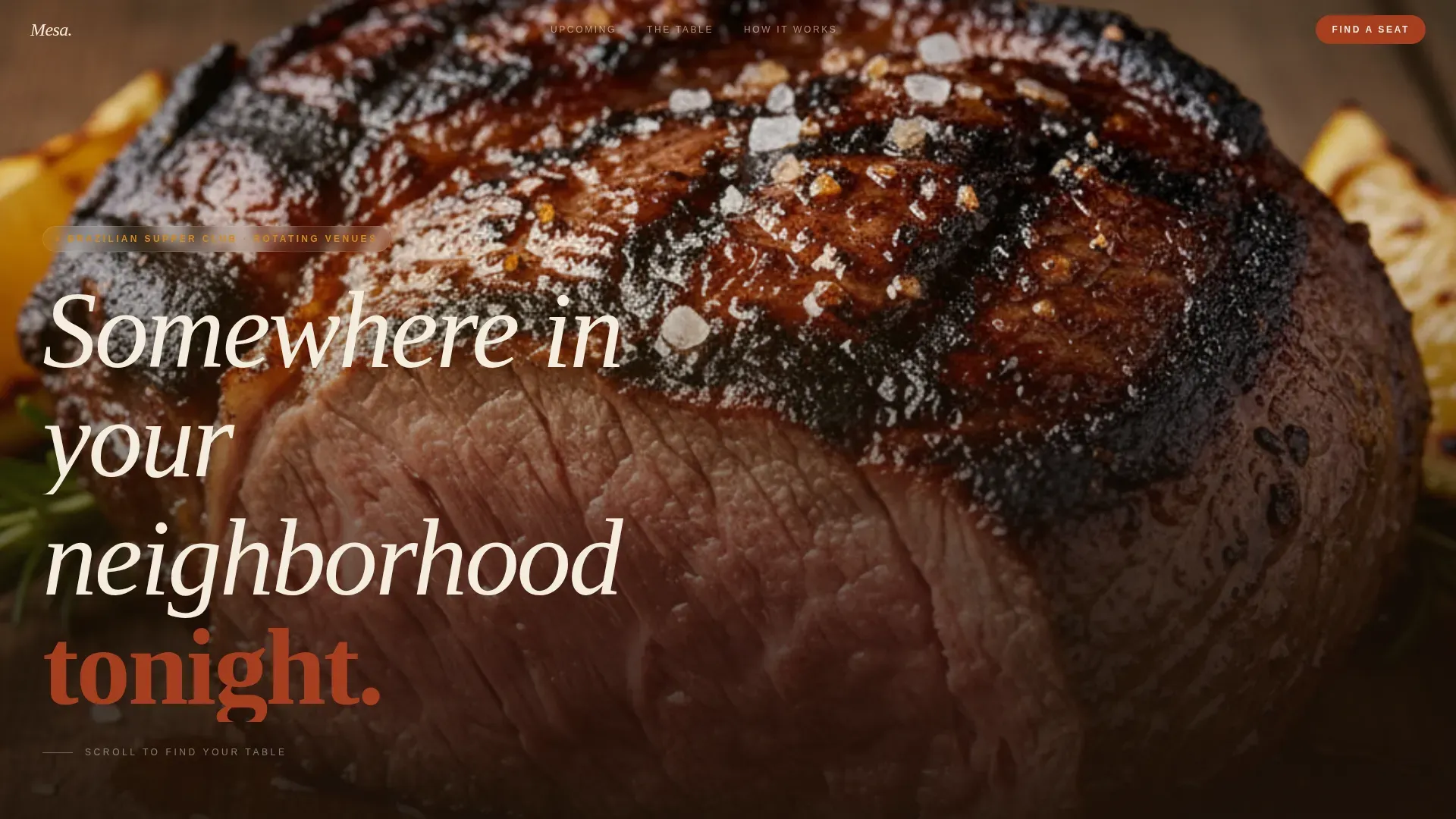
- A full-viewport hero with a macro close-up of picanha being sliced, a single rising headline in cassava white, and a prominent booking call-to-action placed above the fold
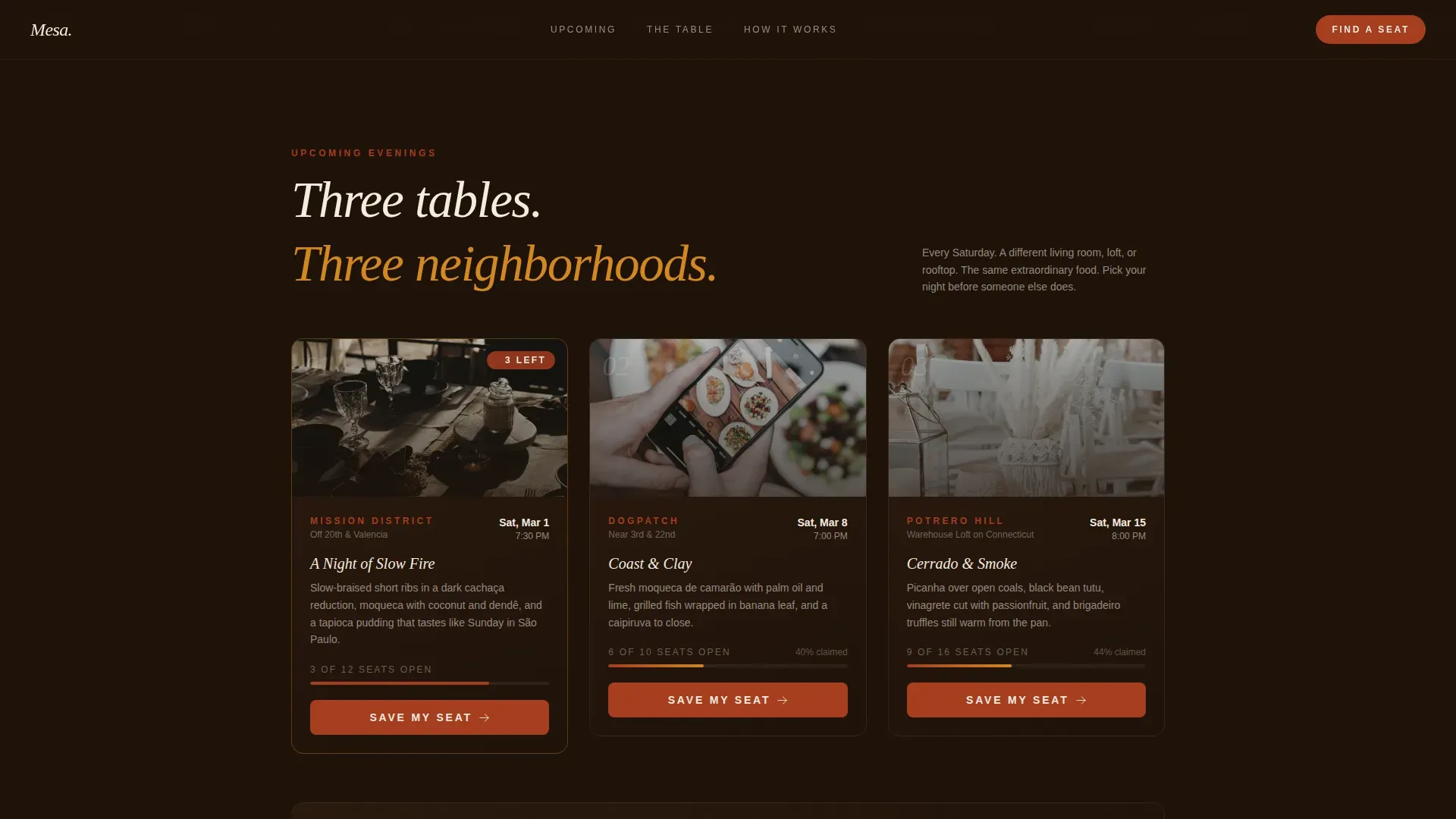
- Three upcoming event cards showing neighborhood, menu theme, and live seat counts, each with a "Save My Seat" button that opens a compact modal form
- A host application section at the bottom inviting people to sign up, open their tables, and cook alongside the chef
Feature list
This template is built around a small number of high-impact components. Each one serves the page's core purpose: create urgency, build desire, and guide the visitor to act.
Cinematic Hero Section
The hero fills the entire viewport with a macro close-up of picanha being sliced on a reclaimed wood board. Shallow depth of field, warm tungsten light, and a single line of cassava white text rising from the bottom give the page a cinematic opening that needs no explanation. Good design here means the image does the work first.
Live Seat-Count Event Cards
Three upcoming event cards display the host neighborhood, the evening's menu theme, and the number of seats still available. The arrangement of these cards is intentional, thoughtful table and event layout can significantly influence how guests decide and move through a booking flow. Scarcity is visible at a glance.
Compact Modal Booking Form
Each "Save My Seat" button opens a focused modal form collecting first name, party size from one to six, and a phone number. The address is delivered by text on the day of the event. Keeping the form short removes friction and increases the chance a visitor will start and complete the process.
Neighborhood Map with Pinned Locations
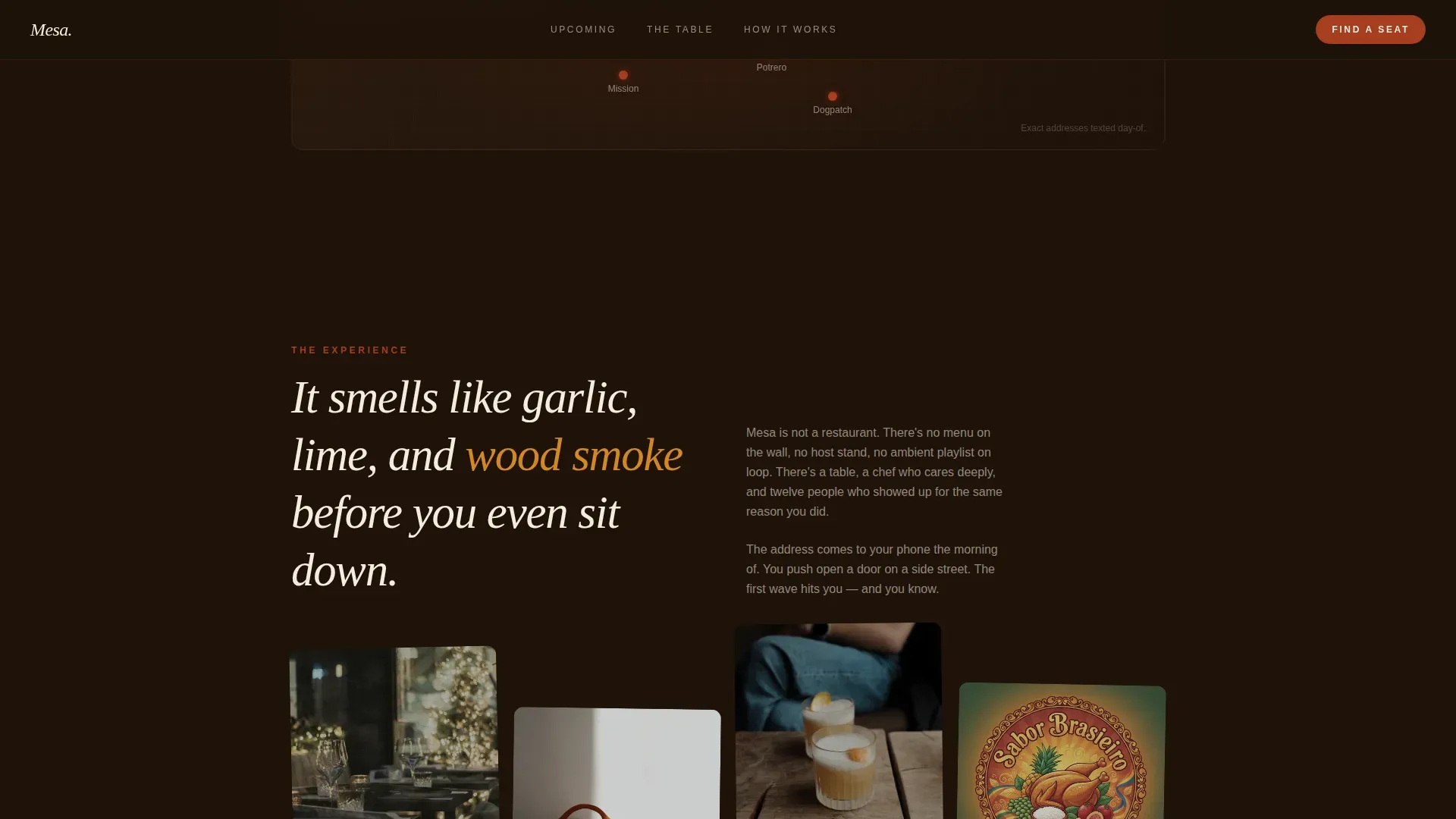
A small embedded map dots the upcoming event locations across the neighborhood without revealing exact addresses. This builds intrigue and a sense of world, the evening exists somewhere real, close by, worth finding. It rewards curiosity without giving everything away.
Host Application Path
The "Open Your Table" section at the bottom of the page serves guests who arrive with a different goal. It is a short application flow for anyone who wants to lend their home, cook alongside the chef, and host a communal table. This secondary path lets the team grow the supply side of the supper club without a separate page.
Organic Flow Typography and Color System
Fraunces serif display pairs with DM Sans body text throughout. Scorched terracotta and deep amber dominate section transitions and hover states. Jungle-floor black-brown anchors all type. Warm cassava white opens generous margins so the page breathes the way a long dinner breathes between courses. The design style is intentionally warm, tactile, and alive.
Page sections overview
| Section | Purpose |
|---|---|
| Hero Full Viewport | Opens with cinematic picanha close-up and a single rising headline |
| Upcoming Events Cards | Three event cards with neighborhood, date, and live seat counts |
| The Experience Strip | Candid warm photography showing what a Mesa evening feels like |
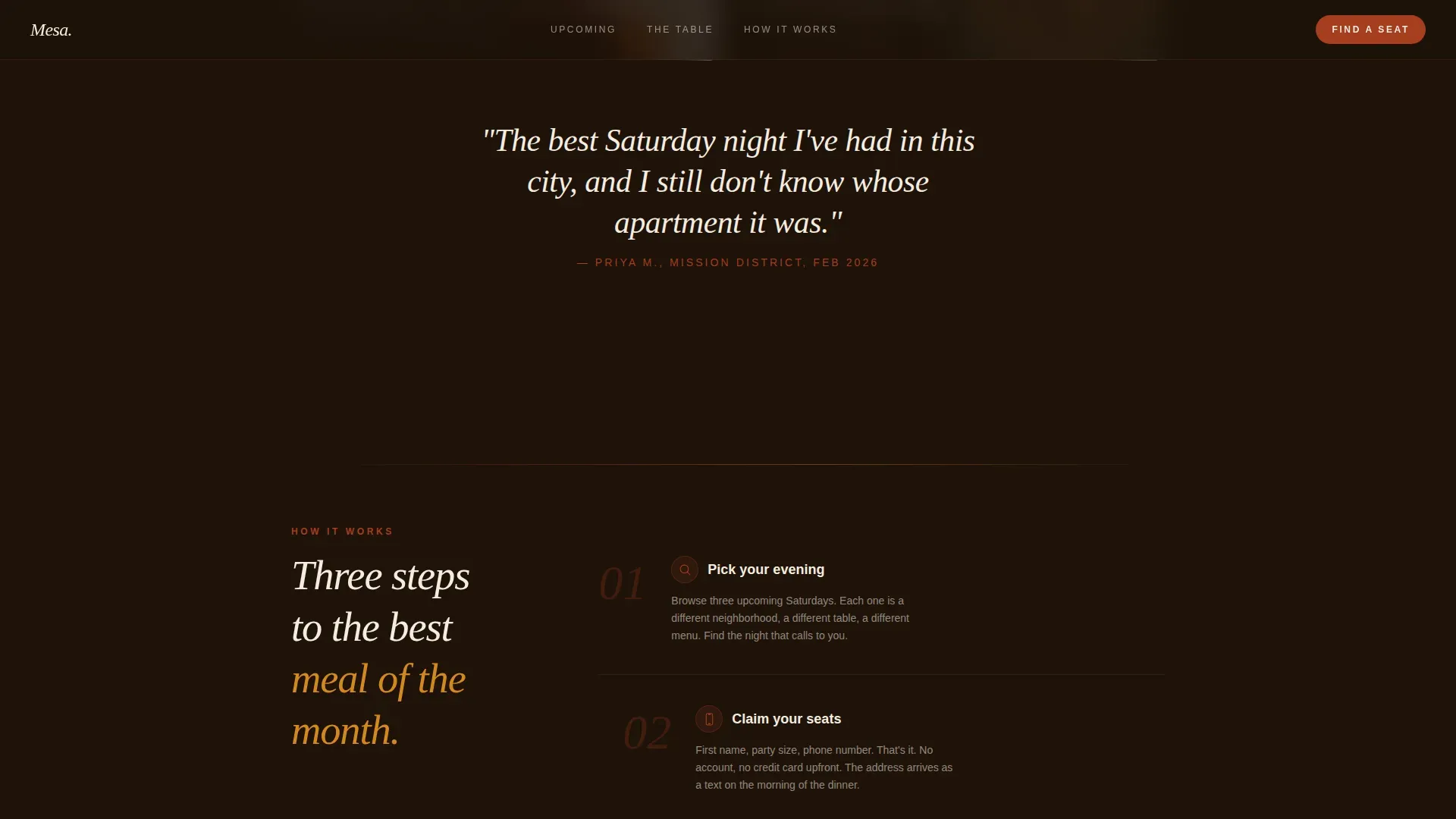
| How It Works | Asymmetric three-step flow explaining the booking process |
| Open Your Table | Host application call-to-action for prospective home hosts |
| Footer | Ultra-minimal horizontal footer with essential contact details |
Design & branding system
The visual identity follows an Organic Flow theme built on a Fire & Earth color system. Every color choice is grounded in texture and warmth, not trend. The palette feels like the bottom of a clay pot after hours over open coals.
- Colors: scorched terracotta (#A63D20) and dendê oil amber (#D4881C) lead section transitions and hover states; jungle-floor black-brown (#1E1209) anchors all typography; warm cassava white (#F5EDE0) opens margins and carries body text
- Typography: Fraunces handles all display headlines for a rich serif presence; DM Sans carries body copy and user interface labels with clean, neutral legibility
- Photography style: warm, candid, slightly motion-blurred images of hands passing platters and shared tables, high-quality visuals that reflect the communal dining world this template lives in
Mobile & speed optimization
This template is built mobile-first. The audience follows pop-up culture on Instagram and checks everything on a phone. Every section reflows cleanly for smaller screens without losing the cinematic quality of the design.
- The hero image loads with priority so the first frame is never slow or broken on mobile connections
- All content below the hero loads lazily, keeping the initial experience fast without sacrificing the depth of the full page
- Seat counts, modal forms, and the neighborhood map are all touch-friendly and designed for one-thumb navigation
How this template helps you convert
Intimate dining experiences can foster deeper connections among guests, but only if the page gets them to the table first. This template is built around that single goal. A well-designed table layout can leave a lasting impression on every guest, and the same logic applies to the page layout that gets them there.
- Scarcity is structural: live seat counts on every event card create real urgency. Visitors who enjoy browsing but hesitate to commit are pushed to act before a seat is gone.
- Friction is removed: the modal booking form is compact by design. First name, party size, phone number, that is all it takes to claim a seat. The address arrives by text on the day, making the whole experience feel exclusive and personal.
- The host path grows supply: the "Open Your Table" section converts curious readers into future hosts. This keeps the supper club's roster of tables growing week over week without requiring a separate recruiting page.
Other information about this template
This template is worth considering for any food and hospitality operator who wants a reservation-driven page that feels nothing like a standard restaurant website. A few additional things worth knowing before you start building:
- The page is designed to display contact details, pricing, and event information in clearly accessible sections, including the footer, so guests always know where to check essential details
- The "How It Works" section uses a three-step asymmetric layout to guide first-time visitors through the booking flow without overwhelming them
- Newsletter sign-up support within the footer can capture leads for future bookings when current event seats are already gone
- Testimonials and social proof elements near the booking buttons help build trust with guests who are new to the supper club world
- Rocket.new is an artificial-intelligence-powered platform that lets users build production-ready websites from natural-language prompts without traditional programming; it handles backend, integrations, deployment, and code generation, and offers a free trial with paid plans starting at $25 per month, making it a good fit for solopreneurs and small teams who want to launch a template like this one today without writing code
Theme
Organic Flow
Creative direction
Local & Neighborhood
Color system
Fire & Earth
Style
Hero-Dominant (90/10)
Direction
Marketplace/Multi
Page Sections
Cinematic Full-viewport Hero
Live Seat-count Event Cards
Compact Modal Booking Form
Neighborhood Intrigue Map
Host Application Section
Organic Flow Branding System
Related questions
Can I update the event cards and seat counts myself?
Does the template include a sign-up option for guests when seats are full?
Is this template designed for a supper club that changes location regularly?
How does the host application section work?
Can I adjust the colors and fonts to match a different brand style?