Premium Auction Platforms & Types Professional Website Template
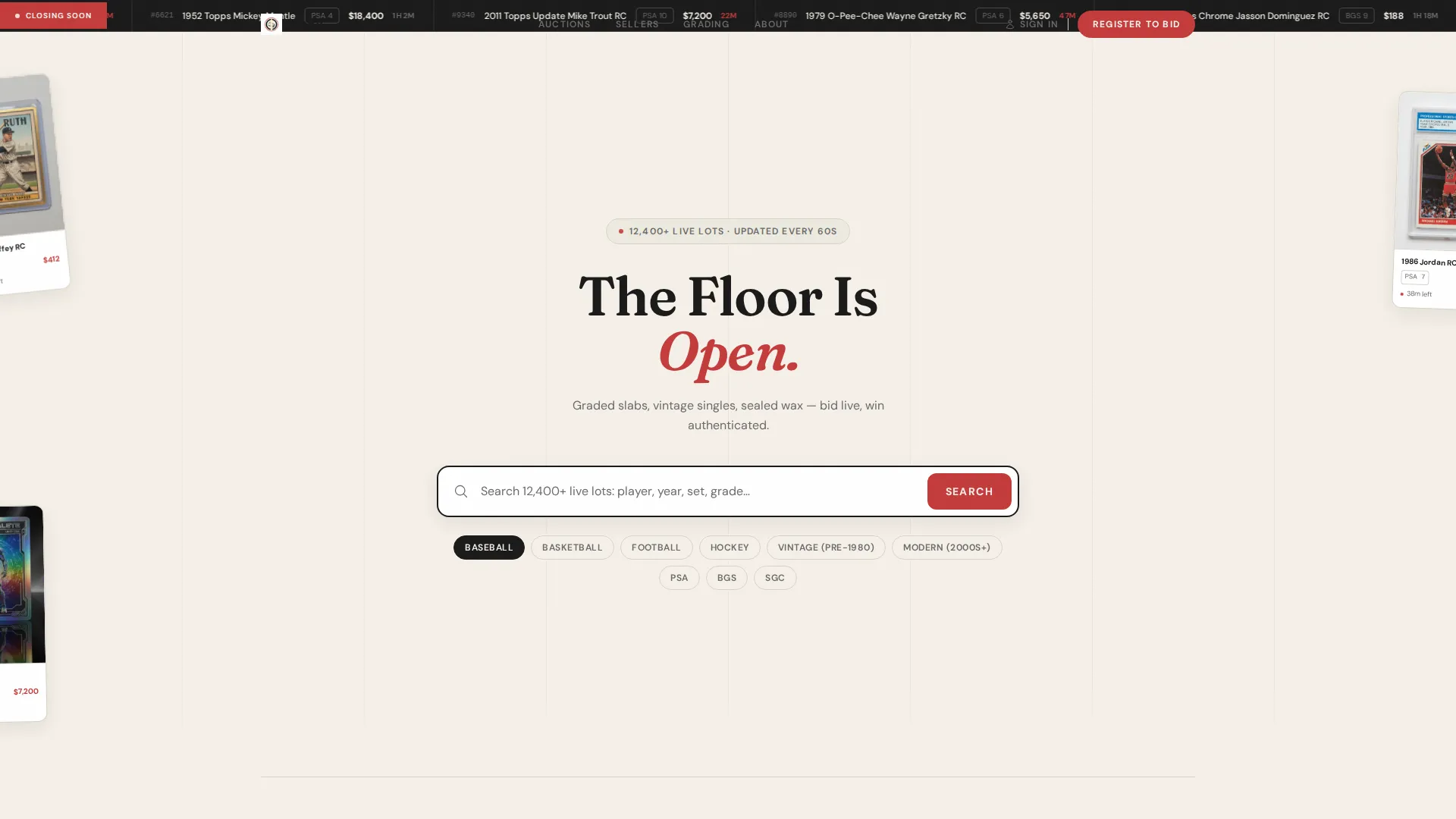
Grail is a trading card auction landing page built for serious collectors and active bidders. It centers the experience on a live search interface, timed lot grids, and inline card detail panels. The design uses a matte ink-and-paper palette that feels as deliberate as a dealer's binder, putting every card front and center.
by Rocket studio
Quick summary
Grail is a single-page auction template designed for trading card platforms. It leads with a powerful search bar, surfaces curated lot grids tied to live market moments, and lets bidders inspect high-resolution grade scans before placing a bid. The result is a focused, trust-building experience that moves collectors from browse to bid.
Who this template is for
This template is built for trading card auction platforms that want a professional, conversion-focused storefront. It works equally well for new auction houses launching their first digital floor and established dealers moving inventory online.
- Set builders and vintage collectors looking for a clean way to find specific lots fast
- Auction operators who need timed bidding, lot detail panels, and watch-list capture in one page layout
- Flipper-focused platforms where transparent bid history and grade verification drive purchase confidence
What problem this template solves
Most auction pages bury the search experience under a hero image or generic splash screen. Serious card buyers do not want a mood photo, they want to type a player name, filter by grade, and see what is closing in the next hour. This template eliminates that friction.
- Buyers lose trust when they cannot see bid history or grade scans before committing to a purchase
- Auction operators struggle to surface time-sensitive lots alongside evergreen inventory in the same layout
- Generic e-commerce templates do not accommodate timed countdowns, expanding lot detail panels, or outbid alert capture
What you get with this template
You get a fully structured, single-page auction layout with every section mapped to a real buyer behavior. From the opening search bar to the lot detail drawer, every component is designed to reduce hesitation and accelerate the bid decision.
- A live-search header with ticker tape, filter chips, and ghost-text guidance for 12,400+ lots
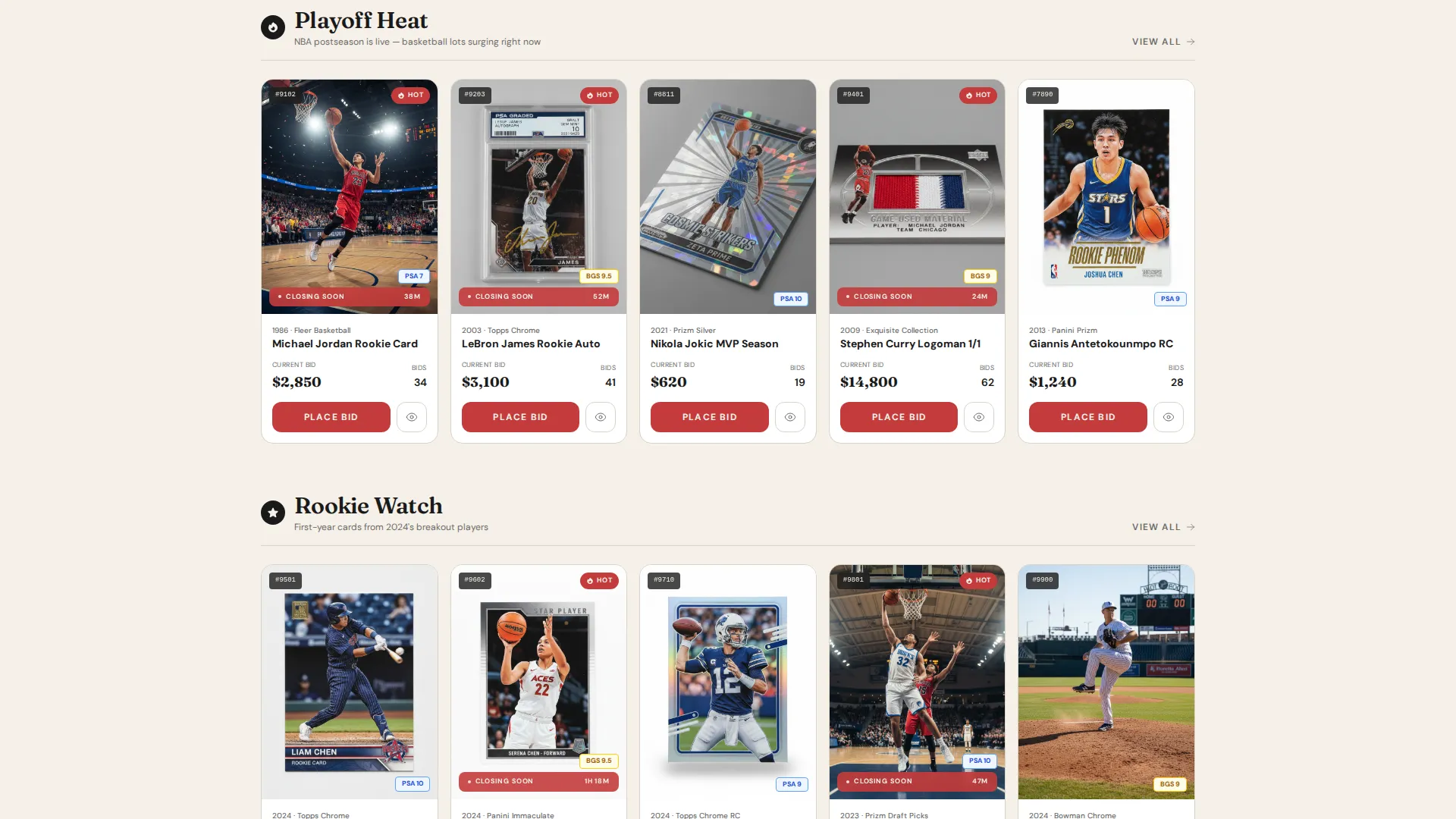
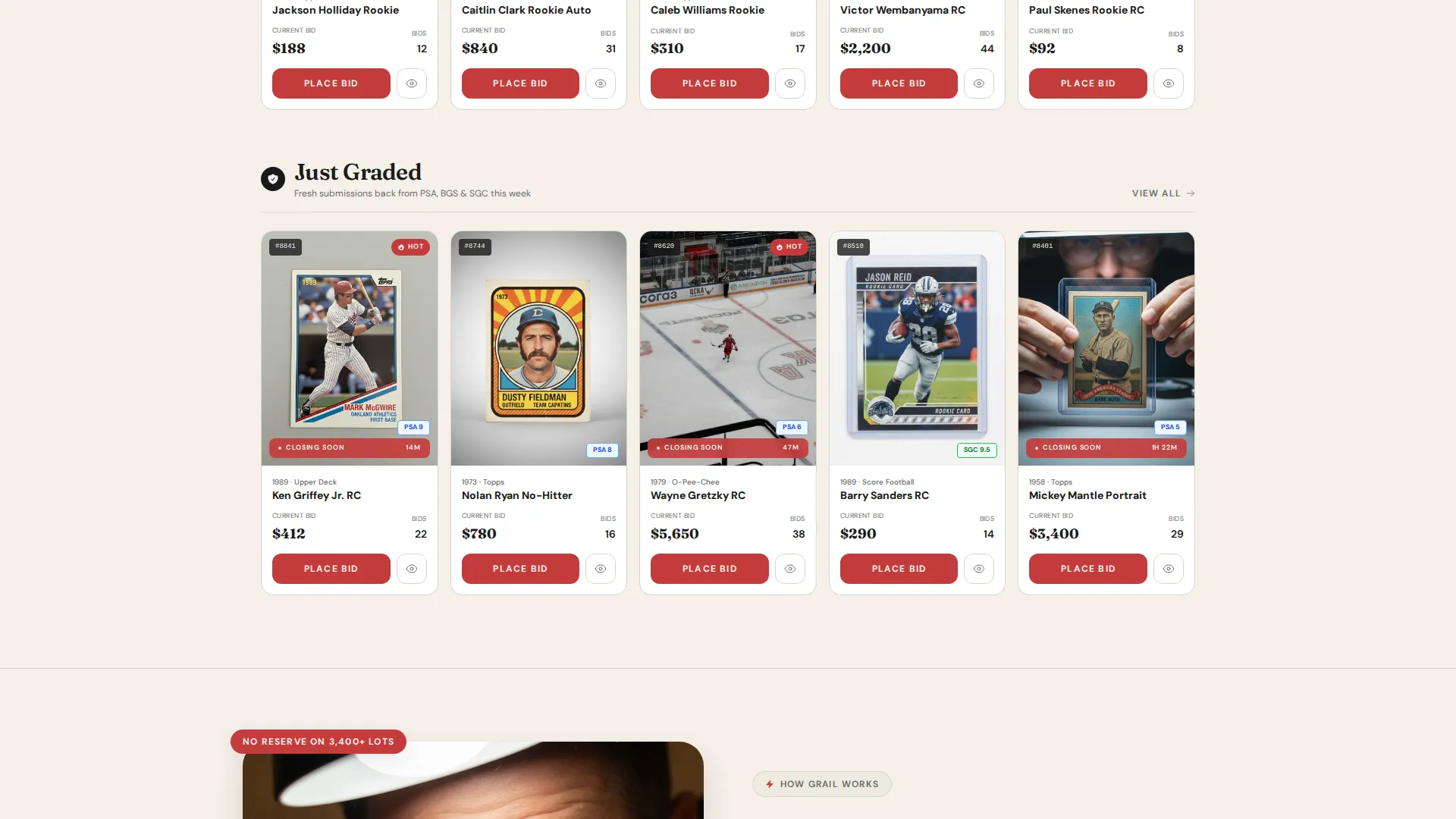
- Curated auction blocks for contextual moments such as playoff seasons, rookie breakouts, and freshly graded submissions
- An inline lot detail panel with high-resolution front and back scans, grade certification, bid history graph, and a one-click bid increment button
Feature list
This template ships with a focused set of components tied directly to the trading card auction experience. Each feature reflects a real buyer behavior or platform need described in the brief.
Live Search Header with Closing Ticker
The header skips the hero image entirely and opens on a full-width search field. Ghost text reads "Search 12,400+ live lots: player, year, set, grade..." and filter chips let visitors narrow by sport, era, and grading company. A rotating ticker above the search bar scrolls lots closing within the hour, card name, current bid, and time remaining, moving left to right like a stock tape.
Curated Contextual Auction Blocks
Below the header, the page reveals themed lot grids tied to live market moments. A "Playoff Heat" block surfaces basketball cards during the postseason. A "Rookie Watch" section highlights first-year cards of breakout players. A "Just Graded" row shows freshly slabbed submissions returned from certification. Each block is a tight thumbnail grid with lot number, current bid, and countdown timer.
Inline Lot Detail Panel
Clicking any card thumbnail expands an inline detail panel without leaving the page. The panel shows high-resolution scans of both the front and back of the card, the grade certification number, a bid history graph, and a one-click bid increment button. Buyers get full proof of condition and pricing transparency before committing.
Place Bid Drawer with Payment Toggle
Every lot card carries a "Place Bid" call to action rendered in the faded red-ink stamp color. Clicking it opens a confirmation drawer showing the current price, the minimum bid increment, and a saved-payment-method toggle for returning bidders. The drawer keeps the commitment step fast and low-friction.
Watch This Lot Capture Path
Not every visitor is ready to bid immediately. The secondary conversion path lets users watch a lot and submit their email address to receive outbid alerts. This captures warm leads and re-engages them at the moment the lot becomes relevant again.
Marketplace Grid Layout
The overall page structure follows a Marketplace Grid theme. Lot cards are arranged in a consistent, scannable grid that scales from wide desktop views down to narrower displays. The grid keeps visual rhythm predictable so buyers can scan dozens of lots without losing their place.
Page sections overview
| Section | Purpose |
|---|---|
| Live Search Header | Entry point for lot discovery with filters and ticker |
| Closing Ticker Tape | Scrolling display of lots ending within the hour |
| Playoff Heat Block | Curated basketball lots tied to postseason timing |
| Rookie Watch Block | First-year cards of current breakout players |
| Just Graded Row | Freshly certified submissions ready for bidding |
| Lot Detail Panel | Inline card inspection with scans, grade, and bid history |
| Place Bid Drawer | Bid confirmation with increment and payment toggle |
| Watch This Lot | Email capture for outbid alert opt-in |
Design & branding system
The visual identity follows an Ink and Paper color system built to feel matte, tactile, and serious about card condition. The palette is deliberately restrained so the cards themselves supply all the visual color on the page.
- Deep registration black (#1A1A1A) for headers, lot numbers, and primary text; uncoated cardstock cream (#F5F0E8) across all backgrounds for that dealer-binder warmth
- Faded red-ink stamp (#C43B3B) reserved for ending-soon badges and bid buttons to draw the eye only where action is needed
- Pencil-graphite gray (#6B6B6B) for body text and divider rules, keeping secondary information readable without competing with card imagery
Mobile & speed optimization
The Marketplace Grid layout adapts naturally to smaller screens. Lot thumbnails restack into a scrollable column, filter chips collapse into a compact row, and the bid drawer opens as a bottom sheet on touch devices.
- Countdown timers and bid amounts remain visible at glance size on mobile without requiring a zoom gesture
- The inline detail panel collapses into a full-screen card view on narrow displays so high-resolution scans stay legible
- Touch targets on "Place Bid" and "Watch This Lot" buttons are sized for reliable tapping without precision
How this template helps you convert
The entire page is structured around reducing the gap between a buyer's first interest and their first bid. Every design and layout decision serves that path.
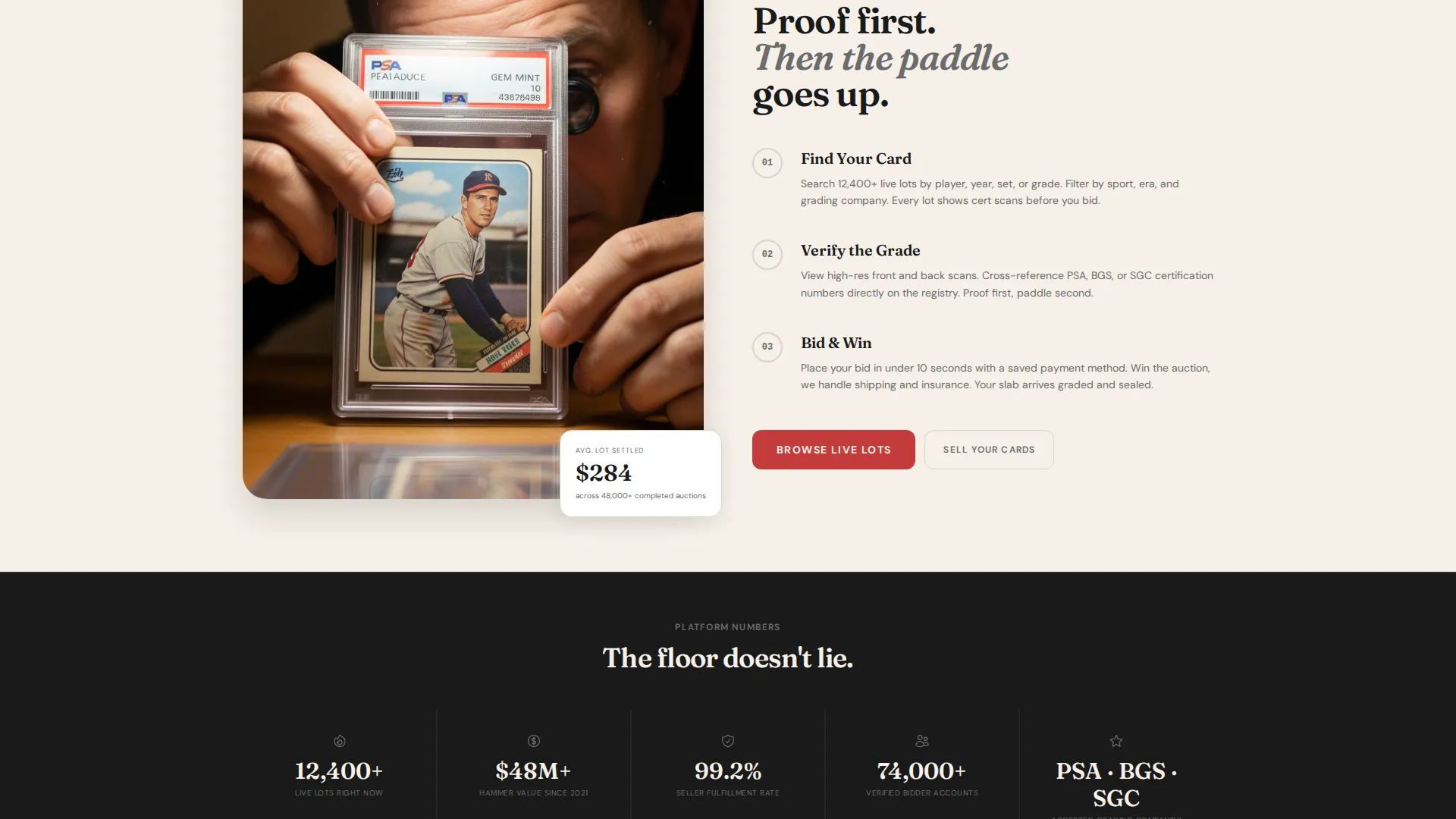
- Transparency before the ask: buyers see bid history graphs and verified grade scans inside the inline detail panel before the bid drawer ever opens, which removes the most common hesitation point in collectibles auctions.
- Urgency made visible: closing tickers, countdown timers on every lot card, and ending-soon badges in the red-ink stamp color keep time pressure front of mind without relying on artificial scarcity language.
- Two conversion paths: the "Place Bid" drawer captures ready buyers immediately, while "Watch This Lot" captures email addresses from browsers, creating a re-engagement loop through outbid alerts.
Other information about this template
This template is a strong fit for trading card auction platforms at any stage of growth. It is designed as a single-page layout, so it deploys quickly and keeps the visitor experience tightly controlled.
- The Seasonal and Moment creative direction means auction blocks like "Playoff Heat" and "Rookie Watch" can be updated to reflect whatever is driving collector interest right now
- The cardstock cream background and registration-black typography are intentionally neutral so card photography from any sport or era reads clearly against the page
- The template suits platforms dealing in graded slabs, raw vintage singles, sealed hobby boxes, or any combination of collectible card formats
- Auction operators looking to run a focused, professional trading card marketplace will find the layout ready to adapt to their current inventory and seasonal calendar
Theme
Neo-Retro
Creative direction
Unboxing Experience
Color system
Sunset Gradient
Style
Overlap/Layered
Direction
Click-Through
Page Sections
Live Search Header with Closing Ticker
Curated Contextual Auction Blocks
Inline Lot Detail Panel
Place Bid Confirmation Drawer
Watch This Lot Email Capture
Marketplace Grid Layout
Related questions
Is this template designed for a single page or a multi-page auction site?
Can the auction blocks be updated to reflect different seasons or card trends?
How does the Watch This Lot path capture leads?
What card formats does this layout support?
Is the bid history graph included as a built-in component?