Precision Smart Grid Component Landing Page Template
Grid is a precision smart grid landing page template built for utility-facing B2B sales. It opens with a logo bar and a live endpoint counter, then walks technical buyers through performance metrics, protocol support, and interoperability evidence. The hub-and-spoke anchor navigation lets procurement engineers and grid modernization directors move directly to the data they need.
by Rocket studio
Quick summary
Grid is a single-page, anchor-nav landing page template for smart grid component vendors. It leads with a live stat counter and a monochrome utility logo bar, then delivers performance figures before narrative copy. Every scroll destination opens with a bold metric, so technical buyers absorb specification-grade data the way they would read a data sheet.
Who this template is for
This template is designed for companies selling smart grid components to large institutional buyers. It speaks directly to the people who control purchase decisions at utilities and energy infrastructure firms.
- Grid modernization directors at regional utilities evaluating edge intelligence components
- Energy storage integrators sizing hybrid inverter fleets who need protocol clarity before committing
- Procurement engineers at municipal co-ops requiring interoperability documentation before issuing a purchase order
What problem this template solves
Technical buyers in the utility sector do not trust marketing pages. They arrive with a checklist and leave the moment they cannot find the numbers they need. This template is structured to close that gap immediately.
- Visitors see hard performance data before any explanatory copy, reducing skepticism at first glance
- The anchor navigation sends engineers directly to the section most relevant to their current stage of evaluation
- Gated and ungated conversion paths separate early-stage researchers from procurement-ready buyers without forcing a single funnel
What you get with this template
The template delivers a fully structured, single-page hub-and-spoke layout with anchor navigation. Every section is built around a leading metric, followed by supporting technical narrative.
- A header logo bar with live endpoint counter and restrained counter animation
- Anchor-nav scroll destinations covering component specs, system architecture, and fleet-scale deployment evidence
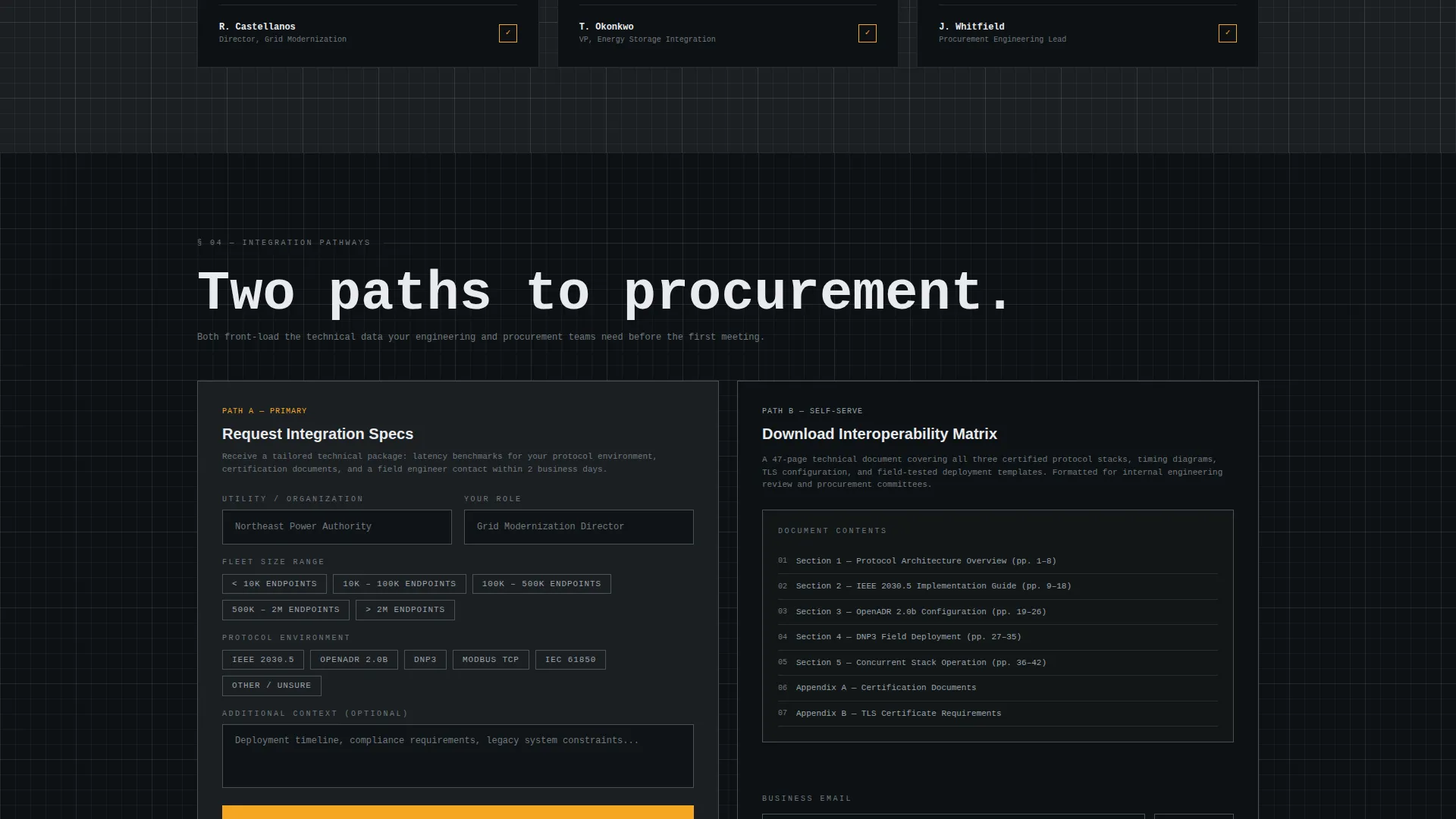
- Two distinct conversion paths: a primary "Request Integration Specs" form and a secondary "Download Interoperability Matrix" gated download
Feature list
This template bundles several purpose-built layout and interaction features drawn from the source brief. Each one serves the evaluation workflow of a technical procurement buyer.
Stats-First Section Architecture
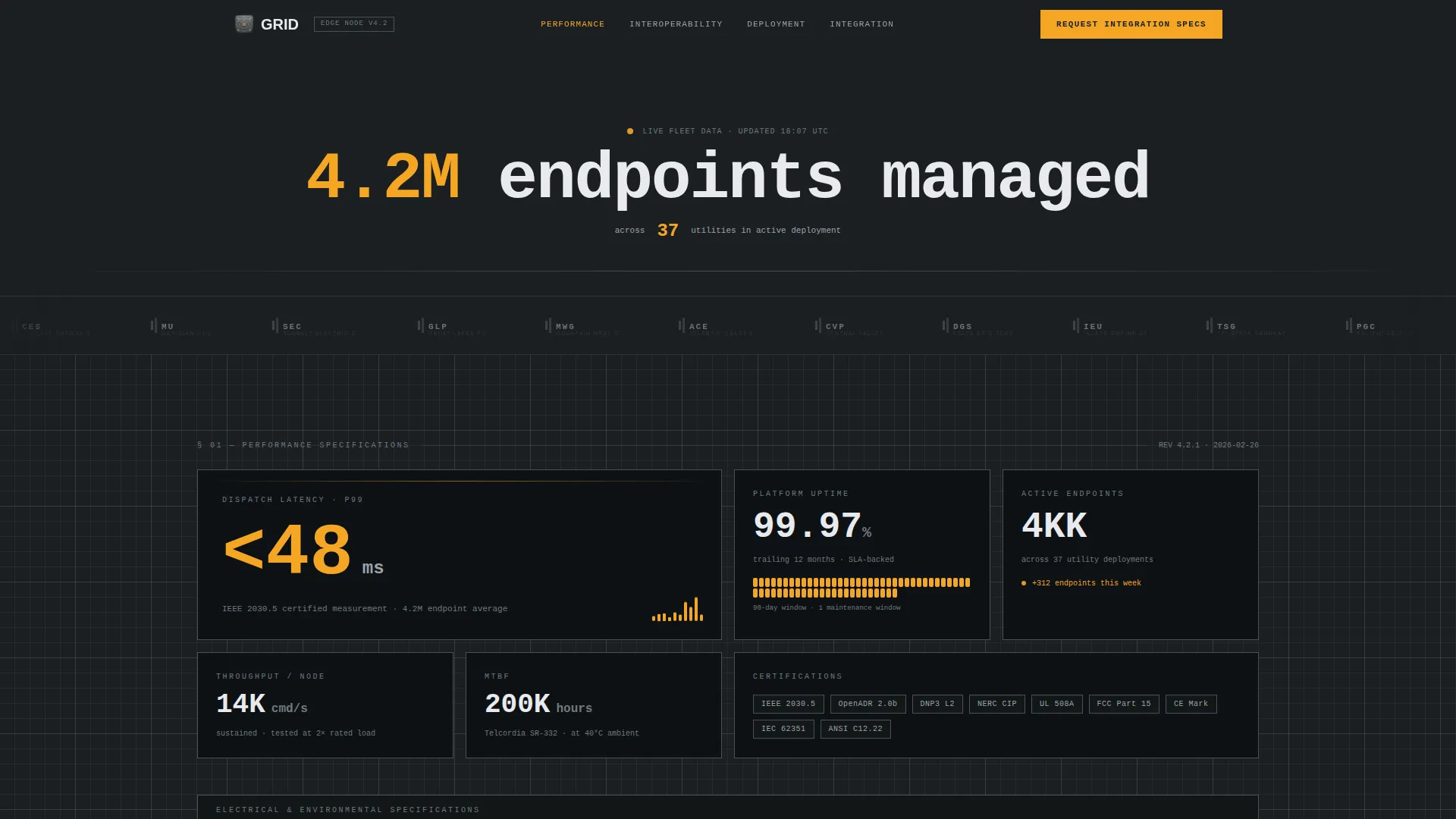
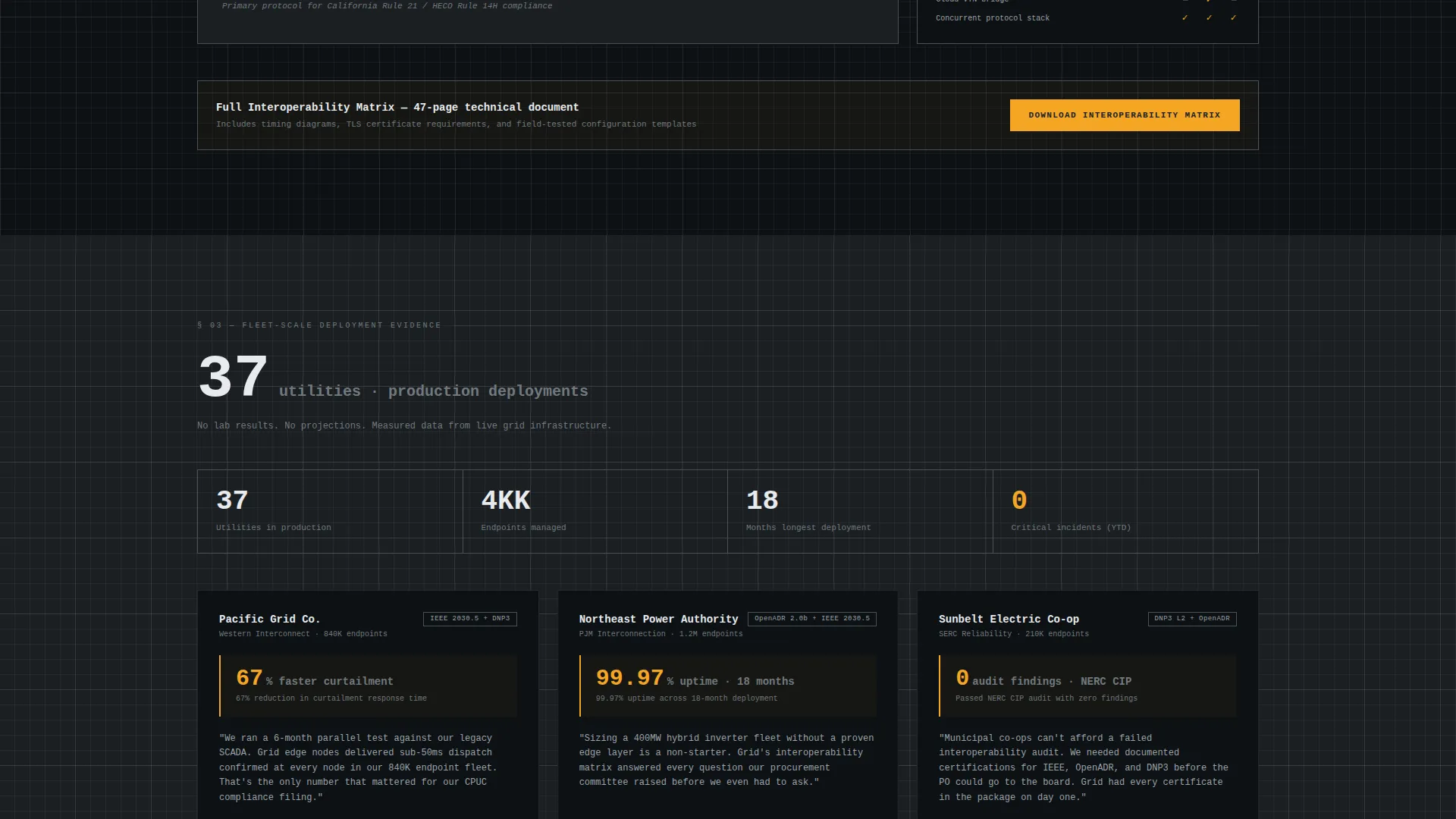
Every anchor-nav destination opens with a bold metric before any explanatory paragraph appears. Latency in milliseconds, uptime expressed in nines, and certified protocol counts are surfaced immediately. Visitors read performance data the way they scan a spec sheet, then find the narrative context just below each figure.
Hub and Spoke Anchor Navigation
A persistent navigation bar connects all scroll destinations on a single page. Buyers can jump directly to component specs, system architecture, or deployment evidence without linear scrolling. The primary call to action, "Request Integration Specs," is anchored into this nav bar and remains visible at every position on the page.
Utility Logo Bar with Counter Animation
The header opens with a horizontal ribbon of utility and integrator logos rendered in monochrome against transformer gray. Each mark is slightly desaturated so no single partner dominates the visual. Above the bar, a condensed-typeface stat counter ticks upward to display the current endpoint and utility count, making the logos and numbers the proof of scale rather than a hero image.
Dual Conversion Path Layout
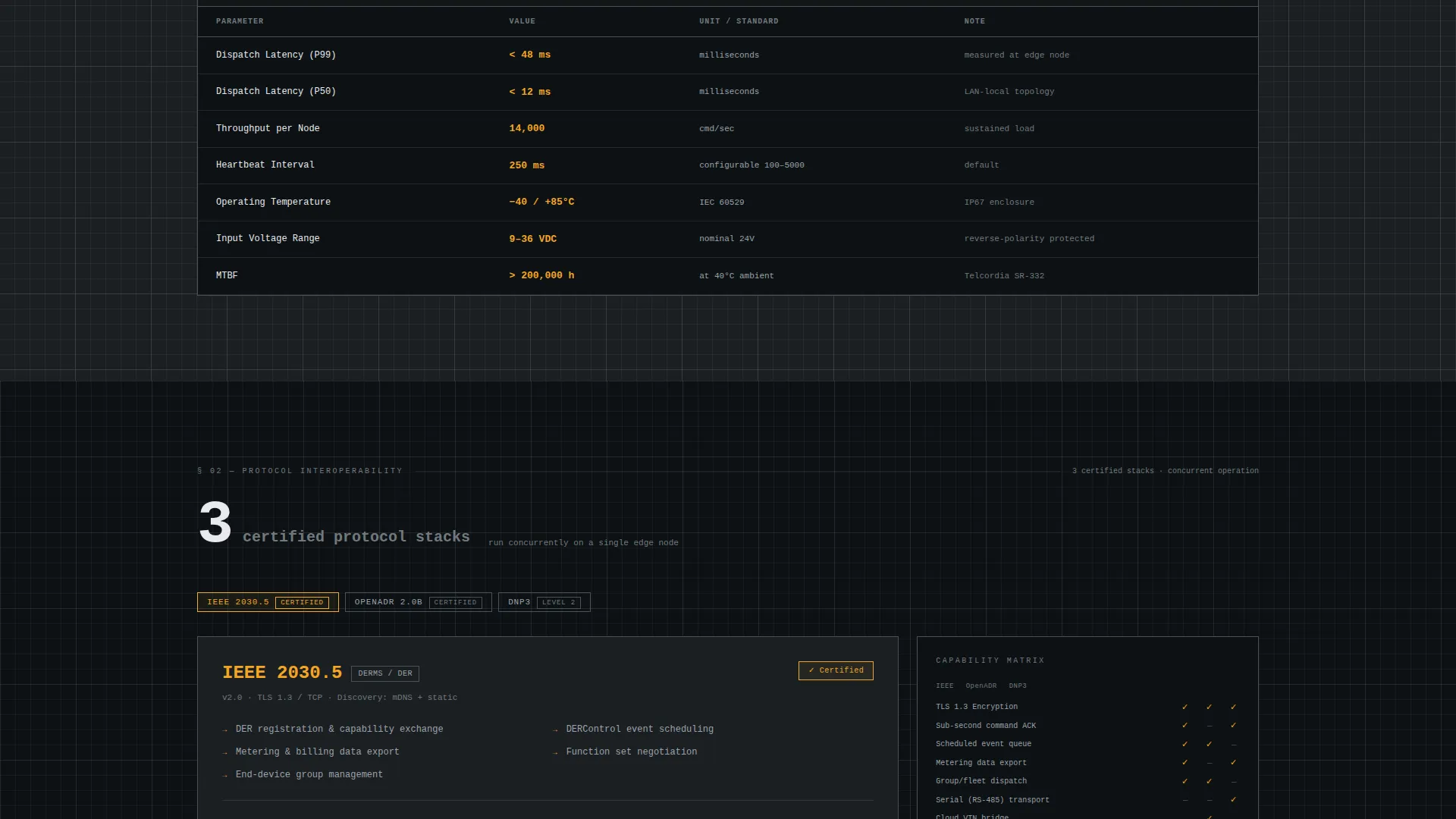
The primary path leads to a short integration-specs request form. It asks for the visitor's utility or integrator name, fleet size range, and protocol environment, covering IEEE 2030.5, OpenADR (Open Automated Demand Response), and DNP3 (Distributed Network Protocol 3). The secondary path offers an interoperability matrix download gated behind a business email field, serving buyers who are earlier in their internal justification process.
Engineering Blueprint Visual System
The layout uses a monochrome steel palette that evokes a CAD drawing on brushed aluminum. Signal amber is reserved exclusively for calls to action and live data callouts, ensuring high-contrast visibility for the most actionable elements. No decorative imagery is used anywhere in the template.
Escalating Evidence Structure
The page is organized to mirror the logical flow of a technical data package. Content escalates from component-level specifications to system architecture details, then to fleet-scale deployment evidence. By the time a buyer reaches the conversion form, the template has already provided most of the data needed to begin an internal business case.
Page sections overview
| Section | Purpose |
|---|---|
| Logo bar header | Establish scale and credibility with utility partner logos and live endpoint counter |
| Anchor nav bar | Provide persistent jump links and keep primary call to action visible at all scroll positions |
| Component specs hub | Deliver leading performance metrics: latency, uptime, and protocol counts |
| System architecture spoke | Explain how the component sits between the meter and the cloud |
| Fleet deployment evidence | Provide large-scale deployment data to support internal business cases |
| Integration specs form | Capture procurement-ready leads with utility name, fleet size, and protocol fields |
| Interoperability matrix download | Gate early-stage research with a business email field for the downloadable matrix |
Design & branding system
The visual identity follows an Engineering Blueprint theme. The palette is derived from industrial materials and printed technical documentation, not consumer branding.
- Cold-rolled steel (#71797E), deep transformer gray (#1B1F23), and panel white (#E8EAED) form the base palette
- Signal amber (#F5A623) appears only on calls to action and live data callouts, never as decorative color
- Typography uses a condensed engineering typeface for headline numerics, reinforcing the spec-sheet reading experience
Mobile & speed optimization
The template is structured for fast, focused rendering. Buyers reviewing the page on a phone between meetings need the same metric-first experience as desktop visitors.
- The anchor nav collapses cleanly for smaller screens, keeping the primary call to action reachable without scrolling through all sections
- Heavy visual elements are intentionally absent; the design relies on typography and structured data rather than large images or video
How this template helps you convert
The page is engineered to reduce friction for technical buyers who have limited patience for marketing language. It earns the click by front-loading the data that procurement teams need to begin internal justification.
- Metric-first section openings give buyers the performance figures they need before they decide whether to read further, shortening the evaluation cycle
- The dual conversion path separates early-stage researchers from procurement-ready buyers, so both groups find a relevant next step without confusion
Other information about this template
This template belongs to the Manufacturing and Industrial category, specifically the Renewable Energy Components subcategory, with a niche focus on smart grid component marketing. It is designed for Partnership and B2B landing page objectives and uses a Hub and Spoke template style with anchor navigation.
- The template is well suited for vendors positioning an edge intelligence component that connects metered endpoints to cloud-based dispatch systems
- Protocol fields in the request form cover IEEE 2030.5, OpenADR, and DNP3, the three most common interoperability environments referenced in utility procurement workflows
- The Stats-First Impact creative direction is intentionally modeled on how grid engineers read technical data packages, not on how consumers browse product pages
- The Engineering Blueprint theme and Monochrome Steel color system give the page the quiet authority of outdoor-rated industrial equipment, consistent with the deployment environments of utility-scale hardware
Theme
Engineering Blueprint
Creative direction
Stats-First Impact
Color system
Monochrome Steel
Style
Hub & Spoke (Anchor Nav)
Direction
Partnership/B2B
Page Sections
Stats-first Section Architecture
Hub and Spoke Anchor Navigation
Utility Logo Bar with Counter Animation
Dual Conversion Path Layout
Engineering Blueprint Visual System
Escalating Evidence Structure
Related questions
Who is this landing page template designed for?
What conversion actions does this template support?
Does the template include a hero image?
Can I adapt the protocol fields in the request form?
How does the page serve buyers at different evaluation stages?