Brewery & Craft Beer Booking Website Template
Harvest is a full-width immersive landing page template built for a fifth-generation farm hard seltzer brand. It combines a user-generated content photo mosaic header, a scroll-driven terroir flavor walk, and an inline three-step booking form. The template converts weekend visitors and event coordinators into confirmed farm bookings through cinematic storytelling and a warm, agrarian visual identity.
by Rocket studio
Quick summary
Harvest is a single-page booking template designed for a farm-crafted hard seltzer brand. It walks visitors from the orchard to the fermentation barn to the tasting room through immersive full-viewport photography and parallax scroll. A pinned ember-red call-to-action button and an inline calendar stepper keep the booking path short and clear from the first scroll to the final confirmation.
Who this template is for
This template is built for craft beverage producers who sell an experience alongside their product. It fits farm-based taprooms, agritourism operations, and artisan hard seltzer brands that want visitors to feel the place before they arrive. If your brand story is rooted in soil, seasons, and a real production process, this template speaks that language fluently.
- Taproom crawlers and weekend drivers who plan Saturday or Sunday farm trips and want a site that convinces them the drive is worth it.
- Event coordinators booking private tastings, bachelorette celebrations, or corporate retreats who need to see group options and a clear schedule path without making a phone call.
- Bottle shop owners and wholesale buyers scouting the next local pour with a story strong enough to sell itself on a shelf.
What problem this template solves
Farm-based craft beverage brands often have a rich, textured story to tell but nowhere to tell it well online. A standard product page or a generic brewery site cannot carry the weight of fifth-generation heritage, hand-fermented batches, and the sensory pull of orchard fruit and wet oak. Visitors leave before they book because the digital experience never matches the real one.
This template solves that gap. It uses full-viewport photography, slow parallax drift, and section-by-section environmental storytelling to make the farm feel real before the visitor even picks a date. The booking form is embedded inline so there is no redirect friction. The page earns the conversion by making visitors feel they are already late to something good.
- Storytelling gap closed: The immersive scroll structure moves visitors physically through the farm, from orchard to barn to tasting room, so the brand narrative lands before the call to action appears.
- Booking friction removed: An inline three-step calendar stepper handles date, group size, and occasion type without sending visitors to a separate page or making them wait on hold.
- Two conversion paths covered: A primary "Book Your Visit" button handles direct reservations, and a secondary "Send a Case" shop link captures buyers who are sold on the story but cannot make the trip yet.
What you get with this template
The template delivers a complete, production-ready landing page structure. Every section is purposefully ordered to move a visitor from curiosity to confirmed booking. Design choices are baked in. Typography, color assignments, scroll behavior, and animation triggers are all pre-configured to the Agrarian Root identity. You receive a cohesive build that does not require rebuilding from a blank canvas.
- Five core page sections: Hero photo mosaic, terroir flavor walk, farm story, inline booking form, and visitor testimonials with press mentions, all in a deliberate narrative sequence.
- Pre-configured visual identity: The Fire and Earth color system, Fraunces serif headings, DM Sans body type, and a linen white base are set up and ready to populate with your farm's content.
- Dual conversion architecture: A pinned top-nav booking button and a secondary shop link give visitors two paths forward without competing for attention.
Feature list
This template ships with a set of purposeful, prompt-built features. Each one serves a specific role in creating the immersive booking experience described in the source design brief.
UGC Photo Wall Hero Section
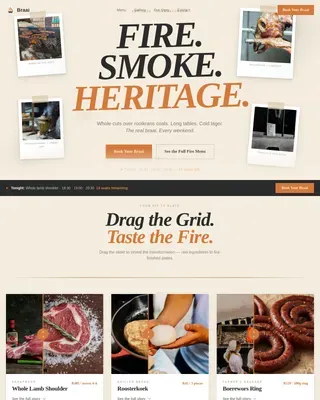
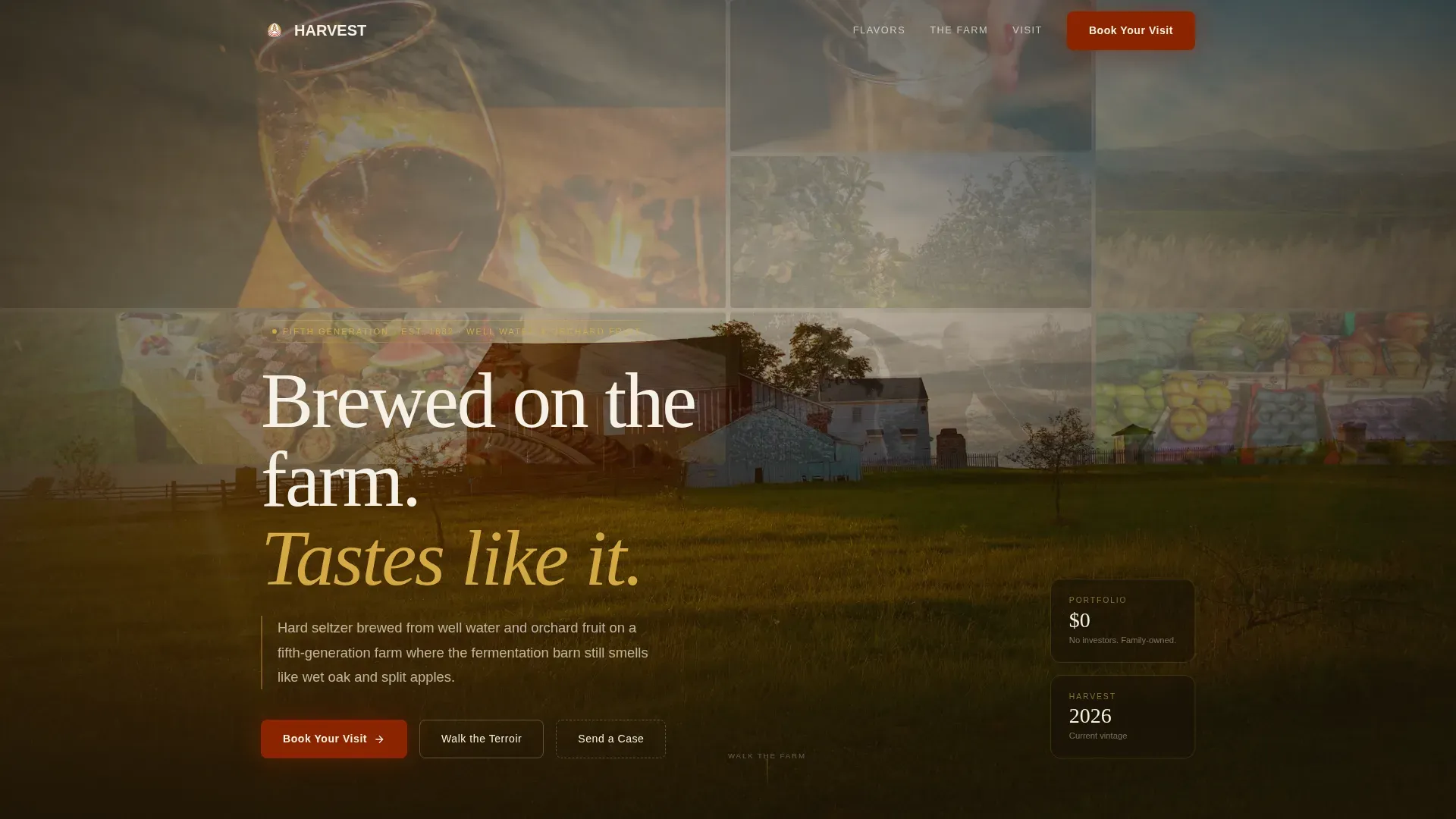
The header is built as a mosaic of overlapping photographic tiles, styled to look like prints pinned to a barn wall. One center tile is a looping video panel. Images apply a slow parallax drift as the visitor scrolls, creating depth without distraction. The layout is designed for real, unpolished photography, the kind that comes from someone's camera roll at magic hour rather than a studio shoot. The whole effect lands like cracking a cold can at golden hour: sharp, warm, and immediately honest.
Terroir Flavor Walk
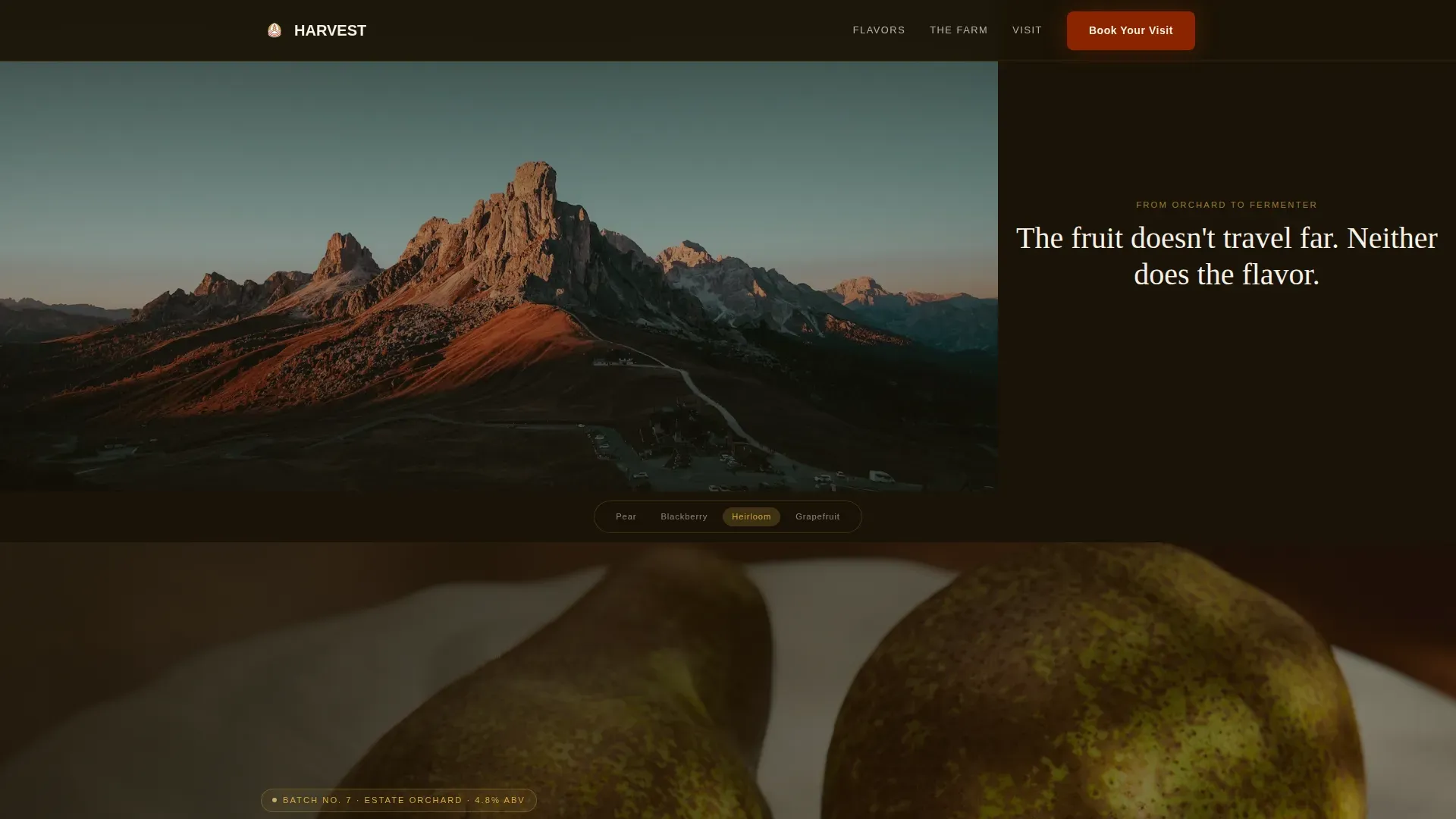
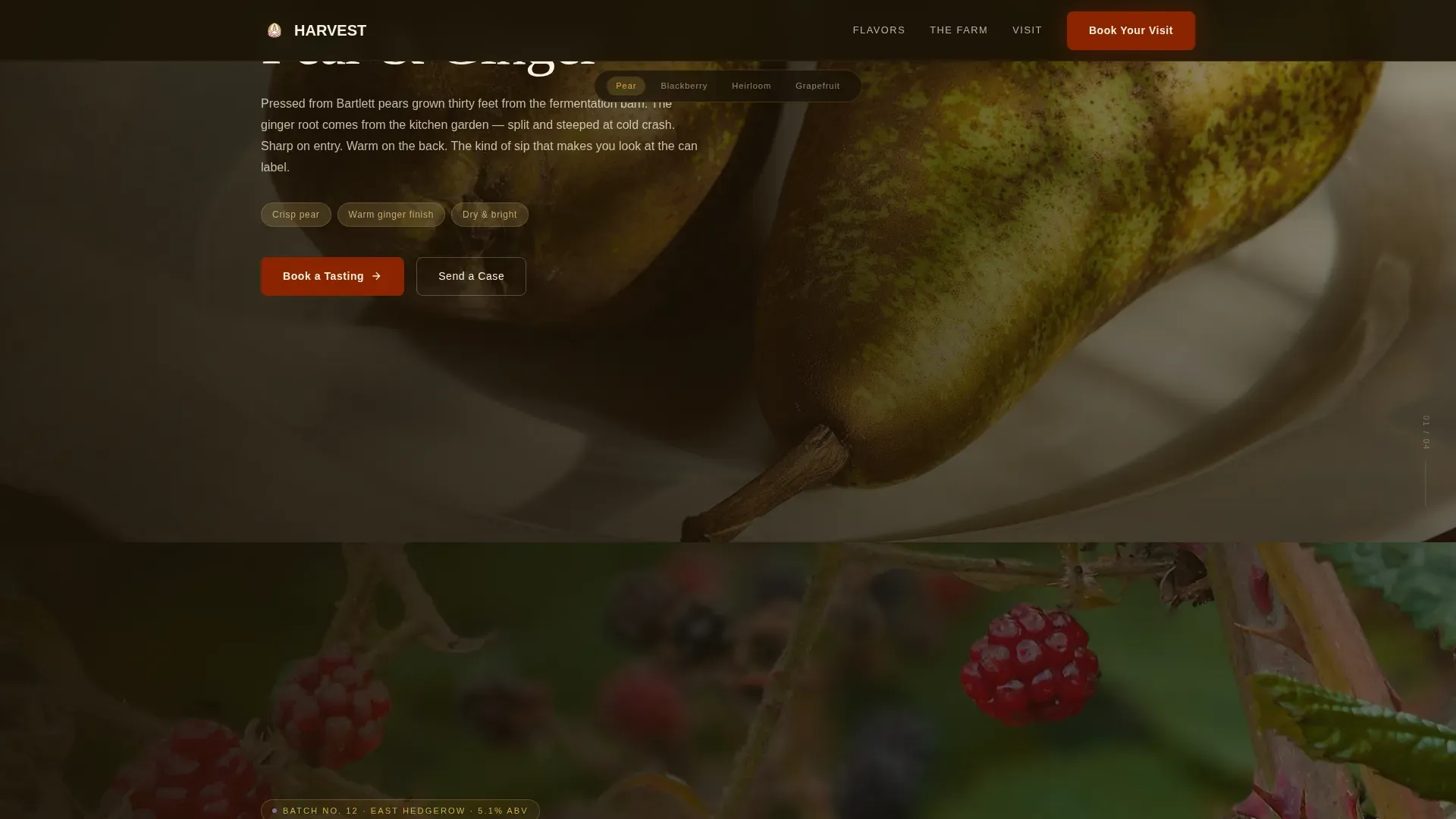
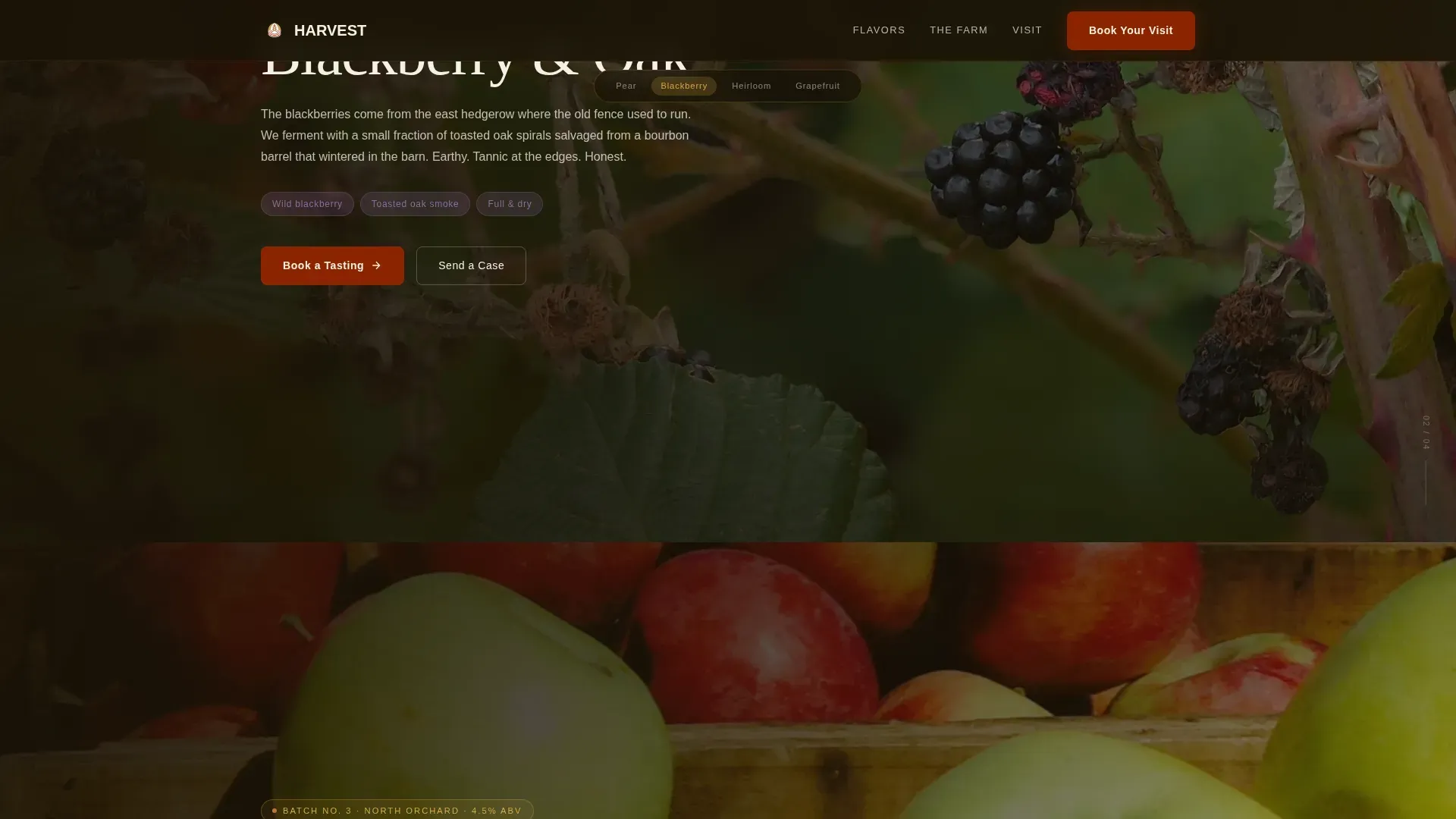
This is the signature storytelling section of the template. Each hard seltzer flavor is presented as a full-viewport environment. The blackberry flavor section is backed by close-up bramble photography. The ginger citrus section sits against cracked earth and root textures. The scroll does not list products in a grid. It walks the visitor through the land that grew each flavor, so by the time they reach the booking section, they can almost taste what they are about to sample. This approach treats the farm landscape as the menu.
Inline Three-Step Booking Form
The booking calendar is embedded directly in the page. No redirect. No new tab. Visitors select a date, enter their group size, and choose their occasion type: casual tasting, private event, or wholesale inquiry. The three-step stepper keeps the form light and focused so visitors do not feel overwhelmed. Urgency cues such as limited availability notices are built into the form layout to encourage immediate action. A user-friendly interface in the booking flow leads to higher engagement and reduces the chance of an abandoned session.
Pinned Call-to-Action Button
A warm ember-red "Book Your Visit" button is pinned to the top navigation and remains visible throughout the entire scroll. This ensures the primary conversion path is always accessible, whether a visitor is reading the farm story, watching the flavor walk, or browsing the testimonials. The button color, drawn from the smoked ember red in the Fire and Earth palette, creates a consistent visual anchor that is hard to miss and easy to act on.
Farm Story Section
This section carries the fifth-generation credibility of the brand. It covers the fermentation barn, the well water source, the orchard fruit, and the honest production process. Visitor testimonials and press mentions are placed immediately after, providing trust indicators such as real quotes, batch numbers, and farm statistics. Trust indicators like these can reassure potential customers and move them from interest to intent. The section closes the gap between a beautiful scroll experience and a confident booking decision.
Secondary Shop Path
Not every visitor is ready to make the drive. Some want to purchase a case first and plan the trip later. The "Send a Case" secondary call-to-action links to an online shop for exactly this audience. This path captures money that would otherwise leave the page. It also works for bottle shop owners who want to place a wholesale order before visiting the farm in person.
Page sections overview
| Section | Purpose |
|---|---|
| Hero Photo Mosaic | Opens the page with a UGC photo wall, looping video tile, and parallax drift to place visitors immediately on the farm. |
| Terroir Flavor Walk | Full-viewport scroll environments tied to each flavor, replacing a product list with an immersive land-based presentation. |
| The Farm Story | Fifth-generation heritage, fermentation process, and orchard sourcing told in a grounded, credibility-building narrative. |
| Book Your Visit | Inline three-step calendar with date, group size, and occasion type fields plus visible availability cues. |
| Voices from the Farm | Visitor testimonials, press mentions, batch numbers, and farm statistics as social proof to close hesitant buyers. |
| Footer Arc Split | Dual-column footer layout with navigation, shop link, and contact details using the Pattern 7 Arc Browser Split design. |
Design & branding system
The visual identity is built around an Agrarian Root theme with a Fire and Earth color system. Every design choice reinforces the sensory story of the brand: warm, textured, cinematic, and honest. Nothing feels polished for the sake of it. The palette reads like reaching into a wood-fired oven and pulling out something beautiful.
- Color palette: Scorched field black (#1A1307) for deep backgrounds, kiln-fired clay (#A0522D) for structural accents, dry wheat gold (#D4A843) for secondary highlights, smoked ember red (#8B2500) reserved for buttons and hover states, and sun-bleached linen white (#F5F0E6) as the breathing base.
- Typography: Fraunces serif is used for all headings to carry the weight of farm heritage and craft narrative. DM Sans handles body text with clean legibility across all section types.
- Scroll and motion: High-animation GSAP reveals, image drift, mosaic tile tilt on hover, and slow parallax transitions are pre-configured to create the immersive physical pull described in the creative brief.
Mobile & speed optimization
The template is designed desktop-first because weekend planners typically browse on a laptop when mapping out a Saturday farm trip. However, the mobile experience is fully considered for event coordinators who are often on the go and checking options on a phone during the week.
- Mobile-responsive layout: The photo mosaic, flavor walk, and booking form all reflow cleanly for smaller screens. Event coordinators booking a bachelorette or corporate retreat should be able to complete the three-step form comfortably from a phone.
- Optimized image handling: Photography-heavy sections use optimized image delivery to keep visual quality high without creating unnecessary load delays. Server Components handle static rendering while Client Components manage interactive booking states and animation triggers.
- Sticky navigation on all devices: The ember-red booking button remains pinned in the top navigation on both desktop and mobile, so the primary call to action is never more than a tap away regardless of screen size.
How this template helps you convert
This template is built with one conversion goal in mind: turn a visitor browsing farm country options into a confirmed booking or a completed shop purchase. Every design and structure decision serves that goal directly.
- The immersive scroll earns the click. Before a visitor ever sees the booking form, they have traveled through the orchard, the fermentation barn, and the tasting room. By the time the calendar appears, they are already emotionally invested. A benefit-driven headline and sensory scroll journey mean the form rarely feels like a hard ask. Experience-driven imagery of people enjoying tastings reinforces the sense that this is a place worth visiting.
- The booking form removes every friction point. Three clean steps, embedded inline, with no redirect and no waiting. Urgency cues such as limited slot availability keep visitors moving forward rather than saving the page to come back to later. A seamless checkout process in a booking form significantly reduces the chance that a visitor walks away without committing.
- The secondary shop path captures the undecided visitor. Not everyone books on the first visit. The "Send a Case" link lets them purchase first and plan the trip after. This dual-path architecture ensures no visitor leaves completely empty-handed. The farm earns money from both paths.
Other information about this template
This template is built for the hard seltzer and broader craft beer niche within the Food and Beverage category, specifically targeting the agritourism booking use case. It is well-suited for farm-based breweries and craft producers who want to compete alongside established local breweries and taproom destinations without losing what makes them distinct.
The farm-to-table craft beverage movement is growing steadily. Farm-to-table craft beverages emphasize the use of locally sourced ingredients from nearby farms, and consumers are actively seeking out brands with traceable, honest sourcing. Local farms contribute to the craft beverage industry by providing fresh produce, grains, and other ingredients that genuinely enhance flavor profiles. Seasonal offerings in craft beverages often reflect the harvest cycles of local farms, allowing consumers to enjoy fresh and unique flavors throughout the year. Craft beverage producers often collaborate with local farmers to create specialty drinks that highlight regional ingredients, and farmers markets serve as a vital link between local producers and consumers, promoting farm-to-table practices in the craft beverage sector. The farm-to-table movement in beverages encourages sustainability by reducing transportation emissions and supporting local economies, which resonates strongly with the audience this template targets.
The craft beer and hard seltzer festival scene is thriving year round and gives context to why a booking-led template works so well for this niche. Augusta Beerfest 2025, for example, will feature over 100 beers from various breweries across the country. The Augusta Beerfest will take place at the Bell Auditorium on August 23, 2025, from 3:00 PM to 6:00 PM. VIP ticket holders at Augusta Beerfest will have early access starting at 2:00 PM, allowing them an extra hour of sampling. The Augusta Craft Beer Festival is scheduled for April 27, 2025, at SRP Park, featuring over 30 breweries and 100 different beers. Both the Augusta Craft Beer Festival and Augusta Beerfest support local community causes, with proceeds benefiting organizations like the Augusta Sports Council. The Augusta Beerfest emphasizes craft beer education, allowing attendees to meet brewers and learn about different beer styles. Designated driver tickets are available for both festivals, promoting responsible drinking and providing free food and soft drinks. Augusta's beer festival scene has grown significantly, with multiple festivals held throughout the year, showcasing local and national breweries. The Augusta Beerfest will include live music and food pairings to enhance the tasting experience. Attendees at Augusta Beerfest can expect a vibrant community atmosphere, attracting beer enthusiasts from across Georgia and South Carolina.
Farm-based beverage destinations draw a wide mix of guests. Families looking for a relaxed weekend outing appreciate the open farm environment. Kids enjoy the farm setting even when they are not drinking. Dog-friendly outdoor spaces are a strong draw too, as many visitors want to bring their dogs along for an afternoon in the fresh air. Picnic tables, lawn space, and the ability to eat snacks and light meals on site make the farm feel welcoming for a full afternoon rather than a quick stop. Many guests plan a broader trip that includes local restaurants and nearby shops, treating the farm visit as the centerpiece of a Saturday or Sunday itinerary. Guests often arrive from the city and spend several hours on site, enjoying the space, the drinks, the evening light, and the entertainment of a place that feels genuinely alive.
Effective marketing strategies for craft beverages often include leveraging social media platforms to engage with consumers and build brand awareness. Community engagement is a crucial aspect of marketing craft beverages, as it helps to create a loyal customer base and fosters brand loyalty. Craft beverage brands can benefit from hosting special events or participating in local festivals to showcase their products and connect with potential customers. Utilizing influencer marketing can enhance the visibility of craft beverages, as influencers can reach targeted audiences effectively. Email marketing campaigns can be an effective way to keep customers informed about new product launches, events, and promotions in the craft beverage industry. Creating engaging content such as blog posts or videos about the craft beverage-making process can attract and educate consumers, enhancing brand connection. Offering limited-time promotions or seasonal products can create urgency and encourage consumers to make purchases in the craft beverage market. Building partnerships with local businesses, such as restaurants or retailers, can expand the reach of craft beverage brands and enhance their market presence. Trust indicators such as awards and ratings can reassure potential customers and strengthen confidence in the booking decision.
The landing page design principles built into this template reflect best practices for beverage booking experiences. A compelling landing page for Harvest Farm Crafted Hard Seltzer bookings should include a clear, benefit-driven headline, and this template delivers exactly that in its hero section. Experience-driven imagery such as people enjoying tastings provides a more engaging visual than static product photography. A benefit-driven headline and sensory descriptions enhance user engagement on the landing page and increase the likelihood of a booking action. Effective landing pages for beverage booking should have a clear call to action that guides users to make a reservation or purchase, and the pinned ember-red button serves this role throughout the scroll. Landing pages should be visually appealing and reflect the brand's identity to attract potential customers, and the Fire and Earth color system ensures every pixel is on-brand. Including high-quality images of the beverages and the booking experience can enhance user engagement on landing pages. User testimonials and reviews can build trust and encourage bookings on beverage landing pages. A mobile-friendly design is crucial for landing pages as many users will access them via smartphones. Integrating social media sharing options on landing pages can help increase visibility and attract more customers. Clear and concise information about the booking process should be provided to avoid confusion for users. Seasonal themes can be incorporated into landing page designs to resonate with users looking for timely beverage experiences, and the terroir flavor walk does exactly this by connecting each seltzer variety to the season and land that produced it.
Booking systems for craft beverage events should prioritize user experience to enhance customer satisfaction, and the three-step inline form in this template is designed with that priority in mind. Effective booking systems can improve conversion rates by simplifying the ticket purchasing process for users. User-friendly interfaces in booking systems can lead to higher engagement and repeat customers for craft beverage events. Mobile-friendly booking systems are essential for reaching a wider audience in the craft beverage event market. A seamless checkout process in booking systems can significantly reduce cart abandonment rates for craft beverage events.
This template draws creative inspiration from the atmosphere of a farm at golden hour. The broad street of the farm property, from the orchard gate to the fermentation barn doors, is the visual track that carries visitors through the page. The landscape of the farm is never background decoration. It is the primary art of the site, creating a sense of place that no studio shoot could replicate. Artists behind the camera and the sand and soil under every frame are what make this template feel grounded rather than generic. Regional bands playing at farm events, the smell of food vendors setting up near the tasting room, the sound of live music drifting across the meadow on a summer evening: these are the textures the template is built to capture and communicate.
For operators looking for more ideas on how to position their farm booking page, there is more inspiration available in the broader craft beverage template library. The harvest farm crafted hard seltzer booking landing page template is specifically designed for this niche and this use case, making it a focused starting point rather than a general framework to adapt from scratch.
- The template is designed for desktop-first use but scales fully to mobile for coordinators and buyers on the go.
- The USA locale is pre-configured with MM/DD/YYYY date formatting and imperial measurement conventions.
- The Arc Browser Split footer (Pattern 7) provides a clean dual-column close for navigation, shop link, and contact details.
- Social proof elements, including real visitor quotes, press logo placements, batch numbers, and farm statistics, are built into the Voices from the Farm section as structural components.
- The template supports two primary audience paths: direct visit booking and online case purchase, without either path competing with the other.
- Farm operators can use the occasion type selector in the booking form to distinguish between casual tastings, private events, and wholesale inquiries, keeping lead quality high from the first form submission.
Theme
Agrarian Root
Creative direction
Immersive Visual
Color system
Fire & Earth
Style
Full-Width Immersive
Direction
Booking/Scheduling
Page Sections
UGC Photo Wall Hero with Parallax and Video Tile
Terroir Flavor Walk with Full-viewport Environments
Inline Three-step Booking Calendar
Pinned Ember-red Call-to-action Button
Farm Story and Social Proof Section
Secondary Shop Path for Remote Buyers
Related questions
Who is this landing page template designed for?
What does the inline booking form include?
Can this template support both individual visitors and corporate event groups?
How does the terroir flavor walk section work?
Does the template include a path for visitors who are not ready to book a visit?