Specialist Kosher Food & Dining Appointment Booking Website Template
Shuk is a warm, editorial kosher grocery delivery landing page template built around a masonry photo gallery, a floating scheduling button, and a two-step delivery overlay. It captures the spirit of Machane Yehuda market in Israel and guides visitors from browsing fresh food and vegetables to booking a delivery slot in one smooth, unhurried flow.
by Rocket studio
Quick summary
Shuk is a single-page kosher grocery delivery landing page template with a cinematic full-bleed hero, a scrollable masonry gallery of food still-lifes, and a floating "Schedule Your Delivery" button that opens a two-step booking overlay. The design draws warmth from a Sunset Mesa color system and moves visitors naturally from browsing to ordering.
Who this template is for
This template is built for kosher grocery delivery businesses that want a landing page as inviting as the store itself. It speaks to operators who serve tight-knit communities where food, family, and the rhythm of the Jewish week are central to daily life.
- Kosher delivery services targeting young Orthodox families who shop for Shabbat and holiday groceries on their phones
- Businesses serving elderly customers or baalei teshuva building a first kosher kitchen, who need a clear and welcoming site
- Founders creating a new delivery brand inspired by the open-air shuk culture of Israel and the rich flavors of israeli cuisine
What problem this template solves
Grocery shopping for a kosher household is not like ordinary grocery shopping. Customers are not simply buying food. They are managing kashrut standards, planning Shabbat meals, sourcing fresh vegetables and quality meat, and doing it all under time pressure. A generic store template ignores all of that context.
This template solves four specific problems at once:
- It removes the cold, clinical feel of standard grocery websites and replaces it with warmth, making visitors feel like they are visiting a beloved local market rather than a faceless shop
- It cuts the distance from curiosity to first order by offering a curated "Build a Shabbat Box" path, so first-time visitors do not have to browse every category before they can pay
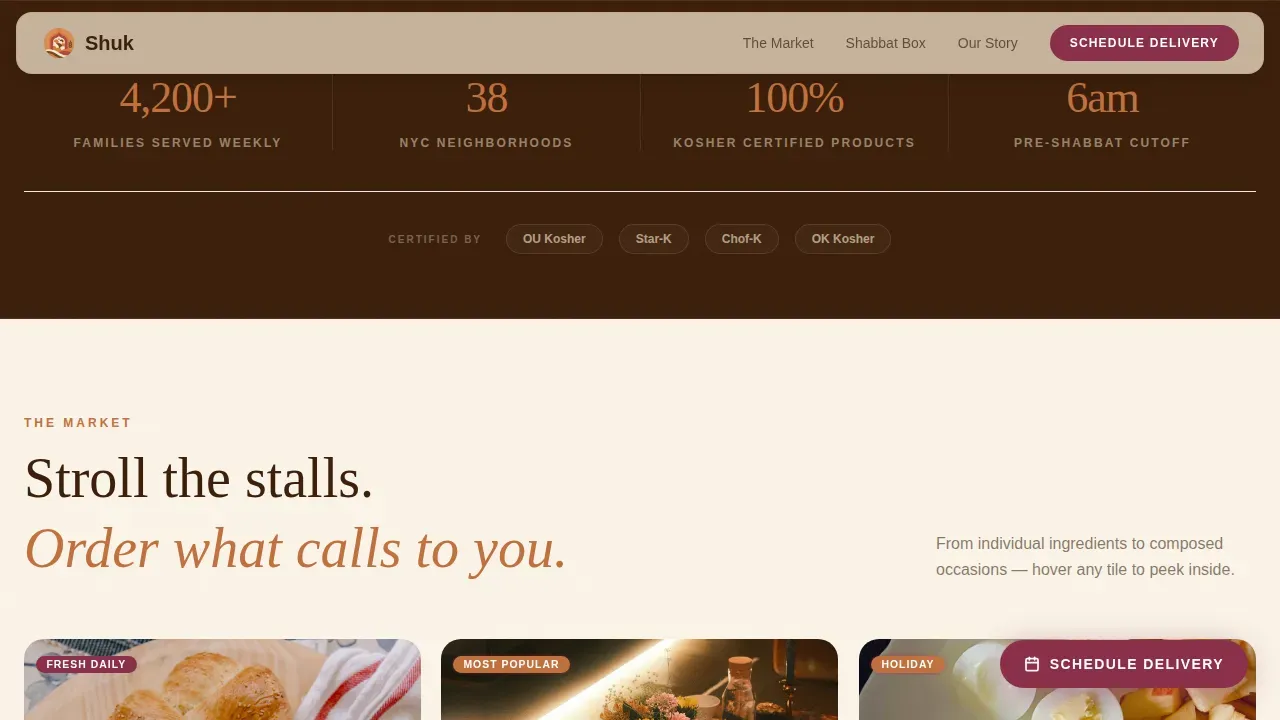
- It communicates trust immediately through a prominent trust bar designed to display kosher certification badges, delivery neighborhoods, and order statistics, so customers know before they scroll that this is a credible, community-rooted service
What you get with this template
You get a fully structured kosher grocery delivery landing page with every section pre-built and every interaction pre-designed. The layout handles the entire visitor journey: from a cinematic first impression to a scheduled delivery confirmation.
- A hero section, trust bar, masonry gallery, Shabbat box call-to-action, testimonials block, and footer, all ready to customize with your own food photography and copy
- A floating "Schedule Your Delivery" button that persists after the first scroll, plus a two-step delivery overlay with a zip code field and a calendar picker organized around weekly delivery windows
- A Fraunces serif headline system paired with DM Sans body text, set in a Sunset Mesa palette of terracotta, pomegranate, pita cream, and date brown
Feature list
This section covers the core built-in capabilities of the Shuk template. Every feature listed here is grounded in the original design brief.
Full-Bleed Cinematic Hero
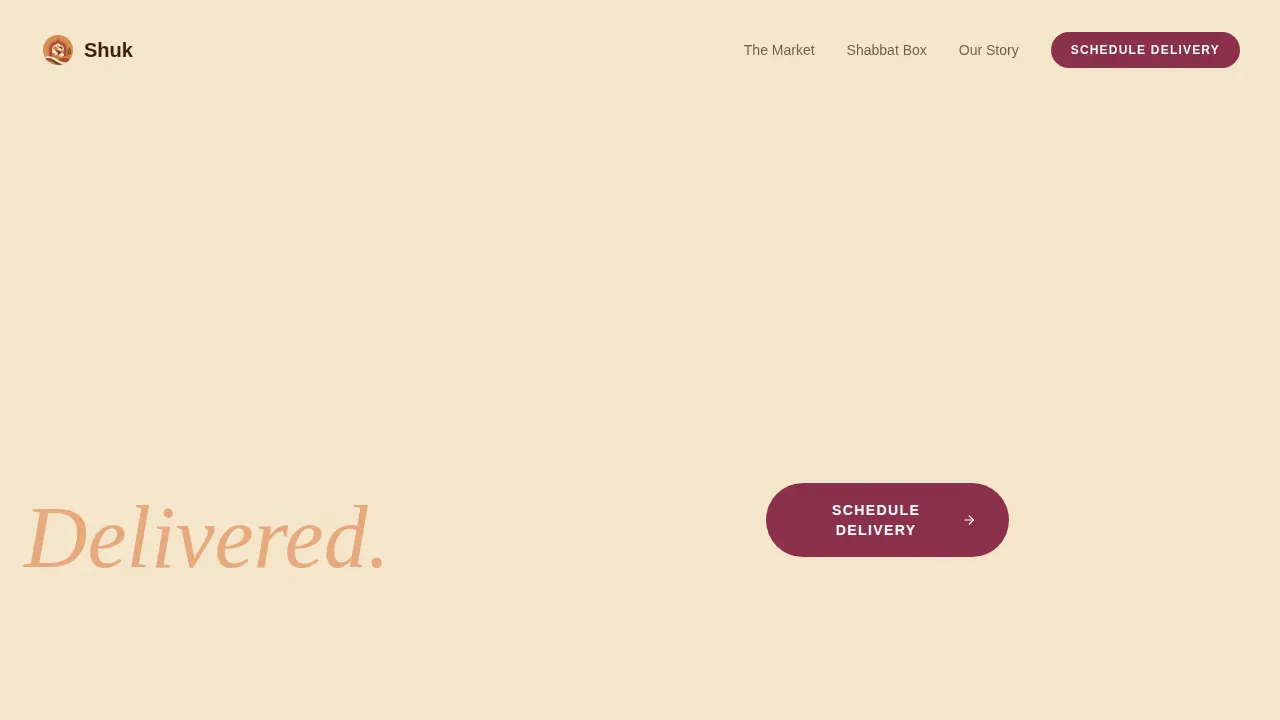
The hero fills the entire screen with a warm overhead photograph of a fresh grocery haul on a weathered wooden table. A braided challah, bundles of dill, a split pomegranate, glass jars of spices and honey, and a single hand placing dried apricots into the scene. The headline "Your Shuk, Delivered." fades in over the negative space. Two calls to action sit beneath it: one to schedule a delivery and one to build a Shabbat box.
Masonry Gallery Walk
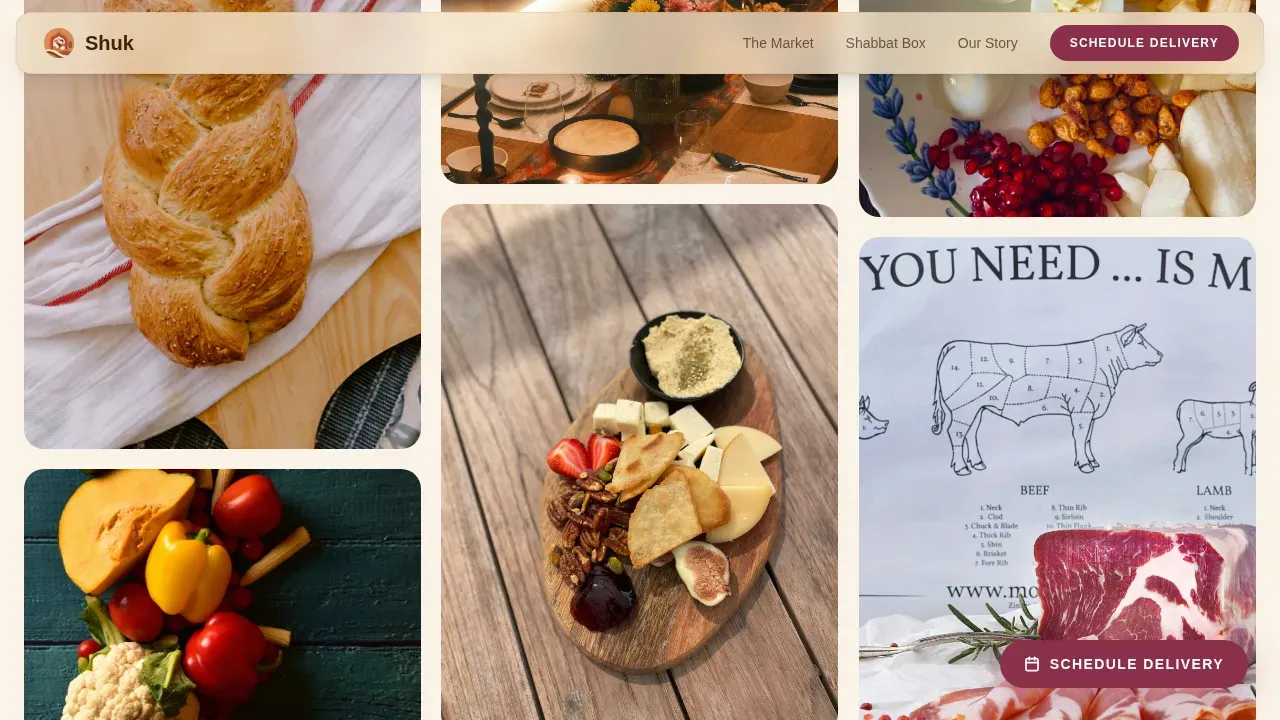
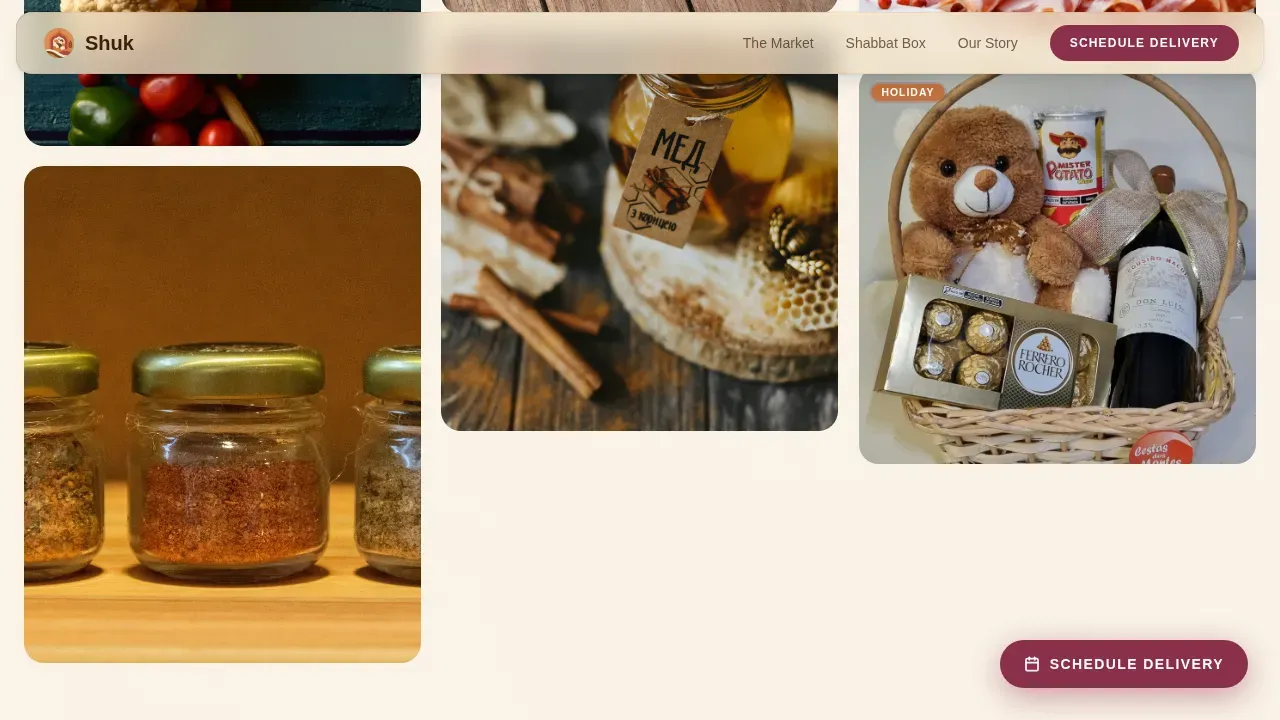
The gallery is the heart of the landing page. It uses a Pinterest-style masonry grid where each tile is a product category still-life: dairy, meat, bakery, fresh fish, pantry staples, Shabbat bundles, and holiday specials. Hovering over any tile lifts it gently off the grid with a warm shadow and reveals a one-line description plus an "Add to Order" tag. As visitors scroll deeper, the tiles shift from individual food items to composed occasion scenes: a set Shabbat table, a Rosh Hashanah spread, a Purim mishloach manot basket. The journey moves from grocery shopping to imagining, from items to occasions.
Floating Schedule Button and Booking Overlay
After the first scroll, a pomegranate-colored "Schedule Your Delivery" button pins itself to the screen. Tapping it opens a two-step overlay. Step one asks for a zip code to confirm the delivery area. Step two presents a calendar picker with available windows organized around the week: Sunday through Thursday slots, a highlighted "Pre-Shabbat Friday" morning window in terracotta, and a recurring weekly toggle for regular customers. This flow is built to convert interest into a confirmed slot as fast as possible.
Shabbat Box Bundle Builder
A dedicated section below the gallery presents the "Build a Shabbat Box" path. First-time visitors who feel uncertain about grocery shopping across many categories can choose a curated bundle and select a delivery slot in a single, uninterrupted flow. The design goal is to take a new customer from curiosity to a confirmed first order in under sixty seconds.
Trust Bar with Certification Display
Immediately below the hero, a trust bar is designed to display kosher certification logos, the list of delivery neighborhoods, and a weekly order count metric. This section is where visitors confirm that the service is credible. Recognized kosher symbols and rabbinical supervision details can be placed here prominently. The trust bar sets the tone before the visitor reaches a single product image.
Testimonials with Asymmetric Layout
Three customer testimonials are presented in an asymmetric layout that breaks the grid in an intentional, editorial way. Each voice represents a different customer archetype: a young family managing Shabbat prep, an elderly customer who no longer wants to make the trip to a physical store, and a newcomer discovering the joy of a fully stocked kosher kitchen. The layout creates the sense of a community sharing its story rather than a corporate page listing reviews.
Page sections overview
| Section | Purpose |
|---|---|
| Hero Full-Bleed | Opens the page with a cinematic food photograph and dual calls to action |
| Trust Bar | Displays kosher certifications, delivery zones, and order statistics |
| Masonry Gallery | Presents product categories as still-life tiles with hover interactions |
| Shabbat Box call to action | Guides first-time visitors into a curated bundle and delivery flow |
| Testimonials Block | Shares three customer voices in an asymmetric editorial layout |
| Site Footer | Closes the page with navigation and brand context |
Design & branding system
The Shuk template follows an Organic Flow theme. The visual language is warm, editorial, and unhurried, like a food magazine photographed at golden hour in the alleyways of a market in Israel.
- The Sunset Mesa color system uses sun-warmed terracotta (#C2703E) for section dividers and hover states, dusty pomegranate (#8B2F4A) for calls to action and seasonal badges, soft pita cream (#F5E6CC) for backgrounds, and deep date-skin brown (#3B1F0B) for all body text and navigation
- Typography pairs Fraunces, a warm optical serif, for headlines with DM Sans for body copy, creating a contrast that feels artisanal without being difficult to read
- GSAP scroll reveals animate content into view as visitors scroll, masonry tiles lift on hover with a warm shadow, and the floating button appears at the right moment to catch intent without interrupting the browsing experience
Mobile & speed optimization
This template is designed mobile-first. The primary audience shops on a phone, often mid-week during Shabbat preparation, so every interaction is built to work with a thumb.
- The floating "Schedule Your Delivery" button is sized and positioned for easy one-thumb tapping on small screens, and the two-step booking overlay is optimized for mobile viewports
- Product images in the masonry gallery are lazy-loaded, meaning only the images currently in view are fetched, which keeps the page feeling responsive even when the gallery contains many high-resolution food photographs
- Static sections of the site, including the hero text, trust bar, and testimonials, are built as Server Components, while the interactive overlay and masonry hover states run as Client Components, keeping the interactive layer lean
How this template helps you convert
Every design decision in Shuk is oriented toward one outcome: turning a visitor who arrived curious about groceries into a customer who has scheduled a delivery.
- The floating pomegranate button means the primary call to action is always visible after the first scroll, so visitors never have to hunt for a way to order no matter how deep into the gallery they go
- The two-path conversion system gives different visitor types their own route: the scheduling overlay for repeat shoppers and the Shabbat Box builder for first-timers who want to skip the full grocery shopping experience and simply choose a curated set of food
- The masonry gallery moves visitors emotionally from ingredient browsing to occasion planning, so by the time they reach the bottom of the page they are not thinking about individual items but about the Shabbat table they are creating
Other information about this template
Shuk is built around the cultural story of grocery shopping in Israel, and specifically around the spirit of Mahaneh Yehuda, the beloved open-air shuk in Jerusalem where fresh produce, spices, dried fruit, nuts, meat, fish, and bread overflow from every stall. That market energy, where someone hands you a sample before you have even asked, is the emotional target the template aims to recreate on screen.
The template is relevant to any kosher grocery delivery operator who wants a site that treats food as something beautiful and culturally meaningful, not just a transaction. It is especially useful for businesses serving communities where grocery shopping is tied to religious observance, seasonal holidays, and the weekly rhythm of Shabbat preparation.
Here is additional context that is helpful for evaluating or adapting the template:
- Grocery shopping in Israel can feel overwhelming for new immigrants due to unfamiliar systems and product labeling. A warm, clearly organized site like this one lowers that barrier for customers who are still learning their way around a kosher kitchen
- Mahaneh Yehuda, the shuk, is a favorite spot in Israel for fresh produce, nuts, spices, and dried fruit. Many customers who grew up visiting the shuk in person will recognize the visual language of this template immediately and feel at home
- Neighborhood makolets are convenient but are often overpriced. Online grocery shopping through a service like the one this template represents can save time and, in many cases, money compared to impulse buying at a corner store
- Many olim, immigrants to Israel, prefer buying meat from local butchers for better quality and prices compared to supermarket pre-packed options. A kosher delivery service that highlights its sourcing story connects directly with that preference
- Seasonal produce is usually cheaper than out-of-season vegetables and fruit in Israel. A landing page that surfaces seasonal offerings and Shabbat bundles mirrors how experienced shoppers in Israel already think about grocery planning
- Discount chains in Israel like Rami Levy, Osher Ad, and Shufersal offer competitive prices for standard groceries. A kosher delivery service that emphasizes quality, curation, and convenience positions itself as a complement rather than a direct competitor, justifying the value it delivers
- Many stores in Israel offer free loyalty cards. A recurring weekly delivery toggle built into the scheduling overlay serves a similar purpose, rewarding regulars and making the service a habitual part of weekly life rather than a one-off purchase
- Shopping online can save time and help avoid crowded stores, but it can come with issues like missing items or substitutions. A template that prominently displays delivery windows, zone coverage, and rabbinical supervision details addresses those trust gaps before the customer has to ask
- The Mediterranean culinary scene in Tel Aviv features a blend of traditional dishes and innovative twists, with restaurants celebrating the rich flavors and fresh ingredients that define the region. Visiting Tel Aviv and experiencing its food culture often inspires the kind of discovery this template recreates digitally
- Tel Aviv offers amazing dining options for anyone interested in israeli cuisine. The food story that draws visitors to Tel Aviv restaurants, the same layered flavors and market-fresh ingredients, is the same story this template tells about home delivery
- Imported products in Israel are often expensive, especially American and British brands. Customers who value local, freshly sourced groceries are exactly the audience this template is designed to reach and convert
- AI-powered tools and no-code platforms have made it significantly easier for operators to build and deploy grocery service applications without extensive programming knowledge. This template fits naturally into that landscape, offering a production-ready starting point that builders can customize quickly using natural language prompts or visual editors
- Landing page templates for kosher grocery delivery services should focus on design and functionality together. This template addresses both: the design earns trust visually and the functional overlay, floating button, and bundle builder handle the conversion mechanics
Theme
Organic Flow
Creative direction
Gallery Walk
Color system
Sunset Mesa
Style
Masonry/Pinterest
Direction
Booking/Scheduling
Page Sections
Full-bleed Cinematic Hero Section
Masonry Gallery Walk with Hover Reveals
Floating Booking Button and Scheduling Overlay
Shabbat Box Bundle Builder Path
Trust Bar with Kosher Certification Display
Asymmetric Testimonials Layout
Related questions
Can I use this template without any coding experience?
How does the two-step delivery booking overlay work?
Is the masonry gallery layout mobile-friendly?
Can I display kosher certification logos and rabbinical supervision details?
Does the template support a recurring weekly delivery option?