Complete Low-FODMAP Food & Dining Professional Website Template
The Fodmap Agrarian Root Gut Friendly Cookbook Landing Page Template is a hero-dominant, single-page click-through built for low-FODMAP cookbook creators. Warm parchment and rust tones, hand-drawn illustrations, full-bleed recipe cards, and a sensory-first scroll flow combine to make visitors hungry first and reassured second before a single "Open the Cookbook" click carries them to purchase.
by Rocket studio
Quick summary
This template is a hero-dominant landing page designed for a low-FODMAP cookbook and recipe blog. It leads with a full-viewport hand-drawn illustration, moves through sensory recipe cards with gut-friendliness badges, and closes with testimonials and a persistent click-through call to action. The Agrarian Root aesthetic makes every section feel warm, earthy, and trustworthy.
Who this template is for
This template was built for a very specific creator and a very specific reader. If you are publishing a low-FODMAP cookbook, running a recipe blog for IBS sufferers, or selling a gut-friendly meal program, this landing page speaks the exact language your audience already uses.
- Cookbook authors and food bloggers publishing low-FODMAP diet content for IBS sufferers
- Dietitians and wellness creators building a direct-to-purchase recipe resource for clients who are recently diagnosed or working through the elimination phase
- Partners and caregivers who cook for someone managing IBS symptoms and want a trustworthy, beautiful recipe reference
What problem this template solves
Starting the low-FODMAP diet can feel overwhelming for most people. The list of safe low-FODMAP foods seems short. The rules around serving size feel clinical. And most recipe pages look like medical handouts rather than something you would actually want to eat from. This template solves all three problems at once.
- It presents low-FODMAP meals through sensory language and beautiful food imagery, making the diet feel inviting rather than restrictive
- It builds trust through recipe-level gut-friendliness badges and a "Hidden Onion and Garlic Free" design promise, so visitors feel reassured as they browse
- It removes friction from the purchase decision by using a single click-through flow with no forms and no distractions, just appetite and confidence arriving together
What you get with this template
You get a fully structured, hero-dominant single-page layout that takes a visitor from curiosity to click in one smooth scroll. Every section is built to serve the low-FODMAP audience with both desire and reassurance. The template includes scroll-triggered animations, a horizontal snap gallery for cookbook chapter previews, and a footer using a clean horizontal flow pattern.
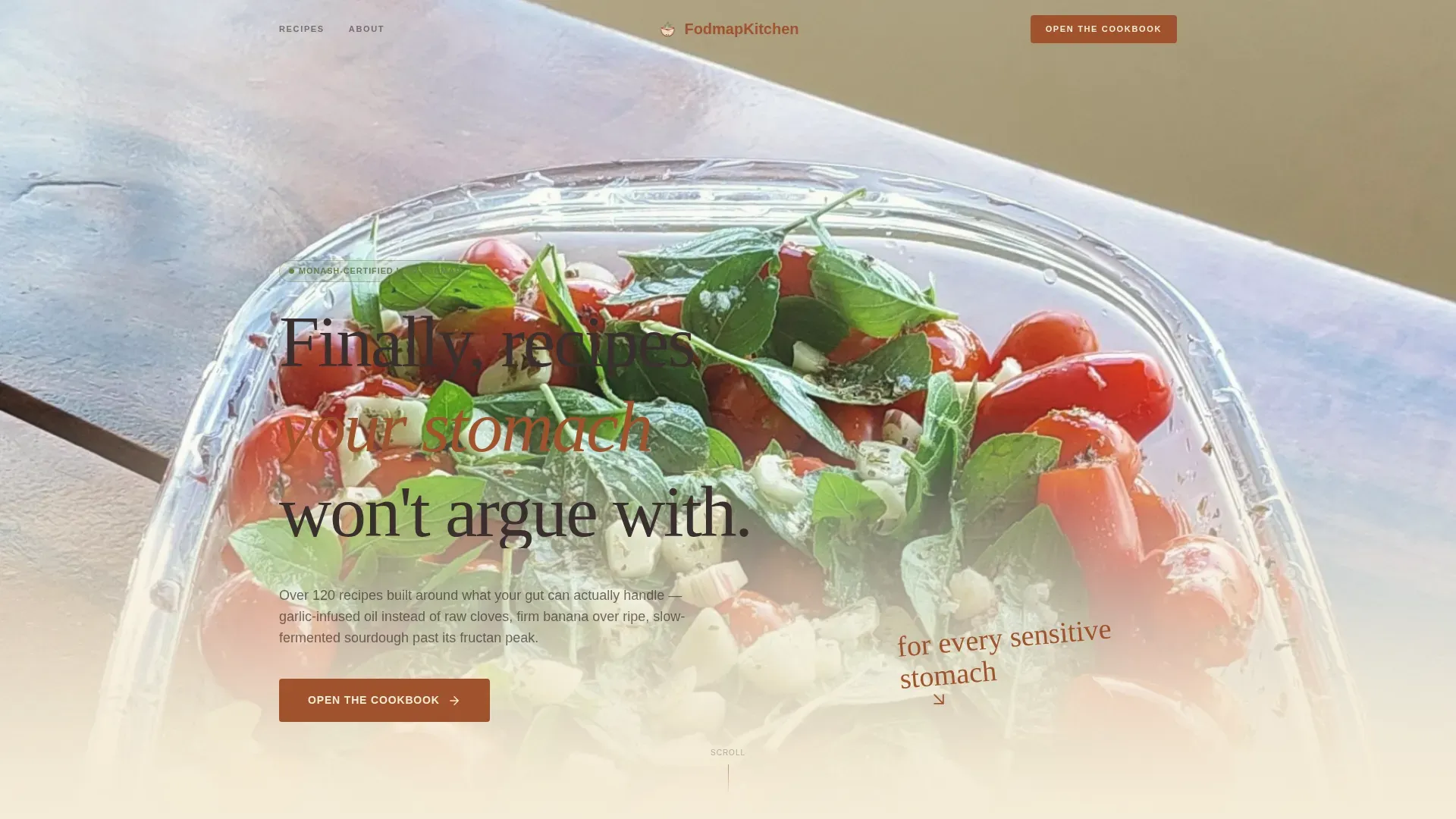
- A full-viewport hero with a hand-drawn ink-and-watercolor illustration, a handwritten-style headline, and a rust-colored primary call-to-action button
- Three full-bleed sensory recipe showcase cards with gut-friendliness badge placements, a scroll-scrub animated philosophy statement, and a horizontal snap-scroll gallery for chapter previews
- A testimonials block featuring three social proof cards from IBS sufferers with specific contexts, followed by a final purchase call-to-action button and a clean horizontal footer with dot separators
Feature list
This template delivers a focused set of high-impact features rooted in the brief. Each one serves a specific role in making the low-FODMAP cookbook feel irresistible and credible.
Full-Viewport Hand-Drawn Hero Illustration
The hero section fills the entire screen with a loose ink-and-watercolor overhead illustration of a worn wooden kitchen table. Low-FODMAP ingredients sit naturally across the surface: a cast-iron skillet with golden potato rösti, a jar of bone broth, scattered chives, a halved lemon with a microplane, and a check-pattern cloth napkin. Negative space between each object lets the illustration breathe. A letterpressed handwritten headline and a rust-colored "Open the Cookbook" button sit just below center, making the first impression both beautiful and actionable.
Sensory-First Full-Bleed Recipe Cards
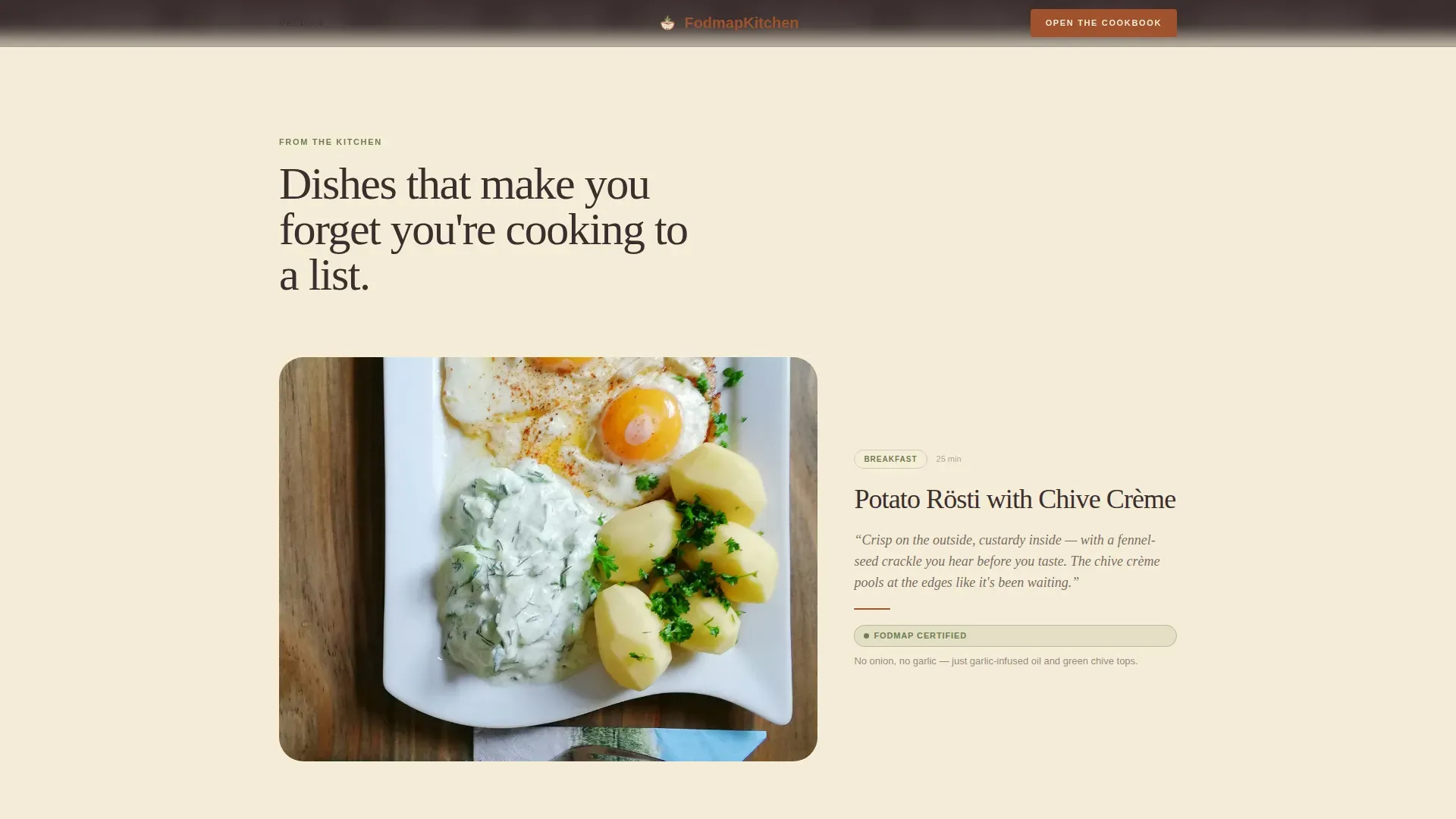
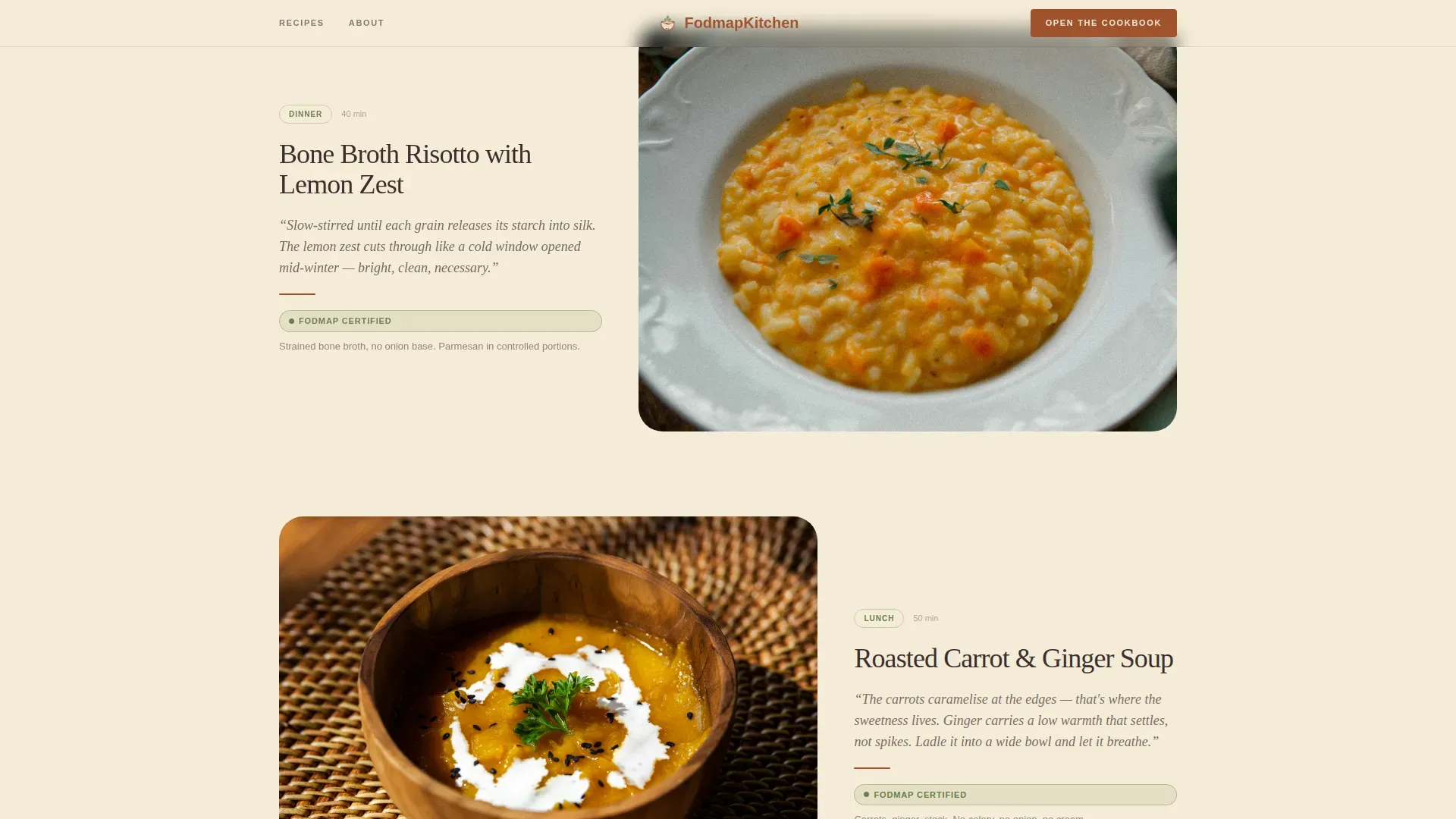
Three recipe showcase cards each fill the viewport with a full-bleed watercolor-style food plate. Every card carries a two-line sensory description written like a taste memory rather than a nutrition label. A small green-certified low-FODMAP badge and a one-line gut-friendliness note follow each image, so desire and trust land in the same visual breath. The call-to-action button reappears after the third card, timed to meet the visitor at the moment of peak appetite.
Scroll-Scrub Animated Philosophy Statement
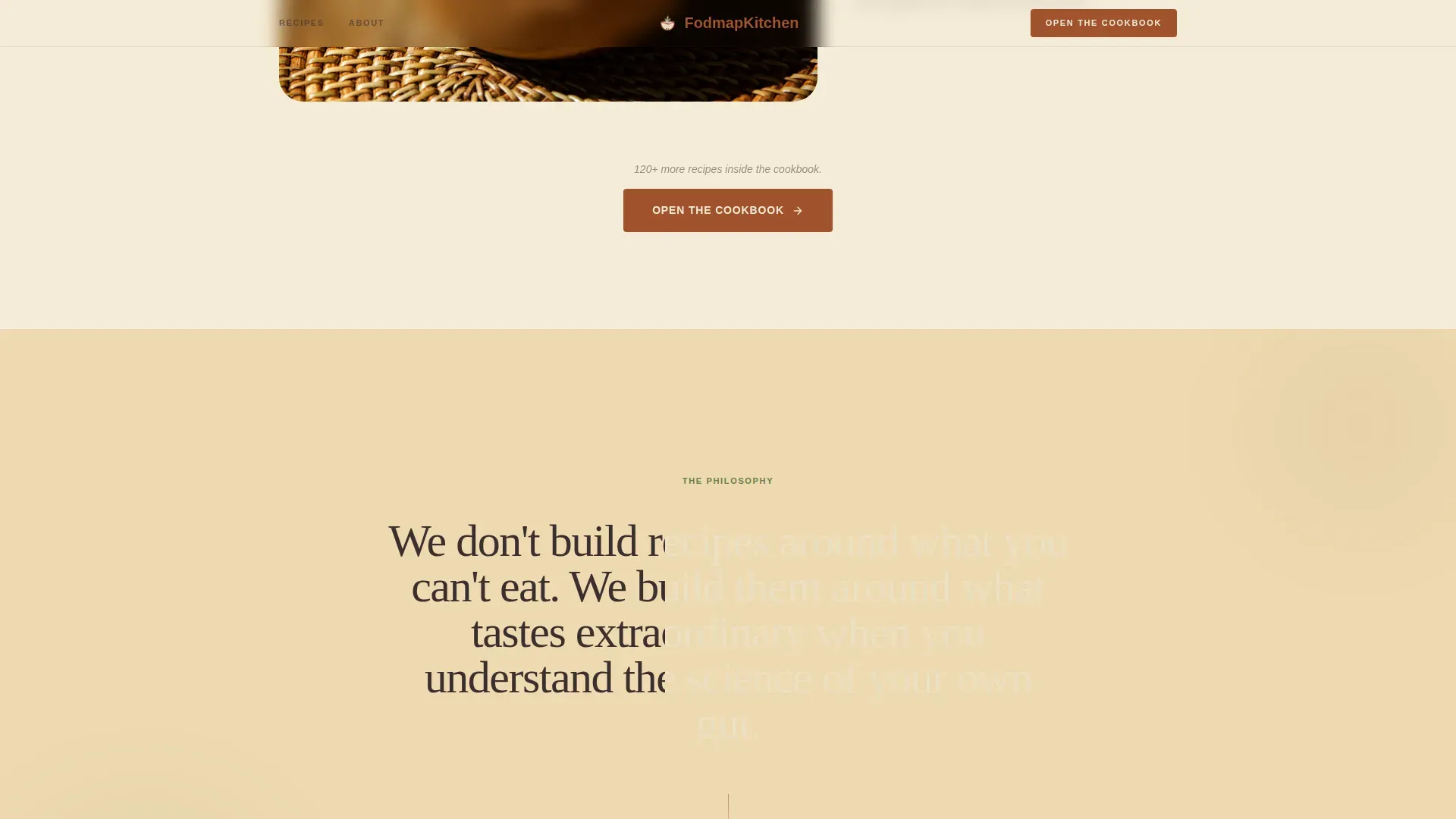
A dedicated scroll-scrub section reveals the cookbook's philosophy one line at a time as the visitor scrolls. The animation is tied to scroll position, meaning the words appear exactly as the reader is ready to absorb them. This section communicates the bridge between rigorous dietary science and genuinely delicious, rustic eating without listing rules or restrictions.
Horizontal Snap-Scroll Chapter Gallery
A snap-scroll horizontal gallery previews the cookbook's chapter cards. Each card represents a different section of the cookbook, letting visitors browse the range of low-FODMAP meals before they click through. The snap mechanic keeps the experience tactile and intentional, matching the slow, considered mood of the overall page.
Testimonials Block with Contextual Social Proof
Three testimonial cards provide social proof grounded in specific IBS contexts. One reviewer was dietitian-referred, one is a daily user of the Monash app, and one is a partner who cooks for someone with IBS. These contexts make the social proof feel earned rather than generic. The testimonials sit directly above the final purchase call-to-action button for maximum conversion proximity.
Warm Color-Temperature Scroll Progression
The page is designed so that color temperature warms as the visitor scrolls deeper. Parchment tints toward amber. Rust deepens toward molasses. This creates a visual sensation of slow-roasting, matching the sensory appeal direction of the overall design. The effect is subtle and reinforces the agrarian, farmhouse aesthetic without requiring any explicit instruction from the visitor.
Page sections overview
| Section | Purpose |
|---|---|
| Hero illustration | Opens with full-viewport hand-drawn art, headline, and primary call-to-action button |
| Recipe card one | First full-bleed sensory dish showcase with low-FODMAP badge |
| Recipe card two | Second sensory dish showcase continuing the flavor scroll |
| Recipe card three | Third dish showcase followed by the first mid-page call-to-action |
| Scroll-scrub statement | Animated philosophy reveal tied to scroll position |
| Horizontal snap gallery | Chapter preview cards in a snap-scroll horizontal layout |
| Testimonials block | Three contextual social proof cards from IBS sufferers |
| Final call to action | Purchase button anchored to cookbook bundle selector |
| Page footer | Horizontal flow footer with dot separators |
Design & branding system
The Agrarian Root visual identity is built entirely from colors pulled from soil, pantry shelves, and natural fiber. Every typographic and color decision reinforces the same idea: this is food rooted in the earth, served with care, and safe for your gut.
- Color palette: unbleached parchment (#F5ECD7) for backgrounds, iron-oxide rust (#A0522D) for headlines and primary buttons, dried thyme green (#6B7F4E) for secondary accents and tag labels, and deep loam (#3B2F2F) for body text
- Typography: DM Serif Display for main headings, Fraunces for display accents and handwritten-style moments, and IBM Plex Sans for body text and labels, creating a layered warmth between serif tradition and clean legibility
- Illustration style: loose ink-and-watercolor hand-drawn artwork with deliberate negative space, a letterpressed headline treatment, and earthy texture overlays that make each screen feel like a page from a linen-bound journal
Mobile & speed optimization
The template is desktop-first in its layout hierarchy, reflecting how most cookbook buyers research and browse on larger screens. At the same time, every section is built to read cleanly on mobile, because visitors who discover the page while browsing on their phone should never feel like they are seeing a compressed desktop layout.
- The hero illustration, recipe cards, and testimonial block all adapt to single-column mobile layouts without losing the warmth or the visual hierarchy of the desktop experience
- Scroll-triggered animations use a single dedicated client component for interactivity while all static sections are rendered as server components, keeping the page lean and the animation smooth
- The snap-scroll chapter gallery translates to a swipe-friendly horizontal scroll on touch devices, preserving the tactile, page-turning sensation on smaller screens
How this template helps you convert
This template earns the click rather than demanding it. The entire scroll sequence is engineered to build appetite first and confidence second, so by the time the visitor sees the purchase button, they already want what is behind it.
- The sensory-first recipe card sequence makes every low-FODMAP meal feel genuinely desirable before any trust signal appears, reversing the usual pattern of leading with credentials and following with food
- The green gut-friendliness badge and one-line safety note that follow each recipe image deliver reassurance at exactly the right moment, right after desire has been activated, so the two arrive together rather than competing
- The persistent but unhurried call-to-action button placement (after the hero, after the third recipe card, and after the testimonials) creates multiple low-pressure click opportunities across a single scroll, matching the visitor wherever they feel ready
Other information about this template
This section covers additional context that is useful for creators building or customizing this template, including coverage of specific dietary ingredients, lab-testing standards, and community resources relevant to the low-FODMAP niche.
- The low-FODMAP diet involves removing fermentable carbohydrates that can trigger IBS symptoms. Common low-FODMAP foods include carrots, sweet potatoes, potatoes, parsnips, turnips, green beans, firm tofu, rice, gluten free bread made from suitable grains, corn tortillas, corn flakes, and lactose-free dairy products
- Serving size matters enormously on a low-FODMAP diet. A food that is safe at one low-FODMAP serving size can cross into high-FODMAP territory at a larger portion. Recipes that specify exact serving sizes help readers eat with confidence rather than anxiety
- Lab-tested ingredients are the backbone of credible low-FODMAP recipe content. Not all carbohydrates are FODMAPs, and the only way to confirm the FODMAP content of a specific food is through lab testing. The results of FODMAP lab tests can vary significantly based on food variety, ripeness, and storage conditions. A lab tested recipe collection that cites these nuances builds far more trust than one that omits them
- The Monash app is a widely used reference tool in the low-FODMAP community. It provides lab tested, up-to-date information on FODMAP content and serving sizes, and readers who already use the Monash app will recognize and trust a cookbook that aligns with its data
- Foods that have been lab tested and certified as low FODMAP can display a certification icon on their packaging. A "Low-FODMAP Certified" badge used within recipe content serves a similar trust-building role, confirming that FODMAP status has been verified rather than estimated
- Common low-FODMAP cooking fats and flavoring agents include olive oil, coconut oil, and garlic-infused oil (used instead of raw garlic). Herbs such as chives, thyme, and fresh herbs that are naturally low FODMAP add flavor without adding FODMAP risk
- The cookbook design promotes underused gut-safe starches including cassava, parsnips, and ginger root, alongside familiar staples such as rice and sweet potatoes. These ingredients provide essential nutrients and fiber variety while staying within safe FODMAP content thresholds
- For calcium intake on a dairy free diet, the template supports recipe contexts that include lactose-free dairy products, fortified non-dairy alternatives such as soy milk made from soy protein isolate rather than whole soybeans, and nuts such as macadamia and peanuts that sit within safe low-FODMAP serving size ranges. Bone health is a relevant consideration for anyone removing dairy products from their diet, and noting calcium-rich alternatives within recipes supports a nutritionally complete approach
- Removing gluten and dairy from the diet can lead to significant improvements in symptoms for some individuals, including those managing autoimmune conditions alongside IBS. A gluten free diet and a dairy free diet often overlap with a low-FODMAP diet in practice, since many high-FODMAP foods also contain gluten or lactose. Gluten free grains such as rice, certified gluten free oats in appropriate portions, and gluten free bread made from sourdough spelt that has been slow-fermented to reduce fructan content are all featured recipe contexts within this template
- The template's visual identity supports content creators who want to use hand-drawn food illustrations, visual assets, and styled food photography to communicate complex dietary information. Visual resources can make dietary changes feel less overwhelming and more empowering for individuals following a low-FODMAP diet. The design system is compatible with content export workflows across common tools for adding branded visuals to nutrition guides and meal plans
- The cookbook features a 4-week Gut-Reset meal plan structure, which gives the template a natural anchor for organized, time-based content sections. This structured way of presenting meal planning content helps readers who are in the elimination phase feel guided rather than overwhelmed
- Ingredients such as maple syrup (in low FODMAP serving size quantities), black pepper, and protein powder made from suitable low FODMAP sources can appear in recipe content without triggering concern, provided that serving size guidance is clearly stated. Prepared foods and processed foods that contain hidden high-FODMAP additives are a common concern for the IBS community, making food labels an important topic within the cookbook's educational context
- Raising awareness about the difference between a gluten free diet and a low-FODMAP diet is valuable for readers who may conflate the two. Not everyone with IBS needs to be fully gluten free, and not everyone following a gluten free diet is automatically following a low-FODMAP diet. The template supports recipe content that explains this distinction clearly and compassionately
- The low-FODMAP diet has been reported to help some individuals with autoimmune conditions by reducing symptoms. Dietary strategies for these conditions often include removing reactive foods and focusing on nutrient-dense options. The template's empathy-first storytelling approach is well suited to this broader audience
- Supplementing a low-FODMAP diet thoughtfully supports overall health. Supplements such as calcium and other nutrients that may be reduced when dairy products, certain grains, or legumes are removed from the diet are worth addressing in recipe content. Readers who eat within a restricted dietary framework need confidence that their food choices still support bone health and full nutrient intake
Theme
Agrarian Root
Creative direction
Sensory Appeal
Color system
Parchment & Rust
Style
Hero-Dominant (90/10)
Direction
Click-Through
Page Sections
Hand-drawn Hero Illustration Section
Sensory Recipe Cards with Trust Badges
Scroll-scrub Philosophy Animation
Horizontal Snap-scroll Gallery
Contextual Testimonials Block
Warm Scroll Color-temperature Progression
Related questions
Who is this landing page template designed for?
Does this template require form submissions or email capture?
Can I update the color palette and typography to match my own brand?
How does the template balance appetite appeal with dietary trust for IBS readers?
Is this template suitable for a cookbook covering both gluten free and low-FODMAP recipes?