Heritage Poultry Training Landing Page Template
Roost is a hero-dominant landing page template built for a hands-on heritage breed poultry training school. It opens with a full-screen golden-hour video, guides visitors through a founder origin story, walks them down a chapter-by-chapter curriculum timeline, and closes with a course enrollment form and a free brooding guide email capture. Calm, editorial, and built to convert.
by Rocket studio
Quick summary
Roost is a single-page template designed for a heritage breed poultry training school. It pairs a cinematic full-screen video hero with a narrative scroll that moves visitors from curiosity to enrollment. The layout is calm and editorial, built around a Japanese Zen color palette, and focused on two conversion goals: course registration and email lead capture for prospective students who want to raise chickens but are not yet ready to sign up.
Who this template is for
This template is designed for educators, farmers, and small-scale producers who teach others how to raise poultry with intention. It fits anyone running a hands-on school where the curriculum covers real-world skills, from incubating eggs to managing a healthy flock on pasture.
- Urban homesteaders converting suburban yards into productive spaces with chickens, hens, and small livestock
- Small-farm dreamers leaving desk jobs who want to build a teaching practice around heritage breeds, turkeys, geese, and other poultry
- Seasoned hobbyists ready to breed selectively, attend poultry shows, and sell chicks at swap meets or through a local farm network
What problem this template solves
Most generic education templates are built for online courses. They push bullet points and feature grids at visitors before those visitors feel any reason to trust the instructor. A school centered on hands-on agriculture, where you learn to read a rooster's behavior, check a hen for laying readiness, or manage a flock through cold weather and predator pressure, needs a different kind of page.
Roost solves the trust gap with a narrative-led scroll that works like chapters in a farming journal. It gives the founder a voice before it asks for anything. It sequences the curriculum the way a real apprenticeship would, answering the next logical question a student would ask before they have time to break away and leave the page.
- Generic templates do not accommodate video-hero storytelling or founder origin story sections
- Standard enrollment forms lack the experience-level and session-format fields that poultry school students need when they sign up
- Most templates ignore the warm, unhurried tone that draws people into the world of heritage agriculture and keeps them reading
What you get with this template
You get a fully structured landing page that handles both conversion paths: immediate enrollment and longer-term lead nurture. Every section is purpose-built for a poultry training school context, from the golden-hour video hero to the free downloadable guide offer.
- A full-screen video background hero with a headline overlay and a persimmon-colored "Reserve Your Coop Seat" call-to-action button
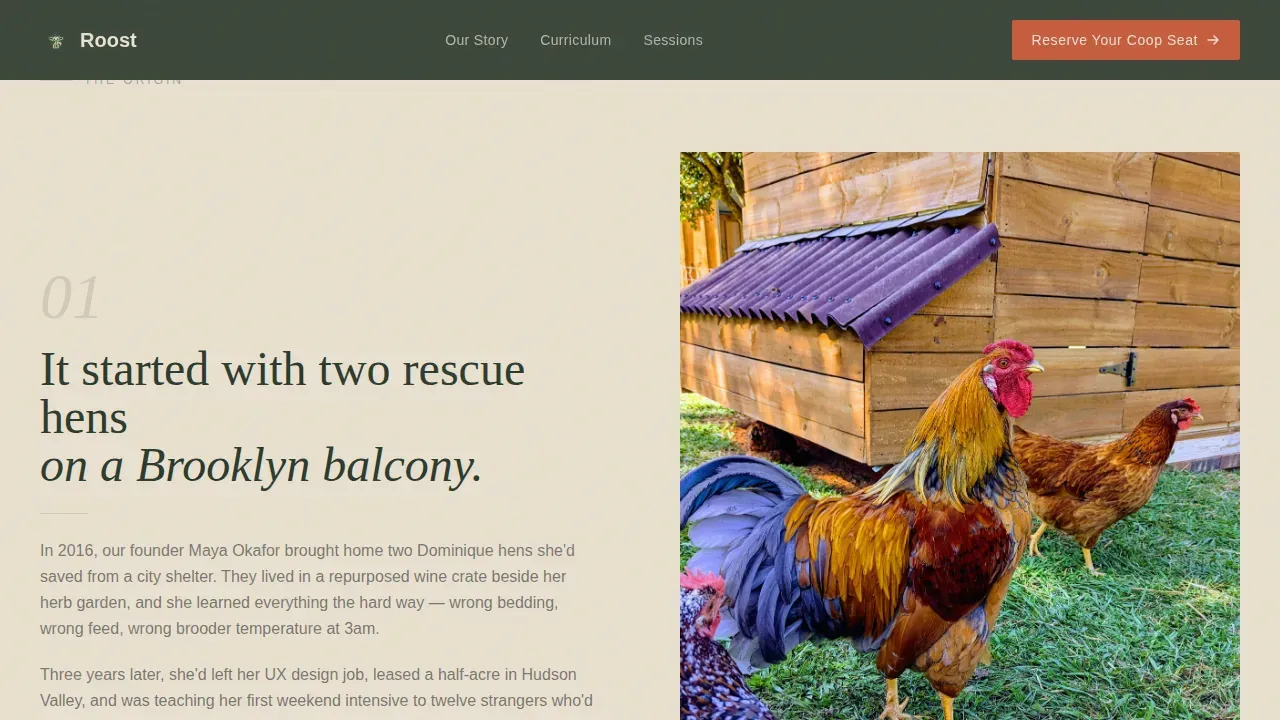
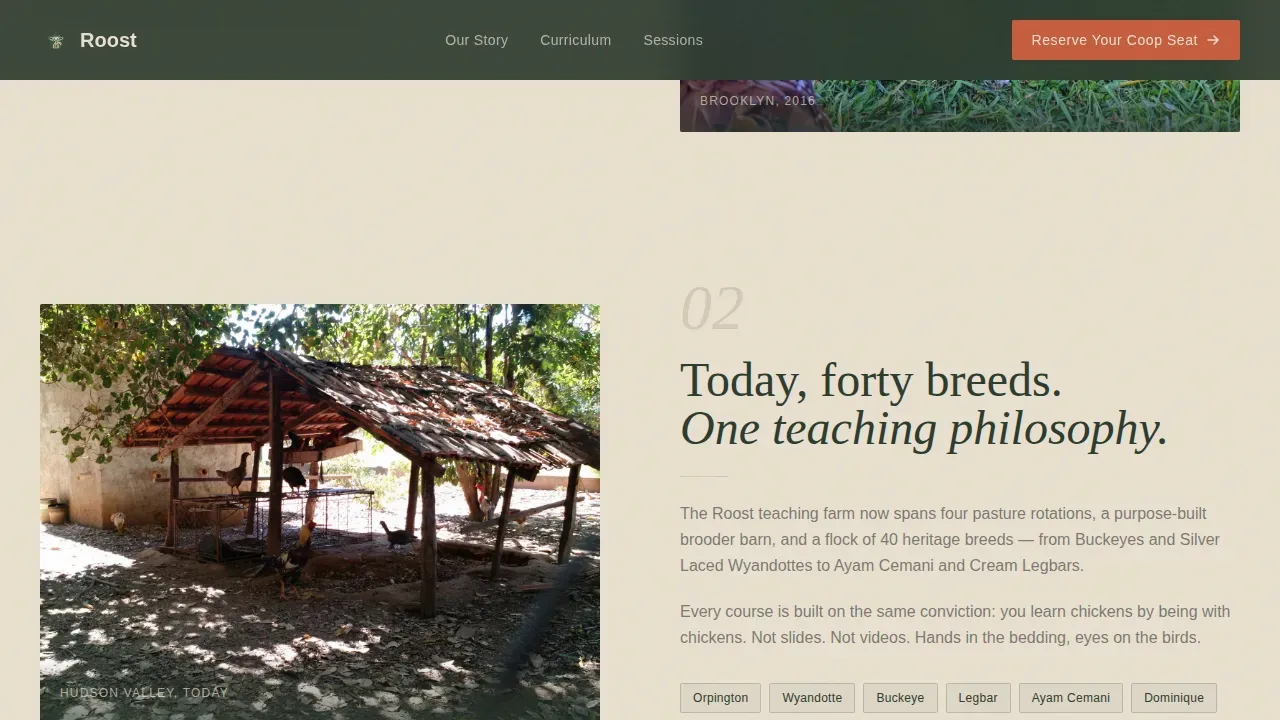
- A founder origin story section that scrolls through a visual timeline, from a balcony with rescue hens to a forty-breed teaching farm
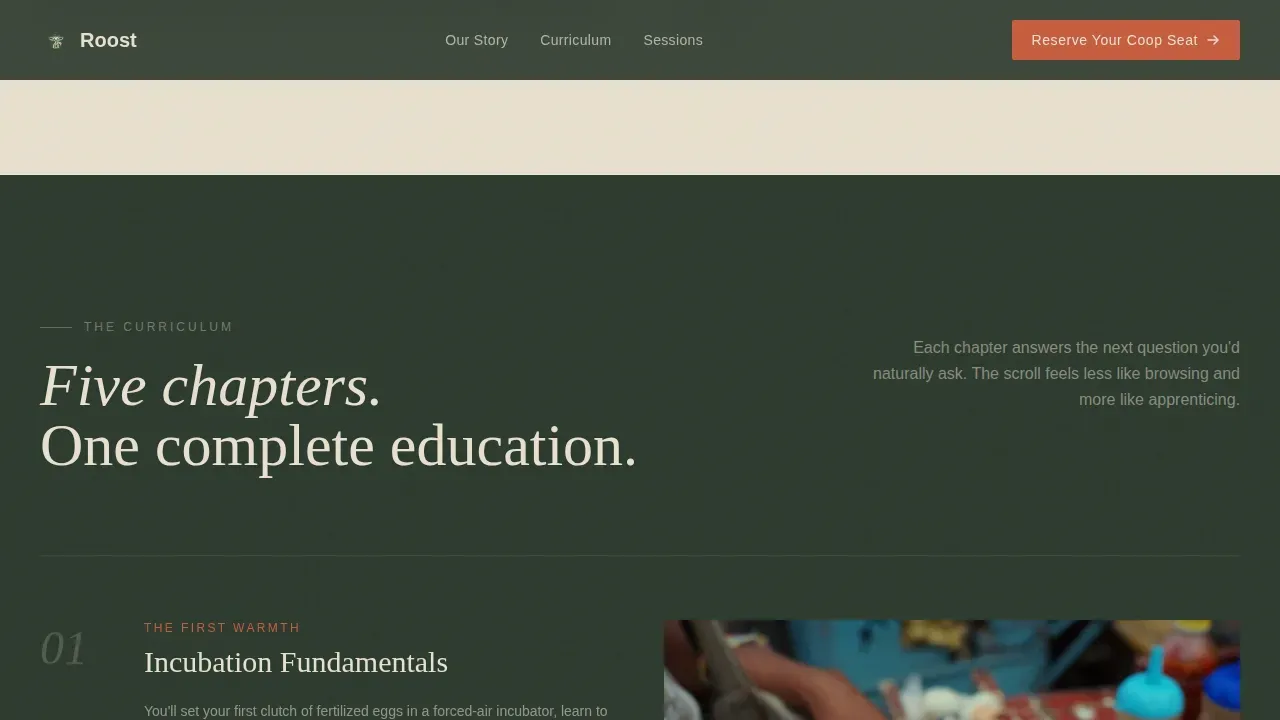
- A chapter-by-chapter curriculum timeline covering incubation, brooder setup, pasture rotation, breed selection, and processing with dignity
- A lead generation form collecting first name, experience level, and preferred session format, followed by a secondary email capture for the free "First 30 Days" brooding guide
- A footer using an Arc Browser Split layout with logo and tagline on the left and minimal navigation links on the right
Feature list
This template is built around five core capabilities that work together to create a cohesive, conversion-focused landing page for a heritage poultry school. Each feature is drawn directly from the prompt brief.
Full-Screen Video Hero with call to action Overlay
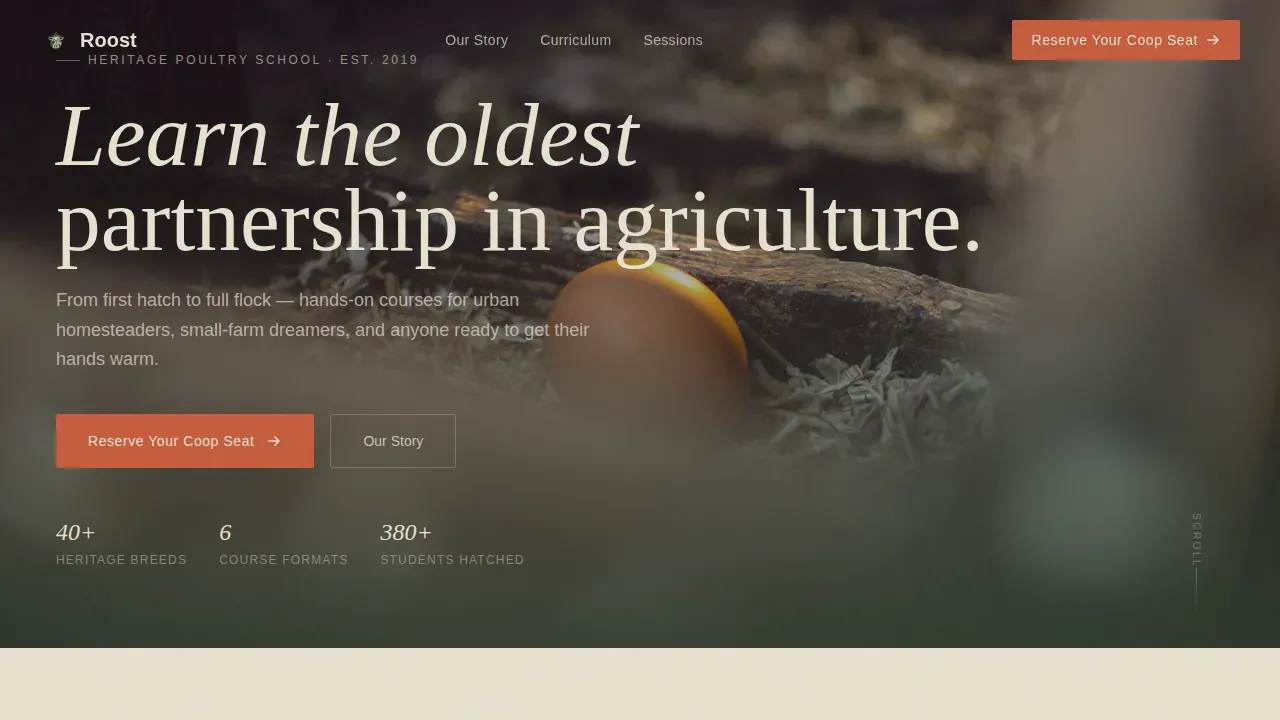
The hero fills ninety percent of the viewport with a slow golden-hour tracking shot. The footage shows a hand lifting a warm brown egg from beneath a broody Orpington hen, then pulls back to reveal a free-ranging flock on a dew-soaked pasture ringed by cedar coops. A single headline fades in over the scene. The primary call-to-action button in persimmon sits pinned at the bottom of the hero and repeats after the curriculum timeline.
Founder Origin Story Section
This section gives the school credibility through narrative rather than credentials. It opens with a photograph of a cramped apartment balcony with two rescue hens, then widens to a frame of the teaching farm today with forty heritage breeds. The scroll moves through a visual timeline that deepens with each chapter, building the kind of trust that makes a visitor want to sign up for a course rather than simply browse.
Chapter-by-Chapter Curriculum Timeline
The curriculum timeline is structured like an apprenticeship, not a syllabus. It moves through incubation basics, brooder setup, pasture rotation, breed selection, and finally processing with dignity. Each chapter answers the next logical question a student would ask. The staggered chapter reveals use scroll-triggered fade-in animations to give the content a measured, unhurried pace that matches the Organic Flow visual theme.
Dual Lead Generation Forms
The template includes two conversion paths. The primary enrollment form collects first name, experience level (never kept birds, backyard flock, or active breeding program), and preferred session format (weekend intensive, eight-week evening, or private farm visit). The secondary path offers a free downloadable "First 30 Days" brooding guide in exchange for an email, capturing leads who are already imagining the coop but are not ready to commit to a full course.
Japanese Zen Visual and Typography System
The page is built on a deliberately spare color system. Deep nori green (#2D3A2E), sun-bleached rice hull (#E8E0D0), ink-stone charcoal (#3B3B3B), and a single persimmon accent (#C65D3E) reserved for calls to action and hover states. Fraunces, a serif editorial typeface, handles all headings. DM Sans handles body copy with clean utility. The result feels like a moss-covered stone basin beside a gravel courtyard: unhurried, natural, and every color earning its place.
Page sections overview
| Section | Purpose |
|---|---|
| Full-Screen Hero | Video background with headline overlay and primary enrollment call to action |
| Founder Origin Story | Visual timeline from balcony hens to forty-breed teaching farm |
| Curriculum Timeline | Chapter-by-chapter apprenticeship scroll from incubation to processing |
| Enrollment Lead Form | Collects name, experience level, and session format preference |
| Free Guide Capture | Email opt-in offer for the "First 30 Days" brooding guide |
| Site Footer | Arc Browser Split layout with logo, tagline, and minimal navigation |
Design & branding system
The visual identity follows an Organic Flow theme expressed through a Japanese Zen color system. The palette was chosen to feel like stepping into a quiet coop at first light: warm, natural, and deliberate. Nothing competes with the content. Every visual element earns its place the way every plant earns its spot in a zen garden.
- Color palette: deep nori green (#2D3A2E) as the primary tone, sun-bleached rice hull (#E8E0D0) as the background, ink-stone charcoal (#3B3B3B) for body text, and persimmon (#C65D3E) exclusively for calls to action and hover states
- Typography: Fraunces serif for editorial headings, DM Sans for body copy, creating a contrast between warmth and utility that mirrors the school's tone
- Animation: medium-intensity scroll-triggered fade-ins, parallax depth layers, and staggered chapter reveals that keep the pace unhurried without feeling slow
Mobile & speed optimization
The template is designed desktop-first, reflecting the video-heavy hero experience. On mobile, the full-screen video transitions gracefully to a static poster image so the hero remains visually rich even when video autoplay is unavailable. Sections are lazy-loaded to keep the page feeling responsive as visitors scroll deeper into the curriculum timeline.
- Desktop-first layout with a graceful mobile fallback using a video poster image for the hero section
- Lazy-loaded sections below the hero to keep initial load performance practical on slower connections
- Enrollment and email capture forms are accessible and functional across screen sizes without layout breakage
How this template helps you convert
The template is built around a single primary action: getting the right visitor to reserve a seat. Every design and content decision serves that goal, from the immersive video entry to the two-path lead capture system.
- The hero creates immediate emotional context. Visitors feel the warmth of a laying hen, hear the flock, and read a headline that speaks to a deep human interest in agriculture before they encounter any enrollment language.
- The origin story and curriculum timeline build trust through narrative progression. By the time a visitor reaches the enrollment form, they have already moved through five chapters of practical knowledge covering incubation, brooder management, pasture rotation, breed selection, and processing, so the decision to sign up feels earned, not rushed.
- The secondary email capture for the free brooding guide creates a low-barrier entry point for visitors who are not ready to enroll today but are already imagining their first flock.
Other information about this template
This section covers additional context about the subject matter, the poultry training landscape, and the practical knowledge base that makes a template like this meaningful for schools and instructors operating in this space.
Heritage breed poultry training programs focus on preserving rare genetics, sustainable pasture-based management, and specialized husbandry techniques that differ significantly from commercial poultry industry operations. Students learn to raise chickens and other poultry using practices that prioritize natural mating capabilities, slow-growing pasture systems, and breed-specific care. The Livestock Conservancy maintains a Conservation Priority List that guides heritage breed selection for programs like this one, and responsible schools reference it when talking about which breeds to feature in their curriculum.
Choosing the right chicken breeds matters deeply in this context. Different chicken breeds have unique characteristics that affect their suitability for various environments and purposes. Barred Plymouth Rocks are known for their reliable egg production and hardiness across climates. Easter Eggers bring colorful eggs and a friendly disposition that makes them a good entry point for beginners. Buff Orpingtons are docile by nature and often recommended for families and young people raising chickens for the first time. Black Australorps are recognized for high egg production and strong adaptability. Chickens generally lay best when exposed to at least 14 hours of natural light a day, a fact that a well-structured training course will cover in the brooder and coop management chapters.
Turkeys deserve their own section in any serious heritage poultry curriculum. Heritage turkeys, including the Bourbon Red, take longer to raise on pasture than conventional breeds and often have a smaller dressed weight compared to Broad Breasted Whites. They require much higher levels of protein in their diet than broilers or laying hens. Turkeys are excellent foragers and can supplement their diet with native plants, insects, seeds, and corn found across pasture ground. A brooding area for turkeys must be cleaned and disinfected before the flock arrives. Turkeys should have access to clean water and feed immediately upon arrival in the brooder. They should be provided with at least 14 hours of light daily to promote growth. Turkeys need at least three to four square feet of space per bird in a range coop, and mobile housing for turkeys must provide adequate feeder and water access as the flock moves across pasture.
Geese are another species that a comprehensive program may address alongside chickens and turkeys. Geese are large birds that forage extensively and can be raised on pasture with other livestock such as goats. Managing geese alongside dogs or alongside free-ranging chickens requires an understanding of flock dynamics and predator behavior, including threats from coyotes, which are among the most persistent predators in rural and semi-rural settings.
Pastured poultry production allows birds to roam and forage outdoors, which can improve both animal welfare and meat quality. Consumers are increasingly interested in meat from animals raised humanely on pasture. Heritage breed poultry products often command higher prices because of their longer grow-out times and production costs. Many consumers prefer the taste of heritage breed poultry over conventional breeds, as shown by blind taste tests. These products are often marketed as part of a local food system, giving farmers a way to sell fresh food directly to customers who value sustainably sourced food. Marketing strategies for heritage breed poultry often include building customer interest through sign-up sheets and deposits before birds are even hatched.
Biosecurity is a critical topic in the current poultry landscape. Highly pathogenic avian influenza, often referred to as avian influenza, has affected flocks across the United States and created serious pressure on both the commercial poultry industry and small-scale producers. Managing the risk of avian influenza spread requires strict biosecurity measures, including controlled access to the coop, clean feeder and waterer protocols, and awareness of wild bird contact. A training program that covers avian influenza biosecurity gives students practical tools to protect their flocks and their livelihoods. Understanding how highly pathogenic avian influenza moves between flocks helps producers make informed decisions about housing, range access, and flock health monitoring. Schools that address highly pathogenic avian influenza in their curriculum are giving students knowledge that the broader poultry industry considers essential. Awareness of avian influenza also matters when raising heritage turkeys alongside chickens or other poultry, since larger mixed flocks carry a higher risk of disease spread if biosecurity is not maintained.
Poultry management training covers flock management, feeding protocols, nutrition, and health care for both small backyard flocks and larger commercial-scale operations. Proper nutrition is essential for poultry to reach market weight efficiently and maintain health across the grow-out period. Monitoring the flock's behavior and health is crucial during the brooding period. Poultry should have access to clean water and a well-managed feeder at all times to reduce stress and promote healthy growth. Training programs for poultry management often include predator control strategies to protect flocks from coyotes, dogs, hawks, and other threats. Producers should also be aware of environmental factors such as temperature, humidity, and seasonal light levels that affect poultry health and egg production.
The roost heritage breed poultry training school landing page template is well-suited for instructors who want a credible, story-driven digital presence that reflects the same quality and care they bring to the farm. Student testimonials can serve as social proof within the page structure, and interactive elements built into the enrollment form increase engagement during the sign-up process. Some programs also offer a free breed selection guide for email sign-ups, a tactic well-supported by this template's secondary lead capture path.
- The Livestock Conservancy Conservation Priority List is a trusted reference for heritage breed selection and can be cited within the curriculum timeline or origin story sections
- Bourbon Red turkeys are one of the most recognizable heritage turkey breeds and are a strong example to feature in breed selection curriculum chapters
- Poultry shows are one outlet where students who complete a selective breeding curriculum can showcase the animals they have bred and developed over a grow-out season
- Young people entering the world of small-scale agriculture often find heritage breed chickens a more accessible entry point than other livestock such as goats or larger farm animals
- Consumer interest in fresh food from heritage poultry is growing, and a well-positioned training school can serve both the education market and the local food economy simultaneously
Theme
Organic Flow
Creative direction
Origin Story
Color system
Japanese Zen
Style
Hero-Dominant (90/10)
Direction
Lead Generation
Page Sections
Full-screen Video Hero with Overlay Call to Action
Founder Origin Story with Visual Timeline
Chapter-by-chapter Curriculum Timeline
Dual-path Lead Generation System
Japanese Zen Branding and Typography
Related questions
Who is this template built for?
What conversion paths does the template include?
Does the template support video in the hero section?
Can I customize the curriculum chapters for my specific school?
Is this template appropriate for schools that also teach turkey or geese raising?