Preschool (3-5) Products & Booking Website Template
Hearth is a warm, masonry-style landing page template built for child psychologists and play therapists who work with three-to-five-year-olds. A photo grid mosaic header, step-by-step narrative cards, and a built-in five-question check-in guide worried parents from "I noticed something" to booking a first conversation, gently and without pressure.
by Rocket studio
Quick summary
Hearth is a single-page play therapy template designed for practices supporting young children and their families. It pairs a staggered photo mosaic header with a picture-book card flow and an interactive five-question check-in. The result is a page that feels like a sunlit playroom: unhurried, trustworthy, and sized exactly right for a parent who is worried and short on time.
Who this template is for
This template is built for small practices and individual clinicians who work with children aged three to five. It suits anyone who needs a warm, professional online presence without a clinical or corporate feel.
- Child psychologists and play therapists running a private or group practice
- Preschool mental health support services looking for their first or refreshed landing page
- Pediatric referral partners who want a page they can confidently share with families
What problem this template solves
Parents who notice something different about their child's behavior often do not know where to start. A cold, clinical page makes that first step harder. Hearth removes that barrier by leading with recognition and warmth before asking for anything in return.
- Parents land on the page mid-worry and need to feel understood immediately, not interrogated
- Practices lose families who bounce before reading because nothing on screen matches the feeling they came in with
- The gap between "I noticed something" and "I booked a call" is wide; this template bridges it step by step
What you get with this template
You get a fully structured, single-page layout ready to represent a play therapy practice from the first scroll to the final call to action. Every section is purposeful and sequenced to build trust progressively.
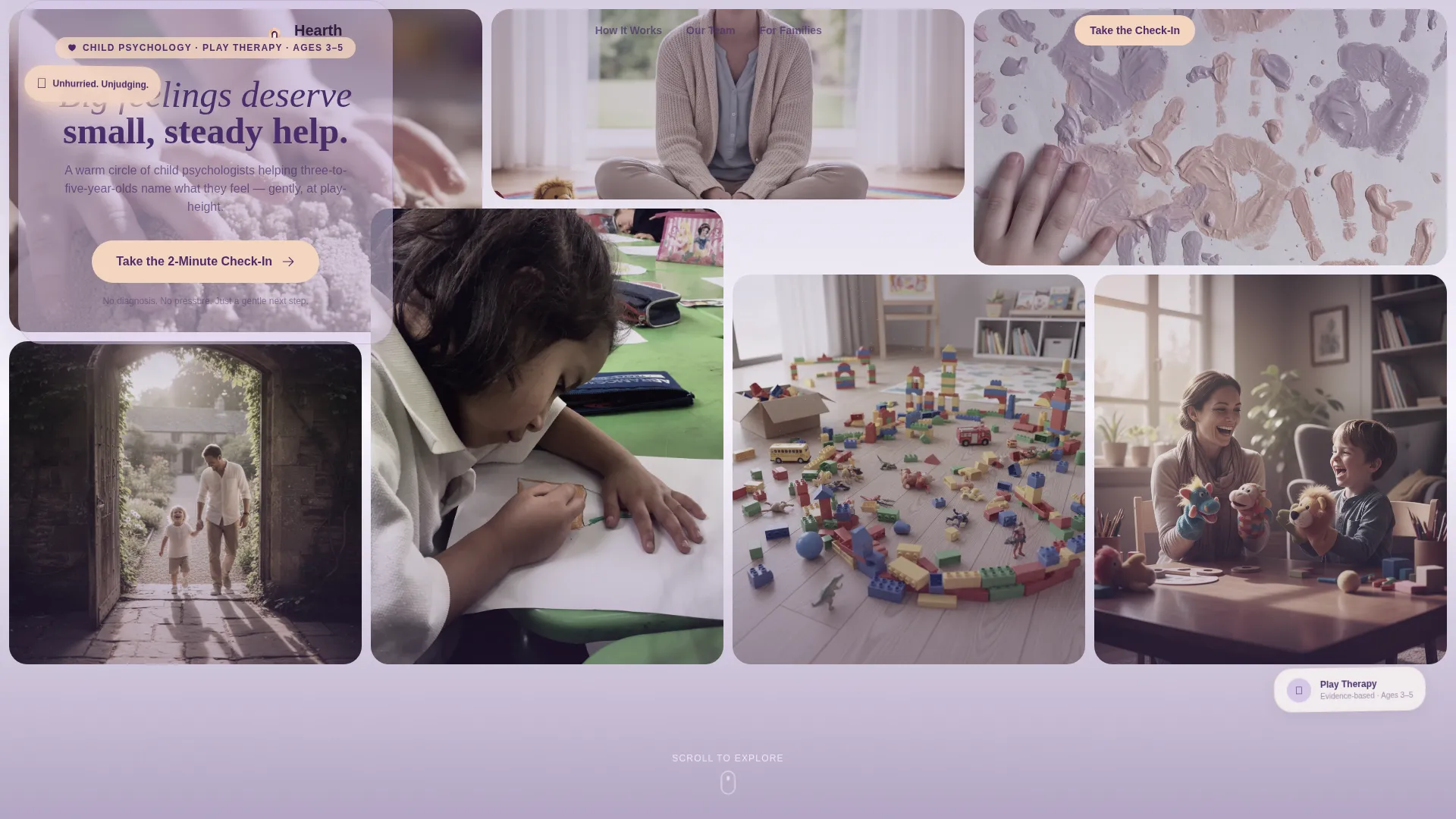
- A photo grid mosaic hero with a floating headline and a primary check-in call-to-action button
- A five-card masonry narrative that walks parents through recognition, normalization, method, team, and real outcomes
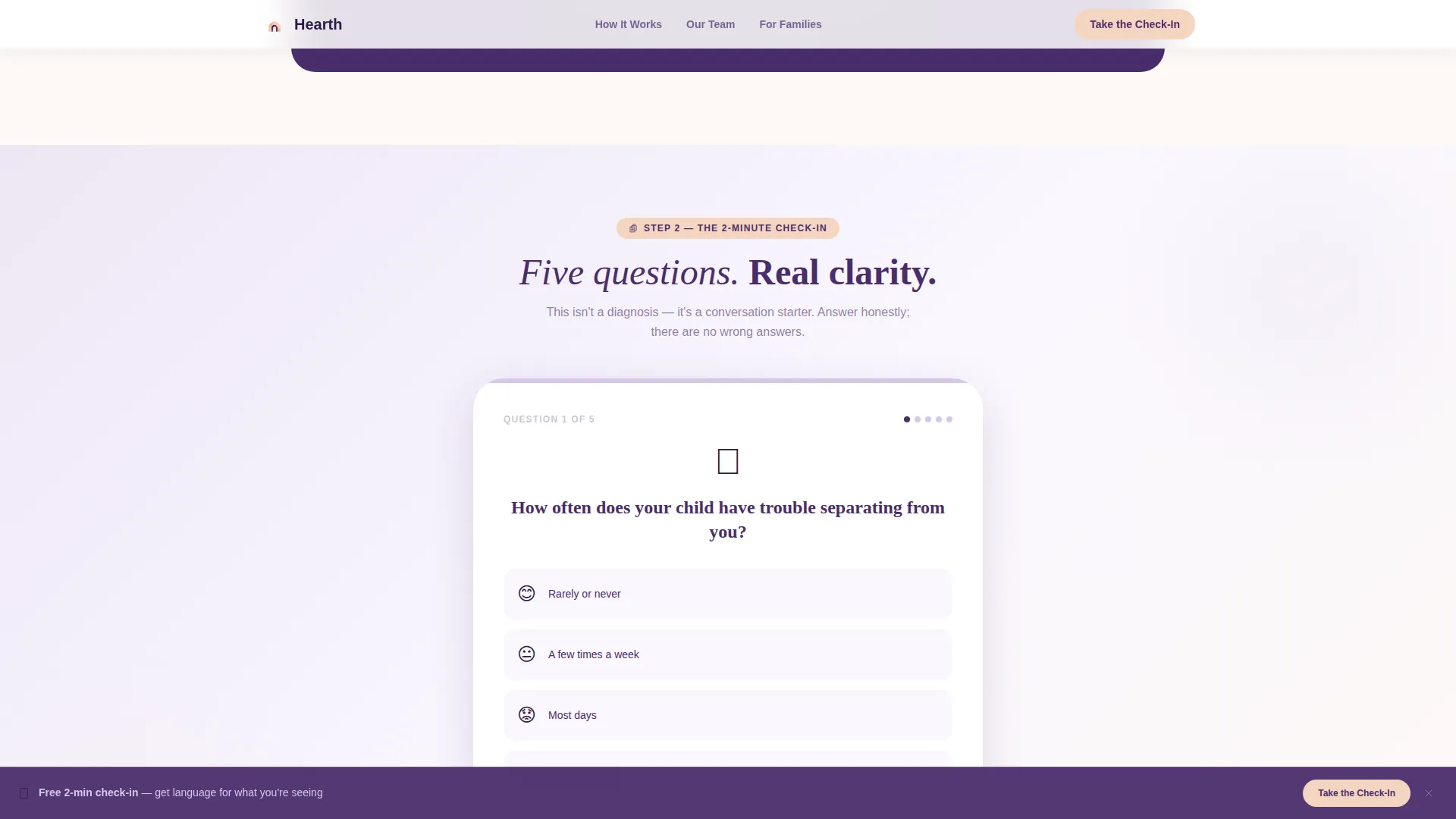
- An illustrated five-question check-in with emoji-scale answers, personalized result snapshots, and a soft next-step prompt to book a 15-minute parent call
Feature list
This template is built around a specific set of interactive and visual components. Each one serves the parent's journey from first impression to booked conversation.
Photo Grid Mosaic Header
The header fills the full viewport with a gently staggered grid of candid, soft-focus images: a small hand in kinetic sand, a therapist seated at child height, finger-paint handprints, and a parent-child doorway moment. A single headline in deep plum floats over the center tile. No single image dominates; the mosaic reads as community at a glance.
Masonry Card Narrative Flow
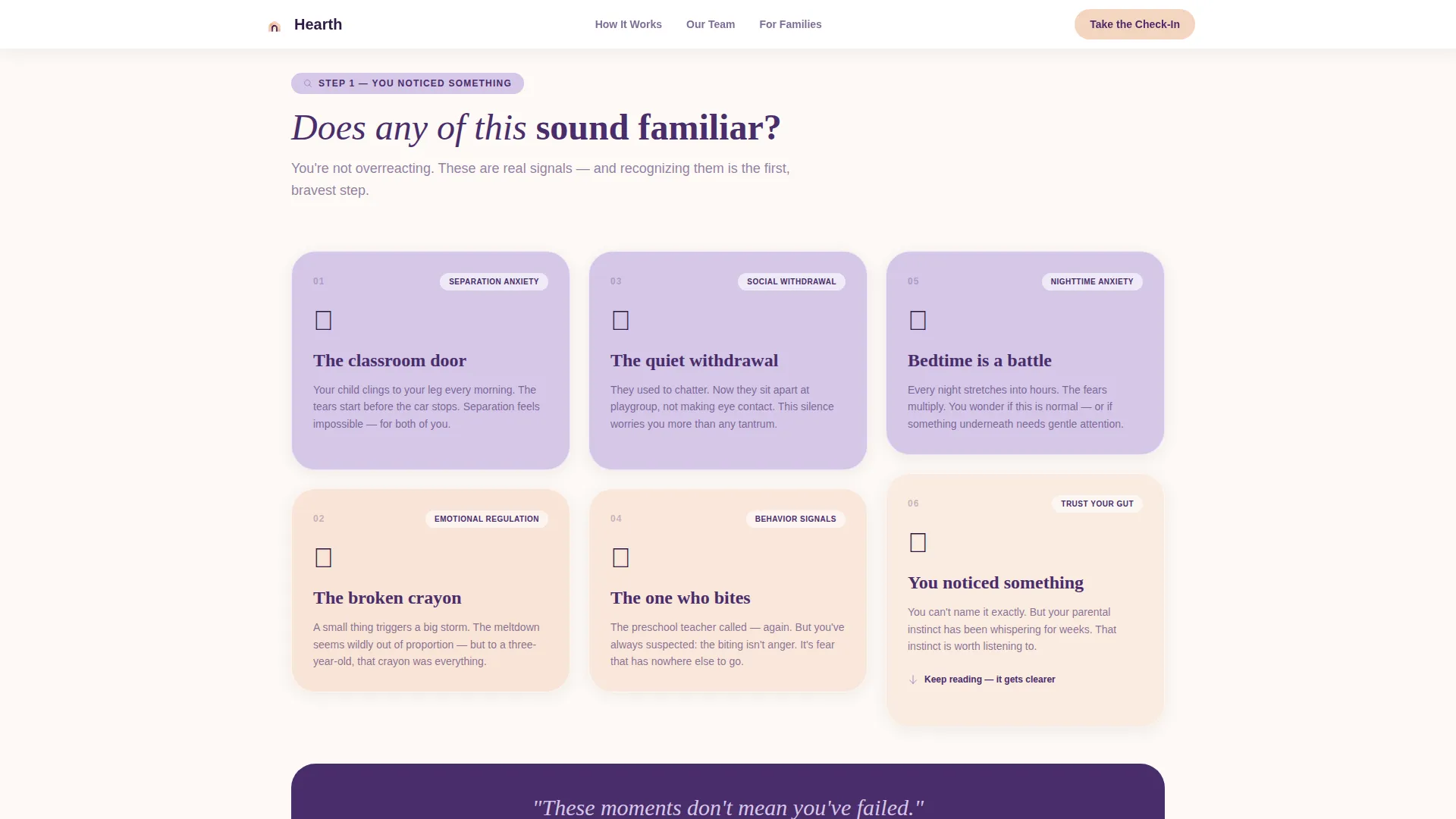
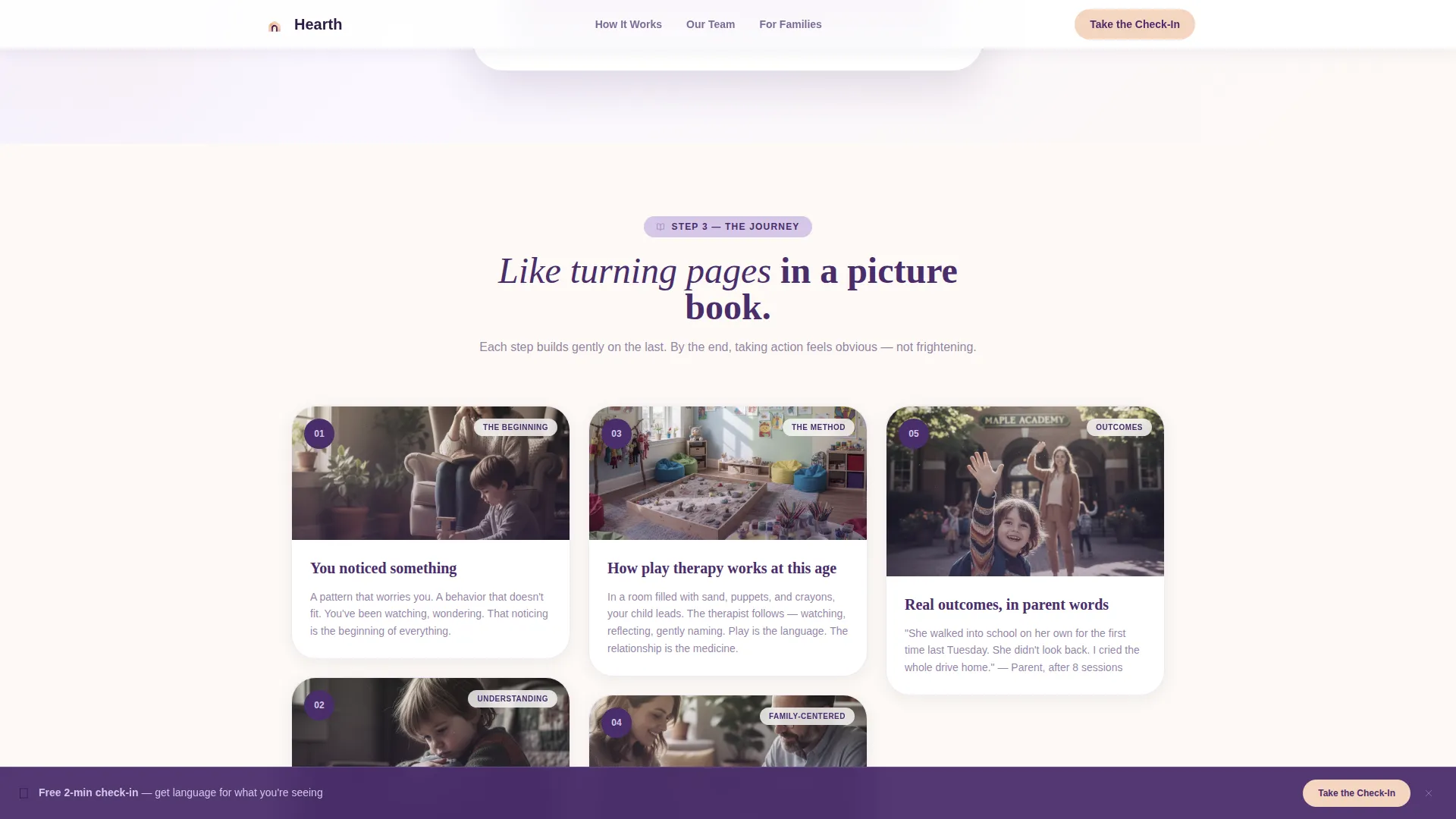
Five cascading cards scroll the parent through a picture-book story. Card one names the worry, card two normalizes what the child might be feeling, card three explains how play therapy works at this age, card four introduces the team, and card five shares real outcomes in parent words. The staggered layout creates natural reading momentum without feeling rushed.
Interactive Five-Question Check-In
The primary call to action is a two-minute, illustrated check-in with five plain-language questions and emoji-scale answer options. After submission, the parent receives a personalized snapshot (not a diagnosis) and a gentle prompt to pick a time for a 15-minute call. The quiz gives insight and language before asking for any personal details.
Sticky Call-to-Action Bar
After the parent scrolls past the third card, a sticky bottom bar appears carrying the "Take the 2-Minute Check-In" button in honeyed peach. The bar keeps the primary action reachable without interrupting the reading flow above it.
Team and Testimonials Section
Therapist profile cards sit alongside named parent testimonials that describe specific outcomes. Credentials are visible and specific. The combination of professional authority and real family voices builds the dual trust a referred parent needs before making contact.
Staggered Card Reveal Animations
Cards enter the viewport with medium-paced staggered reveal animations. Quiz answer transitions are smooth and responsive. Floating elements in the hero add gentle visual depth. The motion is purposeful and calm, matching the unhurried tone of the practice itself.
Page sections overview
| Section | Purpose |
|---|---|
| Photo Grid Mosaic Hero | Sets warm tone, surfaces headline and primary check-in call to action |
| Recognition Worry Cards | Names common parental concerns to create immediate emotional recognition |
| Interactive Check-In Quiz | Guides parents through five questions and delivers a personalized next step |
| How It Works | Explains play therapy method in plain, picture-book language |
| Team and Testimonials | Builds trust through therapist credentials and named parent outcome stories |
| Single-Row Footer | Provides essential practice links in a clean, uncluttered single line |
Design & branding system
The Lavender Dream color system is built to feel like a child's watercolor left to dry on a windowsill. Every color choice is deliberate: soft enough to breathe in, warm enough to trust, never clinical.
- Deep plum (#4A2D6B) anchors headlines and key text; warm heather (#9B7FBB) marks section dividers and iconography; soft lavender mist (#D5C7E8) fills card backgrounds; honeyed peach (#F5D5C0) highlights buttons and interactive elements
- Typography uses Plus Jakarta Sans throughout, chosen for its combination of warmth and reading clarity at all sizes
- The overall visual style follows a Community Hearth theme: watercolor-soft, sunlit playroom aesthetic that reads as expert without feeling cold
Mobile & speed optimization
This template is built mobile-first. The primary audience is parents who encounter a concern during the school run or a tired evening and reach for their phone. Every interactive element is sized for a thumb, not a cursor.
- The masonry card layout reflows cleanly on smaller screens, keeping the step-by-step narrative intact at any viewport width
- The five-question check-in uses large tap targets and emoji-scale answers that are easy to select under stress on a small screen
- Images across the hero mosaic and card sections are set to lazy-load, so the initial viewport appears quickly before off-screen assets are fetched
How this template helps you convert
The conversion path in this template is built around giving value before asking for anything. A parent who feels seen is far more likely to take a next step than one who hits a form immediately.
- The check-in quiz delivers a personalized insight snapshot first, then surfaces the booking prompt only after the parent has already received something useful, reducing resistance at the moment of decision
- The sticky bottom bar keeps the primary call to action visible after the third card without blocking content, so a parent who is ready to act can do so at any point in the scroll without losing their place
- The masonry narrative builds emotional stakes gently across five cards, moving the reader from recognition to reassurance to readiness before any contact information is requested
Other information about this template
This template is part of the Kids and Family category, specifically designed for the preschool mental health support niche. It addresses the needs of practices serving children aged three to five and their caregiving adults.
- The page is localized for English-language audiences using US date formats and USD, making it ready for US-based practices without additional localization edits
- The footer follows a Pattern 1 Linear Single-Row layout, keeping the bottom of the page clean and focused so the parent's attention stays on the call to action rather than a busy footer menu
- The template suits both solo practitioners and small group practices; the team section supports multiple therapist profiles, and the testimonials block can hold several named parent stories
Theme
Community Hearth
Creative direction
Step-by-Step Guide
Color system
Lavender Dream
Style
Masonry/Pinterest
Direction
Quiz/Assessment
Page Sections
Photo Grid Mosaic Header
Masonry Card Narrative Flow
Interactive Five-question Check-in
Sticky Call-to-action Bar
Team Profiles and Testimonials
Staggered Reveal Animations
Related questions
Who is this landing page template designed for?
Does the check-in quiz provide a clinical diagnosis?
Can I use this template if I am a solo practitioner rather than a group practice?
How does the sticky call-to-action bar work?
Is this template suitable for pediatrician referrals and preschool teacher audiences?