Bruneian Cuisine Booking Website Template
Hidang is a hero-dominant landing page template built for a Bruneian heritage restaurant. It leads with a full-viewport macro shot of ambuyat mid-pull, then guides visitors through dish origin stories and a full dulang reveal. The primary call to action, "Reserve Your Seat at the Dulang," drives event registrations across Hari Raya feasts, private dinners, and cultural gatherings.
by Rocket studio
Quick summary
Hidang is a single-page event registration template designed for an authentic Bruneian restaurant. It opens with a pinned hero section, moves through an arresting dish gallery, and closes with a warm reservation form. Every section is built to make visitors feel the weight of tradition before they ever fill in a field.
Who this template is for
This template is a strong fit for hospitality professionals presenting Bruneian cuisine in a story-led, event-driven format. The design is desktop-first, reflecting the audience that most commonly books cultural dinners and heritage experiences in a formal or institutional setting.
- Embassy cultural attachés planning National Day dinners and official cultural events
- Diaspora families searching for a place to celebrate Hari Raya with kelupis, ambuyat, and familiar kampong flavors
- Food writers, private event planners, and gift-givers booking a meaningful cultural dining experience
What problem this template solves
Most food and beverage landing pages rush visitors toward a booking form before earning their trust. A Bruneian heritage restaurant faces an additional challenge: the cuisine is deeply meaningful but largely undocumented for international audiences. Visitors need context, emotion, and story before they commit.
- The template replaces a generic reservation page with an immersive, gallery-led journey that builds genuine anticipation
- Dish origin stories and ingredient provenance answer the "why does this matter" question before a form is ever shown
- The multi-step registration flow collects information gently, starting with event type and party size rather than name and phone number
What you get with this template
This template delivers a fully structured, single-page layout that a Bruneian restaurant can present to embassy contacts, diaspora communities, and cultural dining enthusiasts. Every visual and layout decision is rooted in the Agrarian Root design theme.
- A pinned hero section with a four-second delayed headline fade over a macro ambuyat photograph
- An asymmetric dish gallery with four field-note origin stories, subtle parallax scroll, and hover dish expansions
- A full dulang reveal section and a multi-field event registration form with a persistent "Reserve Your Seat at the Dulang" call-to-action bar
- A secondary gifting path labeled "Gift a Dulang Experience" for visitors booking on behalf of someone else
Feature list
This template is built around a small number of high-impact sections. Each one is purposeful, precise, and tied directly to the restaurant's cultural and commercial goals.
Pinned Hero with Delayed Headline Fade
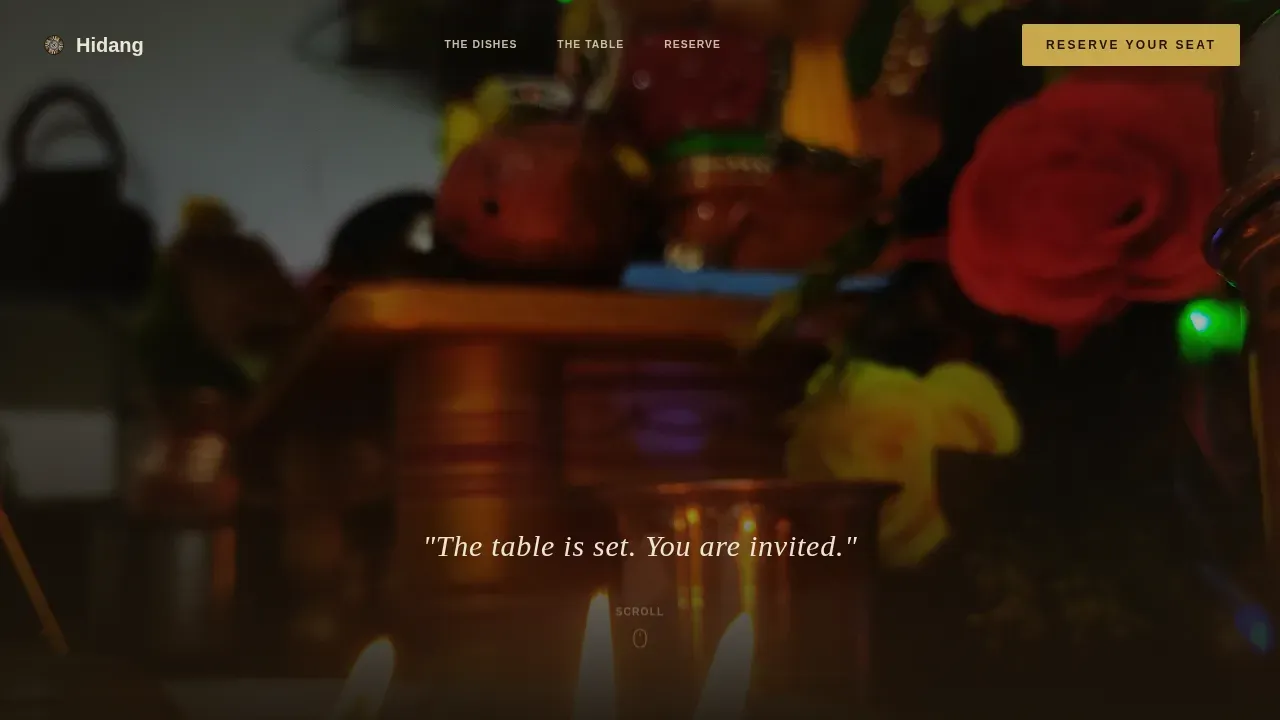
The hero fills ninety percent of the viewport with a shallow-depth-of-field photograph of ambuyat being pulled from the chandas. A GSAP pin holds the image stationary for four seconds. Then a single line, "The table is set. You are invited," fades in at the bottom tenth of the frame. The delayed reveal slows the visitor down and commands immediate attention before any food or content appears below.
Gallery Walk Dish Sections
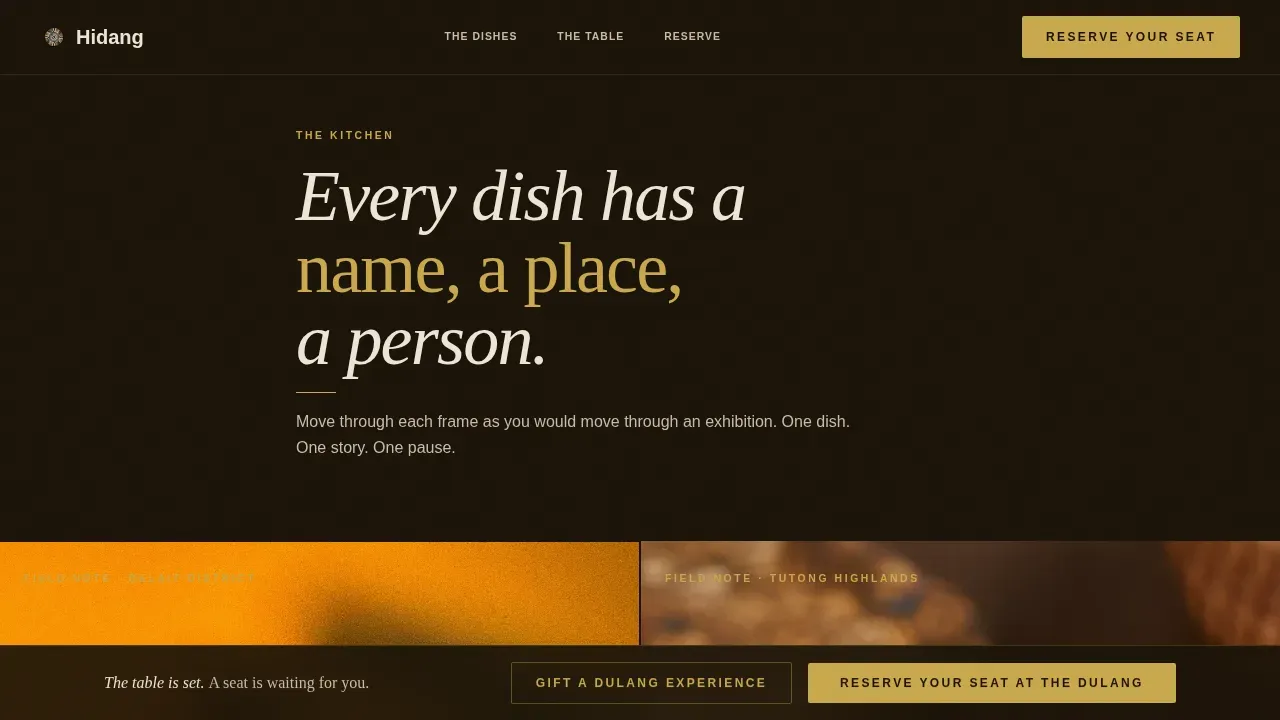
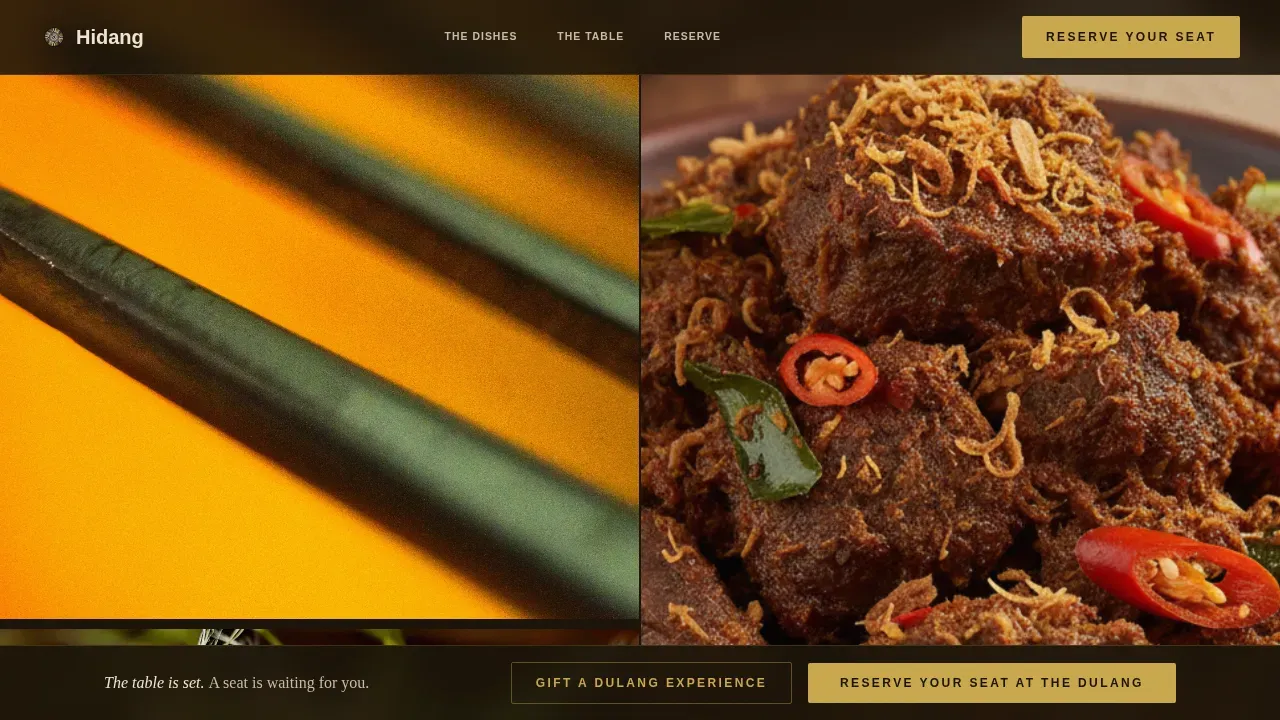
Four dishes are each presented in arresting macro photography inside an asymmetric bento layout. Each image is paired with a short field-note origin story: where the ingredient was grown, who taught the recipe, and why it matters. Staggered reveals and scroll-linked opacity changes are driven by GSAP ScrollTrigger, giving the gallery a pacing that feels deliberate and curated rather than rushed.
Full Dulang Reveal with Parallax Pull-Back
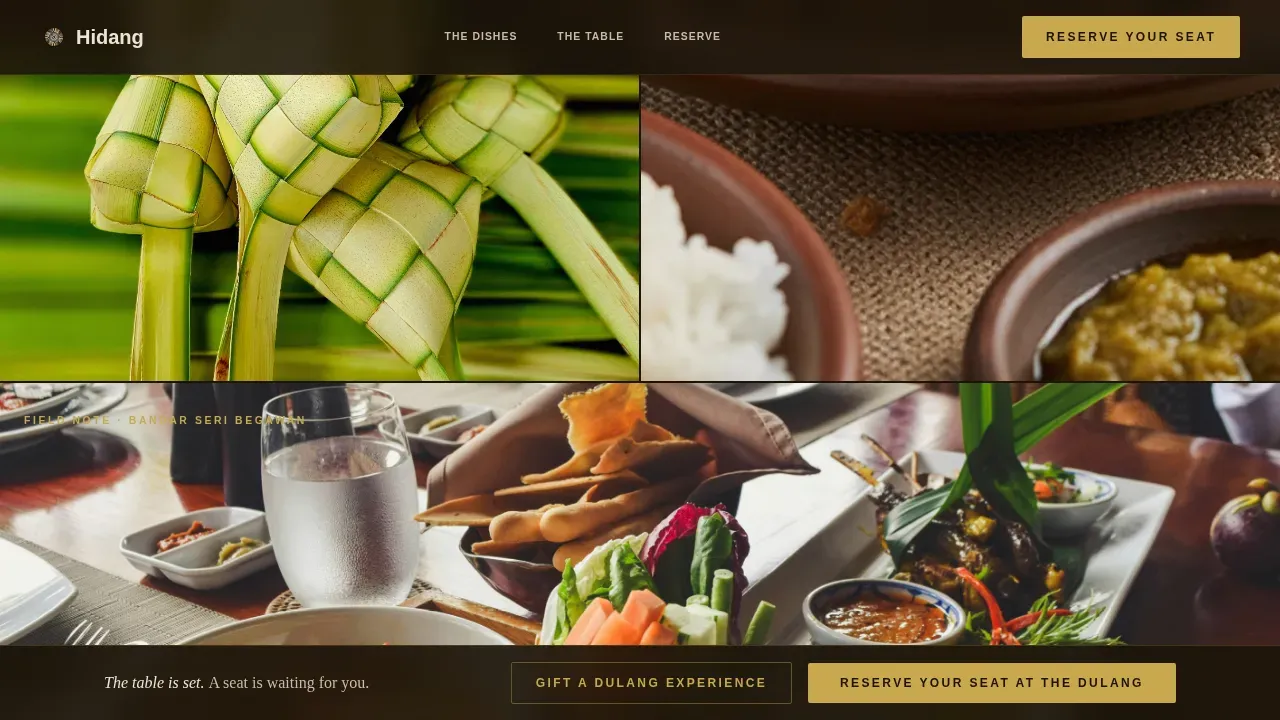
After the dish gallery, the camera metaphorically pulls back to show the complete dulang spread. Every dish is in place. An empty seat waits. This section uses subtle parallax motion to create a tidal shift in perspective. It acts as both an emotional payoff for visitors who have scrolled through the gallery and a natural lead-in to the reservation form.
Multi-Step Event Registration Form
The reservation form opens with event type, asking the visitor to choose between a Hari Raya feast, private dulang, cultural dinner, or tasting menu. It then collects party size and preferred date. A single optional field asks, "Any dishes from home you hope to find here?" This question is earned trust before a name and phone number are requested. The form is paired with a persistent bottom bar repeating the primary call to action.
Magnetic Buttons and Interactive Hover States
Interactive elements including buttons and dish panels use magnetic button behavior and hover expansion states. Padi-husk gold (#C9A84C) activates on hover, making interactive areas immediately identifiable without disrupting the earthy visual language of the page. GPU-accelerated transforms keep motion smooth across the layout.
Secondary Gift Path
A clearly separated secondary call to action, "Gift a Dulang Experience," gives visitors an alternative conversion route. This path serves private event planners and gift-givers who are booking on behalf of someone else. It keeps the primary registration flow uncluttered while still capturing a meaningful secondary audience.
Page sections overview
| Section | Purpose |
|---|---|
| Hero, Macro Ambuyat | Pins the opening image, delays headline four seconds, establishes emotional tone |
| Dish Gallery, Origin Stories | Presents four dishes in macro with field-note provenance text and scroll-linked reveals |
| Full Table Reveal | Shows the complete dulang spread with a parallax pull-back and provenance narrative |
| Reserve, Event Form | Collects event type, party size, date, and optional dish memory before personal details |
| Footer, Minimal Pattern | Closes with a horizontal minimal footer using the Vercel horizontal pattern |
Design & branding system
The visual identity follows the Agrarian Root theme with a Fire and Earth color system. Every color choice is tied to a physical memory: warm clay, scorched wood, golden grain husks, and steam rising off rice. The result feels handmade and rooted rather than polished and generic.
- Scorched hearth black (#1A1208) frames the hero section; laterite clay (#A0522D) anchors secondary section backgrounds; padi-husk gold (#C9A84C) marks interactive elements and hover states; ash-white (#EDE6D6) carries body typography and negative space
- Fraunces is used for all display and heading text, giving the page a rich, literary serif quality that suits storytelling-led food content
- DM Sans handles body text, keeping origin stories and form labels readable and approachable without competing with the display typeface
Mobile & speed optimization
The template is designed desktop-first, reflecting the embassy cultural attaché audience who most commonly books these events from a workstation. Responsive behavior is built in so the layout adapts cleanly to smaller screens without losing its visual integrity. A compelling landing page must prioritize sensory storytelling and frictionless booking across all devices, and the template is structured to support that on mobile too.
- Native CSS smooth scroll is used throughout; all animation runs on GPU-accelerated transforms only, keeping motion consistent without relying on heavy scripts
- The layout reflows gracefully for mobile viewports, preserving the gallery walk pacing and keeping the registration form accessible on any screen size
How this template helps you convert
Conversion in a heritage dining context is not simply about button placement. It is about earning the right to ask. This template sequences emotional content before functional requests, so visitors arrive at the form already invested in the experience.
- The pinned hero and four-second delayed headline create a moment of genuine stillness. Visitors pause rather than scroll past. By the time any text appears, attention is already rich and focused.
- The dish gallery builds progressive trust through specificity. Origin stories, ingredient provenance, and cultural context give visitors concrete reasons to believe the food is worth the occasion. The form does not appear until the visitor has been guided through the full table reveal.
- The reservation form sequence, starting with event type rather than personal details, reduces friction at the most sensitive point of the journey. The optional "dishes from home" field is the emotional anchor that makes completing the form feel personal rather than transactional.
Other information about this template
This section covers additional context about the cultural and culinary traditions that inform the template's design and content direction. These facts are directly relevant to anyone using this template for a Bruneian heritage restaurant.
- Ambuyat is Brunei's national dish, made from sago palm and traditionally eaten using candas, which are bamboo forks. It is the centerpiece dish in the hero section and the emotional anchor of the entire page.
- Rendang, a rich slow-cooked dish of meat stewed in coconut milk with ginger, galangal, turmeric, lemongrass, garlic, and chilies, holds a special place across Malay and Minangkabau society. It is traditionally associated with festive occasions and ceremonial meals, including Eid celebrations and weddings. Rendang is recognized as a National Heritage food in Malaysia and enjoyed across the region for its deep cultural significance.
- In Minangkabau culture, rendang belongs to the category of samba adat, which is essential for traditional ceremonies. Each ingredient carries philosophical symbolism and represents the values and social structure of the community. In villages, making rendang is a communal effort, with large amounts of meat slow-cooked together in a giant cast-iron cauldron.
- Heritage menus often feature slow-cooked dishes like Daging Salai Masak Lemak, which is smoked beef in a rich spicy coconut gravy, and Bamboo Chicken, traditionally cooked in hollow bamboo over an open fire.
- The Hidang method of dining involves placing a full spread of dishes directly on the table to promote intimacy among guests. Diners wash hands before and after meals and use the right hand for eating, following local customs that add to the ceremonial quality of the experience.
- Vibe coding, a technology-assisted approach to atmosphere design, can be used when building and customizing this template. It helps creators reflect cultural elements through layout, pacing, color, and interactive behavior. AI-powered tools can facilitate the implementation of these immersive dining environments. The concept of vibe coding is well suited to crafting unique experiences that resonate with the cultural significance of the food being presented.
- Rendang is enjoyed across Singapore and Malaysia as well as Brunei, and features on the menus of international restaurants from Singapore to cities across the globe, reflecting its enduring appeal beyond its origins.
- Diaspora communities in Singapore and Malaysia often miss the specific flavors of kampong cooking during the days leading up to Hari Raya. This template speaks directly to that longing by centering familiar dishes and culturally resonant language throughout every section.
- The template is built with the Hidang authentic Bruneian heritage dining landing page template framework, designed to serve restaurants preserving culinary traditions that visitors in Singapore, Malaysia, and beyond would otherwise miss.
- Event registrations can be organized around key cultural calendar dates. Feasts enjoyed in April during Brunei's National Day period, or during Hari Raya days in any given year, are natural booking hooks for this template's event registration form.
- The prince of traditional Bruneian court food rarely finds a dedicated digital home. This template gives that cuisine a place that matches the dignity and richness it deserves.
- Social proof such as customer testimonials and award badges can be added to reinforce trust. The "About Us" content area is the natural place to share the restaurant's origin story and the inspiration behind preserving these culinary traditions. Integrating that kind of social proof can build confidence among visitors who have never encountered Bruneian cuisine before.
Theme
Agrarian Root
Creative direction
Gallery Walk
Color system
Fire & Earth
Style
Hero-Dominant (90/10)
Direction
Event Registration
Page Sections
Pinned Hero with Four-second Headline Fade
Gallery Walk Dish Sections with Origin Stories
Full Dulang Reveal with Parallax Motion
Multi-step Event Registration Form
Persistent Bottom Bar Call to Action
Secondary Gift a Dulang Experience Path
Related questions
Who is this template best suited for?
Can the registration form be customized for different event types?
Is the template appropriate for a diaspora audience celebrating Hari Raya?
Does the template support a secondary booking path for gift-givers?
What animation and interactivity is included in the template?