Crop & Grain Farming Blog Website Template
Husk is a hero-dominant landing page template built for corn and maize farms with a story to tell. It pairs a cinematic aerial hero with scroll-reveal origin chapters, varietal spotlight cards, and a gated Varietal Guide download segmented by buyer type. The design follows a pastoral editorial aesthetic grounded in deep canopy green, warm loam, and harvest gold.
by Rocket studio
Quick summary
Husk is a single-page template crafted for heritage corn and maize operations selling direct to buyers. It opens with a full-bleed aerial drone hero, then guides visitors through layered origin storytelling, segmented varietal cards, and agronomy content. A gated Varietal Guide download with a use-case dropdown sits at the heart of the conversion flow.
Who this template is for
This template is built for farm businesses that sell specific corn varieties to specific buyers. It works equally well for multi-generational operations and newer farms with deep agronomic knowledge to share.
- Regional feed mills and craft distilleries sourcing non-GMO dent corn or heirloom flint varieties
- Homesteaders and small-scale farmers looking for open-pollinated seed stock they can save year after year
- Heritage agriculture operations running a direct-to-buyer model with educational content as a trust signal
What problem this template solves
Most commodity farm websites look the same. They list a phone number, a county, and a few crop photos. That approach works fine for anonymous bulk buyers but loses the distiller hunting a specific flint variety or the homesteader comparing seed-saving options. Husk solves that mismatch.
- Generic farm pages fail to segment buyers by use case, leaving feed mills, distillers, and seed savers all reading the same undifferentiated pitch
- Farms with genuine multi-generational knowledge have no structured way to present that depth without it feeling like a wall of text
- Visitors with high intent but no context often leave before finding the right variety or the right contact path
What you get with this template
Husk delivers a fully structured, content-rich landing page ready to be filled with your photography and varietal data. Every section has a clear job, from building trust through storytelling to capturing qualified leads through a segmented download form.
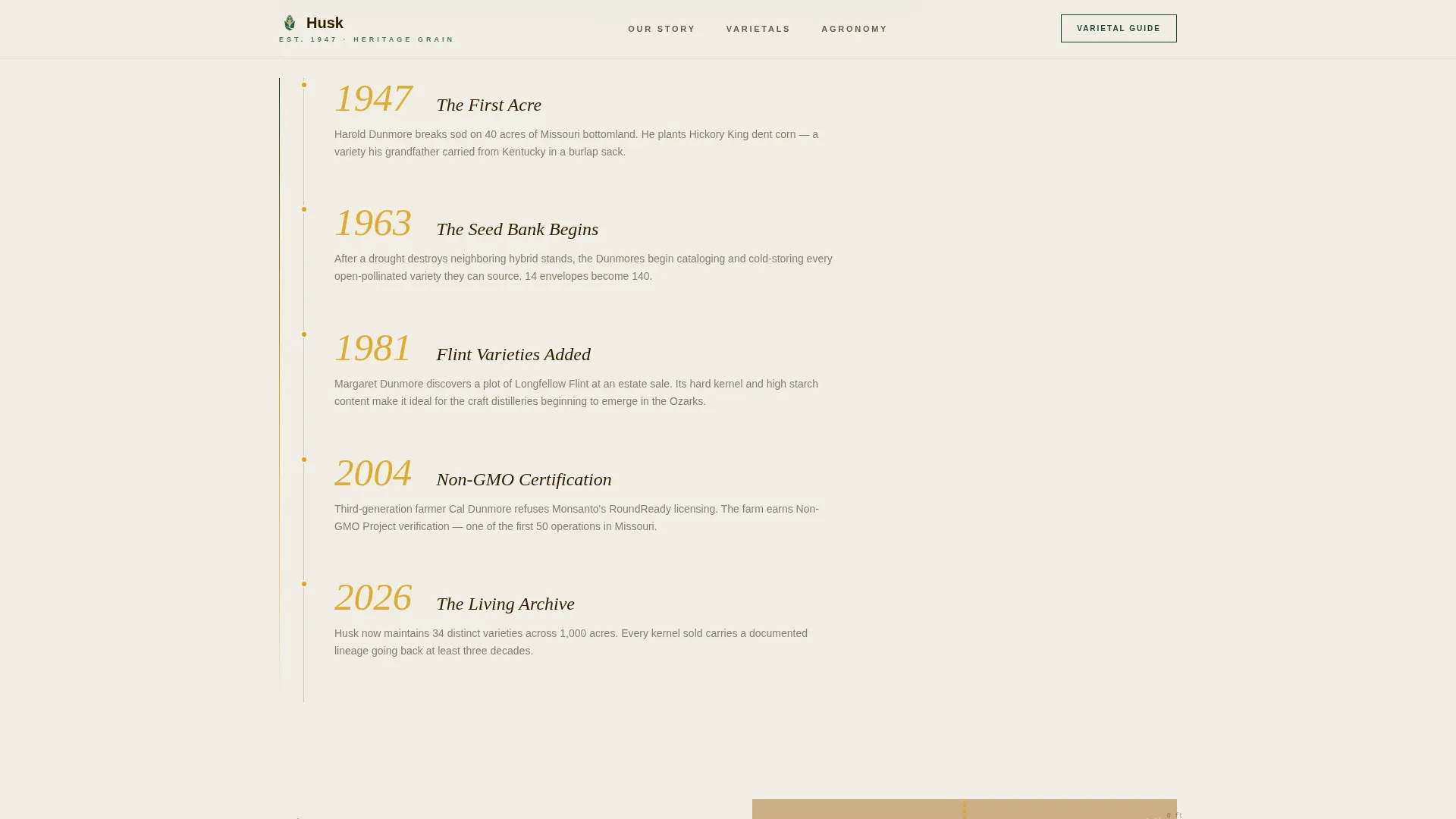
- A cinematic Ken Burns hero section with a sepia-toned origin story scroll sequence and a decade-by-decade varietal timeline
- Spotlight cards segmented by buyer type, a gated Varietal Guide form with a use-case dropdown, and an ungated planting calendar PDF path
- Contextual micro-call-to-action (call to action) links at the end of every content section so visitors always have a logical next step
Feature list
Husk is built around five tightly scoped functional zones that work together as a content and lead-generation system.
Cinematic Ken Burns Hero
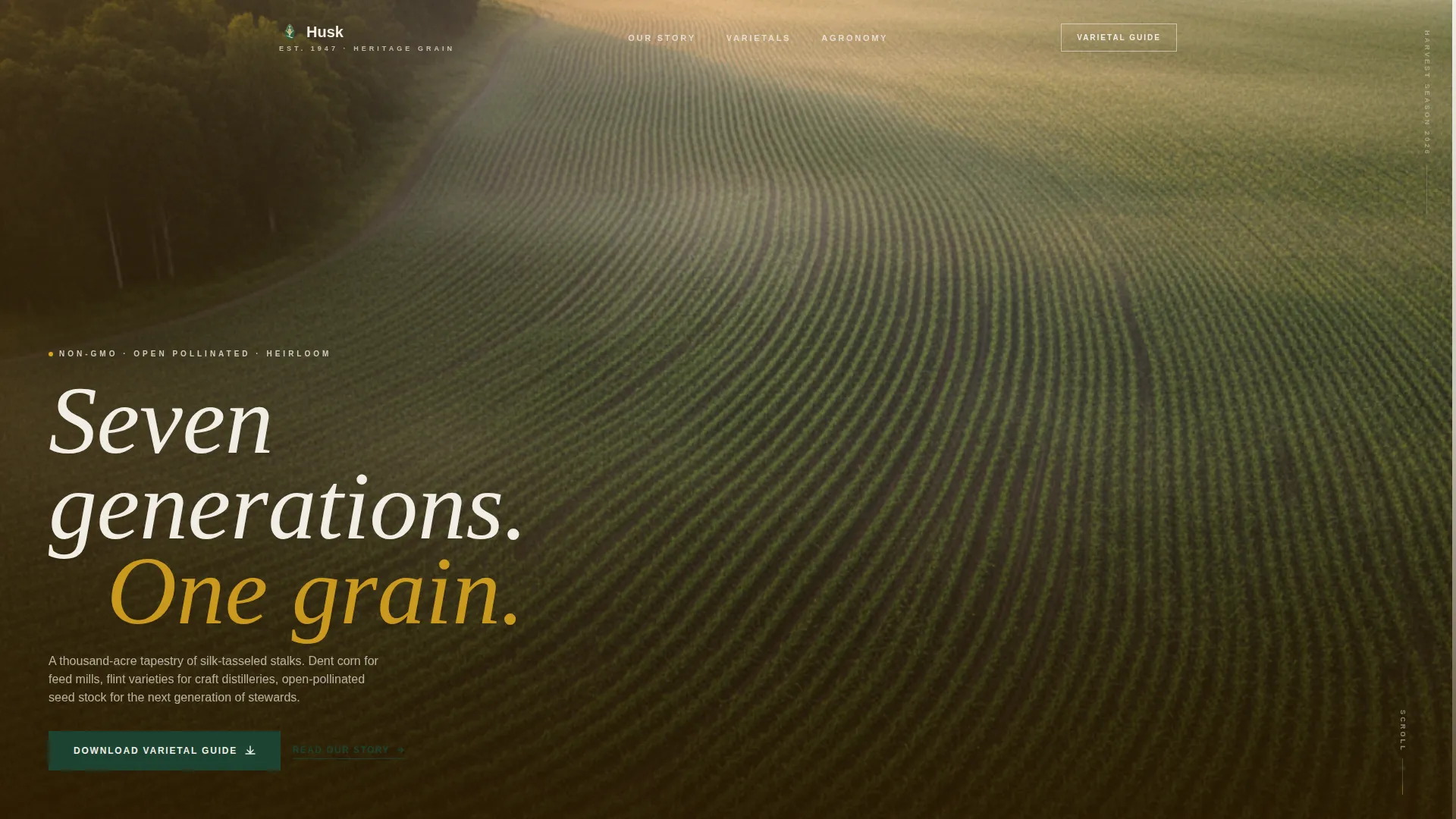
The hero section uses a slow Ken Burns zoom effect on a panoramic aerial drone photograph. Mist sits in the furrow low spots, a combine trails dust in the middle distance, and a quiet italic serif headline fades in low and left. The effect is immediate and atmospheric without requiring any video file.
Scroll-Reveal Origin Story Chapters
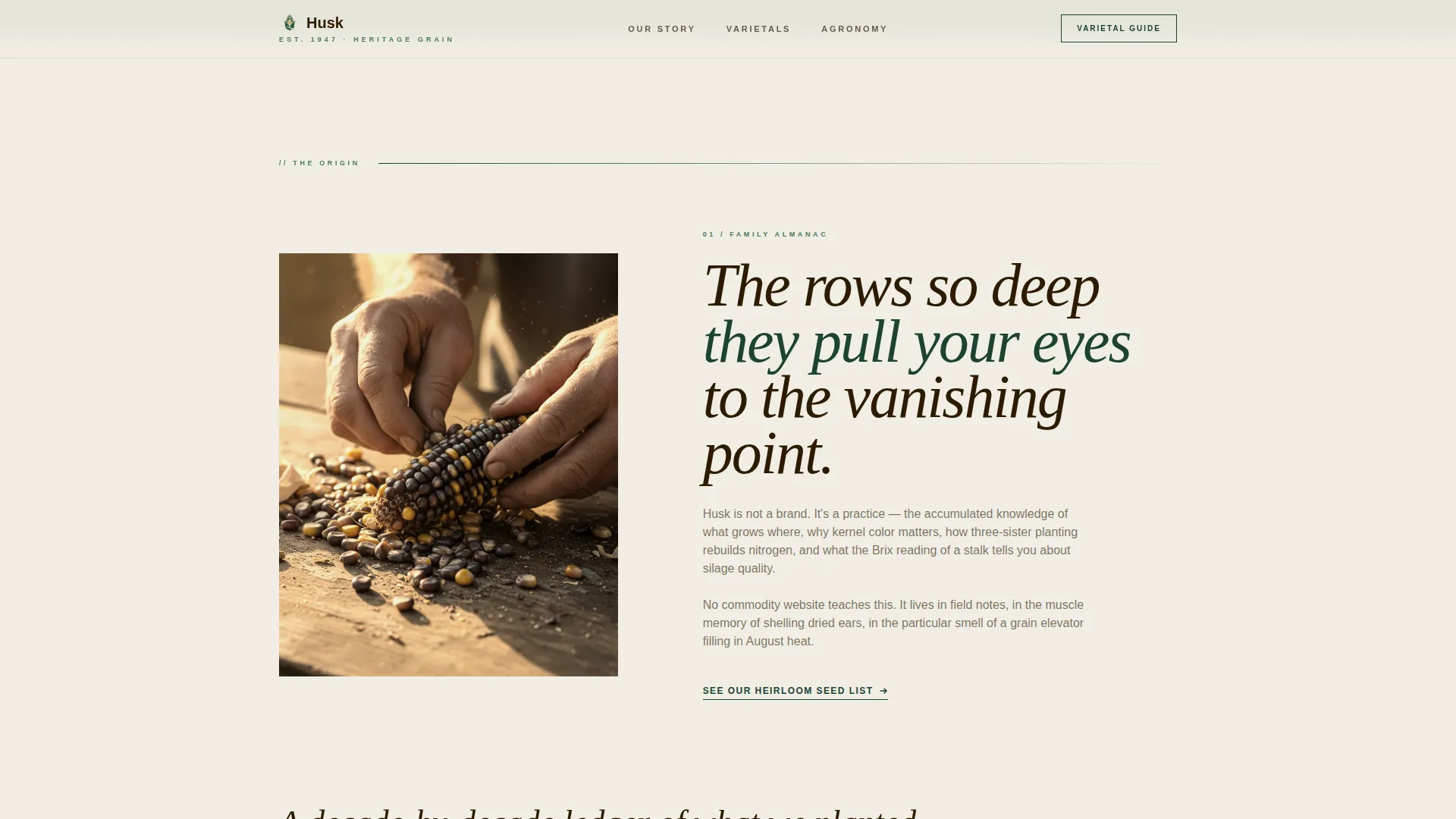
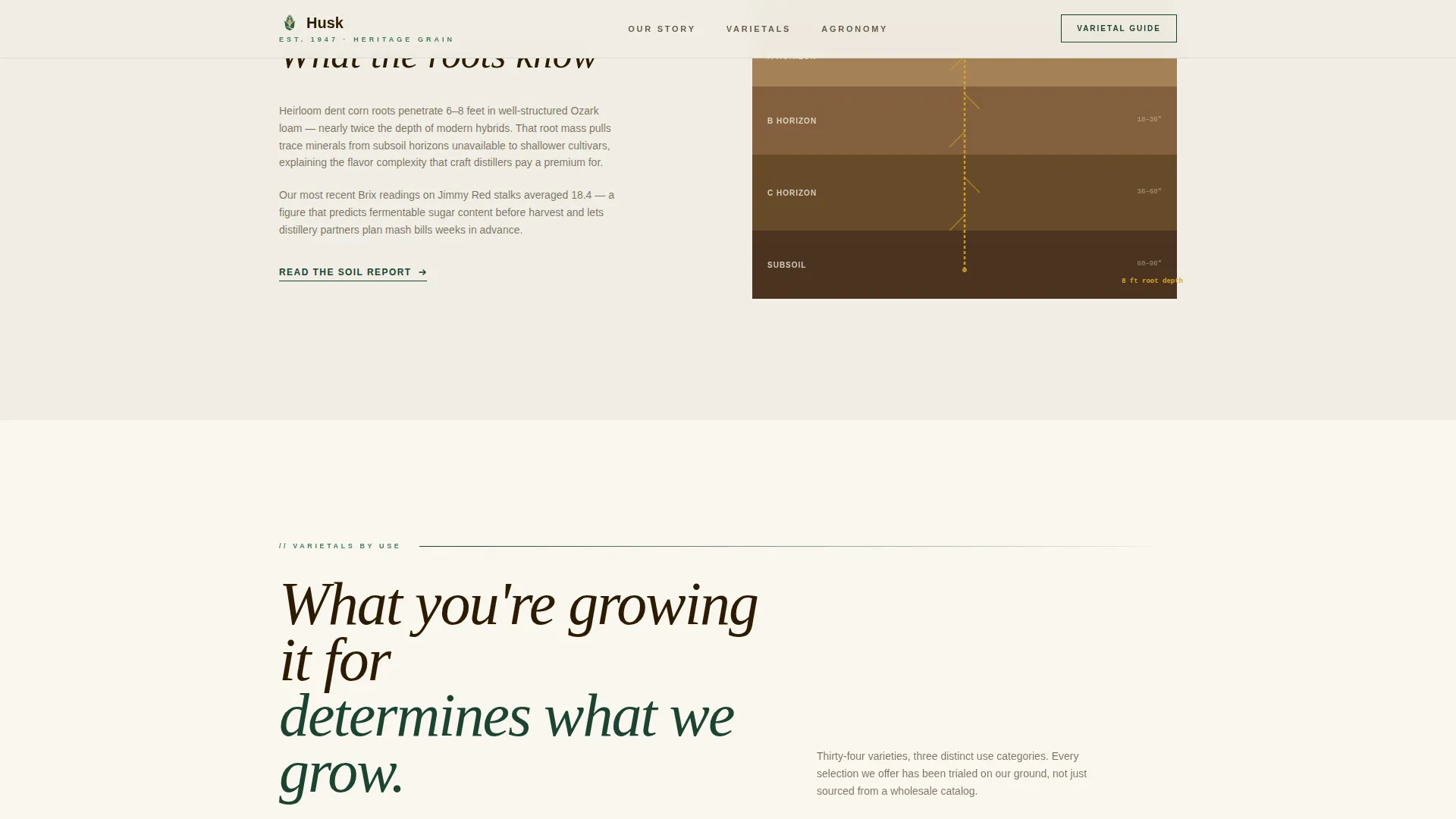
Below the hero, the layout shifts to intimate, sepia-toned frames. Each scroll step reveals a new chapter: hands shelling dried ears, a soil cross-section diagram showing root depth, and a decade-by-decade timeline of planted varietals. The reveal sequence uses IntersectionObserver so each chapter appears only when it enters the viewport.
Varietal Spotlight Cards
Buyer-segmented spotlight cards organize the variety catalog by intended use: feed milling, distilling, and seed saving. Each card surfaces the details that matter to that specific buyer, keeping the page relevant without overwhelming visitors who only care about one use case.
Gated Varietal Guide Download
The primary call to action is a download form requiring only an email address and a dropdown selection for intended use. The segmentation happens at the point of capture, so follow-up communication can be matched to the buyer's actual need from the start.
Contextual Micro-calls to action
Every content section closes with a small, specific next-step link. After the history section, a link points to the heirloom seed list. After the agronomy section, a link surfaces the soil report. These micro-calls to action keep curious visitors moving forward without pushing everyone toward the same generic signup box.
Sticky Navigation and Text Scrub
A sticky navigation bar keeps orientation clear on a long-scroll page. A text scrub animation in the agronomy section lets copy animate in sync with the scroll position, making dense agronomic content feel dynamic rather than academic.
Page sections overview
| Section | Purpose |
|---|---|
| Hero aerial drone | Establish scale, beauty, and the core farm identity headline |
| Origin story chapters | Build trust through scroll-revealed family history and agronomic depth |
| Varietals by use | Segment buyers with spotlight cards organized by intended use case |
| Agronomy knowledge | Present soil science and growing practice content with scroll-scrub animation |
| Varietal Guide call to action | Capture qualified leads via gated download form with use-case dropdown |
| Ungated planting calendar | Offer a free resource to build trust before the main form ask |
| Footer arc split | Close with contact and navigation using Pattern 7 Arc Browser Split layout |
Design & branding system
Husk uses a Pastoral Calm theme drawn from a Rainforest color system. The palette is deliberately restrained so that editorial photography does most of the visual work. Typography pairs DM Serif Display in italic for headlines with Manrope for all body text.
- Canopy green (#1B4332) anchors headers and section dividers; fertile loam (#2D1B00) grounds the footer and heavy typographic moments; sun-through-leaves gold (#DAA520) activates hover states and callout numbers; misty morning white (#F0EDE5) opens up backgrounds
- DM Serif Display in italic carries the almanac aesthetic in headlines, while Manrope keeps body copy clean and readable at any size
- High-animation interactions include Ken Burns hero motion, scroll-reveal chapter transitions, a marquee element, and gold hover states on interactive components
Mobile & speed optimization
The template is designed desktop-first to match how agricultural buyers research at their desks, but every section scales cleanly to mobile viewports. Performance is handled through lightweight native browser features rather than heavy third-party libraries.
- Smooth scrolling is handled with native CSS, keeping the page responsive without requiring additional JavaScript frameworks
- IntersectionObserver drives all scroll-reveal animations, meaning chapter reveals and text scrub effects trigger only when elements enter the viewport
- Spotlight card interactivity and sticky navigation are built without heavy libraries, keeping the overall page load lean
How this template helps you convert
Husk builds conversion through a layered trust sequence rather than a single hard ask. The page earns the lead before it asks for the email.
- The ungated planting calendar PDF is available immediately, giving first-time visitors a free, useful resource before any gate appears. This reduces friction and rewards curiosity.
- The gated Varietal Guide form captures the email address alongside a use-case dropdown, so the lead arrives pre-segmented by buyer intent: feed milling, distilling, or seed saving.
- Contextual micro-calls to action at the end of each section match the visitor's current interest to the most relevant next resource, keeping engagement high throughout the scroll without forcing a generic signup prompt.
Other information about this template
Husk sits at the intersection of heritage agriculture storytelling and practical direct-to-buyer lead generation. It is particularly well suited to corn and maize farm operations that want to move beyond commodity presentation.
- The template is localized for United States audiences, using English language copy, imperial units, and USD pricing references
- Animation level is set to high, covering Ken Burns hero motion, scroll-reveal chapter transitions, a scroll-scrub manifesto effect in the agronomy section, and a marquee band
- The footer uses Pattern 7, an Arc Browser Split layout, which divides the closing section into two distinct zones for navigation and contact information
- The page type is a single-page landing format with a 90/10 hero-dominant ratio, meaning the hero consumes approximately 90 percent of the initial viewport
Theme
Pastoral Calm
Creative direction
Origin Story
Color system
Rainforest
Style
Hero-Dominant (90/10)
Direction
Content/Resource
Page Sections
Cinematic Ken Burns Hero Section
Scroll-reveal Origin Story Sequence
Buyer-segmented Varietal Cards
Gated Varietal Guide with Use-case Dropdown
Contextual Micro-cta System
Sticky Navigation and Text Scrub Animation
Related questions
Who is this template designed for?
How does the gated Varietal Guide form work?
Is the planting calendar download also gated?
What animation effects does the template include?
Does this template work for farms without drone photography?