Certified Summer Camp & Outdoor Program Professional Website Template
Spark is a masonry-style teen leadership camp landing page template built for summer programs serving students ages thirteen to seventeen. It opens with an interactive "What Kind of Leader Are You?" quiz, flows into a dynamic resource-card grid, and closes with a focused email capture. The sunset gradient palette and playful geometric shapes create a bold, high-energy first impression that speaks to teens and reassures parents at once.
by Rocket studio
Quick summary
Spark is a single-page masonry template specifically designed for a teen leadership summer camp. It pairs a personality quiz with a dynamic resource grid, giving every visitor a personalized path through camp content. Bold geometric shapes, warm sunset colors, and high-interactivity components make this summer camp landing page feel alive from the first scroll.
Who this template is for
This template is the perfect solution for anyone running or marketing a summer camp focused on leadership, voice, and real-world skills for teenagers. It speaks directly to the people who care most about the program and the students inside it.
- Camp directors and program coordinators who need a summer camp landing page that converts curious parents into enrolled families.
- School counselors, coaches, and youth advocates searching for a summer camp resource that bridges classroom confidence to real-world leadership skills.
- Independent program operators and small organizations looking to launch a polished, interactive summer camp page without extensive coding skills, making no-code tools the perfect solution for quick deployment.
What problem this template solves
Many summer camp landing pages treat every visitor the same. A parent of a quiet honors student and a coach scouting a future captain need to see different things. Generic pages lose both. Spark solves this by routing each visitor through a short quiz and then surfacing the summer camp content most relevant to their teen's leadership archetype.
- Parents arrive unsure whether the camp fits their specific child. The quiz and archetype-matched resource cards give them a hands on, personal reason to stay and explore.
- Coaches and school counselors need proof that the program builds real skills, not just fun activities. The resource grid surfaces downloadable guides, camper story videos, and discussion prompts that demonstrate program depth.
- Most camp pages bury their calls to action. Spark keeps the "Unlock Your Camp Ready Kit" prompt visible as a sticky progress bar, so the registration process never feels lost or hard to find.
What you get with this template
Spark delivers a fully designed, high-interactivity summer camp landing page ready to fill with your camp's real content. Every visual decision, from color to typography to layout, is already made for you. You bring the story; the template brings the structure.
- A complete single-page layout with seven distinct sections: hero quiz, masonry resource grid, social proof, week overview, email capture, and footer, all connected by a consistent sunset gradient visual system.
- Interactive components including a four-archetype quiz with micro-animations, flip-card resource tiles, a sticky progress bar, and a shareable teen archetype link, all built to create an engaging, hands on experience.
- A full design system using Fraunces serif display type and DM Sans body text, a five-color sunset palette, and playful geometric shapes that give the template a strong brand identity out of the box.
Feature list
This summer camp landing page template packs meaningful interactivity and content-delivery tools into a single cohesive page. Below is a closer look at each core feature and why it matters for your camp's enrollment goals.
Interactive Archetype Quiz
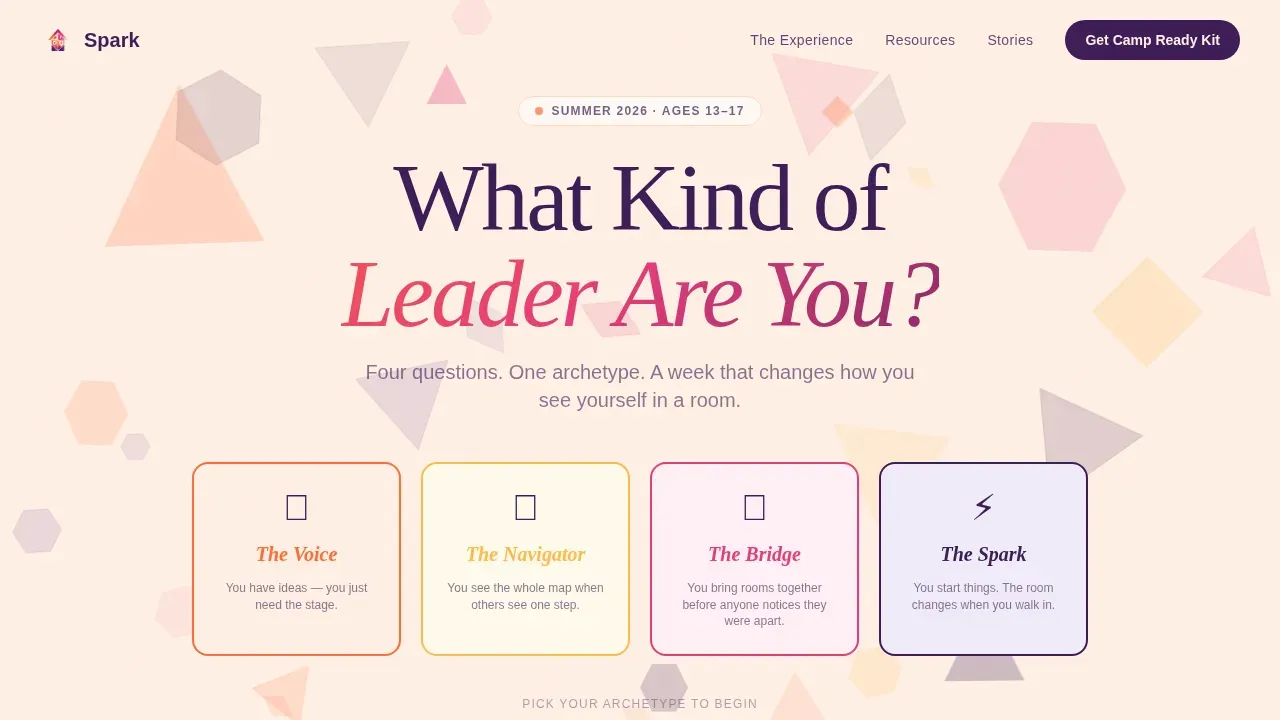
The page opens with a bold question: "What Kind of Leader Are You?" Four illustrated icon buttons, a megaphone, a compass, a bridge, and a lightning bolt, each represent a leadership archetype. Visitors click one to begin a three-question micro-quiz. The geometric tessellation background animates on hover, with each geometric shape shifting to a new sunset tone. This hands on exploration of self expression sets the tone before a single word of camp copy is read. The quiz does not just entertain; it routes each student toward the summer camp content most relevant to their leadership type, giving them a deeper understanding of what to expect before arrival.
Dynamic Masonry Resource Grid
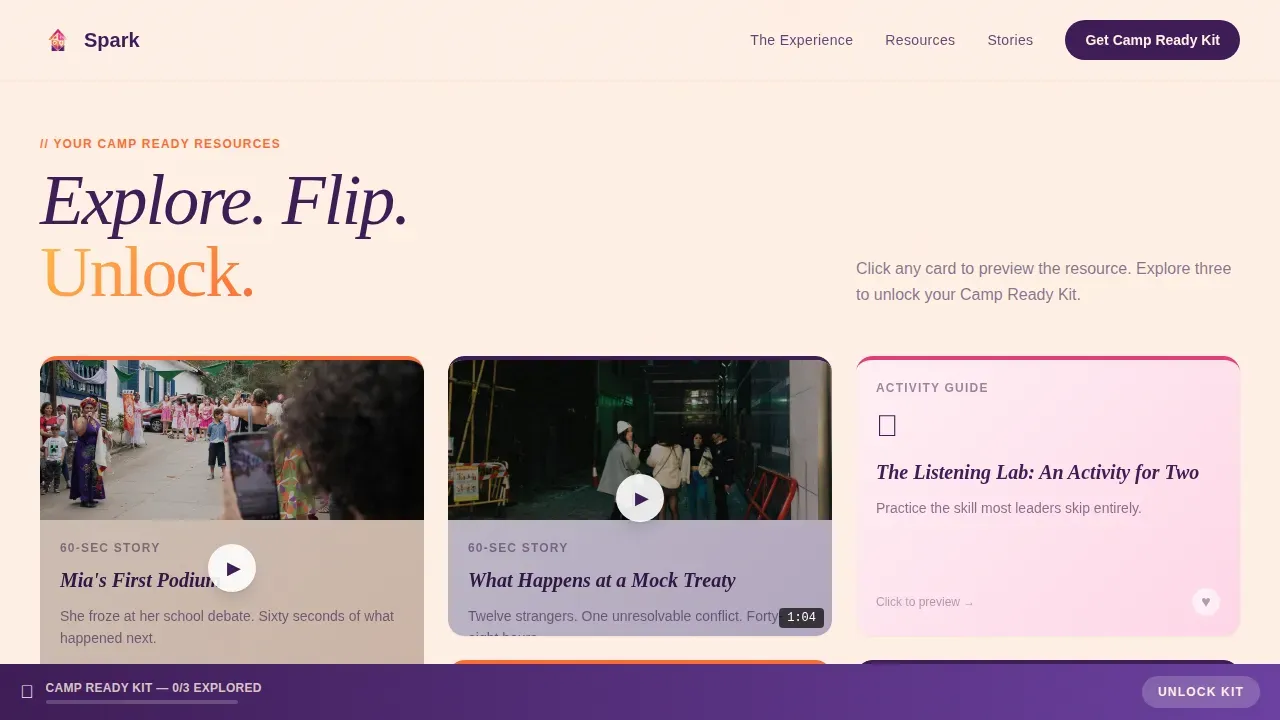
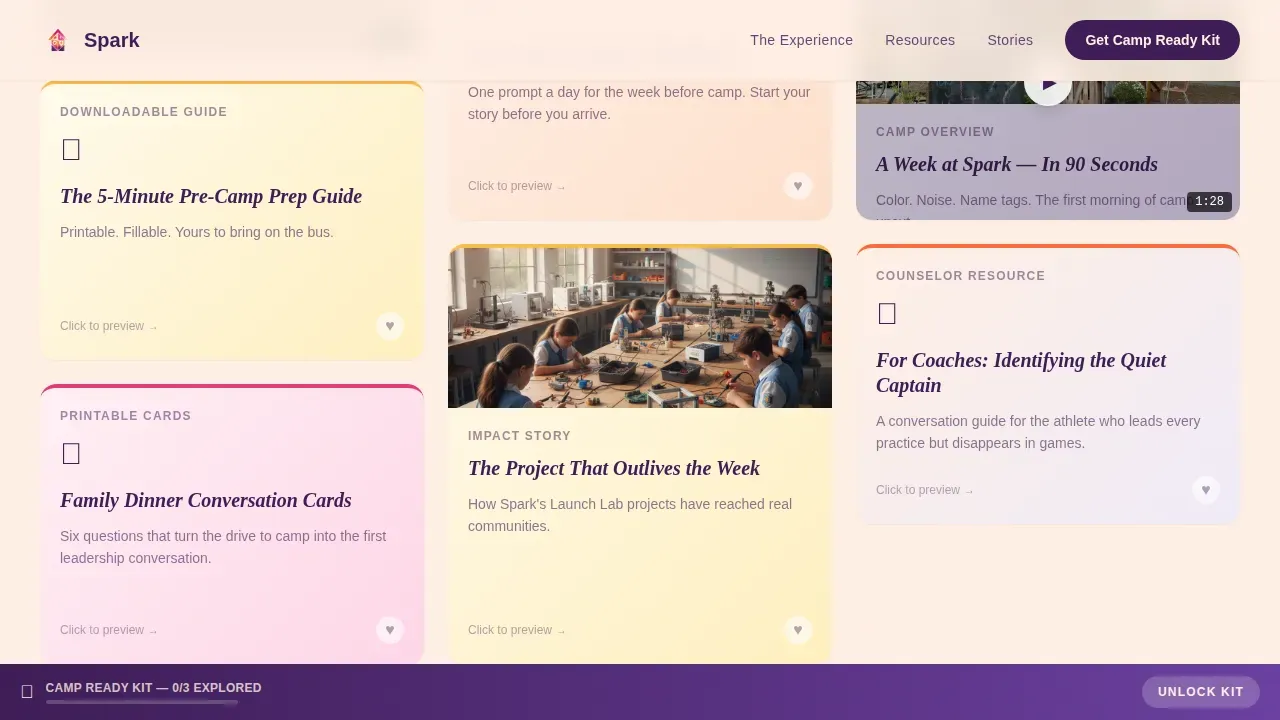
Below the quiz, a masonry grid populates based on the visitor's archetype result. Each card is tinted a different point along the sunset gradient, and the shapes triangulate at corners like folded construction paper. Cards contain downloadable activity guides, sixty-second camper story videos, printable discussion prompts, and journal templates teens can start before arrival. Each card flips on click to reveal a resource preview, creating a hands on program feel that rewards curiosity. Visitors can favorite items, reshuffling their personal grid as they go. Completing any three cards unlocks the Camp Ready Kit, providing the perfect blend of fun learning and structured content delivery. This section is specifically designed to give students at all skill levels an entry point into camp life.
Sticky Progress Bar and Camp Ready Kit Unlock
A progress bar anchors the bottom of the screen throughout the entire scroll. It shows how many resources the visitor has explored out of the three required to unlock the Camp Ready Kit, a downloadable PDF. This persistent visual cue creates a steady beat of forward momentum. The primary call to action, "Unlock Your Camp Ready Kit," never disappears from view. Incentives like early bird discounts can be highlighted near this final call to action, keeping the registration process front and center for motivated families.
Email Capture with Shareable Teen Link
The email capture section keeps things simple: a single email field plus a first name field, framed as "Send My Kit and Quiz Results." This keeps the form lean and removes friction from the sign-up path. A secondary path lets parents click "Send This to My Teen," which opens a pre-written shareable link carrying the teen's archetype result. Every parent visit can become a second visitor. This design approach aligns with best practices for summer camp landing pages, where the goal is to excite teenagers while reassuring parents of safety and value at the same time.
Social Proof Section
Bold editorial-style testimonials from past campers, parents, and school counselors appear in a dedicated section styled after high-impact magazine layouts. Social proof includes direct camper quotes and parent testimonials focused on fun, growth, and creativity. Including these stories builds trust and encourages participation in a way that program descriptions alone cannot match. This section gives families a window into the unique culture of the camp before they ever arrive. Storytelling through real voices is one of the most effective tools a summer camp landing page can use.
Week Overview Layout
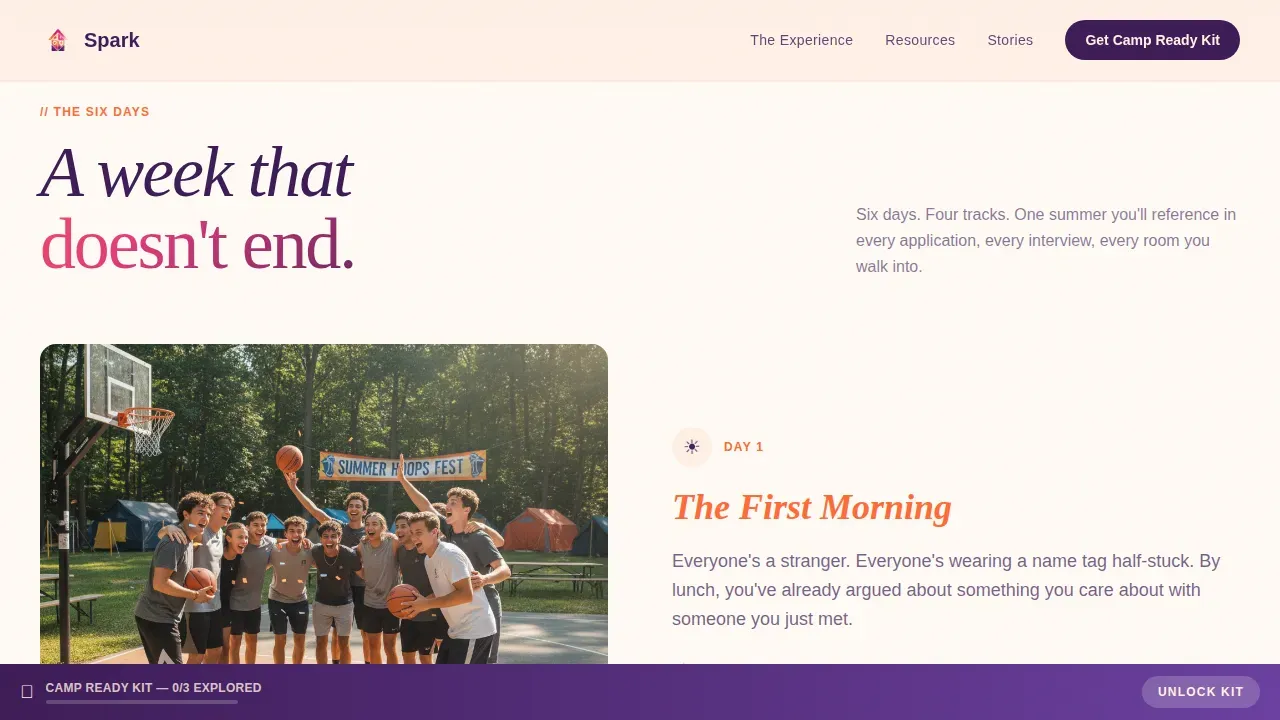
An asymmetric alternating article layout walks visitors through a sample camp day. Each day focuses on a specific leadership challenge: public speaking, negotiation, creative projects, and team strategy. The week overview makes the program feel tangible and real. Parents and students can see exactly what their time investment looks like. The layout presents camp dates, age groups, and program structure in clear, easy-to-read sections so families can check in on every detail before committing.
Page sections overview
| Section | Purpose |
|---|---|
| Hero Quiz Starter | Draws visitors in with an interactive archetype quiz over animated geometric shapes |
| Masonry Resource Grid | Delivers personalized, archetype-filtered camp content through flippable resource cards |
| Social Proof Block | Builds trust with camper quotes, parent testimonials, and counselor endorsements |
| Camp Week Overview | Shows a day-by-day breakdown of activities and leadership challenges |
| Email Capture and Kit | Collects visitor emails and delivers the Camp Ready Kit with quiz results |
| Linear Footer | Closes the page with camp contact details and essential links |
Design & branding system
Spark's visual identity is built around a Playful Geometric theme and a Sunset Gradient color system. The palette feels like a sky ten minutes before the sun drops. Every color, shape, and typographic choice reinforces the camp's energy and gives the template a distinctive brand identity that stands apart from generic summer programs pages.
- Colors: warm tangerine (#FF6B35), soft magenta (#E63B7A), golden hour amber (#FFBA49), deep dusk violet (#3D1C56), and pale peach (#FFF0E5). Violet anchors headlines and interactive states; amber highlights progress indicators and badges.
- Typography: Fraunces is used for display headlines, bringing an expressive serif art quality to big moments. DM Sans handles all body text and labels with clean, modern readability. Bold typography with oversized, expressive fonts acts as a visual anchor throughout the page.
- Visual style: geometric shapes, overlapping triangles, tessellating hexagons, and construction-paper-collage card edges create a fast paced, art-forward aesthetic that appeals to teenagers without alienating parents.
Mobile & speed optimization
This template is built mobile-first, recognizing that parents discover summer programs on their phones and teens browse on their phones too. Every interactive element, from the quiz buttons to the flip cards to the sticky progress bar, is designed to be thumb-friendly with large tap targets and fast-loading assets.
- The animation system uses CSS transforms only, targeting smooth sixty-frames-per-second performance. Intersection Observer triggers section reveals only as elements enter the viewport, keeping the initial load light.
- All grid cards, quiz buttons, and call-to-action elements reflow naturally for smaller screens. The masonry layout adapts from a multi-column desktop view to a single-column mobile stack without losing the geometric card aesthetic.
- The page is specifically designed so that the sticky progress bar and the primary call-to-action button remain visible and tappable on all common phone screen sizes, keeping the registration process accessible at every scroll depth.
How this template helps you convert
A summer camp landing page only works if it moves visitors toward enrollment. Spark is built around a conversion path that feels natural rather than pushy. The interactive quiz earns attention before making any ask. The resource grid builds investment through hands on activities and self expression. The sticky progress bar creates a clear, visible goal. Every element works together to gain confidence from both the teen and the parent at once.
- The quiz personalizes the experience from the first second. Visitors who feel seen by a page stay longer, explore more, and are far more likely to complete the registration process than visitors who land on a static brochure page.
- The Camp Ready Kit unlock mechanic turns passive browsing into active participation. By the time a visitor enters their email, they have already explored resources, watched a camper story, and built a hands on connection to the camp. The "Send This to My Teen" share path doubles the reach of every parent visit, creating a second warm visitor without any additional marketing effort.
Other information about this template
This section covers additional practical details about the Spark template, including platform context, content adaptability, and helpful background on the tools and approaches that make this type of summer camp landing page work well for programs of all sizes.
- This template is part of a no-code landing page builder platform. No-code landing page builders allow users to create websites without extensive coding skills. These tools provide templates and drag-and-drop features to simplify the design process, making them particularly beneficial for small camp organizations and solopreneurs looking to establish an online presence quickly.
- Users can customize the template to reflect their own brand identity using the no-code builder interface. The color variables, type pairings, and card content are all editable without writing a single line of code.
- Many no-code landing page builders offer integrations with email marketing and analytics tools, and no-code platforms include features for A/B testing to help optimize conversion rates over time.
- The spark playful geometric teen leadership camp landing page template is designed around the intersection of Interactive Explorer creative direction, Masonry/Pinterest layout style, Content/Resource landing-page direction, and a Quiz Starter header concept. These four axes work together to create a coherent, purposeful page experience.
- The Google Slides design ecosystem is a useful reference point for teams who want to present the template layout to stakeholders or clients. Google Slides presentations can mirror the page sections, using the same color palette and geometric motifs for pitch decks, sponsor proposals, or parent information nights. Sharing a Google Slides version of the camp overview alongside the live landing page gives camp directors a complete communication toolkit. Many programs prepare a Google Slides deck for school counselor outreach that mirrors their summer camp landing page layout. A Google Slides summary also helps coaches share program details at team meetings. Using Google Slides for staff training sessions means everyone works from the same visual language as the page. Programs that use Google Slides for their onboarding sessions report a more consistent camper check in experience. Google Slides files can also serve as printable handouts for open house nights when families first discover the summer programs on offer.
- The template's resource cards can hold content that supports a wide range of skill levels and prior experience levels. Cards can feature guided instruction videos for first-time leadership students as well as advanced techniques for returning campers who already have prior experience in public speaking or team strategy.
- Day focuses throughout the week can span mock treaty negotiation, creative projects, community service, and collaborative problem solving. Each day features structured activities alongside free-choice exploration blocks, giving students a perfect blend of challenge and imaginative play.
- Day features like landscape design challenges, rocket launch simulations, and solar system mapping projects can be added to science-focused summer programs using this same template structure. The card grid adapts to any theme without requiring layout changes.
- Field trips can be incorporated into the week overview section. Field trips to community spaces, government buildings, or outdoor environments help students connect classroom learning to real life. Field trips are especially motivating for high school students who benefit from hands on exploration beyond the campus. Field trips are one of the most memorable parts of any summer camp week.
- The page supports storytelling through multiple formats: short video, downloadable text guides, printable discussion prompts, and journal templates. Storytelling across these formats helps students gain confidence in their own narrative voice before they arrive.
- Fun activities like themed crafts, educational games, and team-building exercises can be surfaced through the resource card grid. These fun activities help students learn fun cheers, build teamwork skills, and ease into the supportive environment of camp life on day one. Themed crafts and hands on activities help younger or quieter students find their footing before bigger challenges begin.
- The template can also serve summer programs focused on technical skills, including vibe coding workshops for youth. Vibe coding allows users to create interactive and engaging web experiences. Vibe coding can be applied in youth programs to enhance learning through fun and creativity. Interactive web experiences created through vibe coding can foster collaboration among youth, and vibe coding can help in developing essential technical skills among young learners.
- Students who arrive with no prior experience in public speaking or group leadership can still gain confidence quickly within the camp structure. The program is built around hands on activities, interactive demonstrations, and a supportive environment that meets students where they are.
- Leadership development at summer camp gives high school students a solid foundation for future careers. Teens who learn to speak in public, collaborate on a project, and practice problem solving under pressure build a strong foundation that serves them well beyond high school.
- Parents who discover this page are often looking for a perfect solution to a very specific problem: their child is smart and capable but hasn't yet found the space to step into their voice. This template is the perfect solution for communicating exactly that promise clearly and visually.
- The email capture section keeps the registration process simple with a minimal form. Best practices for summer camp landing pages suggest a simple inquiry form with three to four fields for lead generation, and this template follows that guidance with a first name plus email structure.
- Children of all confidence levels, from quiet honors students to emerging team captains, are welcomed by the page's tone. The copy and visual design signal a check in moment rather than a tryout. Families arrive, check in to the page experience, and leave with a personalized kit that feels made for their teen.
- High school students benefit from summer programs that focus on communication, problem solving, and self expression. This camp and this template speak directly to that need, giving students and their families a hands on path to enrollment that feels personal from the very first click.
- Fun learning, imaginative play, and self expression are not just nice-to-have features for a summer camp. They are the core reasons students remember a camp week years later and return as counselors. The template reflects this by centering resource content, storytelling, and creative self expression before pushing any enrollment ask.
- A center stage moment, like standing at a podium for the first time or presenting a project to peers, is what every student at this camp earns by the end of the week. The page is designed to communicate that promise early, giving families confidence that their child will find their moment in the spotlight and take center stage by Friday.
- The template references a telling time mechanic through the progress bar: visitors can see exactly where they are in the resource journey and how close they are to unlocking their kit. This kind of visible progress creates a steady beat of motivation that keeps users engaged.
- Students who are not ready for fast paced competitive programs can find a more supportive entry point here. The page tone is warm and inviting, not high-pressure. The quiz format eases even hesitant teens into the experience through fun, low-stakes choices that feel more like a personality quiz than a sign-up form.
- Boost confidence, develop a team, create new friends, and walk away with skills that outlast the summer. These are the promises that the Spark template is built to communicate, and every section is structured to reinforce them in a way that feels honest and specific.
Theme
Playful Geometric
Creative direction
Interactive Explorer
Color system
Sunset Gradient
Style
Masonry/Pinterest
Direction
Content/Resource
Page Sections
Interactive Leadership Archetype Quiz
Archetype-filtered Masonry Resource Grid
Sticky Progress Bar with Kit Unlock
Shareable Teen Archetype Link
Editorial Social Proof Section
Asymmetric Week Overview Layout
Related questions
Do I need coding skills to use this template?
Can I change the quiz archetypes to match my specific camp program?
Is this template suitable for summer programs beyond teen leadership camps?
How does the "Send This to My Teen" share path work?
What should I put inside the Camp Ready Kit PDF?